
lovethailand home >North Travel Attractions >Chiang Mai Travel Attractions >Chai Prakan >Si Dong Yen > Wat Tham Pha Phueng
TL;DR: Wat Tham Pha Phueng is located at No. 172, Moo 11, Ban Tham Pha Phueng, Nong Bua Subdistrict, Chai Prakan District, Chiang Mai 50320.

Wat Tham Pha Phueng
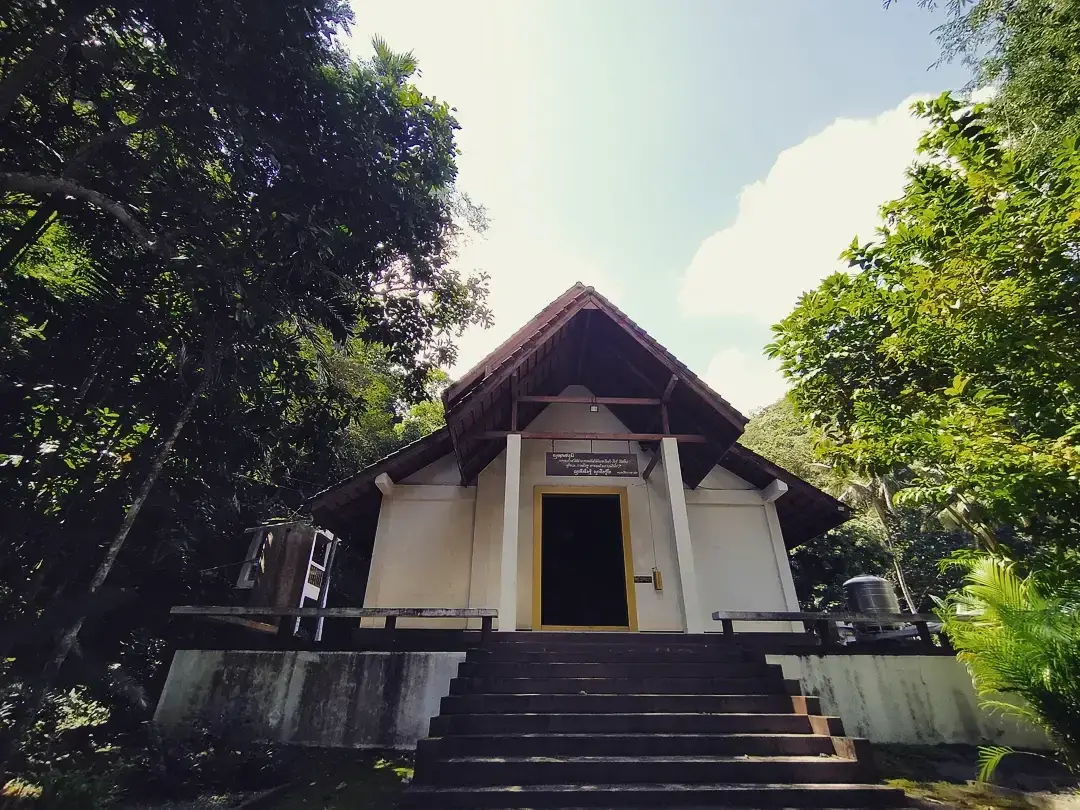
Operating day: Daily
Operating time: 08.00 - 17.00
Wat Tham Pha Phueng is located at No. 172, Moo 11, Ban Tham Pha Phueng, Nong Bua Subdistrict, Chai Prakan District, Chiang Mai Province 50320. It is a Dhammayut community temple with the character of a forest meditation monastery. The temple is set beside mountains, a natural cave, woodland, and a stream, creating a calm and shaded atmosphere suitable for merit-making, quiet reflection, and meditation practice. Wat Tham Pha Phueng was founded in 1973 by Luang Pu Boonchan Chantawaro, a forest meditation monk associated with the lineage of Luang Pu Mun Bhuridatto.
Wat Tham Pha Phueng is different from many ordinary village temples because its identity is rooted in forest practice. The temple’s environment is closely connected with caves, mountains, trees, and water. Visitors do not come here only to pay respect to Buddha images; they also come to experience the quiet discipline of a forest temple, where simplicity, restraint, and inner calm are central to the atmosphere.
The temple began with Luang Pu Boonchan Chantawaro, who came to the Tham Pha Phueng area for monastic practice in 1973. In the beginning, the area was still forested, quiet, and difficult to access. Later, devotees and followers helped develop the site by building monks’ huts, halls, meditation spaces, and necessary facilities. The temple gradually grew while preserving the essential spirit of a forest monastery.
Nai Kham Chaisurin later requested permission to build and establish the temple. The Ministry of Education officially declared it a temple on 16 January 1981, and Wat Tham Pha Phueng received Wisungkhamsima on 18 March 1987. This development shows how the site grew from a forest meditation place into a formally recognized temple with resident monks, religious facilities, and continuing community support.
The temple land covers about 17 rai. Its northern boundary borders a public road, while the southern, eastern, and western boundaries border the Fang River Basin National Reserved Forest. This setting gives Wat Tham Pha Phueng a strong natural identity. It is not located in a dense urban village, but in an environment shaped by forest, mountain, and cave, all of which support meditation practice.
The forest character of the temple can be felt through its quiet landscape. Trees, shade, natural sound, and the mountain setting reduce outside disturbance. This type of temple is best suited to visitors who want to make merit, worship, sit quietly, meditate, and understand the forest meditation tradition rather than rush through a crowded sightseeing stop.
One of the temple’s most important features is the natural cave with Buddha images enshrined inside. In forest Buddhist culture, caves often serve as places of solitude, contemplation, and meditation. The Buddha images within the cave make it both a natural and sacred space. Visitors should enter quietly, walk carefully, and pay respect with mindfulness.
The cave should be experienced with restraint and respect. It is both a religious space and a natural site. Visitors should avoid loud conversation, move carefully, and take time to absorb the peaceful atmosphere. The value of the cave is not only its physical form, but also its role as a place of meditation and reverence.
The temple also has a memorial great stupa and a museum of Luang Pu Boonchan Chantawaro’s requisites. These were created to enshrine his image and preserve his personal monastic belongings. This area is central to the memory of the temple’s founding teacher and is one of the most meaningful places for visitors to pay respect.
The museum of monastic requisites is more than a display of objects. The belongings of a forest monk reflect simplicity, contentment, endurance, and dedication to dhamma practice. Seeing these objects helps visitors understand that forest practice is not based on comfort, but on effort, restraint, and continuous self-training.
Luang Pu Boonchan Chantawaro is deeply respected by his disciples and Buddhist devotees. After his passing, monks, disciples, and forest meditation monks in the lineage of Luang Pu Mun have continued to stay, practice, and maintain monastic activities at Wat Tham Pha Phueng. This continuity keeps the temple’s forest practice identity alive.
The main structures recorded at the temple include an ubosot, sermon hall, and monks’ residences. The temple also has monks’ huts and meditation halls that support resident monks and lay practitioners. The ubosot serves formal monastic acts, the sermon hall supports dhamma listening, and the monks’ residences support the daily life of forest monks.
The meditation halls are especially important because Wat Tham Pha Phueng receives many practitioners. These spaces support sitting meditation, chanting, dhamma listening, and mental training. Visitors should understand that such areas are meant for quiet practice and should avoid disturbing monks or lay practitioners.
The temple serves Ban Tham Pha Phueng and Nong Bua Subdistrict in several ways. It is a spiritual center, a meditation site, a place that preserves the memory of Luang Pu Boonchan Chantawaro, and a religious-natural attraction that connects visitors with the landscape of Chai Prakan. Its role is therefore both local and spiritual.
Nong Bua Subdistrict includes agricultural communities, several temples, hot springs, villages with distinctive histories, and natural travel routes. Wat Tham Pha Phueng, located in Moo 11, adds the forest meditation dimension to this subdistrict. Together with temples such as Wat Buntharikawas, Wat Ban Pong, Wat Ton Chok, and Wat Tha Nam Ngam, it shows how Nong Bua includes both village temples and forest temples.
Wat Tham Pha Phueng is suitable for travelers interested in forest temples, meditation practice, the lineage of Luang Pu Mun, the history of Luang Pu Boonchan Chantawaro, and religious travel connected with nature. Its strength is not liveliness or entertainment, but peace, shade, reverence, and an atmosphere that encourages visitors to become more mindful.
Traditions and activities suited to the temple’s forest context include Buddhist Lent, the end of Buddhist Lent, Kathin, robe offerings, meditation retreats, dhamma listening, memorial merit-making, and activities honoring forest meditation teachers. During Buddhist Lent, monks remain in residence and practitioners often increase their discipline through precepts, meditation, and dhamma practice.
Kathin and robe-offering events at a forest temple support both the temple and the practice life of monks. Devotees do not merely offer material items; they also help sustain monks’ huts, meditation halls, paths, and basic facilities needed for practice. Such activities reflect the relationship between monks and lay supporters.
Visitors should allow enough time for a peaceful visit. A recommended sequence is to pay respect to the Buddha images in the cave, continue to the memorial stupa and museum of Luang Pu Boonchan Chantawaro’s requisites, and then walk quietly through the meditation areas and forest temple grounds. The visit should be slow, respectful, and mindful.
Proper conduct is essential. Visitors should dress modestly, keep quiet near the cave, meditation halls, monks’ residences, and areas used by practitioners. Anyone wishing to photograph monks, people, or practice areas should ask permission first. Wat Tham Pha Phueng is an active forest temple, so respect and restraint are part of the visit.
For a connected cultural route, Wat Tham Pha Phueng can be combined with Ban Tham Ngop, Ban Mai Nong Bua Hot Spring, Wat Buntharikawas, Wat Ban Pong, Wat Ton Chok, and Wat Tha Nam Ngam. Travelers who want to continue beyond Nong Bua can also visit Hinoki Land, Wat Tham Tab Tao, and Doi Wiang Pha National Park. This makes a balanced route of forest temples, village temples, hot springs, local communities, and mountain scenery.
Ban Mai Nong Bua Hot Spring is a local natural hot spring suitable for relaxation. Ban Tham Ngop has distinctive community history and mountain surroundings. Hinoki Land is a contemporary attraction in Chai Prakan, Wat Tham Tab Tao is an old cave religious site, and Doi Wiang Pha National Park offers forest, mountains, and cool northern air. Adding Wat Tham Pha Phueng to this route gives the trip a stronger spiritual and contemplative dimension.
The best time to visit is in the morning or late afternoon, when the weather is more comfortable for walking around a natural temple setting. The cool season is especially pleasant in Chai Prakan, while the rainy season makes the surrounding forest greener and fresher. During rainy periods, visitors should drive carefully on local roads, especially near hills, streams, and shaded areas.
Getting There from Chiang Mai city is easiest by private car or rental car. Follow Highway 107 north through Mae Rim, Mae Taeng, Chiang Dao, and Chai Prakan, then continue into Nong Bua Subdistrict and Ban Tham Pha Phueng, Moo 11. A private vehicle is the most convenient option for combining Wat Tham Pha Phueng with Ban Mai Nong Bua Hot Spring, Ban Tham Ngop, Wat Buntharikawas, Hinoki Land, Wat Tham Tab Tao, and Doi Wiang Pha National Park.
Travelers without a private vehicle can use public transport on the Chiang Mai–Fang or Chiang Mai–Mae Ai route and continue locally from Chai Prakan to Nong Bua and Ban Tham Pha Phueng. This requires more planning because forest temples and nature attractions are not all located directly at main public transport stops. A private vehicle is recommended for a flexible and safe route.
For food and accommodation, travelers can use restaurants, cafés, guest rooms, small resorts, and homestays in Nong Bua, Si Dong Yen, and Chai Prakan. The area is suitable as a stopover between Chiang Mai, Fang, Mae Ai, Doi Ang Khang, and Tha Ton. Staying overnight in Chai Prakan allows more time for worship, meditation, and slow exploration of nearby communities and natural attractions.
In summary, Wat Tham Pha Phueng is a Dhammayut forest temple at No. 172, Moo 11, Ban Tham Pha Phueng, Nong Bua Subdistrict, Chai Prakan District, Chiang Mai Province. Founded by Luang Pu Boonchan Chantawaro in 1973, it was officially declared a temple on 16 January 1981 and received Wisungkhamsima on 18 March 1987. Its highlights include a natural cave with Buddha images, a memorial great stupa, the museum of Luang Pu Boonchan Chantawaro’s requisites, monks’ huts, meditation halls, and a peaceful forest setting. The temple is suitable for travelers who want to make merit, meditate, learn about the forest meditation tradition, and connect a Chai Prakan route with nature, community temples, hot springs, food, and accommodation.
| Name | Wat Tham Pha Phueng |
| Temple Type | Dhammayut Community Temple / Forest Meditation Temple |
| Location | No. 172, Moo 11, Ban Tham Pha Phueng, Nong Bua Subdistrict, Chai Prakan District, Chiang Mai 50320 |
| Temple Code | 650210401 |
| Founding | Founded in 1973 by Luang Pu Boonchan Chantawaro |
| Official Declaration | Declared a temple on 16 January 1981 |
| Wisungkhamsima | Granted on 18 March 1987 |
| Temple Land Area | About 17 rai |
| Boundaries | North borders a public road; south, east, and west border the Fang River Basin National Reserved Forest |
| Important Monk | Luang Pu Boonchan Chantawaro, a forest meditation monk associated with the lineage of Luang Pu Mun Bhuridatto |
| Main Structures | Ubosot, sermon hall, monks’ residences, meditation halls, memorial great stupa, and museum of Luang Pu Boonchan Chantawaro’s requisites |
| Sacred Objects / Worship Points | Buddha images inside the cave, image of Luang Pu Boonchan Chantawaro, and his preserved monastic requisites |
| Highlights | Forest temple beside mountains, natural cave, woodland, and stream, with a peaceful setting suitable for worship and meditation |
| Community Role | Spiritual center, meditation site, and place preserving the memory of Luang Pu Boonchan Chantawaro for Ban Tham Pha Phueng and Nong Bua Subdistrict |
| Forest Temple Activities | Buddhist Lent, end of Buddhist Lent, Kathin, robe offerings, meditation, dhamma listening, memorial merit-making, and activities honoring forest meditation teachers |
| Current Status | Active temple in the current temple registry of Nong Bua, Chai Prakan, Chiang Mai, with continuing monastic and lay meditation activity |
| Travel Information | From Chiang Mai city, follow Highway 107 toward Chai Prakan, then continue to Nong Bua Subdistrict and Ban Tham Pha Phueng, Moo 11. Private car or rental car is the most convenient option. |
| Nearby Tourist Attractions | 1. Ban Tham Ngop, About 5 km 2. Ban Mai Nong Bua Hot Spring, About 7 km 3. Wat Buntharikawas Or Wat Nong Bua Kham, About 9 km 4. Wat Tha Nam Ngam, About 11 km 5. Wat Ban Pong, About 12 km 6. Hinoki Land, About 18 km 7. Wat Tham Tab Tao, About 19 km 8. Doi Wiang Pha National Park, About 33 km |
| Nearby Restaurants | 1. Cafe Amazon PTT Chai Prakan, About 12 km, Tel. 098-808-1958 2. Cafe' De Mamana, About 14 km, Tel. 099-435-4061, 090-435-4061 3. Mor Cafe, About 15 km, Tel. 095-861-5556 4. Pa Phan Noodle Ban Chiang Man, About 16 km, Tel. 085-864-8001 5. Pizza & View Pang Chai Prakan, About 17 km, Tel. 082-198-8792 |
| Nearby Accommodations | 1. Anton Place, About 10 km, Tel. 091-853-1586 2. Pingkhong Resort, About 13 km 3. Baan Suan Ngoon Sirisuk Rooms, About 15 km, Tel. 092-398-8884, 098-750-0115, 086-919-9542 4. Phrom Prathan Resort, About 16 km 5. Pang Kham Pom Homestay Chai Prakan, About 25 km, Tel. 084-170-7943 |
Frequently Asked Questions (FAQ)
Q: Where is Wat Tham Pha Phueng located?
A: Wat Tham Pha Phueng is located at No. 172, Moo 11, Ban Tham Pha Phueng, Nong Bua Subdistrict, Chai Prakan District, Chiang Mai Province 50320.
Q: What type of temple is Wat Tham Pha Phueng?
A: Wat Tham Pha Phueng is a Dhammayut community temple with the character of a forest meditation temple.
Q: When was Wat Tham Pha Phueng founded?
A: It was founded in 1973 by Luang Pu Boonchan Chantawaro and was officially declared a temple on 16 January 1981.
Q: How is Luang Pu Boonchan Chantawaro connected with Wat Tham Pha Phueng?
A: Luang Pu Boonchan Chantawaro was the founding teacher and former abbot who established the temple as a forest meditation site. The temple now has a memorial stupa and a museum preserving his monastic requisites.
Q: What are the main highlights of Wat Tham Pha Phueng?
A: Highlights include the natural cave with Buddha images, peaceful forest setting, memorial great stupa, museum of Luang Pu Boonchan Chantawaro’s requisites, and meditation spaces.
Q: What kind of travelers should visit Wat Tham Pha Phueng?
A: The temple is suitable for travelers interested in forest temples, meditation practice, the lineage of Luang Pu Mun, Thai forest monks, and religious travel connected with nature.
Q: How should visitors behave at Wat Tham Pha Phueng?
A: Visitors should dress modestly, keep quiet near the cave, meditation halls, and monks’ residences, and ask permission before photographing people or practice areas.
Q: What nearby places can travelers visit after Wat Tham Pha Phueng?
A: Nearby places include Ban Tham Ngop, Ban Mai Nong Bua Hot Spring, Wat Buntharikawas, Wat Tha Nam Ngam, Hinoki Land, Wat Tham Tab Tao, and Doi Wiang Pha National Park.
 Category: ●Places of Worship
 Group: ●Temple
Last Update : 3 DayAgo
 Last Update : 3 DayAgo
 Click to Access the Navigation Map GPS
Wat Tham Pha Phueng Map
Recommend

 Muang Chiang Mai(121)Chom Thong(47)Mae Chaem(25)Chiang Dao(33)Doi Saket(68)Mae Taeng(85)Mae Rim(69)Samoeng(29)Fang(71)Mae Ai(59)Phrao(70)San Pa Tong(103)San Kamphaeng(66)San Sai(73)Hang Dong(73)Hot(32)Doi Tao(22)Omkoi(11)Saraphi(74)Wiang Haeng(15)Chai Prakan(28)Mae Wang(32)Mae On(22)Doi Lo(33)Galyani Vadhana(1)


