
lovethailand home >North Travel Attractions >Chiang Mai Travel Attractions >Chai Prakan >Nong Bua > Wat Buntharikawas
TL;DR: Wat Buntharikawas is located at No. 25, Ban Nong Bua, Moo 3, Nong Bua Subdistrict, Chai Prakan District, Chiang Mai 50320., locally known as Wat Nong Bua Kham, is a community Buddhist temple located at No. 25, Ban Nong Bua, Moo 3, Nong Bua Subdistrict, Chai.

Wat Buntharikawas
Operating day: Daily
Operating time: 08.00 - 17.00
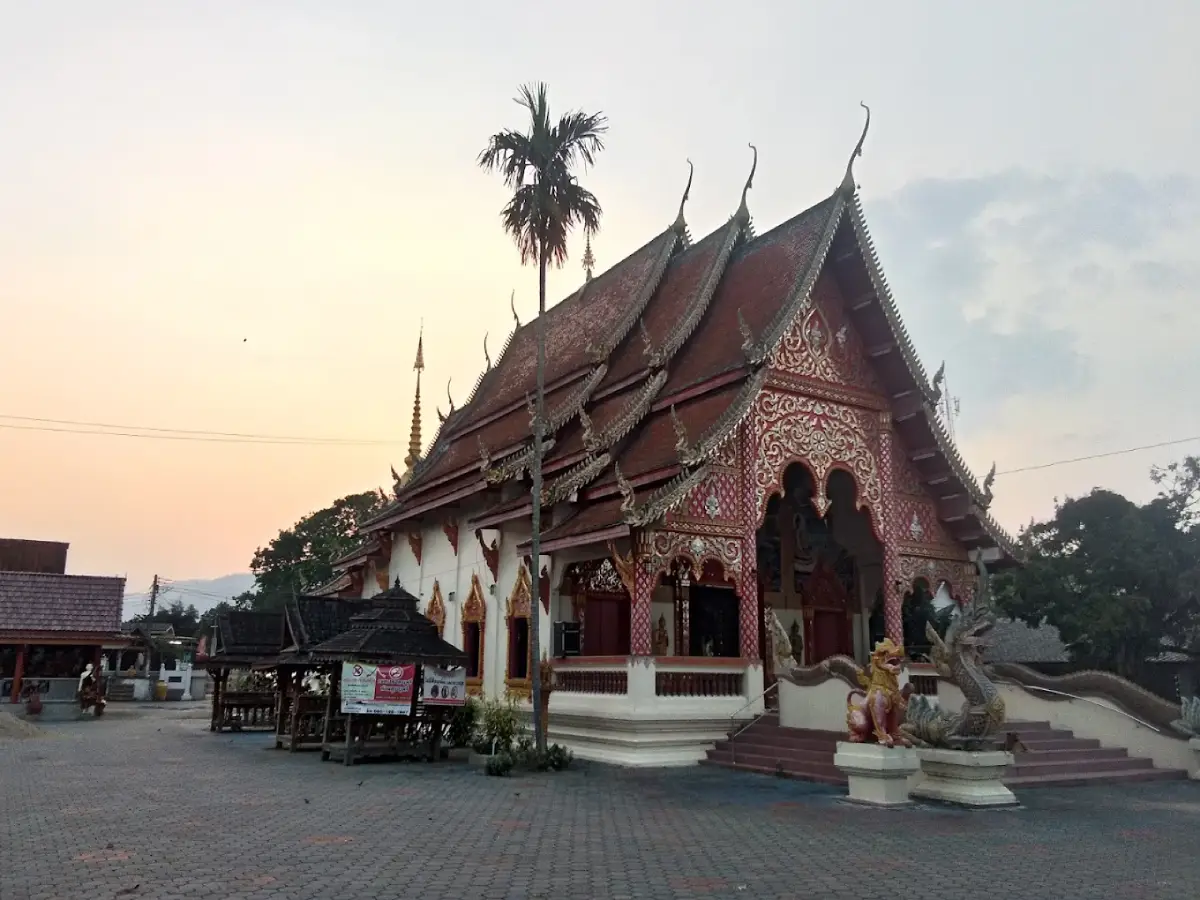
Wat Buntharikawas, locally known as Wat Nong Bua Kham, is a community Buddhist temple located at No. 25, Ban Nong Bua, Moo 3, Nong Bua Subdistrict, Chai Prakan District, Chiang Mai Province 50320. It is a local temple under the Mahanikaya order. The temple was officially permitted in 1925 and received its Wisungkhamsima in 1990. The current abbot is Phra Thanu Thanawangso. Wat Buntharikawas is one of the important temples of Ban Nong Bua and Nong Bua Subdistrict because of its long history, its community role, and its continuing use for Buddhist ceremonies, merit-making, education, and local traditions.
Wat Buntharikawas is especially significant as one of the older temples in Nong Bua Subdistrict. By 2026, more than 100 years had passed since the temple was officially established in 1925. Over this long period, the temple became part of the shared memory of Ban Nong Bua through Buddhist holy days, Kathin, robe offerings, Salak Phat, family merit-making, annual festivals, and community activities across generations.
The name Buntharikawas carries an auspicious Buddhist tone, while the local name Wat Nong Bua Kham reflects the identity of Ban Nong Bua. The word Nong Bua evokes a pond of lotuses, and in Buddhist culture the lotus is associated with purity and spiritual growth. This makes both the temple name and the local village name meaningful within the religious and cultural landscape of Nong Bua.
The temple was founded through the faith of local people. Nai Pan Thakham Ban donated land for the temple, and Phra Athikan Ta Kham Parasussaro encouraged villagers to help build it. Later, Nai Un Ayapa donated additional land to the temple. This origin shows that Wat Buntharikawas was created through cooperation between monks, land donors, and the local community rather than as an isolated institution.
Having a temple in Ban Nong Bua was important because it gave villagers a nearby place for merit-making, almsgiving, dhamma listening, precept observance, family ceremonies, and annual religious events. A village temple is not merely a ritual site; it is a shared place where families gather, work together, and maintain community identity.
The temple land covers 4 rai and 68 square wa under title deed No. 381, land parcel No. 55. The northern boundary measures about 50 wa and borders a public road. The southern boundary measures about 35 wa and borders private land. The eastern boundary measures about 37 wa and 5 sok and borders the village, while the western boundary measures about 40 wa and also borders the village. These boundaries show that the temple stands directly within the village landscape and is connected with public roads, homes, and community space.
The granting of Wisungkhamsima in 1990 is an important milestone. In Thai Buddhism, Wisungkhamsima relates to the consecrated boundary for formal monastic acts and the function of the ubosot. This status confirms the temple’s development within the formal Buddhist system and strengthens its role as a complete religious site for the local community.
The main structures of Wat Buntharikawas include a viharn, monks’ residences, multi-purpose pavilion, merit-making pavilion, and kitchen. These structures allow the temple to support worship, monastic life, community gatherings, family ceremonies, and large merit-making events. The temple’s layout reflects the practical character of a functioning village temple.
The viharn is the main space for worship and Buddhist activity. Villagers use it to pay respect to Buddha images, receive precepts, listen to sermons, and take part in ceremonies. In a Lanna community temple, the viharn is not only a building but a place where the everyday life of villagers meets Buddhist faith.
The monks’ residences support the continuing presence of monks at the temple. Resident monks maintain daily religious routines, accept offerings, chant, conduct ceremonies, and provide spiritual guidance for lay supporters. This makes Wat Buntharikawas a living temple, not merely a historical site.
The multi-purpose pavilion and merit-making pavilion give the temple flexibility. They can support dhamma listening, meetings, family ceremonies, community preparation for festivals, and merit-making activities. Such spaces are especially important in village temples because they allow local people to cooperate in religious and social events.
The temple kitchen reflects the active role of lay supporters. During temple events, villagers often gather to cook, prepare offerings, welcome guests, and clean up together. This shared work is part of the merit-making culture of northern Thai communities and helps strengthen village relationships.
The sacred objects at the temple include Buddha images in various postures. Although public sources do not provide detailed art-historical descriptions of each image, the Buddha images remain the main focus of worship. Visitors should begin by paying respect, calming the mind, and experiencing the quiet atmosphere of a working village temple.
The temple has had a long line of abbots, beginning with Phra Athikan Ta Kham Parasussaro, who served from 1927 to 1935. He was followed by Phra Athikan Chanthit Phutthasiro, Phra Athikan Kham Tan Ratanawanno, Phra Athikan Bun Som Sirivichayo, Phra Athikan Bun Eng Wisutthalo, Phra Athikan Sakhon Sakhonkharo, Phra Athikan Suthin Thitathammo, and Phra Khru Kham Puan Worathammo from 1984 onward. This sequence reflects the continuity of monastic leadership at Wat Buntharikawas across many decades.
The current abbot, Phra Thanu Thanawangso, continues the temple’s role in religious and community life. In a village temple, the abbot’s responsibility extends beyond ritual performance. He cares for monastic discipline, temple grounds, ceremonies, invitations from villagers, and the relationship between monks and lay supporters.
Wat Buntharikawas also has an educational and community development role. It has hosted a Sunday Buddhist study center since 1985 and is the site of a local public training unit. These roles show that the temple is more than a ceremony space. It also supports dhamma learning, moral education, public training, and the development of people in Nong Bua Subdistrict.
The Sunday Buddhist study center is important because it helps teach dhamma, ethics, manners, and Buddhist values to children and youth. Learning in a temple setting is different from ordinary classroom learning because it takes place in an atmosphere of faith, respect, calmness, and community connection.
The local public training unit also shows how the temple functions as a public space. Temples in northern Thai villages often support meetings, training, community activities, and cooperation between local leaders and villagers. Wat Buntharikawas therefore serves not only religious needs, but also broader community development.
Nong Bua Subdistrict is an important part of Chai Prakan District, with several villages, temples, natural attractions, and local travel routes. Wat Buntharikawas is located in Ban Nong Bua, Moo 3, which is closely connected with the subdistrict identity. The temple helps define Nong Bua’s religious and cultural character.
Local traditions associated with Wat Buntharikawas and Nong Bua include Buddhist Lent, the end of Buddhist Lent, Kathin, robe offerings, Salak Phat, Northern Thai New Year, Yi Peng, Mahachat sermons, and new rice offerings. These traditions keep the temple active throughout the year and connect Buddhist faith with agricultural life and Lanna culture.
Salak Phat, also known in northern Thailand as Tan Kuai Salak, is especially important at Wat Buntharikawas. The tradition involves offering food, religious items, and prepared offerings to the Sangha through a drawing of lots rather than selecting a specific monk. This reflects equality, generosity, and unity within the Buddhist community.
In northern Thailand, Salak Phat is not only an offering ceremony but also a community event. Families prepare offerings according to their means, often with care and beauty. When these offerings are gathered at the temple, the atmosphere reflects cooperation, generosity, and pride in Lanna Buddhist culture.
Buddhist Lent is a time when monks remain in residence and laypeople present candles, make merit, observe precepts, and support the temple. After the end of Buddhist Lent, communities prepare for Kathin and robe-offering ceremonies that help maintain the temple and unite villagers through shared faith.
Northern Thai New Year, or Pi Mai Mueang, brings villagers to temples for merit-making, bathing Buddha images, asking blessings from elders, and reconnecting with family and community. Yi Peng brings candlelight, prayer, and full-moon merit-making. These traditions keep Lanna identity alive through temple life.
New rice offerings reflect the agricultural character of Nong Bua. When villagers bring newly harvested rice or produce to the temple, they express gratitude for land, harvest, family labor, and the Triple Gem. The temple becomes a place where faith, livelihood, and local culture meet.
Wat Buntharikawas is suitable for travelers interested in Lanna community temples, old temples of Chai Prakan, the history of land donation and village faith, Buddhist education, and Salak Phat traditions. Its appeal does not come from large-scale tourism, but from its age, continuity, and living role as the spiritual center of Ban Nong Bua.
Visitors should begin by paying respect in the viharn, then walk quietly around the monks’ residences, multi-purpose pavilion, merit-making pavilion, and shared temple areas. Modest dress and respectful behavior are important because the temple remains an active religious space for local residents.
Wat Buntharikawas can be combined with several nearby places in a Nong Bua cultural route. These include Wat Tha Nam Ngam, Wat Ban Pong, Wat Ton Chok, Wat Pa Daeng, Ban Mai Nong Bua Hot Spring, and Ban Tham Ngop. Travelers who want a wider route can continue to Hinoki Land, Wat Tham Tab Tao, and Doi Wiang Pha National Park.
Wat Tha Nam Ngam is closely connected with Wat Buntharikawas in community history. Before Ban Tha had its own temple, villagers traveled to Wat Buntharikawas, also known as Wat Nong Bua Kham, for merit-making. Visiting both temples together helps travelers understand the development of Buddhist spaces in Nong Bua, from an older central temple to later village temples established for local convenience.
Ban Mai Nong Bua Hot Spring is a local natural hot spring used for relaxation, while Ban Tham Ngop is a village with distinctive local history and mountain surroundings. Hinoki Land, Wat Tham Tab Tao, and Doi Wiang Pha National Park add modern tourism, cave religious heritage, forest, and mountain scenery to the route.
The best time to visit is in the morning or late afternoon, when the weather is more comfortable and travelers can continue to nearby temples or attractions. The cool season is especially pleasant for travel in Chai Prakan, while the rainy season brings greener fields and mountain scenery. During rainy periods, visitors should drive carefully on local roads and village routes.
Getting There from Chiang Mai city is easiest by private car or rental car. Follow Highway 107 north through Mae Rim, Mae Taeng, Chiang Dao, and Chai Prakan, then continue into Nong Bua Subdistrict and Ban Nong Bua, Moo 3. A private vehicle is the most convenient option for combining Wat Buntharikawas with Wat Tha Nam Ngam, Wat Ban Pong, Wat Ton Chok, Ban Mai Nong Bua Hot Spring, Hinoki Land, Wat Tham Tab Tao, and Doi Wiang Pha National Park.
Travelers without a private vehicle can use public transport on the Chiang Mai–Fang or Chiang Mai–Mae Ai route and continue locally from Chai Prakan to Nong Bua and Ban Nong Bua. This requires more planning because community temples and local attractions are not all located directly at main public transport stops. A private vehicle is recommended for a complete cultural route.
For food and accommodation, travelers can use restaurants, cafés, guest rooms, small resorts, and homestays in Nong Bua, Si Dong Yen, and Chai Prakan. The area is suitable as a stopover between Chiang Mai, Fang, Mae Ai, Doi Ang Khang, and Tha Ton. Staying overnight in Chai Prakan allows more time to explore temples, villages, hot springs, and natural attractions without rushing.
In summary, Wat Buntharikawas, or Wat Nong Bua Kham, is a long-established Mahanikaya community temple in Ban Nong Bua, Moo 3, Nong Bua Subdistrict, Chai Prakan District, Chiang Mai Province. Officially established in 1925 and granted Wisungkhamsima in 1990, it was founded through land donations and the faith of local villagers. With its viharn, monks’ residences, multi-purpose pavilion, merit-making pavilion, kitchen, Buddha images, Sunday Buddhist study center, public training role, and Salak Phat tradition, the temple is suitable for travelers who want to make merit, understand Lanna village temple life, and connect a Nong Bua–Chai Prakan route with nearby temples, hot springs, restaurants, accommodations, and natural attractions.
| Name | Wat Buntharikawas |
| Local Name | Wat Nong Bua Kham |
| Temple Type | Community Buddhist Temple, Mahanikaya Order |
| Location | No. 25, Ban Nong Bua, Moo 3, Nong Bua Subdistrict, Chai Prakan District, Chiang Mai 50320 |
| Temple Code | 350210405 |
| Establishment | Officially permitted as a temple in 1925 |
| Wisungkhamsima | Granted in 1990 |
| Abbot | Phra Thanu Thanawangso |
| Temple Land Area | 4 rai, 68 square wa, title deed No. 381, land parcel No. 55 |
| Boundaries | North borders a public road, south borders private land, east borders the village, and west borders the village |
| History | Nai Pan Thakham Ban donated land for the temple. Phra Athikan Ta Kham Parasussaro encouraged villagers to build it, and Nai Un Ayapa later donated additional land. |
| Main Structures | Viharn, monks’ residences, multi-purpose pavilion, merit-making pavilion, and kitchen |
| Sacred Objects | Buddha images in various postures |
| Educational Role | Sunday Buddhist study center opened in 1985; the temple is also the site of a local public training unit |
| Community Role | Spiritual center of Ban Nong Bua, supporting worship, merit-making, dhamma listening, Salak Phat, Kathin, robe offerings, and village Buddhist activities |
| Local Traditions | Buddhist Lent, end of Buddhist Lent, Kathin, robe offerings, Salak Phat, Northern Thai New Year, Yi Peng, Mahachat sermons, and new rice offerings |
| Current Status | Active temple in the current temple registry of Nong Bua, Chai Prakan, Chiang Mai, and still used as a local Buddhist activity site |
| Travel Information | From Chiang Mai city, follow Highway 107 toward Chai Prakan, then continue to Nong Bua Subdistrict and Ban Nong Bua, Moo 3. Private car or rental car is the most convenient option. |
| Nearby Tourist Attractions | 1. Wat Tha Nam Ngam, About 2 km 2. Wat Ban Pong, About 5 km 3. Wat Ton Chok, About 6 km 4. Ban Mai Nong Bua Hot Spring, About 9 km 5. Ban Tham Ngop, About 10 km 6. Hinoki Land, About 14 km 7. Wat Tham Tab Tao, About 15 km 8. Doi Wiang Pha National Park, About 29 km |
| Nearby Restaurants | 1. Cafe Amazon PTT Chai Prakan, About 7 km, Tel. 098-808-1958 2. Cafe' De Mamana, About 9 km, Tel. 099-435-4061, 090-435-4061 3. Mor Cafe, About 10 km, Tel. 095-861-5556 4. Pa Phan Noodle Ban Chiang Man, About 12 km, Tel. 085-864-8001 5. Pizza & View Pang Chai Prakan, About 13 km, Tel. 082-198-8792 |
| Nearby Accommodations | 1. Anton Place, About 6 km, Tel. 091-853-1586 2. Pingkhong Resort, About 9 km 3. Baan Suan Ngoon Sirisuk Rooms, About 11 km, Tel. 092-398-8884, 098-750-0115, 086-919-9542 4. Phrom Prathan Resort, About 12 km 5. Pang Kham Pom Homestay Chai Prakan, About 21 km, Tel. 084-170-7943 |
Frequently Asked Questions (FAQ)
Q: Where is Wat Buntharikawas located?
A: Wat Buntharikawas is located at No. 25, Ban Nong Bua, Moo 3, Nong Bua Subdistrict, Chai Prakan District, Chiang Mai Province 50320.
Q: What is the local name of Wat Buntharikawas?
A: Local people also call Wat Buntharikawas “Wat Nong Bua Kham.”
Q: When was Wat Buntharikawas officially established?
A: Wat Buntharikawas was officially permitted as a temple in 1925 and received Wisungkhamsima in 1990.
Q: Who is the abbot of Wat Buntharikawas?
A: The abbot is Phra Thanu Thanawangso.
Q: Who founded Wat Buntharikawas?
A: Nai Pan Thakham Ban donated land for the temple, Phra Athikan Ta Kham Parasussaro encouraged villagers to build it, and Nai Un Ayapa later donated additional land.
Q: What main structures are found at Wat Buntharikawas?
A: Main structures include a viharn, monks’ residences, multi-purpose pavilion, merit-making pavilion, and kitchen.
Q: What is Wat Buntharikawas’s educational role?
A: The temple has hosted a Sunday Buddhist study center since 1985 and is also the site of a local public training unit.
Q: What nearby places can travelers visit after Wat Buntharikawas?
A: Nearby places include Wat Tha Nam Ngam, Wat Ban Pong, Wat Ton Chok, Ban Mai Nong Bua Hot Spring, Ban Tham Ngop, Hinoki Land, Wat Tham Tab Tao, and Doi Wiang Pha National Park.
 Category: ●Places of Worship
 Group: ●Temple
Last Update : 1 DayAgo
 Last Update : 1 DayAgo
 Click to Access the Navigation Map GPS
 Muang Chiang Mai(121)Chom Thong(47)Mae Chaem(25)Chiang Dao(33)Doi Saket(68)Mae Taeng(85)Mae Rim(69)Samoeng(29)Fang(71)Mae Ai(59)Phrao(70)San Pa Tong(103)San Kamphaeng(66)San Sai(73)Hang Dong(73)Hot(32)Doi Tao(22)Omkoi(11)Saraphi(74)Wiang Haeng(15)Chai Prakan(28)Mae Wang(32)Mae On(22)Doi Lo(34)Galyani Vadhana(1)


