
lovethailand home >North Travel Attractions >Chiang Mai Travel Attractions >Chai Prakan >Nong Bua > Wat Ban Pong (Nong Bua)
TL;DR: Wat Ban Pong (Nong Bua) is located at Ban Pong, Moo 7, Nong Bua Subdistrict, Chai Prakan District, Chiang Mai 50320, open Daily, hours 08.00 – 17.00.
Wat Ban Pong (Nong Bua)
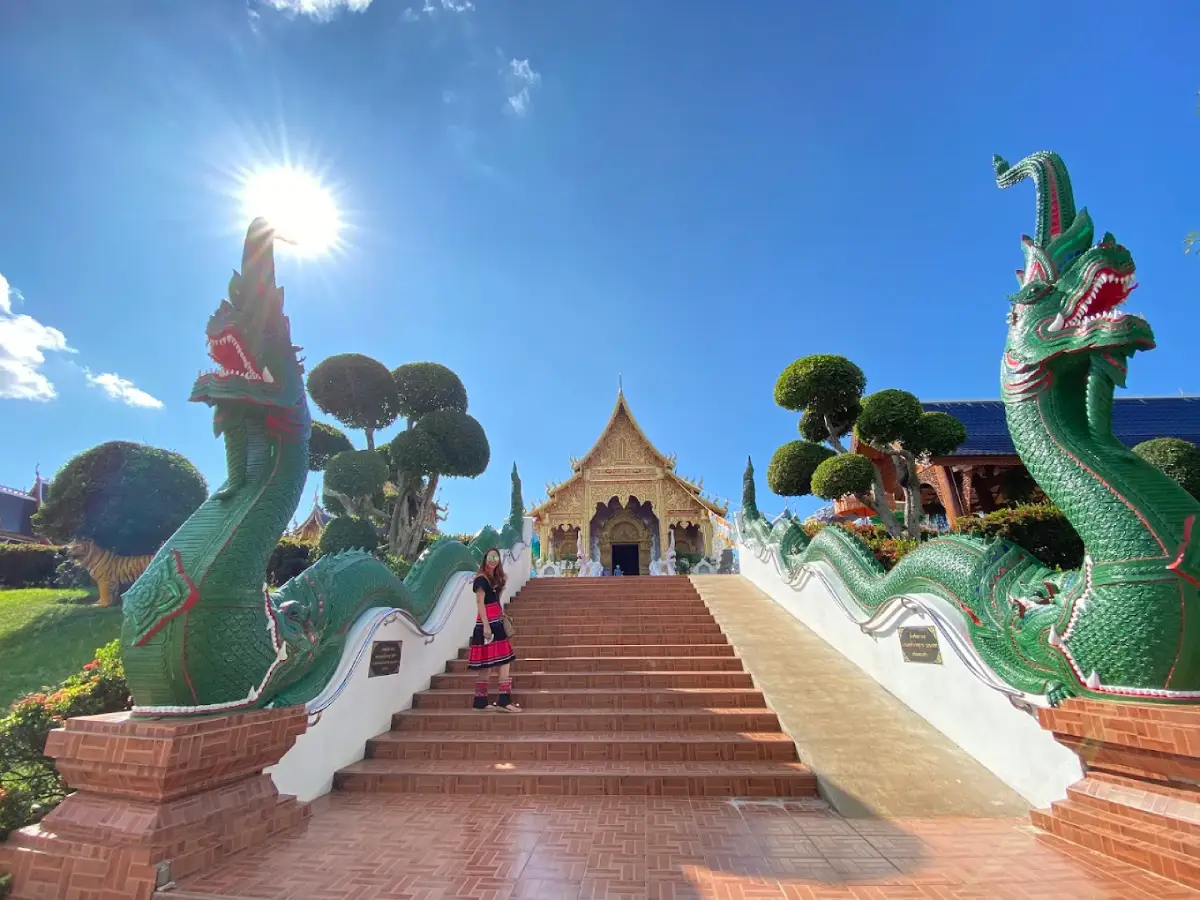
Open Days: Daily
Opening Hours: 08.00 – 17.00
Wat Ban Pong (Nong Bua) is a community Buddhist temple located in Ban Pong, Moo 7, Nong Bua Subdistrict, Chai Prakan District, Chiang Mai Province 50320. It is a local temple under the Mahanikaya order and was officially permitted as a temple in 1938. The abbot is Phra Somphon Chotipanyo Chotikaro. Wat Ban Pong is an important spiritual center for Ban Pong, serving as a place for merit-making, dhamma listening, Buddhist ceremonies, and community religious activities. Its importance lies not only in being the village temple, but also in its founding story, which began from the villagers’ need for a nearby place of worship after they had long traveled with difficulty to Wat Nong Bua.
Wat Ban Pong has served the local community for more than 85 years by 2026. Over this long period, it has become part of the shared memory of Ban Pong through Buddhist holy days, Kathin, robe offerings, family merit-making, dhamma learning, and village activities. The temple is both a religious site and a community space where villagers have gathered across generations.
Ban Pong is a village in Nong Bua Subdistrict, Chai Prakan District, northern Chiang Mai. The area is connected with agriculture, local roads, water sources, mountain scenery, and the wider travel route linking Chiang Mai with Fang and Mae Ai. Nong Bua includes several villages such as Ban Den, Ban Nong Bua, Ban Tha, Ban Ton Chok, Ban Tham Ngop, Ban Pong, Ban Pang, Ban Pa Daeng, Ban Mai Nong Bua, and Ban Tham Pha Phueng. Wat Ban Pong is therefore part of a broader network of villages and temples in Chai Prakan.
The name Wat Ban Pong directly reflects its role as the village temple of Ban Pong. In Lanna village culture, a local temple is not only a place for worship, but also a gathering space where families meet, support ceremonies, prepare offerings, cook for merit-making events, and maintain community ties. Wat Ban Pong expresses the religious and cultural identity of its village.
The temple’s history begins with the difficulty of traveling to make merit in the past. Ban Pong villagers originally had to go to Wat Nong Bua, walking across rice fields in conditions that were inconvenient, especially during the rainy season or before local roads were developed. Nai Ten Watthanasomboon, the village headman at the time, discussed with local devotees the need to create a temple within Ban Pong so that villagers could make merit more easily.
The founding land was donated by Nang Oei and measured 1 rai, 3 ngan, and 28 square wa. Local devotees then helped build the temple and invited Phra Suk Kham Siripanyo to become the first abbot. This origin shows that Wat Ban Pong was created through true community cooperation: a village leader, a land donor, monks, and local residents worked together to establish a Buddhist center for their own community.
The temple land covers 1 rai, 3 ngan, and 28 square wa. It also has two plots of monastic land totaling 1 rai, 1 ngan, and 40 square wa. Although Wat Ban Pong is not a large temple in physical scale, its land has long supported Buddhist worship, merit-making, learning, and community gatherings at the village level.
The main structures of Wat Ban Pong include a viharn, monks’ residences, a merit-making pavilion, a dining hall, and a kitchen. These buildings reflect the practical character of a functioning community temple. The viharn supports worship and dhamma activities, the monks’ residences support monastic life, the merit-making pavilion supports ceremonies, the dining hall supports monks’ meals, and the kitchen is where villagers help prepare food for temple events.
The viharn is the main space visitors should approach with respect. It is where villagers pay respect to Buddha images, receive precepts, listen to dhamma, and join important Buddhist activities. In a Lanna community temple, the viharn is not merely a building; it is the place where everyday village life meets Buddhist faith.
The monks’ residences show that the temple supports continuing monastic life. A temple with resident monks can maintain chanting, receive offerings, conduct ceremonies, accept invitations from villagers, and serve as a spiritual guide for the community. This makes Wat Ban Pong a living religious space rather than a simple place of occasional worship.
The merit-making pavilion is closely connected with family and community ceremonies. It supports memorial merit-making, annual Buddhist events, village gatherings, and shared preparation for religious activities. In rural northern Thailand, such spaces are also social spaces where villagers cooperate through food, offerings, labor, and shared responsibilities.
The dining hall and kitchen complete the temple’s practical structure. The dining hall supports the daily and ceremonial meals of monks, while the kitchen reflects the active role of lay supporters. During temple events, villagers often gather to cook, prepare offerings, welcome guests, and clean up together. This makes the temple a place of both merit-making and community cooperation.
The temple’s sacred objects include Buddha images. Although public records do not provide detailed art-historical descriptions of each image, the Buddha images remain the central focus of worship. Visitors should begin by paying respect, calming the mind, and observing the quiet atmosphere of a working village temple.
Wat Ban Pong has a long line of known abbots, beginning with Phra Suk Kham Siripanyo, who served from 1938 to 1946. He was followed by Phra Inta Chitchitto from 1946 to 1955, Phra Bun Yen Thanathammo from 1955 to 1963, Phra Kantha Analayo from 1963 to 1972, Phra Sap Thammachoto from 1972 to 1977, Phra Wirat Panyatharo from 1977 to 1980, Phra Wichian Dipathammo from 1980 to 1982, Phra Sanan Biwanno from 1982 to 1984, and Phra Duang Tip Thammawaro from 1984 onward. This sequence reflects the continuing religious leadership of the temple across decades.
More recent information identifies Phra Somphon Chotipanyo Chotikaro as the abbot of Wat Ban Pong. In a community temple, the abbot’s role is essential. He cares for religious duties, monks, temple facilities, ceremonies, invitations from villagers, and the relationship between monks and lay supporters. The temple continues not only through buildings and land, but through this ongoing relationship between Sangha and community.
Wat Ban Pong also has an important educational role. Its history records a Dhamma section of a Buddhist scripture school beginning in 1988, a Sunday Buddhist study center beginning in 1985, an adult school beginning in 1990, and a local public training unit located at the temple. These roles make Wat Ban Pong more than a merit-making site. It has also served as a place for moral education, adult learning, and community development.
The Sunday Buddhist study center is especially important for children and youth. It teaches dhamma, ethics, manners, and Buddhist values in a temple setting where monks, parents, and young people are connected. This type of learning helps pass moral values from one generation to the next and preserves the role of the temple in community education.
The Dhamma school and adult school show the temple’s long-standing role as a learning space. In many Thai and Lanna communities, temples were among the earliest centers of education, especially in rural areas. Wat Ban Pong fits this broader pattern by supporting both religious learning and practical community education.
Nong Bua Subdistrict includes agricultural communities, natural sites, and travel routes within Chai Prakan District. A visit to Wat Ban Pong can be combined with nearby places such as Ban Mai Nong Bua Hot Spring, Ban Tham Ngop, Wat Ton Chok, Wat Tha Nam Ngam, Wat Buntharikawat, Wat Pa Daeng, Hinoki Land, Wat Tham Tab Tao, and Doi Wiang Pha National Park. This allows travelers to experience religion, education, village life, and natural attractions in one route.
Ban Mai Nong Bua Hot Spring is a local natural hot spring used as a relaxing community site. Ban Tham Ngop has distinctive local history and mountain landscapes. Wat Ton Chok is known for its Buddhist education role, while Wat Tha Nam Ngam was founded through community faith and local land donation. Together with Wat Ban Pong, these places show how Nong Bua combines temples, learning, agriculture, and natural resources.
Wat Ban Pong is suitable for travelers interested in Lanna community temples, the history of temples founded by local faith, Buddhist education, and quiet travel in Chai Prakan. Its main appeal is not large-scale tourism, but its simplicity, continuity, and living role in village life.
Local traditions connected with the temple context include Buddhist Lent, the end of Buddhist Lent, Kathin, robe offerings, Salak Phat, Northern Thai New Year, Yi Peng, Mahachat sermons, new rice offerings, and family merit-making. These traditions keep the temple active throughout the year. During Buddhist Lent, villagers present candles, make merit, and observe precepts. After the end of Buddhist Lent, Kathin and robe-offering ceremonies help maintain the temple and unite the village community.
Salak Phat is a distinctive Lanna merit-making tradition in which families prepare offerings according to their means. The tradition reflects generosity, cooperation, refinement, and community faith. Mahachat sermons, or Fang Tham Luang, allow villagers to listen to the Vessantara Jataka and reflect on generosity, sacrifice, and moral cultivation.
Northern Thai New Year, or Pi Mai Mueang, is an important temple season. Villagers visit temples to make merit, bathe Buddha images, ask blessings from elders, and reconnect with family and community. Yi Peng brings candlelight, prayer, and full-moon merit-making. These traditions help preserve Lanna identity through temple life.
New rice offerings are connected with the agricultural character of Nong Bua. When villagers bring newly harvested rice or produce to the temple, they express gratitude for land, harvest, family labor, and the Triple Gem. The temple becomes a place where faith, livelihood, and local culture meet.
Visitors to Wat Ban Pong should begin by paying respect in the viharn, then walk quietly around the temple’s main areas, including the monks’ residences, merit-making pavilion, dining hall, and kitchen. Modest dress and respectful behavior are important because the temple remains an active religious space for local residents.
The best time to visit is in the morning or late afternoon, when the weather is more comfortable and travelers can continue to nearby temples or attractions. The cool season is especially pleasant for travel in Chai Prakan, while the rainy season brings greener fields and mountain scenery. During rainy periods, visitors should drive carefully on village roads.
Getting There from Chiang Mai city is easiest by private car or rental car. Follow Highway 107 north through Mae Rim, Mae Taeng, Chiang Dao, and Chai Prakan, then continue into Nong Bua Subdistrict and Ban Pong, Moo 7. A private vehicle is the most convenient option for combining Wat Ban Pong with Wat Ton Chok, Wat Tha Nam Ngam, Ban Mai Nong Bua Hot Spring, Ban Tham Ngop, Hinoki Land, Wat Tham Tab Tao, and Doi Wiang Pha National Park.
Travelers without a private vehicle can use public transport on the Chiang Mai–Fang or Chiang Mai–Mae Ai route and continue locally from Chai Prakan to Nong Bua and Ban Pong. This requires more planning because community temples and local attractions are not all located directly at main public transport stops. A private vehicle is recommended for a complete cultural route.
For food and accommodation, travelers can use restaurants, cafés, guest rooms, small resorts, and homestays in Nong Bua, Si Dong Yen, and Chai Prakan. The area is suitable as a stopover between Chiang Mai, Fang, Mae Ai, Doi Ang Khang, and Tha Ton. Staying overnight in Chai Prakan allows more time to explore temples, villages, hot springs, and natural attractions without rushing.
In summary, Wat Ban Pong (Nong Bua) is a Mahanikaya community temple in Ban Pong, Moo 7, Nong Bua Subdistrict, Chai Prakan District, Chiang Mai Province. Officially permitted as a temple in 1938, it was created through the cooperation of the village headman, local devotees, and a land donor to solve the difficulty of traveling to Wat Nong Bua for merit-making. With its viharn, monks’ residences, merit-making pavilion, dining hall, kitchen, Buddha images, and educational roles, the temple is suitable for travelers who want to make merit, understand Lanna village temple life, and connect a Nong Bua–Chai Prakan route with nearby temples, hot springs, restaurants, accommodations, and natural attractions.
| Name | Wat Ban Pong (Nong Bua) |
| Temple Type | Community Buddhist Temple, Mahanikaya Order |
| Location | Ban Pong, Moo 7, Nong Bua Subdistrict, Chai Prakan District, Chiang Mai 50320 |
| Temple Code | 350210404 |
| Establishment | Officially permitted as a temple in 1938 |
| Abbot | Phra Somphon Chotipanyo Chotikaro |
| Temple Land Area | 1 rai, 3 ngan, 28 square wa |
| Monastic Land | 2 plots totaling 1 rai, 1 ngan, and 40 square wa |
| History | Ban Pong villagers formerly traveled across rice fields to Wat Nong Bua for merit-making. Nai Ten Watthanasomboon, the village headman, discussed with local devotees and established a village temple on land donated by Nang Oei. Phra Suk Kham Siripanyo was invited as the first abbot. |
| Main Structures | Viharn, monks’ residences, merit-making pavilion, dining hall, and kitchen |
| Sacred Objects | Buddha images |
| Educational Role | Dhamma school began in 1988, Sunday Buddhist study center began in 1985, adult school began in 1990, and a local public training unit is located at the temple. |
| Community Role | Spiritual center of Ban Pong, supporting worship, merit-making, dhamma listening, Kathin, robe offerings, and village Buddhist activities |
| Local Traditions | Buddhist Lent, end of Buddhist Lent, Kathin, robe offerings, Salak Phat, Northern Thai New Year, Yi Peng, Mahachat sermons, and new rice offerings |
| Current Status | Active temple in the current temple registry of Nong Bua, Chai Prakan, Chiang Mai |
| Open Days | Daily |
| Opening Hours | 08.00 – 17.00 |
| Travel Information | From Chiang Mai city, follow Highway 107 toward Chai Prakan, then continue to Nong Bua Subdistrict and Ban Pong, Moo 7. Private car or rental car is the most convenient option. |
| Nearby Tourist Attractions | 1. Wat Tha Nam Ngam, About 5 km 2. Wat Ton Chok, About 6 km 3. Ban Mai Nong Bua Hot Spring, About 9 km 4. Ban Tham Ngop, About 10 km 5. Hinoki Land, About 15 km 6. Wat Tham Tab Tao, About 16 km 7. Doi Wiang Pha National Park, About 30 km |
| Nearby Restaurants | 1. Cafe Amazon PTT Chai Prakan, About 8 km, Tel. 098-808-1958 2. Cafe' De Mamana, About 10 km, Tel. 099-435-4061, 090-435-4061 3. Mor Cafe, About 11 km, Tel. 095-861-5556 4. Pa Phan Noodle Ban Chiang Man, About 13 km, Tel. 085-864-8001 5. Pizza & View Pang Chai Prakan, About 14 km, Tel. 082-198-8792 |
| Nearby Accommodations | 1. Anton Place, About 7 km, Tel. 091-853-1586 2. Pingkhong Resort, About 10 km 3. Baan Suan Ngoon Sirisuk Rooms, About 12 km, Tel. 092-398-8884, 098-750-0115, 086-919-9542 4. Phrom Prathan Resort, About 13 km 5. Pang Kham Pom Homestay Chai Prakan, About 22 km, Tel. 084-170-7943 |
Frequently Asked Questions (FAQ)
Q: Where is Wat Ban Pong located?
A: Wat Ban Pong is located in Ban Pong, Moo 7, Nong Bua Subdistrict, Chai Prakan District, Chiang Mai Province 50320.
Q: What type of temple is Wat Ban Pong?
A: Wat Ban Pong is a community Buddhist temple under the Mahanikaya order and is listed in the current temple registry of Nong Bua, Chai Prakan, Chiang Mai.
Q: When was Wat Ban Pong officially established?
A: Wat Ban Pong was officially permitted as a temple in 1938.
Q: Who is the abbot of Wat Ban Pong?
A: The abbot is Phra Somphon Chotipanyo Chotikaro.
Q: Why was Wat Ban Pong built?
A: Ban Pong villagers formerly had to travel across rice fields to Wat Nong Bua for merit-making, which was difficult. The village headman and local devotees therefore worked together to establish a temple in Ban Pong.
Q: What main structures are found at Wat Ban Pong?
A: Main structures include a viharn, monks’ residences, merit-making pavilion, dining hall, and kitchen.
Q: What is Wat Ban Pong’s educational role?
A: The temple has supported Buddhist and community education through a Dhamma school, Sunday Buddhist study center, adult school, and local public training unit.
Q: What nearby places can travelers visit after Wat Ban Pong?
A: Nearby places include Wat Tha Nam Ngam, Wat Ton Chok, Ban Mai Nong Bua Hot Spring, Ban Tham Ngop, Hinoki Land, Wat Tham Tab Tao, and Doi Wiang Pha National Park.
 Category: ●Places of Worship
 Group: ●Temple
Last Update : 2 DayAgo
 Last Update : 2 DayAgo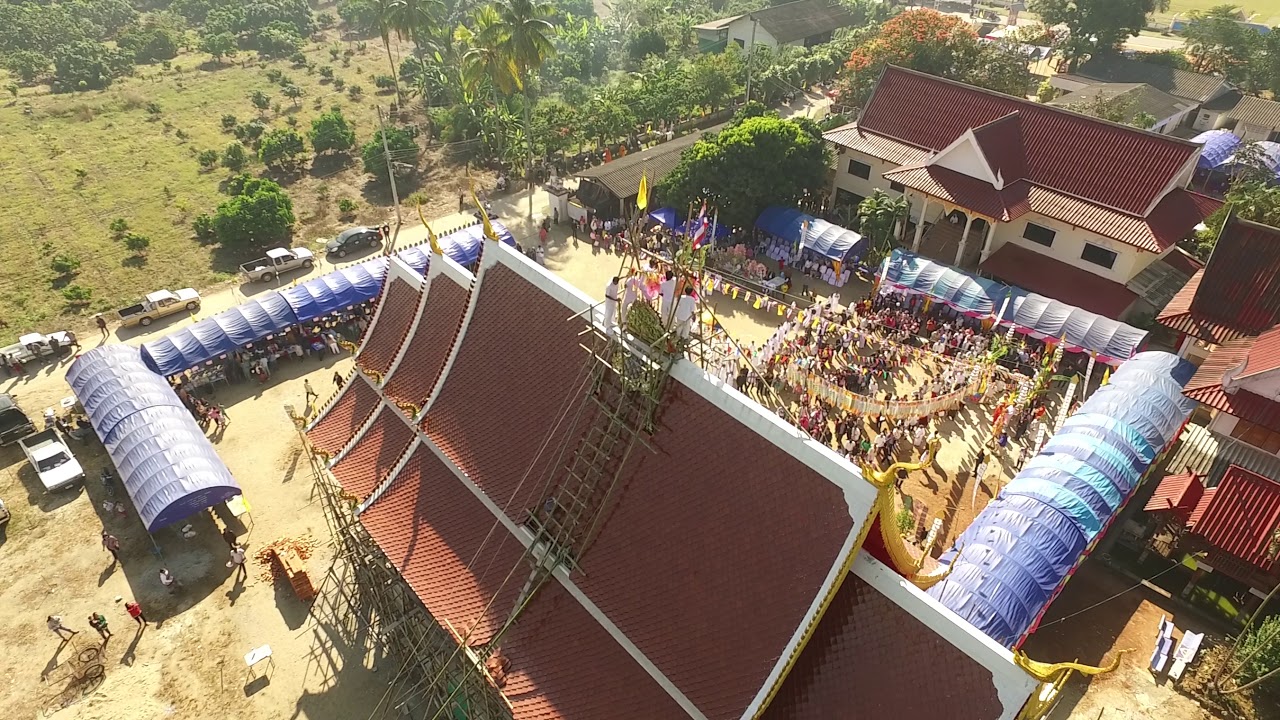
 Click to Access the Navigation Map GPS
Wat Ban Pong (Nong Bua) Map
Recommend

 Muang Chiang Mai(121)Chom Thong(47)Mae Chaem(25)Chiang Dao(33)Doi Saket(68)Mae Taeng(85)Mae Rim(69)Samoeng(29)Fang(71)Mae Ai(59)Phrao(70)San Pa Tong(103)San Kamphaeng(66)San Sai(73)Hang Dong(73)Hot(32)Doi Tao(22)Omkoi(11)Saraphi(74)Wiang Haeng(15)Chai Prakan(28)Mae Wang(32)Mae On(22)Doi Lo(34)Galyani Vadhana(1)


