
lovethailand home >North Travel Attractions >Chiang Mai Travel Attractions >Chai Prakan >Si Dong Yen > Wat Sukawat
TL;DR: Wat Sukawat is located at No. 275, Ban Mae Khi, Moo 1, Si Dong Yen Subdistrict, Chai Prakan District, Chiang Mai 50320, open Daily, hours 08.00 – 17.00.
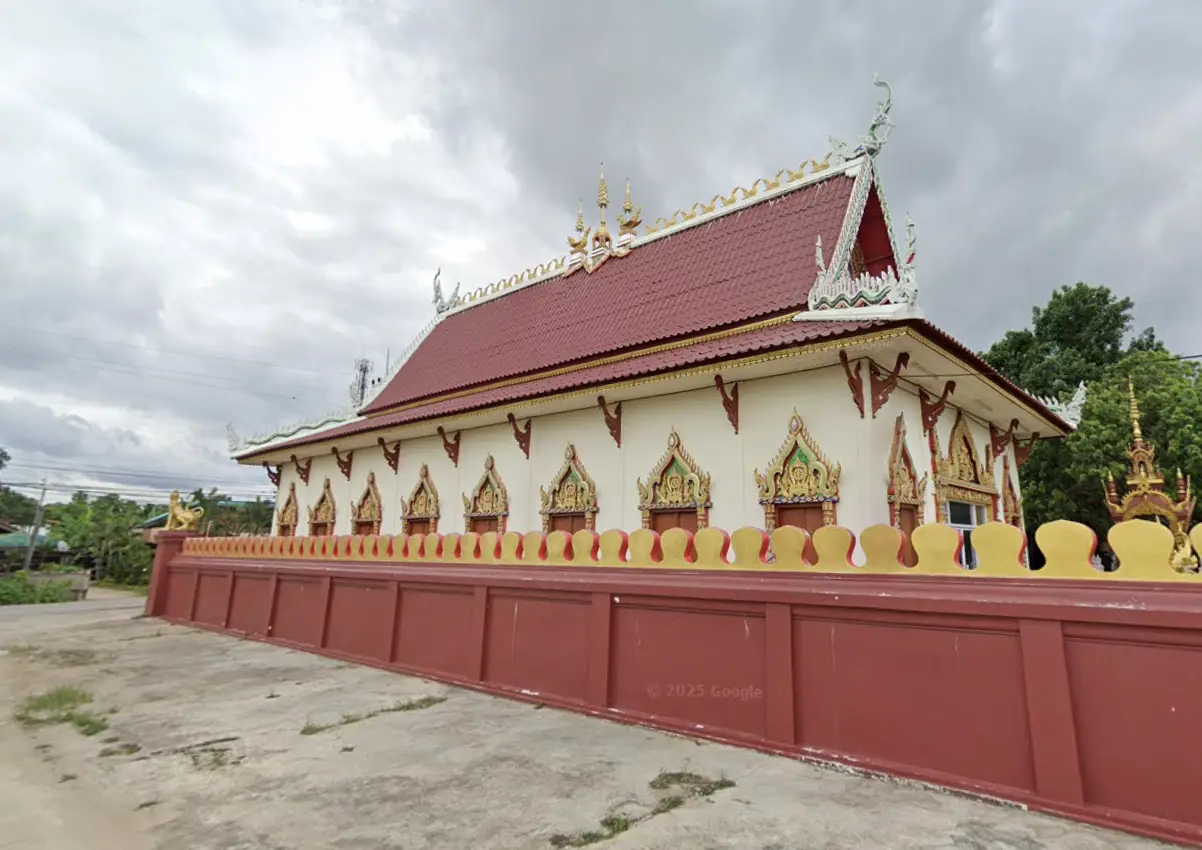
Wat Sukawat
Open Days: Daily
Opening Hours: 08.00 – 17.00
Wat Sukawat, locally known as Wat Mae Khi Nai, is a community Buddhist temple located at No. 275, Ban Mae Khi, Moo 1, Si Dong Yen Subdistrict, Chai Prakan District, Chiang Mai Province. It is a local temple under the Mahanikaya order and one of the important religious and cultural sites of Ban Mae Khi. The temple was established in 1902 and has long served as a place where local people gather for Buddhist activities on important religious days. Its importance is not limited to worship alone, as Wat Sukawat is also the location of the Thai Cultural Network Community Center of Si Dong Yen Subdistrict.
Wat Sukawat is especially meaningful because of its long history. Established in 1902, the temple has existed for more than 120 years by 2026. Over this long period, it has become part of the shared memory of Ban Mae Khi. The local name Wat Mae Khi Nai shows how closely the temple is tied to the identity of the village. It is not an isolated monument, but a living temple surrounded by homes, local roads, farmland, schools, and Lanna cultural life.
Ban Mae Khi is an important village in Si Dong Yen Subdistrict and reflects the settlement history of northern Chiang Mai. The subdistrict includes agricultural land, water sources, mountains, and travel routes connecting Chiang Mai with Chai Prakan, Fang, Mae Ai, and Doi Ang Khang. In this setting, Wat Sukawat stands within a living landscape where Buddhism, farming communities, and transportation routes are closely connected.
The local name Wat Mae Khi Nai is important because it distinguishes the temple from other nearby temples in the Mae Khi area, including Wat Intharam, which is also associated with Mae Khi Lai Fang and is known locally as Wat Mae Khi Nok. These names show how temples help define the identity of different parts of the community. Wat Sukawat is therefore best understood as the temple of Mae Khi Nai and a central religious space for Ban Mae Khi.
Wat Sukawat also has a meaningful connection with local education. In the early period of Chai Prakan School, formerly known as Mae Khi Secondary School, classes were held at the sermon hall of Wat Sukawat, or Wat Mae Khi. This shows that the temple served not only as a religious site, but also as a public learning space for the community at a time when educational infrastructure was still developing.
The connection between temples and education is an important feature of Thai and Lanna society. Many temples were early centers of learning because they had halls, communal space, monks, local scholars, and a trusted position within the village. Wat Sukawat therefore represents the link between faith, learning, and community development in Ban Mae Khi.
The main monastic structures of Wat Sukawat include an ubosot, viharn, sermon hall, monks’ residences, and multi-purpose hall. These structures allow the temple to support a wide range of religious and community functions. The ubosot is important for formal monastic acts, the viharn is used for worship and ceremonies, the sermon hall serves as a gathering place for dhamma listening and merit-making, the monks’ residences support monastic life, and the multi-purpose hall accommodates community and cultural activities.
Important sacred and cultural objects at the temple include Buddha images and palm-leaf manuscripts. Palm-leaf manuscripts are especially valuable in the Lanna context because they are linked with the preservation of Buddhist teachings, Lanna script, traditional writing culture, and local knowledge. Their presence gives Wat Sukawat a cultural depth that goes beyond its role as an ordinary village temple.
The ubosot should be approached with particular respect because it is connected with formal monastic functions. Visitors should dress modestly, keep quiet, and avoid disturbing monks or local people during ceremonies. A visit to the ubosot allows travelers to appreciate the sacred function of the temple within the Buddhist monastic system.
The viharn is where local people pay respect to Buddha images and participate in Buddhist activities. In a Lanna community temple, the viharn is more than a building. It is a space where villagers receive precepts, listen to sermons, and participate in religious life throughout the year.
The sermon hall is another important community space. It is used for dhamma listening, merit-making, gatherings, and activities that involve local participation. In rural northern Thailand, the sermon hall often functions as a shared public space where villagers help prepare ceremonies, organize offerings, and support the temple together.
The multi-purpose hall gives Wat Sukawat flexibility in supporting community activities, cultural events, and public gatherings. This makes the temple more than a ritual site. It becomes a practical social space for Ban Mae Khi and the wider Si Dong Yen community.
The monks’ residences reflect the continuity of monastic life at the temple. Resident monks maintain daily religious routines, receive offerings, conduct ceremonies, and support the moral and spiritual life of the village. The relationship between monks and lay supporters is central to the life of a functioning community temple.
Wat Sukawat’s cultural role is particularly strong because it is the site of the Thai Cultural Network Community Center of Si Dong Yen Subdistrict. Such a center helps gather, preserve, and pass on local wisdom, traditions, arts, and community identity. This role makes the temple a place of cultural learning as well as worship.
Si Dong Yen Subdistrict maintains traditions rooted in Buddhism and agriculture. Important local traditions include Buddhist Lent, the end of Buddhist Lent, Salak Phat, Northern Thai New Year, Yi Peng, new rice offerings, and the wooden support ceremony. These traditions keep local temples active throughout the year and connect Buddhist practice with seasonal cycles and village life.
Buddhist Lent is a time when monks remain in residence and laypeople make offerings, present candles, observe precepts, and support the temple. After the end of Buddhist Lent, communities enter the important season of Kathin, robe offerings, and other merit-making activities. These rhythms bring villagers back to the temple repeatedly through the year.
Salak Phat is an important Lanna merit-making tradition. Families prepare offerings and decorated merit gifts according to their means, then bring them to the temple. The tradition reflects generosity, craftsmanship, and the close cooperation between monks and villagers.
Northern Thai New Year, or Pi Mai Mueang, is a major season for temple activities. Villagers visit temples to make merit, bathe Buddha images, ask blessings from elders, and reconnect with family and community. Yi Peng adds a full-moon atmosphere of candlelight, prayer, and merit-making. These traditions keep Lanna identity alive through temple life.
The new rice offering tradition is closely connected with the agricultural character of Si Dong Yen. When villagers bring newly harvested rice or farm produce to the temple, they express gratitude for the land, the harvest, family labor, and the Triple Gem. The wooden support ceremony reflects the Lanna idea of upholding Buddhism and sustaining life.
Visitors to Wat Sukawat should pay attention to the ubosot, viharn, sermon hall, multi-purpose hall, Buddha images, and palm-leaf manuscripts. The temple’s value lies not in large-scale tourism, but in its age, community role, cultural center, and connection with Ban Mae Khi.
For travelers interested in local history, Wat Sukawat is especially meaningful because of its relationship with education. The early use of the temple hall by Mae Khi Secondary School shows how temples supported learning and community development. This gives the temple a role beyond religious ceremony and places it within the social history of Chai Prakan.
Wat Sukawat can serve as a starting point for a cultural route through Si Dong Yen. Visitors can begin here to pay respect and learn about the cultural center, then continue to Wat Intharam, Wat Si Dong Yen, Wat San Sai, Wat San Ton Pao, Wat Tham Tab Tao, Hinoki Land, and Doi Wiang Pha National Park.
Wat Intharam, locally associated with Mae Khi Nok, is a nearby temple that helps complete the picture of the Mae Khi community. Visiting Wat Sukawat together with Wat Intharam allows travelers to understand the relationship between Mae Khi Nai and Mae Khi Nok and how village temples help shape local identity.
Wat Tham Tab Tao is an important nearby religious and cultural site known for its cave setting and local history. Hinoki Land is a popular modern attraction in Chai Prakan, while Doi Wiang Pha National Park offers mountain scenery and nature. Combining these places with Wat Sukawat creates a balanced itinerary of religion, community, culture, and nature.
The best time to visit is in the morning or late afternoon, when the weather is more comfortable and there is enough time to continue to nearby temples or attractions. The cool season is especially pleasant for travel in Chai Prakan, while the rainy season brings greener fields and mountain scenery. During the rainy season, travelers should drive carefully on local roads.
Getting There from Chiang Mai city is easiest by private car or rental car. Follow Highway 107 north through Mae Rim, Mae Taeng, Chiang Dao, and Chai Prakan, then continue into Si Dong Yen Subdistrict and Ban Mae Khi, Moo 1. The distance from Chiang Mai to the Chai Prakan area is about 128 kilometers. A private vehicle is the most convenient option for combining Wat Sukawat with Wat Intharam, Wat Si Dong Yen, Wat Tham Tab Tao, Hinoki Land, and nearby attractions.
Travelers without a private vehicle can use public transport on the Chiang Mai–Fang or Chiang Mai–Mae Ai route and continue locally from Chai Prakan to Si Dong Yen and Ban Mae Khi. This requires more planning because many community temples are not located directly at main public transport stops. A private vehicle is recommended for a full cultural route.
Visitors should dress modestly, keep quiet in the ubosot, viharn, sermon hall, and monk-use areas, and avoid disturbing ceremonies or local activities. If taking photos of people, ask permission first. Wat Sukawat is an active community temple, so respectful behavior is essential.
For food and accommodation, travelers can use restaurants, cafés, guest rooms, small resorts, and homestays in Si Dong Yen and Chai Prakan. The area is suitable as a stopover between Chiang Mai, Fang, Mae Ai, Doi Ang Khang, and Tha Ton. Staying overnight in Chai Prakan allows more time to explore local temples, cultural sites, and nearby natural attractions without rushing.
In summary, Wat Sukawat, or Wat Mae Khi Nai, is a long-established community temple of Ban Mae Khi. Founded in 1902, it includes an ubosot, viharn, sermon hall, monks’ residences, multi-purpose hall, Buddha images, and palm-leaf manuscripts. It is also the site of the Thai Cultural Network Community Center of Si Dong Yen Subdistrict. The temple is suitable for travelers who want to make merit, learn about Lanna culture, and understand the role of temples as centers of faith, education, and community heritage in Chai Prakan.
| Name | Wat Sukawat |
| Local Name | Wat Mae Khi Nai |
| Temple Type | Community Buddhist Temple, Mahanikaya Order |
| Location | No. 275, Ban Mae Khi, Moo 1, Si Dong Yen Subdistrict, Chai Prakan District, Chiang Mai 50320 |
| Temple Code | 350210208 |
| Official Establishment | 1902 |
| Importance | A long-established temple of Ban Mae Khi, used for Buddhist activities on important religious days and serving as a cultural center of Si Dong Yen |
| Community Context | Located in Ban Mae Khi, Moo 1, an important agricultural and cultural community in Si Dong Yen Subdistrict, Chai Prakan District |
| Main Structures | Ubosot, viharn, sermon hall, monks’ residences, and multi-purpose hall |
| Sacred Objects / Heritage | Buddha images and palm-leaf manuscripts |
| Cultural Role | Site of the Thai Cultural Network Community Center of Si Dong Yen Subdistrict |
| Educational Link | In its early period, Mae Khi Secondary School used the sermon hall of Wat Sukawat, or Wat Mae Khi, as a classroom site. |
| Local Traditions | Buddhist Lent, end of Buddhist Lent, Salak Phat, Northern Thai New Year, Yi Peng, new rice offerings, and wooden support ceremony |
| Current Status | Active temple in the current temple registry of Si Dong Yen, Chai Prakan, Chiang Mai |
| Open Days | Daily |
| Opening Hours | 08.00 – 17.00 |
| Travel Information | From Chiang Mai city, follow Highway 107 toward Chai Prakan, then continue to Si Dong Yen Subdistrict and Ban Mae Khi, Moo 1. Private car or rental car is the most convenient option. |
| Nearby Tourist Attractions | 1. Wat Intharam, About 2 km 2. Wat Si Dong Yen, About 5 km 3. Wat Tham Tab Tao, About 8 km 4. Hinoki Land, About 9 km 5. Wat San Ton Pao, About 10 km 6. Doi Wiang Pha National Park, About 20 km |
| Nearby Restaurants | 1. Cafe' De Mamana, About 6 km, Tel. 099-435-4061, 090-435-4061 2. Mor Cafe, About 7 km, Tel. 095-861-5556 3. Cafe Amazon PTT Chai Prakan, About 7 km, Tel. 098-808-1958 4. Pa Phan Noodle Ban Chiang Man, About 8 km, Tel. 085-864-8001 5. Pizza & View Pang Chai Prakan, About 10 km, Tel. 082-198-8792 |
| Nearby Accommodations | 1. Pingkhong Resort, About 6 km 2. Baan Suan Ngoon Sirisuk Rooms, About 8 km, Tel. 092-398-8884, 098-750-0115, 086-919-9542 3. Phrom Prathan Resort, About 9 km 4. Ruean Thai Sunicha Resort, About 10 km 5. Anton Place, About 12 km 6. Pang Kham Pom Homestay Chai Prakan, About 18 km |
Frequently Asked Questions (FAQ)
Q: Where is Wat Sukawat located?
A: Wat Sukawat is located at No. 275, Ban Mae Khi, Moo 1, Si Dong Yen Subdistrict, Chai Prakan District, Chiang Mai Province 50320.
Q: What is the local name of Wat Sukawat?
A: Local people call Wat Sukawat “Wat Mae Khi Nai” because it is located in Ban Mae Khi, Moo 1, Si Dong Yen Subdistrict.
Q: When was Wat Sukawat established?
A: Wat Sukawat was established in 1902 and is one of the long-established community temples of Ban Mae Khi and Si Dong Yen.
Q: Is Wat Sukawat open daily?
A: Yes. Wat Sukawat is open daily from 08.00 to 17.00 for worship, merit-making, and temple visits.
Q: What important features can visitors see at Wat Sukawat?
A: Important features include the ubosot, viharn, sermon hall, monks’ residences, multi-purpose hall, Buddha images, and palm-leaf manuscripts.
Q: What is the cultural role of Wat Sukawat?
A: Wat Sukawat is the site of the Thai Cultural Network Community Center of Si Dong Yen Subdistrict and supports the preservation of local traditions, wisdom, and culture.
Q: How is Wat Sukawat connected with education?
A: In the early period of Mae Khi Secondary School, classes were held at the sermon hall of Wat Sukawat, showing the temple’s role in both religion and community learning.
Q: What nearby places can travelers visit after Wat Sukawat?
A: Nearby places include Wat Intharam, Wat Si Dong Yen, Wat Tham Tab Tao, Hinoki Land, Wat San Ton Pao, and Doi Wiang Pha National Park.
 Category: ●Places of Worship
 Group: ●Temple
Last Update : 4 DayAgo
 Last Update : 4 DayAgo
 Click to Access the Navigation Map GPS
 Muang Chiang Mai(121)Chom Thong(47)Mae Chaem(25)Chiang Dao(33)Doi Saket(68)Mae Taeng(85)Mae Rim(69)Samoeng(29)Fang(71)Mae Ai(59)Phrao(70)San Pa Tong(103)San Kamphaeng(66)San Sai(73)Hang Dong(73)Hot(32)Doi Tao(22)Omkoi(11)Saraphi(74)Wiang Haeng(15)Chai Prakan(28)Mae Wang(32)Mae On(22)Doi Lo(33)Galyani Vadhana(1)


