
lovethailand home >North Travel Attractions >Chiang Mai Travel Attractions >Chai Prakan >Si Dong Yen > Wat Chiang Man
TL;DR: Wat Chiang Man is located at Moo 15, Ban Chiang Man, Si Dong Yen Subdistrict, Chai Prakan District, Chiang Mai 50320, open Daily, hours 08.00 – 17.00.
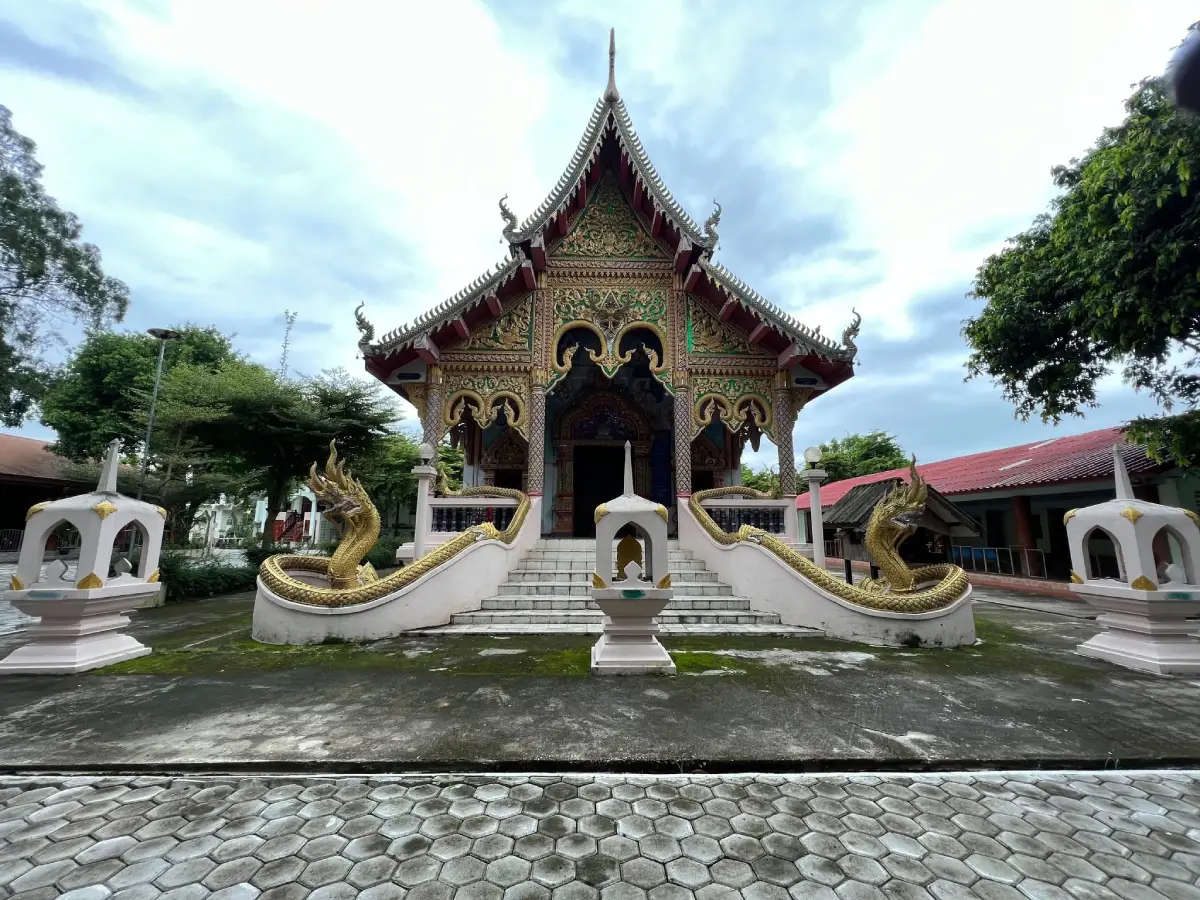
Wat Chiang Man
Open Days: Daily
Opening Hours: 08.00 – 17.00
Wat Chiang Man is a community Buddhist temple in Moo 15, Ban Chiang Man, Si Dong Yen Subdistrict, Chai Prakan District, Chiang Mai Province. It is a local temple under the Mahanikaya order and an important spiritual center for the Ban Chiang Man community. The temple was officially established in 1930 and received its royal Wisungkhamsima boundary in 2000. The abbot is Phra Khru Sumet Chanthawong Chantanwangso. Today, the temple remains listed in the current temple registry and continues to serve the Buddhist community of Si Dong Yen.
The main value of Wat Chiang Man lies in its role as the village temple of Ban Chiang Man, Moo 15. It is a place where local residents make merit, pay respect to Buddha images, listen to dhamma teachings, take part in Buddhist ceremonies, and maintain the religious rhythm of village life. Like many rural Lanna temples, Wat Chiang Man is not only a religious site but also a social and cultural center for the surrounding community.
Since the temple was officially established in 1930, Wat Chiang Man has existed in its recognized form for almost a century. By 2026, it had served the community for more than 90 years. Over this long period, the temple has become part of the shared memory of Ban Chiang Man through Buddhist holy days, annual merit-making activities, family ceremonies, and community gatherings.
The granting of the royal Wisungkhamsima boundary in 2000 marked an important stage in the temple’s development. In Thai Buddhism, a Wisungkhamsima is a consecrated boundary used for formal acts of the Sangha. Receiving this boundary confirms the temple’s role within the Thai Buddhist monastic system and shows that Wat Chiang Man is a formally established religious institution, not merely a village shrine or informal worship space.
Si Dong Yen Subdistrict is an important area of Chai Prakan District. Its landscape includes agricultural land, villages, mountains, and local roads connecting northern Chiang Mai with Fang, Mae Ai, Doi Ang Khang, and Chiang Rai. Wat Chiang Man is therefore located within a living rural landscape where temples, farming communities, transportation routes, and northern Thai traditions are closely connected.
Ban Chiang Man, Moo 15, is one of the villages in Si Dong Yen Subdistrict. Having a village temple gives the community a shared religious center for regular merit-making, Buddhist observances, family ceremonies, and public activities. The temple helps bring villagers together and supports the continuity of Buddhist practice from one generation to the next.
Wat Chiang Man is part of a wider network of temples in Si Dong Yen. The subdistrict includes several important village temples such as Wat Sukkhawat, Wat Si Dong Yen, Wat Intharam, Wat Ban Ai, Wat Sai Khao, Wat Tham Tab Tao, Wat Pang Makham Pom, Wat Pratu Pha Hong, Wat Hua Fai, Wat Nong Thian Kham, Wat Kio Champi, and others. This network shows how Buddhist temples are distributed across villages and how each community maintains its own center of faith.
For this reason, Wat Chiang Man is best understood as a functioning community temple rather than a large-scale tourist attraction. Its importance is found in daily religious life, community continuity, and local faith. Visitors who come here should appreciate the quiet atmosphere of a village temple and the way Buddhism remains integrated into the daily life of rural northern Thailand.
Phra Khru Sumet Chanthawong Chantanwangso is the abbot of Wat Chiang Man. At a community temple, the abbot’s role includes caring for the monastic community, maintaining temple activities, coordinating with lay supporters, and preserving the temple as a spiritual center for the village. The relationship between the abbot, monks, and local residents is central to the continuity of a rural temple such as Wat Chiang Man.
The cultural life of Si Dong Yen is rooted in Buddhism and agriculture. Local traditions include Buddhist Lent, the end of Buddhist Lent, Salak Phat merit-making, Northern Thai New Year, Yi Peng, new rice offerings, and the wooden support ceremony. These traditions connect temples with seasonal cycles, farming life, merit-making, and local identity.
Buddhist Lent and the end of Buddhist Lent are important periods when villagers make offerings, observe precepts, and support monks residing in the temple. These occasions strengthen the relationship between the temple and the community. For a village temple like Wat Chiang Man, the annual rhythm of Buddhist observances is a major part of its social and religious role.
Salak Phat is another important Lanna tradition. It involves offering merit gifts through a customary lottery-style ritual, with decorated offerings prepared by families and community members. This tradition reflects generosity, craftsmanship, and the close bond between monks and lay supporters. Temples in Si Dong Yen continue to belong to this broader cultural context.
Northern Thai New Year, or Pi Mai Mueang, is a major season for temple activities. Villagers go to temples to make merit, bathe Buddha images, ask blessings from elders, and reconnect with family and community. Wat Chiang Man provides a natural setting for these activities within Ban Chiang Man.
Yi Peng adds another cultural layer to the temple calendar. The tradition is associated with merit-making, candlelight, and the full moon atmosphere of northern Thailand. Even in a quiet village temple, these seasonal traditions help maintain the relationship between Buddhist faith and Lanna identity.
The new rice offering tradition is closely connected with the agricultural character of Si Dong Yen. Bringing newly harvested rice or agricultural produce to the temple expresses gratitude for the harvest and respect for the Buddha, dhamma, and sangha. It also shows how temple life and farming life remain connected in rural communities.
The wooden support ceremony reflects the Lanna idea of supporting Buddhism and sustaining life. The act of offering wooden supports, often linked with sacred trees or temple spaces, carries symbolic meaning. It reminds visitors that temples are not only buildings but also cultural spaces where local beliefs, nature, and Buddhist practice meet.
Visitors to Wat Chiang Man should pay attention to the atmosphere of a village temple in an agricultural landscape. The temple offers a quieter experience than major tourist temples in Chiang Mai city. Its value lies in the surrounding community, local roads, village life, and the ongoing use of the temple by residents of Ban Chiang Man.
Although public information about specific architecture inside Wat Chiang Man is limited, the temple’s status as a Mahanikaya community temple with a Wisungkhamsima indicates its clear role as a functioning Buddhist site. Visitors should focus on the worship area, merit-making spaces, temple courtyard, and the living relationship between the temple and the village rather than expecting the scale of a major historic monument.
A respectful visit can begin with paying homage to Buddha images in the worship area, followed by a quiet walk around the temple grounds. Travelers interested in local culture will find the temple meaningful as an example of how Buddhist practice continues in village life. Wat Chiang Man is especially suitable for those who prefer slow travel, local history, and small community temples.
Wat Chiang Man can be combined with other attractions in Si Dong Yen. Travelers interested in temple routes can continue to Wat Si Dong Yen, Wat Tham Tab Tao, Wat Kio Champi, Wat Sai Khao, and Wat Hua Fai. Those who want a wider route can add Hinoki Land, Doi Wiang Pha National Park, or onward travel toward Fang and Doi Ang Khang.
Wat Tham Tab Tao is one of the most notable nearby religious sites in Si Dong Yen, known for its cave setting and historical associations. Hinoki Land is a modern attraction in Chai Prakan, while Doi Wiang Pha National Park offers mountain scenery and nature. These nearby places allow travelers to combine local temples, cultural sites, and natural landscapes in one itinerary.
A temple route through Si Dong Yen can begin at Wat Chiang Man and continue to Wat Si Dong Yen, Wat Kio Champi, Wat Tham Tab Tao, and Wat Sai Khao. This route gives travelers a clearer understanding of how each village maintains its own temple and how Buddhist practice is distributed across the subdistrict. Wat Chiang Man represents the spiritual center of Ban Chiang Man, while other temples reflect the identities of their respective communities.
The best time to visit is in the morning or late afternoon, when the weather is more comfortable and there is enough time to continue to nearby temples or attractions. The cool season offers pleasant travel conditions, while the rainy season brings greener agricultural fields and mountain scenery. Drivers should be careful on local roads during periods of heavy rain.
Getting There from Chiang Mai city is easiest by private car or rental car. Follow Highway 107 north through Mae Rim, Mae Taeng, Chiang Dao, and Chai Prakan, then continue into Si Dong Yen Subdistrict and Ban Chiang Man, Moo 15. Having your own vehicle is the most practical option, especially for travelers who want to visit several temples and attractions in the same area.
Travelers without a private vehicle can take public transport along the Chiang Mai–Fang or Chiang Mai–Mae Ai route and continue locally from Chai Prakan. This option requires more planning and additional travel time. For a full cultural route in Si Dong Yen, a private vehicle is the most convenient choice.
Visitors should dress modestly, remain quiet in worship areas, and avoid disturbing monks or villagers during ceremonies. If taking photos of people, ask permission first. Wat Chiang Man is an active community temple, so respectful behavior is essential.
For food and accommodation, travelers can use restaurants, cafés, small resorts, and guest rooms in Si Dong Yen and Chai Prakan. The area is suitable for a stopover between Chiang Mai, Fang, Mae Ai, Doi Ang Khang, and Tha Ton. Staying overnight in Chai Prakan allows more time to visit temples and natural attractions without rushing.
In summary, Wat Chiang Man is a meaningful village temple in Si Dong Yen Subdistrict. Established in 1930, granted a royal Wisungkhamsima in 2000, and led by Phra Khru Sumet Chanthawong Chantanwangso, the temple continues to serve Ban Chiang Man as a center of Buddhist faith, local culture, merit-making, and community life. It is a suitable stop for travelers who want to experience the quieter, more local side of northern Chiang Mai.
| Name | Wat Chiang Man |
| Temple Type | Community Buddhist Temple, Mahanikaya Order |
| Location | Moo 15, Ban Chiang Man, Si Dong Yen Subdistrict, Chai Prakan District, Chiang Mai 50320 |
| Official Establishment | 1930 |
| Wisungkhamsima | Royal Wisungkhamsima granted in 2000 |
| Abbot | Phra Khru Sumet Chanthawong Chantanwangso |
| Importance | Village temple of Ban Chiang Man, serving as a spiritual center, merit-making space, and Buddhist community site |
| Community Context | Located in Si Dong Yen, an agricultural subdistrict of Chai Prakan with multiple village temples and strong Lanna cultural traditions |
| Highlights | Quiet Lanna community temple atmosphere, Ban Chiang Man village setting, and connections with the Si Dong Yen temple route |
| Local Traditions | Buddhist Lent, end of Buddhist Lent, Salak Phat, Northern Thai New Year, Yi Peng, new rice offering, and wooden support ceremony |
| Current Status | Active temple in the current temple registry and a Buddhist site for the Ban Chiang Man community |
| Open Days | Daily |
| Opening Hours | 08.00 – 17.00 |
| Travel Information | From Chiang Mai city, follow Highway 107 toward Chai Prakan, then continue into Si Dong Yen Subdistrict and Ban Chiang Man, Moo 15. Private car or rental car is the most convenient option. |
| Nearby Tourist Attractions | 1. Wat Si Dong Yen, About 4 km 2. Wat Kio Champi, About 5 km 3. Hinoki Land, About 7 km 4. Wat Tham Tab Tao, About 9 km 5. Wat Sai Khao, About 10 km 6. Doi Wiang Pha National Park, About 22 km |
| Nearby Restaurants | 1. Pa Phan Noodle Ban Chiang Man, About 1 km, Tel. 085-864-8001 2. Mor Cafe, About 5 km, Tel. 095-861-5556 3. Cafe' De Mamana, About 6 km, Tel. 099-435-4061, 090-435-4061 4. Cafe Amazon PTT Chai Prakan, About 7 km, Tel. 098-808-1958 5. Pha Hong Kitchen, About 8 km 6. Pizza & View Pang Chai Prakan, About 10 km, Tel. 082-198-8792 |
| Nearby Accommodations | 1. Pingkhong Resort, About 5 km 2. Baan Suan Ngoon Sirisuk Rooms, About 6 km, Tel. 092-398-8884, 098-750-0115, 086-919-9542 3. Phrom Prathan Resort, About 8 km 4. Ruean Thai Sunicha Resort, About 9 km 5. Anton Place, About 13 km, Tel. 091-853-1586 6. Pang Kham Pom Homestay Chai Prakan, About 18 km, Tel. 084-170-7943 |
Frequently Asked Questions (FAQ)
Q: Where is Wat Chiang Man located?
A: Wat Chiang Man is located in Moo 15, Ban Chiang Man, Si Dong Yen Subdistrict, Chai Prakan District, Chiang Mai Province 50320.
Q: Is Wat Chiang Man open daily?
A: Yes. Wat Chiang Man is open daily from 08.00 to 17.00 for worship, merit-making, and temple visits.
Q: When was Wat Chiang Man established?
A: Wat Chiang Man was officially established in 1930 and received its royal Wisungkhamsima boundary in 2000.
Q: Who is the abbot of Wat Chiang Man?
A: The abbot is Phra Khru Sumet Chanthawong Chantanwangso.
Q: Why is Wat Chiang Man important to the local community?
A: It is the village temple of Ban Chiang Man and serves as a center for worship, merit-making, dhamma listening, and Buddhist community activities.
Q: What kind of travelers should visit Wat Chiang Man?
A: The temple is suitable for travelers who enjoy quiet community temples, Lanna culture, local history, and rural Buddhist life in Chai Prakan.
Q: What local traditions are associated with the Si Dong Yen area?
A: Local traditions include Buddhist Lent, the end of Buddhist Lent, Salak Phat, Northern Thai New Year, Yi Peng, new rice offerings, and the wooden support ceremony.
Q: What nearby places can travelers visit after Wat Chiang Man?
A: Nearby places include Wat Si Dong Yen, Wat Kio Champi, Hinoki Land, Wat Tham Tab Tao, Wat Sai Khao, and Doi Wiang Pha National Park.
 Category: ●Places of Worship
 Group: ●Temple
Last Update : 7 DayAgo
 Last Update : 7 DayAgo
 Click to Access the Navigation Map GPS
 Muang Chiang Mai(121)Chom Thong(47)Mae Chaem(25)Chiang Dao(33)Doi Saket(68)Mae Taeng(85)Mae Rim(69)Samoeng(29)Fang(71)Mae Ai(59)Phrao(70)San Pa Tong(103)San Kamphaeng(66)San Sai(73)Hang Dong(73)Hot(32)Doi Tao(22)Omkoi(11)Saraphi(74)Wiang Haeng(15)Chai Prakan(28)Mae Wang(32)Mae On(22)Doi Lo(33)Galyani Vadhana(1)


