
lovethailand home >North Travel Attractions >Chiang Mai Travel Attractions >Chai Prakan >Si Dong Yen > Wat Kio Champi
TL;DR: Wat Kio Champi is located at No. 32, Ban Kio Champi, Moo 11, Si Dong Yen Subdistrict, Chai Prakan District, Chiang Mai 50320, open Daily, hours 08.00 – 17.00.
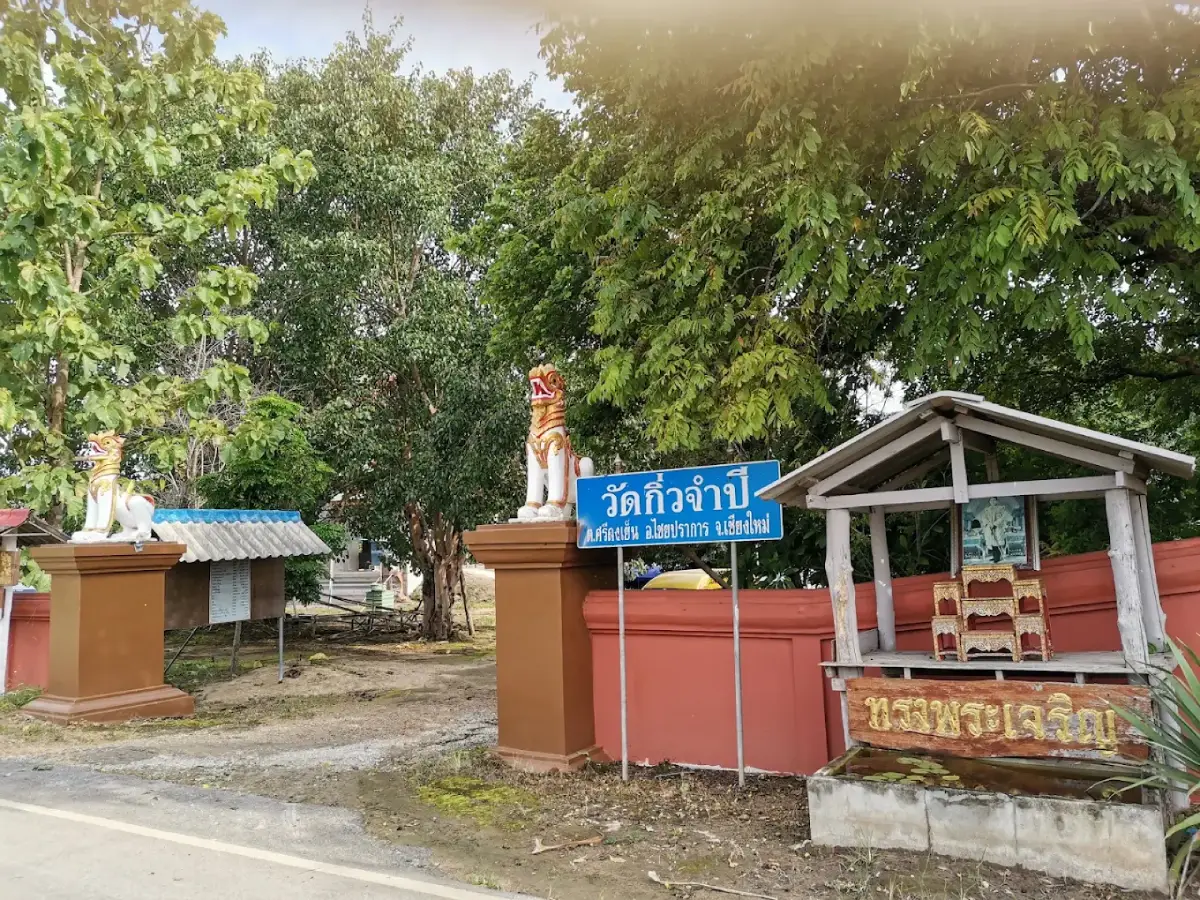
Wat Kio Champi
Open Days: Daily
Opening Hours: 08.00 – 17.00
Wat Kio Champi is a community Buddhist temple located at No. 32, Ban Kio Champi, Moo 11, Si Dong Yen Subdistrict, Chai Prakan District, Chiang Mai Province. It is a local temple under the Mahanikaya order and an important religious site for Ban Kio Champi. The temple was originally abandoned before being revived by Achan Intho Thawaro, who led local villagers in clearing the site and restoring the temple. On 6 August 1984, the Ministry of Education officially elevated the abandoned temple into a temple with resident monks. Today, Wat Kio Champi is open daily from 08.00 to 17.00 for worship, merit-making, and quiet cultural visits.
The charm of Wat Kio Champi does not come from large-scale architecture or mass tourism. Its value lies in the story of a community bringing an abandoned sacred site back to life. The temple reflects a common but meaningful pattern in rural northern Thailand, where temples are sustained by the faith, labor, and cooperation of villagers. When local residents saw the importance of the former sacred site, they helped clear the land, restore the temple grounds, and rebuild its religious function for the village.
The name Kio Champi is distinctive. In northern Thai usage, the word Kio often refers to a narrow passage, ridge, or mountain pass, while Champi is the name of a fragrant flowering tree. Although available temple records do not provide a detailed explanation of the name’s origin, the name itself suggests a relationship between landscape, vegetation, and the rural setting of Chai Prakan.
Before its restoration, Wat Kio Champi was an abandoned temple. This means the site had formerly served a religious purpose but no longer had resident monks or continuous temple activity. Achan Intho Thawaro became the key spiritual leader in the revival of the temple. With the support of local villagers, he helped clear the land and restore Wat Kio Champi as a functioning Buddhist temple. This restoration gave Ban Kio Champi a central place for merit-making, sermons, ceremonies, and village gatherings.
The official elevation of the temple on 6 August 1984 was an important milestone. It marked the return of Wat Kio Champi into the formal system of Buddhist temples with resident monks. By 2026, the temple had been formally active for more than 40 years after its revival from an abandoned state. Its identity is therefore closely linked with the resilience of local faith and the ability of a community to preserve its sacred space.
Wat Kio Champi is also historically connected with Wat Si Dong Yen according to local temple records. This relationship reflects the close network of villages, temples, and Buddhist communities within Si Dong Yen Subdistrict. The subdistrict is one of the important agricultural areas of Chai Prakan and sits along the northern route connecting Chiang Mai with Fang and Mae Ai. Visiting the temple therefore also offers travelers a glimpse of rural life, agricultural landscapes, and local Buddhist culture in northern Chiang Mai.
The temple land covers 10 rai, 2 ngan, and 66 square wa under Nor Sor 3 land document No. 1009. Its northern boundary borders a public irrigation channel, while the southern, eastern, and western boundaries border public roads. These boundaries show that the temple is closely connected with the village’s water system and transport routes. Wat Kio Champi is not isolated from the community; it is embedded in the daily landscape of Ban Kio Champi.
The main monastic structures include monks’ residences, a sermon hall, a merit-making pavilion, and a meditation pavilion. These buildings support the religious and community functions of the temple. The monks’ residences provide living space for resident monks, the sermon hall serves as a gathering place for teaching and ceremonies, the merit-making pavilion supports community rituals, and the meditation pavilion provides a quiet space for spiritual practice.
Important sacred objects and cultural items at the temple include Buddha images and Lanna palm-leaf manuscripts. The palm-leaf manuscripts are especially meaningful because they represent the transmission of Buddhist teachings, Lanna script, and traditional manuscript culture. Their presence gives Wat Kio Champi an added cultural dimension beyond its role as a village temple.
Visitors can begin by paying respect to the Buddha images, then walk quietly around the temple grounds. Wat Kio Champi is best experienced slowly. It is not a commercial attraction designed for quick sightseeing, but a living community temple where the quiet atmosphere, monastic buildings, and local surroundings are part of the experience.
The sermon hall is important in the life of the temple because it is used for sermons, ceremonies, and village gatherings. In northern Thai communities, the sermon hall often functions as a shared space where villagers gather on Buddhist holy days, during annual merit-making events, and for temple-related activities. It helps connect Buddhist practice with community life.
The merit-making pavilion supports religious activities and family ceremonies. It allows villagers to gather for merit-making, rituals, and events connected with ancestors and family life. This function shows how the temple continues to serve local people across different stages of life, not only on major Buddhist holidays.
The meditation pavilion reflects the temple’s role in mental and spiritual development. Beyond worship and offerings, a temple also provides a space for mindfulness, listening to dhamma, and quiet reflection. This is consistent with the wider role of Lanna community temples as places for both ritual and moral cultivation.
Wat Kio Champi serves the local community in several ways. It is a place for Buddhist practice, a center for merit-making, a gathering point for community activities, and a site where Lanna cultural heritage is preserved through palm-leaf manuscripts. The temple’s story of revival from abandonment also makes it a symbol of local commitment and collective memory.
Si Dong Yen Subdistrict is strongly connected with agriculture, mountain landscapes, local roads, and northern Thai traditions. It is one of the important agricultural areas of Chai Prakan District. Traveling to Wat Kio Champi allows visitors to see both a community temple and the surrounding rural landscape of northern Chiang Mai.
Local traditions in Si Dong Yen are rooted in northern Thai Buddhist culture and agricultural life. Important traditions include Buddhist Lent, the end of Buddhist Lent, Salak Phat merit-making, Northern Thai New Year, Yi Peng, the offering of new rice, and the wooden support ceremony. These traditions show the relationship between temples, villagers, seasonal cycles, and local beliefs. Wat Kio Champi belongs to this living cultural context.
Northern Thai New Year is an important season when villagers return to temples for merit-making, Buddha image bathing, and blessings from elders. Yi Peng connects merit-making with candlelight and lantern traditions. Salak Phat reflects the Lanna practice of offering decorated merit gifts. These traditions keep the relationship between villagers and temples active from one generation to the next.
Wat Kio Champi also continues to function as a modern community space. In 2023, the temple hosted a public volunteer development activity under the Wat, Pracha, Rat, Sang Suk project. The activity promoted temples as spaces for physical improvement, learning, spiritual development, and community well-being. This shows that Wat Kio Champi remains an active public space, not only a historic religious site.
For travelers interested in local history, Wat Kio Champi is valuable because it tells the story of a village restoring its own sacred site. The abandoned temple, the leadership of Achan Intho Thawaro, the cooperation of villagers, and the official elevation in 1984 all form a clear narrative of community revival. A visit here offers insight into how faith and local identity are preserved in rural northern Thailand.
Wat Kio Champi can be included in a wider Si Dong Yen and Chai Prakan travel route. Nearby places include Wat Si Dong Yen, Wat Tham Tab Tao, Hinoki Land, Wat Phra That Chom Khiri, Wat Pakkanthawas, Wat Pa Daeng, Wat Chimphliwan, and Doi Wiang Pha National Park. This route combines village temples, caves, modern attractions, mountain scenery, and local culture.
The temple is suitable for travelers who appreciate quiet temples, local stories, Lanna culture, and rural landscapes. It is not a large tourist attraction, but its story is meaningful. The temple shows how local people restored an abandoned religious site and turned it into a living Buddhist temple once again.
The best time to visit is in the morning or late afternoon, when the weather is more comfortable and there is enough time to continue to nearby attractions. The cool season provides pleasant weather, while the rainy season brings greener agricultural and mountain scenery. Visitors should drive carefully on local roads during rainy periods.
Getting There from Chiang Mai city is easiest by private car or rental car. Follow Highway 107 north through Mae Rim, Mae Taeng, Chiang Dao, and Chai Prakan, then continue into Si Dong Yen Subdistrict and Ban Kio Champi, Moo 11. Having your own vehicle is the most convenient option because it allows you to visit other temples and attractions in the same area within one day.
Visitors should dress modestly, remain quiet around temple buildings, and avoid disturbing monks or villagers during ceremonies. When taking photos of people, ask permission first. Wat Kio Champi is an active community temple, so respectful behavior is an important part of the visit.
In summary, Wat Kio Champi is a meaningful village temple in Si Dong Yen Subdistrict, Chai Prakan District. It was revived from an abandoned temple by Achan Intho Thawaro and local devotees, then officially elevated as a temple with resident monks on 6 August 1984. Today it remains a place for worship, merit-making, meditation, community activities, and the preservation of Lanna palm-leaf manuscript heritage.
| Name | Wat Kio Champi |
| Temple Type | Community Buddhist Temple, Mahanikaya Order |
| Location | No. 32, Ban Kio Champi, Moo 11, Si Dong Yen Subdistrict, Chai Prakan District, Chiang Mai 50320 |
| Former / Historical Connection | Historically associated with Wat Si Dong Yen in available temple records |
| Temple Land Area | 10 rai, 2 ngan, 66 square wa under Nor Sor 3 document No. 1009 |
| Boundaries | North borders a public irrigation channel; south, east, and west border public roads |
| Official Elevation | Elevated from an abandoned temple to a temple with resident monks on 6 August 1984 |
| History | Formerly an abandoned temple. Achan Intho Thawaro led local villagers in clearing the site and restoring Wat Kio Champi. |
| Highlights | A restored village temple with monastic structures, community religious functions, and Lanna palm-leaf manuscripts |
| Main Structures | Monks’ residences, sermon hall, merit-making pavilion, and meditation pavilion |
| Sacred Objects / Heritage | Buddha images and Lanna palm-leaf manuscripts |
| Community Role | Merit-making, dhamma listening, meditation, community activities, and preservation of Lanna cultural heritage |
| Local Traditions | Buddhist Lent, end of Buddhist Lent, Salak Phat, Northern Thai New Year, Yi Peng, new rice offering, and wooden support ceremony |
| Current Status | Active temple in the current temple registry and a community activity space in Ban Kio Champi |
| Open Days | Daily |
| Opening Hours | 08.00 – 17.00 |
| Travel Information | From Chiang Mai city, follow Highway 107 toward Chai Prakan, then continue into Si Dong Yen Subdistrict and Ban Kio Champi, Moo 11. Private car or rental car is the most convenient option. |
| Nearby Tourist Attractions | 1. Wat Si Dong Yen, About 6 km 2. Wat Tham Tab Tao, About 9 km 3. Hinoki Land, About 10 km 4. Wat Phra That Chom Khiri, About 14 km 5. Wat Pakkanthawas, About 15 km 6. Doi Wiang Pha National Park, About 24 km |
| Nearby Restaurants | 1. Mor Cafe, About 4 km, Tel. 095-861-5556 2. Cafe Amazon PTT Chai Prakan, About 7 km, Tel. 098-808-1958 3. Cafe' De Mamana, About 7 km, Tel. 099-435-4061, 090-435-4061 4. Pha Hong Kitchen, About 8 km 5. Kusuma Cafe & Restaurant, About 8 km 6. Pizza & View Pang Chai Prakan, About 12 km, Tel. 082-198-8792 |
| Nearby Accommodations | 1. Pingkhong Resort, About 5 km 2. Baan Suan Ngoon Sirisuk Rooms, About 7 km, Tel. 092-398-8884, 098-750-0115, 086-919-9542 3. Phrom Prathan Resort, About 8 km 4. Ruean Thai Sunicha Resort, About 9 km 5. Anton Place, About 14 km, Tel. 091-853-1586 6. Pang Kham Pom Homestay Chai Prakan, About 20 km, Tel. 084-170-7943 |
Frequently Asked Questions (FAQ)
Q: Where is Wat Kio Champi located?
A: Wat Kio Champi is located at No. 32, Ban Kio Champi, Moo 11, Si Dong Yen Subdistrict, Chai Prakan District, Chiang Mai Province 50320.
Q: Is Wat Kio Champi open daily?
A: Yes. Wat Kio Champi is open daily from 08.00 to 17.00 for worship, merit-making, and temple visits.
Q: What is the history of Wat Kio Champi?
A: Wat Kio Champi was formerly an abandoned temple. Achan Intho Thawaro led local villagers in clearing the land and restoring the temple before it was officially elevated into a temple with resident monks on 6 August 1984.
Q: What important things can visitors see at Wat Kio Champi?
A: Important features include monks’ residences, a sermon hall, a merit-making pavilion, a meditation pavilion, Buddha images, and Lanna palm-leaf manuscripts.
Q: Who should visit Wat Kio Champi?
A: The temple is suitable for travelers who enjoy quiet community temples, local history, restored abandoned temples, Lanna culture, and rural landscapes in Chai Prakan.
Q: How is Wat Kio Champi important to the community?
A: It serves as a spiritual center for Ban Kio Champi, supporting merit-making, religious activities, community gatherings, meditation, and the preservation of Lanna palm-leaf manuscript heritage.
Q: What nearby places can travelers visit after Wat Kio Champi?
A: Nearby places include Wat Si Dong Yen, Wat Tham Tab Tao, Hinoki Land, Wat Phra That Chom Khiri, Wat Pakkanthawas, and Doi Wiang Pha National Park.
Q: How can visitors get to Wat Kio Champi?
A: From Chiang Mai city, follow Highway 107 toward Chai Prakan, then continue to Si Dong Yen Subdistrict and Ban Kio Champi, Moo 11. Private car or rental car is the most convenient option.
 Category: ●Places of Worship
 Group: ●Temple
Last Update : 4 DayAgo
 Last Update : 4 DayAgo
 Click to Access the Navigation Map GPS
 Muang Chiang Mai(121)Chom Thong(47)Mae Chaem(25)Chiang Dao(33)Doi Saket(68)Mae Taeng(85)Mae Rim(69)Samoeng(29)Fang(71)Mae Ai(59)Phrao(70)San Pa Tong(103)San Kamphaeng(66)San Sai(73)Hang Dong(73)Hot(32)Doi Tao(22)Omkoi(11)Saraphi(74)Wiang Haeng(15)Chai Prakan(28)Mae Wang(32)Mae On(22)Doi Lo(33)Galyani Vadhana(1)


