
lovethailand home >North Travel Attractions >Chiang Mai Travel Attractions >Chai Prakan >Pong Tam > Wat Huai Muang (Pong Tam)
TL;DR: Wat Huai Muang (Pong Tam) is located at Ban Huai Muang, Moo 6, Pong Tam Subdistrict, Chai Prakan District, Chiang Mai 50320, Thailand, open Daily, hours 08.00 – 17.00.
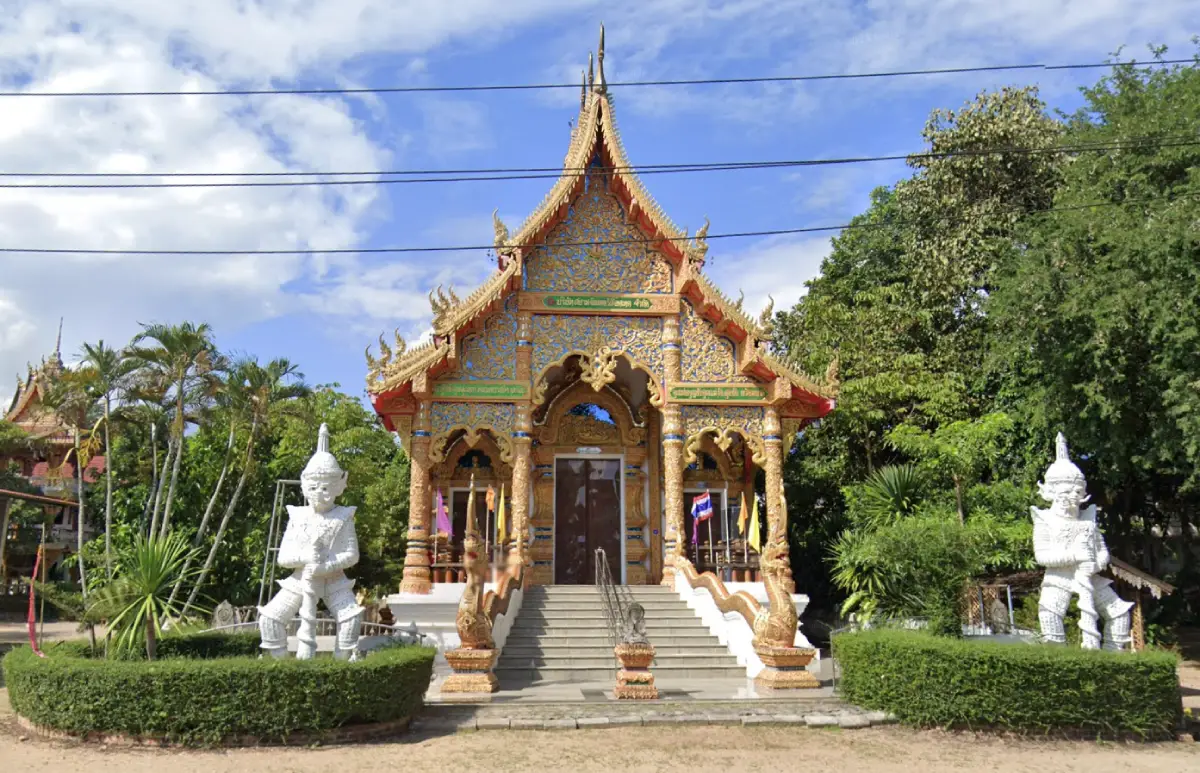
Wat Huai Muang (Pong Tam)
Open Days: Daily
Opening Hours: 08.00 – 17.00
Wat Huai Muang (Pong Tam) is a community Buddhist temple in Ban Huai Muang, Moo 6, Pong Tam Subdistrict, Chai Prakan District, Chiang Mai Province. It is a public temple affiliated with the Maha Nikaya order. The temple was officially permitted to be established in 2000 and received its royal Wisungkhamsima grant in 2007. Although it is considerably younger than many historic Lanna temples, Wat Huai Muang has become an important Buddhist centre for the Ban Huai Muang community.
Thailand’s current temple registry lists Wat Huai Muang, temple code 350210106, in Moo 6, Huai Muang, Pong Tam Subdistrict, Chai Prakan District. Local municipal documents also refer to a temple in the same village as Wat Muang Kham and identify Phra Khru Suchin Sangwon Khun as its abbot. The two names are therefore closely associated with the same Buddhist community site in Ban Huai Muang.
The temple remains part of contemporary community life. It continues to appear in official temple records and local planning documents, while public transport along Chotana Road still includes a stop called “Wat Muang Kham”. The stop lies on the same northern transport corridor that connects Wat Pong Tam and other important places in Chai Prakan.
Ban Huai Muang is one of eight villages in Pong Tam Subdistrict. The other communities are Ban Pong Tam, Ban Tha, Ban Pang Khwai, Ban Mit Aran, Ban Pa Ruak, Ban Huai Bong and Ban Thung Yao. Local data records a population of around 800 residents in Ban Huai Muang and approximately 300 households. The village is about 4 kilometres from central Chai Prakan and is conveniently connected with Highway 107.
The landscape of Ban Huai Muang is closely associated with agriculture and local water resources. Community information identifies the Fang River, Nam Pum Luang, Nam Pum Noi, Nong Wat Muang Kham and local weirs among the area’s water resources. Pong Tam as a whole lies in a fertile valley environment surrounded by mountains, with streams flowing toward the Fang River. Wat Huai Muang therefore belongs to a landscape where temple life, farming, water and village settlement remain closely connected.
The temple’s official institutional history begins in 2000, when Wat Huai Muang received permission to be established as a Buddhist temple. Establishing a formal temple gave Ban Huai Muang a permanent religious centre for Buddhist holy days, merit-making, sermons, offerings, ceremonies and village religious activities.
In 2007, Wat Huai Muang received a royal Wisungkhamsima grant. This was an important stage in the development of the temple because a Wisungkhamsima defines the consecrated monastic boundary used for formal Sangha ceremonies in an ubosot, including ordination and other ecclesiastical rites. The grant came approximately seven years after the temple was formally established.
Phra Khru Suchin Sangwon Khun is the monk most consistently associated with the temple in official and local records. Recent municipal documents list him as the abbot of the temple in Moo 6, Pong Tam, while earlier ecclesiastical records identify Phra Khru Suchin Sangwon Khun in connection with Wat Huai Muang, Chai Prakan. His long association with the temple reflects continuity in the religious leadership of the local community.
In a village temple such as Wat Huai Muang, the abbot’s responsibilities extend beyond monastic administration. The temple supports local merit-making, religious ceremonies and relationships between monks and residents. Because Ban Huai Muang is a relatively compact community, the temple functions as a familiar spiritual institution rather than as a large destination designed primarily for tourism.
The main appeal of Wat Huai Muang is therefore its identity as a living community temple. Visitors should not expect a large commercial attraction or monumental historic complex. Instead, the site provides an opportunity to see how Buddhism remains embedded in contemporary village life in northern Chiang Mai.
The name Wat Huai Muang should always be used together with “Pong Tam” or “Chai Prakan” when searching online. Several other temples in Thailand share the name Wat Huai Muang, including other temples in Chiang Mai Province. Searching for Wat Huai Muang Pong Tam Chai Prakan or Wat Muang Kham Ban Huai Muang helps avoid confusion.
The relationship between the names Wat Huai Muang and Wat Muang Kham is itself culturally interesting. National Buddhist records use Wat Huai Muang, matching the name of the village, while local administrative and public-transport records use Wat Muang Kham. The name Muang Kham also survives in the name of a local water feature, Nong Wat Muang Kham, showing that it remains part of the geographical memory of the community.
For travelers, Wat Huai Muang is most rewarding as a quiet cultural stop. Visitors can make merit, pay respect and experience the atmosphere of a local northern Thai temple without the crowds commonly found at major tourist temples. A visit can also be combined with other temples throughout Pong Tam Subdistrict.
Morning is generally the most comfortable time to visit, particularly during the warmer months. Winter in northern Chiang Mai can be cool, making the area suitable for a full day of temple exploration. During Buddhist ceremonies, visitors should allow local residents and monks to use the religious areas without interruption.
Visitors should dress respectfully, covering shoulders and knees, keep voices low and avoid intrusive photography during worship. Wat Huai Muang is an active Buddhist site rather than a purpose-built tourist attraction, so respecting the daily religious life of the community is an essential part of the visit.
The wider Chai Prakan area maintains a strong northern Thai Buddhist calendar. Important traditions in the district include Salak Phat merit-making, Poi Luang celebrations, Songkran, Buddhist Lent candle offerings, Loy Krathong, Kathin robe offerings and community merit-making. Local temples such as Wat Huai Muang provide the religious setting through which these traditions continue.
Ban Huai Muang is also connected with local economic and community development. Recent municipal planning documents mention processed agricultural products produced by the Muang Muan community group in Ban Huai Muang. This illustrates how religion, agriculture and local enterprise exist together within the same village environment.
One practical advantage of visiting Wat Huai Muang is accessibility. Ban Huai Muang is located very close to Highway 107, or Chotana Road, and community information places the village about 4 kilometres from Chai Prakan district centre. Public transport travelling between Fang and Chiang Mai also serves the Wat Muang Kham stop.
The Wat Muang Kham public-transport stop is close to other community facilities. Current transit information places Wat Aranyawasi School about 448 metres away and Mit Aran Market about 592 metres away, demonstrating the close concentration of temple, school, market and transport infrastructure in this part of Pong Tam.
Travelers interested in temple culture can continue to Wat Aranyawasi, Wat Pong Tam, Wat Supat Naram, Wat Mahingsawat and Wat Thung Yao. These temples serve different villages within Pong Tam and together create a useful cultural route through the subdistrict.
Wat Pong Tam is particularly interesting for its history of relocation after a destructive fire. Wat Supat Naram, founded in 1922, has a viharn, principal Buddha images and mural paintings. Wat Mahingsawat traces its origins to the early twentieth century and preserves a Chiang Saen-style Buddha image in the Mara-Vijaya posture. Combining these temples with Wat Huai Muang provides a broader view of the development of Buddhist institutions in Pong Tam.
Nature can also be added to the itinerary. Huai Bong Reservoir is one of the recognised attractions within the Chai Prakan municipal area. Travelers with more time can continue to Doi Wiang Pha National Park, Mae Thalop Luang Reservoir or Wat Tham Tap Tao, combining cultural and natural attractions in one trip.
Hinoki Land in Si Dong Yen Subdistrict offers a very different contemporary attraction and can be added to the same day itinerary. A route beginning with the village temples of Pong Tam and ending at Hinoki Land creates a contrast between traditional community Buddhism and modern tourism.
Food and coffee options are available along Chotana Road and throughout Pong Tam. Nearby choices include Pop-Pae Coffee & Bakery, Doi Wiang Coffee, Unnamedcoffeeproject, Coffee Amante Chai Prakan and Lump Sum Cafe. Several are located directly in Pong Tam and are convenient rest stops between temple visits.
Accommodation is also available in and around Pong Tam. Leelawadee Resort is located in Moo 6, the same village area as Wat Huai Muang. Other options include Happy Home Resort, Ban Suk Siri, Anton Place and Pha Daeng Cozy Coffee & Homestay. Chai Prakan can therefore be used as a convenient overnight base for travelers continuing north toward Fang, Doi Ang Khang and Mae Ai.
Getting There is easiest by following Highway 107 or Chotana Road north from Chiang Mai city through Mae Rim, Mae Taeng and Chiang Dao to Chai Prakan District. From central Chai Prakan, continue approximately 4 kilometres toward Ban Huai Muang, Moo 6, Pong Tam Subdistrict. Travelers using local public transport can look for the stop named “Wat Muang Kham” on the Chotana Road route.
Wat Huai Muang illustrates a more recent phase in the development of Buddhist community temples in northern Thailand. Rather than being a centuries-old monument, it became an officially recognised temple in 2000 and received a Wisungkhamsima grant in 2007. Its history therefore reflects the growth and organisation of a modern rural community.
The temple is also closely connected with a village that remains active in agriculture, local enterprise and community development. Ban Huai Muang has its own water resources, hundreds of residents, public transport and connections with neighbouring villages. Wat Huai Muang is therefore best understood as one component of a functioning community landscape.
For travelers looking beyond Chiang Mai’s famous urban temples, Wat Huai Muang offers a different experience. It provides an opportunity to see Buddhism at village level, where the temple remains closely associated with residents, local transport and everyday community life.
The strongest reason to visit Wat Huai Muang is this sense of continuity. From its formal establishment in 2000 and Wisungkhamsima grant in 2007 to its present role in Ban Huai Muang, the temple remains a spiritual centre within Pong Tam. A visit can therefore be both a simple act of worship and an introduction to the living Buddhist culture of northern Chiang Mai.
| Name | Wat Huai Muang (Pong Tam) |
| Local Administrative Name | Wat Muang Kham |
| Location | Ban Huai Muang, Moo 6, Pong Tam Subdistrict, Chai Prakan District, Chiang Mai 50320, Thailand |
| Buddhist Order | Maha Nikaya |
| Temple Code | 350210106 |
| Official Establishment | 2000 |
| Wisungkhamsima | Royal grant received in 2007 |
| Abbot | Phra Khru Suchin Sangwon Khun |
| Distinctive Character | Active village temple serving Ban Huai Muang and supporting Buddhist worship and community religious activities |
| Community Context | Ban Huai Muang is Moo 6 of Pong Tam Subdistrict, close to Highway 107 and home to approximately 800 residents |
| Open Days | Daily |
| Opening Hours | 08.00 – 17.00 |
| Travel Information | Follow Highway 107 / Chotana Road to Chai Prakan and continue to Ban Huai Muang, Moo 6. The village is approximately 4 km from central Chai Prakan. |
| Public Transport | Local buses and vans use the Wat Muang Kham stop on the Chotana Road corridor |
| Nearby Tourist Attractions | 1. Wat Aranyawasi, about 1 km 2. Wat Pong Tam, about 3 km 3. Wat Supat Naram, about 4 km 4. Wat Mahingsawat, about 5 km 5. Wat Thung Yao, about 6 km 6. Huai Bong Reservoir, about 8 km |
| Nearby Restaurants And Cafés | 1. Pop-Pae Coffee & Bakery, about 2 km, Tel. +66 81 023 2516 2. Doi Wiang Coffee, about 4 km, Tel. +66 53 457 078 3. Unnamedcoffeeproject, about 4 km, Tel. +66 62 431 3239 4. Coffee Amante Chai Prakan, about 4 km, Tel. +66 90 758 7004 5. Lump Sum Cafe, about 3 km |
| Nearby Accommodations | 1. Leelawadee Resort, Moo 6 Pong Tam, about 2 km, Tel. +66 64 495 5569 2. Happy Home Resort, about 3 km, Tel. +66 89 114 6900 3. Ban Suk Siri, about 4 km, Tel. +66 92 398 8884 4. Anton Place, about 7 km, Tel. +66 91 853 1586 5. Pha Daeng Cozy Coffee & Homestay, about 9 km, Tel. +66 61 269 6936 |
Frequently Asked Questions (FAQ)
Q: Where is Wat Huai Muang in Pong Tam located?
A: Wat Huai Muang is located in Ban Huai Muang, Moo 6, Pong Tam Subdistrict, Chai Prakan District, Chiang Mai Province 50320.
Q: Are Wat Huai Muang and Wat Muang Kham the same temple?
A: National temple records use the name Wat Huai Muang, while local administrative and public-transport records use Wat Muang Kham for the temple in Moo 6, Pong Tam. Both names refer to the Buddhist community site in Ban Huai Muang.
Q: When was Wat Huai Muang officially established?
A: Wat Huai Muang was officially permitted to be established in 2000 and received its royal Wisungkhamsima grant in 2007.
Q: Who is the abbot of Wat Huai Muang?
A: Recent local administrative documents identify Phra Khru Suchin Sangwon Khun as the abbot of the temple in Moo 6, Pong Tam.
Q: What type of traveler would enjoy visiting Wat Huai Muang?
A: The temple is suitable for Buddhist visitors, cultural travelers and anyone interested in quiet village temples and contemporary Lanna community life.
Q: Can Wat Huai Muang be reached by public transport?
A: Yes. Local northern transport services use a stop called Wat Muang Kham along the Chotana Road route through Chai Prakan.
Q: How far is Ban Huai Muang from central Chai Prakan?
A: Ban Huai Muang is approximately 4 kilometres from central Chai Prakan and is located close to Highway 107.
Q: What places can be combined with a visit to Wat Huai Muang?
A: Nearby options include Wat Aranyawasi, Wat Pong Tam, Wat Supat Naram, Wat Mahingsawat, Wat Thung Yao and Huai Bong Reservoir, with longer routes continuing to Hinoki Land, Wat Tham Tap Tao and Doi Wiang Pha National Park.
 Category: ●Places of Worship
 Group: ●Temple
Last Update : 7 DayAgo
 Last Update : 7 DayAgo
 Click to Access the Navigation Map GPS
Wat Huai Muang (Pong Tam) Map
Recommend

 Muang Chiang Mai(121)Chom Thong(47)Mae Chaem(25)Chiang Dao(33)Doi Saket(68)Mae Taeng(85)Mae Rim(69)Samoeng(29)Fang(71)Mae Ai(59)Phrao(70)San Pa Tong(103)San Kamphaeng(66)San Sai(73)Hang Dong(73)Hot(32)Doi Tao(22)Omkoi(11)Saraphi(74)Wiang Haeng(15)Chai Prakan(28)Mae Wang(32)Mae On(22)Doi Lo(33)Galyani Vadhana(1)


