
lovethailand home >North Travel Attractions >Chiang Mai Travel Attractions >Chiang Dao >Mae Na > Wat Siri Mongkhon
TL;DR: Wat Siri Mongkhon is located at Ban Huai Jo, Village No. 4, Mae Na Subdistrict, Chiang Dao District, Chiang Mai Province, open Daily, hours 08.00 - 17.00.
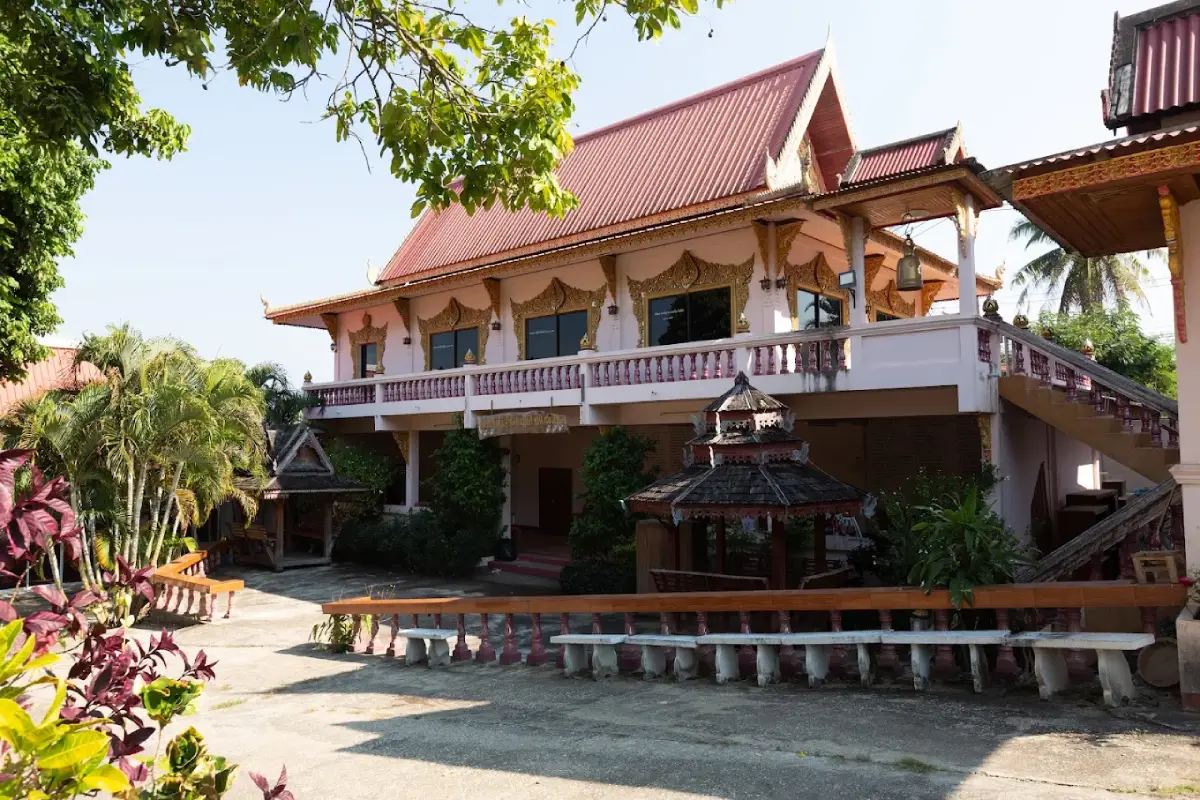
Wat Siri Mongkhon
Open Days: Daily
Opening Hours: 08.00 - 17.00
Wat Siri Mongkhon is located in Village No. 4, Ban Huai Jo, Mae Na Subdistrict, Chiang Dao District, Chiang Mai Province. It is a local Buddhist temple under the Maha Nikaya order and one of the long-established community temples of Mae Na. The temple was officially permitted to be established in B.E. 2461 (1918), and its abbot is Chao Athikan Wanlop Narinto. Wat Siri Mongkhon remains a spiritual center for the local community, supporting worship, merit-making, Buddhist ceremonies, and the everyday religious life of Ban Huai Jo.
Ban Huai Jo is a village in Mae Na Subdistrict, an important local area of Chiang Dao. The subdistrict connects rural communities, local temples, farming areas, mountain routes, and natural attractions. Wat Siri Mongkhon stands within this village landscape. It is not only a temple building but a shared community space where local residents gather for Buddhist holy days, merit-making, robe-offering events, and ceremonies that keep the relationship between monks and laypeople alive.
The name “Siri Mongkhon” carries a directly auspicious meaning. “Siri” suggests prosperity, grace, and sacred beauty, while “Mongkhon” means blessing or good fortune. The name suits the role of the temple as a place where people come to make merit, chant, listen to Dhamma teachings, and seek calm. For the village, the temple name reflects the hope for peace, wellbeing, and spiritual support within the community.
The temple’s official establishment in B.E. 2461 (1918) makes it a historic community temple of Mae Na. Over more than a century, Wat Siri Mongkhon has remained part of local Buddhist life through changing periods of transportation, settlement, and tourism development in Chiang Dao. While the district is now widely known for mountains, caves, hot springs, and nature-based travel, the temple preserves an older layer of community faith.
The temple land covers 2 rai, 1 ngan, and 5 square wah, a suitable size for a village temple. The grounds provide space for worship, merit-making, monastic residence, and local religious gatherings. A temple of this scale often feels intimate and accessible, allowing visitors to experience the quiet, grounded atmosphere of a working northern Thai community temple.
As a Maha Nikaya community temple, Wat Siri Mongkhon is closely connected with local residents. Temples of this kind often function as the religious home of the village. They provide moral guidance, ritual support, and a familiar place for people during important moments in life. The value of Wat Siri Mongkhon lies in this living relationship between monks, laypeople, and the community.
The abbot of Wat Siri Mongkhon is Chao Athikan Wanlop Narinto. In a community temple, the abbot plays an important role in maintaining the temple, leading ceremonies, supporting Buddhist practice, and coordinating with local devotees. The presence of an active abbot helps the temple continue its role as a place of worship, merit-making, and community connection.
The atmosphere of Wat Siri Mongkhon is peaceful and local. It is suitable for travelers who want to worship, make merit, or experience a village temple away from crowded tourist areas. Its charm is not based on grand scale or commercial presentation, but on its authenticity as a religious space still used by the community. Visitors can pay respect, walk quietly around the temple, and observe the calm rhythm of local Buddhist life.
Mae Na Subdistrict contains several community temples, including Wat Si Don Chai, Wat Si Un Mueang, Wat Rat Pradit, Wat Chom Khiri, Wat Pang Ma-O, Wat Sawang Arom, and Wat Phra Non Sop Khap. These temples form a local Buddhist network across the subdistrict. Wat Siri Mongkhon is meaningful as an old temple of Ban Huai Jo and as part of this wider temple landscape in Chiang Dao.
Visitors can include Wat Siri Mongkhon in a local temple route around Mae Na. A meaningful itinerary can connect Wat Phra Non Sop Khap, Wat Sawang Arom, Wat Pang Ma-O, Wat Si Un Mueang, and Wat Si Don Chai in the same trip. This route is suitable for travelers interested in village temples, local history, and the relationship between Buddhism and rural life in northern Thailand.
Wat Pang Ma-O is a worthwhile nearby temple to combine with Wat Siri Mongkhon. It is known for its mountain setting and the three-shadow stupa phenomenon. Visiting both temples allows travelers to see two different forms of religious space in Mae Na: a village temple closely tied to community life and a mountain temple connected with forest, highland settlement, and sacred local belief.
Wat Phra Non Sop Khap and Wat Sawang Arom are also part of the nearby religious landscape. They help complete a Mae Na temple route that shows how Buddhist temples remain distributed across local villages. This type of slow temple route gives travelers a more grounded understanding of Chiang Dao than a journey focused only on major tourist attractions.
Wat Siri Mongkhon can also be combined with major Chiang Dao attractions such as Chiang Dao Hot Springs, Wat Tham Chiang Dao, Wat Tham Pha Plong, and the Mae Mae route. A half-day trip can focus on the temple and nearby Mae Na stops, while a full-day trip can include caves, hot springs, restaurants, and accommodations near Doi Luang Chiang Dao.
Chiang Dao Hot Springs add a natural relaxation element to the route. Wat Siri Mongkhon provides the cultural and spiritual dimension, while the hot springs and mountain scenery provide the nature-based side of Chiang Dao. This combination works well for travelers who prefer a balanced trip that includes both Buddhist culture and local nature.
Wat Tham Chiang Dao and Wat Tham Pha Plong can also be paired with Wat Siri Mongkhon. Wat Tham Chiang Dao is known for its cave landscape, while Wat Tham Pha Plong offers a quiet forest-temple atmosphere. Starting with a community temple and continuing to cave and mountain temples gives visitors a broader view of Buddhist life in Chiang Dao.
Getting There is easiest by private car, rental car, or local transport. From Chiang Mai, take Highway 107 toward Chiang Dao, then continue into Mae Na Subdistrict and Ban Huai Jo, Village No. 4. The temple is located within the community and can be reached through local roads in Mae Na. A private vehicle is the most convenient option because it allows travelers to combine the temple with nearby temples, restaurants, and natural attractions.
Travelers without a private vehicle can take public transport from Chiang Mai to Chiang Dao town and then hire local transport to Mae Na and Ban Huai Jo. This option requires planning because village transport is not frequent throughout the day. For small groups, hiring a local driver or renting a car is usually more practical and allows more flexibility.
The best time to visit is in the morning or late afternoon, when the weather is more comfortable and the temple atmosphere is calm. During the cool season or after the rainy season, Chiang Dao and Mae Na are especially pleasant, with fresh air, rural landscapes, and mountain scenery along the route.
Visitors should dress politely, speak quietly, keep the temple grounds clean, and avoid entering monastic areas without permission. Photography should be done respectfully and should not disturb monks or local worshippers. Wat Siri Mongkhon is an active community temple, so respectful behavior toward monks, villagers, and sacred spaces is essential.
Restaurants and accommodations around Mae Na and Chiang Dao can be included in the same travel plan. Visitors can worship at Wat Siri Mongkhon, continue to a local restaurant, and stay near Doi Luang Chiang Dao or the Mae Mae route. This makes the temple a practical stop for travelers who want to experience Chiang Dao through temples, villages, food, and nature.
Overall, Wat Siri Mongkhon is an old Maha Nikaya community temple of Ban Huai Jo in Mae Na Subdistrict. Established in B.E. 2461, the temple continues to serve the Buddhist life of the local community. It is suitable for worship, merit-making, and slow cultural travel in Chiang Dao, especially when paired with nearby village temples and natural attractions.
| Name | Wat Siri Mongkhon |
| Location | Ban Huai Jo, Village No. 4, Mae Na Subdistrict, Chiang Dao District, Chiang Mai Province |
| Address | Village No. 4, Ban Huai Jo, Mae Na Subdistrict, Chiang Dao District, Chiang Mai 50170, Thailand |
| Temple Type | Community Buddhist Temple Under The Maha Nikaya Order |
| History | Officially permitted to be established as a temple in B.E. 2461 (1918) |
| Temple Land | 2 rai, 1 ngan, and 5 square wah |
| Highlights | Old community temple of Ban Huai Jo, suitable for worship, merit-making, and local cultural travel in Mae Na |
| Distinctive Features | Peaceful Maha Nikaya village temple connected with Ban Huai Jo and the wider temple network of Mae Na |
| Abbot / Caretaker | Chao Athikan Wanlop Narinto |
| Open Days | Daily |
| Opening Hours | 08.00 - 17.00 |
| Travel Information | From Chiang Mai, take Highway 107 toward Chiang Dao, then continue into Mae Na Subdistrict and Ban Huai Jo, Village No. 4. Best reached by private car, rental car, or local transport. |
| Current Status | Active Maha Nikaya community temple of Ban Huai Jo in Mae Na Subdistrict |
| Nearby Tourist Attractions | 1. Wat Phra Non Sop Khap, about 3 km 2. Wat Sawang Arom, Mae Na, about 4 km 3. Wat Pang Ma-O, about 5 km 4. Wat Si Un Mueang, about 6 km 5. Chiang Dao Hot Springs, about 9 km |
| Nearby Restaurants | 1. Chiang Dao Resto, about 9 km, Tel. 053-456-456 2. Khao Soi Doi Nang, about 11 km, Tel. 081-167-2721 3. Chiang Dao Nest 1 Restaurant, about 13 km, Tel. 053-456-612 4. Krua Lanna Mueang Ngai, about 16 km, Tel. 053-088-233, 080-846-4233 5. Baan Mintra, about 17 km, Tel. 065-518-4565, 064-295-0117 |
| Nearby Accommodations | 1. Ban Pho Doi Goi Dao, about 11 km, Tel. 064-943-9565 2. Chiang Dao Nest 1, about 13 km, Tel. 053-456-612 3. Marisa Resort & Spa Chiang Dao, about 16 km, Tel. 086-431-6898 4. Chomdoi Resort Chiang Dao, about 17 km, Tel. 081-998-7478 5. Chiang Dao Mountain View, about 13 km |
Frequently Asked Questions (FAQ)
Q: Where is Wat Siri Mongkhon located?
A: Wat Siri Mongkhon is located in Village No. 4, Ban Huai Jo, Mae Na Subdistrict, Chiang Dao District, Chiang Mai Province.
Q: When was Wat Siri Mongkhon officially established?
A: Wat Siri Mongkhon was officially permitted to be established as a temple in B.E. 2461 (1918).
Q: What type of temple is Wat Siri Mongkhon?
A: Wat Siri Mongkhon is a local Buddhist temple under the Maha Nikaya order.
Q: Who is the abbot of Wat Siri Mongkhon?
A: The abbot of Wat Siri Mongkhon is Chao Athikan Wanlop Narinto.
Q: What are the opening hours of Wat Siri Mongkhon?
A: Wat Siri Mongkhon is open daily from 08.00 to 17.00.
Q: How can travelers get to Wat Siri Mongkhon?
A: From Chiang Mai, take Highway 107 toward Chiang Dao, then continue into Mae Na Subdistrict and Ban Huai Jo, Village No. 4. A private car, rental car, or local transport is recommended.
Q: What type of travelers should visit Wat Siri Mongkhon?
A: The temple is suitable for travelers who want to worship, make merit, visit a peaceful community temple, and learn about local Buddhist life in Mae Na.
Q: What nearby places can be visited with Wat Siri Mongkhon?
A: Nearby places include Wat Phra Non Sop Khap, Wat Sawang Arom, Wat Pang Ma-O, Wat Si Un Mueang, and Chiang Dao Hot Springs.
 Category: ●Places of Worship
 Group: ●Temple
Last Update : 2 DayAgo
 Last Update : 2 DayAgo
 Click to Access the Navigation Map GPS
 Muang Chiang Mai(121)Chom Thong(47)Mae Chaem(25)Chiang Dao(33)Doi Saket(68)Mae Taeng(85)Mae Rim(69)Samoeng(29)Fang(71)Mae Ai(62)Phrao(70)San Pa Tong(105)San Kamphaeng(66)San Sai(73)Hang Dong(74)Hot(32)Doi Tao(22)Omkoi(11)Saraphi(74)Wiang Haeng(15)Chai Prakan(28)Mae Wang(32)Mae On(22)Doi Lo(34)Galyani Vadhana(1)


