
lovethailand home >North Travel Attractions >Chiang Mai Travel Attractions >Chiang Dao >Mae Na > Wat Pang Ma-O
TL;DR: Wat Pang Ma-O is located at Ban Pang Ma-O, Village No. 9, Mae Na Subdistrict, Chiang Dao District, Chiang Mai Province, open Daily, hours 08.00 - 17.00.
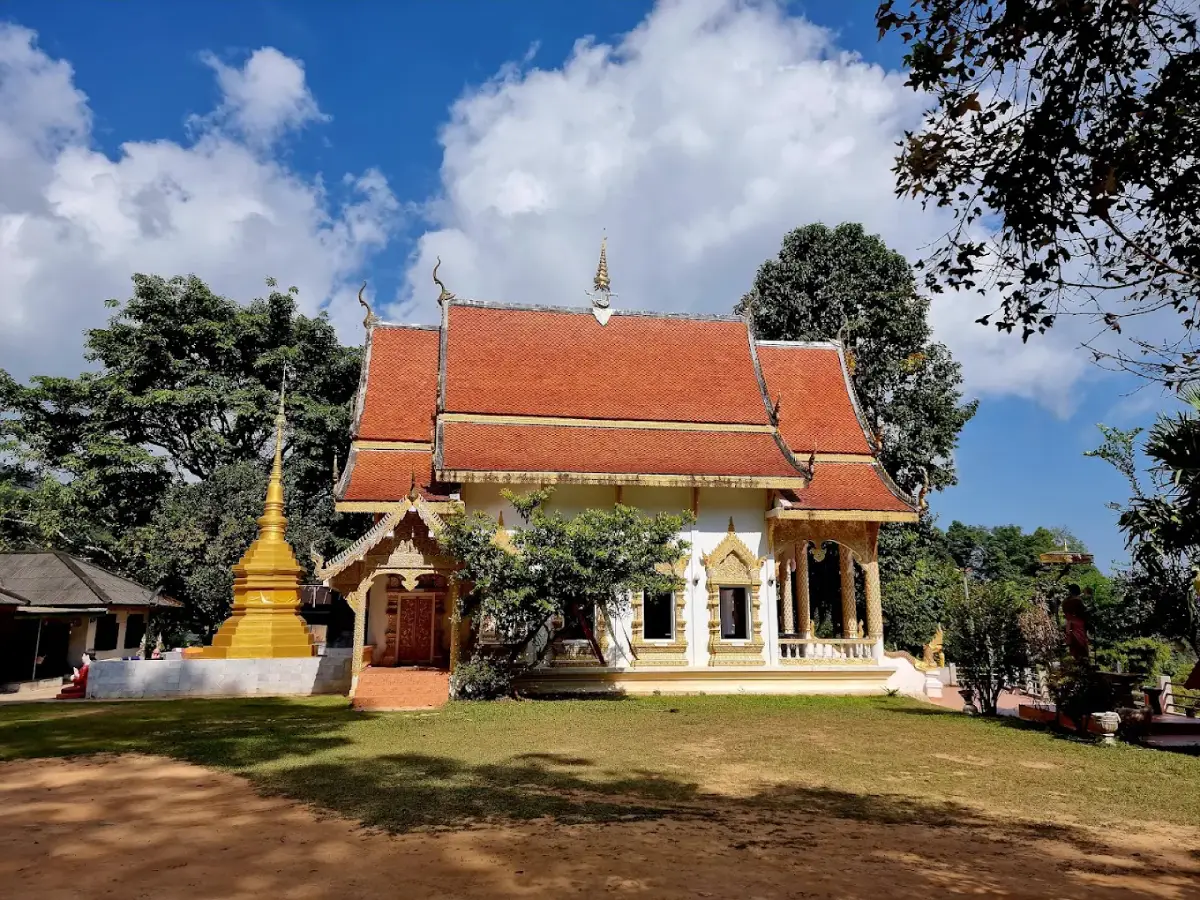
Wat Pang Ma-O
Open Days: Daily
Opening Hours: 08.00 - 17.00
Wat Pang Ma-O is located in Village No. 9, Ban Pang Ma-O, Mae Na Subdistrict, Chiang Dao District, Chiang Mai Province. It is a local Buddhist temple under the Maha Nikaya order and was officially permitted to be established in B.E. 2476 (1933). The temple is also known as Wat Aran Chom Mek and Wat Phra That Sam Ngao, or the Temple of the Three Shadows Stupa, because of its distinctive stupa shadow phenomenon. When sunlight passes through a specific opening, the image of the stupa appears as three reflected shadows inside a nearby viewing room. This rare feature makes the temple one of the most distinctive cultural and religious places in Mae Na and Chiang Dao.
Ban Pang Ma-O is a mountain village in Mae Na Subdistrict. The village is surrounded by valleys, forested slopes, streams, tea-growing areas, and watershed forest. The temple is deeply connected with this landscape. It is not only a place for Buddhist worship but also a spiritual center for a community that has long lived with forest, tea, and mountain agriculture. A visit to Wat Pang Ma-O therefore offers more than a temple stop; it gives travelers a view of how Buddhism, village life, and forest ecology meet in northern Chiang Mai.
The name “Pang Ma-O” is linked with local language and village memory. “Pang” or “Pang” in the local northern context can refer to a temporary shelter or resting place in a forested area, while “Ma-O” refers to pomelo. The village name carries the feeling of a mountain settlement that grew from forest life and local agriculture. The temple’s other name, Wat Aran Chom Mek, suggests a forest temple high among the clouds, a fitting image for a temple located in a cool mountain community.
Wat Pang Ma-O was officially established as a temple in B.E. 2476 (1933), but the religious memory of the site reaches deeper through local traditions, sacred geography, and the stupa. Like many village temples in northern Thailand, it grew together with the surrounding community. It serves as a place for merit-making, Buddhist holy day activities, local ceremonies, and community gatherings. Its importance lies not in grand scale but in its role as the religious heart of Ban Pang Ma-O.
The most important feature of the temple is the stupa and the three-shadow phenomenon. The stupa is positioned in relation to a small viewing room or receiving space. When sunlight enters through a controlled opening, the reflected image of the stupa appears on a cloth or screen inside the room as three separate shadows. This has given the temple its well-known name, Wat Phra That Sam Ngao. The phenomenon combines faith, local knowledge, light, architecture, and the sacred presence of the stupa in one memorable experience.
Visitors should approach the three-shadow viewing area with respect. This is not only a visual curiosity but also a sacred part of the temple’s identity. The viewing room should be kept calm and undisturbed. Visitors should avoid touching the cloth, screen, or objects in the room without permission. The beauty of the shadow is not only in the image itself but also in the quiet, careful way the community has preserved the experience.
The name Wat Aran Chom Mek also reflects the temple’s identity. It suggests a forest temple on a high mountain, close to mist and clouds. This meaning matches the character of Ban Pang Ma-O, a cool highland village known for forest, tea, and traditional mountain settlement. The journey to the temple is part of the experience, as travelers move away from the main highway into a quieter landscape of curves, slopes, and forested hills.
Ban Pang Ma-O is also associated with tea and Miang culture. Miang refers to fermented tea leaves, a traditional northern Thai food and one of the important products of several highland communities in Chiang Dao. The cool and humid mountain environment supports tea and forest-based agriculture. Travelers who visit Wat Pang Ma-O can therefore understand the temple within the wider context of a tea-forest village rather than as an isolated religious site.
The surrounding landscape is part of the Doi Chiang Dao area and the Mae Ping watershed forest. The terrain includes valleys, mountain ridges, forest, and steep slopes. This gives Wat Pang Ma-O a peaceful atmosphere that feels different from temples in town centers. The temple is best appreciated by travelers who enjoy slow travel, mountain communities, local history, and quiet Buddhist places.
The abbot of Wat Pang Ma-O is Phra Lop Chantasaro. In a mountain village temple, the abbot plays an important role in maintaining the temple, leading Buddhist ceremonies, guiding laypeople, and preserving the temple’s calm and sacred atmosphere. The continuity of temple leadership is essential because temples in more remote communities depend strongly on cooperation between monks, villagers, and local supporters.
Wat Pang Ma-O is not designed as a large commercial attraction. Its strength lies in its authenticity as a village temple with a unique sacred feature. Visitors can pay respect to the stupa, learn about the three-shadow phenomenon, walk around the temple grounds, and observe the calm atmosphere of a Buddhist site that remains closely tied to local life.
The temple can be combined with Ban Pang Ma-O and Ban Mae Mae in the same route. Ban Mae Mae is known for homestays, forest cafés, streams, and peaceful mountain scenery. A meaningful itinerary can begin with worship at Wat Pang Ma-O and continue to food or an overnight stay in Ban Mae Mae. This route is suitable for travelers who want to experience Chiang Dao beyond the more familiar cave and mountain viewpoints.
Wat Pang Ma-O can also be paired with other major attractions in Chiang Dao, such as Chiang Dao Hot Springs, Wat Tham Chiang Dao, and Wat Tham Pha Plong. Because the road to Pang Ma-O includes mountain sections, travelers should plan the route carefully and avoid rushing. A half-day itinerary works best when focused on Wat Pang Ma-O and nearby Mae Mae, while a full-day itinerary can include the Chiang Dao cave area and hot springs.
Getting There is easiest by private car, rental car, or local transport with a driver familiar with mountain roads. From Chiang Mai, take Highway 107 toward Chiang Dao, then continue into Mae Na Subdistrict and follow the route toward Ban Pang Ma-O. The road includes curves, slopes, and narrow sections. Careful driving is recommended, especially during rain, fog, or late afternoon travel.
Travelers who are unfamiliar with the route should ask local residents for directions before driving up to the village. Driving after dark is not recommended. Road surfaces may be damp in the rainy season, and the route requires attention. For small groups, hiring a local driver can be a safer and more practical option, especially if combining the temple with Ban Mae Mae or other stops in Chiang Dao.
The best time to visit is in the morning or afternoon when the light is comfortable and the village atmosphere is calm. Visitors who want to see the three-shadow stupa phenomenon should ask temple caretakers or local residents about the suitable time, because the visibility of the shadow depends on sunlight, season, and weather conditions.
Visitors should dress politely, speak quietly, and respect all temple spaces. If entering the shadow-viewing room, follow local instructions and avoid touching the receiving cloth or equipment. Photography should be done carefully and should not disturb monks, local worshippers, or the sacred atmosphere of the site.
Overall, Wat Pang Ma-O is one of the most distinctive temples in the Mae Na area of Chiang Dao. It is a Maha Nikaya village temple, a mountain community temple, and the home of the remarkable three-shadow stupa phenomenon. Its setting among forest, tea, and mountain villages gives it a depth that goes beyond ordinary sightseeing. A visit here offers worship, local history, mountain culture, and a rare sacred-light experience in one journey.
| Name | Wat Pang Ma-O |
| Other Names | Wat Aran Chom Mek / Wat Phra That Sam Ngao |
| Location | Ban Pang Ma-O, Village No. 9, Mae Na Subdistrict, Chiang Dao District, Chiang Mai Province |
| Address | Village No. 9, Ban Pang Ma-O, Mae Na Subdistrict, Chiang Dao District, Chiang Mai 50170, Thailand |
| Temple Type | Community Buddhist Temple Under The Maha Nikaya Order |
| History | Officially permitted to be established as a temple in B.E. 2476 (1933) |
| Highlights | Three-shadow stupa phenomenon, where the reflected image of the stupa appears as three shadows inside a nearby viewing room |
| Distinctive Features | Mountain village temple in a tea-forest community, surrounded by the quiet landscape of Mae Na and Chiang Dao |
| Abbot / Caretaker | Phra Lop Chantasaro |
| Main Areas / Zones | Stupa area, three-shadow viewing room, worship area, and community temple grounds |
| Open Days | Daily |
| Opening Hours | 08.00 - 17.00 |
| Travel Information | From Chiang Mai, take Highway 107 toward Chiang Dao, then continue into Mae Na Subdistrict and follow the mountain road to Ban Pang Ma-O. Best reached by private car, rental car, or local transport. |
| Current Status | Listed in temple, community, and location databases for Mae Na Subdistrict, Chiang Dao District, Chiang Mai Province |
| Nearby Tourist Attractions | 1. Ban Pang Ma-O Community, about 1 km 2. Ban Mae Mae, about 8 km 3. Chiang Dao Hot Springs, about 13 km 4. Wat Tham Chiang Dao, about 15 km 5. Wat Tham Pha Plong, about 17 km |
| Nearby Restaurants | 1. Tree House Mae Mae, about 8 km, Tel. 081-958-5601 2. Chiang Dao Nest 1 Restaurant, about 15 km, Tel. 053-456-612 3. Chiang Dao Resto, about 16 km, Tel. 053-456-456 4. Khao Soi Doi Nang, about 17 km, Tel. 081-167-2721 5. Krua Lanna Mueang Ngai, about 22 km, Tel. 053-088-233, 080-846-4233 |
| Nearby Accommodations | 1. Tree House Mae Mae, about 8 km, Tel. 081-958-5601 2. Mae Mae Home, about 8 km, Tel. 081-967-8974 3. Mayamyay Homestay, about 8 km, Tel. 086-342-7669 4. Tarnchevee, about 9 km, Tel. 099-414-4265 5. Pang Sai Kham Cottage Mae Mae, about 9 km, Tel. 088-251-7897 |
Frequently Asked Questions (FAQ)
Q: Where is Wat Pang Ma-O located?
A: Wat Pang Ma-O is located in Village No. 9, Ban Pang Ma-O, Mae Na Subdistrict, Chiang Dao District, Chiang Mai Province.
Q: When was Wat Pang Ma-O officially established?
A: Wat Pang Ma-O was officially permitted to be established as a temple in B.E. 2476 (1933).
Q: What other names is Wat Pang Ma-O known by?
A: The temple is also known as Wat Aran Chom Mek and Wat Phra That Sam Ngao, or the Temple of the Three Shadows Stupa.
Q: What is the three-shadow stupa phenomenon?
A: It is a reflected image of the stupa that appears as three shadows on a receiving cloth or screen inside a nearby viewing room when sunlight passes through a specific opening.
Q: Who is the abbot of Wat Pang Ma-O?
A: The abbot of Wat Pang Ma-O is Phra Lop Chantasaro.
Q: What are the opening hours of Wat Pang Ma-O?
A: Wat Pang Ma-O is open daily from 08.00 to 17.00.
Q: How can travelers get to Wat Pang Ma-O?
A: From Chiang Mai, take Highway 107 toward Chiang Dao, then continue into Mae Na Subdistrict and follow the mountain road to Ban Pang Ma-O. A private car, rental car, or local driver is recommended.
Q: What nearby places can be visited with Wat Pang Ma-O?
A: Nearby places include Ban Pang Ma-O Community, Ban Mae Mae, Chiang Dao Hot Springs, Wat Tham Chiang Dao, and Wat Tham Pha Plong.
 Category: ●Places of Worship
 Group: ●Temple
Last Update : 3 DayAgo
 Last Update : 3 DayAgo
 Click to Access the Navigation Map GPS
 Muang Chiang Mai(121)Chom Thong(47)Mae Chaem(25)Chiang Dao(33)Doi Saket(68)Mae Taeng(85)Mae Rim(69)Samoeng(29)Fang(71)Mae Ai(62)Phrao(70)San Pa Tong(105)San Kamphaeng(66)San Sai(73)Hang Dong(74)Hot(32)Doi Tao(22)Omkoi(11)Saraphi(74)Wiang Haeng(15)Chai Prakan(28)Mae Wang(32)Mae On(22)Doi Lo(34)Galyani Vadhana(1)


