
lovethailand home >North Travel Attractions >Chiang Mai Travel Attractions >Chiang Dao >Muang Na > Wat Lo Pa Han
TL;DR: Wat Lo Pa Han is located at Ban Lo Pa Han, Village No. 4, Mueang Na Subdistrict, Chiang Dao District, Chiang Mai Province.

Wat Lo Pa Han
Operating day: Daily
Operating time: 08.00 - 17.00
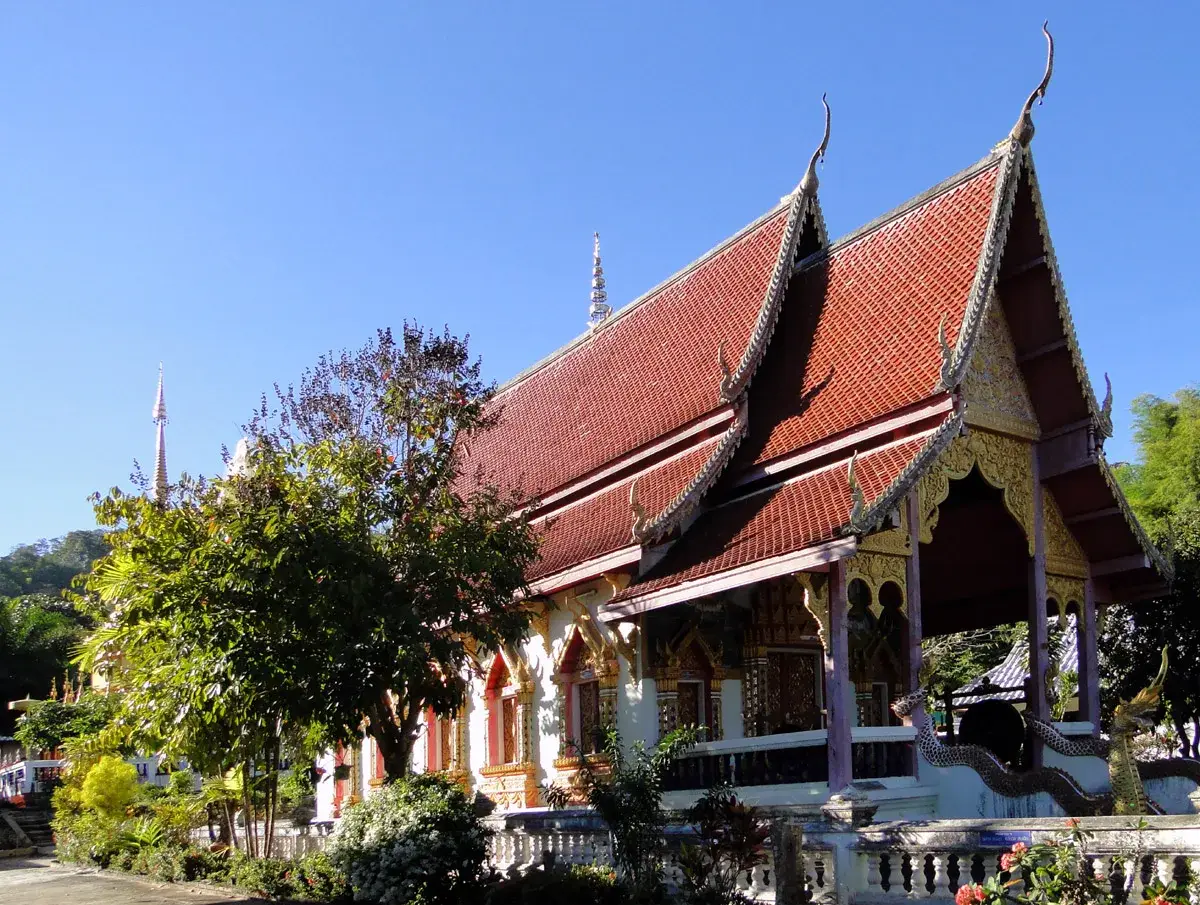
Wat Lo Pa Han is located in Ban Lo Pa Han, Village No. 4, Mueang Na Subdistrict, Chiang Dao District, Chiang Mai Province. It is a local Buddhist temple under the Maha Nikaya order and has long served as the spiritual center of the Ban Lo Pa Han community. The temple was founded in B.E. 2439 (1896) by local villagers led by Nai Pan Techajam and Nang Kui Techajam. It was officially permitted to be established as a temple in B.E. 2479 (1936) and received its Wisungkhamsima in B.E. 2541 (1998). These milestones show the temple’s development from a community-built sacred place into a formally recognized Buddhist temple with a complete religious role in the local monastic system.
Ban Lo Pa Han is Village No. 4 of Mueang Na Subdistrict, an area located northeast of Chiang Dao town. This part of Chiang Mai is shaped by mountain routes, rural communities, forests, local agriculture, and natural attractions. Wat Lo Pa Han is therefore surrounded by a quiet village landscape rather than a busy tourist setting. Visitors who come here will encounter a working community temple that remains closely connected with local religious life and the everyday rhythm of Ban Lo Pa Han.
The name “Lo Pa Han” is directly connected with the village. In northern Thailand, many temples developed alongside the communities that built and supported them. Their names often preserve the identity of the village itself. Wat Lo Pa Han is a clear example of this relationship. It is not only a place of worship but also a symbol of the village’s shared faith, memory, and continuity.
The founding of Wat Lo Pa Han in B.E. 2439 (1896) makes it one of the older community temples in Mueang Na. Over more than a century, the temple has witnessed changes in local life, transportation, settlement patterns, and the wider development of Chiang Dao. Its importance does not come only from its age, but from the fact that it has remained part of local religious practice, merit-making, and community gatherings over many generations.
The temple was officially permitted to be established in B.E. 2479 (1936). This formal recognition confirmed its status as a Buddhist temple after local villagers had already built and used the site for religious purposes. Later, in B.E. 2541 (1998), Wat Lo Pa Han received its Wisungkhamsima, marking the designated boundary for formal monastic acts. This is especially important for a temple with an ubosot, because the Wisungkhamsima allows important Sangha ceremonies to be performed properly within the temple boundary.
The temple covers 3 rai, 1 ngan, and 34 square wah. Its main monastic buildings include a sermon hall, an ubosot, monks’ residences, a meditation hall, a village meeting hall, and a dining hall. These structures show how the temple serves multiple functions. It is a place for worship, monastic residence, meditation practice, religious ceremonies, community gatherings, and shared village activities. Wat Lo Pa Han is therefore not separated from village life; it is one of the central places where Buddhist practice and community life meet.
The sermon hall is an important space for merit-making, listening to Dhamma teachings, and gathering during Buddhist festivals. The ubosot is central to formal monastic ceremonies and reflects the temple’s religious completeness after receiving its Wisungkhamsima. The monks’ residences support the monastic community, while the meditation hall provides space for quiet practice. The village meeting hall and dining hall show the temple’s broader role as a community space used during ceremonies and local events.
The appeal of Wat Lo Pa Han lies in its identity as a real village temple rather than a commercial attraction. Visitors can see a temple that is still used by local people for worship, merit-making, and community religious occasions. The atmosphere is quiet and modest, making it suitable for those who want to pay respect, make merit, or spend a calm moment away from crowded tourist routes. Visitors should move through the temple with respect, as this is an active religious space for monks and villagers.
The recorded abbots associated with Wat Lo Pa Han include Phra Thammawong Dhammavangso and Phra Amphol Kambalo, who is recorded as the current abbot in the temple history provided. The continuity of temple leadership is important for maintaining the temple grounds, leading Buddhist ceremonies, supporting the monastic community, and preserving the relationship between monks and local villagers.
Wat Lo Pa Han plays a broader role in Ban Lo Pa Han than simply being a place to pay respect to the Buddha. It is where villagers gather for Buddhist holy days, Kathin ceremonies, robe-offering events, annual merit-making, community occasions, and ceremonies connected with important moments in life. Like many village temples in northern Thailand, it helps preserve moral values, community unity, and the relationship between laypeople and monks.
Mueang Na Subdistrict contains several local temples connected with different villages, including Wat Na Wai, Wat Weluwan, Wat Huai Sai, and Wat Lo Pa Han. Each temple reflects the identity of its own community. Visiting Wat Lo Pa Han together with nearby temples gives travelers a clearer understanding of how Buddhist temples form a local network across rural Chiang Dao.
Beyond its religious setting, Mueang Na is also known for natural attractions such as Pha Daeng National Park, Sri Sangwan Waterfall, Pong Arng Hot Spring, and the route toward Arunothai Village. Pha Daeng National Park covers mountainous landscapes, forests, watersheds, waterfalls, and natural hot springs. Arunothai Village is known for its mountain community atmosphere and Yunnan-influenced food. Wat Lo Pa Han can therefore be included in a travel route that combines temples, villages, local food, and nature.
Sri Sangwan Waterfall is one of the best-known natural attractions in the Mueang Na area. Located within Pha Daeng National Park, it is a limestone waterfall with water flowing down in small tiers amid a shaded forest atmosphere. Travelers visiting Wat Lo Pa Han can continue to the waterfall for a route that combines quiet worship with nature. This pairing is suitable for slow travel, especially for visitors who want more than a quick stop in Chiang Dao.
Pong Arng Hot Spring is another worthwhile stop in the same wider area. It is a natural hot spring set within the landscape of Pha Daeng National Park and Mueang Na. A route that begins with worship at Wat Lo Pa Han and continues to Sri Sangwan Waterfall or Pong Arng Hot Spring offers a balanced experience of spiritual calm and natural relaxation.
Arunothai Village can also be included in the same journey. The village is known for its mountain community atmosphere and Yunnan-style food. Travelers who visit Wat Lo Pa Han can continue toward Arunothai for a meal, a local walk, or an overnight stay in the Mueang Na area. This route reveals a side of Chiang Dao that is different from the more familiar areas around Doi Luang Chiang Dao and Chiang Dao town.
For those interested in local history, Wat Lo Pa Han is meaningful because it preserves the memory of village cooperation. The fact that Nai Pan Techajam and Nang Kui Techajam led local villagers in building the temple shows how local families and community leaders contributed to the creation of shared religious spaces. This gives the temple a clear human story, not only an institutional one.
Wat Lo Pa Han is suitable for several types of travelers. Buddhist visitors can come to worship and make merit. Cultural travelers can learn about an old village temple in Mueang Na. Visitors on their way to Sri Sangwan Waterfall, Pha Daeng National Park, or Arunothai Village can stop at the temple as part of a wider local route. Slow travelers can use the temple as a quiet stop connecting villages, food, and nature in northern Chiang Dao.
Getting There is easiest by private car, rental car, or local transport. From Chiang Mai, take Highway 107 toward Chiang Dao, then continue toward Mueang Na via Highway 1178 and proceed to Ban Lo Pa Han, Village No. 4. The route includes rural and mountain sections, so careful driving is recommended, especially during rain, fog, or evening travel. Navigation apps can be used together with village signs along the route.
From Chiang Dao town, Mueang Na is about 29 km away according to local information. After entering Mueang Na, continue toward Ban Lo Pa Han. The temple is located within the village, so visitors should drive slowly, avoid blocking village roads, and park only in appropriate areas. The route is practical for a half-day or full-day cultural and nature itinerary.
Travelers without a private vehicle can take public transport from Chiang Mai to Chiang Dao town and then hire local transport to Mueang Na and Ban Lo Pa Han. This requires advance planning because local transport to smaller villages is not as frequent as transport to major tourist attractions. For families or small groups, renting a car or hiring a local driver is usually more convenient and allows stops at nearby attractions.
The best time to visit is in the morning or late afternoon, when the weather is more comfortable and the temple atmosphere is calm. During the cool season or after the rainy season, Mueang Na feels especially fresh, and the surrounding mountain and village landscapes are pleasant for slow travel. Travelers who plan to continue to waterfalls or hot springs should allow enough time for rural road conditions and changing weather.
Visitors should dress politely, speak quietly, avoid disturbing monks, and not enter monastic areas without permission. The temple grounds should be kept clean, and photography should be done respectfully without interrupting religious activities. Wat Lo Pa Han is an active community temple, so respectful behavior toward monks, villagers, and sacred spaces is essential.
Restaurants and accommodations around the wider Mueang Na, Arunothai, Chiang Dao, and Mueang Ngai areas can be included in the same travel plan. Visitors can worship at Wat Lo Pa Han, continue to a local restaurant or Yunnan-style food stop, and stay overnight in Mueang Na or Chiang Dao. This makes the temple a useful stop for travelers who want to experience the local and natural side of Chiang Dao rather than only the district’s better-known tourist landmarks.
Overall, Wat Lo Pa Han is an old community temple of Mueang Na with religious, historical, and local value. Founded through village cooperation in B.E. 2439, officially established in B.E. 2479, and granted its Wisungkhamsima in B.E. 2541, the temple preserves the relationship between Buddhism and village life in northern Chiang Dao. With its sermon hall, ubosot, monks’ residences, meditation hall, village meeting hall, and dining hall, Wat Lo Pa Han remains a meaningful place for worship, community connection, and cultural travel in the Mueang Na area.
| Name | Wat Lo Pa Han |
| Location | Ban Lo Pa Han, Village No. 4, Mueang Na Subdistrict, Chiang Dao District, Chiang Mai Province |
| Temple Type | Community Buddhist Temple Under The Maha Nikaya Order |
| History | Founded in B.E. 2439 (1896), officially established in B.E. 2479 (1936), and granted Wisungkhamsima in B.E. 2541 (1998) |
| Founders | Nai Pan Techajam and Nang Kui Techajam led local villagers in building the temple |
| Temple Land | 3 rai, 1 ngan, and 34 square wah |
| Highlights | Old community temple of Ban Lo Pa Han, suitable for worship, merit-making, meditation, and cultural travel in Mueang Na |
| Distinctive Features | Local Maha Nikaya temple in a rural community of Mueang Na, closely connected with village life |
| Main Areas / Zones | Sermon hall, ubosot, monks’ residences, meditation hall, village meeting hall, and dining hall |
| Facilities | Religious activity spaces, meditation hall, community meeting area, and merit-making facilities |
| Abbot / Caretaker | Phra Amphol Kambalo |
| Former Abbot | Phra Thammawong Dhammavangso |
| Travel Information | From Chiang Mai, take Highway 107 toward Chiang Dao, then continue via Highway 1178 toward Mueang Na and Ban Lo Pa Han. Best reached by private car, rental car, or local transport. |
| Current Status | Listed in temple and location databases for Mueang Na, Chiang Dao District, Chiang Mai Province |
| Nearby Tourist Attractions | 1. Wat Na Wai, Mueang Na, about 4 km 2. Wat Weluwan, Mueang Na, about 5 km 3. Sri Sangwan Waterfall, about 7 km 4. Pha Daeng National Park, about 7 km 5. Pong Arng Hot Spring, about 10 km |
| Nearby Restaurants | 1. Kuai Tiao Rot Loet & Bubble Tea, about 6 km, Tel. 084-949-3770 2. Ta Yong Yunnan Noodle, Arunothai Village, about 18 km, Tel. 086-193-4569, 080-776-5330 3. Pirom Yunnan Noodle, about 18 km, Tel. 080-849-7963, 053-405-570 4. Chiang Dao Resto, about 29 km, Tel. 053-456-456 5. Khao Soi Doi Nang, about 25 km, Tel. 081-167-2721 |
| Nearby Accommodations | 1. Micha Resort, Arunothai Village, about 18 km, Tel. 091-314-4692 2. Yunnan Home Stay, about 25 km, Tel. 062-426-6052, 089-261-6053 3. Ban Arunothai Homestay, about 18 km, Tel. 099-291-9916 4. Marisa Resort & Spa Chiang Dao, about 28 km, Tel. 086-431-6898 5. Chomdoi Resort Chiang Dao, about 29 km, Tel. 081-998-7478 |
Frequently Asked Questions (FAQ)
Q: Where is Wat Lo Pa Han located?
A: Wat Lo Pa Han is located in Ban Lo Pa Han, Village No. 4, Mueang Na Subdistrict, Chiang Dao District, Chiang Mai Province.
Q: When was Wat Lo Pa Han founded?
A: Wat Lo Pa Han was founded in B.E. 2439 (1896), officially established in B.E. 2479 (1936), and granted its Wisungkhamsima in B.E. 2541 (1998).
Q: Who founded Wat Lo Pa Han?
A: Nai Pan Techajam and Nang Kui Techajam led local villagers in building Wat Lo Pa Han.
Q: What are the main buildings at Wat Lo Pa Han?
A: The main buildings include a sermon hall, an ubosot, monks’ residences, a meditation hall, a village meeting hall, and a dining hall.
Q: Who is the abbot of Wat Lo Pa Han?
A: The temple history provided records Phra Amphol Kambalo as the current abbot of Wat Lo Pa Han.
Q: How can travelers get to Wat Lo Pa Han?
A: From Chiang Mai, take Highway 107 toward Chiang Dao, then continue via Highway 1178 toward Mueang Na and Ban Lo Pa Han. The route is best traveled by private car, rental car, or local transport.
Q: What type of travelers should visit Wat Lo Pa Han?
A: The temple is suitable for visitors who want to worship, make merit, practice meditation, visit a quiet community temple, and explore the local culture of Mueang Na.
Q: What nearby places can be visited with Wat Lo Pa Han?
A: Nearby places include Wat Na Wai, Wat Weluwan, Sri Sangwan Waterfall, Pha Daeng National Park, and Pong Arng Hot Spring.
 Category: ●Places of Worship
 Group: ●Temple
Last Update : 3 DayAgo
 Last Update : 3 DayAgo
 Click to Access the Navigation Map GPS
 Muang Chiang Mai(121)Chom Thong(47)Mae Chaem(25)Chiang Dao(33)Doi Saket(68)Mae Taeng(85)Mae Rim(69)Samoeng(29)Fang(71)Mae Ai(62)Phrao(70)San Pa Tong(105)San Kamphaeng(66)San Sai(73)Hang Dong(74)Hot(32)Doi Tao(22)Omkoi(11)Saraphi(74)Wiang Haeng(15)Chai Prakan(28)Mae Wang(32)Mae On(22)Doi Lo(34)Galyani Vadhana(1)


