
lovethailand home >North Travel Attractions >Chiang Mai Travel Attractions >Chiang Dao >Muang Ngai > Wat Si Bun Rueang
TL;DR: Wat Si Bun Rueang is located at Ban Mai, Village No. 3, Mueang Ngai Subdistrict, Chiang Dao District, Chiang Mai Province, open Daily, hours 08.00 - 17.00.

Wat Si Bun Rueang
Open Days: Daily
Opening Hours: 08.00 - 17.00
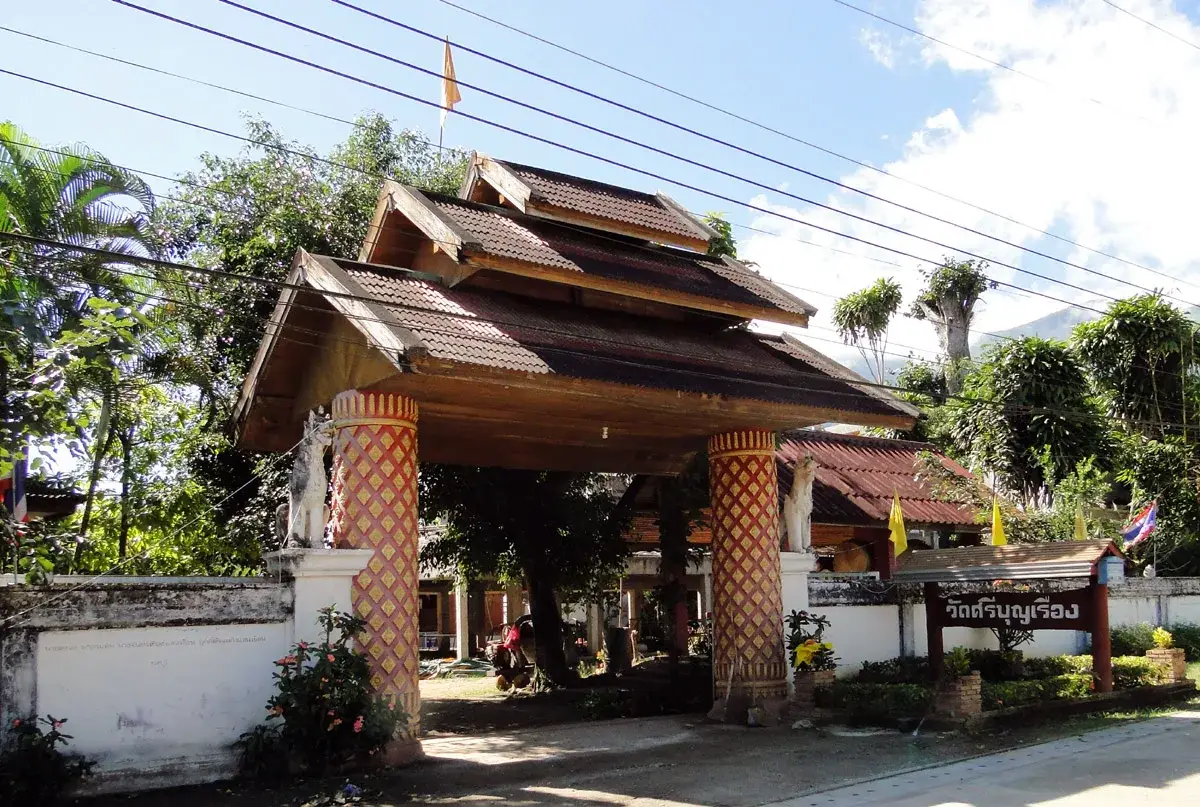
Wat Si Bun Rueang in Mueang Ngai Subdistrict, Chiang Dao District, Chiang Mai Province, is an old community temple under the Maha Nikaya order of Thai Buddhism. Located at Ban Mai, Village No. 3, the temple has served as a spiritual center for the local community since B.E. 2418 (1875). Its importance lies in its long local history, simple Lanna community-temple atmosphere, and sacred Buddhist images such as the Buddha image in the Subduing Mara posture and Phra Sing Sam. It is suitable for travelers who want to make merit, pay respect to the Buddha, and explore a quieter cultural side of Chiang Dao beyond the well-known mountain scenery.
The temple is located at 153 Ban Mai, Village No. 3, Mueang Ngai Subdistrict, Chiang Dao District, Chiang Mai Province 50170. The surrounding area remains closely connected with the local village, rural roads, and the everyday rhythm of a northern Thai community. For visitors, Wat Si Bun Rueang is best experienced as a calm cultural stop rather than a crowded tourist attraction. It can be combined with nearby places such as the King Naresuan Memorial Stupa, Muang Ngai Market, local restaurants, and accommodations around Mueang Ngai and Chiang Dao.
Wat Si Bun Rueang was founded in B.E. 2418 (1875). Its former name was Wat Ban Mai, reflecting its close relationship with Ban Mai village. The current name, Si Bun Rueang, carries an auspicious meaning associated with merit, prosperity, and spiritual growth. This makes the temple not only a place of worship but also a marker of community identity. For generations, it has functioned as a venue for religious activities, merit-making, community gatherings, and the preservation of Buddhist practice in Mueang Ngai.
The temple received its royal grant of consecrated boundary, known in Thai as Wisungkhamsima, on January 29, B.E. 2490 (1947). This is an important milestone in the formal religious status of the temple, as the consecrated boundary is essential for key monastic ceremonies. For visitors interested in Thai temple history, this detail shows that Wat Si Bun Rueang is not merely a small local shrine but an established Buddhist temple with a documented religious role in the area.
The temple land covers 3 rai, 3 ngan, and 58 square wah, with an additional monastic land plot of 2 ngan. The land boundaries connect with local roads, village areas, and rice fields, showing how closely the temple is integrated into the physical and social landscape of Ban Mai. This setting is typical of many northern Thai community temples, where the temple is not separated from daily life but stands at the heart of local settlement, agriculture, and social relationships.
The main monastic buildings at Wat Si Bun Rueang include a viharn, monks’ residences, a merit-making hall, and a kitchen. These structures reflect the real use of the temple in community life. The viharn serves as the main worship space, the monks’ residences support the daily life of the Sangha, the merit-making hall is used for offerings and communal religious activities, and the kitchen supports temple events and merit-making occasions. Together, these areas make the temple a functional religious and community space rather than a purely decorative attraction.
The important sacred objects of the temple include a Buddha image in the Subduing Mara posture and Phra Sing Sam. The Subduing Mara posture refers to the moment in the Buddha’s life when he overcame Mara before enlightenment, symbolizing spiritual firmness, victory over defilements, and inner stability. Phra Sing Sam is associated with northern Thai Buddhist art and devotion. These sacred images give Wat Si Bun Rueang both religious meaning and cultural value for local worshippers and visitors.
Visitors to Wat Si Bun Rueang will notice that its appeal is not based on grand scale or heavy tourism development. Instead, the temple offers a quiet and sincere community atmosphere. It is a place to observe the way local temples continue to function in northern Thailand: as spaces for worship, merit-making, monastic residence, community support, and cultural continuity. Travelers who enjoy local temples will appreciate the calm setting, the village surroundings, and the opportunity to understand Chiang Dao through its living Buddhist heritage.
The temple’s list of abbots shows a long continuity of monastic care. The first known abbot was Phra Sen, who served from B.E. 2418 to 2424. Later abbots included Phra Athikan Luang, Phra Suwan, Phra Thi, Phra Somyot, Phra Prasan, Phra Kham Pan, Phra In Suan, Phra Sao, Phra Athikan Kaeo, Phra Athikan Khamthammo, In Som Yanyawaro, Phra Sombun, Phra Inta, Phra Charoen Warapunyo, Phra Thong Detthammo, Phra In Intasaro, Phra Bun Yong, Phra Champa, Phra Pradit Thipathammo, Phra In Son Sumetho, Phra Bun Tan, Phra Irasorn, Phra Duang Chan Katapunyo, Phra Khru Amorn Punyaphirat, and Phra Bunma Thitawangso. This long succession reflects the temple’s continuous role in the religious life of Ban Mai and Mueang Ngai.
Phra Khru Amorn Punyaphirat served from B.E. 2534 to 2551, followed by Phra Bunma Thitawangso from B.E. 2551 onward according to the temple history. The continuity of leadership is important for maintaining temple buildings, religious practice, community merit-making, and the cultural identity of the village. For travelers, this background helps explain why a small community temple can still hold deep historical and spiritual meaning.
Wat Si Bun Rueang is also a useful stop for understanding Mueang Ngai as a cultural area. Mueang Ngai is not only a gateway to natural attractions and mountain views; it also has historical layers connected with local temples, the King Naresuan Memorial Stupa, community markets, and old settlement routes. Visiting Wat Si Bun Rueang helps travelers see Chiang Dao from a more grounded perspective, where Buddhism, village life, and local memory remain closely connected.
The temple is suitable for several types of visitors. Buddhist travelers can stop here for worship and merit-making. Cultural travelers can use it as a quiet introduction to the religious life of Mueang Ngai. History-minded visitors can connect the temple with nearby heritage sites, especially the King Naresuan Memorial Stupa. Travelers staying in Mueang Ngai or Chiang Dao can also include the temple in a half-day local route together with nearby restaurants and accommodations.
Visitors should dress politely and behave respectfully inside the temple grounds. As this is an active community temple, avoid disturbing monks, entering monastic areas without permission, or taking photographs in sensitive areas during religious activities. The most appropriate way to visit is to walk quietly, pay respect to the Buddha images, observe the temple architecture, and appreciate the temple’s role in local life.
Getting There is most convenient by private car, rental car, or local transport from Chiang Dao town. Visitors can search for Wat Si Bun Rueang, Ban Mai Samakkhi, or use the Plus Code FX42+2XG in Mueang Ngai, Chiang Dao District, Chiang Mai. From Chiang Dao, head toward Mueang Ngai and continue to Ban Mai, Village No. 3. The route is practical for a half-day or full-day cultural trip around Mueang Ngai.
The best time to visit is in the morning or late afternoon, when the weather is more comfortable and the temple atmosphere is calm. During the cool season or the transition from the rainy season to winter, Chiang Dao’s landscape becomes especially pleasant for combining temple visits, local food, and scenic drives. For photography, focus on respectful images of the temple atmosphere, surrounding village life, and travel route rather than interrupting religious activities.
Although Wat Si Bun Rueang is not a large mainstream tourist site, its value lies in its authenticity. It is a living community temple with a documented history, important sacred images, a line of abbots, and a clear connection with Ban Mai village. For travelers who want to understand Chiang Dao in greater depth, Wat Si Bun Rueang offers a quiet but meaningful glimpse into the Buddhist and cultural foundations of Mueang Ngai.
| Name | Wat Si Bun Rueang |
| Former Name | Wat Ban Mai |
| Location | Ban Mai, Village No. 3, Mueang Ngai Subdistrict, Chiang Dao District, Chiang Mai Province |
| Address | 153 Ban Mai, Village No. 3, Mueang Ngai Subdistrict, Chiang Dao District, Chiang Mai 50170, Thailand |
| Coordinates | FX42+2XG, Mueang Ngai, Chiang Dao District, Chiang Mai 50170 |
| Temple Type | Community Buddhist Temple Under The Maha Nikaya Order |
| Highlights | Historic community temple in Mueang Ngai, founded in B.E. 2418 (1875), with important sacred images and a long line of abbots |
| History | Founded in B.E. 2418 (1875) and granted Wisungkhamsima on January 29, B.E. 2490 (1947) |
| Name Origin | The name Si Bun Rueang carries an auspicious meaning connected with merit, prosperity, and spiritual growth; the temple was formerly known as Wat Ban Mai |
| Distinctive Features | Quiet Lanna community temple with a viharn, monks’ residences, merit-making hall, kitchen, and worship area |
| Sacred Objects | Buddha image in the Subduing Mara posture and Phra Sing Sam |
| Temple Land | 3 rai, 3 ngan, 58 square wah, with one additional monastic land plot of 2 ngan |
| Main Areas / Zones | Viharn, monks’ residences, merit-making hall, kitchen, and Buddha image worship area |
| Facilities | Worship area, merit-making hall, kitchen, and community temple activity areas |
| Abbot / Caretaker | Phra Bunma Thitawangso |
| Travel Information | Best reached by private car, rental car, or local transport from Chiang Dao town toward Mueang Ngai and Ban Mai, Village No. 3 |
| Current Status | Open as a community Buddhist temple in Mueang Ngai and listed in current temple and travel databases |
| Open Days | Daily |
| Opening Hours | 08.00 - 17.00 |
| Nearby Tourist Attractions | 1. King Naresuan Memorial Stupa, about 2 km 2. Muang Ngai Market, about 2 km 3. Wat Chiang Man, Mueang Ngai, about 3 km 4. Wat Chiang Yuen, Mueang Ngai, about 3 km 5. Doi Luang Chiang Dao Scenic Road 107, about 3 km |
| Nearby Restaurants | 1. Khao Soi Doi Nang, about 2 km, Tel. 081-167-2721 2. Krua Lanna Mueang Ngai, about 2 km, Tel. 053-088-233, 080-846-4233 3. Moohao Restaurant, about 3 km, Tel. 081-884-1840 4. Wang Talay Chiang Dao Restaurant, about 3 km, Tel. 095-681-5054 5. Chiang Dao Goodview, about 4 km, Tel. 053-106-189, 085-916-9490 |
| Nearby Accommodations | 1. Paradise Resort & Cafe, about 2 km, Tel. 093-324-0298 2. Chiang Dao Garden Home, about 2 km, Tel. 089-202-2998 3. Marisa Resort & Spa Chiang Dao, about 3 km, Tel. 086-431-6898 4. Chomdoi Resort Chiang Dao, about 3 km, Tel. 081-998-7478 5. Chiang Dao Goodview Resort & Spa, about 4 km, Tel. 053-106189, 085-9169490 |
Frequently Asked Questions (FAQ)
Q: Where is Wat Si Bun Rueang located?
A: Wat Si Bun Rueang is located at 153 Ban Mai, Village No. 3, Mueang Ngai Subdistrict, Chiang Dao District, Chiang Mai 50170, Thailand.
Q: When was Wat Si Bun Rueang founded?
A: Wat Si Bun Rueang was founded in B.E. 2418 (1875). Its former name was Wat Ban Mai, and it received its royal grant of consecrated boundary on January 29, B.E. 2490 (1947).
Q: What makes Wat Si Bun Rueang interesting?
A: It is an old community temple in Mueang Ngai with a documented history, monastic buildings, important sacred images, and a long line of abbots.
Q: Is Wat Si Bun Rueang open every day?
A: Yes. Wat Si Bun Rueang is open daily from 08.00 to 17.00.
Q: How can travelers get to Wat Si Bun Rueang?
A: Travelers can go by private car, rental car, or local transport from Chiang Dao town toward Mueang Ngai and Ban Mai, Village No. 3.
Q: What nearby places can be visited with Wat Si Bun Rueang?
A: Nearby places include the King Naresuan Memorial Stupa, Muang Ngai Market, Wat Chiang Man, Wat Chiang Yuen, and Doi Luang Chiang Dao Scenic Road 107.
Q: Who should visit Wat Si Bun Rueang?
A: The temple is suitable for Buddhist visitors, cultural travelers, history-minded travelers, and anyone planning a quiet local route around Mueang Ngai and Chiang Dao.
 Category: ●Places of Worship
 Group: ●Temple
Last Update : 2 WeekAgo
 Last Update : 2 WeekAgo
 Click to Access the Navigation Map GPS
 Muang Chiang Mai(121)Chom Thong(47)Mae Chaem(25)Chiang Dao(33)Doi Saket(68)Mae Taeng(85)Mae Rim(69)Samoeng(29)Fang(71)Mae Ai(59)Phrao(70)San Pa Tong(103)San Kamphaeng(66)San Sai(73)Hang Dong(73)Hot(32)Doi Tao(22)Omkoi(11)Saraphi(74)Wiang Haeng(15)Chai Prakan(28)Mae Wang(32)Mae On(22)Doi Lo(34)Galyani Vadhana(1)


