
lovethailand home >North Travel Attractions >Chiang Mai Travel Attractions >Chiang Dao >Muang Ngai > Wat Chiang Man (Mueang Ngai)
TL;DR: Wat Chiang Man (Mueang Ngai) is located at Moo 2, Mueang Ngai Subdistrict, Chiang Dao District, Chiang Mai Province, open Daily, hours 08.00 - 17.00.
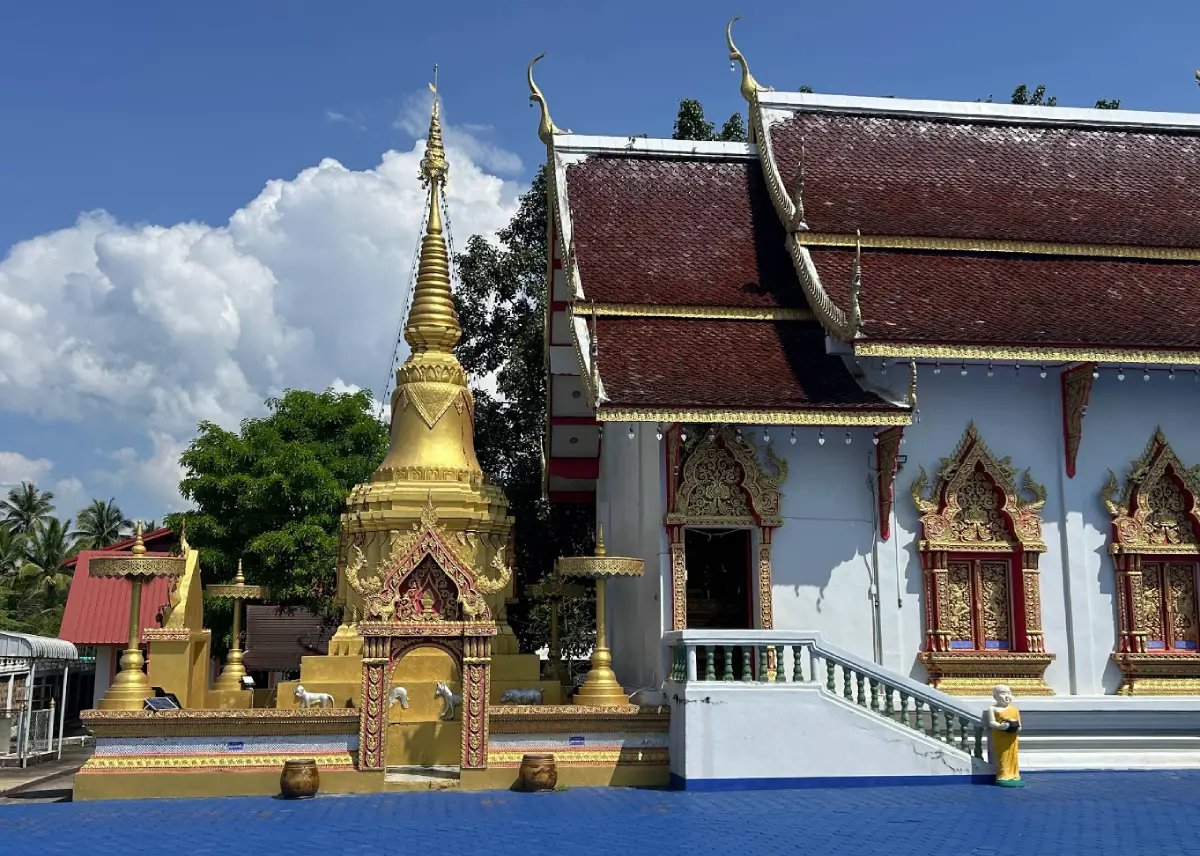
Wat Chiang Man (Mueang Ngai)
Open Days: Daily
Opening Hours: 08.00 - 17.00
Wat Chiang Man (Mueang Ngai) is located in Moo 2, Mueang Ngai Subdistrict, Chiang Dao District, Chiang Mai Province. It is a local Buddhist temple under the Maha Nikaya order and serves as an important community temple for Ban Mueang Ngai Tai. The temple was officially established in 1898 and remains part of the living Buddhist landscape of Mueang Ngai. Its current abbot is Phra Athikan Ket Kittipanyo. This temple should be clearly distinguished from Wat Chiang Man in Chiang Mai Old City, as Wat Chiang Man (Mueang Ngai) is a separate temple in Chiang Dao District.
For travelers who want a clear overview, Wat Chiang Man (Mueang Ngai) is a quiet community temple suitable for merit-making, paying respect, and learning about village Buddhist life in northern Thailand. It is not a large tourist temple. Its importance comes from its role as a local religious center in Ban Mueang Ngai Tai and from its location within a historically meaningful area connected with King Naresuan the Great, Phra That Pu Kam, and the wider cultural route of Mueang Ngai.
Mueang Ngai Subdistrict lies north of Chiang Dao town and connects Highway 107 with Highway 1178, the Mae Khon–Na Wai road. The surrounding area includes villages, farmland, temples, Buddhist landmarks, mountain scenery, and local communities. Mueang Ngai is therefore more than a transit point. It is a cultural landscape where Buddhism, local history, village life, and the northern Thai environment remain closely linked.
The name “Mueang Ngai” is associated with a local story about King Naresuan the Great. Local tradition says that the king once stopped in this area and had his morning meal here. In the Lanna language, “ngai” refers to the morning meal or morning time. This story gives Mueang Ngai a distinct identity and connects the area with historical memory, local pride, and community faith.
Wat Chiang Man (Mueang Ngai) stands in Moo 2, the Ban Mueang Ngai Tai area. The temple is closely tied to village life. Local people use the temple for Buddhist holy days, merit-making, robe-offering ceremonies, Kathin activities, and other religious events. A community temple like this is valuable because it continues to support everyday religious practice rather than functioning only as a sightseeing destination.
The temple’s official establishment in 1898 shows that Wat Chiang Man (Mueang Ngai) has deep roots in the area. A village temple with more than a century of history often functions as more than a religious building. It becomes a gathering place, a spiritual center, and a keeper of village memory. For this reason, the temple should be understood through the combined lens of history, community, Buddhism, and local travel.
As a Maha Nikaya temple, Wat Chiang Man (Mueang Ngai) reflects the ordinary Buddhist life of rural northern Thailand. Temples of this type support merit-making, family ceremonies, Buddhist holy days, offerings to monks, and local religious gatherings. Its value lies not in grand architecture or mass tourism but in the way it continues to serve people in the surrounding community.
Phra Athikan Ket Kittipanyo, the abbot of Wat Chiang Man (Mueang Ngai), oversees the temple’s religious role and community activities. The presence of an abbot and active religious activity confirms the temple’s continuing function as a living Buddhist site in Mueang Ngai. Visitors should therefore treat the temple as an active sacred space, not merely as a point on a map.
The atmosphere of Wat Chiang Man (Mueang Ngai) is calm, local, and modest. It is best suited to travelers who prefer quiet village temples and culturally meaningful stops. Visitors will experience a temple that exists within a real community, where Buddhism remains part of daily life. This makes the temple a good place to understand the quieter side of Chiang Dao beyond the district’s famous caves and mountain views.
When viewed within the wider Mueang Ngai area, Wat Chiang Man is one of several Buddhist sites serving different villages. Nearby community temples include Wat Chiang Yuen, Wat Si Bun Rueang, Wat Sa-at Chai Si, and other local temples. This pattern reflects the strong Buddhist identity of Mueang Ngai, where temples continue to act as spiritual centers for individual villages.
One important site to combine with Wat Chiang Man is the King Naresuan the Great Memorial Stupa. The memorial stupa was built to honor King Naresuan the Great and reflects Mueang Ngai’s historical identity. Visiting the stupa together with Wat Chiang Man allows travelers to understand both the living Buddhist community and the historical memory of the area.
The King Naresuan the Great Memorial Stupa also functions as a local learning site. It helps explain why Mueang Ngai is significant beyond its role as a rural subdistrict. For travelers interested in Thai history, the memorial adds depth to a visit to Wat Chiang Man and makes the route through Mueang Ngai more meaningful.
Another nearby sacred site is Phra Phuttha Chayanti Si Mueang Ngai, also known as Phra That Pu Kam. Local tradition connects this stupa with the early settlement of Mueang Ngai, a village leader named Pu Kam, and a wandering monk who entrusted a sacred hair relic to the villagers. The community later built a stupa on the hill and continued the annual tradition of bathing the stupa. This makes Phra That Pu Kam one of the most important faith sites in Mueang Ngai.
Combining Wat Chiang Man, the King Naresuan Memorial Stupa, and Phra That Pu Kam creates a complete cultural route through Mueang Ngai. Visitors can experience a village temple, a historical memorial, and a sacred local stupa in one trip. This route is suitable for travelers who want to see Chiang Dao through culture and community, not only through natural attractions.
Getting There is most convenient by private car. From Chiang Dao District, take Highway 107 to the Mueang Ngai junction, then continue on Highway 1178, also known as the Mae Khon–Na Wai road, toward Ban Mueang Ngai Tai. From Chiang Mai city, travelers can follow the Mae Rim–Mae Taeng–Chiang Dao route before turning into Mueang Ngai. The route works well for a full-day cultural trip or as part of an overnight stay in Chiang Dao.
Daytime travel is recommended because Mueang Ngai has several junctions and community roads. Visiting during the day makes it easier to find the temple, continue to nearby landmarks, and combine temples, historical sites, restaurants, and accommodations in the same trip.
Travelers can continue from Wat Chiang Man to Wat Chiang Yuen, the King Naresuan the Great Memorial Stupa, Phra That Pu Kam, Chiang Dao Cave, and Wat Tham Pha Plong. With more time, the route can be expanded to include local restaurants, resorts in Mueang Ngai, and the main attractions of Chiang Dao town.
Wat Chiang Man (Mueang Ngai) is best suited to visitors interested in local temples, Lanna culture, Mueang Ngai history, and slow travel. Travelers familiar with large temples in Chiang Mai city will find a different atmosphere here. This temple shows how a Buddhist temple continues to function inside a real village community.
Visitors should dress respectfully, speak quietly, and avoid disturbing monks or local worshippers. As Wat Chiang Man is an active community temple, it should be treated as a sacred place rather than only a sightseeing location. Photography should be done politely, especially during ceremonies or when local residents are present.
For travelers seeking a deeper view of Chiang Dao, Wat Chiang Man helps complete the picture. Chiang Dao is not only known for Doi Luang Chiang Dao, Chiang Dao Cave, Wat Tham Pha Plong, and scenic cafes. It is also home to village temples, historical memories, local Buddhist communities, and sacred sites like Phra That Pu Kam. A visit to Wat Chiang Man therefore adds cultural depth to a Chiang Dao itinerary.
In conclusion, Wat Chiang Man (Mueang Ngai) is a Maha Nikaya community temple in Moo 2, Ban Mueang Ngai Tai, Mueang Ngai Subdistrict, Chiang Dao District, Chiang Mai Province. Officially established in 1898 and overseen by Phra Athikan Ket Kittipanyo, the temple remains an important spiritual center for the local community. Travelers who want to understand Chiang Dao beyond its natural attractions should include Wat Chiang Man in a route with the King Naresuan the Great Memorial Stupa, Phra That Pu Kam, Chiang Dao Cave, and Wat Tham Pha Plong.
| Name | Wat Chiang Man (Mueang Ngai) |
| Location | Moo 2, Mueang Ngai Subdistrict, Chiang Dao District, Chiang Mai Province |
| Address | Moo 2, Ban Mueang Ngai Tai, Mueang Ngai Subdistrict, Chiang Dao District, Chiang Mai 50170, Thailand |
| Navigation Code | FX78+V6W, Mueang Ngai, Chiang Dao District, Chiang Mai |
| Temple Type | Local Buddhist temple under the Maha Nikaya order |
| Highlights | A historic community temple in Ban Mueang Ngai Tai, connected with the King Naresuan Memorial Stupa and Phra That Pu Kam cultural route |
| History | Officially established as a temple in 1898 |
| Distinctive Features | A village temple supporting merit-making, Kathin activities, robe-offering events, Buddhist holy days, and local religious life in Ban Mueang Ngai Tai |
| Area Context | Mueang Ngai is a historically important area of Chiang Dao with local stories connected to King Naresuan the Great, the King Naresuan Memorial Stupa, Phra That Pu Kam, and several Buddhist village communities |
| Related Sacred Areas | King Naresuan the Great Memorial Stupa and Phra Phuttha Chayanti Si Mueang Ngai, Phra That Pu Kam |
| Travel Information | From Chiang Dao District, take Highway 107 to the Mueang Ngai junction, then continue on Highway 1178 or the Mae Khon–Na Wai road toward Ban Mueang Ngai Tai |
| Current Status | A registered Buddhist temple with current religious activity in Mueang Ngai Subdistrict |
| Open Days | Daily |
| Opening Hours | 08.00 - 17.00 |
| Abbot / Caretaker | Phra Athikan Ket Kittipanyo |
| Local Area Contact | Phra That Pu Kam Municipality, Tel. 053-106403, 097-991-8906 |
| Nearby Tourist Attractions | 1. King Naresuan the Great Memorial Stupa, about 1 km 2. Phra Phuttha Chayanti Si Mueang Ngai, Phra That Pu Kam, about 2 km 3. Wat Chiang Yuen, Mueang Ngai, about 2 km 4. Chiang Dao Cave, about 15 km 5. Wat Tham Pha Plong, about 17 km |
| Nearby Restaurants | 1. Khrua Lanna Mueang Ngai, about 2 km, Tel. 053-088-233, 080-846-4233 2. Khao Soi Doi Nang, about 3 km 3. Chiang Dao Goodview, about 9 km, Tel. 053-106-189, 081-111-9671 4. Sanae Doi Luang Chiang Dao, about 12 km, Tel. 081-111-7219 5. Doi Mek Coffee, about 18 km, Tel. 053-375-088 |
| Nearby Accommodations | 1. Marisa Resort & Spa - Chiang Dao, about 2 km 2. Baan Sri Chiang Dao, about 3 km 3. STAY Day Off, about 4 km, Tel. 083-159-3445 4. Paradise Resort & Cafe, about 5 km, Tel. 093-324-0298 5. Chiang Dao Good View Resort, about 9 km, Tel. 053-106-189, 081-111-9671 |
Frequently Asked Questions (FAQ)
Q: Where is Wat Chiang Man (Mueang Ngai) located?
A: Wat Chiang Man (Mueang Ngai) is located in Moo 2, Ban Mueang Ngai Tai, Mueang Ngai Subdistrict, Chiang Dao District, Chiang Mai Province.
Q: Is Wat Chiang Man (Mueang Ngai) the same temple as Wat Chiang Man in Chiang Mai Old City?
A: No. Wat Chiang Man (Mueang Ngai) is a separate temple in Mueang Ngai Subdistrict, Chiang Dao District, while Wat Chiang Man in Chiang Mai Old City is located in central Chiang Mai.
Q: What type of temple is Wat Chiang Man (Mueang Ngai)?
A: Wat Chiang Man (Mueang Ngai) is a local Buddhist temple under the Maha Nikaya order.
Q: What is the historical background of Wat Chiang Man (Mueang Ngai)?
A: Wat Chiang Man (Mueang Ngai) was officially established as a temple in 1898 and has long served the Ban Mueang Ngai Tai community.
Q: Who is the abbot of Wat Chiang Man (Mueang Ngai)?
A: The abbot is Phra Athikan Ket Kittipanyo.
Q: What are the opening hours of Wat Chiang Man (Mueang Ngai)?
A: The temple is open daily from 08.00 to 17.00.
Q: How can travelers get to Wat Chiang Man (Mueang Ngai)?
A: From Chiang Dao District, take Highway 107 to the Mueang Ngai junction, then continue on Highway 1178 or the Mae Khon–Na Wai road toward Ban Mueang Ngai Tai.
Q: What nearby places can be visited with Wat Chiang Man (Mueang Ngai)?
A: Nearby places include the King Naresuan the Great Memorial Stupa, Phra That Pu Kam, Wat Chiang Yuen, Chiang Dao Cave, and Wat Tham Pha Plong.
 Category: ●Places of Worship
 Group: ●Temple
Last Update : 2 DayAgo
 Last Update : 2 DayAgo
 Click to Access the Navigation Map GPS
Wat Chiang Man (Mueang Ngai) Map
Recommend

 Muang Chiang Mai(121)Chom Thong(47)Mae Chaem(25)Chiang Dao(33)Doi Saket(68)Mae Taeng(85)Mae Rim(69)Samoeng(29)Fang(71)Mae Ai(62)Phrao(70)San Pa Tong(105)San Kamphaeng(66)San Sai(73)Hang Dong(74)Hot(32)Doi Tao(22)Omkoi(11)Saraphi(74)Wiang Haeng(15)Chai Prakan(28)Mae Wang(32)Mae On(22)Doi Lo(34)Galyani Vadhana(1)


