
lovethailand home >North Travel Attractions >Chiang Mai Travel Attractions >Chiang Dao >Thung Khao Phuang > Wat Huai Pao
TL;DR: Wat Huai Pao is located at Moo 1, Ban Huai Pao, Thung Khao Phuang Subdistrict, Chiang Dao District, Chiang Mai Province, open Daily, hours 08.00 - 17.00.
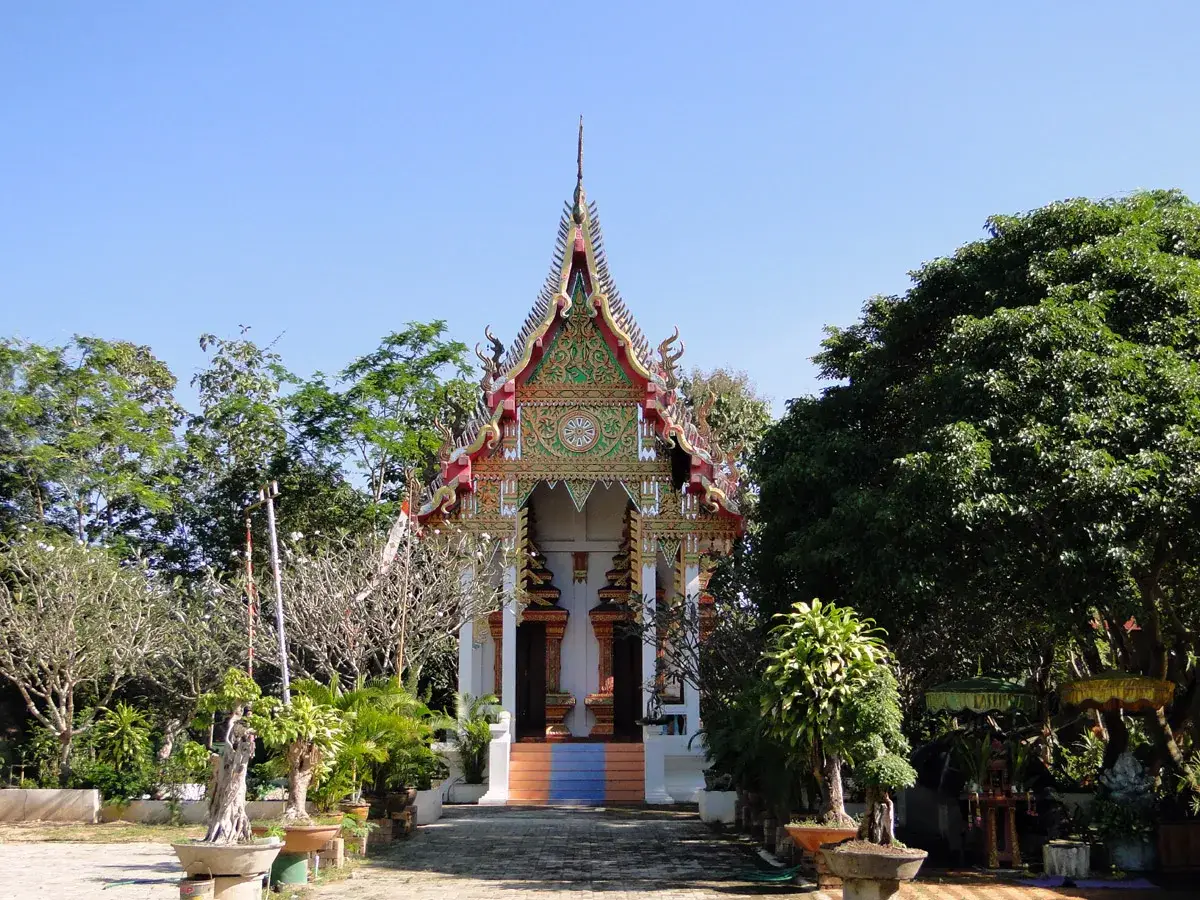
Wat Huai Pao
Open Days: Daily
Opening Hours: 08.00 - 17.00
Wat Huai Pao is located in Moo 1, Ban Huai Pao, Thung Khao Phuang Subdistrict, Chiang Dao District, Chiang Mai Province. It is a local Buddhist temple under the Maha Nikaya order and an important spiritual center for the Ban Huai Pao community. The temple was officially established in 1941 and received Wisungkhamsima in 2007. Its abbot is Phra Khru Piyatham Bandit Piyadhammo. Wat Huai Pao is closely connected with the religious life of the village, local traditions, and nearby sacred sites such as Phra That Doi Pan Tang and Wat Phra Bat Roi Wua.
Wat Huai Pao is a quiet community temple suitable for merit-making, paying respect to Buddhist sacred places, and learning about the local faith of Thung Khao Phuang. The temple is not only a village monastery but also part of a wider cultural route through Ban Huai Pao. Nearby sacred and scenic places include Phra That Doi Pan Tang, a hilltop stupa overlooking the village, and Wat Phra Bat Roi Wua, another local Buddhist site in the same community.
Ban Huai Pao is a village in Thung Khao Phuang Subdistrict, a rural area of Chiang Dao where mountain landscapes, agricultural communities, Buddhist temples, and local traditions remain closely connected. Wat Huai Pao reflects this setting clearly. It functions as a real community temple rather than a large commercial tourist attraction. Local people use the temple for worship, Buddhist ceremonies, merit-making, annual religious events, and community gatherings.
The official establishment of Wat Huai Pao in 1941 shows that the temple has long been rooted in the community. A village temple that has existed for many decades often represents more than religious architecture. It reflects the faith of local families, the development of the village, and the need for a central Buddhist space where people can gather for ceremonies and maintain their spiritual life.
In 2007, Wat Huai Pao received Wisungkhamsima, an important recognition in Thai Buddhism. Wisungkhamsima defines the official sacred boundary for formal monastic acts. For a community temple, this milestone indicates a stronger religious status and confirms the temple’s continuing role within the Thai Sangha system. It also reflects the long-term support of the Ban Huai Pao community.
Wat Huai Pao is a Maha Nikaya temple. Its character is typical of many northern Thai village temples: modest, community-focused, and closely tied to everyday Buddhist practice. Its value does not depend on grand scale or heavy tourism. Instead, its importance comes from its role as a place where villagers make merit, observe Buddhist holy days, support monks, and gather during religious ceremonies.
Phra Khru Piyatham Bandit Piyadhammo, the abbot of Wat Huai Pao, oversees the temple’s religious life and maintains its role as the spiritual center of the village. The presence of an abbot and resident monks allows the temple to continue supporting daily worship, Buddhist rituals, Kathin ceremonies, robe-offering events, and other activities that keep the connection between temple and community alive.
One of the most important features connected with Wat Huai Pao is Phra That Doi Pan Tang. This sacred stupa is located in Ban Huai Pao, Moo 1, Thung Khao Phuang Subdistrict. It stands on higher ground with a peaceful atmosphere and a clear view of Ban Huai Pao. Visitors can pay respect to the stupa and also appreciate the natural scenery of the area. The site is also associated with reverence for King Naresuan the Great.
Phra That Doi Pan Tang is significant not only as a viewpoint but also as a sacred place connected with local religious tradition. The tradition of bathing Phra That Doi Pan Tang at Wat Huai Pao reflects the community’s faith and the Lanna Buddhist practice of honoring sacred stupas. This kind of ritual helps connect villagers with Buddhism, local identity, and the sacred landscape of their home area.
Another nearby site is Wat Phra Bat Roi Wua, located in Ban Huai Pao on Highway 1178 around kilometer 18. The site has a quiet natural atmosphere and sits on elevated ground with views over Ban Huai Pao. Travelers visiting Wat Huai Pao can combine it with Phra That Doi Pan Tang and Wat Phra Bat Roi Wua in the same route, creating a meaningful local pilgrimage and cultural trip through the village.
When Wat Huai Pao, Phra That Doi Pan Tang, and Wat Phra Bat Roi Wua are viewed together, Ban Huai Pao becomes a compact cultural and spiritual route. Wat Huai Pao represents the village’s living temple. Phra That Doi Pan Tang represents sacred devotion and hilltop scenery. Wat Phra Bat Roi Wua adds another religious stop that deepens the visitor’s understanding of the area. These places together show how Buddhism, community, and landscape are connected in rural Chiang Dao.
The atmosphere around Wat Huai Pao is quiet and rural. This is a place for travelers who prefer slow travel, local culture, and authentic village settings. The temple may not have the extensive facilities of major tourist temples in Chiang Mai city, but it offers a more grounded experience. Visitors can observe how a northern Thai village temple actually supports local religious life.
Thung Khao Phuang Subdistrict has a landscape of plains, mountains, forests, agricultural areas, and local communities. Several groups live in the area, and village life is closely tied to farming, Buddhism, and seasonal traditions. Wat Huai Pao is one of the places that helps visitors understand this local context. It shows that Chiang Dao is not only a destination for mountains and caves, but also a district with active village temples and living traditions.
Ban Huai Pao is also connected with the Huai Pao Highland Development Project under the Royal Project model. This wider local context adds another layer to the visitor experience. The village is not only a religious community but also part of a highland development area where agriculture, local livelihoods, and community well-being are important. A visit to Wat Huai Pao therefore connects Buddhist culture with the broader life of the village.
Getting There is easiest by private car. From Chiang Dao District, take Highway 107 toward the Mueang Ngai junction, then turn onto Highway 1178 toward Thung Khao Phuang and Ban Huai Pao. The distance from Chiang Dao District Office to the Ban Huai Pao area is about 25 km. This is the same route used to reach Phra That Doi Pan Tang and Wat Phra Bat Roi Wua.
Daytime travel is recommended because the route includes rural roads and mountain-area sections. During daylight, signs, junctions, road conditions, and village entrances are easier to see. Travelers who plan to visit several places in Ban Huai Pao can start with Wat Huai Pao, continue to Phra That Doi Pan Tang, and then visit Wat Phra Bat Roi Wua, or adjust the order based on the actual route and road conditions.
From Chiang Mai city, travelers can drive through Mae Rim, Mae Taeng, and Chiang Dao, then enter Highway 1178 at the Mueang Ngai junction. The route can be planned as a full-day trip or part of an overnight stay in Chiang Dao. Wat Huai Pao can be combined with Chiang Dao Cave, Wat Tham Pha Plong, Doi Luang Chiang Dao, Thung Khao Phuang Viewpoint, and local restaurants or accommodations in Chiang Dao.
Visitors should dress respectfully, speak quietly, and behave appropriately within temple grounds. As Wat Huai Pao is an active religious place for the local community, travelers should avoid disturbing monks or villagers during ceremonies. If continuing to Phra That Doi Pan Tang or Wat Phra Bat Roi Wua, visitors should drive carefully on hill roads and help keep the sacred and natural areas clean.
For cultural travelers, Wat Huai Pao offers a deeper way to understand Chiang Dao beyond its famous mountain and cave attractions. The district contains temples, highland villages, local traditions, sacred stupas, and diverse communities. A visit to Wat Huai Pao helps reveal the spiritual and social structure of a village that continues to use its temple as a center of faith and identity.
Wat Huai Pao is not a place to rush through. It is best appreciated slowly, with time to observe its community role, pay respect, and connect the temple with nearby sacred sites. Seen in this way, Wat Huai Pao is more than a name in a temple register or a stop on a map. It is part of the living Buddhist landscape of Ban Huai Pao.
In conclusion, Wat Huai Pao is a Maha Nikaya community temple with clear religious, historical, and cultural importance. Its highlights include its establishment in 1941, its Wisungkhamsima in 2007, the leadership of Phra Khru Piyatham Bandit Piyadhammo, and its connection with Phra That Doi Pan Tang and Wat Phra Bat Roi Wua. Travelers who want to understand the cultural side of Chiang Dao should include Wat Huai Pao in a route through Thung Khao Phuang.
| Name | Wat Huai Pao |
| Location | Moo 1, Ban Huai Pao, Thung Khao Phuang Subdistrict, Chiang Dao District, Chiang Mai Province |
| Address | Ban Huai Pao, Moo 1, Thung Khao Phuang Subdistrict, Chiang Dao District, Chiang Mai 50170, Thailand |
| Temple Type | Local Buddhist temple under the Maha Nikaya order |
| Highlights | A village temple connected with Phra That Doi Pan Tang, Wat Phra Bat Roi Wua, and the Buddhist cultural route of Thung Khao Phuang |
| History | Officially established as a temple in 1941 and granted Wisungkhamsima in 2007 |
| Distinctive Features | A community temple serving religious, ceremonial, and social roles for Ban Huai Pao |
| Tradition / Important Activity | Bathing ceremony of Phra That Doi Pan Tang, Wat Huai Pao |
| Related Sacred Areas | Phra That Doi Pan Tang, Ban Huai Pao, and Wat Phra Bat Roi Wua, Ban Huai Pao |
| Nearby Sacred Site Coordinates | Phra That Doi Pan Tang 19.5683, 98.9582 / Wat Phra Bat Roi Wua 19.5730, 98.9557 |
| Travel Information | From Chiang Dao District, take Highway 107 to the Mueang Ngai junction, then continue on Highway 1178 toward Ban Huai Pao. The distance from Chiang Dao District Office to the Ban Huai Pao area is about 25 km. |
| Current Status | An active registered Buddhist temple serving the Ban Huai Pao community |
| Open Days | Daily |
| Opening Hours | 08.00 - 17.00 |
| Abbot / Caretaker | Phra Khru Piyatham Bandit Piyadhammo |
| Local Travel Contact | Thung Khao Phuang Municipality, Tel. 053-045120 |
| Nearby Tourist Attractions | 1. Phra That Doi Pan Tang, about 1 km 2. Wat Phra Bat Roi Wua, Ban Huai Pao, about 1 km 3. Huai Pao Royal Project Development Area, about 2 km 4. Thung Khao Phuang Viewpoint, about 5 km 5. Wat Phra That Doi Mon Ching, about 8 km |
| Nearby Restaurants | 1. Sanae Doi Luang Chiang Dao, about 17 km, Tel. 081-111-7219 2. The Terrace, about 18 km 3. Doi Mek Coffee, about 24 km, Tel. 053-375-088 4. Chiang Dao Nest 1 Restaurant, about 29 km, Tel. 053-456-612 5. The Cave Bar, about 29 km |
| Nearby Accommodations | 1. Azalea Village Wellness Resort & Residence, about 19 km, Tel. 053-456-168, 086-359-4244 2. Aurora Resort Chiangdao, about 19 km, Tel. 053-456-928 3. Malee's Nature Lovers Bungalows, about 29 km, Tel. 053-456-617 4. Chiang Dao Hut, about 29 km 5. Chiang Dao Nest, about 29 km, Tel. 053-456-612 |
Frequently Asked Questions (FAQ)
Q: Where is Wat Huai Pao located?
A: Wat Huai Pao is located in Moo 1, Ban Huai Pao, Thung Khao Phuang Subdistrict, Chiang Dao District, Chiang Mai Province.
Q: What type of temple is Wat Huai Pao?
A: Wat Huai Pao is a local Buddhist temple under the Maha Nikaya order.
Q: What is the historical background of Wat Huai Pao?
A: Wat Huai Pao was officially established as a temple in 1941 and received Wisungkhamsima in 2007.
Q: Who is the abbot of Wat Huai Pao?
A: The abbot is Phra Khru Piyatham Bandit Piyadhammo.
Q: What is special about Wat Huai Pao?
A: Wat Huai Pao is a community temple connected with Phra That Doi Pan Tang, Wat Phra Bat Roi Wua, and the Buddhist cultural route of Thung Khao Phuang.
Q: Is there an important tradition related to Wat Huai Pao?
A: Yes. The temple is associated with the bathing ceremony of Phra That Doi Pan Tang, a local religious tradition connected with the sacred stupa of Ban Huai Pao.
Q: How can travelers get to Wat Huai Pao?
A: From Chiang Dao District, take Highway 107 to the Mueang Ngai junction, then continue on Highway 1178 toward Ban Huai Pao in Thung Khao Phuang Subdistrict.
Q: What nearby places can be visited with Wat Huai Pao?
A: Nearby places include Phra That Doi Pan Tang, Wat Phra Bat Roi Wua, the Huai Pao Royal Project Development Area, Thung Khao Phuang Viewpoint, and Wat Phra That Doi Mon Ching.
 Category: ●Places of Worship
 Group: ●Temple
Last Update : 7 DayAgo
 Last Update : 7 DayAgo
 Click to Access the Navigation Map GPS
 Muang Chiang Mai(121)Chom Thong(47)Mae Chaem(25)Chiang Dao(33)Doi Saket(68)Mae Taeng(85)Mae Rim(69)Samoeng(29)Fang(71)Mae Ai(59)Phrao(70)San Pa Tong(103)San Kamphaeng(66)San Sai(73)Hang Dong(74)Hot(32)Doi Tao(22)Omkoi(11)Saraphi(74)Wiang Haeng(15)Chai Prakan(28)Mae Wang(32)Mae On(22)Doi Lo(34)Galyani Vadhana(1)


