
lovethailand home >North Travel Attractions >Chiang Mai Travel Attractions >Chiang Dao >Chiang Dao > Wat Jai
TL;DR: Wat Jai is located at Moo 6, Chiang Dao Subdistrict, Chiang Dao District, Chiang Mai Province, open Daily, hours 08.00 – 17.00.
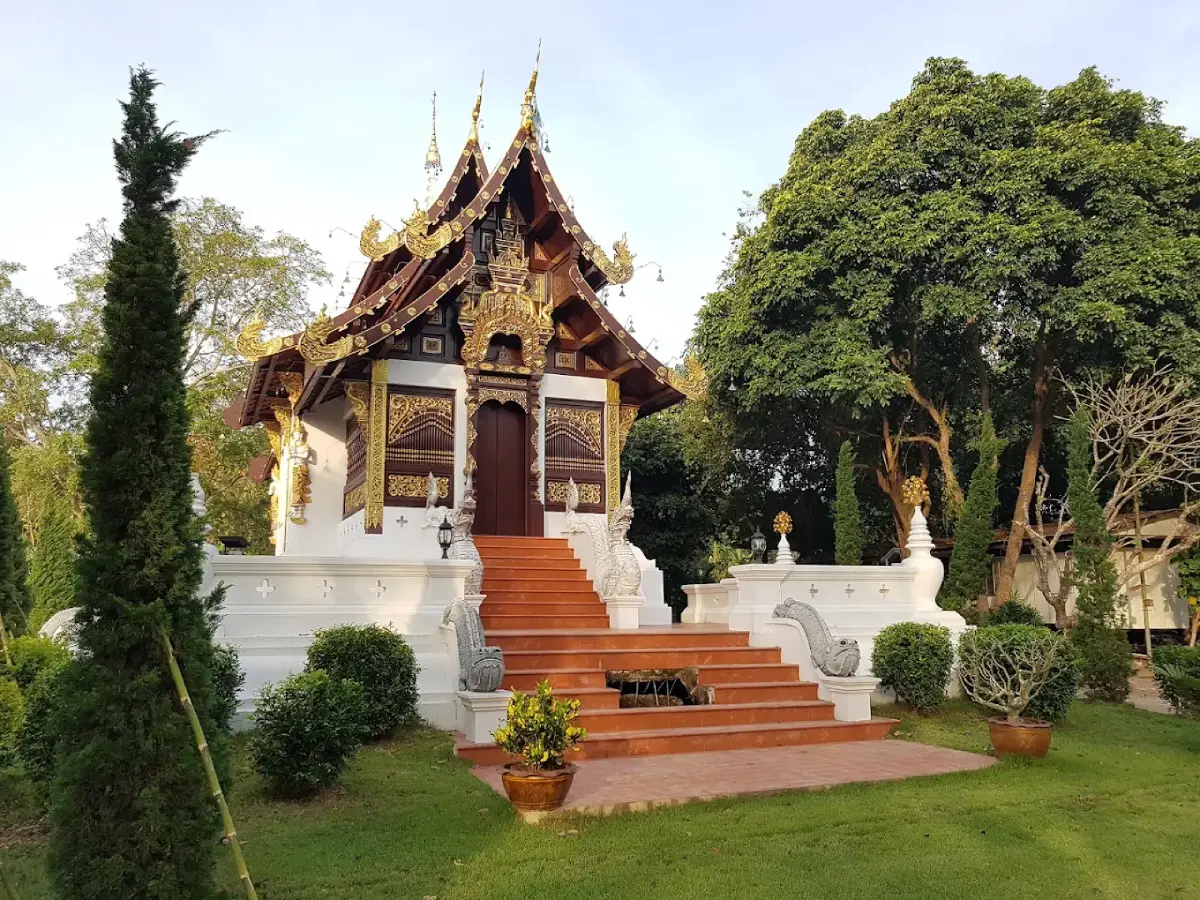
Wat Jai
Open Days: Daily
Opening Hours: 08.00 – 17.00
Wat Jai, also known as Wat Jai (Dong Thewi) or Wat Jai (Dong Tae Wee), is located at 311 Moo 6, Chiang Dao Subdistrict, Chiang Dao District, Chiang Mai Province. It is a local Buddhist temple with Phatthasima status and a meaningful connection to the Dong Thewi community. The temple was officially established in 1979 and received Wisungkham Sima in 1999. Its abbot is Phra Khru Sophon Thammanuwat Sutammo. Wat Jai is especially interesting because of its unusual name, its history as a restored abandoned temple, and its location in an area associated with the old cultural landscape of Chiang Dao.
Chiang Dao is often remembered for its mountains, caves, hot springs, and nature routes, but its community temples are just as important for understanding the district. Wat Jai (Dong Thewi) is one of these temples. It is not a large commercial tourist site. Instead, it is a local Buddhist temple that connects religious practice, village life, and historical memory. For travelers who want to understand Chiang Dao beyond scenic landscapes, this temple offers a quieter and deeper perspective.
The history of Wat Jai is closely linked with the revival of an abandoned temple site. The temple was raised to the status of a temple with resident monks on 12 October 1979. The original temple land covered about 4 rai, and local residents later donated additional land for the temple. This type of revival shows the strength of community faith. Restoring an abandoned temple requires land donation, local cooperation, long-term care, and a shared commitment to keeping Buddhism active in the village.
The name “Wat Jai” is memorable and unusual. When paired with “Dong Thewi,” it becomes even more distinctive. For cultural travelers, the name helps make the temple stand out, but the value of the temple is not limited to its name. Its deeper importance lies in its restored-temple background and its role as a Buddhist and community space in Chiang Dao today.
Dong Thewi is also meaningful in local historical discussions. Information about Chiang Dao refers to the Dong Thewi area and the so-called double moat, or Khu Song Chan, in relation to traces of the old Chiang Dao settlement. This background gives Wat Jai a richer cultural setting than an ordinary village temple. A visit here is therefore not only about paying respect at a temple, but also about seeing a layer of Chiang Dao connected with old settlements, abandoned temple remains, and local memory.
Historical descriptions of the old Dong Thewi temple area mention traces of temple walls, old bricks, and a ruined chedi with a rounded earth mound form. A broken upper section of the chedi was described as still showing lotus-like stucco patterns. These details give Wat Jai archaeological and artistic interest. Even if not every old feature is clearly visible to today’s visitor, the story helps explain why this temple matters to the cultural memory of the Dong Thewi community.
Wat Jai is a temple with Phatthasima status. This means the temple has a properly designated monastic boundary for important Sangha ceremonies. Receiving Wisungkham Sima in 1999 was therefore a significant milestone. It marked the temple’s development from a revived former abandoned site into a recognized Buddhist institution with clearer religious status.
Local temple listings also identify Wat Jai as a Dhammayuttika temple. This gives the temple a distinct place within Chiang Dao’s wider Buddhist landscape, where both Mahā Nikāya and Dhammayuttika temples can be found. Wat Jai therefore contributes to the religious diversity of Chiang Dao, alongside cave temples, village temples, forest practice spaces, and other local Buddhist institutions.
The temple’s sacred objects include metal Buddha images, a gilded stucco walking Buddha image, and a chedi. These objects are important to the temple’s atmosphere of faith. The walking Buddha image carries an elegant artistic meaning, often associated with grace, serenity, and the Buddha’s compassionate movement through the world. The chedi serves as a devotional focus and a symbol of Buddhist remembrance.
Wat Jai’s temple structures and functional areas include a sermon hall, a multipurpose pavilion, a dining hall or kitchen area, and spaces used for religious activities. These buildings show how the temple functions as a real community center. The sermon hall supports merit-making and listening to Dhamma teachings, while the multipurpose pavilion and kitchen area are useful during temple events, community merit-making, and annual Buddhist activities.
Older temple information also mentions a library at Wat Jai. This detail is important because many Thai temples serve not only as places of worship but also as learning spaces for the community. A temple library supports reading, Dhamma study, ethical learning, and village education. This gives Wat Jai a social role in addition to its religious role.
Phra Khru Sophon Thammanuwat Sutammo is identified as the abbot of Wat Jai (Dong Thewi) in the information used for this article. In a community temple, the abbot’s role is essential. He helps maintain the temple, leads ceremonies, supports local religious practice, and connects the temple with residents. For a temple that was once abandoned, continuing monastic leadership is especially important because it keeps the temple’s religious life active.
Wat Jai continues to appear in current public listings as a religious place in Chiang Dao. Its address is listed as 311 Moo 6, Chiang Dao Subdistrict, Chiang Dao District, Chiang Mai 50170, and its public contact number is 053-455-434. The temple’s name also appears in government-related public activity listings for Chiang Dao. These references confirm that Wat Jai (Dong Thewi) remains identifiable in current public information and is not a permanently closed or lost site.
For travelers, Wat Jai is best understood as a quiet cultural stop. It is close enough to central Chiang Dao and the main travel routes to be included in a short itinerary, yet it has a deeper historical background than many simple map listings suggest. It can be visited before or after Chiang Dao Cave, Wat Tham Pha Plong, Doi Luang Chiang Dao, or nearby accommodation in Chiang Dao town.
Getting There is easiest by private car or rental car. From Chiang Mai city, take Highway 107 on the Chiang Mai–Fang route toward Chiang Dao District. Once in Chiang Dao, search for Wat Jai (Dong Thewi), Wat Jai (Dong Tae Wee), or 311 Moo 6, Chiang Dao Subdistrict. The temple is in a local community area, so visitors should drive carefully near homes, schools, shops, and small local roads.
Travelers using public transport can start from Chang Phueak Bus Station in Chiang Mai and take a bus or local transport heading toward Chiang Dao or Tha Ton. After getting off in Chiang Dao town, continue to the temple by local vehicle, hired transport, or a short local transfer. This is possible for budget travelers, but it is best to plan the return trip in advance, especially if combining several stops in one day.
The best time to visit Wat Jai is in the morning or late afternoon. Morning visits are suitable for making merit and then continuing to Chiang Dao Cave or Wat Tham Pha Plong. Late afternoon visits work well before checking into accommodation or returning toward Chiang Mai. In the cool season, Chiang Dao has a pleasant northern atmosphere. During the rainy season, the landscape is greener, but travelers should allow extra time for wet roads and local traffic conditions.
Visitors should follow standard Thai temple etiquette. Dress modestly, speak quietly, avoid entering monk-only areas without permission, and do not disturb monks or worshippers. If old bricks, chedi remains, or historic temple features are seen, they should be treated carefully. Visitors should not climb on old structures, touch fragile remains, or remove anything from the temple area.
Travelers interested in Chiang Dao’s local history can use Wat Jai as a starting point for understanding Dong Thewi and the old settlement landscape. Chiang Dao should not be seen only through its mountains and caves. Its temples, village names, old moats, roads, and community spaces also preserve local history. Wat Jai helps reveal this cultural side of the district.
A half-day route can begin at Wat Jai (Dong Thewi), continue to Chiang Dao Market or Chiang Dao Walking Street, and then proceed to Chiang Dao Cave and Wat Tham Pha Plong. With more time, travelers can add Ban Yang Pu To Hot Spring or a Doi Luang Chiang Dao viewpoint. This route combines a village temple, a local market, a cave temple, meditation atmosphere, local food, and mountain scenery.
Wat Jai offers a different experience from the better-known Chiang Dao temples. Chiang Dao Cave is known for its cave setting and sacred atmosphere within the limestone mountain. Wat Tham Pha Plong is known for meditation, forest quietness, and its stairway through nature. Wat Jai is valuable as a community temple with a restored abandoned-temple story and a connection to Dong Thewi. Visiting all these places together gives a fuller picture of Chiang Dao.
For photography, Wat Jai is better suited to quiet documentary-style images than dramatic landmark shots. Visitors can capture the temple atmosphere, sermon hall, chedi area, sacred objects, and local surroundings, but photography should always be respectful. Avoid inappropriate poses, do not disturb ceremonies, and ask permission before photographing monks, worshippers, or private community activities.
Wat Jai is suitable for slow travel. It is not a place to rush through just to collect another check-in point. Spend time observing the temple atmosphere, the Dong Thewi community setting, and the way an old temple site has returned to religious use. This slower approach makes a small local temple more meaningful and helps travelers understand Chiang Dao beyond its famous natural attractions.
In summary, Wat Jai (Dong Thewi) is a community Buddhist temple in Chiang Dao with religious, historical, and local cultural value. It was officially established in 1979, received Wisungkham Sima in 1999, and is associated with Phra Khru Sophon Thammanuwat Sutammo as abbot. Its story as a restored abandoned temple in the Dong Thewi area makes it a worthwhile stop for travelers interested in local temples, old Chiang Dao history, and quiet cultural travel.
| Name | Wat Jai or Wat Jai (Dong Thewi) |
| Location | Moo 6, Chiang Dao Subdistrict, Chiang Dao District, Chiang Mai Province |
| Address | 311 Moo 6, Chiang Dao Subdistrict, Chiang Dao District, Chiang Mai 50170, Thailand |
| Map Search | Search for “Wat Jai (Dong Thewi)” or “Wat Jai (Dong Tae Wee), Chiang Dao” |
| Highlights | A community temple with Phatthasima status in the Dong Thewi area, connected with a restored abandoned temple site and the historical landscape of Chiang Dao |
| History | Officially established in 1979 and granted Wisungkham Sima in 1999; formerly an abandoned temple site before restoration |
| Temple Type | Local Buddhist temple with Phatthasima status |
| Monastic Order | Dhammayuttika |
| Name Origin / Local Name | Known as Wat Jai (Dong Thewi), combining the temple name with the Dong Thewi community area |
| Distinctive Features | Metal Buddha images, a gilded stucco walking Buddha image, chedi, sermon hall, multipurpose pavilion, and community temple grounds |
| Travel Information | From Chiang Mai city, take Highway 107 toward Chiang Dao and search for Wat Jai (Dong Thewi) or 311 Moo 6, Chiang Dao Subdistrict. Public transport travelers can get off in Chiang Dao town and continue by local vehicle. |
| Current Status | Still appears in current public temple and business listings with a published address and contact number |
| Open Days | Daily |
| Opening Hours | 08.00 – 17.00 |
| Main Areas / Zones | Sermon hall, multipurpose pavilion, kitchen area, chedi area, worship area, and Dong Thewi community temple grounds |
| Abbot / Caretaker | Phra Khru Sophon Thammanuwat Sutammo |
| Main Contact Number | 053-455-434 |
| Nearby Tourist Attractions | 1. Wat Mae Ead, about 2 km 2. Chiang Dao Market, about 3 km 3. Chiang Dao Walking Street, about 3 km 4. Chiang Dao Cave / Wat Tham Chiang Dao, about 8 km 5. Wat Tham Pha Plong, about 10 km 6. Doi Luang Chiang Dao, about 15 km |
| Nearby Restaurants | 1. Breakfast Bar Chiang Dao, about 3 km, Tel. 053-455-297 2. JERNS - Chiang Dao, about 3 km, Tel. 099-139-1627, 098-945-7958 3. Chiang Dao Riverside, about 4 km, Tel. 061-315-1973, 098-770-1336 4. Chiang Dao Resto, about 5 km, Tel. 053-456-456 5. Mok Luang, about 5 km, Tel. 091-302-1909, 088-261-5346 6. Sanae Doi Luang Chiang Dao, about 5 km, Tel. 081-111-9271, 081-783-1484, 093-618-1469 |
| Nearby Accommodations | 1. Baanphufah Resort and Camping, about 0.7 km 2. Titans House Chiang Dao, about 0.9 km 3. Mon Kiang-Dao Resort, about 1 km 4. Chiang Dao Hostel, about 2 km, Tel. 081-032-2116 5. Microkosmos Guest House Chiang Dao, about 2 km 6. Huan Chiang Dao Resort, about 2 km |
Frequently Asked Questions (FAQ)
Q: Where is Wat Jai (Dong Thewi) located?
A: Wat Jai (Dong Thewi) is located at 311 Moo 6, Chiang Dao Subdistrict, Chiang Dao District, Chiang Mai Province 50170, Thailand.
Q: What is the history of Wat Jai?
A: Wat Jai was formerly an abandoned temple site. It was raised to the status of a temple with resident monks on 12 October 1979 and received Wisungkham Sima in 1999.
Q: What type of temple is Wat Jai?
A: Wat Jai is a local Buddhist temple with Phatthasima status in Chiang Dao, and local listings identify it as a Dhammayuttika temple.
Q: Who is the abbot of Wat Jai (Dong Thewi)?
A: The abbot of Wat Jai (Dong Thewi) is Phra Khru Sophon Thammanuwat Sutammo.
Q: What important features does Wat Jai have?
A: Important features include metal Buddha images, a gilded stucco walking Buddha image, a chedi, a sermon hall, a multipurpose pavilion, and the historical story of the restored Dong Thewi temple site.
Q: How can travelers get to Wat Jai?
A: From Chiang Mai city, take Highway 107 toward Chiang Dao and search for Wat Jai (Dong Thewi) or 311 Moo 6, Chiang Dao Subdistrict. Public transport travelers can get off in Chiang Dao town and continue by local vehicle.
Q: What nearby places can be visited with Wat Jai?
A: Travelers can combine the visit with Wat Mae Ead, Chiang Dao Market, Chiang Dao Walking Street, Chiang Dao Cave, Wat Tham Pha Plong, and Doi Luang Chiang Dao.
Q: What kind of traveler is Wat Jai best for?
A: Wat Jai is best for travelers interested in local temples, old Chiang Dao history, restored abandoned temple sites, and quiet cultural travel connected with real community life.
 Category: ●Places of Worship
 Group: ●Temple
Last Update : 2 WeekAgo
 Last Update : 2 WeekAgo
 Click to Access the Navigation Map GPS
 Muang Chiang Mai(121)Chom Thong(47)Mae Chaem(25)Chiang Dao(33)Doi Saket(68)Mae Taeng(85)Mae Rim(69)Samoeng(29)Fang(71)Mae Ai(59)Phrao(70)San Pa Tong(103)San Kamphaeng(66)San Sai(73)Hang Dong(73)Hot(32)Doi Tao(22)Omkoi(11)Saraphi(74)Wiang Haeng(15)Chai Prakan(28)Mae Wang(32)Mae On(22)Doi Lo(33)Galyani Vadhana(1)


