
lovethailand home >North Travel Attractions >Chiang Mai Travel Attractions >Chiang Dao >Chiang Dao > Wat Amphawan
TL;DR: Wat Amphawan is located at Moo 3, Chiang Dao Subdistrict, Chiang Dao District, Chiang Mai Province, open Daily, hours 08.00 – 17.00.

Wat Amphawan
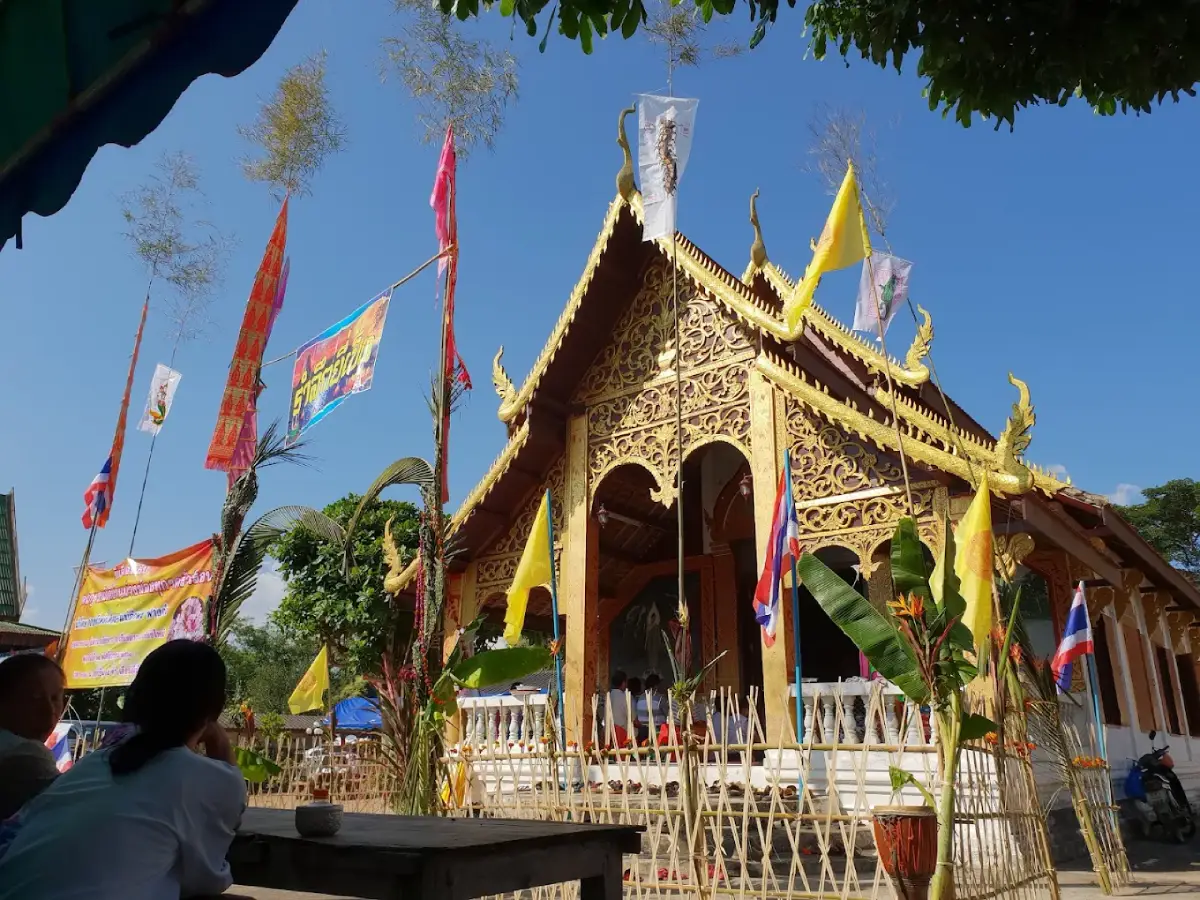
Open Days: Daily
Opening Hours: 08.00 – 17.00
Wat Amphawan in Moo 3, Chiang Dao Subdistrict, Chiang Dao District, Chiang Mai Province, is a local Mahā Nikāya Buddhist temple with a meaningful community history. The temple was officially established in 1932 and is associated with Ban Muang Khong, also recorded in older temple information as Ban Muang Mong. It is a quiet community temple rather than a major commercial tourist attraction, making it suitable for travelers who want to make merit, visit a local temple, and understand the Buddhist village culture of Chiang Dao.
Wat Amphawan is located in Chiang Dao Subdistrict, the central area of Chiang Dao District. Chiang Dao is widely known for mountains, caves, hot springs, markets, and nature routes, but its village temples are equally important for understanding local life. Temples such as Wat Amphawan connect Buddhist practice, community identity, and local history. Visiting this temple gives travelers a quieter view of Chiang Dao beyond the usual nature-based itinerary.
The history of Wat Amphawan is especially interesting because the site was once an abandoned temple before being rebuilt in 1932. The temple was formerly known as Wat Muang Khong. According to older temple records, the name was connected with 2 mango trees growing in the temple area. The temple later adopted the current name Wat Amphawan, a name that still carries a connection to mango trees and a peaceful grove-like setting. This gives the temple’s name a local memory, not just an official registration identity.
Older temple information records Wat Amphawan at No. 12, Ban Muang Mong, Moo 3, Chiang Dao Subdistrict, Chiang Dao District, Chiang Mai Province. The temple land covers about 3 rai, 2 ngan, and 14 square wah. Its boundaries are connected with a school, rice fields, Soi Suwanno, and an irrigation canal. These details show that Wat Amphawan developed within an agricultural and residential community, reflecting the way temples in northern Thailand often stand close to homes, schools, fields, and daily village life.
The temple’s main buildings and religious spaces include a sermon hall and monks’ residences. A bronze Buddha image is also recorded as an important sacred object of the temple. These details are typical of a community temple designed for real religious use rather than large-scale tourism. The sermon hall functions as a place for merit-making, Buddhist gatherings, and local ceremonies, while the monks’ residences support the daily life and monastic activities of the temple.
Wat Amphawan belongs to the Mahā Nikāya order, the largest monastic order in Thailand. As a local temple, it supports everyday Buddhist life in the community, including merit-making, listening to sermons, family ceremonies, and annual religious activities. Visitors should therefore see the temple as a living spiritual space. Its value comes from its role in the community as much as from its historical details.
The temple has had several abbots over time, beginning with Phra Athikan Kongkham in 1932–1947, followed by other monastic caretakers named in older records. The current information provided for this article identifies Phra Athikan Duangchan Kuttadhammo as the abbot of Wat Amphawan. This continuity of monastic leadership shows that the temple is not only a historical site but also an active Buddhist institution serving the Chiang Dao community today.
Travelers should search carefully for this temple because the name Wat Amphawan is used by many temples in Thailand, including other temples in Chiang Mai Province. To find the correct destination, use search terms such as “Wat Amphawan Chiang Dao” or “Wat Amphawan Ban Muang Khong Chiang Dao.” The key details are Moo 3, Chiang Dao Subdistrict, Chiang Dao District, Chiang Mai Province. These details help avoid confusion with Wat Amphawan in Mae Rim, San Pu Loei, or other provinces.
The atmosphere of Wat Amphawan is best described as calm, local, and modest. It is more suitable for travelers who appreciate quiet temples than for visitors looking for grand architecture or crowded check-in points. The temple is located near village areas and local roads, so a visit here allows travelers to experience the slower rhythm of Chiang Dao. It can be included easily in a route that also covers Chiang Dao Market, Chiang Dao Cave, Chiang Dao Hot Spring, and Wat Tham Pha Plong.
The name story of Wat Amphawan is one of the temple’s most distinctive cultural points. The earlier name Wat Muang Khong was connected with the mango trees in the temple grounds. Many Thai temples preserve this type of naming history, where the original village name or a natural feature becomes part of the temple identity. For Wat Amphawan, this background adds depth to the visit because the name preserves a memory of the landscape before the temple became widely known by its present name.
For travelers interested in local religious history, Wat Amphawan should be understood as part of the temple network of Chiang Dao Subdistrict. Nearby temples in local listings include Wat Tham Chiang Dao, Wat Intharam, Wat Charoen Rat, Wat Don Si Sa-at, Wat Thung Luk, Wat Muang Kham, and others. Together, these temples show how Buddhist institutions are distributed across village communities and how closely Buddhism is tied to settlement patterns in Chiang Dao.
Wat Amphawan can be included in either a half-day or full-day Chiang Dao itinerary. A simple half-day route can start from Chiang Dao Market or central Chiang Dao, stop at Wat Amphawan, then continue to Chiang Dao Cave and Wat Tham Pha Plong. With a full day, travelers can add Chiang Dao Hot Spring or a viewpoint route near Doi Luang Chiang Dao. This type of itinerary combines a local village temple, a cave temple, a meditation site, and natural attractions in one trip.
Getting There is easiest by private car or rental car. From Chiang Mai city, take Highway 107 on the Chiang Mai–Fang route toward Chiang Dao District. Once in Chiang Dao, search for Wat Amphawan Chiang Dao or Ban Muang Khong, Moo 3. The final approach uses local community roads, so drivers should slow down near villages, schools, and residential areas.
Travelers using public transport can start from Chang Phueak Bus Station in Chiang Mai and take a bus or local transport heading toward Chiang Dao or Tha Ton. After getting off in Chiang Dao town, continue to the temple by local vehicle or hired transport. This option is possible for budget travelers, but return transport should be planned in advance, especially in the late afternoon.
Visitors should follow normal Thai temple etiquette. Dress modestly, speak quietly, avoid entering monk-only areas without permission, and do not disturb people who are making merit or taking part in ceremonies. Since Wat Amphawan is a community temple rather than a commercial tourist site, respectful behavior is an important part of the visit.
The best time to visit Wat Amphawan is in the morning or late afternoon. Morning visits are suitable for merit-making and for continuing to Chiang Dao Cave afterward. Late afternoon visits work well before heading to accommodation in Chiang Dao. In the cool season, the atmosphere is especially pleasant, while the rainy season brings a greener landscape around Chiang Dao. Travelers should allow extra travel time during wet weather.
Wat Amphawan is useful for travelers who want all key Chiang Dao planning information in one place. The temple is close to local accommodation, restaurants, and attractions. Nearby places to stay include Baan AingDoi Homestay, Baan 2 Dao Farmstay, Baan Porhdoi Goidao, Phu Vara, Azalea Village, and Ban Suan Tawan Chiang Dao. This makes Wat Amphawan easy to include in both day trips and overnight Chiang Dao itineraries.
Many online listings mention Wat Amphawan only briefly, usually giving the name, location, and temple category. The details that make the temple more meaningful are its abandoned-temple origin, its rebuilding in 1932, the older name Wat Muang Khong, the connection with mango trees, the bronze Buddha image, and its role as a village Buddhist center. These details help travelers understand why a quiet temple like Wat Amphawan deserves attention in a cultural route through Chiang Dao.
Compared with better-known Chiang Dao temples, Wat Amphawan offers a different kind of experience. Wat Tham Chiang Dao is known for its cave setting, while Wat Tham Pha Plong is known for meditation and its forested stairway. Wat Amphawan stands out as a village temple connected to local life. Travelers who want to understand Chiang Dao more deeply should combine these different types of temple experiences.
For slow travelers, Wat Amphawan can be the starting point for a calm day in Chiang Dao. Begin with a respectful temple visit, continue to a nearby local restaurant or café, and then explore caves, hot springs, or mountain viewpoints. This style of travel suits visitors who prefer local atmosphere and meaningful cultural stops over rushing from one famous attraction to another.
In summary, Wat Amphawan in Chiang Dao is a Mahā Nikāya community temple with historical and cultural value. Its story includes an abandoned-temple past, rebuilding in 1932, a former name connected with mango trees, and an ongoing role in the Ban Muang Khong community. Although it is not a large tourist attraction, it is a worthwhile stop for travelers interested in Lanna culture, local Buddhism, and a deeper view of Chiang Dao.
| Name | Wat Amphawan |
| Location | Moo 3, Chiang Dao Subdistrict, Chiang Dao District, Chiang Mai Province |
| Address | No. 12, Ban Muang Mong / Ban Muang Khong, Moo 3, Chiang Dao Subdistrict, Chiang Dao District, Chiang Mai 50170, Thailand |
| Coordinates | 19.38979, 98.98226 |
| Highlights | A Mahā Nikāya community temple in Chiang Dao with a history linked to an abandoned temple site and mango trees in the temple grounds |
| History | Officially established in 1932; formerly known as Wat Muang Khong before being renamed Wat Amphawan |
| Name Origin | The former name was connected with 2 mango trees in the temple area before the current name Wat Amphawan was adopted |
| Distinctive Features | Quiet village temple with a sermon hall, monks’ residences, and a bronze Buddha image as an important sacred object |
| Travel Information | From Chiang Mai city, take Highway 107 toward Chiang Dao and search for Wat Amphawan Chiang Dao or Ban Muang Khong, Moo 3. Public transport travelers can get off in Chiang Dao town and continue by local vehicle. |
| Current Status | Listed as an active Mahā Nikāya temple in Chiang Dao Subdistrict across multiple current temple and location references |
| Open Days | Daily |
| Opening Hours | 08.00 – 17.00 |
| Main Areas / Zones | Sermon hall, monks’ residences, Buddhist ceremony areas, and Ban Muang Khong community temple grounds |
| Abbot / Caretaker | Phra Athikan Duangchan Kuttadhammo |
| Nearby Tourist Attractions | 1. Chiang Dao Market, about 4 km 2. Chiang Dao Cave / Wat Tham Chiang Dao, about 10 km 3. Chiang Dao Hot Spring, about 10 km 4. Wat Tham Pha Plong, about 13 km 5. Doi Luang Chiang Dao, about 15 km |
| Nearby Restaurants | 1. Baan Phu 369, about 1 km, Tel. 089-826-6781 2. JERNS - Chiang Dao, about 3 km, Tel. 099-139-1627, 098-945-7958 3. Chiang Dao Pork Rib Noodles, about 3 km 4. Breakfast Bar Chiang Dao, about 4 km, Tel. 053-455-297 5. Chiang Dao Resto, about 5 km, Tel. 053-456-456 6. Chiangdao Mountain View, about 8 km, Tel. 081-531-1310 |
| Nearby Accommodations | 1. Baan AingDoi Homestay, about 0.5 km, Tel. 061-280-2099 2. Baan 2 Dao Farmstay, about 1 km, Tel. 089-264-0976 3. Baan Porhdoi Goidao, about 1 km 4. Phu Vara, about 3 km, Tel. 085-123-0100 5. Azalea Village Wellness Resort & Residence, about 3 km 6. Ban Suan Tawan Chiang Dao, about 5 km, Tel. 081-887-7930 |
Frequently Asked Questions (FAQ)
Q: Where is Wat Amphawan in Chiang Dao located?
A: Wat Amphawan is located in Moo 3, Chiang Dao Subdistrict, Chiang Dao District, Chiang Mai Province, in the Ban Muang Khong or Ban Muang Mong community area.
Q: What is the history of Wat Amphawan?
A: Wat Amphawan was once an abandoned temple site before being rebuilt and officially established in 1932. It was formerly known as Wat Muang Khong because of the mango trees in the temple grounds.
Q: What type of temple is Wat Amphawan?
A: Wat Amphawan is a local Buddhist temple under the Mahā Nikāya order.
Q: Who is the abbot of Wat Amphawan?
A: The abbot of Wat Amphawan is Phra Athikan Duangchan Kuttadhammo.
Q: What important features does Wat Amphawan have?
A: The temple has a sermon hall, monks’ residences, and a bronze Buddha image recorded as an important sacred object.
Q: How can travelers get to Wat Amphawan?
A: From Chiang Mai city, take Highway 107 toward Chiang Dao and search for Wat Amphawan Chiang Dao or Ban Muang Khong, Moo 3. Public transport travelers can get off in Chiang Dao town and continue by local vehicle.
Q: What nearby places can be visited with Wat Amphawan?
A: Travelers can combine the visit with Chiang Dao Market, Chiang Dao Cave, Chiang Dao Hot Spring, Wat Tham Pha Plong, and Doi Luang Chiang Dao.
Q: What kind of traveler is Wat Amphawan best for?
A: It is best for travelers interested in quiet community temples, Lanna culture, local Buddhist history, and slow travel in Chiang Dao.
 Category: ●Places of Worship
 Group: ●Temple
Last Update : 2 DayAgo
 Last Update : 2 DayAgo
 Click to Access the Navigation Map GPS
 Muang Chiang Mai(121)Chom Thong(47)Mae Chaem(25)Chiang Dao(33)Doi Saket(68)Mae Taeng(85)Mae Rim(69)Samoeng(29)Fang(71)Mae Ai(62)Phrao(70)San Pa Tong(105)San Kamphaeng(66)San Sai(73)Hang Dong(74)Hot(32)Doi Tao(22)Omkoi(11)Saraphi(74)Wiang Haeng(15)Chai Prakan(28)Mae Wang(32)Mae On(22)Doi Lo(34)Galyani Vadhana(1)


