
lovethailand home >North Travel Attractions >Chiang Mai Travel Attractions >Chiang Dao >Chiang Dao > Wat Don Si Sa-at
TL;DR: Wat Don Si Sa-at is located at Ban Don Si Sa-at, Moo 2, Chiang Dao Subdistrict, Chiang Dao District, Chiang Mai Province.

Wat Don Si Sa-at
Operating day: Daily
Operating time: 08.00 - 17.00
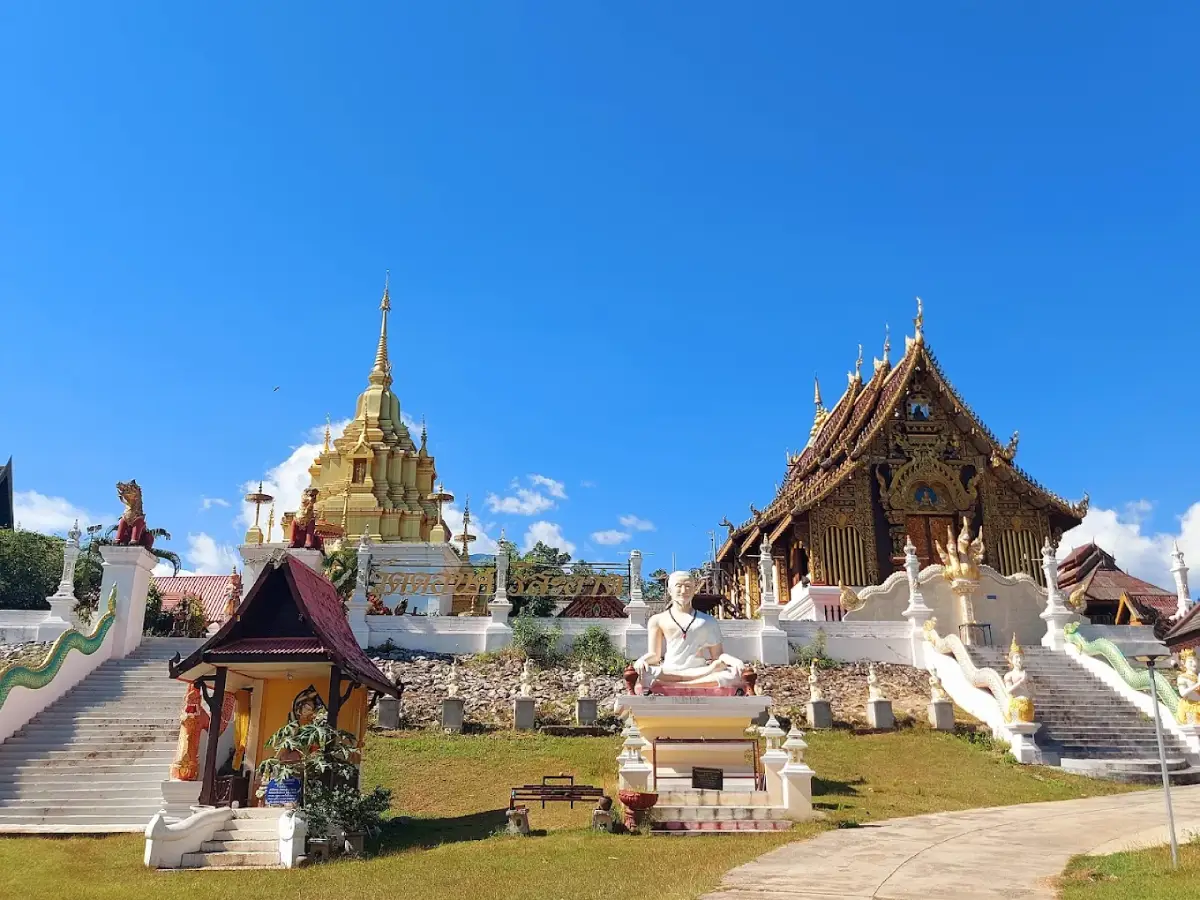
Wat Don Si Sa-at is a local Buddhist temple in Ban Don Si Sa-at, Moo 2, Chiang Dao Subdistrict, Chiang Dao District, Chiang Mai Province. The temple is located at 217 Moo 2, Ban Don Si Sa-at, Chiang Dao, Chiang Mai 50170. It is a community temple under the Mahanikaya order and was officially permitted to be established as a temple in 1922. With a temple area of 9 rai and 1 ngan, Wat Don Si Sa-at remains an important religious place for the local community and a meaningful cultural stop for travelers exploring Chiang Dao.
Wat Don Si Sa-at is not a large commercial tourist temple. Its appeal lies in its quiet community role, its long history, and its connection with local Buddhist life in Chiang Dao. Travelers who want to understand Chiang Dao beyond caves, mountain viewpoints, and resorts can visit this temple to see how a rural northern Thai temple continues to serve the everyday spiritual life of local people.
The temple is located in Ban Don Si Sa-at, a community within Chiang Dao Subdistrict. Chiang Dao is one of Chiang Mai’s most distinctive districts, known for limestone mountains, caves, hot springs, Buddhist retreat sites, agricultural villages, and scenic views of Doi Luang Chiang Dao. In this setting, Wat Don Si Sa-at adds a cultural and religious layer to the travel route. It is suitable for visitors who want to combine merit-making, local temple culture, and nearby natural attractions in one trip.
Historically, Wat Don Si Sa-at was permitted to be established as a temple in 1922. This gives the temple a history of more than 100 years. Temples founded during this period often became the religious and social centers of their communities. Wat Don Si Sa-at continues to reflect that role. It is not only a place for worship, but also a shared community space connected with Buddhist ceremonies, merit-making, village gatherings, and life-cycle rituals.
As a local temple under the Mahanikaya order, Wat Don Si Sa-at is part of the main Buddhist monastic tradition in Thailand. The temple information lists Phra Samu Natthapong Surapanyo as the abbot. In a community temple like this, the abbot’s role is important not only for monastic administration but also for maintaining Buddhist activities, supporting local merit-making traditions, and guiding the temple’s role within the village.
The temple covers 9 rai and 1 ngan, making it a suitable size for a village temple. Its value is not measured by grand tourist architecture, but by its continued function as a living religious place. Visitors should approach Wat Don Si Sa-at with the mindset of entering an active temple, not an exhibition space. Modest dress, quiet behavior, and respect for monks and local worshippers are essential.
The name Wat Don Si Sa-at is closely connected with Ban Don Si Sa-at. The word “Don” often refers to raised ground or a higher piece of land, while “Si Sa-at” carries a positive sense of auspiciousness, beauty, and cleanliness. Together, the name reflects both the identity of the village and the Buddhist values of order, clarity, and spiritual refinement.
For visitors, Wat Don Si Sa-at is best appreciated as a quiet stop for merit-making and cultural observation. It is suitable for travelers who want to experience a local northern Thai temple without crowds. The temple’s calm setting makes it a good place to pause before continuing to Chiang Dao Cave, Wat Tham Pha Plong, Chiang Dao Hot Spring at Ban Yang Pu To, or the natural landscapes around Doi Luang Chiang Dao.
Like many Buddhist temples in northern Thailand, Wat Don Si Sa-at is connected with regular Buddhist observances. Local people may come to the temple for merit-making on Buddhist holy days, almsgiving, sermons, candle-offering during Buddhist Lent, ceremonies at the end of Buddhist Lent, Kathin season, and important Buddhist days such as Makha Bucha, Visakha Bucha, and Asalha Bucha. These activities show how the temple remains part of the community’s living traditions.
Visitors should use the temple space respectfully. Start by paying respect to the main Buddhist images or merit-making area, then walk quietly around the temple grounds. Avoid loud conversations, avoid entering monks’ private areas, and do not take close photographs of monks or local worshippers without permission. A local temple like this is best experienced slowly, with attention to its real community function.
Getting There is easiest by private car or rental vehicle. From Chiang Mai city, follow Highway 107 north through Mae Rim and Mae Taeng toward Chiang Dao. After reaching Chiang Dao Subdistrict, use a navigation map to reach Ban Don Si Sa-at, Moo 2. Travelers using public transport can take a Chiang Mai–Tha Ton bus or minibus from Chang Phueak Bus Station to Chiang Dao town, then continue by local transport or a hired vehicle.
Wat Don Si Sa-at is useful as part of a broader Chiang Dao itinerary. Travelers interested in Buddhist sites can combine it with Chiang Dao Cave Temple and Wat Tham Pha Plong. Travelers interested in nature can continue to Chiang Dao Hot Spring at Ban Yang Pu To, the Doi Luang Chiang Dao natural area, or scenic villages near the mountain. This makes the temple a flexible stop for both cultural and nature-based travel.
Chiang Dao Cave is one of the best-known nearby attractions. It is located at the foot of Doi Luang Chiang Dao and features cave routes, limestone formations, Buddha images, and a clear stream near the cave entrance. Visiting Wat Don Si Sa-at and Chiang Dao Cave together gives travelers a balanced route that includes both a local community temple and a major natural-religious landmark of the district.
Wat Tham Pha Plong is another important nearby Buddhist site. It is known for its peaceful forest setting, its connection with Luang Pu Sim Buddhacaro, and its 510-step stairway leading up to the monastery area. Travelers who enjoy quiet spiritual places can combine Wat Don Si Sa-at with Wat Tham Pha Plong for a meaningful Buddhist route through Chiang Dao.
Chiang Dao Hot Spring at Ban Yang Pu To is a good place to relax after temple visits or cave exploration. The hot spring area is associated with the local community and natural surroundings. It can be added at the end of the day for travelers who want a slower itinerary with time to rest between sightseeing stops.
The best time to visit Wat Don Si Sa-at is in the morning or late afternoon, when the weather is more comfortable. In the cool season, Chiang Dao’s mountain atmosphere is especially pleasant, making it a good time for a relaxed cultural and nature trip. During the rainy season, travelers should allow extra time for road conditions, especially if continuing to hill villages or mountain areas. During the hot season, bring drinking water and avoid walking around in strong midday sun.
A half-day route can begin with Wat Don Si Sa-at in the morning, followed by Chiang Dao Cave and lunch in Chiang Dao town. If time allows, continue to Wat Tham Pha Plong or Chiang Dao Hot Spring in the afternoon. A full-day route can include a café, a local restaurant, or an overnight stay in Chiang Dao to enjoy the district at a slower pace.
Wat Don Si Sa-at is also useful for travelers who want to understand local Buddhist culture rather than only visit famous landmarks. Search results for the temple are generally sparse and often limited to directory-style pages. A complete travel article about the temple should therefore explain its history, temple type, community role, location, respectful visitor behavior, nearby attractions, food options, and accommodation choices. These details help travelers plan a practical and respectful visit.
In summary, Wat Don Si Sa-at is a historic community temple in Chiang Dao District with roots dating back to 1922. It is a Mahanikaya temple, covers 9 rai and 1 ngan, and serves the Ban Don Si Sa-at community as a local Buddhist center. For travelers, it is a peaceful cultural stop that can be combined with Chiang Dao Cave, Wat Tham Pha Plong, Chiang Dao Hot Spring, and the natural landscapes around Doi Luang Chiang Dao.
| Name | Wat Don Si Sa-at |
| Location | Ban Don Si Sa-at, Moo 2, Chiang Dao Subdistrict, Chiang Dao District, Chiang Mai Province |
| Address | 217 Moo 2, Ban Don Si Sa-at, Chiang Dao Subdistrict, Chiang Dao District, Chiang Mai 50170, Thailand |
| Coordinates | 19.39432, 98.97011 |
| Place Type | Local Buddhist temple under the Mahanikaya order |
| Temple Area | 9 rai and 1 ngan |
| History | Officially permitted to be established as a temple in 1922 |
| Highlights | Historic community temple in Ban Don Si Sa-at, suitable for merit-making and a cultural stop in a Chiang Dao travel route |
| Name Origin | The name is connected with Ban Don Si Sa-at. “Don” refers to raised ground, while “Si Sa-at” carries an auspicious sense of beauty and cleanliness. |
| Distinctive Features | Quiet local temple serving as a spiritual center for the Ban Don Si Sa-at community |
| Travel Information | From Chiang Mai city, follow Highway 107 toward Chiang Dao, then use a navigation map to reach Ban Don Si Sa-at, Moo 2. Public transport travelers can take a Chiang Mai–Tha Ton service to Chiang Dao town and continue by local transport or hired vehicle. |
| Current Status | Open as an active Buddhist temple for the Ban Don Si Sa-at community |
| Main Areas / Zones | Religious area, merit-making area, ceremonial area, and community-use area |
| Abbot / Caretaker | Phra Samu Natthapong Surapanyo |
| Nearby Tourist Attractions | 1. Chiang Dao Cave / Wat Tham Chiang Dao, about 6 km 2. Wat Tham Pha Plong, about 8 km 3. Chiang Dao Hot Spring at Ban Yang Pu To, about 9 km 4. Wat Amphawan, Chiang Dao Subdistrict, about 4 km 5. Doi Luang Chiang Dao natural area, about 12 km |
| Nearby Restaurants | 1. Pa Tim Khao Soi Chiang Dao, about 4 km, Tel. 081-884-5498 2. Phakwa, about 5 km, Tel. 080-774-9791 3. Chiang Dao Mountain View, about 8 km, Tel. 081-531-1310 4. Chiang Dao Nest 1, about 9 km, Tel. 053-456-612 5. Breakfast Bar, about 4 km, Tel. 053-455-297 |
| Nearby Accommodations | 1. Azalea Village Resort, about 4 km, Tel. 086-359-4244, 053-456-168, 053-456-169 2. Chiang Dao Nest, about 9 km, Tel. 053-456-612 3. Isbjorn Chiang Dao, about 10 km, Tel. 082-295-7802 4. DaraDao Chiang Dao, about 10 km, Tel. 065-426-1746 5. THE CAMPIAN, about 15 km, Tel. 065-232-3639 |
Frequently Asked Questions (FAQ)
Q: Where is Wat Don Si Sa-at located?
A: Wat Don Si Sa-at is located at 217 Moo 2, Ban Don Si Sa-at, Chiang Dao Subdistrict, Chiang Dao District, Chiang Mai 50170, Thailand.
Q: What type of temple is Wat Don Si Sa-at?
A: Wat Don Si Sa-at is a local Buddhist temple under the Mahanikaya order.
Q: When was Wat Don Si Sa-at established?
A: Wat Don Si Sa-at was officially permitted to be established as a temple in 1922.
Q: Who is the abbot of Wat Don Si Sa-at?
A: The temple information lists Phra Samu Natthapong Surapanyo as the abbot of Wat Don Si Sa-at.
Q: Is Wat Don Si Sa-at suitable for travelers?
A: Yes. It is suitable for travelers who want a peaceful local temple visit, merit-making, and a cultural stop while exploring Chiang Dao.
Q: How can travelers get to Wat Don Si Sa-at from Chiang Mai city?
A: The easiest way is by private car or rental vehicle via Highway 107 toward Chiang Dao. Public transport travelers can take a Chiang Mai–Tha Ton service to Chiang Dao town and continue by local transport.
Q: What attractions can be visited near Wat Don Si Sa-at?
A: Nearby attractions include Chiang Dao Cave, Wat Tham Pha Plong, Chiang Dao Hot Spring at Ban Yang Pu To, Wat Amphawan, and natural areas around Doi Luang Chiang Dao.
 Category: ●Places of Worship
 Group: ●Temple
Last Update : 8 HourAgo
 Last Update : 8 HourAgo
 Click to Access the Navigation Map GPS
Wat Don Si Sa-at Map
Recommend

 Muang Chiang Mai(121)Chom Thong(47)Mae Chaem(25)Chiang Dao(33)Doi Saket(68)Mae Taeng(85)Mae Rim(69)Samoeng(29)Fang(71)Mae Ai(62)Phrao(70)San Pa Tong(105)San Kamphaeng(66)San Sai(73)Hang Dong(74)Hot(32)Doi Tao(22)Omkoi(11)Saraphi(74)Wiang Haeng(15)Chai Prakan(28)Mae Wang(32)Mae On(22)Doi Lo(34)Galyani Vadhana(1)


