
lovethailand home >North Travel Attractions >Chiang Mai Travel Attractions >Chom Thong >Sop Tia > Wat Nong Ap Chang
TL;DR: Wat Nong Ap Chang is located at 136 Moo 9, Ban Nong Ap Chang, Chiang Mai–Hot Road, Sop Tia Subdistrict, Chom Thong District, Chiang Mai Province, open Daily, hours 08.00 – 17.00.

Wat Nong Ap Chang
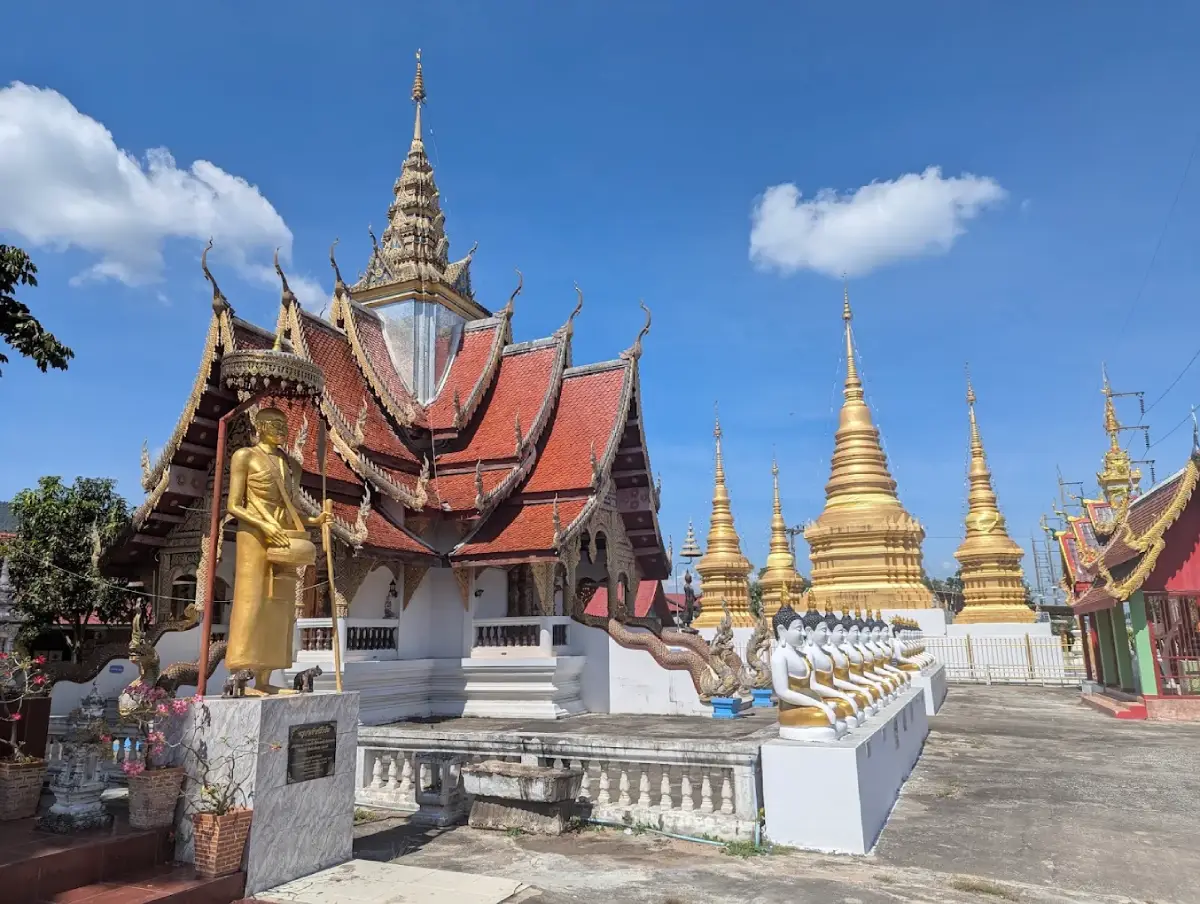
Open Days: Daily
Opening Hours: 08.00 – 17.00
Wat Nong Ap Chang is a local Buddhist temple at 136 Moo 9, Ban Nong Ap Chang, Chiang Mai–Hot Road, Sop Tia Subdistrict, Chom Thong District, Chiang Mai Province. It is a community temple under the Maha Nikaya tradition and serves as the main spiritual center for Ban Nong Ap Chang. The temple was officially permitted to be established in B.E. 2484 and received its royal boundary in B.E. 2538. The abbot is Phra Khru Sophit Punyophas Opaso.
The importance of Wat Nong Ap Chang lies in its role as a living village temple. It is not only a place for worship but also the center of religious ceremonies and community traditions. Local residents gather here for merit-making, almsgiving, the procession of Bodhi-supporting poles, life-prolonging ceremonies, and worship of Phra Chao Than Chai in the Mara-Vijaya posture. The temple is therefore a meaningful cultural stop for travelers who want to understand Buddhist life in Sop Tia and Chom Thong beyond major tourist landmarks.
Ban Nong Ap Chang is part of Sop Tia Subdistrict, an area with many community temples, including Wat Sop Tia, Wat Huai Cho, Wat Huai Muang, Wat Hat Nak, Wat Wang Pan, Wat Wang Champa, Wat Mokkhalan, and Wat Phuttha Nimit. These temples form a local Buddhist network that reflects how northern Thai communities are organized around village temples. Wat Nong Ap Chang is one of the important temples in this network because it remains closely connected with the rituals and daily religious life of its village.
The temple’s establishment in B.E. 2484 shows its long-standing role in the community. Later, the royal boundary granted in B.E. 2538 strengthened its formal religious status. In Thai Buddhism, a royal boundary marks the designated area for monastic acts. This makes Wat Nong Ap Chang more than a village gathering place; it is a formally recognized temple that supports Buddhist ceremonies and monastic functions for the local community.
The name “Nong Ap Chang” is strongly tied to the identity of the village. In Thai place names, “nong” often refers to a pond or wetland, while “ap chang” suggests an image connected with bathing elephants. Although publicly available sources do not provide a detailed historical explanation of the name, the name itself reflects the memory of local landscape, water, and community identity. For visitors, it gives the temple a distinctive character that is easy to remember.
One of the most meaningful features of Wat Nong Ap Chang is the large Bodhi tree where villagers make merit with Bodhi-supporting poles. In Buddhist symbolism, the Bodhi tree is connected with the enlightenment of the Buddha. Supporting a Bodhi tree is therefore understood as supporting Buddhism, extending merit, and creating auspiciousness in life. The tradition is also a way for the community to gather, make merit, and express shared faith.
The temple also has five relic shrines that visitors can pay respect to. In a local community temple, relic shrines are not only religious structures but also focal points of faith. They give villagers and visitors a place for prayer, reflection, and merit-making. Together with the Bodhi tree and Phra Chao Than Chai, these shrines make Wat Nong Ap Chang a temple with several clear devotional points.
Wat Nong Ap Chang is also known for life-prolonging ceremonies, or “sueb chata,” an important Lanna Buddhist ritual. This ceremony is performed to create auspiciousness, strengthen morale, and mark important moments in life. At Wat Nong Ap Chang, the ceremony may be conducted for groups or individuals. This makes the temple a practical religious center for villagers and devotees who continue to follow Lanna ritual traditions.
Phra Chao Than Chai in the Mara-Vijaya posture is one of the main sacred images at Wat Nong Ap Chang. In northern Thailand, Phra Chao Than Chai refers to a Buddha image built within one day. The ritual begins after midnight and the image must be completed before sunset of the following day. If the image is not completed within that period, it is considered an ordinary Buddha image. This belief gives Phra Chao Than Chai a special meaning related to timely success, concentrated effort, and collective faith.
The Mara-Vijaya posture represents the moment when the Buddha overcame Mara before enlightenment. It symbolizes firmness, determination, and victory over obstacles. Devotees who worship Phra Chao Than Chai often pray for success, good fortune, and the fulfillment of their wishes. At the same time, respectful worship should be understood as part of Buddhist faith and personal encouragement, supported by good conduct and sincere intention.
The creation of Phra Chao Than Chai involves detailed ritual elements. After the Buddha image is completed, sacred items and valuables may be placed inside the image. During the making of the image, monks chant throughout the night until dawn. These details show that Phra Chao Than Chai is not simply a Buddha image made quickly; it is created through concentration, ritual discipline, community participation, and continuous chanting.
The almsgiving activities at Wat Nong Ap Chang also reflect everyday Buddhist life in the village. Local temples in northern Thailand are important places for villagers to make merit on Buddhist holy days, annual festivals, and community occasions. Almsgiving connects monks and laypeople, strengthens community bonds, and helps maintain the rhythm of Buddhist practice in village life.
The procession of Bodhi-supporting poles is another important tradition associated with Wat Nong Ap Chang. Villagers bring the poles to the temple and offer them at the large Bodhi tree. This act symbolizes the support of Buddhism and the wish for longevity, stability, and auspiciousness. The tradition is especially meaningful because it shows the temple as an active ritual space, not just a quiet place for sightseeing.
The atmosphere of Wat Nong Ap Chang is calm and local. Visitors can pay respect to Phra Chao Than Chai, worship at the five relic shrines, observe the large Bodhi tree, and learn about the temple’s ritual role in the village. The temple is suitable for cultural travelers who prefer meaningful local places rather than crowded attractions. Its value lies in active village faith, not commercial tourism.
Chom Thong District is known for Wat Phra That Si Chom Thong Worawihan, Mae Ya Waterfall, and routes toward Doi Inthanon. However, community temples such as Wat Nong Ap Chang help complete the cultural picture of the district. They show how Buddhism is practiced in village spaces and how religious traditions remain part of everyday community life.
Getting to Wat Nong Ap Chang is most convenient by private car or rental car. From Chiang Mai city, travelers can follow the Chiang Mai–Hot route toward Chom Thong District, then continue into Sop Tia Subdistrict and Moo 9 Ban Nong Ap Chang. The final approach passes through local roads and village areas, so careful driving is recommended near intersections, schools, homes, and roads used by local residents.
Wat Nong Ap Chang can be combined with nearby temples in Sop Tia, including Wat Huai Cho, Wat Huai Muang, Wat Hat Nak, Wat Sop Tia, and Wat Wang Pan. This route is suitable for travelers who want to understand the local temple network of the same subdistrict. Wat Nong Ap Chang stands out through Phra Chao Than Chai, the Bodhi-supporting pole tradition, the life-prolonging ceremony, and the five relic shrines.
For travelers who want to combine culture and nature, Wat Nong Ap Chang can also be linked with Wat Phra That Si Chom Thong Worawihan, Mae Ya Waterfall, and routes toward Doi Inthanon. A balanced itinerary may begin with temple visits in the morning and continue to natural attractions later in the day. This gives the trip a mix of faith, local tradition, and landscape.
The best time to visit is in the morning or late afternoon, when the weather is more comfortable and the temple atmosphere is usually calm. Visitors should dress modestly, speak respectfully, and observe proper temple manners. If a life-prolonging ceremony, merit-making event, or village activity is taking place, visitors should give space to monks and local residents.
Wat Nong Ap Chang is suitable for slow travelers, cultural writers, documentary photographers, and visitors who want to understand Chiang Mai at the village level. Its value lies in its active rituals, its community role, its sacred Buddha image, its Bodhi tree tradition, and its connection with the people of Ban Nong Ap Chang.
Meals and accommodation are best planned around Chom Thong town, Khuang Pao, Doi Kaeo, or the Doi Inthanon route, where there are more restaurant and lodging choices than in the immediate village area. Visitors can stop at Wat Nong Ap Chang for worship and cultural exploration, then continue to nearby restaurants, hotels, or natural attractions without needing to return to Chiang Mai city immediately.
In summary, Wat Nong Ap Chang is a Maha Nikaya community temple at 136 Moo 9, Ban Nong Ap Chang, Chiang Mai–Hot Road, Sop Tia Subdistrict, Chom Thong District, Chiang Mai Province. It was officially established in B.E. 2484 and received its royal boundary in B.E. 2538. Its key features include Phra Chao Than Chai in the Mara-Vijaya posture, the large Bodhi tree, the Bodhi-supporting pole tradition, life-prolonging ceremonies, five relic shrines, and its role as the spiritual center of Ban Nong Ap Chang.
| Name | Wat Nong Ap Chang |
| Type | Local Buddhist temple under the Maha Nikaya tradition |
| Location | 136 Moo 9, Ban Nong Ap Chang, Chiang Mai–Hot Road, Sop Tia Subdistrict, Chom Thong District, Chiang Mai Province |
| Address | 136 Moo 9, Ban Nong Ap Chang, Chiang Mai–Hot Road, Sop Tia Subdistrict, Chom Thong District, Chiang Mai 50160 |
| Coordinates | 18.33785, 98.6774 |
| Telephone | 087-183-3863 |
| Abbot / Caretaker | Phra Khru Sophit Punyophas Opaso |
| Highlights | Village temple of Ban Nong Ap Chang with Phra Chao Than Chai in the Mara-Vijaya posture, a large Bodhi tree, Bodhi-supporting pole tradition, life-prolonging ceremonies, and five relic shrines |
| History | Officially permitted to be established as a temple in B.E. 2484 and received its royal boundary in B.E. 2538 |
| Key Areas And Sacred Objects | Phra Chao Than Chai In The Mara-Vijaya Posture Large Bodhi Tree Five Relic Shrines Bodhi-Supporting Pole Merit-Making Area Life-Prolonging Ceremony Area |
| Traditions And Rituals | Almsgiving Bodhi-Supporting Pole Procession Bodhi Tree Merit-Making Group And Individual Life-Prolonging Ceremonies Worship Of Phra Chao Than Chai |
| Distinctive Features | An active village temple with clear Lanna ritual traditions and a strong role as the spiritual center of Ban Nong Ap Chang |
| Travel Information | Travel by private car or rental car from Chiang Mai city via the Chiang Mai–Hot route toward Chom Thong District, then continue into Sop Tia Subdistrict and Moo 9 Ban Nong Ap Chang |
| Current Status | Open for visits and worship |
| Open Days | Daily |
| Opening Hours | 08.00 – 17.00 |
| Nearby Tourist Attractions | 1. Wat Huai Cho, about 2 km 2. Wat Huai Muang, about 3 km 3. Wat Hat Nak, about 4 km 4. Wat Sop Tia, about 5 km 5. Wat Phra That Si Chom Thong Worawihan, about 8 km |
| Nearby Restaurants | 1. Khao Soi Ka Long, about 8 km, Tel. 089-983-9922 2. Khao Soi Kaew Noi, about 8 km, Tel. 086-198-2999 3. Khon Muang Chom Thong, about 8 km, Tel. 081-885-8851 4. Krua Cobal, about 9 km, Tel. 089-559-9329, 080-124-3393, 080-501-3622 5. Hug Sen Huen Tiao, about 15 km, Tel. 091-068-8522 |
| Nearby Accommodations | 1. Smile Place Chom Thong, about 8 km, Tel. 065-753-8313 2. B-tel Chom Thong Resort Chiang Mai, about 9 km, Tel. 098-759-2003 3. Chom Thong Boutique House, about 9 km, Tel. 081-582-9889 4. Touch Star Resort, about 13 km, Tel. 092-419-4142, 097-449-1415, 053-033-594 5. Cornetto Resort, about 16 km |
Frequently Asked Questions (FAQ)
Q: Where is Wat Nong Ap Chang located?
A: Wat Nong Ap Chang is located at 136 Moo 9, Ban Nong Ap Chang, Chiang Mai–Hot Road, Sop Tia Subdistrict, Chom Thong District, Chiang Mai Province.
Q: What are the opening days and hours of Wat Nong Ap Chang?
A: Wat Nong Ap Chang is open daily from 08.00 to 17.00.
Q: Why is Wat Nong Ap Chang important?
A: Wat Nong Ap Chang is the village temple of Ban Nong Ap Chang. It was officially established in B.E. 2484 and remains the main spiritual center for local Buddhist ceremonies and community traditions.
Q: What can visitors worship at Wat Nong Ap Chang?
A: Visitors can worship Phra Chao Than Chai in the Mara-Vijaya posture, five relic shrines, and the large Bodhi tree associated with the Bodhi-supporting pole tradition.
Q: What does Phra Chao Than Chai mean?
A: Phra Chao Than Chai is a Buddha image built within one day according to northern Thai tradition. Devotees commonly worship it for timely success, good fortune, and fulfilled wishes.
Q: What traditions are associated with Wat Nong Ap Chang?
A: Important traditions include almsgiving, the procession of Bodhi-supporting poles, Bodhi tree merit-making, and group or individual life-prolonging ceremonies.
Q: Who is the abbot of Wat Nong Ap Chang?
A: The abbot of Wat Nong Ap Chang is Phra Khru Sophit Punyophas Opaso.
Q: What nearby attractions can be combined with Wat Nong Ap Chang?
A: Travelers can combine the visit with Wat Huai Cho, Wat Huai Muang, Wat Hat Nak, Wat Sop Tia, and Wat Phra That Si Chom Thong Worawihan.
 Category: ●Places of Worship
 Group: ●Temple
Last Update : 1 DayAgo
 Last Update : 1 DayAgo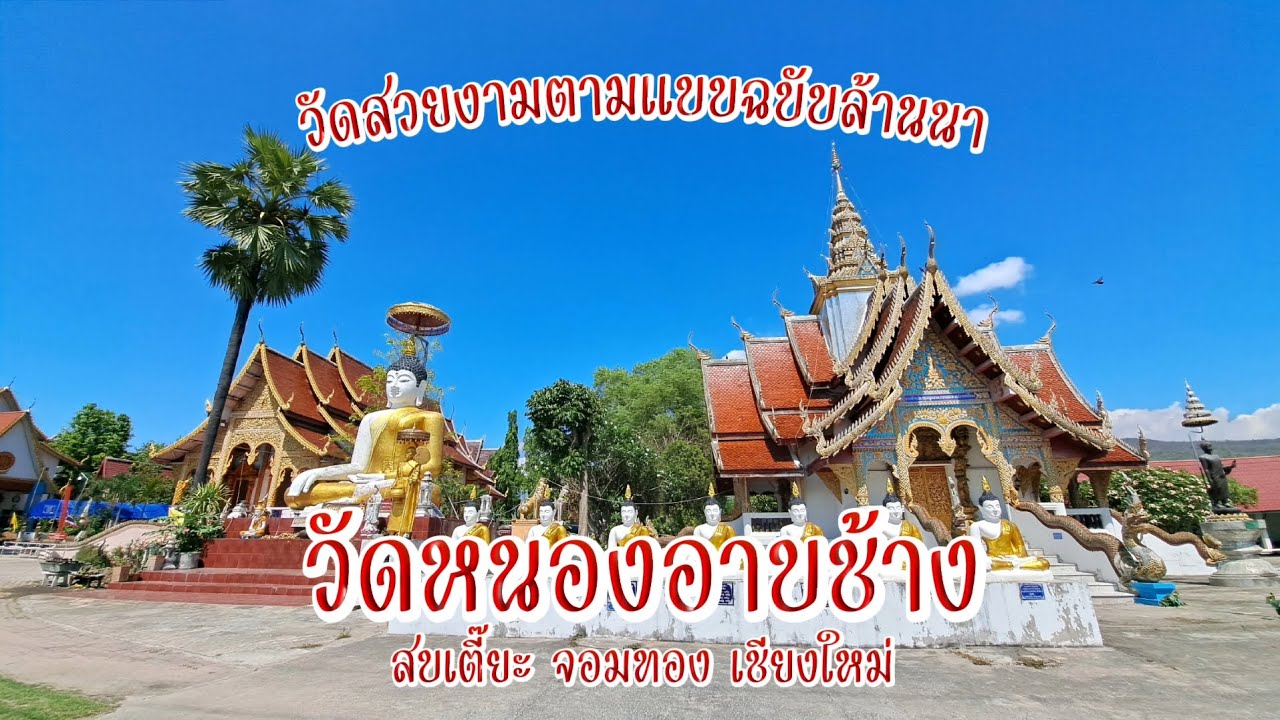
 Click to Access the Navigation Map GPS
Wat Nong Ap Chang Map
Recommend

 Muang Chiang Mai(121)Chom Thong(47)Mae Chaem(25)Chiang Dao(33)Doi Saket(68)Mae Taeng(85)Mae Rim(69)Samoeng(29)Fang(71)Mae Ai(62)Phrao(70)San Pa Tong(105)San Kamphaeng(66)San Sai(73)Hang Dong(74)Hot(32)Doi Tao(22)Omkoi(11)Saraphi(74)Wiang Haeng(15)Chai Prakan(28)Mae Wang(32)Mae On(22)Doi Lo(34)Galyani Vadhana(1)


