
lovethailand home >North Travel Attractions >Chiang Mai Travel Attractions >Chom Thong >Sop Tia > Wat Sop Tia
TL;DR: Wat Sop Tia is located at 176 Moo 1, Ban Sop Tia, Chiang Mai–Hot Road, Sop Tia Subdistrict, Chom Thong District, Chiang Mai Province, open Daily, hours 08.00 – 17.00.

Wat Sop Tia
Open Days: Daily
Opening Hours: 08.00 – 17.00
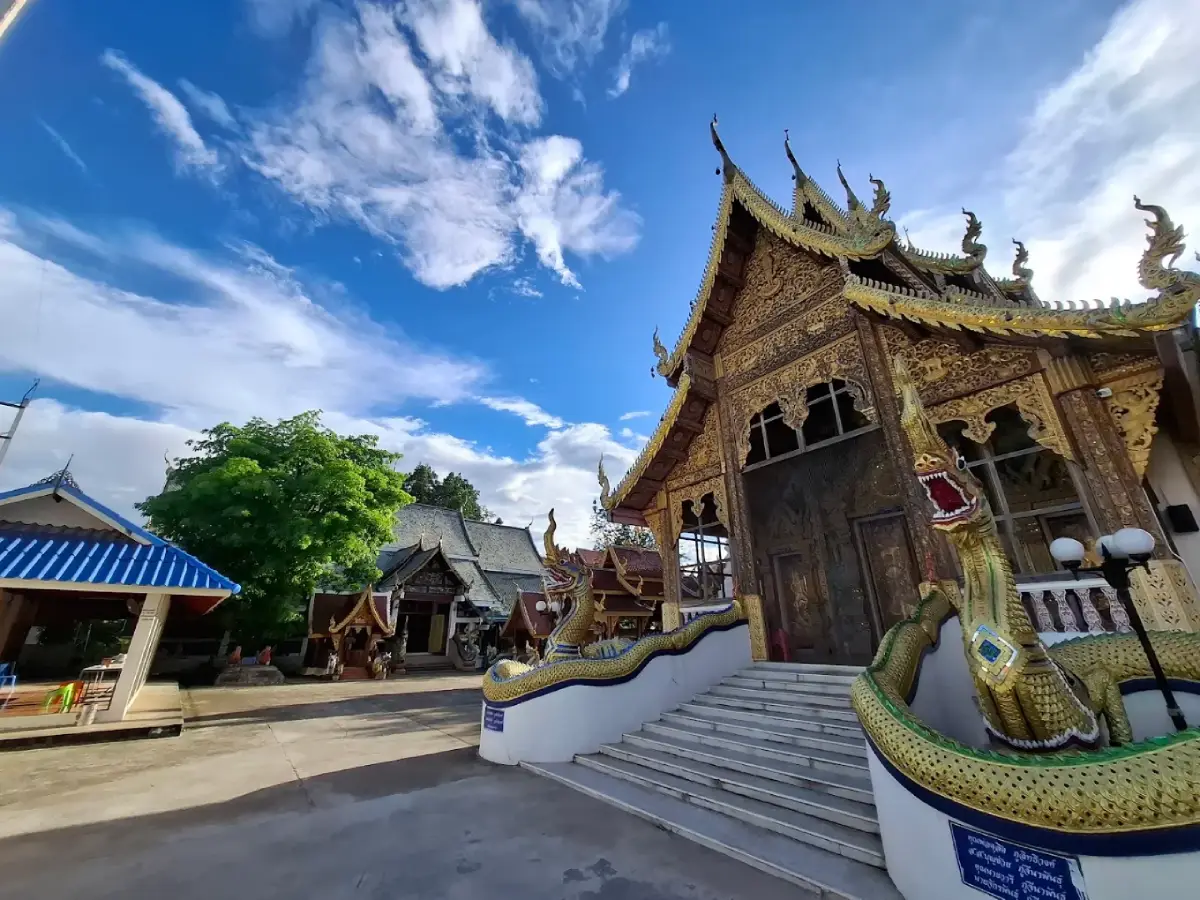
Wat Sop Tia is a local Buddhist temple at 176 Moo 1, Ban Sop Tia, Chiang Mai–Hot Road, Sop Tia Subdistrict, Chom Thong District, Chiang Mai Province. It is a Maha Nikaya community temple and one of the historically important temples in southern Chiang Mai. The temple was officially established in B.E. 2240 and received its royal boundary on 31 July B.E. 2493. With a royal boundary measuring 20 meters wide and 30 meters long, Wat Sop Tia has a clearly recognized religious status and has served the local community for generations.
The main importance of Wat Sop Tia lies in its long history and its role as a temple closely tied to the identity of Sop Tia Subdistrict. The temple is not only a place for worship but also a cultural and religious center for the community along the Chiang Mai–Hot route, one of the important roads connecting Chiang Mai city with Chom Thong and the southern part of the province. For travelers, Wat Sop Tia offers a calm and meaningful stop that reflects the older Buddhist landscape of Chom Thong District.
Its establishment in B.E. 2240 gives Wat Sop Tia a history of more than three centuries. In the context of Chom Thong, a district known for both major religious sites and natural attractions, this long history makes the temple especially valuable. It is not merely a village temple on a map, but a place that helps explain settlement, Buddhist practice, and community continuity in the area.
The royal boundary granted on 31 July B.E. 2493 is another important part of the temple’s identity. In Buddhist practice, a royal boundary is the formal area used for monastic acts. The boundary of Wat Sop Tia measures 20 meters wide and 30 meters long, showing that the temple has an officially defined sacred area for religious ceremonies. This gives the temple a clear role within the local Buddhist community.
The temple covers 6 rai, 2 ngan, and 1 square wah. This area supports the temple’s religious buildings, community activities, and Buddhist ceremonies. Like many village temples in northern Thailand, Wat Sop Tia serves many purposes. It is a place for merit-making, Buddhist observances, sermons, offerings, annual ceremonies, and community gatherings. Its value is therefore found not only in its age but also in its continuing function in village life.
The known abbots in the temple’s administrative history include Khru Ba Kanthiya, Khru Ba Maha Wan, Khru Ba In Chai, Khru Panya Ai, Khru Ba In Kaeo Abhiwangso, and Phra Khru Phiphit Bunnyaphirom Phonthanyo. These names reflect a long line of monastic leadership that has helped maintain the temple over time. A temple of this age can remain active only through the combined support of monks, villagers, and the wider community.
Sop Tia Subdistrict has several community temples, including Wat Phuttha Nimit, Wat Thung Pun, Wat Mokkhalan, Wat Wang Champa, Wat Wang Pan, Wat Nong Ap Chang, Wat Huai Cho, Wat Huai Muang, and Wat Hat Nak. Wat Sop Tia is part of this local temple network and stands out because it shares its name with the subdistrict. This makes the temple closely connected with the identity of the area itself.
The name “Sop Tia” is important because it refers to the temple, the village area, and the subdistrict. A temple that carries the same name as its community often has a strong symbolic role. Although publicly available sources do not provide a detailed explanation of the name’s origin, the direct connection between the temple name and the subdistrict name shows the temple’s importance within the local identity of the area.
The atmosphere of Wat Sop Tia is calm and local. It is suitable for visitors who want a respectful temple stop rather than a busy tourist attraction. Travelers can visit for worship, merit-making, and quiet cultural observation before continuing to other places in Chom Thong District such as Wat Phra That Si Chom Thong Worawihan, Mae Ya Waterfall, Doi Inthanon, or other community temples in Sop Tia.
For cultural travelers, Wat Sop Tia is a strong example of a Maha Nikaya community temple with deep local roots. Many village temples in northern Thailand are not promoted as major tourist destinations, but they remain important to residents. They support Buddhist practice, community ceremonies, local learning, and the social life of the village. Wat Sop Tia has all of these roles and adds the value of a long documented history.
Chom Thong District is well known for major attractions such as Wat Phra That Si Chom Thong Worawihan, Mae Ya Waterfall, and the route toward Doi Inthanon. Smaller temples such as Wat Sop Tia help complete the cultural picture of the district. They show that religious life in Chiang Mai does not exist only in famous temples but also in local village spaces where people continue to practice Buddhism as part of daily life.
Getting to Wat Sop Tia is most convenient by private car or rental car. From Chiang Mai city, travelers can follow the Chiang Mai–Hot route toward Chom Thong District, then continue into Sop Tia Subdistrict and Moo 1 Ban Sop Tia. The final approach passes through local community roads and the main road area, so careful driving is recommended near village intersections, schools, homes, and areas used by local residents.
Wat Sop Tia can be combined with nearby temples in the same subdistrict, including Wat Wang Pan, Wat Wang Champa, Wat Mokkhalan, Wat Phuttha Nimit, and Wat Thung Pun. This route is suitable for travelers who want to understand the local temple network of Sop Tia. Each temple has its own character: Wat Wang Pan is linked with river geography, Wat Wang Champa with old chedis and local stories, Wat Mokkhalan with a hilltop sacred tradition, and Wat Phuttha Nimit with Phra Bat Huai I Ling.
For travelers who want to combine culture and nature, Wat Sop Tia can also be linked with Wat Phra That Si Chom Thong Worawihan, Mae Ya Waterfall, and routes toward Doi Inthanon. A balanced itinerary may begin with temple visits in the morning and continue to natural attractions later in the day. This gives the trip a mix of faith, local history, and landscape.
The best time to visit is in the morning or late afternoon, when the weather is more comfortable and the temple atmosphere is usually calm. Visitors should dress modestly, speak respectfully, and observe proper temple manners. Shoes should be removed where required, especially before entering worship areas. If a religious ceremony or community event is taking place, visitors should give space to monks and local residents.
Wat Sop Tia is suitable for slow travelers, cultural writers, documentary photographers, and visitors who want to understand Chiang Mai at the village level. Its value lies in its age, its royal boundary, its community role, and its direct link with the name of Sop Tia Subdistrict. It is not a destination built around commercial tourism, but it is meaningful for travelers who value local cultural context.
Meals and accommodation are best planned around Chom Thong town, Khuang Pao, Doi Kaeo, or the Doi Inthanon route, where there are more restaurant and lodging choices than in the immediate village area. Visitors can stop at Wat Sop Tia for worship and cultural exploration, then continue to nearby restaurants, hotels, or natural attractions without needing to return to Chiang Mai city immediately.
In summary, Wat Sop Tia is a Maha Nikaya community temple at 176 Moo 1, Ban Sop Tia, Chiang Mai–Hot Road, Sop Tia Subdistrict, Chom Thong District, Chiang Mai Province. It was established in B.E. 2240, received its royal boundary on 31 July B.E. 2493, covers 6 rai, 2 ngan, and 1 square wah, and remains an important local temple in the religious and cultural landscape of Chom Thong District.
| Name | Wat Sop Tia |
| Type | Local Buddhist temple under the Maha Nikaya tradition |
| Location | 176 Moo 1, Ban Sop Tia, Chiang Mai–Hot Road, Sop Tia Subdistrict, Chom Thong District, Chiang Mai Province |
| Address | 176 Moo 1, Chiang Mai–Hot Road, Sop Tia Subdistrict, Chom Thong District, Chiang Mai 50160 |
| Telephone | 053-826-703 |
| Temple Area | 6 rai, 2 ngan, 1 square wah |
| Abbot / Caretaker | Phra Khru Phiphit Bunnyaphirom Phonthanyo |
| Highlights | Historic community temple of Sop Tia Subdistrict, established in B.E. 2240 and granted a royal boundary in B.E. 2493 |
| History | Established in B.E. 2240 and received its royal boundary on 31 July B.E. 2493 |
| Royal Boundary | 20 meters wide and 30 meters long |
| Known Abbots In The Temple History | Khru Ba Kanthiya Khru Ba Maha Wan Khru Ba In Chai Khru Panya Ai Khru Ba In Kaeo Abhiwangso Phra Khru Phiphit Bunnyaphirom Phonthanyo |
| Distinctive Features | An old community temple sharing its name with Sop Tia Subdistrict and reflecting the religious identity of the local community |
| Travel Information | Travel by private car or rental car from Chiang Mai city via the Chiang Mai–Hot route toward Chom Thong District, then continue into Sop Tia Subdistrict and Moo 1 Ban Sop Tia |
| Current Status | Open for visits and worship |
| Open Days | Daily |
| Opening Hours | 08.00 – 17.00 |
| Nearby Tourist Attractions | 1. Wat Wang Pan, about 3 km 2. Wat Wang Champa, about 4 km 3. Wat Mokkhalan, about 5 km 4. Wat Phuttha Nimit, about 6 km 5. Wat Phra That Si Chom Thong Worawihan, about 7 km |
| Nearby Restaurants | 1. Khao Soi Ka Long, about 7 km, Tel. 089-983-9922 2. Khao Soi Kaew Noi, about 8 km, Tel. 053-826-043, 086-198-2999 3. Khon Muang Chom Thong, about 8 km, Tel. 081-885-8851 4. Krua Cobal, about 9 km, Tel. 089-559-9329, 080-124-3393, 080-501-3622 5. Hug Sen Huen Tiao, about 15 km, Tel. 091-068-8522 |
| Nearby Accommodations | 1. Smile Place Chom Thong, about 8 km, Tel. 065-753-8313 2. B-tel Chom Thong Resort Chiang Mai, about 9 km, Tel. 098-759-2003 3. Chom Thong Boutique House, about 9 km, Tel. 081-582-9889 4. Touch Star Resort, about 13 km, Tel. 092-419-4142, 097-449-1415, 053-033-594 5. Cornetto Resort, about 16 km |
Frequently Asked Questions (FAQ)
Q: Where is Wat Sop Tia located?
A: Wat Sop Tia is located at 176 Moo 1, Ban Sop Tia, Chiang Mai–Hot Road, Sop Tia Subdistrict, Chom Thong District, Chiang Mai Province.
Q: What are the opening days and hours of Wat Sop Tia?
A: Wat Sop Tia is open daily from 08.00 to 17.00.
Q: Why is Wat Sop Tia important?
A: Wat Sop Tia is a Maha Nikaya community temple established in B.E. 2240 and granted its royal boundary on 31 July B.E. 2493, making it one of the long-established temples of Sop Tia Subdistrict.
Q: How large is the royal boundary of Wat Sop Tia?
A: The royal boundary of Wat Sop Tia measures 20 meters wide and 30 meters long.
Q: Who is the abbot of Wat Sop Tia?
A: Phra Khru Phiphit Bunnyaphirom Phonthanyo is listed as the abbot of Wat Sop Tia in the temple history information.
Q: How can travelers get to Wat Sop Tia?
A: The most convenient way is by private car or rental car from Chiang Mai city toward Chom Thong District, then onward to Sop Tia Subdistrict and Moo 1 Ban Sop Tia.
Q: What nearby attractions can be combined with Wat Sop Tia?
A: Travelers can combine the visit with Wat Wang Pan, Wat Wang Champa, Wat Mokkhalan, Wat Phuttha Nimit, and Wat Phra That Si Chom Thong Worawihan.
 Category: ●Places of Worship
 Group: ●Temple
Last Update : 1 WeekAgo
 Last Update : 1 WeekAgo
 Click to Access the Navigation Map GPS
Wat Sop Tia Map
Recommend

 Muang Chiang Mai(121)Chom Thong(47)Mae Chaem(25)Chiang Dao(33)Doi Saket(68)Mae Taeng(85)Mae Rim(69)Samoeng(29)Fang(71)Mae Ai(59)Phrao(70)San Pa Tong(103)San Kamphaeng(66)San Sai(73)Hang Dong(74)Hot(32)Doi Tao(22)Omkoi(11)Saraphi(74)Wiang Haeng(15)Chai Prakan(28)Mae Wang(32)Mae On(22)Doi Lo(34)Galyani Vadhana(1)


