
lovethailand home >North Travel Attractions >Chiang Mai Travel Attractions >Chom Thong >Sop Tia > Wat Wang Champa
TL;DR: Wat Wang Champa is located at Moo 5, Sop Tia Subdistrict, Chom Thong District, Chiang Mai Province, open Daily, hours 08.00 – 17.00.
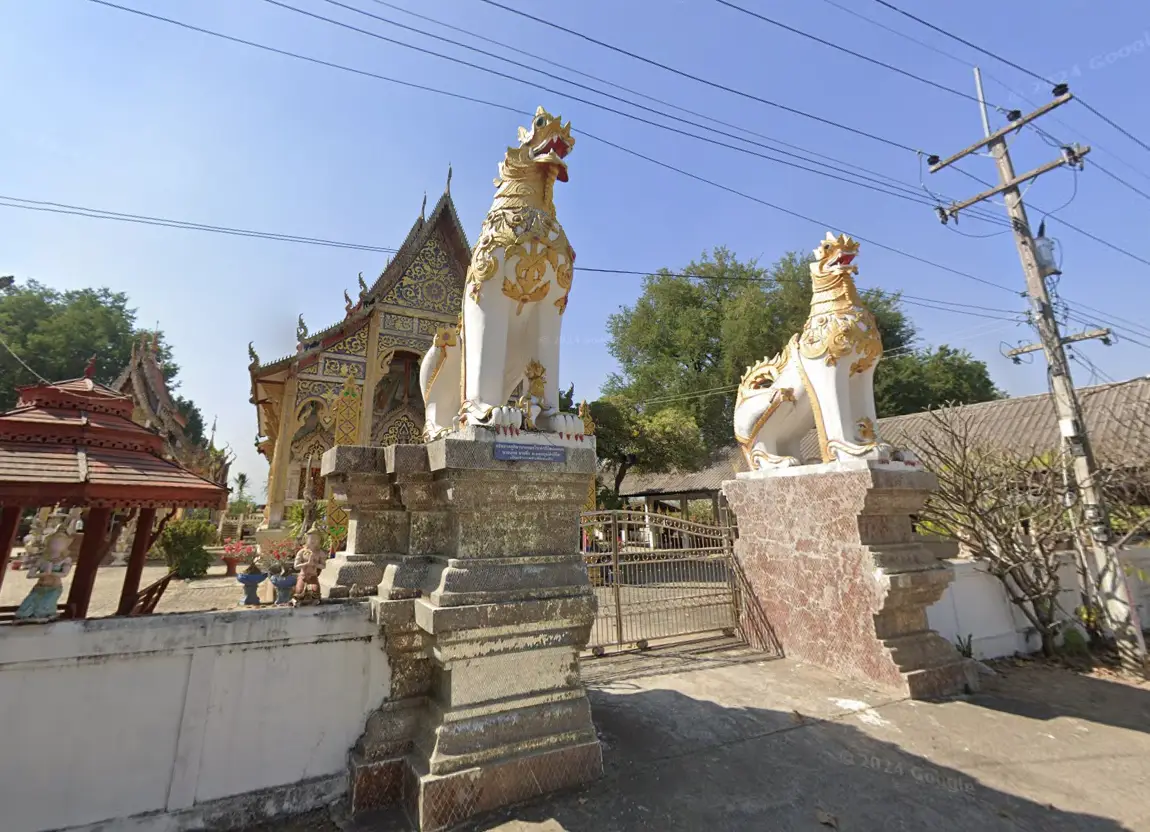
Wat Wang Champa
Open Days: Daily
Opening Hours: 08.00 – 17.00
Wat Wang Champa is a local Buddhist temple in Moo 5, Sop Tia Subdistrict, Chom Thong District, Chiang Mai Province. It is a community temple under the Maha Nikaya tradition and one of the older temples in the area, officially permitted to be established in B.E. 2405. The temple is closely connected with Ban Thung Mak Num and two important local archaeological remains known as Chedi Muen Phrik and Chedi Muen Kluea. These two abandoned chedis are linked with local stories about chili farming, salt trading, merit-making, and the religious life of the Chom Thong community in the past.
The importance of Wat Wang Champa lies not only in its role as a village temple but also in its connection with local cultural memory. The temple helps visitors understand how faith, occupation, trade, and community life were tied together in old Chom Thong. For travelers interested in cultural history, Wat Wang Champa offers more than a quiet temple visit; it opens a window into the story of Ban Thung Mak Num and the surrounding Buddhist landscape of Sop Tia.
Sop Tia Subdistrict has several community temples, including Wat Phuttha Nimit, Wat Thung Pun, Wat Mokkhalan, Wat Wang Pan, Wat Sop Tia, Wat Nong Ap Chang, Wat Huai Cho, Wat Huai Muang, and Wat Hat Nak. This pattern reflects the structure of many northern Thai communities, where local temples stand at the center of village life. A temple is not only a place of worship but also a shared cultural space for ceremonies, merit-making, and community connection. Wat Wang Champa is part of this wider religious and cultural network.
The official establishment of Wat Wang Champa in B.E. 2405 gives the temple a long historical foundation. More than a century and a half of temple history connects the site with generations of local residents. In village communities, temples of this kind preserve not only Buddhist practice but also local memory, annual ceremonies, and relationships between people and place. Wat Wang Champa is therefore best understood as a living community temple with a strong historical background.
Ban Thung Mak Num, the area associated with Wat Wang Champa, has an especially interesting cultural story. In the past, local households lived and farmed near two abandoned chedis: Chedi Muen Phrik and Chedi Muen Kluea. The exact construction period of these chedis is not clearly documented, but local oral history links them with the occupations and merit-making traditions of the people who once lived in the area.
Chedi Muen Phrik and Chedi Muen Kluea are remembered through names that reflect local livelihood. The word “muen” suggests abundance. Chedi Muen Phrik is associated with chili, while Chedi Muen Kluea is associated with salt. Local stories say that people who earned money from chili farming, salt trading, and agricultural work believed that their earnings should first be used for merit-making. The chedis therefore represent the connection between work, wealth, faith, and Buddhist donation in the old community.
The story of the two chedis also refers to people from Chom Thong, Thaen Kham, Tha Luk, and nearby areas. Some communities were involved in chili farming, while others were connected with salt trading and farming around Thung Mak Num. After earning money, they agreed to create religious structures as a form of merit. This tradition reflects a worldview in which economic success and Buddhist generosity were closely connected.
The local story also mentions an old river landing called Tha Chang. This detail is important because it places the history of Wat Wang Champa and the two chedis within a wider landscape of river travel, trade, and religious movement. In the past, river routes were important for transport and exchange. A temple or chedi near such a route was not only a religious structure but also part of the cultural geography of the community.
Over time, Chedi Muen Phrik and Chedi Muen Kluea deteriorated, but their cultural meaning remains important. They are not merely ruins; they are evidence of local memory and the values of a past community. Wat Wang Champa should therefore be presented as a temple with cultural assets, not only as a simple name on a list of temples in Sop Tia. Its value comes from the link between the temple, Ban Thung Mak Num, the abandoned chedis, and the story of local merit-making.
The atmosphere of Wat Wang Champa is calm and local. It is suitable for travelers who enjoy quiet community temples rather than crowded tourist attractions. Visitors can stop for worship, merit-making, and cultural learning. The temple is especially meaningful for those who take time to understand the story of the nearby chedis, because this gives the visit a stronger connection with local history.
For cultural travelers, Wat Wang Champa is a good example of a local northern Thai temple with deep community roots. Many village temples are not widely promoted as tourist attractions, but they are important to residents. They serve as places for worship, ceremonies, Buddhist events, and community gatherings. Wat Wang Champa has an additional cultural layer because of its connection with the ancient chedis and the story of chili and salt-based merit-making.
Chom Thong District is widely known for Wat Phra That Si Chom Thong Worawihan, Mae Ya Waterfall, and the route toward Doi Inthanon. However, smaller temples such as Wat Wang Champa help complete the cultural picture of the district. They show how village temples, old settlements, local occupations, and Buddhist faith shaped the area over time. Visiting Wat Wang Champa gives travelers a quieter and deeper perspective on Chom Thong.
Getting to Wat Wang Champa is most convenient by private car or rental car. From Chiang Mai city, travelers can follow the Chiang Mai–Hot route toward Chom Thong District, then continue into Sop Tia Subdistrict and Moo 5 Ban Thung Mak Num. The final approach passes through local community roads, so careful driving is recommended, especially near village areas, intersections, schools, and roads used by local residents.
Wat Wang Champa can be combined with other temples in Sop Tia, including Wat Wang Pan, Wat Mokkhalan, Wat Phuttha Nimit, and Wat Thung Pun. This route is suitable for travelers who want to see the diversity of temples in the same subdistrict. Wat Phuttha Nimit is notable for its connection with Phra Bat Huai I Ling, Wat Mokkhalan is associated with a hilltop sacred story, and Wat Wang Champa stands out through the story of Chedi Muen Phrik and Chedi Muen Kluea.
For travelers who want to combine culture and nature, Wat Wang Champa can also be linked with Wat Phra That Si Chom Thong Worawihan, Mae Ya Waterfall, and routes toward Doi Inthanon. A balanced itinerary may begin with temple visits in the morning and continue to natural attractions later in the day. This gives the trip a mix of faith, local history, and landscape.
The best time to visit is in the morning or late afternoon, when the weather is more comfortable and the temple atmosphere is usually calm. Visitors should dress modestly, speak respectfully, and observe proper temple manners. If a merit-making event or community ceremony is taking place, visitors should give space to monks and local residents.
Wat Wang Champa is suitable for slow travelers, cultural writers, documentary photographers, and visitors who want to understand Chiang Mai at the village level. Its strength lies in its age, its community role, and the cultural story connected with Ban Thung Mak Num. It is not a destination built around commercial attractions, but it is meaningful for travelers who value local history.
Meals and accommodation are best planned around Chom Thong town, Khuang Pao, Doi Kaeo, or the Doi Inthanon route, where there are more restaurant and lodging choices than in the immediate village area. Visitors can stop at Wat Wang Champa for worship and cultural exploration, then continue to nearby restaurants, hotels, or natural attractions without needing to return to Chiang Mai city immediately.
In summary, Wat Wang Champa is a Maha Nikaya community temple in Moo 5, Sop Tia Subdistrict, Chom Thong District, Chiang Mai Province. It was officially permitted to be established in B.E. 2405 and is closely connected with Chedi Muen Phrik and Chedi Muen Kluea in Ban Thung Mak Num. The temple is best visited as a quiet cultural and religious stop for travelers who want to understand local faith, village history, and the older cultural landscape of Chom Thong.
| Name | Wat Wang Champa |
| Type | Local Buddhist temple under the Maha Nikaya tradition |
| Location | Moo 5, Sop Tia Subdistrict, Chom Thong District, Chiang Mai Province |
| Address | Moo 5, Sop Tia Subdistrict, Chom Thong District, Chiang Mai 50160 |
| Highlights | Historic community temple of Ban Thung Mak Num, connected with Chedi Muen Phrik and Chedi Muen Kluea, two important local archaeological remains |
| History | Officially permitted to be established as a temple in B.E. 2405 and associated with the cultural story of Ban Thung Mak Num |
| Related Cultural Sites | Chedi Muen Phrik Chedi Muen Kluea Ban Thung Mak Num Tha Chang river-landing story Local merit-making traditions linked with chili and salt trading |
| Distinctive Features | A historic temple that links local faith, village life, abandoned chedis, and the cultural landscape of Chom Thong District |
| Travel Information | Travel by private car or rental car from Chiang Mai city via the Chiang Mai–Hot route toward Chom Thong District, then continue into Sop Tia Subdistrict and Moo 5 Ban Thung Mak Num |
| Current Status | Open for visits and worship |
| Open Days | Daily |
| Opening Hours | 08.00 – 17.00 |
| Nearby Tourist Attractions | 1. Wat Wang Pan, about 2 km 2. Wat Mokkhalan, about 5 km 3. Wat Phuttha Nimit, about 6 km 4. Wat Thung Pun, about 6 km 5. Wat Phra That Si Chom Thong Worawihan, about 8 km |
| Nearby Restaurants | 1. Khao Soi Ka Long, about 8 km, Tel. 087-189-2619 2. Khao Soi Kaew Noi, about 9 km, Tel. 053-826-043, 086-198-2999 3. Khon Muang Chom Thong, about 9 km, Tel. 081-885-8851 4. Krua Cobal, about 9 km, Tel. 089-559-9329, 080-124-3393, 080-501-3622 5. Hug Sen Huen Tiao, about 15 km, Tel. 091-068-8522 |
| Nearby Accommodations | 1. Smile Place Chom Thong, about 8 km, Tel. 065-753-8313 2. B-tel Chom Thong Resort Chiang Mai, about 9 km, Tel. 098-759-2003 3. Chom Thong Boutique House, about 9 km, Tel. 081-582-9889 4. Touch Star Resort, about 13 km 5. Cornetto Resort, about 16 km |
Frequently Asked Questions (FAQ)
Q: Where is Wat Wang Champa located?
A: Wat Wang Champa is located in Moo 5, Sop Tia Subdistrict, Chom Thong District, Chiang Mai Province.
Q: What are the opening days and hours of Wat Wang Champa?
A: Wat Wang Champa is open daily from 08.00 to 17.00.
Q: Why is Wat Wang Champa important?
A: Wat Wang Champa is a Maha Nikaya community temple officially established in B.E. 2405 and is one of the older temples in Sop Tia Subdistrict.
Q: How are Chedi Muen Phrik and Chedi Muen Kluea connected with Wat Wang Champa?
A: They are abandoned chedis in the Ban Thung Mak Num area, linked with local stories about chili farming, salt trading, and merit-making in the past.
Q: Is Wat Wang Champa suitable for travelers?
A: Yes. It is suitable for travelers who want a quiet Buddhist temple visit and a cultural stop connected with local history in Chom Thong District.
Q: How can travelers get to Wat Wang Champa?
A: The most convenient way is by private car or rental car from Chiang Mai city toward Chom Thong District, then onward to Sop Tia Subdistrict and Moo 5 Ban Thung Mak Num.
Q: What nearby attractions can be combined with Wat Wang Champa?
A: Travelers can combine the visit with Wat Wang Pan, Wat Mokkhalan, Wat Phuttha Nimit, Wat Thung Pun, and Wat Phra That Si Chom Thong Worawihan.
 Category: ●Places of Worship
 Group: ●Temple
Last Update : 3 WeekAgo
 Last Update : 3 WeekAgo
 Click to Access the Navigation Map GPS
 Muang Chiang Mai(121)Chom Thong(47)Mae Chaem(25)Chiang Dao(33)Doi Saket(68)Mae Taeng(85)Mae Rim(69)Samoeng(29)Fang(71)Mae Ai(59)Phrao(70)San Pa Tong(103)San Kamphaeng(66)San Sai(73)Hang Dong(73)Hot(32)Doi Tao(22)Omkoi(11)Saraphi(74)Wiang Haeng(15)Chai Prakan(28)Mae Wang(32)Mae On(22)Doi Lo(33)Galyani Vadhana(1)


