
lovethailand home >North Travel Attractions >Chiang Mai Travel Attractions >Chom Thong >Sop Tia > Wat Mokkhalan
TL;DR: Wat Mokkhalan is located at 49 Ban Mokkhalan, Moo 3, Sop Tia Subdistrict, Chom Thong District, Chiang Mai Province, open Daily, hours 08.00 – 17.00.
Wat Mokkhalan
Open Days: Daily
Opening Hours: 08.00 – 17.00
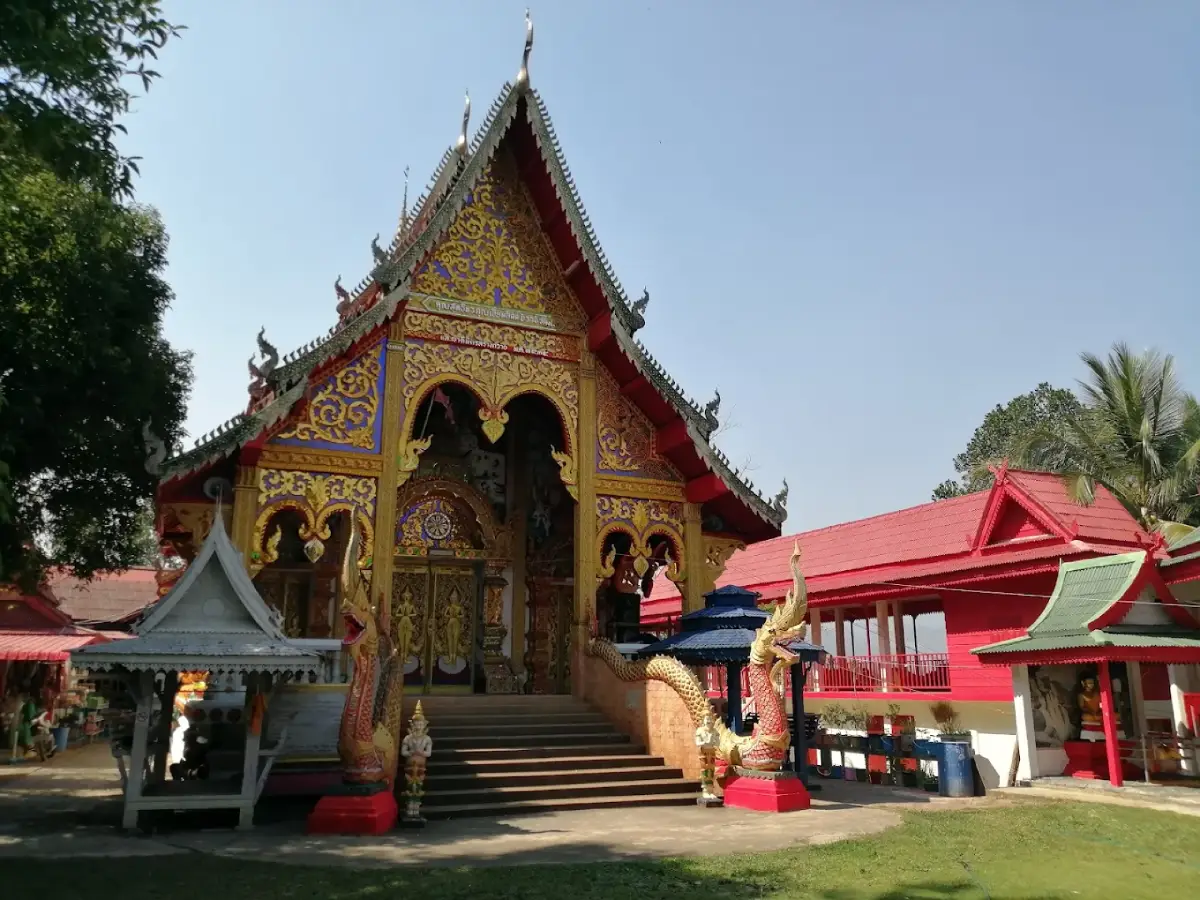
Wat Mokkhalan is a local Buddhist temple at 49 Ban Mokkhalan, Moo 3, Sop Tia Subdistrict, Chom Thong District, Chiang Mai Province. It is a community temple under the Maha Nikaya tradition and is significant as both a village temple and a hilltop religious site in southern Chiang Mai. The temple covers 6 rai and was officially permitted to be established in B.E. 2475. Its history is especially distinctive because the temple was once moved from the hill down to an area beside the water, but after flash floods damaged the boundary wall, it was moved back to Mokkhalan Hill.
Wat Mokkhalan is suitable for travelers who want to understand Chiang Mai beyond major landmarks. It is not only a village temple but also a place with a layered story involving a hilltop sacred area, local Buddhist devotion, and community development. The temple was recognized as an exemplary developed temple in B.E. 2537 and later as an educational park temple in B.E. 2541. These roles show that the temple has served not only as a place of worship but also as a learning space for the local community.
The name “Mokkhalan” is linked with Phra Moggallana, one of the Buddha’s chief disciples. Local tradition connects the hilltop area with a footprint associated with Phra Moggallana. This belief gives the temple a distinctive spiritual identity. The temple’s name, its hilltop location, and the story of the footprint are closely connected, making Wat Mokkhalan more than an ordinary community temple.
According to recorded local information, Wat Mokkhalan was built in B.E. 2475 on the hilltop where the footprint associated with Phra Moggallana was believed to be located. Later, Phra Kaew Suttho, a monk who had traveled from Nakhon Phanom, stayed on the hill and worked with local villagers to build a chedi to cover the sacred site. This story reflects the cooperation between monks and the community in preserving a place of faith.
Another important part of the temple’s history is its relocation. The temple was moved from the hill down to a riverside area that covered about 20 rai. However, flash floods later damaged the boundary wall, so the temple returned to Mokkhalan Hill. This event explains why the present temple is strongly associated with the hill and why the landscape matters to its identity. The return to the hill also strengthened the connection between the temple and its original sacred setting.
Inside Wat Mokkhalan, visitors can find several religious structures and devotional points. In addition to the chedi and hilltop sacred area, the temple has developed other religious features, including statues of Khru Ba Siwichai, Luang Pu Kasem Khemako, Buddha images, Lanna monk figures, a large reclining Buddha image, and a large Ganesha image. These elements give the temple a varied devotional character and make it suitable for visitors interested in local faith, Buddhist art, and community religious practice.
The temple also has structures and sacred objects that reflect its broader religious function, including a vihara, sermon hall, monks’ residences, a Buddhist scripture school building, a Sukhothai-style Buddha image, and a relic shrine. These details show that Wat Mokkhalan has served the community in several ways: as a place of worship, a place of Buddhist education, and a site for preserving religious art and local devotion.
Sop Tia Subdistrict has several community temples, including Wat Phuttha Nimit, Wat Thung Pun, Wat Wang Champa, Wat Wang Pan, Wat Sop Tia, Wat Nong Ap Chang, Wat Huai Cho, Wat Huai Muang, and Wat Hat Nak. Wat Mokkhalan stands out in this local temple network because of its hilltop story, relocation history, sacred footprint tradition, and status as both an exemplary developed temple and an educational park temple.
For cultural travelers, Wat Mokkhalan helps explain how local temples function in northern Thai society. Many village temples may be modest in scale, but they are deeply important to surrounding communities. They provide space for merit-making, ceremonies, Buddhist learning, and social connection. Wat Mokkhalan shares these roles while also offering a more unusual story shaped by geography, devotion, and community resilience.
The temple is best visited slowly. Its value is not limited to one structure or one photo spot. Visitors should pay attention to the temple’s name, hilltop setting, chedi, sacred story, religious images, and educational role. Together, these elements create a richer understanding of the site and of the way faith is rooted in local landscapes in Chom Thong District.
Getting to Wat Mokkhalan is most convenient by private car or rental car. From Chiang Mai city, travelers can follow the Chiang Mai–Hot route toward Chom Thong District, then continue into Sop Tia Subdistrict and Moo 3 Ban Mokkhalan. The final approach passes through local community roads and areas near the hills, so careful driving is recommended, especially near intersections, village roads, slopes, and areas used by local residents.
Wat Mokkhalan can be combined with other temples in Sop Tia, including Wat Phuttha Nimit, Wat Thung Pun, Wat Wang Champa, Wat Wang Pan, and Wat Sop Tia. This route is suitable for travelers who want to understand the local temple network of the same subdistrict. Wat Phuttha Nimit is notable for its connection with Phra Bat Huai I Ling, Wat Thung Pun represents a quiet village temple, and Wat Mokkhalan offers a hilltop story connected with Phra Moggallana.
Travelers can also combine Wat Mokkhalan with major attractions in Chom Thong District, such as Wat Phra That Si Chom Thong Worawihan, Mae Ya Waterfall, and routes toward Doi Inthanon. A good itinerary may begin with temple visits in the morning and continue to natural attractions later in the day. This gives the trip a balance of faith, local history, and landscape.
The best time to visit is in the morning or late afternoon, when the weather is more comfortable and the temple atmosphere is usually calm. Visitors traveling during the rainy season should check weather conditions and drive carefully, because hill roads and community roads may become wet or slippery. A private vehicle gives the most flexibility for visiting the temple and continuing to nearby attractions.
Visitors should dress modestly, speak respectfully, and observe proper temple manners. Shoes should be removed where required, especially before entering worship areas. If monks, local residents, or worshippers are using the temple for ceremonies, visitors should give them space and avoid disruptive behavior. Wat Mokkhalan remains a living religious site for the community, so respectful conduct is essential.
From a cultural travel perspective, Wat Mokkhalan is more detailed than many small community temples. It has a hilltop setting, a story connected with Phra Moggallana, a chedi built to cover a sacred footprint area, a relocation history shaped by flash floods, and later development as an educational temple. These elements make it a meaningful place for travelers who want more than a brief temple stop.
The temple also reflects a wide range of devotional practices. Visitors can pay respect to Buddha images, the relic shrine, Khru Ba Siwichai, Luang Pu Kasem Khemako, the large reclining Buddha image, and the large Ganesha image. This variety should be understood as part of the temple’s local devotional landscape rather than simply as a collection of attractions.
Meals and accommodation are best planned around Chom Thong town, Khuang Pao, Doi Kaeo, or the Doi Inthanon route, where there are more restaurant and lodging choices than in the immediate village area. Visitors can stop at Wat Mokkhalan for worship and cultural exploration, then continue to nearby restaurants, hotels, or natural attractions without needing to return to Chiang Mai city immediately.
In summary, Wat Mokkhalan is a Maha Nikaya community temple at 49 Ban Mokkhalan, Moo 3, Sop Tia Subdistrict, Chom Thong District, Chiang Mai. It covers 6 rai, was officially established in B.E. 2475, and is known for its hilltop setting, the story of Phra Moggallana’s footprint, its relocation history, its chedi, religious structures, large devotional images, and its status as an exemplary developed temple and educational park temple. It is a meaningful cultural and religious stop for travelers exploring Chom Thong District.
| Name | Wat Mokkhalan |
| Type | Local Buddhist temple under the Maha Nikaya tradition |
| Location | 49 Ban Mokkhalan, Moo 3, Sop Tia Subdistrict, Chom Thong District, Chiang Mai Province |
| Address | 49 Ban Mokkhalan, Moo 3, Sop Tia Subdistrict, Chom Thong District, Chiang Mai 50160 |
| Coordinates | 18.3851, 98.67869 |
| Temple Area | 6 rai |
| Highlights | Hilltop temple associated with the story of Phra Moggallana’s footprint, a chedi, religious structures, and several devotional images in Chom Thong District |
| History | Officially permitted to be established as a temple in B.E. 2475. The temple was once moved from the hill to a riverside area but returned to Mokkhalan Hill after flash floods damaged the boundary wall |
| Development Status | Recognized as an exemplary developed temple in B.E. 2537 and an educational park temple in B.E. 2541 |
| Key Areas And Sacred Objects | Chedi Vihara Sermon Hall Monks’ Residences Buddhist Scripture School Building Sukhothai-Style Buddha Image Relic Shrine Khru Ba Siwichai Statue Luang Pu Kasem Khemako Statue Reclining Buddha Image Ganesha Image |
| Distinctive Features | A temple with a hilltop sacred story, relocation history, Phra Moggallana-related belief, religious structures, and a Buddhist educational role in the local community |
| Travel Information | Travel by private car or rental car from Chiang Mai city via the Chiang Mai–Hot route toward Chom Thong District, then continue into Sop Tia Subdistrict and Moo 3 Ban Mokkhalan |
| Current Status | Open for visits and worship |
| Open Days | Daily |
| Opening Hours | 08.00 – 17.00 |
| Nearby Tourist Attractions | 1. Wat Phuttha Nimit, about 4 km 2. Wat Thung Pun, about 4 km 3. Wat Wang Champa, about 5 km 4. Wat Wang Pan, about 5 km 5. Wat Phra That Si Chom Thong Worawihan, about 7 km |
| Nearby Restaurants | 1. Khao Soi Ka Long, about 7 km, Tel. 087-189-2619 2. Khao Soi Kaew Noi, about 8 km, Tel. 053-826-043, 086-198-2999 3. Khon Muang Chom Thong, about 8 km, Tel. 081-885-8851 4. Krua Cobal, about 9 km, Tel. 089-559-9329, 080-124-3393, 080-501-3622 5. Hug Sen Huen Tiao, about 15 km, Tel. 091-068-8522 |
| Nearby Accommodations | 1. Smile Place Chom Thong, about 8 km, Tel. 053-341155, 065-7538313 2. B-tel Chom Thong Resort Chiang Mai, about 9 km, Tel. 098-759-2003 3. Chom Thong Boutique House, about 9 km, Tel. 081-582-9889 4. Touch Star Resort, about 13 km, Tel. 092-419-4142, 097-449-1415, 053-033-594 5. Cornetto Resort, about 16 km, Tel. 099-084-2288 |
Frequently Asked Questions (FAQ)
Q: Where is Wat Mokkhalan located?
A: Wat Mokkhalan is located at 49 Ban Mokkhalan, Moo 3, Sop Tia Subdistrict, Chom Thong District, Chiang Mai Province.
Q: What are the opening days and hours of Wat Mokkhalan?
A: Wat Mokkhalan is open daily from 08.00 to 17.00.
Q: Why is Wat Mokkhalan important?
A: Wat Mokkhalan is a Maha Nikaya community temple officially established in B.E. 2475. It is associated with the story of Phra Moggallana’s footprint and has been recognized as both an exemplary developed temple and an educational park temple.
Q: What are the main highlights of Wat Mokkhalan?
A: Highlights include the chedi, hilltop religious area, Sukhothai-style Buddha image, relic shrine, Khru Ba Siwichai statue, Luang Pu Kasem Khemako statue, reclining Buddha image, and Ganesha image.
Q: Why did Wat Mokkhalan move back to the hill?
A: The temple was once moved from the hill to a riverside area, but flash floods damaged the boundary wall, so it returned to Mokkhalan Hill.
Q: How can travelers get to Wat Mokkhalan?
A: The most convenient way is by private car or rental car from Chiang Mai city toward Chom Thong District, then onward to Sop Tia Subdistrict and Moo 3 Ban Mokkhalan.
Q: What nearby attractions can be combined with Wat Mokkhalan?
A: Travelers can combine the visit with Wat Phuttha Nimit, Wat Thung Pun, Wat Wang Champa, Wat Wang Pan, and Wat Phra That Si Chom Thong Worawihan.
 Category: ●Places of Worship
 Group: ●Temple
Last Update : 4 DayAgo
 Last Update : 4 DayAgo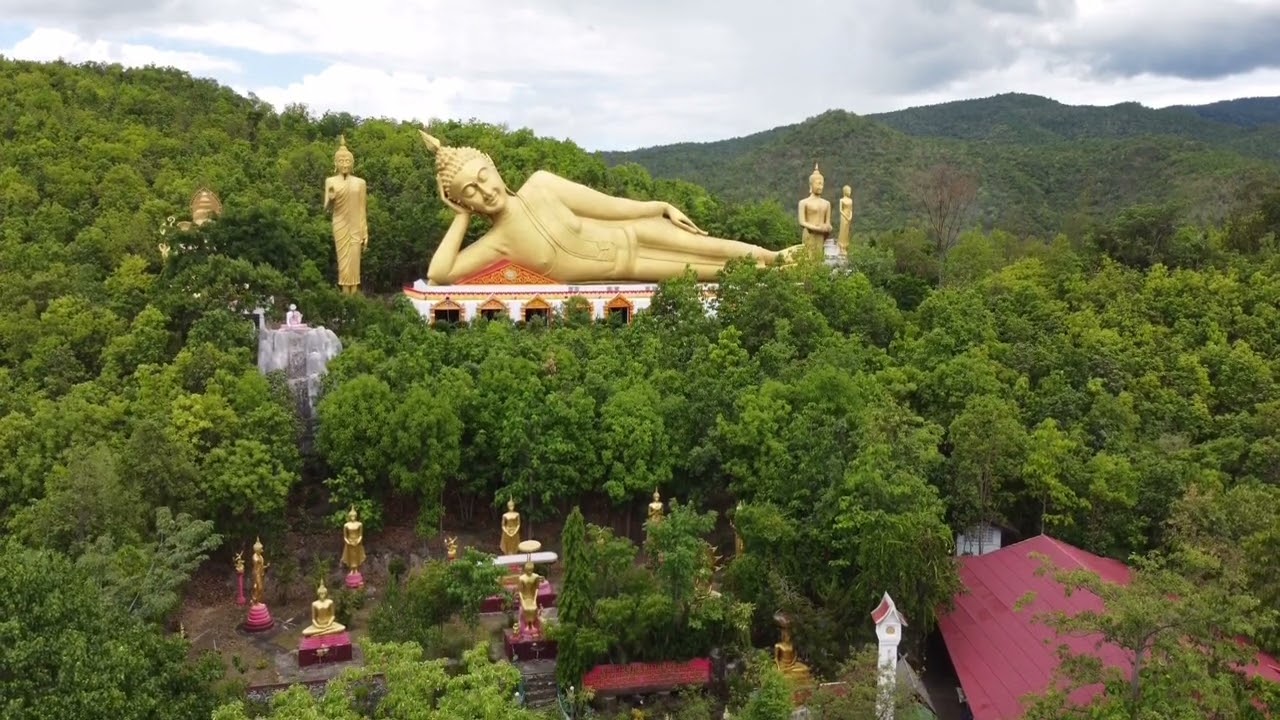
 Click to Access the Navigation Map GPS
Wat Mokkhalan Map
Recommend

 Muang Chiang Mai(121)Chom Thong(47)Mae Chaem(25)Chiang Dao(33)Doi Saket(68)Mae Taeng(85)Mae Rim(69)Samoeng(29)Fang(71)Mae Ai(62)Phrao(70)San Pa Tong(105)San Kamphaeng(66)San Sai(73)Hang Dong(74)Hot(32)Doi Tao(22)Omkoi(11)Saraphi(74)Wiang Haeng(15)Chai Prakan(28)Mae Wang(32)Mae On(22)Doi Lo(34)Galyani Vadhana(1)


