
lovethailand home >North Travel Attractions >Chiang Mai Travel Attractions >San Pa Tong >Mae Ka > Wat Rong Wua
TL;DR: Wat Rong Wua is located at Ban Rong Wua, Moo 2, Mae Ka Subdistrict, San Pa Tong District, Chiang Mai Province, open Daily, hours 08.00 – 17.00.

Wat Rong Wua
Open Days: Daily
Opening Hours: 08.00 – 17.00
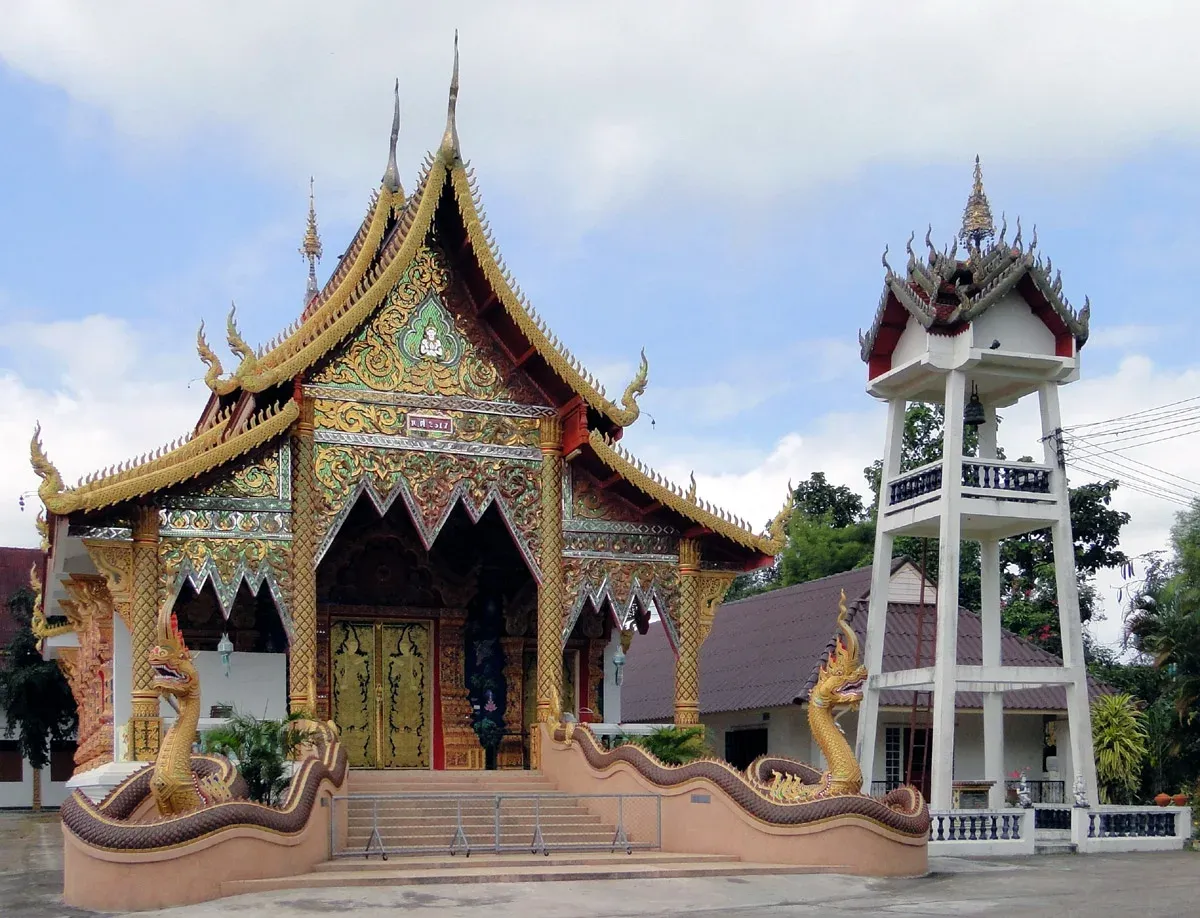
Wat Rong Wua is an old community temple in Mae Ka Subdistrict, San Pa Tong District, Chiang Mai Province. Its identity comes from the former name Wat Pham Wua, a place once associated with cattle traders who stopped and built temporary shelters for themselves and their cattle. The temple is known for its restored Burmese-style chedi, viharn, ordination hall, scripture hall, bell tower, sermon hall, multipurpose pavilion, monks’ residences, and the legacy of Luang Pu Khru Ba Oon Atthakamo, a former abbot who played an important role in developing the temple and supporting the local community.
Wat Rong Wua is located at 197 Moo 2, Than Lam Nam Ping Road, Mae Ka Subdistrict, San Pa Tong District, Chiang Mai Province 50120. It is a local Buddhist temple under the Mahanikaya order. The temple was formerly known as Wat Pham Wua, and in some local references the former name also appears as Wat Phang Wua. The site had long been an abandoned temple before it was rebuilt as a temple in 1667. Provincial temple records list its establishment in 1732, and it later received its royal Wisungkhamsima on 2 August 1946. These dates make the temple significant both as a historical community temple and as a religious landmark of Mae Ka Subdistrict.
The origin of Wat Rong Wua is closely connected with cattle-trading routes in the past. In earlier times, cattle traders from nearby and distant areas brought their cattle to rest in this area. They built temporary shelters known locally as “pham” to use as resting places during their journeys. As the area became a repeated stopping point, people gradually settled nearby and built homes. The name Pham Wua therefore preserves the memory of cattle traders, temporary shelters, and the early formation of the local village.
The word “pham” refers to a simple shelter or temporary pavilion, while “wua” means cattle. The former name of the temple is therefore not just a place name. It is a cultural record that reflects movement, trade, settlement, and local memory. As the village developed, the temple was called Wat Pham Wua after the community. Later, the name changed to Wat Rong Wua, but the new name still preserves the old meaning because it remains connected with cattle, resting places, and the village’s historical roots.
The restoration of the temple is an important part of its history. After the area had been abandoned and overgrown, a local figure known as Pho Jai encouraged faithful villagers to clear the site and rebuild the temple. This story shows how deeply village temples depend on community faith. Wat Rong Wua was not revived by architecture alone. It was restored through the shared effort of local residents who wanted a sacred place for worship, merit-making, and community life.
Ban Rong Wua in Mae Ka Subdistrict is directly tied to the temple. The temple serves as the spiritual and cultural center of the village. It is a place for Buddhist holy days, Dhamma listening, family ceremonies, merit-making, and annual community activities. The importance of Wat Rong Wua therefore lies not only in its old establishment dates, but also in its role in shaping the identity and continuity of Ban Rong Wua.
Mae Ka Subdistrict contains many temples and important local places across different villages, including Wat Nong Tao Kham, Wat Ko Chok, Wat Nong Khrop, Wat Pa Chedi Liam, Wat San Kawaan, Wat Sai Mun, Wat Phra Chao Ton Luang, Wat Rong Khut, Wat Mae Ka, and Wat Inthawichai. This pattern shows that Mae Ka has a strong Buddhist village network. Wat Rong Wua, located in Moo 2, is part of this network and remains connected to the broader spiritual and cultural landscape of the subdistrict.
One of the most important features of Wat Rong Wua is its chedi. The chedi had once been abandoned, with only its old foundation remaining for many years. When villagers gradually settled in the area and revived the temple, the chedi was rebuilt. Burmese craftsmen were hired to construct it in a Burmese artistic style. This makes the chedi significant not only as a sacred Buddhist monument but also as evidence of cultural exchange in the Lanna region.
The chedi was restored again in the modern period under the support of Luang Pu Khru Ba Oon Atthakamo and the village devotees of Ban Rong Wua. The restoration began on 16 June 2012 and took more than two months to complete. The key principle of the restoration was to preserve the original form of the chedi without changing its traditional shape. New details such as a stainless-steel fence, a golden umbrella finial, and decorative corner umbrellas were added to complete the monument. This restoration reflects the community’s care for inherited sacred objects and local memory.
In addition to the chedi, the temple contains several important religious structures: a viharn, an ordination hall, a scripture hall, a bell tower, a sermon hall, a multipurpose pavilion, monks’ residences, and a kitchen. These structures make the temple functional for both monastic life and community activities. The viharn is used for worship and merit-making, the ordination hall supports important monastic acts, the scripture hall is connected with the preservation of Buddhist texts, the bell tower marks religious time, and the halls serve lay gatherings and ceremonies.
The temple covers 4 rai, 2 ngan, and 76 square wah. Although it is not a large tourist temple, its layout and structures clearly show the full role of a rural Lanna community temple. Visitors can walk around the temple grounds, pay respect to the chedi, worship in the main religious areas, and observe how the temple continues to serve the village. Wat Rong Wua is especially suitable for travelers interested in community history, local temples, and northern Thai Buddhist culture.
A key figure in the temple’s modern history is Phra Khru Atthakitjathon, also known as Luang Pu Khru Ba Oon Atthakamo, the former abbot of Wat Rong Wua. He played a major role in caring for and developing the temple over a long period. His work included restoring temple structures, guiding devotees, supporting Buddhist learning, and maintaining the temple as a spiritual center. Official reports in 2026 recorded the royal bathing rite for his funeral at Wat Rong Wua and recognized his lifelong service to Buddhism and the local community.
After the passing of Luang Pu Khru Ba Oon, Wat Rong Wua continues to be an important place for Ban Rong Wua and devotees in Mae Ka Subdistrict. His role should be remembered as part of the temple’s historical identity. The restoration of the chedi, the care of temple buildings, and the deep respect of the villagers all reflect the legacy he helped cultivate during his years of service.
The atmosphere of Wat Rong Wua is calm, local, and community-based. It is located in Mae Ka Subdistrict of San Pa Tong District, an area known for rural Lanna life, agricultural communities, and many village temples. The temple is not designed as a large commercial tourist site. Its appeal lies in its authenticity as a living temple that still supports the everyday religious life of local residents.
The temple plays several roles in the community. It is a place for merit-making on Buddhist holy days, Dhamma listening, ordination ceremonies, funerals, dedication ceremonies, Kathin robe offerings, forest robe offerings, and other annual Buddhist activities. These events bring villagers together, allow different generations to participate in religious life, and help preserve social ties through shared merit-making.
In the Lanna community context, temple festivals and merit-making activities are not only religious rituals. They are also social practices that keep families, neighbors, elders, and younger generations connected. At Wat Rong Wua, the temple continues to function as a shared space where villagers help prepare ceremonies, cook, clean, support monks, and maintain local Buddhist customs.
Visitors should observe proper temple etiquette. Dress modestly, keep voices low, avoid entering monks’ private areas without permission, remove shoes before entering religious buildings, and do not take close photographs of monks or local residents without asking. If a merit-making event or ceremony is taking place, visitors should give priority to local participants. Wat Rong Wua is a living community temple, so respectful behavior is essential.
Getting There is most convenient by private car or rental car. From Chiang Mai city, travel south toward San Pa Tong District via the Chiang Mai – Hang Dong – San Pa Tong route or the Chiang Mai – Hot road. Continue into Mae Ka Subdistrict and Ban Rong Wua. The temple is located in Moo 2 along Than Lam Nam Ping Road. Daytime travel is recommended, especially for visitors who plan to combine the temple with other stops in Mae Ka and San Pa Tong.
A good connected route can begin at Wat Rong Wua, then continue to Wat Nong Tao Kham, Wat Mae Ka, Wat Rong Khut, Wat Phra Chao Ton Luang, and Wat Pa Chedi Liam. Travelers can also continue to San Pa Tong town for food and accommodation, or extend the route toward Nam Bo Luang, Hang Dong, or Mae Wang depending on time. This route is suitable for visitors who want to explore local temples, village culture, and rural Chiang Mai close to the city.
The best time to visit is in the morning or late afternoon during opening hours. These periods are more comfortable for walking around the temple grounds and photographing the chedi and religious buildings respectfully. Festival days and merit-making periods may be busier because local residents gather at the temple. Weekdays are better for visitors who prefer a quieter atmosphere and want to spend more time understanding the temple’s history.
Overall, Wat Rong Wua is valuable for several reasons: its origin as the former Wat Pham Wua, its connection with cattle traders and early settlement, its restoration from an abandoned temple, its Burmese-style chedi, and the important role of Luang Pu Khru Ba Oon Atthakamo in modern temple development. For travelers interested in old temples of San Pa Tong, Lanna community history, and rural Buddhist culture, Wat Rong Wua is a meaningful stop in Mae Ka Subdistrict.
| Name | Wat Rong Wua |
| Former Name | Wat Pham Wua / Wat Phang Wua |
| Location | Ban Rong Wua, Moo 2, Mae Ka Subdistrict, San Pa Tong District, Chiang Mai Province |
| Address | 197 Moo 2, Than Lam Nam Ping Road, Mae Ka Subdistrict, San Pa Tong District, Chiang Mai 50120, Thailand |
| Temple Type | Local Buddhist Temple Under The Mahanikaya Order |
| Temple Area | 4 Rai, 2 Ngan, 76 Square Wah |
| History | Formerly an abandoned temple, rebuilt in 1667, listed in provincial temple records as established in 1732, and received its royal Wisungkhamsima on 2 August 1946 |
| Important Former Abbot | Phra Khru Atthakitjathon, also known as Luang Pu Khru Ba Oon Atthakamo |
| Important Sacred Object | Burmese-style chedi restored while preserving its original form |
| Important Structures | Viharn Ordination Hall Scripture Hall Bell Tower Sermon Hall Multipurpose Pavilion Monks’ Residences Kitchen |
| Highlights | Former Wat Pham Wua history, cattle-trader settlement story, Burmese-style chedi, and Luang Pu Khru Ba Oon’s role in temple development |
| Community Role | A spiritual center for Ban Rong Wua, used for merit-making, Dhamma listening, Buddhist ceremonies, and preserving Lanna community life |
| Related Traditions | Buddhist holy days, Buddhist Lent, the end of Buddhist Lent, Kathin robe offerings, forest robe offerings, ordination ceremonies, funerals, and local merit-making |
| Open Days | Daily |
| Opening Hours | 08.00 – 17.00 |
| Travel Information | Private car or rental car is the most convenient option. From Chiang Mai city, travel south toward San Pa Tong District, continue into Mae Ka Subdistrict and Ban Rong Wua, and follow Than Lam Nam Ping Road to the temple. |
| Current Status | Active local Mahanikaya temple in Moo 2, Ban Rong Wua, Mae Ka Subdistrict, San Pa Tong District, Chiang Mai Province |
| Nearby Tourist Attractions | 1. Wat Nong Tao Kham, about 3 km 2. Wat Mae Ka, about 4 km 3. Wat Rong Khut, about 5 km 4. Wat Phra Chao Ton Luang, about 6 km 5. Wat Pa Chedi Liam, about 7 km 6. San Pa Tong Market, about 9 km |
| Nearby Restaurants | 1. Mak Nuea Grilled Beef, about 3 km, Tel. 084-939-8939 2. Lake View @ San Pa Tong, about 7 km, Tel. 097-079-8448 3. Klin Kaphrao Khao Ho Mok San Pa Tong, about 8 km, Tel. 093-243-8923 4. Khrua Pa Phan, about 11 km, Tel. 084-609-6109 5. Charcoal Pork Leg Rice San Pa Tong, about 9 km, Tel. 081-881-5112 |
| Nearby Accommodations | 1. San Pa Tong Daily-Monthly Dormitory, about 7 km, Tel. 089-558-7741 2. Bannoi Himsuan, about 8 km, Tel. 090-329-6108 3. Home At 9, about 9 km, Tel. 088-636-2679 4. P Resort & W Resort, about 11 km, Tel. 064-334-4566 5. Fortune Hotel, about 12 km, Tel. 095-129-9564 6. Hom Thai Resort, about 13 km, Tel. 063-952-8228 |
Frequently Asked Questions (FAQ)
Q: Where is Wat Rong Wua located?
A: Wat Rong Wua is located at 197 Moo 2, Than Lam Nam Ping Road, Mae Ka Subdistrict, San Pa Tong District, Chiang Mai Province 50120.
Q: What are the open days and opening hours?
A: Wat Rong Wua is open daily from 08.00 to 17.00.
Q: What was the former name of Wat Rong Wua?
A: The temple was formerly known as Wat Pham Wua or Wat Phang Wua, a name connected with cattle traders who once built temporary shelters in the area.
Q: Why is Wat Rong Wua historically important?
A: It was formerly an abandoned temple, rebuilt in 1667, listed as established in 1732, and received its royal Wisungkhamsima on 2 August 1946.
Q: What important structures are found in Wat Rong Wua?
A: Important structures include the Burmese-style chedi, viharn, ordination hall, scripture hall, bell tower, sermon hall, multipurpose pavilion, monks’ residences, and kitchen.
Q: How is Luang Pu Khru Ba Oon connected with Wat Rong Wua?
A: Luang Pu Khru Ba Oon Atthakamo, also known as Phra Khru Atthakitjathon, was an important former abbot who helped develop the temple, restore its chedi, and support the religious life of the local community.
Q: What kind of travelers is Wat Rong Wua suitable for?
A: It is suitable for visitors interested in merit-making, old village temples, Burmese-style chedi architecture, Lanna community history, and rural Buddhist culture in San Pa Tong.
Q: What nearby places can be visited with Wat Rong Wua?
A: Nearby places include Wat Nong Tao Kham, Wat Mae Ka, Wat Rong Khut, Wat Phra Chao Ton Luang, Wat Pa Chedi Liam, and San Pa Tong Market.
 Category: ●Places of Worship
 Group: ●Temple
Last Update : 22 HourAgo
 Last Update : 22 HourAgo
 Click to Access the Navigation Map GPS
 Muang Chiang Mai(121)Chom Thong(47)Mae Chaem(25)Chiang Dao(33)Doi Saket(68)Mae Taeng(85)Mae Rim(69)Samoeng(29)Fang(71)Mae Ai(59)Phrao(70)San Pa Tong(103)San Kamphaeng(66)San Sai(73)Hang Dong(74)Hot(32)Doi Tao(22)Omkoi(11)Saraphi(74)Wiang Haeng(15)Chai Prakan(28)Mae Wang(32)Mae On(22)Doi Lo(34)Galyani Vadhana(1)


