
lovethailand home >North Travel Attractions >Chiang Mai Travel Attractions >Chom Thong >Ban Luang > Wat Phra Koet
TL;DR: Wat Phra Koet is located at Moo 13, Ban Luang Subdistrict, Chom Thong District, Chiang Mai Province, open Daily, hours 08.00 - 17.00.

Wat Phra Koet
Open Days: Daily
Opening Hours: 08.00 - 17.00
Wat Phra Koet is located in Moo 13, Ban Luang Subdistrict, Chom Thong District, Chiang Mai Province. It is a community Buddhist temple under the Mahanikaya order and an important local religious site in the Ban Nam Lat area. The temple was officially established in 1931 and received royal Wisungkhamsima in 1997. This confirms its recognized status within the Thai Sangha system and its role as a living community temple in Chom Thong.
Wat Phra Koet is suitable for travelers who want to explore a quieter and more local side of Chiang Mai. Instead of being a large commercial tourist temple, it represents the spiritual life of a village community. The temple is connected with merit-making, Buddhist ceremonies, local legends, the sacred image known as Phra Chao Ton Luang, and the wider religious landscape of Ban Luang Subdistrict.
Ban Luang is an important area in Chom Thong District because it connects major temples, village communities, Mae Klang Waterfall, and the Doi Inthanon route. Wat Phra Koet belongs to a network of local temples that includes Wat Nam Lat, Wat Nam Tong, Wat Nam Tok Mae Klang, Wat Thaen Kham, Wat Phrabat, Wat Mueang Klang, and Wat Phra That Si Chom Thong Worawihan. A visit to Wat Phra Koet therefore helps travelers understand the cultural and Buddhist geography of Chom Thong more deeply.
The word “Koet” or “Koed” is a northern Thai term associated with blocking, preventing, setting a boundary, or keeping something from entering a particular area. This makes the temple’s name distinctive because it reflects local language and the way Lanna communities describe place, boundary, and terrain. The name is more than a label; it carries linguistic and cultural meaning within the northern Thai context.
Local cultural records describe Wat Phra Koet as having an older name, “Doi Loha Kuti.” The site is associated with a local Buddhist legend about the Buddha’s journey through the world and the placing of a sacred footprint. The story also connects the area with Phaya Alavaka Yaksha in the forested hills. Such stories are part of the Lanna sacred landscape, where mountains, footprints, temple sites, Buddha images, and local memory are woven together.
Although detailed historical documents about many village temples are limited, local narratives remain valuable as cultural memory. Wat Phra Koet should therefore be understood both as a formally recognized community temple and as a site carrying local legend and devotional meaning. This combination makes the temple more meaningful than a simple map listing.
The temple was officially established in 1931. During that period, temples in northern Thai communities played important roles in religion, education, moral formation, and social life. The establishment of Wat Phra Koet shows that the Ban Luang community had a recognized Buddhist center for religious practice and village activities.
Wat Phra Koet received royal Wisungkhamsima in 1997. Wisungkhamsima is the consecrated boundary granted for important monastic acts according to Buddhist discipline. Receiving this boundary confirms that the temple has a complete religious role within the Sangha system and can properly support important Buddhist ceremonies.
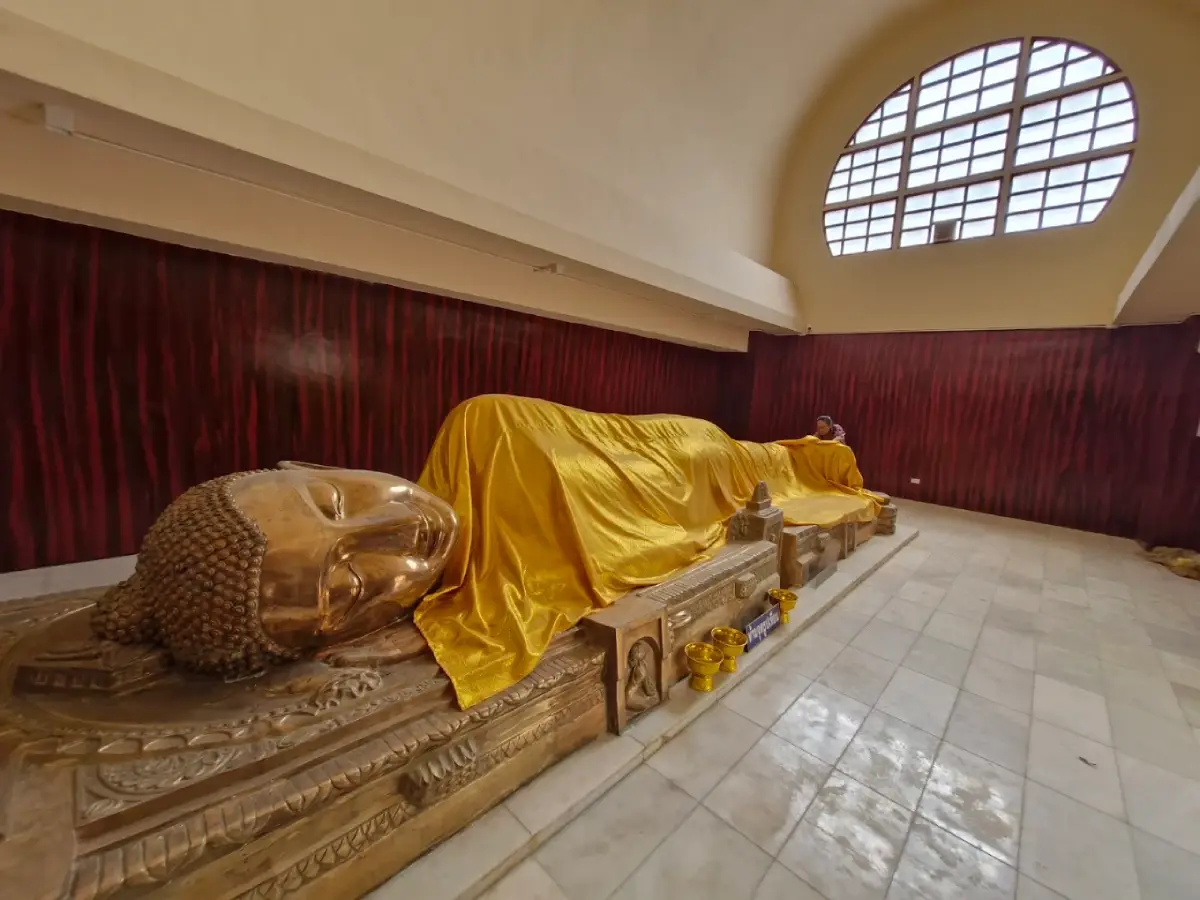
One of the most important sacred objects at Wat Phra Koet is Phra Chao Ton Luang, the principal Buddha image enshrined in the viharn. Local accounts suggest that this Buddha image is over a century old and has been restored over time. For the community, Phra Chao Ton Luang is not only an image for worship, but also a center of memory, faith, and continuity.
The viharn of Wat Phra Koet is therefore an important devotional space. Visitors who pay respect to Phra Chao Ton Luang are also connecting with generations of local faith. In village temples, a principal Buddha image often acts as the heart of the temple, giving villagers a shared spiritual focus and a sense of belonging.
Cultural information also mentions a naga staircase leading up toward the viharn of Phra Chao Ton Luang and a chedi containing Buddha relics. In northern Thai temple architecture, a naga staircase is not only a pathway, but also a symbolic transition from ordinary space to sacred space. It prepares visitors to approach the temple with respect and awareness.
The chedi containing Buddha relics adds another layer of religious importance to Wat Phra Koet. A chedi is a Buddhist monument associated with remembrance, devotion, and reverence for the Buddha. The presence of a relic-containing chedi strengthens the temple’s sacred character and makes it a meaningful place for merit-making and worship.
Recent 2025 Kathin information lists Wat Phra Koet as a community temple in Ban Luang Subdistrict, Chom Thong District, Chiang Mai Province. It records six resident monks and lists the abbot as Phra Athikan Montree Cakkadhammo. This confirms that the temple continues to have active monastic residence and annual religious activity.
Kathin is a major Buddhist ceremony after the end of Buddhist Lent. It allows villagers and supporters to offer robes and support to monks, maintain temple buildings, and strengthen the relationship between the temple and the community. The temple’s appearance in recent Kathin information shows that Wat Phra Koet remains an active religious site rather than only a historical place name.
Religious traditions associated with Wat Phra Koet and nearby community temples include Buddhist holy-day merit-making, food offerings to monks, sermons, Kathin, robe-offering ceremonies, memorial merit-making, Buddhist festival days, and northern Thai merit-making traditions such as Tan Kuai Salak. These activities allow villagers to gather, support the temple, dedicate merit to ancestors, and preserve community identity.
For visitors, Wat Phra Koet is best experienced slowly and respectfully. Its value lies in Phra Chao Ton Luang, the Doi Loha Kuti story, the sacred-footprint legend, the relic chedi, and its role in the Ban Nam Lat community. Travelers who take time to understand these layers will see the temple as more than a small village temple.
Wat Phra Koet can be included in a cultural route through Ban Luang. It can be combined with Wat Nam Lat, Wat Phra That Si Chom Thong Worawihan, Wat Phrabat, Wat Mueang Klang, Wat Nam Tok Mae Klang, and Wat Nam Tong. This route reveals the diversity of Buddhist sites in the same district, from major royal temples to village temples with local legends and community functions.
Getting There is most convenient by private car. From Chiang Mai city, take Highway 108, the Chiang Mai–Hot route, toward Chom Thong District. From Chom Thong, continue into Ban Luang Subdistrict and Moo 13 via local roads. Travelers without a private car can take a bus to Chom Thong and then arrange local transport. Planning ahead is recommended, especially when combining the temple with Wat Phra That Si Chom Thong Worawihan, Mae Klang Waterfall, or the Doi Inthanon route.
A visit to Wat Phra Koet can be short or part of a deeper half-day cultural route. Travelers with limited time can pay respect to Phra Chao Ton Luang and continue toward Chom Thong town or Mae Klang Waterfall. Travelers with more time can include Wat Nam Lat, Wat Phrabat, and Wat Mueang Klang to better understand the temple network of Ban Luang.
The best time to visit is in the morning or afternoon, when the weather is more comfortable. Wat Phra Koet is open daily from 08.00 to 17.00. Visitors should dress modestly, speak quietly, avoid disturbing monks or villagers, and avoid entering monks’ private areas without permission. If a ceremony is taking place, follow local guidance.
No confirmed public information indicates that a fixed admission fee is charged for general visitors. Travelers may visit respectfully and make merit according to their faith. A verified main telephone number for the temple was not found in reliable public sources, so visitors who need direct contact should ask locally in Ban Nam Lat or through local offices in Ban Luang.
In summary, Wat Phra Koet is a Mahanikaya community temple in Moo 13, Ban Luang Subdistrict, Chom Thong District, Chiang Mai Province. It was officially established in 1931 and received royal Wisungkhamsima in 1997. Its importance lies in its local legend, the meaning of its northern Thai name, Phra Chao Ton Luang, the naga stairway, the relic chedi, and its continuing role as a living Buddhist temple in the Ban Luang religious landscape.
| Name | Wat Phra Koet |
| Location | Moo 13, Ban Luang Subdistrict, Chom Thong District, Chiang Mai Province |
| Address | Moo 13, Ban Luang Subdistrict, Chom Thong District, Chiang Mai 50160, Thailand |
| Temple Type | Community Buddhist temple under the Mahanikaya order |
| History | Officially established as a temple in 1931 and granted royal Wisungkhamsima in 1997. |
| Abbot | Phra Athikan Montree Cakkadhammo |
| Resident Monks | 6 monks |
| Highlights | A local temple in Ban Nam Lat with Phra Chao Ton Luang, local legends about Doi Loha Kuti, a sacred-footprint tradition, and a chedi containing Buddha relics. |
| Sacred Objects / Key Features | Phra Chao Ton Luang, the viharn of Phra Chao Ton Luang, and the chedi containing Buddha relics. |
| Main Areas | Community temple grounds, the viharn of Phra Chao Ton Luang, naga stairway, and relic chedi area. |
| Name Origin | “Koet” or “Koed” is a northern Thai term related to blocking, preventing, setting a boundary, or keeping something from entering an area. |
| Community Role | A Ban Nam Lat community temple used for merit-making, Sangha ceremonies, Kathin, and Buddhist activities. |
| Related Traditions | Buddhist holy-day merit-making, food offerings, sermons, Kathin, robe-offering ceremonies, memorial merit-making, Buddhist festival days, and Lanna merit-making traditions. |
| Travel Information | From Chiang Mai city, take Highway 108 toward Chom Thong, then continue into Ban Luang Subdistrict and Moo 13. Private car is the most convenient option. |
| Current Status | The temple continues to appear in Mahanikaya temple listings and 2025 Kathin-related public information for Ban Luang Subdistrict, Chom Thong District, Chiang Mai Province. |
| Open Days | Daily |
| Opening Hours | 08.00 - 17.00 |
| Nearby Tourist Attractions | 1. Wat Nam Lat, about 1 km 2. Wat Phra That Si Chom Thong Worawihan, about 6 km, Tel. 053-342184 3. Wat Phrabat, about 7 km 4. Mae Klang Waterfall, about 9 km 5. Doi Inthanon National Park, about 30 km |
| Nearby Restaurants | 1. Khon Mueang Chom Thong, about 6 km, Tel. 081-8858851 2. Food Center near Wat Phra That, about 6 km, Tel. 090-7588224 3. Krua Fueang Fa, about 7 km, Tel. 053-341274, 086-1825031 4. Pa Oi Krua Rim Than, about 18 km, Tel. 053-286760 5. Ban Hom Doi Inthanon Restaurant, about 20 km, Tel. 053-361381 |
| Nearby Accommodations | 1. Chom Thong Boutique House, about 7 km, Tel. 081-5829889 2. Smile Place Chom Thong, about 8 km, Tel. 065-7538313 3. Touch Star Resort Doi Inthanon, about 10 km, Tel. 092-4194142, 097-4491415, 053-033594 4. Suan Sook Homestay Resort, about 11 km 5. Rim Na Ban Phak, about 27 km, Tel. 096-6536521 |
Frequently Asked Questions (FAQ)
Q: Where is Wat Phra Koet located?
A: Wat Phra Koet is located in Moo 13, Ban Luang Subdistrict, Chom Thong District, Chiang Mai Province, Thailand.
Q: What are the opening days and hours of Wat Phra Koet?
A: Wat Phra Koet is open daily from 08.00 to 17.00.
Q: What is the historical importance of Wat Phra Koet?
A: Wat Phra Koet was officially established as a temple in 1931 and received royal Wisungkhamsima in 1997.
Q: What does the name Wat Phra Koet mean?
A: “Koet” or “Koed” is a northern Thai word related to blocking, preventing, setting a boundary, or keeping something from entering an area.
Q: What are the important sacred features of Wat Phra Koet?
A: Important features include Phra Chao Ton Luang, the viharn of Phra Chao Ton Luang, the naga stairway, and the chedi containing Buddha relics.
Q: Who is the abbot of Wat Phra Koet?
A: The 2025 Kathin information lists Phra Athikan Montree Cakkadhammo as the abbot of Wat Phra Koet.
Q: How can visitors get to Wat Phra Koet?
A: From Chiang Mai city, take Highway 108 toward Chom Thong, then continue into Ban Luang Subdistrict and Moo 13. A private car is the most convenient option.
Q: What nearby places can be combined with a visit to Wat Phra Koet?
A: Visitors can combine the trip with Wat Nam Lat, Wat Phra That Si Chom Thong Worawihan, Wat Phrabat, Mae Klang Waterfall, and the Doi Inthanon route.
 Category: ●Places of Worship
 Group: ●Temple
Last Update : 2 WeekAgo
 Last Update : 2 WeekAgo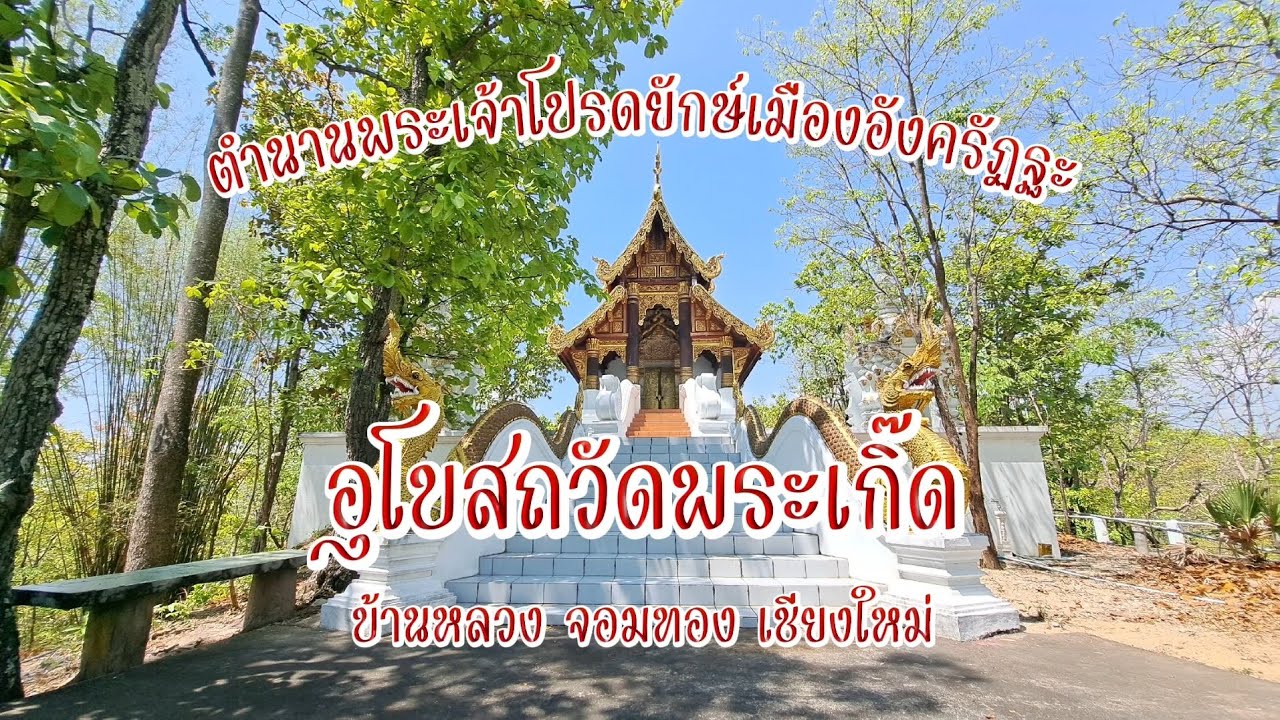
 Click to Access the Navigation Map GPS
Wat Phra Koet Map
Recommend

 Muang Chiang Mai(121)Chom Thong(47)Mae Chaem(25)Chiang Dao(33)Doi Saket(68)Mae Taeng(85)Mae Rim(69)Samoeng(29)Fang(71)Mae Ai(59)Phrao(70)San Pa Tong(103)San Kamphaeng(66)San Sai(73)Hang Dong(73)Hot(32)Doi Tao(22)Omkoi(11)Saraphi(74)Wiang Haeng(15)Chai Prakan(28)Mae Wang(32)Mae On(22)Doi Lo(33)Galyani Vadhana(1)


