
lovethailand home >North Travel Attractions >Chiang Mai Travel Attractions >Chom Thong >Ban Pae > Wat Sop Chaem Fang Sai
TL;DR: Wat Sop Chaem Fang Sai is located at Moo 11, Ban Sop Chaem Fang Sai, Ban Pae Subdistrict, Chom Thong District, Chiang Mai Province, open Daily, hours 08.00 - 17.00.
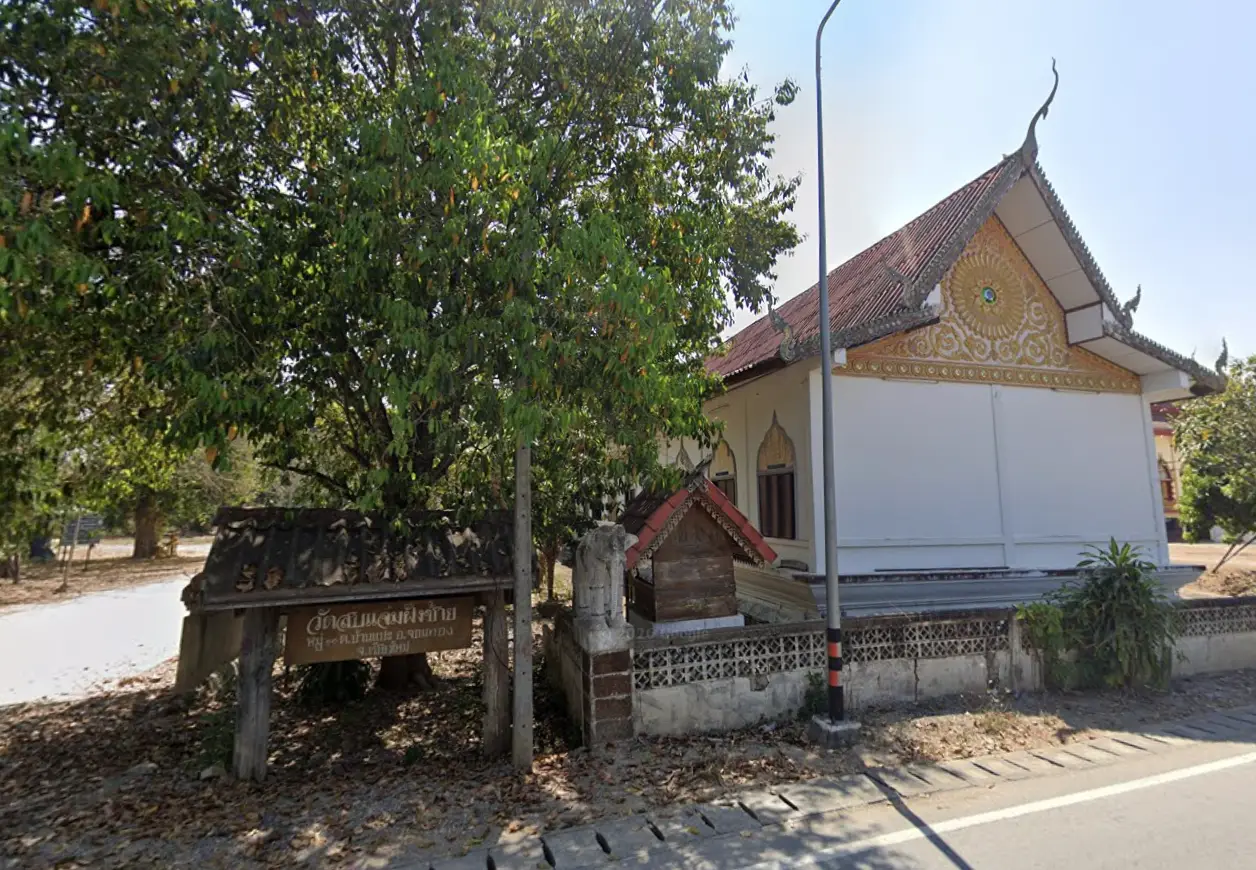
Wat Sop Chaem Fang Sai
Open Days: Daily
Opening Hours: 08.00 - 17.00
Wat Sop Chaem Fang Sai is located in Moo 11, Ban Sop Chaem Fang Sai, Ban Pae Subdistrict, Chom Thong District, Chiang Mai Province. It is a community Buddhist temple under the Mahanikaya order and an important local religious center for Ban Sop Chaem Fang Sai. For travelers who want to explore Chiang Mai beyond its famous city temples, this temple offers a quiet and meaningful look at rural Lanna Buddhist life, village faith, and the cultural landscape of Chom Thong.
The temple is best understood as a living village temple rather than a developed tourist attraction. Its significance comes from its role in local life. Wat Sop Chaem Fang Sai functions as a place for Buddhist ceremonies, merit-making, community gatherings, and village traditions. Visitors interested in cultural travel will find the temple valuable because it shows how Buddhism continues to shape daily life in small communities of northern Thailand.
The history of Wat Sop Chaem Fang Sai is closely connected with the relocation of the local community from Ban Sop Chaem Fang Khwa, Moo 8, in 1971. The temple began to take shape in 1973. In its early period, there was only one resident monk, Phra Kaew Dhammachinno, and around 220 local households supported the temple. This background makes the temple a strong example of a Buddhist site built through village faith and community participation.
The temple land was donated by Nai Peng Sudjai, whose contribution helped establish the religious and communal foundation of the area. In rural northern Thailand, many temples grew from similar local patronage. A village temple was not only a place of worship, but also a shared space for ceremonies, learning, moral guidance, and community identity. Wat Sop Chaem Fang Sai reflects this pattern clearly.
The temple developed gradually through the efforts of the local community. Around 1982, the first pavilion was built to support religious and village activities. In 1993, monks’ quarters were constructed. In 1995, a second pavilion was added to provide more space for ceremonies and community gatherings. In 2004, the viharn was built as an important religious building for chanting, sermons, and Buddhist rites.
Wat Sop Chaem Fang Sai received official permission to be established as a temple in 1990. It is classified as a private community temple under the Mahanikaya order. The temple covers about 12 rai and 2 ngan and is located in Moo 11, Ban Pae Subdistrict, Chom Thong District, Chiang Mai Province, postal code 50240. Its name continues to appear in temple listings and local information sources for Ban Pae, confirming its ongoing presence in the religious geography of Chom Thong.
The name “Sop Chaem Fang Sai” preserves a sense of geography and settlement. In northern Thai place names, the word “sop” often refers to an area near a river mouth, confluence, or water-related settlement. “Chaem” connects the name to the Mae Chaem River landscape, while “Fang Sai” refers to the left bank or left side. The temple’s name therefore links the Buddhist site with the village, the river, and the local landscape.
The atmosphere of Wat Sop Chaem Fang Sai is calm, modest, and local. Travelers should approach it as a community temple where monks and villagers still use the space for real religious life. The main interest lies in observing the temple’s pavilion, viharn, monks’ quarters, and surrounding village environment. For cultural travelers, this offers a more grounded perspective on northern Thai Buddhism than a short visit to a major tourist temple.
Phra Baidika Sanya Thanasampanno is listed in the core temple information as the abbot of Wat Sop Chaem Fang Sai. In a community temple, the abbot plays an important role in taking care of the monastic residence, maintaining the temple, leading ceremonies, and working with villagers during Buddhist festivals and merit-making events. The temple therefore remains closely connected with the spiritual and social life of Ban Sop Chaem Fang Sai.
One tradition connected with temples in Ban Pae Subdistrict and Lanna communities is the offering of salak phat, known locally as Tan Kuai Salak. Villagers prepare offerings in woven containers and present them to monks through a lottery-style allocation. The tradition expresses merit-making, dedication to ancestors, generosity, and community solidarity. As a village temple, Wat Sop Chaem Fang Sai belongs to this broader cultural rhythm of Buddhist life in Chom Thong.
Visitors should dress respectfully, speak quietly, and avoid entering monks’ private areas without permission. If a ceremony or community event is taking place, travelers should follow the guidance of local residents or temple caretakers. This is especially important at rural temples, where the temple grounds are part of everyday village life rather than a managed tourist facility. Respectful behavior helps preserve both the dignity of the temple and the community’s way of life.
Getting There is most convenient by private car. From Chiang Mai city, take Highway 108, the Chiang Mai–Hot route, toward Chom Thong District. From there, continue into Ban Pae Subdistrict and Ban Sop Chaem Fang Sai via local roads. Travelers without private transport can take a Chiang Mai–Hot or Chiang Mai–Mae Hong Son route bus and then arrange local transport in Chom Thong or Ban Pae. Planning ahead is recommended because the temple is not located on a high-frequency tourist transport route.
A visit to Wat Sop Chaem Fang Sai can be combined with other cultural and natural attractions in Chom Thong. Travelers interested in temples may continue to Wat Ban Pae, Wat Sop Pae, Wat Tha Kham, and Wat Phra That Si Chom Thong Worawihan. Those planning a wider nature route can continue toward Mae Klang Waterfall, Mae Ya Waterfall, and Doi Inthanon National Park. This makes the temple suitable for a slow cultural route that connects village Buddhism, river landscapes, and mountain scenery in one trip.
Wat Sop Chaem Fang Sai is not a mainstream landmark, but that is exactly what makes it meaningful. Its history of relocation, land donation, gradual development, and continuing village role reflects how rural temples preserve memory, identity, and faith. For travelers seeking a quieter cultural experience in Chiang Mai, the temple offers a valuable window into the relationship between Buddhism, community, and the landscape of northern Thailand.
| Name | Wat Sop Chaem Fang Sai |
| Location | Moo 11, Ban Sop Chaem Fang Sai, Ban Pae Subdistrict, Chom Thong District, Chiang Mai Province |
| Address | Moo 11, Ban Pae Subdistrict, Chom Thong District, Chiang Mai 50240, Thailand |
| Coordinates | 18.20265250200, 98.64392853400 |
| Temple Type | Community Buddhist temple under the Mahanikaya order |
| Area | 12 rai and 2 ngan |
| History | The community moved from Ban Sop Chaem Fang Khwa, Moo 8, in 1971. The temple began in 1973 and received official permission to be established as a temple in 1990. |
| Land Donor | Nai Peng Sudjai |
| Key Buildings And Areas | Pavilions, monks’ quarters, viharn, and community ceremony areas. The first pavilion was built around 1982, monks’ quarters in 1993, the second pavilion in 1995, and the viharn in 2004. |
| Abbot | Phra Baidika Sanya Thanasampanno |
| Highlights | A rural community temple that reflects local faith, village cooperation, and the relationship between the temple, Ban Sop Chaem Fang Sai, and the Mae Chaem River landscape. |
| Distinctive Features | A local temple built through community support and used for merit-making, Buddhist ceremonies, sermons, and village gatherings. |
| Name Origin | The name relates to Ban Sop Chaem Fang Sai. “Sop” is associated with a river-mouth or water-related settlement, while “Chaem” connects with the Mae Chaem River landscape. |
| Related Traditions | Regular Buddhist merit-making, Kathin, robe-offering ceremonies, village ceremonies, and the northern Thai salak phat offering tradition. |
| Travel Information | From Chiang Mai city, take Highway 108 toward Chom Thong, then continue into Ban Pae Subdistrict and Ban Sop Chaem Fang Sai. Private car is the most convenient option. |
| Current Status | The temple continues to appear in temple listings and local information sources for Ban Pae Subdistrict, Chom Thong District, Chiang Mai Province. |
| Open Days | Daily |
| Opening Hours | 08.00 - 17.00 |
| Nearby Tourist Attractions | 1. Wat Ban Pae, about 14 km 2. Wat Phra That Si Chom Thong Worawihan, about 20 km 3. Mae Klang Waterfall, about 29 km 4. Mae Ya Waterfall, about 33 km 5. Doi Inthanon National Park, about 55 km |
| Nearby Restaurants | 1. Krua Fueang Fa, about 18 km, Tel. 053-341274, 086-1825031 2. Ing Than Rim Nam Mae Chaem Restaurant, about 20 km, Tel. 093-1892839 3. Pa Oi Krua Rim Than, about 24 km, Tel. 053-286760 4. Ban Hom Doi Inthanon Restaurant, about 32 km, Tel. 053-361381 5. Khun Pae Coffee, about 19 km |
| Nearby Accommodations | 1. Khun Pae Mina Krathom Noi, about 19 km, Tel. 081-2318664 2. Khun Pae Krathom View Doi Bla-Ae-Jor, about 19 km, Tel. 065-9651299 3. Ban Suk Jai, about 22 km 4. Chom Thong Boutique House, about 25 km, Tel. 081-5829889 5. Smile Place Chom Thong, about 26 km, Tel. 065-7538313 |
Frequently Asked Questions (FAQ)
Q: Where is Wat Sop Chaem Fang Sai located?
A: Wat Sop Chaem Fang Sai is located in Moo 11, Ban Sop Chaem Fang Sai, Ban Pae Subdistrict, Chom Thong District, Chiang Mai Province, Thailand.
Q: What are the opening days and hours of Wat Sop Chaem Fang Sai?
A: Wat Sop Chaem Fang Sai is open daily from 08.00 to 17.00.
Q: What type of temple is Wat Sop Chaem Fang Sai?
A: It is a community Buddhist temple under the Mahanikaya order and received official permission to be established as a temple in 1990.
Q: What is the history of Wat Sop Chaem Fang Sai?
A: The temple is connected with the relocation of the community from Ban Sop Chaem Fang Khwa in 1971. It began in 1973 and developed gradually through local community support.
Q: Who is the abbot of Wat Sop Chaem Fang Sai?
A: The abbot listed in the core temple information is Phra Baidika Sanya Thanasampanno.
Q: How can visitors get to Wat Sop Chaem Fang Sai?
A: From Chiang Mai city, take Highway 108 toward Chom Thong, then continue to Ban Pae Subdistrict and Ban Sop Chaem Fang Sai. A private car is the most convenient option.
Q: What kind of travelers should visit Wat Sop Chaem Fang Sai?
A: It is suitable for travelers interested in rural temples, local Buddhist culture, Ban Pae community history, and quiet cultural routes in Chom Thong District.
Q: What nearby attractions can be combined with this visit?
A: Travelers can combine the visit with Wat Ban Pae, Wat Phra That Si Chom Thong Worawihan, Mae Klang Waterfall, Mae Ya Waterfall, and Doi Inthanon National Park.
 Category: ●Places of Worship
 Group: ●Temple
Last Update : 1 WeekAgo
 Last Update : 1 WeekAgo
 Click to Access the Navigation Map GPS
Wat Sop Chaem Fang Sai Map
Recommend

 Muang Chiang Mai(121)Chom Thong(47)Mae Chaem(25)Chiang Dao(33)Doi Saket(68)Mae Taeng(85)Mae Rim(69)Samoeng(29)Fang(71)Mae Ai(59)Phrao(70)San Pa Tong(103)San Kamphaeng(66)San Sai(73)Hang Dong(73)Hot(32)Doi Tao(22)Omkoi(11)Saraphi(74)Wiang Haeng(15)Chai Prakan(28)Mae Wang(32)Mae On(22)Doi Lo(34)Galyani Vadhana(1)


