
lovethailand home >North Travel Attractions >Chiang Mai Travel Attractions >Chom Thong >Doi Kaeo > Wat Doi Kaew
TL;DR: Wat Doi Kaew is located at Ban Doi Kaew, Moo 2, Doi Kaew Subdistrict, Chom Thong District, Chiang Mai Province, open Daily, hours 08.00 – 17.00.

Wat Doi Kaew
Open Days: Daily
Opening Hours: 08.00 – 17.00
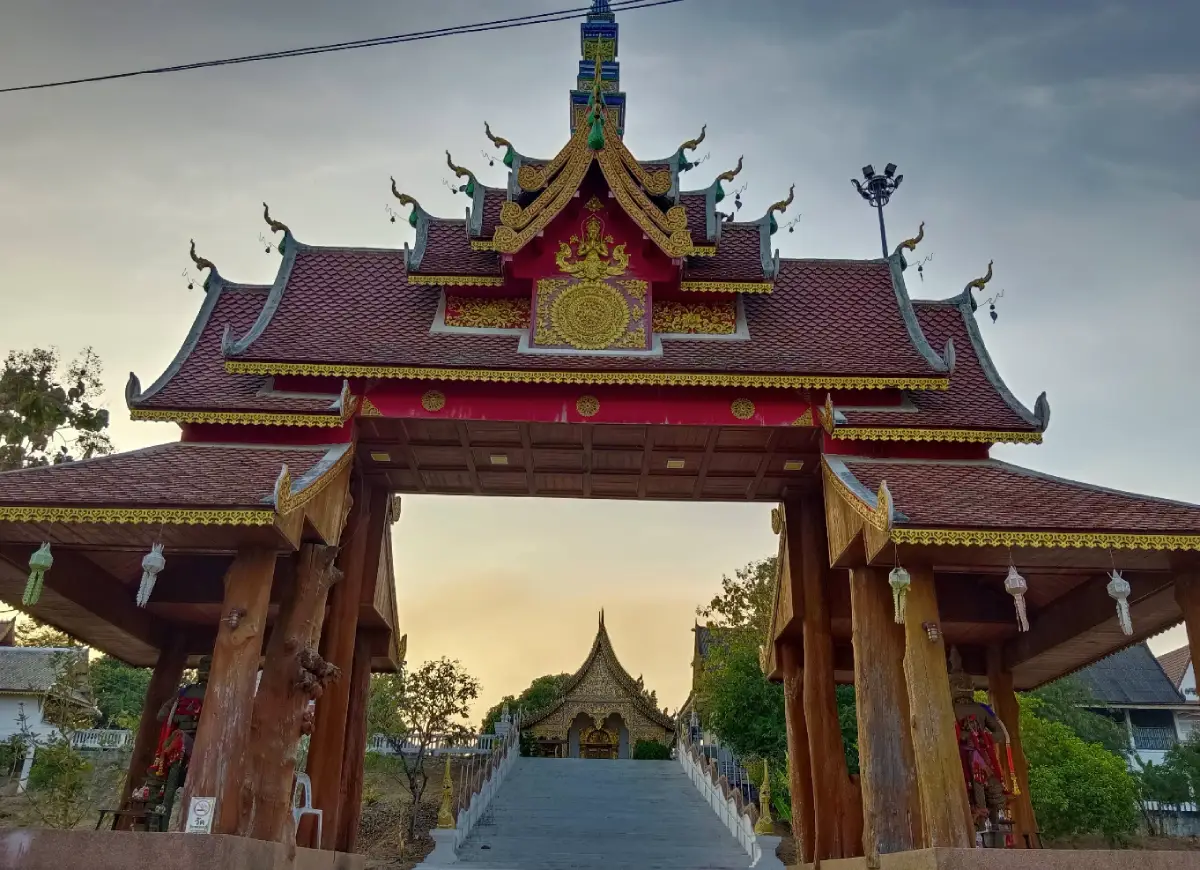
Wat Doi Kaew is located at 104 Ban Doi Kaew, Chiang Mai-Hot Road, Moo 2, Doi Kaew Subdistrict, Chom Thong District, Chiang Mai Province. It is a Mahanikaya local Buddhist temple with a long history and an important role in the religious life of Ban Doi Kaew. The temple was officially established in 1907 and received its royal grant of Wisungkhamsima on 18 November 1967, with a consecrated boundary measuring 40 meters wide and 40 meters long. This makes Wat Doi Kaew a fully functioning community temple with an ordination hall, viharn, sermon hall, monks’ residences, and sacred Buddha images.
Wat Doi Kaew is suitable for travelers who want to explore a local and historically rooted side of Chiang Mai’s temple culture. It is not a large tourist landmark, but it offers a meaningful view of how village temples continue to serve local Buddhist communities. Its location along Highway 108, the Chiang Mai-Hot route, makes it convenient for visitors traveling through Chom Thong toward Wat Phrathat Si Chom Thong Worawihan, Mae Klang Waterfall, Doi Inthanon National Park, and other attractions in southern Chiang Mai.
The temple’s main value lies in its long history and continuing role as a living community temple. Official temple records state that Wat Doi Kaew was built in 1907, while local historical accounts also refer to an earlier origin around 1720. These layers of information show that the temple has been deeply associated with the Doi Kaew community for generations. Even when using the official establishment date, Wat Doi Kaew remains one of the older community temples in the Chom Thong area.
The name Doi Kaew carries both geographical and symbolic meaning. “Doi” refers to a hill or upland feature, a common term in northern Thailand, while “Kaew” suggests something precious, pure, or auspicious. Together, the name evokes a sacred place rooted in northern Thai landscape and local faith. The temple name therefore preserves both the identity of the village and the sense of spiritual value attached to the site.
The temple stands beside the Chiang Mai-Hot road, one of the most important travel routes in Chom Thong District. This road connects Chiang Mai city with Chom Thong, Hot, and southern Chiang Mai. Because of this location, Wat Doi Kaew is easy to reach by private car, rental car, motorbike, or local transport. It can be visited as a short cultural stop before continuing to Chom Thong town, Doi Inthanon, or nearby waterfalls.
Temple land records list the temple site as 4 rai, 2 ngan, and 98 square wah under land document No. 518. The northern boundary touches a public road, the southern boundary touches an irrigation canal and private land, the eastern boundary touches a public irrigation canal, and the western boundary touches a public road. The temple also has one plot of monastic land measuring 10 rai and 1 ngan. Together, the temple land and monastic land correspond with the broader description of the temple area as approximately 15 rai.
The royal grant of Wisungkhamsima in 1967 is one of the temple’s most important milestones. In Thai Buddhist monastic practice, Wisungkhamsima is the consecrated boundary used for formal Sangha acts, especially those conducted in an ordination hall. This means the ordination hall of Wat Doi Kaew is not merely an architectural structure; it is a formally consecrated space used for important monastic ceremonies.
The main structures of Wat Doi Kaew include an ordination hall, viharn, sermon hall, and monks’ residences. Each structure has a distinct role. The ordination hall supports formal Sangha acts. The viharn is the main devotional space for lay visitors. The sermon hall supports Dhamma listening, community gatherings, and merit-making events. The monks’ residences provide living space for resident monks. Together, these buildings make the temple function as both a spiritual and community center.
The temple’s sacred objects include Buddha images that serve as devotional focal points for villagers and visitors. As in many northern Thai temples, Buddha images are not only objects of worship but also centers of community memory and merit-making. Visitors should approach them respectfully, dress modestly, speak quietly, and remove shoes before entering religious buildings.
Wat Doi Kaew is also significant for its development history. It was selected by the Department of Religious Affairs as a model developed temple in 1982 and later received a certificate and ceremonial fan for outstanding development in 1986. This shows that the temple has not only historical value but also a record of organized development and active community service.
The temple’s known line of abbots includes several important names, such as Phra Khru Ba Achariya Thanadhammo, Khru Ba Pho Kacucano, Khru Ba Khantha Thaworadhammo, Phra Khanthiya, Phra Athikan Tan Thawaro, Phra Athikan Mun Dhammasaro, Phra Athikan Wirat Panyawaro, and Phra Khru Singto Sudhammo. These names show a long succession of monastic leadership and reflect the temple’s continuity through different periods of local history.
Recent Kathin activity records list Phra Maha Aphichai Titayano as abbot of Wat Doi Kaew and record five resident monks for the 2025 Kathin season. This confirms that the temple continues to function as an active religious site with resident monks and contemporary Buddhist activities. Wat Doi Kaew is therefore not only a historical temple; it remains part of the living Buddhist landscape of Chom Thong District.
Doi Kaew Subdistrict is closely connected with Chom Thong town and the road system leading toward Doi Inthanon. The area includes villages, schools, local roads, agricultural land, and religious sites. Wat Doi Kaew serves as a spiritual center for Moo 2 and also as a visible temple along a major travel route. This gives the temple significance for both local residents and travelers passing through the district.
Visitors should experience Wat Doi Kaew as a local community temple rather than a mass-tourism attraction. Its value lies in its history, consecrated ordination boundary, main temple structures, Buddha images, and role in the life of Ban Doi Kaew. A respectful visit may begin with paying homage in the viharn, then observing the ordination hall, sermon hall, and surrounding temple grounds according to public access and temple etiquette.
Wat Doi Kaew can be combined with several nearby sites in Chom Thong District, including Wat Phrathat Si Chom Thong Worawihan, Chom Thong town market, Wat Doi Noi, Wat Huai Tong Sak, Mae Klang Waterfall, Doi Inthanon National Park, and Wachirathan Waterfall. This makes it a practical stop in a route that combines village temples, an important pilgrimage temple, local town life, and major natural attractions.
Getting There is straightforward. From Chiang Mai city, take Highway 108 south toward Chom Thong. Continue through San Pa Tong and Doi Lo, then enter Doi Kaew Subdistrict in Chom Thong District. The temple is located at 104 Ban Doi Kaew, Moo 2, along the Chiang Mai-Hot road. For navigation, search for “Wat Doi Kaew, Chom Thong, Chiang Mai” and check that the destination is in Doi Kaew Subdistrict.
The best time to visit is in the morning or late afternoon, when the weather is more comfortable for walking around the temple. The temple is open daily from 08.00 to 17.00. Visitors planning to join Kathin, robe-offering ceremonies, or specific community events should check local schedules before departure.
Visitors should dress modestly, speak quietly, avoid disturbing monks and worshippers, remove shoes before entering religious buildings, and avoid entering monks’ residential areas without permission. Photography should be done respectfully and should not interfere with religious activities. Since Wat Doi Kaew is an active community temple, respectful conduct is essential.
In summary, Wat Doi Kaew is an old Mahanikaya community temple in Chom Thong District with strong historical and religious value. Its highlights include official establishment in 1907, Wisungkhamsima granted in 1967, an ordination hall, viharn, sermon hall, monks’ residences, sacred Buddha images, recognition as a model developed temple, and continuing monastic activity in the present day. It is a meaningful stop for travelers seeking a quieter, more local Buddhist experience along the Chiang Mai-Hot route.
| Name | Wat Doi Kaew |
| Location | Ban Doi Kaew, Moo 2, Doi Kaew Subdistrict, Chom Thong District, Chiang Mai Province |
| Address | 104 Ban Doi Kaew, Chiang Mai-Hot Road, Moo 2, Doi Kaew Subdistrict, Chom Thong District, Chiang Mai 50160, Thailand |
| Highlights | Historic Mahanikaya community temple of Ban Doi Kaew, officially established in 1907, granted Wisungkhamsima in 1967, with an ordination hall, viharn, sermon hall, monks’ residences, and sacred Buddha images |
| History | Official records state that the temple was built in 1907, while local historical accounts refer to an earlier origin around 1720 |
| Sect | Mahanikaya |
| Wisungkhamsima | Granted on 18 November 1967; the consecrated boundary measures 40 meters wide and 40 meters long |
| Temple Land | Temple land covers 4 rai, 2 ngan, 98 square wah, with one additional plot of monastic land measuring 10 rai and 1 ngan; the wider temple-related area is approximately 15 rai |
| Distinctive Features | A local temple along the Chiang Mai-Hot route, formerly selected as a model developed temple in 1982 and recognized for outstanding development in 1986 |
| Travel Information | From Chiang Mai city, take Highway 108 south toward Chom Thong, then continue into Doi Kaew Subdistrict. Search for “Wat Doi Kaew, Chom Thong, Chiang Mai” for navigation |
| Current Status | Open as a community temple for worship, merit-making, temple visits, and Buddhist activities according to temple schedules |
| Open Days | Daily |
| Opening Hours | 08.00 – 17.00 |
| Facilities | Ordination hall, viharn, sermon hall, monks’ residences, worship areas, and community merit-making areas |
| Main Areas / Zones | Ordination hall, viharn, sermon hall, monks’ residences, Buddha image worship area, and lay merit-making area |
| Buddha Images / Sacred Objects | Sacred Buddha images inside the temple, serving as devotional objects for Ban Doi Kaew community members and visitors |
| Abbot / Key Figure | A 2025 contemporary Kathin record lists Phra Maha Aphichai Titayano as abbot of Wat Doi Kaew |
| Resident Monks | A 2025 Kathin record lists 5 resident monks |
| Nearby Tourist Attractions | 1. Wat Phrathat Si Chom Thong Worawihan, about 2 km 2. Chom Thong Market And Town Area, about 2 km 3. Wat Doi Noi, about 4 km 4. Wat Huai Tong Sak, about 7 km 5. Mae Klang Waterfall, about 10 km 6. Doi Inthanon National Park, about 12 km 7. Wachirathan Waterfall, about 27 km |
| Nearby Restaurants | 1. Ban Kuai Tiao Chak Thong Du Di Branch 2 Chom Thong, about 1 km 2. Kuai Tiao Aphai, about 3 km, Tel. 053-341-996 3. Pao Male Makro Chom Thong, about 3 km, Tel. 098-282-1040 4. Khon Mueang Chom Thong, about 4 km, Tel. 081-885-8851 5. Khao Soi Kalong, about 5 km, Tel. 087-189-2619 6. Krua Koban, about 7 km, Tel. 089-559-9329, 080-124-3393, 080-501-3622 |
| Nearby Accommodations | 1. Sandee Place Mountain View Hotel, about 1 km, Tel. 086-657-4279 2. Sandee Place Guesthouse, about 2 km, Tel. 086-657-4279 3. B-tel Chomthong Chiang Mai, about 4 km, Tel. 098-759-2003 4. Chom Thong Boutique House, about 4 km, Tel. 081-582-9889 5. Huan Khwan Khao, about 6 km, Tel. 084-687-0025, 081-602-0221 |
Frequently Asked Questions (FAQ)
Q: Where is Wat Doi Kaew located?
A: Wat Doi Kaew is located at 104 Ban Doi Kaew, Chiang Mai-Hot Road, Moo 2, Doi Kaew Subdistrict, Chom Thong District, Chiang Mai 50160.
Q: What are the opening days and hours of Wat Doi Kaew?
A: Wat Doi Kaew is open daily from 08.00 to 17.00.
Q: When was Wat Doi Kaew established?
A: Official records state that Wat Doi Kaew was built in 1907, while local historical accounts refer to an earlier origin around 1720.
Q: When did Wat Doi Kaew receive Wisungkhamsima?
A: Wat Doi Kaew received Wisungkhamsima on 18 November 1967, with a consecrated boundary measuring 40 meters wide and 40 meters long.
Q: Which Buddhist sect does Wat Doi Kaew belong to?
A: Wat Doi Kaew is a Mahanikaya local Buddhist temple.
Q: What are the main features inside Wat Doi Kaew?
A: The temple includes an ordination hall, viharn, sermon hall, monks’ residences, sacred Buddha images, and community merit-making areas.
Q: Who is the abbot of Wat Doi Kaew?
A: A 2025 contemporary Kathin record lists Phra Maha Aphichai Titayano as abbot of Wat Doi Kaew.
Q: What nearby places can be visited with Wat Doi Kaew?
A: Nearby places include Wat Phrathat Si Chom Thong Worawihan, Chom Thong Market, Wat Doi Noi, Wat Huai Tong Sak, Mae Klang Waterfall, Doi Inthanon National Park, and Wachirathan Waterfall.
 Category: ●Places of Worship
 Group: ●Temple
Last Update : 4 DayAgo
 Last Update : 4 DayAgo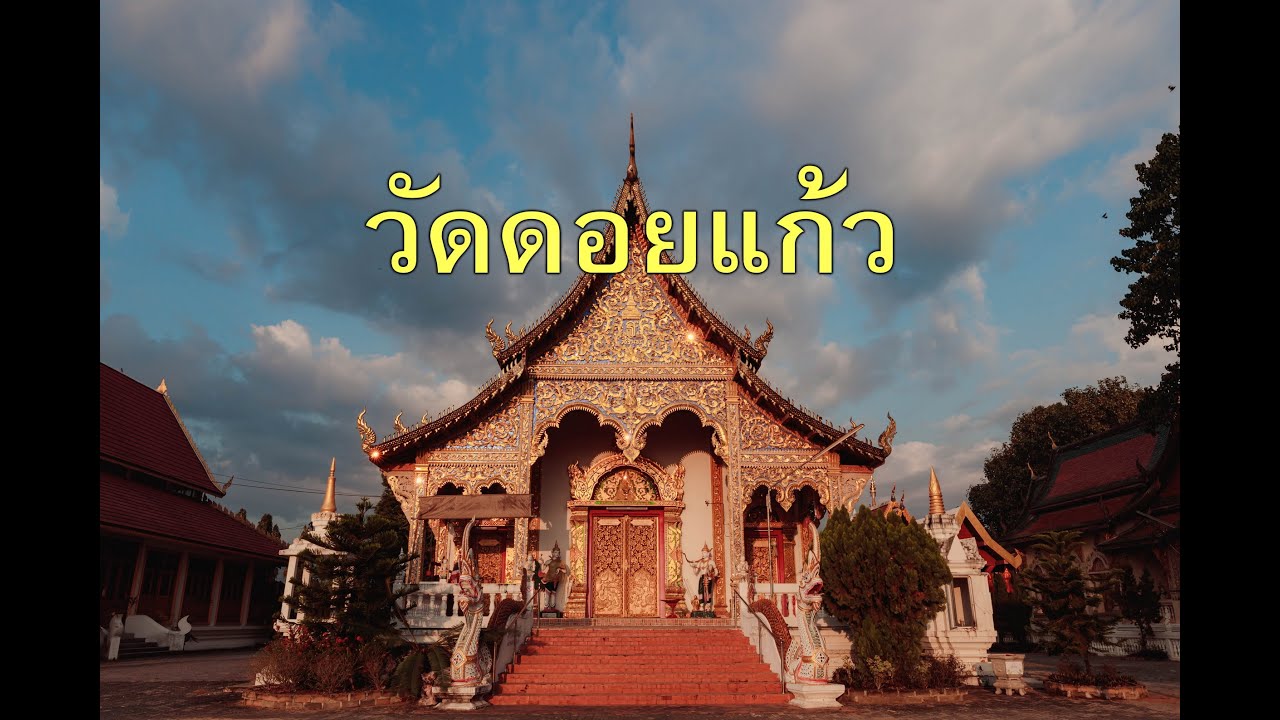
 Click to Access the Navigation Map GPS
Wat Doi Kaew Map
Recommend

 Muang Chiang Mai(121)Chom Thong(47)Mae Chaem(25)Chiang Dao(33)Doi Saket(68)Mae Taeng(85)Mae Rim(69)Samoeng(29)Fang(71)Mae Ai(62)Phrao(70)San Pa Tong(105)San Kamphaeng(66)San Sai(73)Hang Dong(74)Hot(32)Doi Tao(22)Omkoi(11)Saraphi(74)Wiang Haeng(15)Chai Prakan(28)Mae Wang(32)Mae On(22)Doi Lo(34)Galyani Vadhana(1)


