
lovethailand home >North Travel Attractions >Chiang Mai Travel Attractions >Chom Thong >Khuang Pao > Wat Wang Din
TL;DR: Wat Wang Din is located at Ban Wang Din, Moo 7, Khuang Pao Subdistrict, Chom Thong District, Chiang Mai Province, open Daily, hours 08.00 – 17.00.
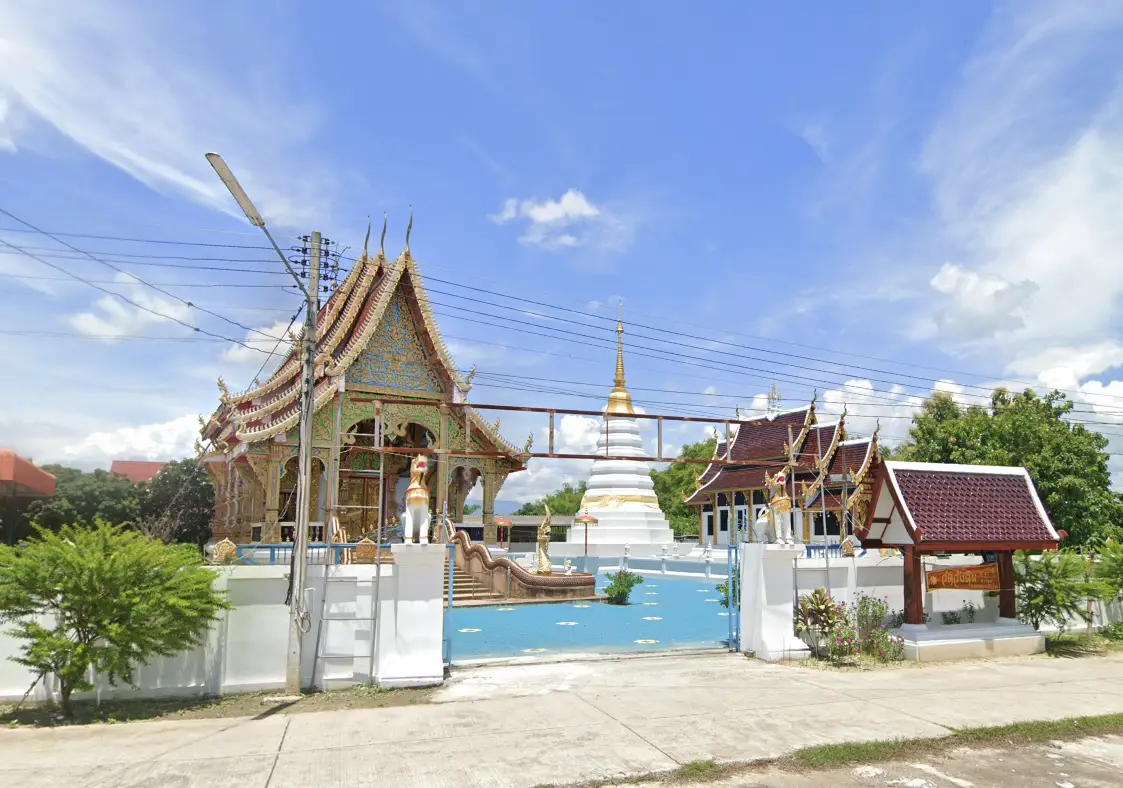
Wat Wang Din
Open Days: Daily
Opening Hours: 08.00 – 17.00
Wat Wang Din is located at 30 Ban Wang Din, Moo 7, Khuang Pao Subdistrict, Chom Thong District, Chiang Mai Province. It is a Mahanikaya local Buddhist temple with a history closely connected to the Ping River, migration, village settlement, and the religious life of Ban Wang Din. Officially established as a temple in 1925, Wat Wang Din began as a monastic site founded by people from Tak Province who migrated north along the Ping River and settled on open land along its bank.
Wat Wang Din is a meaningful destination for travelers who want to explore a quieter and more local side of Chiang Mai’s temple culture. It is not a large tourist landmark, but it offers a valuable view of how Buddhist temples developed within village communities. The temple reflects the relationship between migration, riverside settlement, Buddhist faith, and the continuing role of a local temple in daily community life.
The name Wat Wang Din reflects the local place name of Ban Wang Din. In Thai and northern Thai place names, “wang” often refers to a river pool, water bend, or deeper part of a stream, while “din” refers to land or soil. The name therefore evokes the temple’s relationship with riverside land and the early settlement landscape. This makes the temple’s name an important cultural clue to the geography and memory of the community.
The temple’s history states that it was built in 1925 by migrants from Tak Province who traveled north along the Ping River. They settled on empty land along the riverbank and established a monastic site. In a newly formed community, such a monastic site was essential because it served as a place for merit-making, religious ceremonies, Dhamma learning, and social gathering. Wat Wang Din therefore grew alongside the village itself.
The temple later began constructing permanent religious structures during the time of Phra Sai Khiao Dhammathinno as abbot. This was an important phase in the temple’s development, as it marked the transition from a simple monastic site into a more established village temple. Permanent structures allowed the temple to support monks, novices, lay worshippers, community ceremonies, and Buddhist education more consistently.
Wat Wang Din received its royal grant of Wisungkhamsima on 1 September 2017. The consecrated boundary measures 30 meters wide and 50 meters long. In Thai Buddhist monastic practice, Wisungkhamsima is the formally consecrated area used for important Sangha acts, especially those connected with the ordination hall. This gives the temple’s ordination hall clear religious and institutional importance.
The present temple land covers 9 rai, 1 ngan, and 26 square wah under land title deed number 9050. The northern boundary touches a land reform road, the southern boundary touches the road along the Ping River, the eastern boundary touches a sports ground and meeting hall, and the western boundary touches a local residence. These boundaries show that the temple is embedded in the daily geography of the village, surrounded by public space, homes, roads, and the river landscape.
Earlier records also mention that the temple land was once listed as 8 rai and that its southern side bordered the Ping River, the eastern side bordered a public school, and the western side bordered the village. The current record also lists one plot of monastic land measuring 2 ngan and 13 square wah. This shows that the temple’s land and administrative status have developed over time while remaining closely connected with the Ping River and Ban Wang Din community.
The temple’s sermon hall is one of its main structures. It measures 30 meters wide and 50 meters long and was built in 2005 as a reinforced concrete building. In a village temple, the sermon hall functions as a central space for merit-making, Dhamma listening, religious events, and community gatherings. At Wat Wang Din, it is one of the most practical and important buildings for everyday religious life.
The ordination hall measures 8 meters wide and 15 meters long. It is a reinforced concrete building and is the key structure for formal Sangha acts. After the temple received Wisungkhamsima in 2017, the ordination hall became the proper consecrated space for important monastic ceremonies. Visitors should treat this area with special respect, dress modestly, and remove shoes before entering.
Another important area is the Sala Phra Chao Than Chai, or Phra Chao Than Chai Hall, which measures 10 meters wide and 15 meters long and was built in 2013. Phra Chao Than Chai is widely respected in northern Thai Buddhist belief and is often associated with blessing, success, and auspicious fulfillment. This hall gives the temple an accessible devotional point for visitors who come to worship and make merit.
The temple’s chedi measures 10 meters wide, 10 meters long, and 9 meters high. Built in 2018, it is a reinforced concrete structure and one of the temple’s important sacred features. In northern Thai temple culture, a chedi is more than an architectural form; it is a symbol of Buddhist faith and a focal point for reverence. Visitors should walk around it respectfully and avoid touching or climbing on any sacred structure.
The bell tower was built in 2002 and measures 4 meters wide, 4 meters long, and 6 meters high. Bell towers are traditional features of Thai temples, marking time, ceremonies, and religious activities. Even though modern communication has changed daily temple life, the bell tower remains a strong symbol of Buddhist rhythm and community soundscape.
The abbot’s residence is a reinforced concrete building measuring 6 meters by 9 meters and was built in 2014. The monks’ residence measures 15 meters by 9 meters. The dining hall, built in 2017, is a wooden building measuring 10 meters by 4 meters. Together, these structures show that Wat Wang Din is an active temple equipped for monastic residence, daily practice, meals, and community support.
The temple also has five restrooms built in 2022 and a nine-room hall measuring 8 meters by 60 meters, which began construction in 2022. These facilities show that Wat Wang Din continues to develop its infrastructure to support monks, novices, lay supporters, and community activities. The temple is not only a historical place but also a living religious space that continues to serve local needs.
Basic utilities at the temple include village water supply and provincial electricity. These services support religious ceremonies, merit-making events, and daily use by monks and villagers. For a local temple, such infrastructure is important because community religious life depends on the ability to accommodate gatherings and ceremonies throughout the year.
The temple’s known line of abbots includes Phra Luean, Phra Sai Khiao Dhammathinno, Phra Woraphong, Phra Amnuai, and Phra Banchong Khanthitharo. The more recent temple record lists Phra Kham Pan Pannatharo as abbot until 2013, followed by Phra Athikan Rungrot Aphassaro from 2013 onward. The 2023 temple record identifies Phra Athikan Rungrot Aphassaro as the abbot and certifying monk for the temple information.
The 2023 temple record lists two monks: Phra Sao Kaeo Dhammavuddho and Phra Chakkraphan Dhammavaro. It also lists three novices: Samanen Kittiphong Phoemphunma, Samanen Thiraphon Suwancharratsi, and Samanen Sukrit Sitthipanya. The temple also has one lay steward, Nai Thachit Chinasuk, and one lay ritual assistant, Nai Wirot Saenkham. This shows that the temple is maintained through cooperation between monks, novices, and laypeople.
A later local meeting document refers to Phra Athikan Rungrot Aphassaro as a former abbot of Wat Wang Din who had passed away at the temple. For this reason, a newly confirmed current abbot should only be named when supported by an official temple or Sangha source. This article therefore presents Phra Athikan Rungrot as the abbot listed in the 2023 temple record and does not add an unverified later successor.
Wat Wang Din also has an educational role. Its history records that a Dhamma study school was opened in 1947. This reflects the traditional role of northern Thai temples as places of learning, especially for monks and novices. Temples like Wat Wang Din supported not only rituals and merit-making but also the transmission of Buddhist knowledge within the community.
Khuang Pao Subdistrict is located in the northern part of Chom Thong District along Highway 108, the Chiang Mai-Hot route. Ban Wang Din is Moo 7 of the subdistrict. Population data from April 2024 lists Ban Wang Din with 438 residents and 166 households. Wat Wang Din therefore serves a modest local community and remains an important spiritual and social center for the village.
The subdistrict’s landscape includes foothill plains, agricultural areas, local roads, and the Ping River. Wat Wang Din’s location and history show how Buddhist temples were built into the geography of settlement. The temple helps explain how communities chose river-related land, established religious centers, and developed social life around Buddhist institutions.
Visitors should explore the temple calmly and respectfully. Key areas include the sermon hall, ordination hall, Phra Chao Than Chai Hall, chedi, bell tower, and monk residential areas that are open to public access. The temple’s value lies in its authenticity as a community temple, where every building reflects real use by monks and villagers rather than tourist presentation.
Wat Wang Din can be included in a cultural route through Khuang Pao Subdistrict and Chom Thong District. Nearby temples and attractions include Wat Mai San Tueng, Wat Lanna Nyanasangwararam, Wat Mongkhon Waree, Wat Khuang Pao Nuea, Chom Thong town, Wat Phrathat Si Chom Thong Worawihan, and Doi Inthanon National Park. This route helps travelers understand Chom Thong through both village temples and major cultural landmarks.
Getting There is convenient by private car, rental car, motorbike, or local transport. From Chiang Mai city, take Highway 108 south toward Chom Thong. Continue through San Pa Tong and Doi Lo into Khuang Pao Subdistrict, then proceed to Ban Wang Din, Moo 7. For navigation, search for Wat Wang Din, Ban Wang Din, Khuang Pao, Chom Thong, to avoid confusion with similarly named temples in other provinces.
The best time to visit is in the morning or late afternoon, when the weather is more comfortable for walking around the temple. General visits are most suitable during daylight hours. Visitors planning to join Kathin, merit-making ceremonies, or specific temple events should contact the local community or temple representatives in advance to confirm schedules.
Visitors should dress modestly, speak quietly, remove shoes before entering religious buildings, avoid disturbing monks and novices, and stay out of monastic residential areas unless invited. Since Wat Wang Din is an active community temple, respectful conduct is essential for a meaningful visit.
In summary, Wat Wang Din is a Mahanikaya community temple with strong historical and local value in Chom Thong District. Established in 1925 by migrants from Tak Province along the Ping River, granted Wisungkhamsima in 2017, and still serving Ban Wang Din today, the temple is a meaningful stop for travelers who want to understand Chiang Mai through village temples, riverside settlement, Buddhist education, and local faith.
| Name | Wat Wang Din |
| Location | Ban Wang Din, Moo 7, Khuang Pao Subdistrict, Chom Thong District, Chiang Mai Province |
| Address | 30 Ban Wang Din, Moo 7, Khuang Pao Subdistrict, Chom Thong District, Chiang Mai 50160, Thailand |
| Highlights | Community temple of Ban Wang Din, established in 1925 by migrants from Tak Province along the Ping River, with a sermon hall, ordination hall, Phra Chao Than Chai Hall, chedi, bell tower, and Dhamma education history |
| History | Built in 1925 by people from Tak Province who migrated along the Ping River and established a monastic site on the riverbank; permanent structures were later developed during the time of Phra Sai Khiao Dhammathinno |
| Sect | Mahanikaya |
| Wisungkhamsima | Granted on 1 September 2017; the consecrated boundary measures 30 meters wide and 50 meters long |
| Temple Land | 9 rai, 1 ngan, 26 square wah, with one additional plot of monastic land measuring 2 ngan and 13 square wah |
| Distinctive Features | A riverside community temple connected with migration, Ping River settlement, village religious life, and the Buddhist identity of Ban Wang Din |
| Travel Information | From Chiang Mai city, take Highway 108 south toward Chom Thong, then continue into Khuang Pao Subdistrict and Ban Wang Din, Moo 7. Search for “Wat Wang Din, Ban Wang Din, Khuang Pao, Chom Thong” for accurate navigation |
| Current Status | Open as a community temple for worship, merit-making, temple visits, and religious activities according to temple schedules |
| Open Days | Daily |
| Opening Hours | 08.00 – 17.00 |
| Facilities | Sermon hall, ordination hall, Phra Chao Than Chai Hall, chedi, bell tower, abbot’s residence, monks’ residence, dining hall, restrooms, village water supply, and provincial electricity |
| Main Areas / Zones | Sermon hall, ordination hall, Phra Chao Than Chai Hall, chedi, bell tower, abbot’s residence, monks’ residence, dining hall, restrooms, and nine-room hall |
| Buddha Images / Sacred Objects | Meditation-posture principal Buddha image in the sermon hall, Phra Chao Than Chai, and the temple chedi built in 2018 |
| Abbot / Key Figure | The 2023 temple record lists Phra Athikan Rungrot Aphassaro as abbot and certifying monk for temple information |
| Monks And Novices | The 2023 temple record lists 2 monks, 3 novices, 1 lay steward, and 1 lay ritual assistant |
| Nearby Tourist Attractions | 1. Wat Mai San Tueng, about 2 km 2. Wat Lanna Nyanasangwararam, about 3 km 3. Wat Mongkhon Waree, about 5 km 4. Wat Khuang Pao Nuea, about 7 km 5. Chom Thong Market And Town Area, about 10 km 6. Wat Phrathat Si Chom Thong Worawihan, about 11 km 7. Doi Inthanon National Park, about 22 km |
| Nearby Restaurants | 1. Kuai Tiao Aphai, about 7 km, Tel. 053-341-996 2. Pao Male Makro Chom Thong, about 8 km, Tel. 098-282-1040 3. Khon Mueang Chom Thong, about 10 km, Tel. 081-885-8851 4. Khao Soi Kalong, about 11 km, Tel. 087-189-2619 5. Krua Koban, about 12 km, Tel. 089-559-9329, 080-124-3393, 080-501-3622 6. Phing Phukao, about 13 km, Tel. 089-556-4854 |
| Nearby Accommodations | 1. The Farmer Farm Stay & Cafe, about 5 km, Tel. 064-801-7389 2. B-tel Chomthong Chiang Mai, about 6 km, Tel. 098-759-2003 3. Chom Thong Boutique House, about 8 km, Tel. 081-582-9889 4. Huan Khwan Khao, about 9 km, Tel. 084-687-0025, 081-602-0221 5. Bansuan Inthanon Resort, about 13 km, Tel. 086-429-1642 |
Frequently Asked Questions (FAQ)
Q: Where is Wat Wang Din located?
A: Wat Wang Din is located at 30 Ban Wang Din, Moo 7, Khuang Pao Subdistrict, Chom Thong District, Chiang Mai 50160.
Q: What are the recommended visiting hours for Wat Wang Din?
A: Wat Wang Din is best visited during daylight hours, from 08.00 to 17.00.
Q: When was Wat Wang Din established?
A: Wat Wang Din was established in 1925 by people from Tak Province who migrated along the Ping River and founded a monastic site on the riverbank.
Q: When did Wat Wang Din receive Wisungkhamsima?
A: Wat Wang Din received Wisungkhamsima on 1 September 2017, with a consecrated boundary measuring 30 meters wide and 50 meters long.
Q: What are the main features inside Wat Wang Din?
A: The temple includes a sermon hall, ordination hall, Phra Chao Than Chai Hall, chedi, bell tower, abbot’s residence, monks’ residence, dining hall, and community merit-making areas.
Q: How is Wat Wang Din connected with the Ping River?
A: The temple’s origin is linked with migrants from Tak Province who traveled north along the Ping River and settled on riverbank land before establishing the monastic site.
Q: How can travelers get to Wat Wang Din?
A: From Chiang Mai city, take Highway 108 south toward Chom Thong, then continue into Khuang Pao Subdistrict and Ban Wang Din, Moo 7. Search for Wat Wang Din, Ban Wang Din, Khuang Pao, Chom Thong, for navigation.
Q: What nearby places can be visited with Wat Wang Din?
A: Nearby places include Wat Mai San Tueng, Wat Lanna Nyanasangwararam, Wat Mongkhon Waree, Wat Khuang Pao Nuea, Wat Phrathat Si Chom Thong Worawihan, and Doi Inthanon National Park.
 Category: ●Places of Worship
 Group: ●Temple
Last Update : 5 DayAgo
 Last Update : 5 DayAgo
 Click to Access the Navigation Map GPS
 Muang Chiang Mai(121)Chom Thong(47)Mae Chaem(25)Chiang Dao(33)Doi Saket(68)Mae Taeng(85)Mae Rim(69)Samoeng(29)Fang(71)Mae Ai(62)Phrao(70)San Pa Tong(105)San Kamphaeng(66)San Sai(73)Hang Dong(74)Hot(32)Doi Tao(22)Omkoi(11)Saraphi(74)Wiang Haeng(15)Chai Prakan(28)Mae Wang(32)Mae On(22)Doi Lo(34)Galyani Vadhana(1)


