
lovethailand home >North Travel Attractions >Chiang Mai Travel Attractions >Doi Tao >Muet Ka > Wat Chimplee Wuttharam
TL;DR: Wat Chimplee Wuttharam is located at Moo 3, Ban Plaeng 4, Muet Ka Subdistrict, Doi Tao District, Chiang Mai Province 50260, Thailand.

Wat Chimplee Wuttharam
Operating day: Daily
Operating time: 08.00 - 17.00
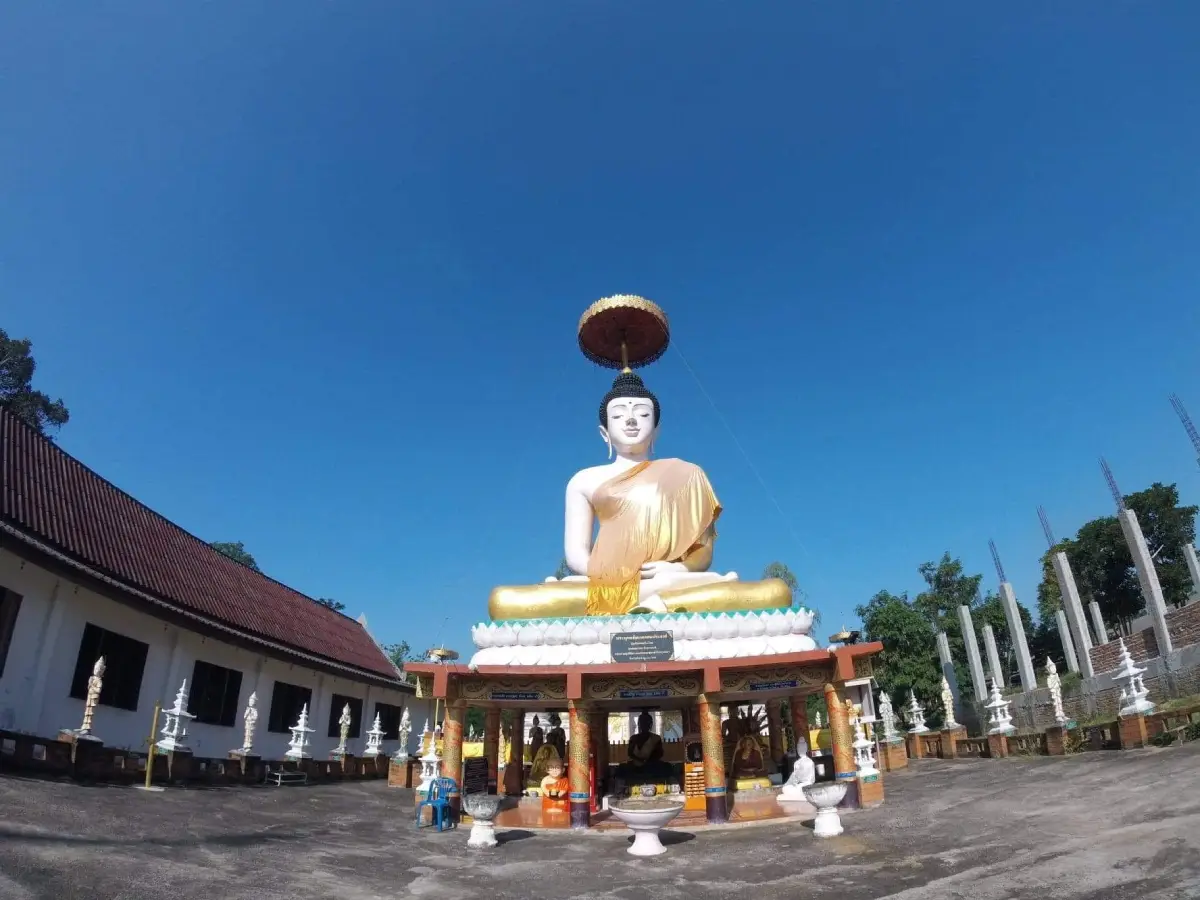
Wat Chimplee Wuttharam is located in Moo 3, Ban Plaeng 4, Muet Ka Subdistrict, Doi Tao District, Chiang Mai Province 50260. It is a local Buddhist temple under the Maha Nikaya order. The temple was officially permitted as a temple in 1790 and received its royal grant of Wisungkhamasima in 2002. Wat Chimplee Wuttharam is one of the old temples of Doi Tao, closely connected with the former Ban Ngio Thao community along the Ping River, the relocation caused by Bhumibol Dam, and the establishment of the present Ban Plaeng 4 settlement. It is not only a village temple but also a living center of community memory, Buddhist art, and local Lanna faith.
The temple’s importance begins with its long history. Established in 1790, Wat Chimplee Wuttharam is among the older temples of southern Chiang Mai. Its former name was Wat Si Don Kham of Ban Ngio Thao, also known as Wat Ngio Thao Don Kham. The old temple stood on the eastern side of the Ping River in a fertile riverside landscape where villagers lived, farmed, traveled, and practiced Buddhism in close connection with the river. The temple served as both a religious center and a social center of the old Ban Ngio Thao community.
The name Chimplee Wuttharam preserves the memory of Ban Ngio Thao. Local history explains that the former village area had a large red silk cotton tree, or ngio luang, with smaller ngio trees below the temple. People therefore called the village Ban Ngio Thao. Later, during the time of Phra Thammarangsi, or Pho Nan Tham Phingcharoen, the temple name was changed into a Pali-based form: ngio became Chimplee, thao became Wuttha, and aram was added to form Chimplee Wuttharam. The name therefore carries the village’s old identity into the temple’s official Buddhist name.
The history of Wat Chimplee Wuttharam is inseparable from old Ban Ngio Thao. Before the flood caused by the rising water above Bhumibol Dam in 1964, Ban Ngio Thao was a riverside community with homes, a temple, a school, agricultural life, and strong local traditions. The old temple was the place where villagers made merit, listened to Dhamma, held community ceremonies, and maintained the cultural identity of the village.
The old main viharn is remembered as an important feature of the former temple. Local history states that the viharn was built in 1801 and was a beautiful structure. When the former village and temple were affected by the rising water, the ecclesiastical authorities of Hot District dismantled the old temple, and the pillars of the old viharn were later used in the construction of a viharn at Wat Mueang Mang in Chiang Mai city. This gives Wat Chimplee Wuttharam a wider historical connection between Doi Tao and Chiang Mai city through the movement of its sacred architectural heritage.
The year 1964 was a turning point for the temple and Ban Ngio Thao. The rising water above Bhumibol Dam flooded the old village and temple area. Villagers had to relocate from their Ping River settlement to land allocated by the authorities. This relocation was not only the movement of homes. It was the movement of faith, sacred objects, old Buddha images, community memory, and social identity to a new settlement area. The villagers of Ban Ngio Thao were allocated Ban Plaeng 4, which became the present location of the community and Wat Chimplee Wuttharam.
The present temple is located in Ban Plaeng 4, Moo 3, Muet Ka Subdistrict, Doi Tao District, Chiang Mai Province. The temple land covers 12 rai, 1 ngan, and 50 square wah. Its northern boundary is about 90 wah adjoining a hill-tribe village, the southern boundary is about 90 wah adjoining the Doi Tao – Mae Tuen road, the eastern boundary is about 55 wah adjoining private rice fields, and the western boundary is about 55 wah adjoining Ban Plaeng 4. These boundaries show that the temple is deeply embedded in the present community landscape.
Important temple structures include a Thai-style reinforced concrete sermon hall and a two-story monks’ residence. The sermon hall is especially important because it contains murals depicting the Vessantara Jataka, the life of the Buddha, Patacara’s ordination, and the royal ploughing scene connected with the Buddha’s father. These murals make the sermon hall more than a ritual space. It also functions as a place of visual Buddhist learning, helping villagers, students, novices, and visitors understand Buddhist stories and moral teachings through art.
Important sacred objects at Wat Chimplee Wuttharam include the principal Buddha image in the sermon hall, a standing Buddha image, a wooden Buddha image in Chiang Saen style, a marble Buddha image, and a golden Buddha image. These sacred objects give the temple both devotional and artistic value. The wooden Chiang Saen-style Buddha image is especially meaningful because Chiang Saen art is one of the important Buddhist art traditions of northern Thailand.
When viewed through its sacred objects and murals, Wat Chimplee Wuttharam has value in faith, art, and learning. The old Buddha images preserved after relocation show that the community’s devotion did not disappear with the flood. Instead, it was carried to the present temple. The murals continue to communicate Buddhist stories, the life of the Buddha, and moral lessons to younger generations.
Another important role of Wat Chimplee Wuttharam is its association with Wat Chimplee Witthaya, a Buddhist scripture school located at the temple. This role expands the temple’s function from ritual and worship to religious education. The temple is therefore connected with Dhamma study, novice education, and the continuation of Buddhist learning in Doi Tao District.
The temple’s role as a Buddhist education site and a field for formal Dhamma study activities shows that it continues to serve Buddhism in active ways. Wat Chimplee Wuttharam is not only a place for local worship but also a place connected with learning, discipline, examination, and religious training in the district.
Muet Ka Subdistrict is one of the Doi Tao areas affected by the changes in the Ping River basin after the construction of Bhumibol Dam. Within Doi Tao District, Muet Ka has 5 villages, covers about 276 square kilometers, and is about 3 kilometers from the district center. Ban Plaeng 4, where Wat Chimplee Wuttharam now stands, is one of the settlement communities connected with relocation after the flood. This gives the temple a strong role as a bridge between the old riverside community and the present settlement.
The present Ban Plaeng 4 context makes Wat Chimplee Wuttharam a living bridge between past and present. On one side, it preserves the name, faith, and old Buddha images of Wat Si Don Kham and Ban Ngio Thao. On the other side, it serves the present community of Ban Plaeng 4 as a place for worship, education, merit-making, and cultural gathering. For visitors, the temple is a living record of how Doi Tao communities adapted after the flooding of the Ping River basin.
Religious traditions connected with the old Ban Ngio Thao community include Tan Kuai Salak, carrying sand into the temple during the northern New Year, merit-making, alms offering, Dhamma listening, bathing Buddha images and sacred objects, paying respect to monks, elders, parents, and teachers, Buddhist Lent, the end of Lent, Yi Peng, Mahachat sermons, and Si Peng. These traditions show the temple’s role as a Lanna community temple where festivals and merit-making help keep villagers connected across generations.
The temple’s role can be understood in several layers. First, it serves as a religious center for worship, merit-making, and annual Buddhist ceremonies. Second, it preserves the memory of old Ban Ngio Thao along the Ping River. Third, it supports Buddhist education through Wat Chimplee Witthaya and scripture learning. Fourth, it holds cultural and artistic value through murals, Buddha images, and Lanna traditions preserved in one place.
Important points to see and pay respect to include the principal Buddha image in the sermon hall, the wooden Chiang Saen-style Buddha image, the golden Buddha image, the marble Buddha image, the standing Buddha image, and the murals depicting the Vessantara Jataka, the life of the Buddha, Patacara’s ordination, and the royal ploughing story. Visitors should take time to observe the art and history rather than treating the temple as a quick stop.
Wat Chimplee Wuttharam is suitable for travelers interested in old temples, Doi Tao history, communities relocated after Bhumibol Dam, Buddhist murals, and temples with a role in Buddhist education. It can be visited together with Wat Prathom Karam, Wat Patchim Karam, Wat Doi Tao Kham, Phra Borommathat Doi Koeng, and Doi Tao Lake. This route gives travelers a fuller view of Muet Ka, Tha Duea, and Doi Tao through religion, local history, and reservoir landscape.
Getting There is most convenient by private car, rental car, or local hired transport. From Chiang Mai city, travel south on Highway 108 through Hang Dong, San Pa Tong, Chom Thong, and Hot District. From Hot, continue on Highway 1103, the Hot – Doi Tao – Mae Tuen route, toward Doi Tao District. Proceed to Muet Ka Subdistrict and Ban Plaeng 4, Moo 3. Using the names Wat Chimplee Wuttharam, Ban Plaeng 4, Muet Ka Subdistrict, and Doi Tao District together in a navigation app is recommended.
A meaningful route can begin at Wat Chimplee Wuttharam for worship, murals, and the history of Ban Ngio Thao, then continue to Wat Prathom Karam and Wat Patchim Karam to understand nearby old temples of Muet Ka and Tha Duea. Travelers can then continue to Phra Borommathat Doi Koeng, Doi Tao Lake, and lakeside restaurants around the reservoir. This route works well as a half-day or full-day cultural trip.
Visitors should dress modestly, keep noise low, and respect monks, novices, students, and local residents. If classes, examinations, merit-making events, or ceremonies are taking place, visitors should allow those activities to proceed without disturbance. Photography of murals and sacred objects should be done carefully, without flash where it may affect artworks, and without interrupting worshippers.
Overall, Wat Chimplee Wuttharam is an old Maha Nikaya local temple in Muet Ka Subdistrict, Doi Tao District, Chiang Mai Province. It was officially established in 1790 and received its Wisungkhamasima in 2002. With roots in Wat Si Don Kham of old Ban Ngio Thao, a relocation history after Bhumibol Dam, a Thai-style sermon hall with murals, important Buddha images including a wooden Chiang Saen-style Buddha, and a role in Buddhist education, the temple is a meaningful cultural stop for travelers who want to understand Doi Tao through faith, art, community memory, and the history of the Ping River basin.
| Name | Wat Chimplee Wuttharam |
| Type | Local Buddhist Temple, Maha Nikaya Order, And Buddhist Scripture Education Site |
| Location | Moo 3, Ban Plaeng 4, Muet Ka Subdistrict, Doi Tao District, Chiang Mai Province 50260, Thailand |
| Temple Code | 350170301 |
| Temple Area | 12 Rai, 1 Ngan, 50 Square Wah |
| Boundaries | North: About 90 Wah, Hill-Tribe Village; South: About 90 Wah, Doi Tao – Mae Tuen Road; East: About 55 Wah, Private Rice Fields; West: About 55 Wah, Ban Plaeng 4 |
| History | Officially established in 1790 and granted Wisungkhamasima in 2002. Formerly known as Wat Si Don Kham of Ban Ngio Thao, or Wat Ngio Thao Don Kham, before relocating to Ban Plaeng 4 after the Bhumibol Dam-related flood in 1964. |
| Name Origin | The name comes from Ban Ngio Thao: ngio is linked with Chimplee, thao is linked with Wuttha, and aram was added to form Chimplee Wuttharam. |
| Important Structures | Thai-Style Reinforced Concrete Sermon Hall And Two-Story Monks’ Residence |
| Important Murals | Murals In The Sermon Hall Depicting The Vessantara Jataka, The Life Of The Buddha, Patacara’s Ordination, And The Royal Ploughing Story |
| Important Sacred Objects | Principal Buddha Image In The Sermon Hall, Standing Buddha Image, Wooden Chiang Saen-Style Buddha Image, Marble Buddha Image, And Golden Buddha Image |
| Related Communities | Old Ban Ngio Thao, Ban Plaeng 4, Moo 3, Muet Ka Subdistrict, And Communities In Doi Tao District |
| Community Role | Spiritual center of Ban Plaeng 4, used for worship, Dhamma listening, Tan Kuai Salak, Yi Peng, Mahachat sermons, annual Buddhist merit-making, and Buddhist scripture education through Wat Chimplee Witthaya |
| Area Context | Muet Ka Subdistrict has 5 villages, covers about 276 square kilometers, and is one of the Doi Tao areas affected by Bhumibol Dam-related changes in the Ping River basin. |
| Travel Information | From Chiang Mai, take Highway 108 through Hang Dong, San Pa Tong, Chom Thong, and Hot, then continue on Highway 1103, the Hot – Doi Tao – Mae Tuen route, toward Muet Ka Subdistrict and Ban Plaeng 4, Moo 3. |
| Current Status | Active local Buddhist temple listed in temple databases and Buddhist education records of Muet Ka Subdistrict, Doi Tao District, Chiang Mai Province |
| Facilities | Temple grounds, courtyard, sermon hall, monks’ residence, worship area, and Buddhist activity spaces |
| Nearby Tourist Attractions | 1. Wat Prathom Karam, about 3 km 2. Wat Patchim Karam, about 4 km 3. Wat Doi Tao Kham, about 6 km 4. Phra Borommathat Doi Koeng, about 12 km 5. Doi Tao Lake, about 18 km |
| Nearby Restaurants | 1. Check In Doi Tao Cafe’ And Resort, about 18 km, Tel. 062-969-8264 2. Krua Than Thip And Ruean Pha Than Thip, about 18 km, Tel. 091-026-4970 3. Ruean Pha Luk Mae Ping, about 18 km, Tel. 081-993-4162, 081-724-5470 4. Ruean Pha Doi Tao Rim Ping, about 18 km, Tel. 081-961-1854, 084-885-5982 5. Ueang Doi Cafe, about 18 km, Tel. 080-730-4285 |
| Nearby Accommodations | 1. Check In Doi Tao Cafe’ And Resort, about 18 km, Tel. 062-969-8264 2. Ruean Pha Than Thip, about 18 km, Tel. 091-026-4970 3. Ruean Pha Luk Mae Ping, about 18 km, Tel. 081-993-4162, 081-724-5470 4. Ruean Pha Doi Tao Rim Ping, about 18 km, Tel. 081-961-1854, 084-885-5982 5. The Creek Resort, about 25 km, Tel. 097-282-8982 |
Frequently Asked Questions (FAQ)
Q: Where Is Wat Chimplee Wuttharam Located?
A: Wat Chimplee Wuttharam is located in Moo 3, Ban Plaeng 4, Muet Ka Subdistrict, Doi Tao District, Chiang Mai Province 50260, Thailand.
Q: When Was Wat Chimplee Wuttharam Officially Established?
A: Wat Chimplee Wuttharam was officially established in 1790 and received its Wisungkhamasima in 2002.
Q: What Was The Former Name Of Wat Chimplee Wuttharam?
A: The temple was formerly known as Wat Si Don Kham of Ban Ngio Thao, also called Wat Ngio Thao Don Kham, before its name was changed to Wat Chimplee Wuttharam.
Q: What Is The Origin Of The Name Chimplee Wuttharam?
A: The name comes from Ban Ngio Thao. Ngio is linked with Chimplee, thao is linked with Wuttha, and aram was added to create the name Chimplee Wuttharam.
Q: What Important Structures Are Found At Wat Chimplee Wuttharam?
A: Important structures include a Thai-style reinforced concrete sermon hall and a two-story monks’ residence. The sermon hall contains murals of the Vessantara Jataka, the life of the Buddha, Patacara’s ordination, and the royal ploughing story.
Q: What Important Sacred Objects Are Found At Wat Chimplee Wuttharam?
A: Important sacred objects include the principal Buddha image in the sermon hall, a standing Buddha image, a wooden Chiang Saen-style Buddha image, a marble Buddha image, and a golden Buddha image.
Q: What Nearby Places Can Be Visited With Wat Chimplee Wuttharam?
A: Nearby places include Wat Prathom Karam, Wat Patchim Karam, Wat Doi Tao Kham, Phra Borommathat Doi Koeng, and Doi Tao Lake.
 Category: ●Places of Worship
 Group: ●Temple
Last Update : 3 WeekAgo
 Last Update : 3 WeekAgo
 Click to Access the Navigation Map GPS
Wat Chimplee Wuttharam Map
Recommend

 Muang Chiang Mai(121)Chom Thong(47)Mae Chaem(25)Chiang Dao(33)Doi Saket(68)Mae Taeng(85)Mae Rim(69)Samoeng(29)Fang(71)Mae Ai(59)Phrao(70)San Pa Tong(103)San Kamphaeng(66)San Sai(73)Hang Dong(73)Hot(32)Doi Tao(22)Omkoi(11)Saraphi(74)Wiang Haeng(15)Chai Prakan(28)Mae Wang(32)Mae On(22)Doi Lo(33)Galyani Vadhana(1)


