
lovethailand home >North Travel Attractions >Chiang Mai Travel Attractions >Doi Tao >Pong Thung > Wat Phra Phutthabat Tamo
TL;DR: Wat Phra Phutthabat Tamo is located at 149 Moo 9, Ban Mae Tup, Mae Tuen – Doi Tao Road, Pong Thung Subdistrict, Doi Tao District, Chiang Mai Province 50260, Thailand.
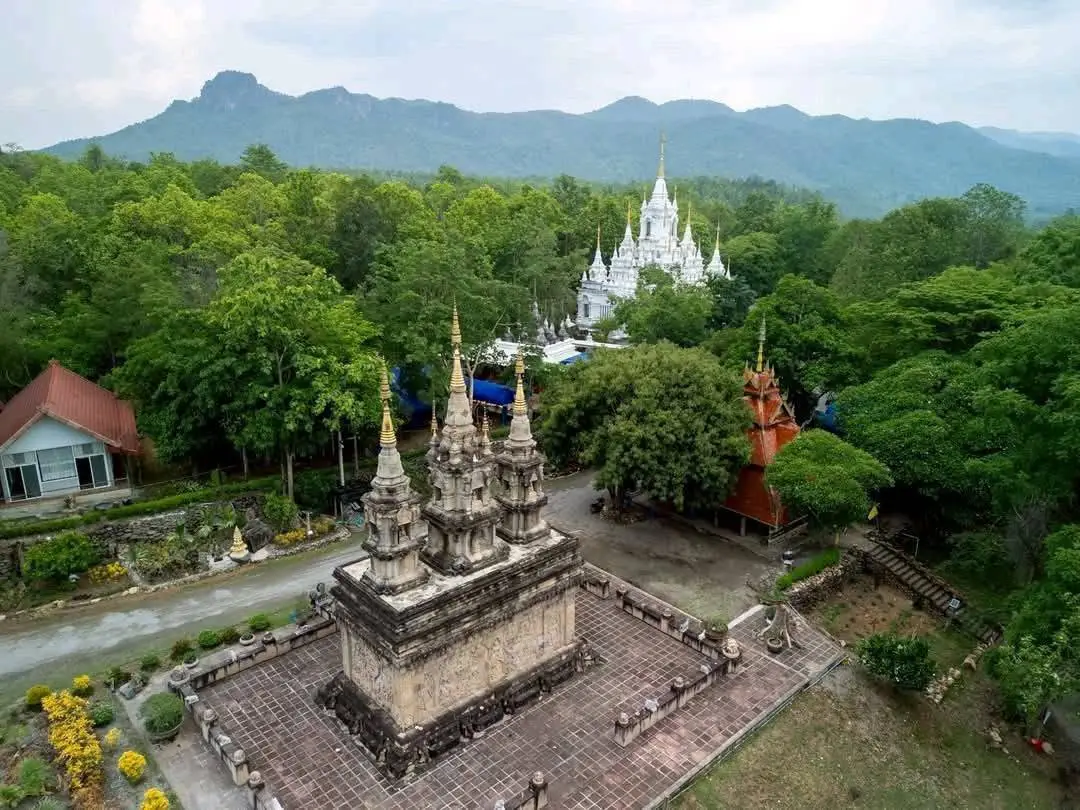
Wat Phra Phutthabat Tamo
Operating day: Daily
Operating time: 08.00 - 17.00
Wat Phra Phutthabat Tamo is located at 149 Moo 9, Ban Mae Tup, on the Mae Tuen – Doi Tao road, Pong Thung Subdistrict, Doi Tao District, Chiang Mai Province 50260. It is a local Buddhist temple under the Maha Nikaya order. The temple covers about 20 rai and was officially permitted as a temple in 1927. Wat Phra Phutthabat Tamo is one of the most important sacred sites in Doi Tao because it enshrines the Tamo Buddha Footprint and is historically connected with Khru Ba Siwichai, Khru Ba Aphichai Khao Pi, Khru Ba Chaiyawongsa Phatthana, and generations of meditative monks. Its open forest setting, quiet atmosphere, and distance from dense settlement make it suitable for worship, meditation, and cultural travel focused on Lanna Buddhist faith.
The temple’s most important feature is the Tamo Buddha Footprint, a sacred site that has long been revered by local devotees. This footprint is the spiritual center of the temple and gives Wat Phra Phutthabat Tamo a different character from an ordinary village temple. Visitors come not only to pay respect at a rural Buddhist temple but also to worship a footprint associated with Buddhist legend, the journey of revered Lanna monks, and meditation practice in a forested mountain landscape.
The temple history states that the Tamo Buddha Footprint was discovered by Khru Ba Siwichai and Khru Ba Aphichai Khao Pi around 1924. Khru Ba Aphichai Khao Pi later built and developed the temple from around 1924 until before 1960, when he moved to Wat Phra Phutthabat Pha Nam in Li District, Lamphun Province. After that, monks from different places continued to visit and stay for meditation practice. This allowed Wat Phra Phutthabat Tamo to remain a quiet spiritual site across several generations.
The connection with Khru Ba Siwichai and Khru Ba Aphichai Khao Pi gives the temple deep meaning in Lanna religious culture. Khru Ba Siwichai is remembered as the great saint of Lanna, known for restoring sacred places and inspiring major religious works. Khru Ba Aphichai Khao Pi was an important disciple and builder of temples and public works in northern Thailand. Their association with Wat Phra Phutthabat Tamo makes the temple part of the wider Lanna network of faith, restoration, and pilgrimage.
Wat Phra Phutthabat Tamo stands in Ban Mae Tup, Moo 9, Pong Thung Subdistrict. Pong Thung is one of the larger subdistricts of Doi Tao District, with an area of about 236 square kilometers, or approximately 131,326 rai. It consists of 11 villages: Ban Ko Luang, Ban San Bo Yen, Ban Nong Men, Ban Pong, Ban Pong Thung, Ban Ngio Sung, Ban Kong Wa, Ban Mae Buan Nuea, Ban Mae Tup, Ban Mae Buan Tai, and Ban Pong Khong. The temple is therefore located in a rural landscape of villages, forested hills, agricultural areas, and routes connecting Doi Tao with Hot District, Tak Province, and Li District in Lamphun.
The atmosphere of Wat Phra Phutthabat Tamo is calm and forest-like. It is away from the busyness of urban communities and is well suited to visitors seeking quiet reflection. The temple is not a place of entertainment or mass tourism. Its value lies in faith, silence, meditation, and the spiritual atmosphere of a forest temple connected with revered Lanna monks.
Important structures and areas at Wat Phra Phutthabat Tamo include a sermon hall, monks’ residences in the form of meditation huts, a sala bat, and a mondop covering the Buddha Footprint. The footprint mondop is the heart of the worship area because it protects and honors the sacred footprint. The meditation huts and monastic residences reflect the temple’s long-standing role as a place of practice for monks and devotees.
Within the temple grounds, several sacred places are associated with the Tamo tradition: the Buddha Footprints of the four Buddhas, the stone platform where the four Buddhas are believed to have reclined, the footprint of a disciple who served Kakusandha Buddha, and the footprints of ascetics believed to have attained arahantship. These sacred points turn the temple into a devotional walking route, allowing visitors to move through the site with respect and reflection.
Local legend tells that the four Buddhas of the present aeon — Kakusandha, Konagamana, Kassapa, and Gotama Buddha — once came to this place to teach beings and leave their footprints. This legend forms the core of local faith and explains why the site is deeply revered. Whether approached as sacred tradition or cultural memory, the legend is central to how local people understand the meaning of Wat Phra Phutthabat Tamo.
Another local story tells of two ascetics who practiced at this site, later ordained as Buddhist monks, and attained arahantship. Their places of passing are associated with stone platforms in the temple area and with Khao Tamo and Doi Koeng. This story adds another layer of meaning to the temple, connecting it with meditation, renunciation, spiritual attainment, and the sacred geography of Doi Tao.
During the time of Khru Ba Aphichai Khao Pi, the temple was an open forest site far from village density and suitable for meditation. After he moved to Wat Phra Phutthabat Pha Nam in Lamphun, monks from other places continued to come and practice here. The temple therefore retained its character as a meditative retreat connected with the Lanna forest-monastic tradition.
Phra Nopphadon Siriwatthano became an important figure in the later development of Wat Phra Phutthabat Tamo. He came to practice meditation at the temple and helped construct permanent structures, allowing the temple to develop and support devotees more effectively. His role reflects the importance of monastic care, community support, and continued development in sustaining a forest temple far from dense settlement.
Wat Phra Phutthabat Tamo is also associated with Khru Ba Chaiyawongsa Phatthana, or Luang Pho Wong of Wat Phra Phutthabat Huai Tom in Lamphun Province. The temple’s sacred points, including footprints and stone platforms, are linked to teachings and stories transmitted through this Lanna monastic lineage. This connection places the temple within a wider devotional route between Doi Tao and Lamphun, especially sites such as Wat Phra Phutthabat Pha Nam and Wat Phra Phutthabat Huai Tom.
In spiritual and cultural terms, Wat Phra Phutthabat Tamo is not only a temple of Ban Mae Tup. Its meaning reaches beyond the village because it is associated with revered monks, meditation, sacred footprints, legends of the four Buddhas, and the natural geography of Doi Tao. Visitors should allow time to experience the quietness of the site rather than treating it as a quick photo stop.
The temple serves the Ban Mae Tup community and the wider Pong Thung area as a place for worship, meditation, Buddhist holy days, Buddhist Lent, the end of Lent, Kathin, robe-offering ceremonies, memorial merit-making, and community merit events. It also serves those seeking calm and contemplation. This dual role — village temple and meditation site — gives Wat Phra Phutthabat Tamo its strong spiritual identity.
Important points to visit include the Buddha Footprint inside the mondop, the stone platform connected with the four Buddhas, the footprints associated with disciples and ascetics, and the open forest atmosphere of the temple. A meaningful visit should be slow, quiet, and respectful. The value of the temple lies in faith, sacred memory, and meditation rather than casual sightseeing.
Wat Phra Phutthabat Tamo is suitable for faith-based travelers, meditation practitioners, visitors interested in forest temples, and those following the Lanna saint tradition. It can be combined with Wat Ban Pong, Wat Tha Khrang, Wat Mae Tup, Phra Borommathat Doi Koeng, and Doi Tao Lake. This route offers a broad view of Doi Tao through forest temples, community temples, relocation history, and lakeside scenery.
Getting There is most convenient by private car, rental car, or local hired transport. From Chiang Mai city, travel south on Highway 108 through Hang Dong, San Pa Tong, Chom Thong, and Hot District. From there, continue toward Doi Tao District and Pong Thung Subdistrict, heading to Ban Mae Tup, Moo 9, on the Mae Tuen – Doi Tao road. Using the names Wat Phra Phutthabat Tamo, Ban Mae Tup, Pong Thung Subdistrict, and Doi Tao District together in a navigation app is recommended.
A meaningful route can begin at Wat Phra Phutthabat Tamo for worship and meditation, continue to Wat Ban Pong to learn about the revival of an old abandoned temple and Phra Phuttha Sihing, and then proceed to Wat Tha Khrang for community history and temple murals. Travelers can also continue to Doi Tao Lake and Phra Borommathat Doi Koeng. This route works best as a full-day cultural and spiritual journey.
Visitors should dress modestly, keep noise low, and respect the meditation atmosphere. If monks or practitioners are present, avoid disturbing their practice. Photography around the footprint, mondop, and sacred points should be done respectfully. Visitors should not climb onto restricted areas, touch sacred marks unnecessarily, or behave casually in spaces of worship.
Overall, Wat Phra Phutthabat Tamo is a Maha Nikaya local temple of Ban Mae Tup, Pong Thung Subdistrict, Doi Tao District, Chiang Mai Province. Officially established in 1927, it is valued for the Tamo Buddha Footprint, its connection with Khru Ba Siwichai and Khru Ba Aphichai Khao Pi, its mondop, sermon hall, meditation huts, sala bat, and its open forest atmosphere. It is one of Doi Tao’s most meaningful sacred sites for travelers seeking a quiet, deep, and spiritually focused route in southern Chiang Mai.
| Name | Wat Phra Phutthabat Tamo |
| Type | Local Buddhist Temple, Maha Nikaya Order, And Meditation Site |
| Location | 149 Moo 9, Ban Mae Tup, Mae Tuen – Doi Tao Road, Pong Thung Subdistrict, Doi Tao District, Chiang Mai Province 50260, Thailand |
| Temple Code | 350170603 |
| Temple Area | About 20 Rai |
| History | Officially established in 1927. The Tamo Buddha Footprint is associated with its discovery by Khru Ba Siwichai and Khru Ba Aphichai Khao Pi around 1924. |
| Important Historical Figures | Khru Ba Siwichai, Khru Ba Aphichai Khao Pi, Khru Ba Chaiyawongsa Phatthana, And Phra Nopphadon Siriwatthano |
| Important Structures | Sermon Hall, Meditation-Hut Monks’ Residences, Sala Bat, And Mondop Covering The Buddha Footprint |
| Important Sacred Places | Tamo Buddha Footprint, Footprints Of The Four Buddhas, Stone Reclining Platform Of The Four Buddhas, Footprint Of A Buddhist Disciple, And Footprints Of Ascetics Believed To Have Attained Arahantship |
| Distinctive Features | Quiet open-forest temple suitable for worship, Buddha Footprint pilgrimage, meditation, and Lanna sacred-site travel |
| Related Communities | Ban Mae Tup, Moo 9, And Communities In Pong Thung Subdistrict |
| Community Role | Spiritual center and meditation site used for worship, Buddhist ceremonies, Dhamma practice, Kathin, robe offerings, and community merit-making |
| Area Context | Pong Thung Subdistrict has 11 villages and covers about 236 square kilometers, or approximately 131,326 rai. Ban Mae Tup is Moo 9 of the subdistrict. |
| Travel Information | From Chiang Mai, take Highway 108 through Hang Dong, San Pa Tong, Chom Thong, and Hot, then continue toward Doi Tao District and Pong Thung Subdistrict, heading to Ban Mae Tup, Moo 9, on the Mae Tuen – Doi Tao road. |
| Current Status | Active local Buddhist temple and meditation site listed in temple databases of Pong Thung Subdistrict, Doi Tao District, Chiang Mai Province |
| Facilities | Temple grounds, courtyard, Buddha Footprint mondop, sermon hall, sala bat, monks’ residences, and meditation areas |
| Nearby Tourist Attractions | 1. Wat Ban Pong, about 12 km 2. Wat Tha Khrang, about 15 km 3. Wat Mae Tup, about 4 km 4. Doi Tao Lake, about 35 km 5. Phra Borommathat Doi Koeng, about 40 km |
| Nearby Restaurants | 1. Check In Doi Tao Cafe’ And Resort, about 35 km, Tel. 062-969-8264 2. Krua Than Thip And Ruean Pha Than Thip, about 35 km, Tel. 091-026-4970 3. Ruean Pha Luk Mae Ping, about 35 km, Tel. 081-993-4162, 081-724-5470 4. Ruean Pha Doi Tao Rim Ping, about 35 km, Tel. 081-961-1854, 084-885-5982 5. Ueang Doi Cafe, about 35 km, Tel. 080-730-4285 |
| Nearby Accommodations | 1. Check In Doi Tao Cafe’ And Resort, about 35 km, Tel. 062-969-8264 2. Ruean Pha Than Thip, about 35 km, Tel. 091-026-4970 3. Ruean Pha Luk Mae Ping, about 35 km, Tel. 081-993-4162, 081-724-5470 4. Ruean Pha Doi Tao Rim Ping, about 35 km, Tel. 081-961-1854, 084-885-5982 5. The Creek Resort, about 45 km, Tel. 097-282-8982 |
Frequently Asked Questions (FAQ)
Q: Where Is Wat Phra Phutthabat Tamo Located?
A: Wat Phra Phutthabat Tamo is located at 149 Moo 9, Ban Mae Tup, on the Mae Tuen – Doi Tao road, Pong Thung Subdistrict, Doi Tao District, Chiang Mai Province 50260, Thailand.
Q: When Was Wat Phra Phutthabat Tamo Officially Established?
A: Wat Phra Phutthabat Tamo was officially established in 1927 as a local Buddhist temple under the Maha Nikaya order.
Q: What Makes Wat Phra Phutthabat Tamo Special?
A: Its main value lies in the Tamo Buddha Footprint, the footprint mondop, its open forest atmosphere, and its historical connection with Khru Ba Siwichai and Khru Ba Aphichai Khao Pi.
Q: Who Discovered The Tamo Buddha Footprint?
A: Temple history says the footprint was discovered by Khru Ba Siwichai and Khru Ba Aphichai Khao Pi around 1924.
Q: Is Wat Phra Phutthabat Tamo Suitable For Meditation?
A: Yes. The temple has an open forest setting, a quiet atmosphere, distance from dense settlement, and a long history as a place where monks came to practice meditation.
Q: What Important Structures Are Found At Wat Phra Phutthabat Tamo?
A: Important structures include a sermon hall, meditation-hut monks’ residences, a sala bat, and a mondop covering the Buddha Footprint.
Q: What Nearby Places Can Be Visited With Wat Phra Phutthabat Tamo?
A: Nearby places include Wat Ban Pong, Wat Tha Khrang, Wat Mae Tup, Doi Tao Lake, and Phra Borommathat Doi Koeng.
 Category: ●Places of Worship
 Group: ●Temple
Last Update : 3 DayAgo
 Last Update : 3 DayAgo
 Click to Access the Navigation Map GPS
Wat Phra Phutthabat Tamo Map
Recommend

 Muang Chiang Mai(121)Chom Thong(47)Mae Chaem(25)Chiang Dao(33)Doi Saket(68)Mae Taeng(85)Mae Rim(69)Samoeng(29)Fang(71)Mae Ai(59)Phrao(70)San Pa Tong(103)San Kamphaeng(66)San Sai(73)Hang Dong(73)Hot(32)Doi Tao(22)Omkoi(11)Saraphi(74)Wiang Haeng(15)Chai Prakan(28)Mae Wang(32)Mae On(22)Doi Lo(34)Galyani Vadhana(1)


