
lovethailand home >North Travel Attractions >Chiang Mai Travel Attractions >Doi Tao >Pong Thung > Wat Ban Pong
TL;DR: Wat Ban Pong is located at 90 Moo 4, Ban Pong, Pong Thung Subdistrict, Doi Tao District, Chiang Mai Province, Thailand. is located at 90 Moo 4, Ban Pong, Pong Thung Subdistrict, Doi Tao District, Chiang Mai Province. It is a local Buddhist temple under the.

Wat Ban Pong
Operating day: Daily
Operating time: 08.00 - 17.00
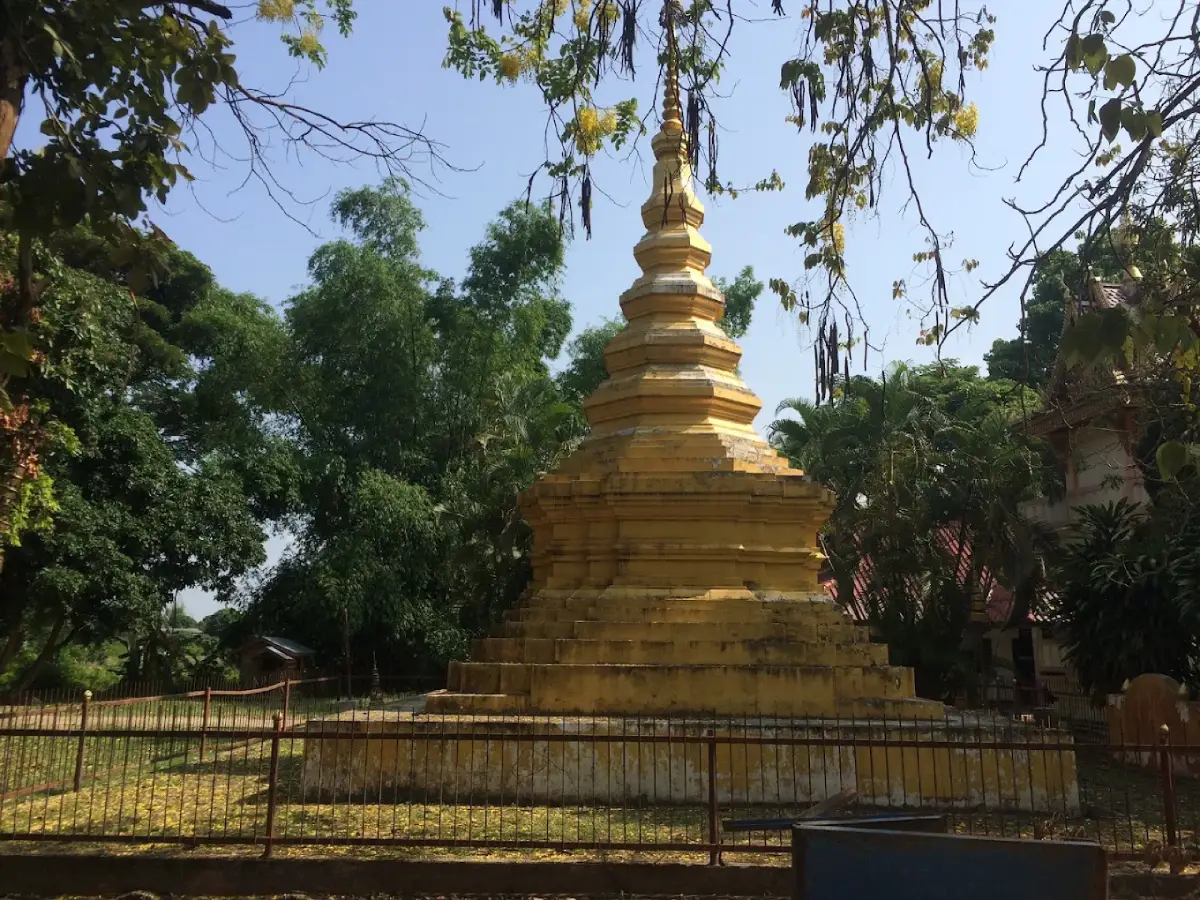
Wat Ban Pong is located at 90 Moo 4, Ban Pong, Pong Thung Subdistrict, Doi Tao District, Chiang Mai Province. It is a local Buddhist temple under the Maha Nikaya order. The temple covers 10 rai, 1 ngan, and 68 square wah. It was officially permitted as a temple in 1992 and received its royal grant of Wisungkhamasima in 1998. The temple was rebuilt in 1964 on the site of an old abandoned temple. Nai Chu Chaiwong donated 6 rai and 3 ngan of land, while Kham Ai Soyyawongso initiated the rebuilding work with support from villagers of Ban Pong and Ban San Bo Yen. Wat Ban Pong therefore grew directly from community faith and remains an important spiritual center of Pong Thung Subdistrict.
The key identity of Wat Ban Pong lies in its revival from an old abandoned temple site. The area had long been associated with an older sacred place, but it had become overgrown and unused. In 1964, villagers began clearing and redeveloping the area so that it could once again serve as a Buddhist temple. This was not simply the construction of a new religious building. It was the restoration of a sacred village space and the return of Buddhist life to Ban Pong.
The land donation by Nai Chu Chaiwong was a decisive beginning for the temple. By offering 6 rai and 3 ngan of land, he gave the community a stable foundation for temple development. In rural Buddhist communities, land is one of the most important factors in establishing a temple. Once the land was available, villagers could organize the temple area, build religious facilities, and create a place for monks and laypeople to carry out Buddhist activities.
Kham Ai Soyyawongso played an important role as the person who initiated the rebuilding of Wat Ban Pong. The early development of the temple depended on local labor, faith, and cooperation. The temple was not created as a tourist attraction. It was built because the villagers wanted a sacred place for merit-making, Dhamma listening, Buddhist ceremonies, and community gatherings. Wat Ban Pong is therefore a temple built by the community, maintained by the community, and used by the community.
Ban Pong is Moo 4 of Pong Thung Subdistrict in Doi Tao District. Pong Thung is one of the larger subdistricts in Doi Tao, covering about 236 square kilometers, or approximately 131,326 rai. It consists of 11 villages: Ban Ko Luang, Ban San Bo Yen, Ban Nong Men, Ban Pong, Ban Pong Thung, Ban Ngio Sung, Ban Kong Wa, Ban Mae Buan Nuea, Ban Mae Tup, Ban Mae Buan Tai, and Ban Pong Khong. Wat Ban Pong stands in one of the important village communities of this subdistrict and has been supported since its beginning by both Ban Pong and Ban San Bo Yen villagers.
The landscape of Pong Thung Subdistrict includes village settlements, agricultural land, hills, and routes connecting Doi Tao with Hot District, Tak Province, and Li District in Lamphun. The subdistrict lies about 153 kilometers south of Chiang Mai city. In this setting, Wat Ban Pong functions as a living village temple rather than a large tourist-oriented site. It serves the religious and social life of the local community in a direct and practical way.
The official permission to establish Wat Ban Pong as a temple in 1992 marked an important step after decades of community-led development that began in 1964. In 1998, the temple received its royal grant of Wisungkhamasima, a boundary used for formal monastic acts under Buddhist discipline. This strengthened the temple’s role as an established Maha Nikaya Buddhist institution serving the Ban Pong community.
Wat Ban Pong was also designated as an educational temple in 2008. This reflects a role beyond ceremonial activities. The temple functions as a place for learning, moral development, community participation, and Buddhist practice. Its identity therefore includes religion, community life, and education within the same village setting.
The most important sacred object of Wat Ban Pong is Phra Phuttha Sihing, also called Phra Sing. This Buddha image was found during temple development and land improvement in 1982. The discovery is highly meaningful for the community because it connects the present temple with the older sacred character of the abandoned site. Phra Phuttha Sihing is therefore more than a Buddha image for worship; it is a symbol of the revived Buddhist life of Wat Ban Pong.
Phra Phuttha Sihing is an important name in Lanna and Thai Buddhist culture. At Wat Ban Pong, the presence of this image gives the temple a strong devotional identity. Visitors should pay respect to the image with calmness and understand it as part of the temple’s revival story. The image links the memory of the older temple site with the active community temple of today.
The development of Wat Ban Pong from an abandoned site into a living temple clearly shows the cooperation of Ban Pong and Ban San Bo Yen villagers. Local residents supported the temple through merit-making, labor, construction, and continued use of the temple for Buddhist ceremonies. This makes the temple a shared spiritual space for nearby communities, not merely a site belonging to one household or one donor.
Wat Ban Pong serves the community through Buddhist holy days, Dhamma activities, Buddhist Lent, the end of Lent, Kathin, robe-offering ceremonies, memorial merit-making, and annual village merit events. These activities bring monks, elders, families, young people, and villagers together. The temple remains an important social and religious center where local Buddhist values are practiced and passed to the next generation.
The atmosphere of Wat Ban Pong is suitable for travelers who appreciate quiet community temples. Its value does not lie in large-scale tourism or grand architecture, but in its revival story, the discovery of Phra Phuttha Sihing, and the continuing faith of local people. Visitors who understand this background will see the temple as a meaningful place of local history and living Buddhist practice.
Pong Thung Subdistrict also has other religious sites that can be combined with Wat Ban Pong, such as Wat Tha Khrang in Ban Pong Thung and Wat Phra Phutthabat Tamo in Ban Mae Tup. Wat Phra Phutthabat Tamo is an important sacred site in the subdistrict, known for its Buddha footprints and religious legends. Combining Wat Ban Pong with these nearby temples creates a route that includes village faith, community history, and sacred Doi Tao landscapes.
A meaningful Doi Tao route can begin with worship at Phra Phuttha Sihing at Wat Ban Pong, continue to Wat Tha Khrang for community history and temple murals, and then proceed to Wat Phra Phutthabat Tamo or Doi Tao Lake. With more time, travelers can add Phra Borommathat Doi Koeng and lakeside restaurants around Doi Tao Lake. This route connects village temples, local history, and natural scenery in one trip.
Getting There is most convenient by private car, rental car, or local hired transport. From Chiang Mai city, travel south on Highway 108 through Hang Dong, San Pa Tong, Chom Thong, and Hot District. From there, continue toward Doi Tao District and Pong Thung Subdistrict, heading to Ban Pong, Moo 4. Using the names Wat Ban Pong, Ban Pong, Pong Thung Subdistrict, and Doi Tao District together in a navigation app is recommended.
Visitors should dress modestly, keep noise low, and respect monks and local residents. If a merit-making event or ceremony is taking place, local worshippers should be given priority. Photography should be done respectfully, especially near Phra Phuttha Sihing and areas used for Buddhist ceremonies. Wat Ban Pong is a living community temple built from local faith, so a respectful visit helps reveal the temple’s true value.
Overall, Wat Ban Pong is a Maha Nikaya local temple of Ban Pong, Moo 4, Pong Thung Subdistrict, Doi Tao District, Chiang Mai Province. Its value lies in the revival of an old abandoned temple site in 1964, the land donation by Nai Chu Chaiwong, the initiative of Kham Ai Soyyawongso, the support of Ban Pong and Ban San Bo Yen villagers, the official temple establishment in 1992, the Wisungkhamasima in 1998, and its educational temple status in 2008. Its most important sacred object is Phra Phuttha Sihing, found during temple development in 1982, making Wat Ban Pong a meaningful cultural and spiritual stop in Doi Tao.
| Name | Wat Ban Pong |
| Type | Local Buddhist Temple, Maha Nikaya Order |
| Location | 90 Moo 4, Ban Pong, Pong Thung Subdistrict, Doi Tao District, Chiang Mai Province, Thailand |
| Temple Code | 350170602 |
| Temple Area | 10 Rai, 1 Ngan, 68 Square Wah |
| Initial Donated Land | Nai Chu Chaiwong donated 6 Rai and 3 Ngan of land. |
| History | Rebuilt in 1964 from an old abandoned temple site, officially established in 1992, granted Wisungkhamasima in 1998, and designated as an educational temple in 2008 |
| Important Historical Figures | Nai Chu Chaiwong, the land donor, and Kham Ai Soyyawongso, who initiated the temple rebuilding |
| Related Communities | Ban Pong, Moo 4; Ban San Bo Yen, Moo 2; And Communities In Pong Thung Subdistrict |
| Important Sacred Object | Phra Phuttha Sihing, also called Phra Sing, found during temple development and land improvement in 1982 |
| Distinctive Features | Community temple revived from an old abandoned temple site, with Phra Phuttha Sihing as its important sacred image and strong support from Ban Pong and Ban San Bo Yen villagers |
| Community Role | Spiritual center for local villagers, used for Buddhist ceremonies, Dhamma listening, Kathin, robe offerings, annual merit-making, and community Buddhist activities |
| Area Context | Pong Thung Subdistrict has 11 villages and covers about 236 square kilometers, or approximately 131,326 rai. Ban Pong is Moo 4 of the subdistrict. |
| Travel Information | From Chiang Mai, take Highway 108 through Hang Dong, San Pa Tong, Chom Thong, and Hot, then continue toward Doi Tao District and Pong Thung Subdistrict, heading to Ban Pong, Moo 4. |
| Current Status | Active local Buddhist temple listed in temple databases of Pong Thung Subdistrict, Doi Tao District, Chiang Mai Province |
| Facilities | Temple grounds, courtyard, worship area, and spaces for community Buddhist activities |
| Nearby Tourist Attractions | 1. Wat Tha Khrang, about 6 km 2. Wat Phra Phutthabat Tamo, about 12 km 3. Wat Mae Tup, about 14 km 4. Doi Tao Lake, about 30 km 5. Phra Borommathat Doi Koeng, about 35 km |
| Nearby Restaurants | 1. Check In Doi Tao Cafe’ And Resort, about 30 km, Tel. 062-969-8264 2. Krua Than Thip And Ruean Pha Than Thip, about 30 km, Tel. 091-026-4970 3. Ruean Pha Luk Mae Ping, about 30 km, Tel. 081-993-4162, 081-724-5470 4. Ruean Pha Doi Tao Rim Ping, about 30 km, Tel. 081-961-1854, 084-885-5982 5. Ueang Doi Cafe, about 30 km, Tel. 080-730-4285 |
| Nearby Accommodations | 1. Check In Doi Tao Cafe’ And Resort, about 30 km, Tel. 062-969-8264 2. Ruean Pha Than Thip, about 30 km, Tel. 091-026-4970 3. Ruean Pha Luk Mae Ping, about 30 km, Tel. 081-993-4162, 081-724-5470 4. Ruean Pha Doi Tao Rim Ping, about 30 km, Tel. 081-961-1854, 084-885-5982 5. The Creek Resort, about 40 km, Tel. 097-282-8982 |
Frequently Asked Questions (FAQ)
Q: Where Is Wat Ban Pong Located?
A: Wat Ban Pong is located at 90 Moo 4, Ban Pong, Pong Thung Subdistrict, Doi Tao District, Chiang Mai Province, Thailand.
Q: When Did Wat Ban Pong Begin To Be Rebuilt?
A: Wat Ban Pong began to be rebuilt in 1964 from an old abandoned temple site, with support from Ban Pong and Ban San Bo Yen villagers.
Q: When Was Wat Ban Pong Officially Established?
A: Wat Ban Pong was officially established in 1992 and received its Wisungkhamasima in 1998.
Q: Who Played Important Roles In The Establishment Of Wat Ban Pong?
A: Nai Chu Chaiwong donated 6 rai and 3 ngan of land, and Kham Ai Soyyawongso initiated the rebuilding of the temple.
Q: What Is The Important Sacred Object At Wat Ban Pong?
A: The important sacred object is Phra Phuttha Sihing, also called Phra Sing, which was found during temple development and land improvement in 1982.
Q: What Makes Wat Ban Pong Special?
A: Its value lies in its revival from an old abandoned temple site, the discovery of Phra Phuttha Sihing, and the community support of Ban Pong and Ban San Bo Yen villagers.
Q: What Nearby Places Can Be Visited With Wat Ban Pong?
A: Nearby places include Wat Tha Khrang, Wat Phra Phutthabat Tamo, Wat Mae Tup, Doi Tao Lake, and Phra Borommathat Doi Koeng.
 Category: ●Places of Worship
 Group: ●Temple
Last Update : 7 DayAgo
 Last Update : 7 DayAgo
 Click to Access the Navigation Map GPS
 Muang Chiang Mai(121)Chom Thong(47)Mae Chaem(25)Chiang Dao(33)Doi Saket(68)Mae Taeng(85)Mae Rim(69)Samoeng(29)Fang(71)Mae Ai(59)Phrao(70)San Pa Tong(103)San Kamphaeng(66)San Sai(73)Hang Dong(73)Hot(32)Doi Tao(22)Omkoi(11)Saraphi(74)Wiang Haeng(15)Chai Prakan(28)Mae Wang(32)Mae On(22)Doi Lo(33)Galyani Vadhana(1)


