
lovethailand home >North Travel Attractions >Chiang Mai Travel Attractions >Doi Tao >Doi Tao > Wat Doi Tao
TL;DR: Wat Doi Tao is located at 302 Moo 3, Ban Doi Tao, Doi Tao Subdistrict, Doi Tao District, Chiang Mai Province 50260, Thailand, open Daily, hours 08.00 – 17.00.

Wat Doi Tao
Open Days: Daily
Opening Hours: 08.00 – 17.00
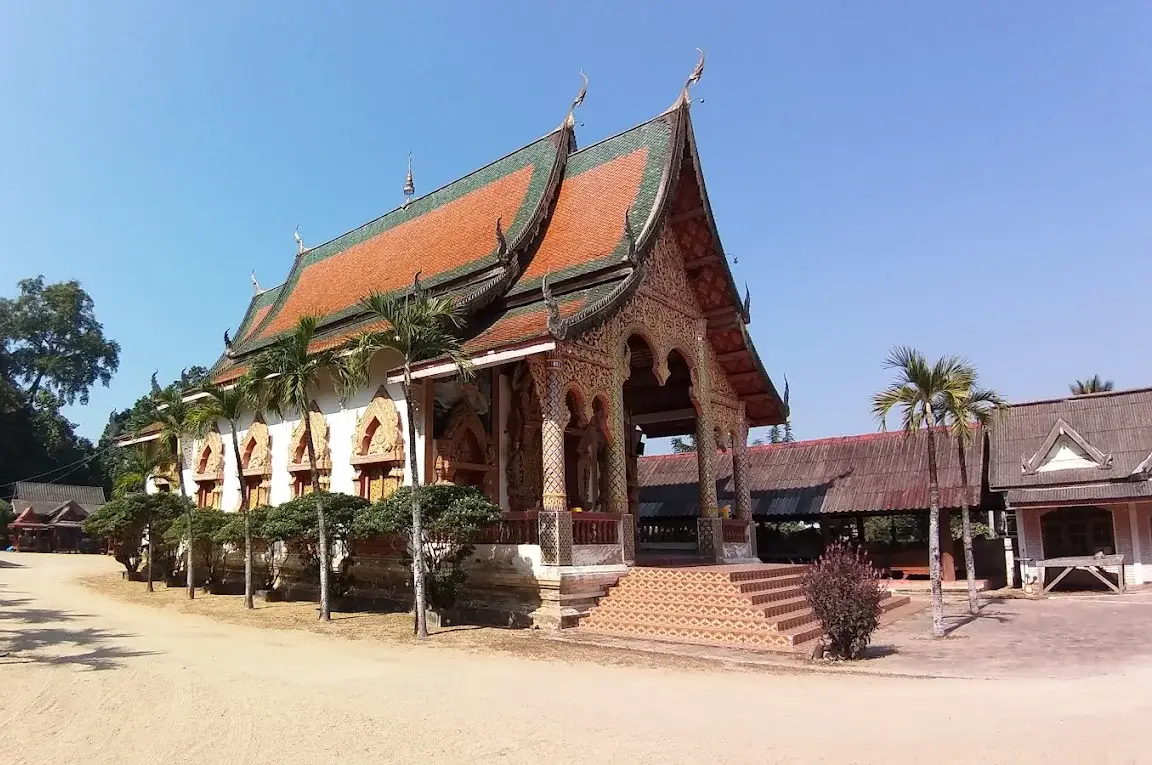
Wat Doi Tao, also known as Wat Luang Doi Tao, is located at 302 Moo 3, Ban Doi Tao, Doi Tao Subdistrict, Doi Tao District, Chiang Mai Province 50260. It is a local Buddhist temple under the Maha Nikaya order. The temple was established in 1905 and has long served as a spiritual center for Ban Doi Tao. Its history is connected with an old abandoned Lua temple near the eastern bank of Huai Mae Hak, the relocation of the temple after erosion along the stream, and the rebuilding of the temple by Phra Som Sriyong together with local villagers. Wat Doi Tao is therefore a temple of faith, memory, and community continuity.
The temple is important not only as a village temple but also as one of the key Buddhist places in Doi Tao Subdistrict. Local information records the temple area as 6 rai and 57 square wah. Wat Doi Tao was officially permitted as a temple in 1905, later recognized as a model developed temple in 1998, and recognized as an outstanding developed temple in 2007. The current abbot listed in the source material for this article is Phra Athikan Kaew Kusalachitto. These details show that Wat Doi Tao has both historical depth and an ongoing role in local Buddhist life.
The early history of Wat Doi Tao begins with an older temple site believed to have been an abandoned Lua temple on the eastern side of Huai Mae Hak. Because the original site was close to the watercourse, it was gradually eroded each year. The temple land became narrower over time, creating difficulties for the community. Later, Phra Som Sriyong, a monk from Ban Makok in Pa Sang District, Lamphun Province, came to stay in the area. With the faith of the villagers, he led the relocation of the temple to its present site, about 200 meters from the old location.
This relocation was more than a physical move. It preserved the spiritual center of Ban Doi Tao and allowed the community to continue using the temple for worship, ceremonies, and merit-making. The story also reflects how local communities in northern Thailand adapt religious places to changing landscapes. Long before Doi Tao became widely associated with the Bhumibol Dam reservoir and Doi Tao Lake, Wat Doi Tao already carried a history of water, erosion, relocation, and community resilience.
The name Wat Doi Tao and the alternative name Wat Luang Doi Tao express the close connection between the temple and the community. The word “Luang” suggests its older and central status, while “Doi Tao” connects it directly with the village, subdistrict, and district. For travelers, the temple is not simply a small village temple; it is a cultural marker of old Doi Tao and a place that helps explain the identity of the area.
One of the important local faith elements associated with the temple is the shrine of Pho Lao Nan, a sacred figure respected by the people of Doi Tao. This shrine reflects the way Buddhist practice, local protective belief, and community memory coexist in Lanna culture. In many northern Thai temples, the sacred space includes both Buddhist worship and local guardian traditions. Wat Doi Tao therefore offers visitors a deeper view of how faith works in village life.
Confirmed temple structures include a viharn, sermon hall, sala bat, and monks’ residences. Important sacred objects include the principal Buddha image, with a lap width of 30 inches, and a Sing Song-style Buddha image. These elements make Wat Doi Tao a complete local temple for worship, ceremonies, and community use. The viharn serves as the main worship area, while the sermon hall and sala support merit-making and village religious gatherings.
The principal Buddha image and the Sing Song-style Buddha image are the key sacred objects visitors should pay respect to. The Sing Song style is connected with northern Thai Buddhist art and adds cultural value to the temple. Visitors should approach the temple respectfully, pay homage calmly, and take time to observe how the temple functions as a living religious place rather than a purely tourist-oriented site.
Wat Doi Tao is also part of the broader historical landscape of Doi Tao District. The district is strongly linked with the Ping River, the Bhumibol Dam reservoir, agriculture, freshwater fishing, and community relocation. Temples in this area are not only religious places; they are also spaces where community memory is preserved. Wat Doi Tao helps visitors understand Doi Tao beyond the lake scenery by showing the religious life of the village itself.
Doi Tao Subdistrict has a strong agricultural character, with local livelihoods connected to longan, rice, soybeans, lime, shallots, garlic, corn, fishing, and livestock. Wat Doi Tao stands within this rural social setting, where temple life is closely tied to seasonal rhythms, merit-making, family ceremonies, ordination, memorial rites, and Buddhist holy days. The temple remains an important social and spiritual place for the people of Ban Doi Tao.
Annual merit-making activities at a local Lanna temple such as Wat Doi Tao generally follow the Buddhist calendar, including Buddhist holy days, Makha Bucha, Visakha Bucha, Asalha Bucha, Buddhist Lent, the end of Lent, Kathin, robe-offering ceremonies, and community merit-making. These activities are not only religious observances but also a way to keep the community connected across generations.
The main appeal of Wat Doi Tao lies in its clear and layered story: an old Lua temple site, revival by Phra Som Sriyong, relocation from an eroded streamside location, the shrine of Pho Lao Nan, the principal Buddha image, the Sing Song Buddha image, and its status as a developed temple. It is a living community temple with a strong sense of place, not a staged attraction made only for photography.
Wat Doi Tao is suitable for travelers interested in community temples, Lanna culture, local history, and meaningful Buddhist routes in southern Chiang Mai. Elderly visitors can come for worship, families can use the temple as a learning stop, and cultural travelers can connect the temple with Doi Tao Lake, Phra Borommathat Doi Koeng, and the wider history of Doi Tao communities. A short visit may take about 30 minutes, while a slower cultural visit may take around 1 hour.
Getting There is most convenient by private car, rental car, or local hired transport. From Chiang Mai city, travel south through Chom Thong and Hot District, then continue to Doi Tao District on Highway 1103, the Hot – Doi Tao – Mae Tuen route. Once in Doi Tao Subdistrict, proceed to Ban Doi Tao, Moo 3. The temple is located at 302 in the village area. Using the names Wat Doi Tao or Wat Luang Doi Tao in a navigation app is recommended.
A good travel route can combine Wat Doi Tao with Doi Tao Lake, Phra Borommathat Doi Koeng, Wat Tha Duea, Wat Ban Rai, Wat Chimplee, and local community attractions. Travelers coming from Chiang Mai can pass through Hot District, visit Wat Doi Tao, then continue to Doi Tao Lake for scenery and lakeside food. This route works well for a one-day cultural trip or an overnight stay in Doi Tao.
Visitors should dress modestly, keep noise low, and respect monks and local worshippers. If a religious event is taking place, visitors should allow local residents to conduct their merit-making first. Photography should be done with care and should not disturb ceremonies or people using the temple. Since Wat Doi Tao remains a real village temple, the best visit is one that respects both the sacred space and the local community.
Overall, Wat Doi Tao, or Wat Luang Doi Tao, is a Maha Nikaya local temple with strong religious, historical, and community value. Its key importance lies in its establishment in 1905, its story as an old Lua temple site, its relocation from an eroded streambank, the shrine of Pho Lao Nan, its principal Buddha image and Sing Song Buddha image, and its recognition as a developed temple. It is a worthwhile cultural stop for travelers who want to understand the quieter and more authentic side of Doi Tao, Chiang Mai.
| Name | Wat Doi Tao / Wat Luang Doi Tao |
| Type | Local Buddhist Temple, Maha Nikaya Order |
| Location | 302 Moo 3, Ban Doi Tao, Doi Tao Subdistrict, Doi Tao District, Chiang Mai Province 50260, Thailand |
| Coordinates | 17.89311, 98.73091 |
| Temple Area | 6 Rai 57 Square Wah |
| Abbot | Phra Athikan Kaew Kusalachitto |
| Highlights | Historic temple of Ban Doi Tao, also called Wat Luang Doi Tao, with roots in an old Lua temple site, the shrine of Pho Lao Nan, a principal Buddha image, a Sing Song Buddha image, and recognition as a developed temple |
| History | Established in 1905. The former temple site was an abandoned Lua temple near Huai Mae Hak. Phra Som Sriyong led villagers to relocate the temple to the present site, about 200 meters from the old location. |
| Development Status | Recognized as a model developed temple in 1998 and an outstanding developed temple in 2007 |
| Important Structures | Viharn, sermon hall, sala bat, and monks’ residences |
| Important Sacred Objects | Principal Buddha image with a lap width of 30 inches, Sing Song Buddha image, and the shrine of Pho Lao Nan |
| Community Role | Spiritual center of Ban Doi Tao, used for Buddhist ceremonies, merit-making, Kathin, robe-offering ceremonies, and community religious activities |
| Travel Information | From Chiang Mai, travel through Chom Thong and Hot District, then continue to Doi Tao on Highway 1103, the Hot – Doi Tao – Mae Tuen route, toward Ban Doi Tao, Moo 3. |
| Current Status | Active local Buddhist temple and an important temple of Doi Tao Subdistrict |
| Open Days | Daily |
| Opening Hours | 08.00 – 17.00 |
| Facilities | Temple grounds, courtyard, viharn, sala, worship area, and spaces for Buddhist community activities |
| Nearby Tourist Attractions | 1. Wat Chimplee, about 3 km 2. Wat Mon Chom Tham, about 6 km 3. Doi Tao Lake, about 18 km 4. Phra Borommathat Doi Koeng, about 20 km 5. Ban Chang Plot 8 Weaving Learning Area, about 24 km |
| Nearby Restaurants | 1. Bandin in the Doi, about 20 km, Tel. 087-951-6778, 084-810-5058 2. Check In Doi Tao Cafe’ and Resort, about 18 km, Tel. 062-969-8264 3. Krua Than Thip And Ruean Pha Than Thip, about 18 km, Tel. 091-026-4970 4. Ruean Pha Luk Mae Ping, about 18 km, Tel. 081-993-4162, 081-724-5470 5. Ruean Pha Doi Tao Rim Ping, about 18 km, Tel. 081-961-1854, 084-885-5982 |
| Nearby Accommodations | 1. The Creek Resort, about 10 km, Tel. 097-282-8982 2. Check In Doi Tao Cafe’ and Resort, about 18 km, Tel. 062-969-8264 3. Ruean Pha Than Thip, about 18 km, Tel. 091-026-4970 4. Ruean Pha Luk Mae Ping, about 18 km, Tel. 081-993-4162, 081-724-5470 5. Ruean Pha Doi Tao Rim Ping, about 18 km, Tel. 081-961-1854, 084-885-5982 |
Frequently Asked Questions (FAQ)
Q: Where is Wat Doi Tao located?
A: Wat Doi Tao is located at 302 Moo 3, Ban Doi Tao, Doi Tao Subdistrict, Doi Tao District, Chiang Mai Province 50260, Thailand.
Q: When was Wat Doi Tao established?
A: Wat Doi Tao was established in 1905 and is a local Buddhist temple under the Maha Nikaya order.
Q: What is another name for Wat Doi Tao?
A: Wat Doi Tao is also known as Wat Luang Doi Tao.
Q: What makes Wat Doi Tao special?
A: Its significance comes from its history as an old Lua temple site, its relocation from an eroded streambank, the shrine of Pho Lao Nan, the principal Buddha image, the Sing Song Buddha image, and its continuing role in Ban Doi Tao.
Q: What are the opening hours of Wat Doi Tao?
A: Wat Doi Tao is open daily from 08.00 to 17.00.
Q: How do travelers get to Wat Doi Tao?
A: From Chiang Mai, travel through Chom Thong and Hot District, then continue on Highway 1103, the Hot – Doi Tao – Mae Tuen route, toward Ban Doi Tao, Moo 3.
Q: What nearby places can be visited with Wat Doi Tao?
A: Nearby places include Doi Tao Lake, Phra Borommathat Doi Koeng, Wat Chimplee, Wat Mon Chom Tham, and the Ban Chang Plot 8 weaving learning area.
 Category: ●Places of Worship
 Group: ●Temple
Last Update : 3 DayAgo
 Last Update : 3 DayAgo
 Click to Access the Navigation Map GPS
 Muang Chiang Mai(121)Chom Thong(47)Mae Chaem(25)Chiang Dao(33)Doi Saket(68)Mae Taeng(85)Mae Rim(69)Samoeng(29)Fang(71)Mae Ai(59)Phrao(70)San Pa Tong(103)San Kamphaeng(66)San Sai(73)Hang Dong(73)Hot(32)Doi Tao(22)Omkoi(11)Saraphi(74)Wiang Haeng(15)Chai Prakan(28)Mae Wang(32)Mae On(22)Doi Lo(34)Galyani Vadhana(1)


