
lovethailand home >North Travel Attractions >Chiang Mai Travel Attractions >Muang Chiang Mai >Nong Hoi > Wat Muang Sat Noi
TL;DR: Wat Muang Sat Noi is located at Moo 5, Nong Hoi Subdistrict, Mueang Chiang Mai District, Chiang Mai Province, open Daily, hours 08.00 – 17.00.

Wat Muang Sat Noi
Open Days: Daily
Opening Hours: 08.00 – 17.00
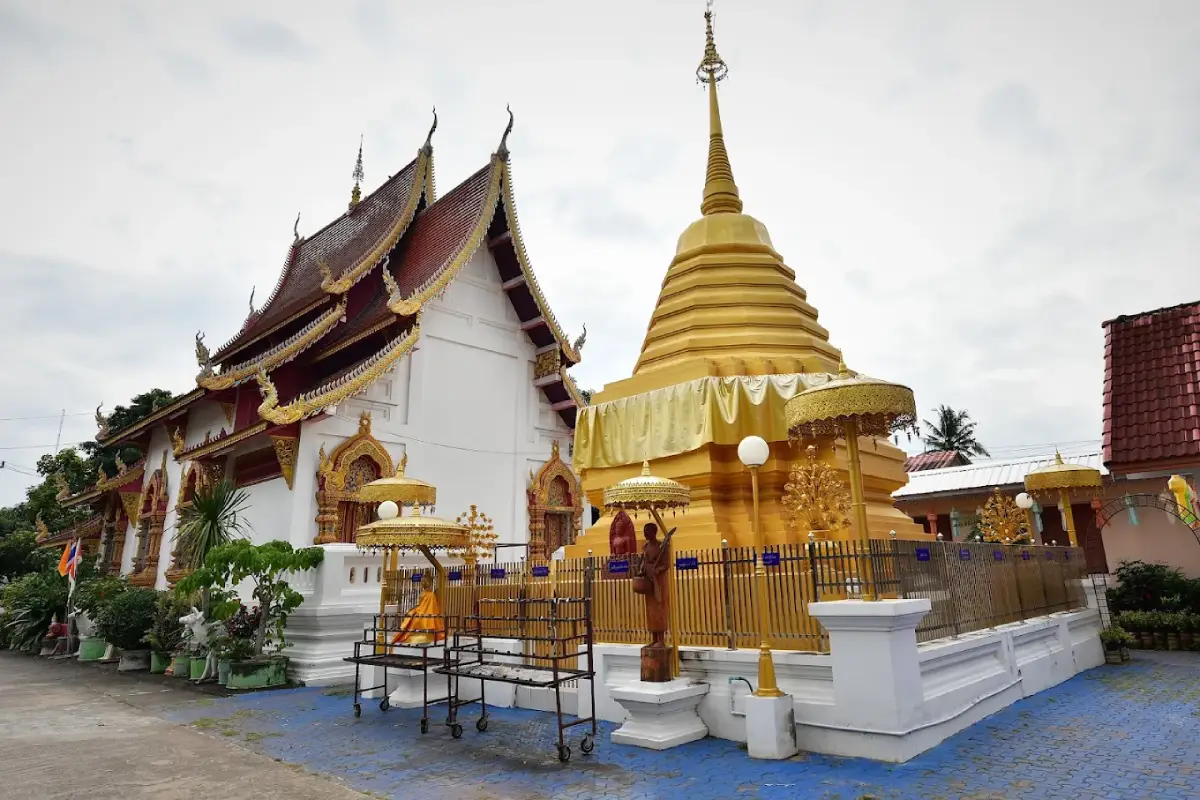
Wat Mueang Sat Noi is a local Buddhist temple under the Maha Nikaya order, located in Moo 5, Nong Hoi Subdistrict, Mueang Chiang Mai District, Chiang Mai Province. The temple stands within the Mueang Sat community, an important cultural neighborhood on the eastern side of Chiang Mai. Established as a temple in 1887, Wat Mueang Sat Noi continues to serve as a local religious center for merit-making, worship, Buddhist ceremonies, and community life. It is also closely connected with the broader cultural identity of Mueang Sat, a community known for Lanna lantern craftsmanship.
Wat Mueang Sat Noi is suitable for travelers who want to explore a quieter, more community-based side of Chiang Mai’s temple culture. It is not a major tourist landmark inside the old city or on Doi Suthep. Its value lies in its peaceful atmosphere, local religious role, and origin story. The temple began when monks from Wat Mueang Sat Luang moved to this area for meditation and residence when the site was still surrounded by rice fields. Later, Pho Nan La donated land and built a monks’ residence, allowing the area to develop into an officially recognized temple in 1887.
Nong Hoi Subdistrict contains several temples located relatively close to one another, including Wat Mueang Sat Luang, Wat Si Bun Rueang, Wat San Pa Liang, and Wat Sao Hin. Wat Mueang Sat Noi is therefore part of a network of eastern Chiang Mai community temples. The area is not far from Chiang Mai-Lamphun Road, Mahidol Road, Mengrai Bridge, Nong Hoi Market, and routes toward Wiang Kum Kam. This makes the temple suitable for a half-day cultural itinerary focused on temples, local neighborhoods, food, and Lanna craft traditions.
The name “Mueang Sat” is culturally important because it is associated with one of Chiang Mai’s best-known lantern-making communities. Mueang Sat Luang and Mueang Sat Noi are widely recognized for producing Lanna lanterns used in festivals, rituals, and decoration, especially during Chiang Mai’s Yi Peng season. Visiting Wat Mueang Sat Noi therefore gives travelers more than a temple visit. It also offers a way to understand the community behind the lanterns that shape one of Chiang Mai’s most iconic cultural images.
The history of Wat Mueang Sat Noi begins around 1869, when monks residing at Wat Mueang Sat Luang moved to the present temple area to meditate and stay. At that time, the land was still a quiet rice-field area, suitable for simple monastic life. In 1887, Pho Nan La donated the land and built a monks’ dwelling for the monks who had moved there. This act of donation became the foundation of Wat Mueang Sat Noi as a temple of the local community.
Land donation is significant in the history of many Lanna temples. Local temples often began not as large state-built monuments, but through the faith of villagers, donors, monks, and local families. When someone donated land, built a kuti, or helped restore temple structures, a small religious space could gradually become a community monastery. Wat Mueang Sat Noi reflects this pattern clearly. Its story shows how faith, land, and local participation created a lasting Buddhist center for later generations.
Wat Mueang Sat Noi should also be understood alongside Wat Mueang Sat Luang. Historical information records that monks from Wat Mueang Sat Luang first moved to this site before Wat Mueang Sat Noi was formally established. This connection makes the two temples part of the same religious and community landscape. Wat Mueang Sat Luang is better known for its older temple identity and Lanna architectural features, while Wat Mueang Sat Noi reflects the growth of local faith within the same neighborhood.
Important areas inside Wat Mueang Sat Noi include the viharn, sermon hall, monks’ residences, multipurpose building, and bell tower. The viharn was completed in 2006 and functions as the main worship space for paying respect to the Buddha image, making merit, listening to Dhamma, and joining community ceremonies. The sermon hall was completed in 2002 and supports religious gatherings and lay community activities. These structures show how the temple continues to develop for practical use while preserving its identity as a neighborhood monastery.
The temple has two monks’ residences, which support monastic life and the daily religious function of the monastery. The multipurpose building provides space for temple and community activities, while the bell tower remains an important symbolic and functional structure. In a local temple, the bell is not only an architectural feature. It marks time, signals religious routines, and connects nearby residents with the rhythm of temple life.
Although Wat Mueang Sat Noi is not a large tourist temple, this is part of its appeal. Visitors can experience a modest and grounded temple that remains close to local residents. The atmosphere is calmer than many famous temples in central Chiang Mai. This makes the temple suitable for travelers who want to see Buddhism as part of everyday community life rather than only as a sightseeing attraction.
Wat Mueang Sat Noi is also connected with Wat Mueang Sat School and nearby communities. Local documents mention the Wat Mueang Sat Noi community, the Wat Mueang Sat Luang community, and the nearby housing community in the same area. This relationship between temple, school, and neighborhood is important in Thai society. In northern Thailand, temples often support education, cultural transmission, ceremonies, and public gatherings. Wat Mueang Sat Noi should therefore be seen as part of a living community system.
The Lanna lantern craftsmanship of Mueang Sat adds an important cultural layer to the temple. Local residents in Mueang Sat have long produced lanterns used for temple fairs, Buddhist festivals, Yi Peng celebrations, and decorative purposes across Chiang Mai. A Lanna lantern is not simply a decorative object. It represents light, devotion, craftsmanship, and local beauty. A visit to Wat Mueang Sat Noi can therefore be connected with learning about the artisans and cultural labor behind Chiang Mai’s lantern traditions.
During Yi Peng and other festive periods in Chiang Mai, the Mueang Sat area becomes especially meaningful for cultural travelers. Many lanterns seen during the city’s ceremonies and decorations are connected to the skill of communities like Mueang Sat. Travelers who want to understand Chiang Mai more deeply can visit Wat Mueang Sat Noi, observe the surrounding neighborhood, and learn how local craft traditions support the visual identity of the city’s festivals.
Wat Mueang Sat Noi is a good example of how a temple and a craft community can support one another. The temple is a spiritual space, while lantern making represents local knowledge and cultural livelihood. Both exist within the same community. When residents continue to make merit, join temple ceremonies, and produce craftwork for festivals, religion and livelihood remain connected in daily life. This relationship helps Chiang Mai preserve its Lanna identity in a changing urban environment.
For visitors interested in architecture, Wat Mueang Sat Noi may not offer large ancient ruins, but its viharn, sermon hall, residences, multipurpose building, and bell tower show the functional structure of a modern community temple. The viharn is the center of worship. The sermon hall serves lay gatherings. The monks’ residences support the monastic community. The multipurpose building helps the temple adapt to contemporary community needs.
A visit to Wat Mueang Sat Noi should begin respectfully. Visitors can pay respect inside the viharn, walk quietly around the temple grounds, and observe how the temple fits into the local neighborhood. The temple is best appreciated not as a grand monument, but as a living Buddhist space. It gives travelers a different experience from major landmark temples because it reveals how Buddhism remains present in everyday Chiang Mai life.
On ordinary weekdays, Wat Mueang Sat Noi is generally calm and suitable for a short visit, worship, and quiet reflection. During Buddhist holy days or temple events, the temple becomes livelier with local residents, elderly people, families, and lay supporters. This changing atmosphere shows the temple’s role as a social center. Even as the surrounding area becomes more urban and commercial, the temple continues to connect residents through faith and tradition.
Travelers interested in local history should pay attention to the movement of monks from Wat Mueang Sat Luang to this site. The story shows how a religious space can grow from a meditation place in a rice-field area into an established temple. It also shows how villagers helped create a permanent spiritual center by donating land and supporting monastic residence. Wat Mueang Sat Noi is therefore not only a temple; it is a record of local faith and community formation.
Wat Mueang Sat Noi is best paired with Wat Mueang Sat Luang in the same itinerary. The two temples share a historical and community connection. Visiting both helps travelers understand the Mueang Sat area more fully. Wat Mueang Sat Luang reflects the identity of the older main temple, while Wat Mueang Sat Noi shows the expansion and continuity of Buddhist life within the same neighborhood.
Nearby places can also enrich the route. Travelers can combine Wat Mueang Sat Noi with Nong Hoi Market, Mengrai Memorial Bridge, Chiang Mai Gymkhana Club, Wiang Kum Kam, Wat Mueang Kai, and Chiang Mai Railway Station. This part of Chiang Mai offers a different atmosphere from the old city and Nimmanhaemin area. It has community temples, local food, river routes, historic zones, and neighborhood culture within a compact travel area.
Getting There is convenient from central Chiang Mai. Travelers can use Chang Klan Road, Chiang Mai-Lamphun Road, Mahidol Road, or Charoen Prathet Road to reach Nong Hoi Subdistrict, then continue to Mueang Sat Road in Moo 5. Those using a private car, motorcycle, taxi, songthaew, or ride-hailing service can set the destination as Wat Mueang Sat Noi, Nong Hoi, or use the coordinates 18.76434, 99.01534.
From Chiang Mai Railway Station, the temple can be reached by local taxi, songthaew, or ride-hailing service. The Nong Hoi area is not far from the railway station and Charoen Mueang. From Chiang Mai International Airport, travelers can use Mahidol Road toward Nong Hoi without passing through the entire old city. This makes Wat Mueang Sat Noi practical for a route that also includes Wiang Kum Kam, Nong Hoi, and Chang Klan.
The best time to visit Wat Mueang Sat Noi is in the morning or late afternoon. Morning is suitable for worship and quiet observation, while late afternoon is convenient before continuing to nearby markets, restaurants, or riverside areas. Visitors should plan their time appropriately because some areas of a community temple may be used for monks’ activities or local ceremonies.
Temple etiquette is important. Visitors should dress modestly, speak quietly, remove shoes before entering religious buildings, avoid entering monks’ private areas, and avoid intrusive photography. During temple events, visitors should follow the arrangement of the temple and local community so that ceremonies can proceed respectfully.
The strength of Wat Mueang Sat Noi as a cultural travel destination lies in the link between temple life and the Lanna lantern community. Many travelers know Chiang Mai through the image of Yi Peng lanterns, but fewer know the neighborhood traditions behind those lanterns. Including Wat Mueang Sat Noi in a cultural itinerary helps visitors see the origin of local craftsmanship, not only the final image of a festival.
Overall, Wat Mueang Sat Noi is meaningful on several levels. It is a local Maha Nikaya temple in Nong Hoi, a temple formally established in 1887, a site that developed from monks moving from Wat Mueang Sat Luang, a community monastery with active religious buildings, and a temple located within one of Chiang Mai’s important Lanna lantern-making neighborhoods. Visiting this temple helps travelers understand Chiang Mai through faith, craftsmanship, local memory, and everyday community life.
| Name | Wat Mueang Sat Noi |
| Location | Moo 5, Nong Hoi Subdistrict, Mueang Chiang Mai District, Chiang Mai Province |
| Address | Moo 5, Mueang Sat Road, Nong Hoi Subdistrict, Mueang Chiang Mai District, Chiang Mai 50000, Thailand |
| Coordinates | 18.76434, 99.01534 |
| Temple Type | Local Buddhist temple under the Maha Nikaya order |
| Highlights | Community temple in the Mueang Sat area, connected with Wat Mueang Sat Luang and Chiang Mai’s Lanna lantern-making heritage |
| History | Monks from Wat Mueang Sat Luang moved to the area around 1869. In 1887, Pho Nan La donated land and built a monks’ residence, leading to the establishment of Wat Mueang Sat Noi. |
| Name Origin | The name is connected with the Mueang Sat Noi community in Nong Hoi, alongside Mueang Sat Luang, an important Lanna lantern-making area of Chiang Mai. |
| Distinctive Features | Quiet community temple with a viharn, sermon hall, monks’ residences, multipurpose building, bell tower, and a cultural connection to Mueang Sat lantern craftsmanship |
| Main Areas / Zones | Viharn Sermon Hall Two Monks’ Residences Multipurpose Building Bell Tower |
| Travel Information | From central Chiang Mai, use Chang Klan Road, Chiang Mai-Lamphun Road, Mahidol Road, or Charoen Prathet Road toward Nong Hoi, then continue to Mueang Sat Road. Set the destination as Wat Mueang Sat Noi or use coordinates 18.76434, 99.01534. Access is possible by private car, motorcycle, songthaew, taxi, or ride-hailing service. |
| Current Status | Open as a local Buddhist temple in Nong Hoi and still appears in temple directories, community records, and public activity information for Chiang Mai. |
| Open Days | Daily |
| Nearby Tourist Attractions | 1. Wat Mueang Sat Luang, about 1 km 2. Nong Hoi Market, about 1 km 3. Mengrai Memorial Bridge, about 1 km 4. Chiang Mai Gymkhana Club, about 1 km 5. Wiang Kum Kam, about 3 km 6. Chiang Mai Railway Station, about 3 km |
| Nearby Restaurants | 1. Nai O Stewed Chicken Noodles, about 1 km, Tel. 082-069-5620, 065-567-8398 2. Khot Kaphrao Khang Hong, about 1 km, Tel. 061-524-5835 3. Mae Wan Made-To-Order Food Nong Hoi, about 1 km, Tel. 063-882-3373 4. Minimal Coffee Nong Hoi, about 2 km, Tel. 098-934-5532 5. Banh mi LISA Nong Hoi 1, about 2 km, Tel. 092-405-0909 6. Kung Yasothon Rot Saep Nong Hoi 1, about 2 km, Tel. 092-946-8868 |
| Nearby Accommodations | 1. La Mai Hotel, about 1 km, Tel. 053-140-822 2. Amata Lanna Village, about 2 km, Tel. 053-141-991 3. The Park Hotel Chiang Mai, about 2 km, Tel. 053-280-080 4. Brique Hotel Chiang Mai, about 3 km, Tel. 052-012-555 5. Wiang Kum Kam Resort, about 4 km, Tel. 097-949-4227 |
Frequently Asked Questions (FAQ)
Q: Where is Wat Mueang Sat Noi located?
A: Wat Mueang Sat Noi is located in Moo 5 on Mueang Sat Road, Nong Hoi Subdistrict, Mueang Chiang Mai District, Chiang Mai 50000, Thailand.
Q: What type of temple is Wat Mueang Sat Noi?
A: Wat Mueang Sat Noi is a local Buddhist temple under the Maha Nikaya order in Nong Hoi Subdistrict.
Q: What is important about the history of Wat Mueang Sat Noi?
A: The temple began when monks from Wat Mueang Sat Luang moved to the area around 1869. In 1887, Pho Nan La donated land and built a monks’ residence, leading to the establishment of the temple.
Q: How is Wat Mueang Sat Noi connected with Lanna lanterns?
A: The temple is located in the Mueang Sat community, one of Chiang Mai’s important Lanna lantern-making areas. Lanterns from this community are used in festivals, ceremonies, and Yi Peng decorations.
Q: What can visitors see inside Wat Mueang Sat Noi?
A: Visitors can see the viharn, sermon hall, monks’ residences, multipurpose building, and bell tower, which reflect the temple’s role as a community monastery.
Q: How can travelers get to Wat Mueang Sat Noi?
A: Travelers can use Chang Klan Road, Chiang Mai-Lamphun Road, Mahidol Road, or Charoen Prathet Road toward Nong Hoi, then set the destination as Wat Mueang Sat Noi or use coordinates 18.76434, 99.01534.
Q: What nearby places can be visited with Wat Mueang Sat Noi?
A: Nearby places include Wat Mueang Sat Luang, Nong Hoi Market, Mengrai Memorial Bridge, Chiang Mai Gymkhana Club, Wiang Kum Kam, and Chiang Mai Railway Station.
Q: What should visitors keep in mind when visiting Wat Mueang Sat Noi?
A: Visitors should dress modestly, speak quietly, remove shoes before entering religious buildings, avoid private monks’ areas, and take photographs respectfully because the temple is an active community religious site.
 Category: ●Places of Worship
 Group: ●Temple
Last Update : 1 WeekAgo
 Last Update : 1 WeekAgo
 Click to Access the Navigation Map GPS
Wat Muang Sat Noi Map
Recommend

 Muang Chiang Mai(121)Chom Thong(47)Mae Chaem(25)Chiang Dao(33)Doi Saket(68)Mae Taeng(85)Mae Rim(69)Samoeng(29)Fang(71)Mae Ai(59)Phrao(70)San Pa Tong(103)San Kamphaeng(66)San Sai(73)Hang Dong(74)Hot(32)Doi Tao(22)Omkoi(11)Saraphi(74)Wiang Haeng(15)Chai Prakan(28)Mae Wang(32)Mae On(22)Doi Lo(34)Galyani Vadhana(1)


