
lovethailand home >North Travel Attractions >Chiang Mai Travel Attractions >Muang Chiang Mai >Nong Pa Khrang > Wat Buak Krok Noi
TL;DR: Wat Buak Krok Noi is located at Buak Krok Noi Community, Nong Pa Khrang Subdistrict, Mueang Chiang Mai District, Chiang Mai Province, open Daily, hours 08.00 – 17.00.
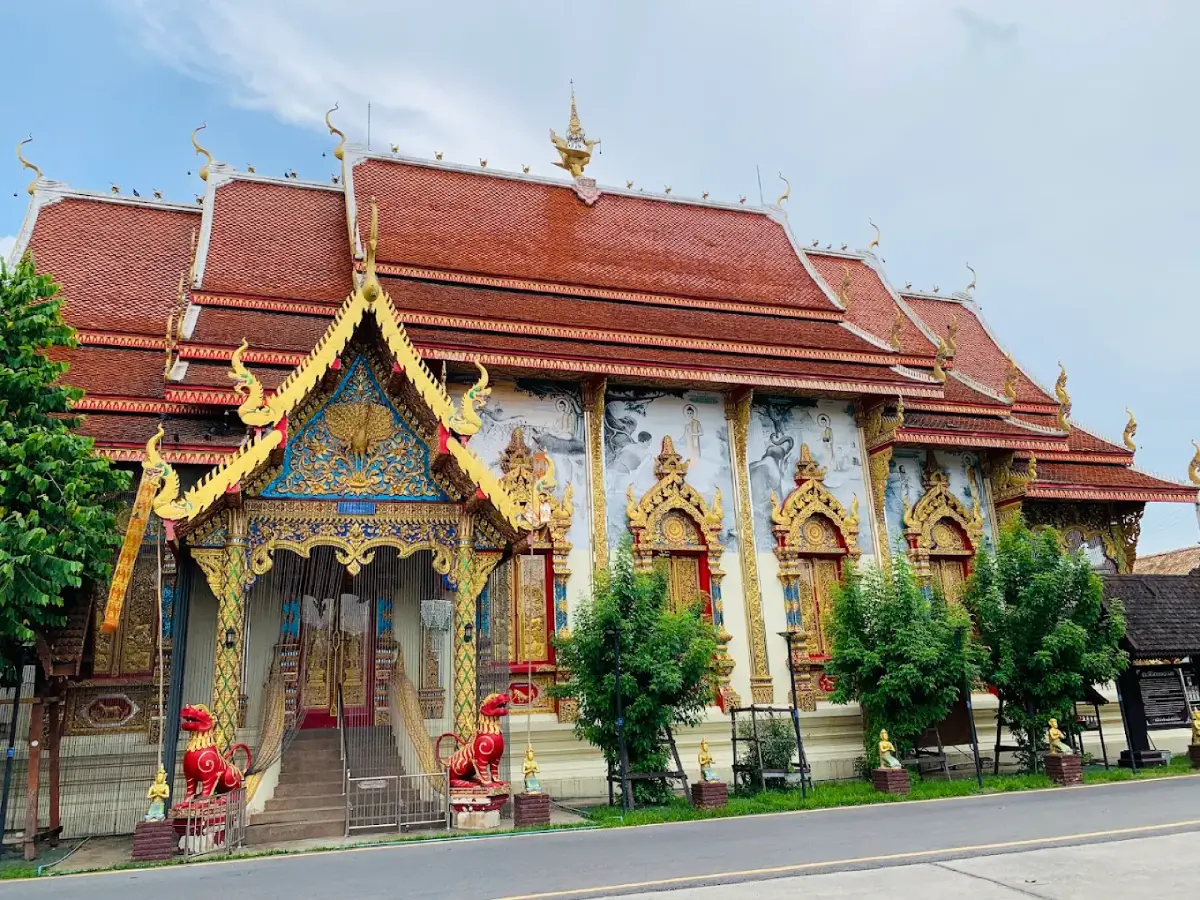
Wat Buak Krok Noi
Open Days: Daily
Opening Hours: 08.00 – 17.00
Wat Buak Krok Noi is a local Buddhist temple under the Maha Nikaya order, located in the Buak Krok Noi community of Nong Pa Khrang Subdistrict, Mueang Chiang Mai District, Chiang Mai Province. The temple is an old community monastery on the eastern side of Chiang Mai. Its history dates back to around 1802, and it continues to function as a living religious center for merit-making, Buddhist ceremonies, local traditions, and community events in Nong Pa Khrang.
Wat Buak Krok Noi is suitable for travelers who want to experience a quieter and more local side of Chiang Mai’s temple culture. It is not a crowded landmark in the old city or on Doi Suthep. Its value lies in its deep connection with local geography, its historical relationship with Wat Buak Krok Luang, its Lanna-style chedi believed to be more than 200 years old, and its active role in community life. Important areas inside the temple include the viharn, ubosot, sermon halls, monks’ residences, alms pavilion, bell tower, Kruba Srivichai hall, King Naresuan pavilion, and Ganesha shrine.
For travelers who want to understand Chiang Mai beyond famous landmarks, Wat Buak Krok Noi helps explain the story of Nong Pa Khrang as a community. The temple stands in an area once shaped by local settlements, the Mae Khao River, and older travel routes. Over time, this part of Chiang Mai developed into a neighborhood with homes, schools, markets, restaurants, accommodations, and roads linking the city with Tha Sala, San Kamphaeng, and Chiang Mai Railway Station.
The temple’s history begins with evidence recorded in old palm-leaf manuscripts, which state that Wat Buak Krok Noi was founded around 1802. The original temple land covered 4 rai, 3 ngan, and 56 square wah. Later, the temple expanded by another 1 rai, 1 ngan, and 16 square wah, bringing the total area in the original record to 6 rai and 72 square wah. This makes Wat Buak Krok Noi a compact community temple with enough space for monastic life, worship, ceremonies, and neighborhood activities without feeling like a large tourist complex.
The temple has been known by four names over time: Wat Hua Dong, Wat Buak Krok Noi, Wat Buak Krok Rim Khao, and Wat Buak Krok Plai Rang. Each name reflects a different layer of local history. Wat Hua Dong refers to the former landscape, when the area was dense woodland and a route used by wild animals on the way toward Doi Suthep. This older name preserves the memory of the area before urban growth changed the surrounding environment.
The name Wat Buak Krok Noi developed after the temple was separated from the older Wat Buak Krok Luang, which is regarded as its sister temple. In northern Thai usage, “buak” refers to a wet hollow or muddy depression, while “krok” relates to the shape of a mortar. The area was once low and basin-like, with scattered paddy fields and muddy resting places for cattle and buffaloes. Because the ground resembled a mortar-like hollow, the area became known as Buak Krok. When this smaller temple developed separately from Wat Buak Krok Luang, it became known as Wat Buak Krok Noi.
The name Wat Buak Krok Rim Khao connects the temple with the Mae Khao River, a waterway that ran through the village area. A settlement beside a river had advantages for farming, movement, and community life. This name shows that water was once central to the identity and prosperity of the Buak Krok Noi community.
The name Wat Buak Krok Plai Rang refers to a travel marker in the past. A rail-end or platform-end area was located about 1.3 km from the temple, so the words “Plai Rang” were added to help people identify the temple’s location more easily. This name shows that the temple was also a local landmark used for orientation and travel, not only a place of worship.
The most important historical structure at Wat Buak Krok Noi is the old chedi, believed to be more than 200 years old. In 1915, a new chedi was built over the original one. The present structure is a Lanna-style bell-shaped chedi associated with Lamphun craftsmanship. It is the historical heart of the temple because it links Wat Buak Krok Noi with Lanna religious art and the wider cultural landscape of the Ping River basin. Building a new chedi over an older sacred structure also reflects a traditional way of preserving the spiritual core of a temple while protecting it for later generations.
The Lanna bell-shaped chedi form is a familiar feature in many northern Thai temples. Its steady base, rounded body, and vertical composition create an atmosphere of dignity and calm. In a community temple such as Wat Buak Krok Noi, the chedi is more than an architectural object. It is a focus of devotion, a place for paying respect, and a symbol of continuity between ancestors, present residents, and future generations.
Wat Buak Krok Noi received its royal consecrated boundary and built its ubosot in 1984. A consecrated boundary is important in Thai Buddhism because it marks the sacred area used for formal monastic acts, including ordination. The ubosot is therefore one of the most sacred parts of the temple and shows that Wat Buak Krok Noi has the religious status needed to support important Buddhist ceremonies.
In 2001, the temple built a new viharn in Lanna style. The viharn is a central space for worship, Dhamma listening, merit-making, and community gatherings. Its Lanna-style design connects the temple with northern Thai identity through roof form, decorative elements, and the calm atmosphere of a traditional Buddhist assembly hall. This newer building shows how Wat Buak Krok Noi continues to develop while preserving the cultural character of Chiang Mai.
Other important structures within the temple include two monks’ residences, two sermon halls, one alms pavilion, one bell tower, the Kruba Srivichai hall, the King Naresuan pavilion, and the Ganesha shrine. These areas show the temple’s many functions: monastic residence, worship, teaching, public gatherings, remembrance of important figures, and the coexistence of Buddhist and broader cultural devotion within a Thai temple setting.
The Kruba Srivichai hall reflects the deep reverence that Lanna communities have for Kruba Srivichai, the revered northern monk associated with temple restoration and Buddhist revival in the region. The King Naresuan pavilion connects the temple with national historical memory, while the Ganesha shrine reflects a layer of contemporary devotional practice often found alongside Buddhist spaces in Thailand. Together, these features give Wat Buak Krok Noi a layered spiritual identity.
Today, Wat Buak Krok Noi remains an active center for the Nong Pa Khrang community. The temple is used for Buddhist ceremonies, local festivals, and public activities, especially Poi Luang celebrations, candle-offering events, Songkran or Pi Mai Mueang activities, and community programs involving the municipality, schools, residents, and local organizations. Its continuing use shows that Wat Buak Krok Noi is not a dormant historic site; it is a living temple within an active neighborhood.
Poi Luang is one of the most important Lanna traditions connected with community temples such as Wat Buak Krok Noi. It is a merit-making celebration held to mark the completion or dedication of religious property. During such events, local people come together through merit-making, processions, offerings, music, performances, food stalls, and family activities. Poi Luang turns the temple into the heart of community life and shows how religious devotion, culture, and social ties are renewed through shared participation.
Wat Buak Krok Noi is also connected with Pi Mai Mueang, the northern Thai Songkran tradition. Activities may include merit-making, carrying sand into the temple, processions of Buddha images, and Buddhist ceremonies organized by the community. These traditions help younger generations understand that a temple is not only a place for worship, but also a place where local identity, seasonal customs, and community memory are passed on.
Nong Pa Khrang is a modern urban community with strong cultural roots. Important places such as the Nong Pa Khrang Municipality Office, Ban Buak Krok Noi Community School, Nong Pa Khrang municipal health facilities, Thai massage learning areas, and Wat Buak Krok Noi are linked through the neighborhood’s road network. This connection shows how religion, education, health, local knowledge, and public activity remain close to one another in the everyday life of the community.
The current abbot recorded in recent public activity information is Phra Kritsada Paphassaro. In a community temple, the abbot’s role is central. The abbot oversees religious ceremonies, temple maintenance, coordination with the temple committee, local authorities, and lay supporters. The ongoing activities at Wat Buak Krok Noi reflect continuing cooperation between the monastic community and local residents.
A visit to Wat Buak Krok Noi should begin with paying respect in the viharn, followed by a walk around the chedi, ubosot, and other temple areas. Visitors should not rush through the site. The temple’s value is best understood through its name history, old chedi, newer Lanna-style viharn, community halls, and the daily function of the temple in local life. Visiting Wat Buak Krok Noi helps travelers understand that Chiang Mai’s temples are diverse: some are grand relic temples, some are meditation centers, some are historic art sites, and some are living community temples.
Photography is possible around the viharn, chedi, bell tower, and temple grounds, but visitors should photograph respectfully. Avoid using flash inside sacred buildings, avoid intrusive close-up photos of monks or worshippers, and do not pose in ways that disrespect religious objects. Wat Buak Krok Noi is an active place of worship, so respectful behavior allows visitors and residents to share the space properly.
For families and younger travelers, Wat Buak Krok Noi is a useful place to explain local geography and northern Thai language. The word “buak” refers to a muddy depression, “krok” relates to a mortar-like hollow, “rim khao” connects with the Mae Khao River, and “plai rang” relates to an older travel marker near the temple. The four names of the temple show that place names are created from landscape, water, agriculture, travel, and community memory.
Wat Buak Krok Noi also works well as part of an eastern Chiang Mai temple and community route. It can be combined with Wat Buak Krok Luang, a related sister temple known for Lanna art, as well as Aueng Kam Market, Khum Khantoke, Chamcha Market, and other sites in Nong Pa Khrang and Tha Sala. This route is suitable for travelers who want to see community temples, local markets, northern food, and cultural venues outside the old city core.
Getting There is convenient from central Chiang Mai. Travelers can use Kaew Nawarat Road, the old Chiang Mai-San Kamphaeng road, or the route from Chiang Mai Railway Station into Nong Pa Khrang Subdistrict. The temple is located within the Buak Krok Noi community near the Makro Chiang Mai and Big C Extra area. Those driving or using a ride-hailing service can set the destination as Wat Buak Krok Noi, Nong Pa Khrang, or use the coordinates 18.7872, 99.0338.
From Chiang Mai Railway Station, visitors can travel by local taxi, songthaew, or ride-hailing service. The temple is about 2 km from the railway station, making it a practical stop for travelers staying on the eastern side of Chiang Mai, around Wat Ket, the Night Bazaar, or the railway station area. A visit can be combined with Khum Khantoke, Chamcha Market, or Wat Buak Krok Luang without backtracking into the old city.
The best times to visit are in the morning and late afternoon. Morning is suitable for merit-making, worship, and walking around the temple before the weather becomes hot. Late afternoon is suitable for travelers coming from nearby markets, restaurants, or cultural venues. Visitors should allow enough time before closing to pay respect, see the chedi, and observe the main temple areas at a calm pace.
Visitors should dress modestly, speak quietly, remove shoes before entering religious buildings, avoid blocking local roads when parking, and avoid entering monks’ private areas without permission. During temple fairs or community events, visitors should follow the temple’s arrangements and local staff instructions so that ceremonies and public activities can continue smoothly.
Overall, Wat Buak Krok Noi is valuable for its local history, religious function, Lanna art, and community role. Its four historical names preserve the memory of the landscape. Its old chedi confirms the temple’s long history. Its viharn and ubosot show the continued development of the temple. Its Poi Luang, Pi Mai Mueang, and Buddhist activities keep the temple connected with the people of Nong Pa Khrang.
Wat Buak Krok Noi is a worthwhile stop for travelers who want to explore Chiang Mai in a more detailed and grounded way. It is especially suitable for those interested in local temples, Lanna place names, community history, and quieter cultural routes outside the old city. Visiting this temple adds depth to a Chiang Mai itinerary because the city is not defined only by major temples and mountain landmarks. It is also shaped by community monasteries like Wat Buak Krok Noi, where local history, river landscapes, routes, architecture, and faith remain closely connected.
| Name | Wat Buak Krok Noi |
| Location | Buak Krok Noi Community, Nong Pa Khrang Subdistrict, Mueang Chiang Mai District, Chiang Mai Province |
| Address | 1 Moo 2, Buak Krok Noi, Nong Pa Khrang Subdistrict, Mueang Chiang Mai District, Chiang Mai 50000, Thailand |
| Coordinates | 18.7872, 99.0338 |
| Temple Type | Local Buddhist temple under the Maha Nikaya order |
| Highlights | Old community temple in Nong Pa Khrang with a Lanna-style chedi more than 200 years old and a four-name history linked to local geography |
| History | Founded around 1802 according to old palm-leaf manuscript evidence. A new chedi was built over the old chedi in 1915. The temple received its consecrated boundary and built the ubosot in 1984, and built a new Lanna-style viharn in 2001. |
| Temple Area | 6 rai and 72 square wah |
| Name Origin | The temple has been known as Wat Hua Dong, Wat Buak Krok Noi, Wat Buak Krok Rim Khao, and Wat Buak Krok Plai Rang. “Buak” refers to a muddy depression in northern Thai, while “krok” relates to a mortar-like hollow. |
| Distinctive Features | Lanna-style bell-shaped chedi associated with Lamphun craftsmanship, Lanna-style viharn, ubosot, sermon halls, and community religious spaces |
| Main Areas / Zones | Buak Krok Noi Chedi Lanna-style Viharn Ubosot Two Monks’ Residences Two Sermon Halls One Alms Pavilion One Bell Tower Kruba Srivichai Hall King Naresuan Pavilion Ganesha Shrine |
| Traditions / Main Activities | Poi Luang, Pi Mai Mueang, Buddhist holy day ceremonies, candle-offering activities, and Nong Pa Khrang community events |
| Travel Information | From central Chiang Mai, use Kaew Nawarat Road, the old Chiang Mai-San Kamphaeng road, or the route from Chiang Mai Railway Station into Nong Pa Khrang. Set the destination as Wat Buak Krok Noi or use coordinates 18.7872, 99.0338. Access is possible by private car, motorcycle, songthaew, taxi, or ride-hailing service. |
| Current Status | Open as a local Buddhist temple in Nong Pa Khrang and still used for Buddhist ceremonies, merit-making, and community events |
| Open Days | Daily |
| Opening Hours | 08.00 – 17.00 |
| Abbot / Caretaker | Phra Kritsada Paphassaro |
| Main Contact Number | 053-246-893 |
| Nearby Tourist Attractions | 1. Wat Buak Krok Luang, about 1 km 2. Aueng Kam Market, about 1 km 3. Khum Khantoke, about 2 km 4. Chamcha Market, about 2 km 5. Chiang Mai Railway Station, about 2 km 6. Wat Don Chan, about 3 km |
| Nearby Restaurants | 1. Khao Man Kai Aueng Kham, about 1 km 2. Lap Pae Buak Krok Noi, about 1 km, Tel. 090-403-8335 3. TALIE BAKERY Nong Pa Khrang, about 1 km, Tel. 065-741-8646 4. Crepe Pa at Buak Krok Noi Market, about 1 km, Tel. 088-267-7414 5. Samut Sakhon Yentafo Buak Krok Noi Branch, about 1 km, Tel. 086-911-4047 6. Khrua Nam Nueng, about 2 km, Tel. 089-555-1177 |
| Nearby Accommodations | 1. K House Apartment, about 0.3 km, Tel. +66-81-165-6688 2. LK House, about 0.3 km, Tel. +66-62-478-2936 3. Double J Hotel, about 0.5 km 4. S1 Service Apartment, about 0.5 km, Tel. +66-53-117-148 5. Chanaporn Place, about 0.5 km, Tel. +66-89-956-6211 6. House and Home Residence, about 0.8 km 7. Choktawee Smile, about 0.8 km, Tel. +66-53-105-453 |
Frequently Asked Questions (FAQ)
Q: Where is Wat Buak Krok Noi located?
A: Wat Buak Krok Noi is located in the Buak Krok Noi community of Nong Pa Khrang Subdistrict, Mueang Chiang Mai District, Chiang Mai Province, not far from Chiang Mai Railway Station.
Q: What are the opening hours of Wat Buak Krok Noi?
A: Wat Buak Krok Noi is open daily from 08.00 to 17.00.
Q: What is important about the history of Wat Buak Krok Noi?
A: The temple was founded around 1802 according to old palm-leaf manuscript evidence. It has a Lanna-style chedi believed to be more than 200 years old, with a new chedi built over the original structure in 1915.
Q: Why does Wat Buak Krok Noi have several historical names?
A: The names reflect different local contexts: Wat Hua Dong refers to the former woodland, Wat Buak Krok Noi refers to the mortar-like lowland landscape, Wat Buak Krok Rim Khao connects with the Mae Khao River, and Wat Buak Krok Plai Rang relates to an old travel marker near the temple.
Q: What can visitors see inside Wat Buak Krok Noi?
A: Visitors can see the Buak Krok Noi chedi, Lanna-style viharn, ubosot, sermon halls, bell tower, Kruba Srivichai hall, King Naresuan pavilion, and Ganesha shrine.
Q: What traditions are associated with Wat Buak Krok Noi?
A: The temple is associated with Poi Luang, Pi Mai Mueang, Buddhist holy day ceremonies, candle-offering activities, and community events in Nong Pa Khrang.
Q: How can travelers get to Wat Buak Krok Noi?
A: Travelers can use Kaew Nawarat Road, the old Chiang Mai-San Kamphaeng road, or the route from Chiang Mai Railway Station into Nong Pa Khrang, then set the destination as Wat Buak Krok Noi or use coordinates 18.7872, 99.0338.
Q: What nearby places can be visited with Wat Buak Krok Noi?
A: Nearby places include Wat Buak Krok Luang, Aueng Kam Market, Khum Khantoke, Chamcha Market, Chiang Mai Railway Station, and Wat Don Chan.
 Category: ●Places of Worship
 Group: ●Temple
Last Update : 2 DayAgo
 Last Update : 2 DayAgo
 Click to Access the Navigation Map GPS
 Muang Chiang Mai(121)Chom Thong(47)Mae Chaem(25)Chiang Dao(33)Doi Saket(68)Mae Taeng(85)Mae Rim(69)Samoeng(29)Fang(71)Mae Ai(62)Phrao(70)San Pa Tong(105)San Kamphaeng(66)San Sai(73)Hang Dong(74)Hot(32)Doi Tao(22)Omkoi(11)Saraphi(74)Wiang Haeng(15)Chai Prakan(28)Mae Wang(32)Mae On(22)Doi Lo(34)Galyani Vadhana(1)


