
lovethailand home >North Travel Attractions >Chiang Mai Travel Attractions >Muang Chiang Mai >San Phi Suea > Wat Tha Luk
TL;DR: Wat Tha Luk is located at Moo 7, Ban Tha Luk, San Phi Suea Subdistrict, Mueang Chiang Mai District, Chiang Mai Province, open Daily, hours 08.00 – 17.00.
Wat Tha Luk
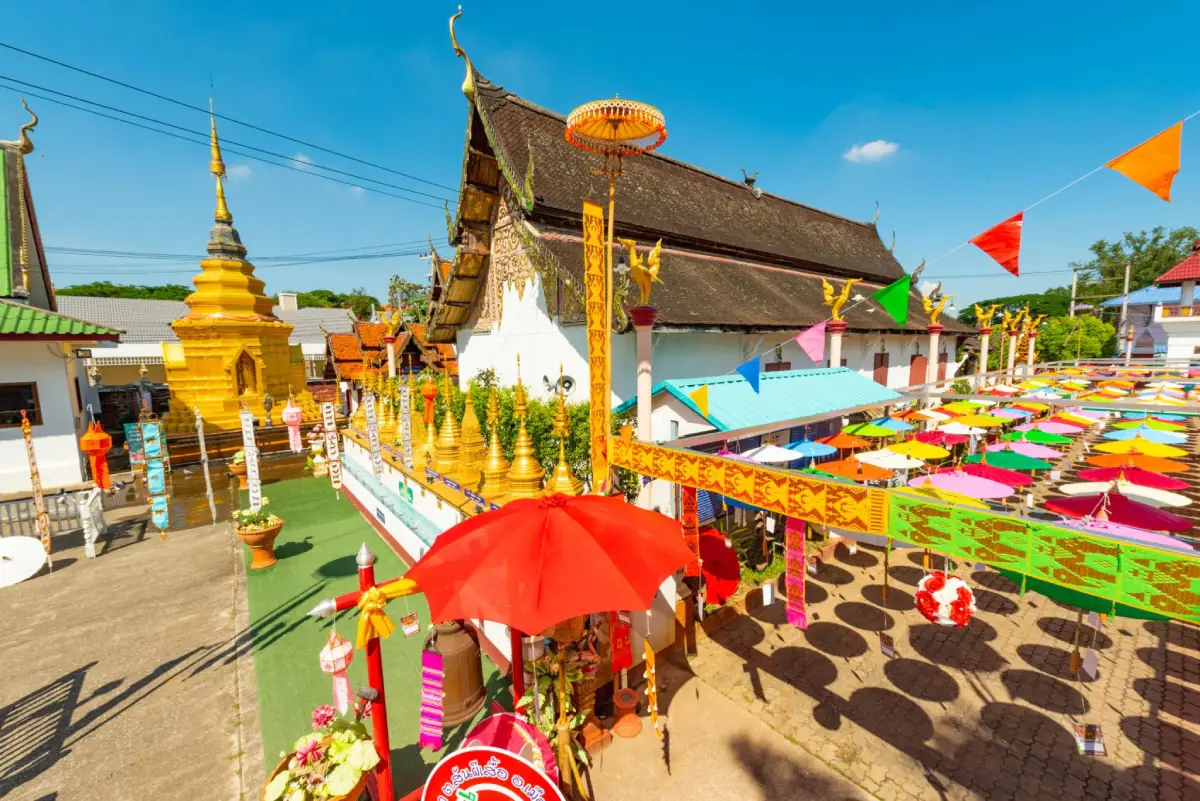
Open Days: Daily
Opening Hours: 08.00 – 17.00
Wat Tha Luk in Chiang Mai is a local Buddhist temple under the Maha Nikaya order, located in Moo 7, Ban Tha Luk, San Phi Suea Subdistrict, Mueang Chiang Mai District. It is one of the old community temples on the northern side of Chiang Mai city and is closely connected with the history of Ban Tha Luk, the Ping River, traditional irrigation canals, and the local device known as a “luk,” or water-lifting wheel. Founded in B.E. 2319, the temple is not only a place for Buddhist worship but also a living record of community faith, agricultural knowledge, water management, and Lanna village identity.
Wat Tha Luk is suitable for travelers who want to explore a quieter and more local side of Chiang Mai temple culture. Unlike the famous temples inside Chiang Mai Old City, this temple stands within a riverside community where village life, local roads, markets, small restaurants, temples, and the Ping River landscape remain closely connected. A visit here allows travelers to understand Chiang Mai beyond its central tourist routes and to see how a community temple continues to function as a spiritual and social center.
The history of Wat Tha Luk is inseparable from the history of Ban Tha Luk. Local elders describe the area as formerly being known as Khum Ban Sang Si Ngam, a residential compound connected with members of the Na Chiang Mai lineage. The area had several compounds and a temple known as Wat Si Sang Si Ngam. It was once a fertile settlement rich in plants, crops, and agricultural land. Later, the old temple deteriorated, and the community moved religious activity to another temple site called Wat San Kamphaeng Ngam. The surrounding fields were divided into two main areas known as Thung Pu Loei and Thung Thong Kwao, both remembered as fertile fields filled with flowers such as thong kwao blossoms and kae flowers.
As the community grew, local rulers and residents worked together to dig irrigation canals in order to bring water into the fields and gardens. These canals included Lam Mueang Wang Rao and Lam Mueang Ku. They reveal the importance of collective water management in old northern Thai communities. Later, when water was no longer sufficient, villagers dug another canal from the Ping River and built a water-lifting wheel to move water into Thung Thong Kwao. This water device became central to the name “Tha Luk,” which has remained attached to both the temple and the community until today.
In local usage, “luk” refers to a water-lifting wheel or a device used to raise water into irrigation channels and fields. The word “tha” can refer to a landing place, riverside access point, or a place connected with the use of water. Together, “Tha Luk” reflects the image of a riverside agricultural community that depended on local irrigation systems and shared labor. The name of Wat Tha Luk therefore preserves more than a place name; it preserves a record of water knowledge, farming life, and community cooperation.
Wat Tha Luk was founded on December 4, B.E. 2319 and was officially permitted as a temple in the same year. It received its consecrated boundary, or wisungkhamsima, in B.E. 2467. This consecrated boundary allowed the temple to conduct formal monastic ceremonies and marked an important stage in the temple’s development. The temple has therefore remained an active Buddhist institution for the Ban Tha Luk community rather than simply a historic place from the past.
The temple’s importance lies in its role as the spiritual center of Ban Tha Luk. In B.E. 2481, Ban Tha Luk San Sai School was established, and the community used Wat Tha Luk as a central place for local activities. Later, the community developed additional public facilities, including a local health station. This history shows that Wat Tha Luk was connected not only with Buddhist ceremonies but also with education, community organization, and daily life in the village.
Ban Tha Luk, Moo 7 of San Phi Suea Subdistrict, is a semi-urban and semi-rural community located on raised land near the Ping River. The village is bordered by Ban Tha Duea to the north, Ban San Phi Suea Samakkhi to the east and south, and the Ping River to the west. Its location helps explain why water, canals, agricultural fields, and the water-lifting wheel are so central to the local story. Wat Tha Luk should therefore be understood within its wider riverside landscape, not only as a single temple compound.
Most residents of Ban Tha Luk are Buddhist, and Wat Tha Luk serves as their main spiritual anchor. The community observes Buddhist holy days and annual traditions such as Visakha Bucha, Asalha Bucha, Buddhist Lent, the end of Buddhist Lent, village-spirit rituals in June, Yi Peng in November, Pi Mai Mueang in April, and the candle procession for Buddhist Lent in July. These traditions show how the temple supports both Buddhist practice and local Lanna cultural identity throughout the year.
The village-spirit ritual reflects local beliefs about protection and the relationship between people and place. Yi Peng and Pi Mai Mueang express Lanna cultural values connected with water, light, merit-making, and respect for elders. The candle procession before Buddhist Lent shows the community’s support for monks during the rainy-season retreat. Through these recurring traditions, Wat Tha Luk continues to serve as a place where religion, local identity, and community memory meet.
The wider Ban Tha Luk community also preserves local skills and social networks. Some long-established families are known for craft skills such as drum making, while the village has community groups including village health volunteers, women’s groups, elderly groups, village funds, and funeral-support groups. These organizations reflect the social structure of a close local community. Wat Tha Luk functions as a shared space where religious life, kinship networks, and community cooperation are connected.
Phra Khru Adun Punyapirat Punyawaro is recorded as the abbot of Wat Tha Luk. In a community temple, the abbot’s role is especially important because the temple must support monastic life, Buddhist ceremonies, merit-making, religious education, and community coordination. Wat Tha Luk continues to be used for local religious and civic activities, showing that the temple remains active and relevant to the surrounding community.
Although detailed architectural records of Wat Tha Luk are not as extensive as those of major Old City temples, the temple has the essential elements of a northern Thai community temple, including a viharn, ubosot, monk residences, courtyard, worship areas, and community activity spaces. The viharn is the main hall for worship and religious gatherings, while the ubosot is used for formal monastic ceremonies. These buildings allow the temple to continue serving its core Buddhist functions.
The temple courtyard is also important because it supports Buddhist festivals, merit-making events, and community gatherings. Wat Tha Luk stands within a village where the temple, school, local health facility, shops, and homes are part of the same social landscape. This makes the temple more than a religious building. It is part of the living structure of Ban Tha Luk, connecting children, adults, elders, monks, and local families through recurring community activities.
For travelers interested in place names and local history, Wat Tha Luk is a strong example of how a temple name can preserve real geography and daily life. The stories of Thung Pu Loei, Thung Thong Kwao, Lam Mueang Wang Rao, Lam Mueang Ku, the Ping River, and the water-lifting wheel reveal how deeply local people depended on water systems. Naming the temple after this device preserves village knowledge within a sacred place name.
Wat Tha Luk is also suitable for visitors who want to explore Chiang Mai beyond the Old City. San Phi Suea has old temples, riverside communities, local restaurants, community learning areas, and routes leading toward the northern side of Chiang Mai and Mae Rim. A half-day route may begin at Wat Tha Luk, continue through Ban Tha Luk, then include Wat Tha Duea, Baan Chao Na San Phi Suea, Wat Kha Jao, Hidden Village Chiang Mai, or Wat Chet Yot before returning to central Chiang Mai.
The atmosphere of Wat Tha Luk is calm and local. Visitors can spend around 30 minutes to 1 hour paying respect, walking around the temple compound, observing the village setting, and learning about the origin of the temple’s name. Morning is suitable for a quieter temple visit and a look at local community life, while afternoon visitors should prepare for stronger sunlight because some areas of the temple compound are open.
Photography should be done respectfully. Visitors may photograph the viharn, ubosot, gateway, courtyard, and surrounding community atmosphere, but they should avoid disturbing monks or villagers during merit-making or ceremonies. They should not climb on religious structures, touch sacred objects unnecessarily, or treat the temple as a decorative background without regard for its living religious function.
Visitors should dress modestly when entering Wat Tha Luk. Shoulders should be covered, shorts and skirts should be of appropriate length, and shoes should be removed before entering sacred buildings. Voices should be kept low, and monks, elders, and villagers should be treated respectfully. If a ritual or community event is taking place, visitors should watch from an appropriate distance and avoid entering ceremonial areas without permission.
Getting There from central Chiang Mai is convenient by using Chiang Mai 700-Year Road or the San Phi Suea route toward Ban Tha Luk. Travelers without a private vehicle can use a red songthaew, taxi, or ride-hailing service. The destination should be entered clearly as Wat Tha Luk, Moo 7, San Phi Suea Subdistrict, Mueang Chiang Mai District, because Chiang Mai has several places with similar names.
Drivers should use navigation together with the village and subdistrict names to avoid confusion. Roads in the village are generally accessible, but visitors should drive carefully because the temple is located in a local residential area with homes, shops, and community traffic. Parking should be done in a considerate way that does not block village roads or temple access.
For a fuller trip, Wat Tha Luk can be combined with Wat Tha Duea, Baan Chao Na San Phi Suea, Wat Kha Jao, Hidden Village Chiang Mai, and Wat Chet Yot. This route offers a combination of old community temples, Ping River surroundings, local food, village life, and family-friendly attractions on the northern side of Chiang Mai. It is a good choice for travelers who want a slower and more contextual experience of the city.
Restaurants near Wat Tha Luk include small village eateries, drink shops, made-to-order restaurants, and dining places in San Phi Suea. Nearby accommodation options include riverside resorts, boutique hotels, and small hotels in the San Phi Suea area. This makes the temple convenient for travelers staying on the quieter northern side of Chiang Mai while still being able to reach the Old City or Mae Rim easily.
Overall, Wat Tha Luk has several layers of value. It preserves the history of a temple founded in B.E. 2319, the story of irrigation canals and a local water-lifting wheel, the role of a temple as the center of Ban Tha Luk, the community’s annual Buddhist and Lanna traditions, and the continuing presence of an active village temple. It is a meaningful stop for travelers who want to understand Chiang Mai through riverside community history rather than only through famous Old City landmarks.
Wat Tha Luk is therefore worth visiting for those interested in old temples, Lanna culture, local history, and slow travel. Its name, community background, agricultural memory, Buddhist traditions, school history, and relationship with the Ping River make it more than a simple worship site. A visit here offers a deeper understanding of how religion, water, farming, and community life have shaped the northern side of Chiang Mai.
| Name | Wat Tha Luk |
| Location | Moo 7, Ban Tha Luk, San Phi Suea Subdistrict, Mueang Chiang Mai District, Chiang Mai Province |
| Address | Moo 7, San Phi Suea Road, San Phi Suea, Mueang Chiang Mai District, Chiang Mai 50300, Thailand |
| Highlights | Historic community temple of Ban Tha Luk, known for its connection with traditional irrigation canals and the local water-lifting wheel that inspired the temple name |
| History | Founded on December 4, B.E. 2319; officially permitted as a temple in B.E. 2319 and received its consecrated boundary in B.E. 2467 |
| Name Origin | The name comes from the “luk,” a traditional water-lifting wheel used to bring water from the Ping River into agricultural fields |
| Distinctive Features | Riverside community temple with a viharn, ubosot, courtyard, worship areas, monk residences, and the semi-rural atmosphere of San Phi Suea |
| Important Sacred Objects And Structures | Viharn, ubosot, monk residences, temple courtyard, and community worship areas |
| Traditions / Community Activities | Visakha Bucha, Asalha Bucha, Buddhist Lent, end of Buddhist Lent, village-spirit ritual, Yi Peng, Pi Mai Mueang, and the Buddhist Lent candle procession |
| Main Areas / Zones | Viharn, ubosot, courtyard, monk residences, worship areas, and community activity spaces |
| Abbot / Caretaker | Phra Khru Adun Punyapirat Punyawaro |
| Travel Information | Reachable from central Chiang Mai via Chiang Mai 700-Year Road or San Phi Suea Road toward Ban Tha Luk; accessible by private car, red songthaew, taxi, or ride-hailing service |
| Current Status | Open to visitors and worshippers; it remains an active Maha Nikaya community temple used by monks and local residents |
| Open Days | Daily |
| Opening Hours | 08.00 – 17.00 |
| Main Contact Number | 053-245-386 |
| Nearby Tourist Attractions | 1. Ban Tha Luk Market, about 1 km 2. Wat Tha Duea, about 3 km 3. Baan Chao Na San Phi Suea, about 3 km 4. Wat Kha Jao, about 5 km 5. Hidden Village Chiang Mai, about 6 km 6. Wat Chet Yot, about 8 km |
| Nearby Restaurants | 1. Satanee Nampan beside Wat Tha Luk San Phi Suea, about 0.1 km, Tel. 085-106-0686 2. Popeye Shop Beverages Drinks And Thai Sausage, about 0.5 km, Tel. 089-015-0365 3. Som Tum Yum Yai, about 0.6 km, Tel. 081-993-3585 4. Food For You Restaurant, about 4 km, Tel. 092-642-9414 5. Kub Khao Kub Kaeng Madame, about 5 km, Tel. 062-440-9161 6. E-saan 102 Restaurant, about 5 km, Tel. 081-035-3797 |
| Nearby Accommodations | 1. Villa San Pee Seua, about 2 km, Tel. 080-015-6789 2. Baan Suan Residence, about 4 km, Tel. 053-110-876 3. B2 Resort Boutique & Budget Hotel, about 5 km, Tel. 052-009-567 4. Homeditation for Dreamers, about 6 km, Tel. 095-698-1895 5. Lanna Dusita Riverside Boutique Resort, about 6 km, Tel. 053-110-345 |
Frequently Asked Questions (FAQ)
Q: Where is Wat Tha Luk located?
A: Wat Tha Luk is located in Moo 7, Ban Tha Luk, San Phi Suea Subdistrict, Mueang Chiang Mai District, Chiang Mai Province.
Q: Why is Wat Tha Luk important?
A: Wat Tha Luk is an old community temple founded in B.E. 2319 and has long served as the spiritual center of Ban Tha Luk, a riverside community in San Phi Suea.
Q: What does the name Wat Tha Luk mean?
A: The name comes from the “luk,” a traditional water-lifting wheel used by villagers to bring water from the Ping River into agricultural fields.
Q: What are the opening hours of Wat Tha Luk?
A: Wat Tha Luk is open daily from 08.00 to 17.00.
Q: What traditions are associated with Wat Tha Luk?
A: The temple is connected with Buddhist holy days and local traditions such as Buddhist Lent, the end of Buddhist Lent, village-spirit rituals, Yi Peng, Pi Mai Mueang, and the candle procession for Buddhist Lent.
Q: Can visitors reach Wat Tha Luk without a private car?
A: Yes. Visitors can use a red songthaew, taxi, or ride-hailing service from central Chiang Mai by setting the destination as Wat Tha Luk, Moo 7, San Phi Suea Subdistrict.
Q: What nearby attractions can be visited with Wat Tha Luk?
A: Nearby attractions include Ban Tha Luk Market, Wat Tha Duea, Baan Chao Na San Phi Suea, Wat Kha Jao, Hidden Village Chiang Mai, and Wat Chet Yot.
Q: What should visitors wear when visiting Wat Tha Luk?
A: Visitors should dress modestly, cover their shoulders, wear appropriate-length clothing, remove shoes before entering sacred buildings, keep quiet, and avoid disturbing monks or local worshippers.
 Category: ●Places of Worship
 Group: ●Temple
Last Update : 1 WeekAgo
 Last Update : 1 WeekAgo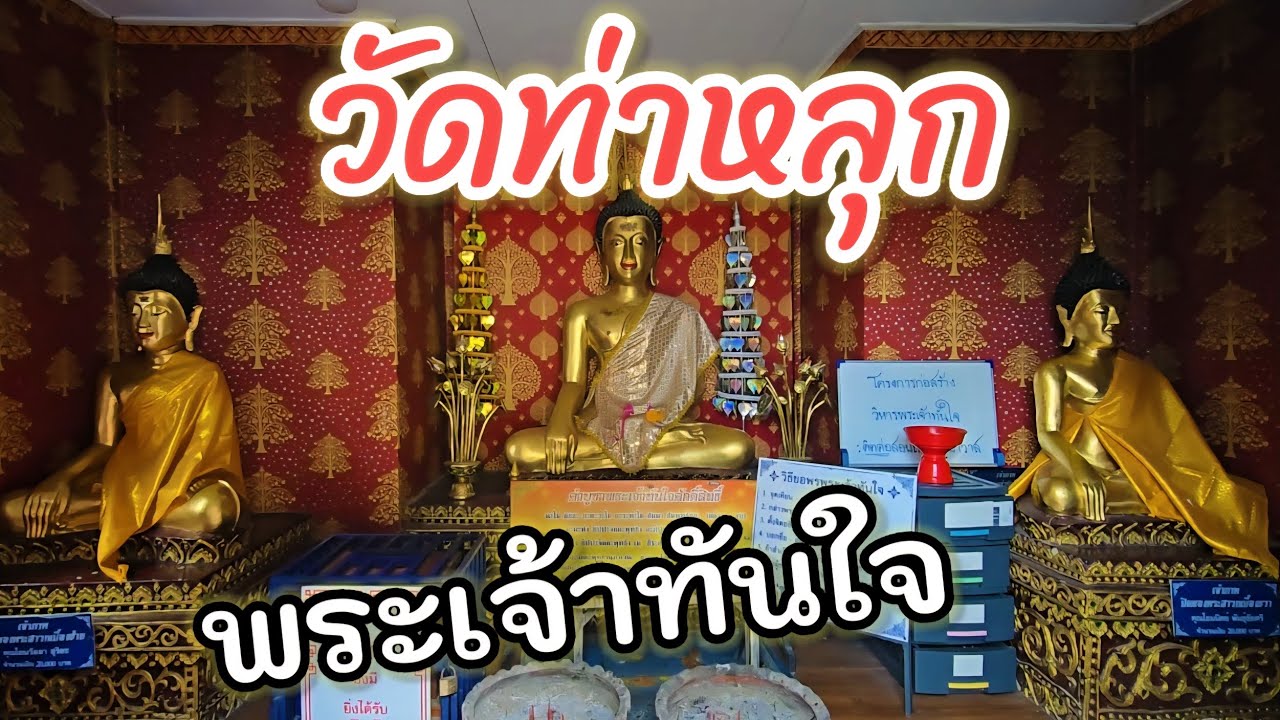
 Click to Access the Navigation Map GPS
Wat Tha Luk Map
Recommend

 Muang Chiang Mai(121)Chom Thong(47)Mae Chaem(25)Chiang Dao(33)Doi Saket(68)Mae Taeng(85)Mae Rim(69)Samoeng(29)Fang(71)Mae Ai(59)Phrao(70)San Pa Tong(103)San Kamphaeng(66)San Sai(73)Hang Dong(74)Hot(32)Doi Tao(22)Omkoi(11)Saraphi(74)Wiang Haeng(15)Chai Prakan(28)Mae Wang(32)Mae On(22)Doi Lo(34)Galyani Vadhana(1)


