
lovethailand home >North Travel Attractions >Chiang Mai Travel Attractions >Muang Chiang Mai >Si Phum > Wat Muen Lan
TL;DR: Wat Muen Lan is located at Ratchadamnoen Road, Si Phum Subdistrict, Mueang Chiang Mai District, Chiang Mai Province, open Daily, hours 06.00 – 18.00.

Wat Muen Lan
Open Days: Daily
Opening Hours: 06.00 – 18.00
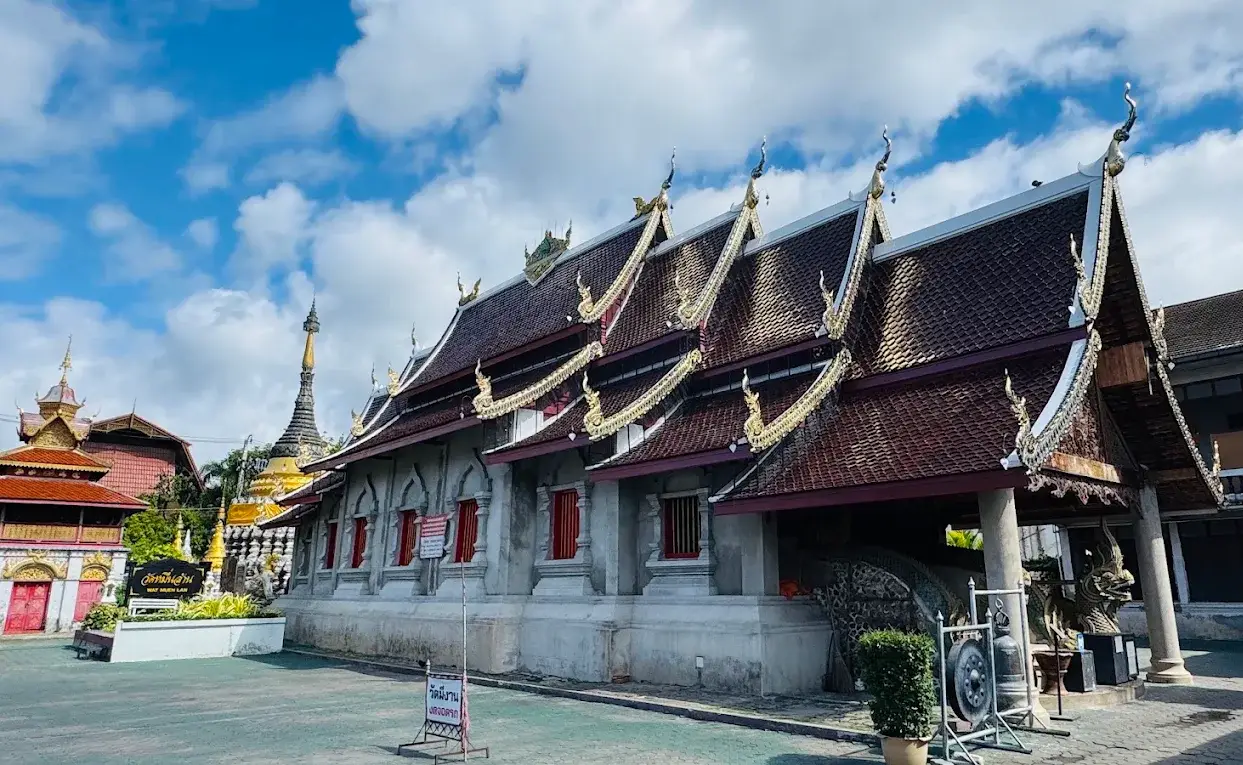
Wat Muen Lan in Chiang Mai is a historic Buddhist temple on Ratchadamnoen Road in Si Phum Subdistrict, Mueang Chiang Mai District, inside Chiang Mai Old City. It stands close to Tha Phae Gate, Wat Phan On, Wat Samphao, Wat Phan Tao, and Wat Chedi Luang, making it an excellent stop for travelers exploring the Old City on foot. The temple is known for its history from the reign of King Tilokaraj, its connection with Muen Lok Sam Lan Khunphon Kaew, its applied Lanna architecture with Burmese artistic influence, its richly decorated viharn, golden chedi, scripture hall, and the principal Buddha image seated in the Mara-vijaya posture with vajra-style crossed legs.
Wat Muen Lan is especially suitable for travelers who want to experience a quieter but historically meaningful temple in Chiang Mai Old City. Its location on Ratchadamnoen Road places it along one of the most important cultural walking routes in the old walled city. From Tha Phae Gate, visitors can walk into the Old City and stop at Wat Muen Lan before continuing to Wat Phan On, Wat Samphao, Wat Phan Tao, Wat Chedi Luang, or the Three Kings Monument. The temple therefore functions as a place of worship, an architectural stop, and a peaceful resting point within one of Chiang Mai’s busiest heritage districts.
The history of Wat Muen Lan is connected with the powerful Lanna period under King Tilokaraj. The temple was founded around 1459–1462 CE, or B.E. 2002–2005, by Muen Lok Sam Lan Khunphon Kaew, an important military officer of King Tilokaraj who was also known as Muen Dong or Muen Dong Nakhon. The temple was built as a religious dedication for Lanna commanders and soldiers, as well as opposing commanders who had died in battle. This background gives Wat Muen Lan a deeper historical meaning than that of an ordinary neighborhood temple, as it reflects war, political memory, merit-making, and Buddhist devotion in the Lanna kingdom.
The name “Wat Muen Lan” is directly linked to the title of its founder. The word “Muen” comes from the official rank, while “Lan” comes from the name Muen Lok Sam Lan. The name is therefore not only auspicious in a general sense, but also functions as a historical marker preserving the identity of a significant Lanna figure. For this reason, the temple’s name itself is an important clue to understanding the temple’s origin and its place in Chiang Mai’s cultural memory.
The temple was established inside Chiang Mai’s city wall on the eastern side, in a position between the city gate and the heart of the old town. This location reflects the way Lanna people understood and organized sacred space in relation to gates, roads, and the central urban area. Even today, visitors walking around Wat Muen Lan can still sense this relationship between temple and city layout. The temple stands in a highly walkable area where religious sites, old streets, local communities, restaurants, and cultural landmarks are closely connected.
In later periods, Wat Muen Lan received continued restoration and support. A key restoration is associated with Luang Yonakan Phichit, also known as Mong Pan Yo Upayokin, a Burmese merchant and benefactor connected with the Upayokin family. In the early 20th century, around B.E. 2460, he supported the restoration and reconstruction of important temple structures that had deteriorated. This restoration helps explain the temple’s present artistic appearance, especially the combination of Lanna architectural forms with Burmese decorative influence.
The viharn, or main assembly hall, is one of the most important structures at Wat Muen Lan. It represents applied Lanna architecture and has been restored, repaired, and extended across different periods according to the needs of the temple community. Its decorative pediment is particularly striking, with wood carving and ornamentation that show Burmese influence. Visitors should take time to observe the details of the front façade rather than simply walking through it, because the viharn is one of the strongest visual expressions of the temple’s identity.
The pediment of the viharn is a major highlight. It features intricate carved wood, peacock motifs, floral patterns, and colored glass decoration. The peacock motif is closely associated with Burmese-influenced Buddhist art and appears here within a Lanna temple context. This creates a distinctive visual language that differs from simpler northern Thai temple façades. The result is an elegant mixture of Lanna and Burmese aesthetics, reflecting Chiang Mai’s historical connections with diverse communities and patrons.
Inside the viharn, the principal Buddha image is seated in the Mara-vijaya posture with vajra-style crossed legs. It was created in B.E. 2460, during the period of Major General Chao Kaew Nawarat, the last ruler of Chiang Mai. The Mara-vijaya posture represents the Buddha’s victory over Mara and all obstacles, while the vajra-style seated posture conveys firmness, stability, and spiritual strength. This Buddha image is therefore both the devotional center of the viharn and an important artistic object associated with the temple’s early 20th-century restoration.
The viharn also contains smaller Buddha images in the Mara-vijaya posture and standing Buddha images in different attitudes. In front of the principal Buddha image is a ceremonial candle stand with intertwined naga figures. This detail is especially interesting because the naga plays an important role in Buddhist and Lanna belief, symbolizing protection, fertility, sacred power, and devotion. These elements give the interior of the viharn a layered religious atmosphere, combining worship, symbolism, and craftsmanship.
Murals inside the viharn depict episodes from the life of the Buddha. Such paintings function not only as decoration, but also as visual teaching tools for Buddhist communities. For travelers interested in religious art, the wall paintings, colors, narrative arrangement, and relationship with the Buddha images deserve careful attention. Together, they show how Buddhist teachings were communicated through visual culture within northern Thai temples.
The main chedi of Wat Muen Lan stands behind the viharn. It is a brick-and-stucco chedi with strong Burmese artistic influence. Its base has three recessed tiers, with small subsidiary chedis at the corners and lion figures guarding each corner. The main body is golden, the upper part is decorated with colored glass, and the top is crowned with a seven-tiered umbrella finial. Seen from the temple courtyard, the golden chedi forms the most visually commanding sacred monument in the compound.
The location of the chedi behind the viharn follows a pattern seen in many Lanna temples, where the viharn and chedi form the main sacred axis. The viharn is the main space for worship and religious gatherings, while the chedi represents devotion, sacred memory, and continuity of Buddhism. At Wat Muen Lan, the viharn and chedi should be viewed together because they explain both the temple’s ritual structure and its artistic identity.
The scripture hall, or ho trai, is another important structure in the temple compound. It stands near the chedi and displays a mixture of Lanna and Burmese architectural characteristics. Its upper wooden carving with a spread-tail peacock motif is especially notable. The contrast of red and gold decoration creates a dignified and elegant appearance, while the carved ventilation panels and stucco frame with garuda-and-naga motifs add further visual interest. This building is highly valuable for visitors who appreciate detailed northern Thai craftsmanship.
A ho trai traditionally serves as a place for keeping Buddhist scriptures, palm-leaf manuscripts, and religious texts. Even when general visitors do not enter the building, its presence shows that the temple was not only a ritual site but also a place where Buddhist knowledge was preserved. The scripture hall should therefore be understood as a symbol of religious learning and textual tradition, standing alongside the viharn and chedi as part of the temple’s spiritual landscape.
The ubosot, or ordination hall, is also part of Wat Muen Lan’s religious compound. The present structure was rebuilt after the former building was damaged by fire. It is a masonry building in Lanna style, with floral stucco decoration on the pediment and a standing Buddha image in the reflection posture placed at the front. The ubosot is used for formal monastic ceremonies and helps complete the temple’s functional religious layout.
Walking through the temple compound, visitors can observe the viharn, chedi, scripture hall, ubosot, courtyard, entrance gateway, and worship areas within a compact space. These elements are not isolated structures; together, they form a small but complete sacred landscape. Wat Muen Lan is therefore a good place for travelers who want to understand the basic organization of a northern Thai Buddhist temple without needing to travel outside the Old City.
Wat Muen Lan is also part of the Sunday Walking Street environment. On Sunday evenings, Ratchadamnoen Road becomes one of Chiang Mai’s most famous walking streets, filled with local crafts, food, souvenirs, and cultural activity. The temple then becomes both a sacred site and a resting point for visitors walking through the market. This creates a different atmosphere from a weekday visit: the surrounding streets become lively, while the temple itself continues to offer a sense of calm and devotion.
Wat Muen Lan also became an important conservation case in 2020, when restoration work on the viharn doors covered older lai rot nam gilded designs. Specialists from the Fine Arts Department later examined the doors and found that careful restoration could help recover the original designs. However, a gilded stencil decoration behind the principal Buddha image had already been damaged beyond recovery. This case has become an important reminder of the need to care for old religious art according to proper conservation principles.
This conservation history does not reduce the value of the temple. On the contrary, it shows that Wat Muen Lan contains artistic elements significant enough to require careful protection. Door panels, gilded designs, wood carving, stucco work, murals, and decorative details all preserve the skill and faith of earlier generations. Visitors should therefore observe respectfully, avoid touching fragile elements, and treat the temple’s artistic heritage with care.
The list of abbots recorded in the temple’s historical information includes Maha Chinwong Thera, Phra Khruba Chaiya, Phra Khru Anuson Silakhan Chomphu, Phra Palat Khamsai Kuno, Phra Khru Anuson Silakhan Anan Dhammatharo, and Phra Maha Phon Phatthachari. These names reflect the continuity of monastic leadership and care across different periods. Wat Muen Lan is therefore important not only because of its buildings and sacred objects, but also because of the monks who helped preserve Buddhist life in Chiang Mai Old City.
For visitors who come to worship, Wat Muen Lan is often attractive because of its auspicious-sounding name. Many people visit the temple to pay respect to the principal Buddha image and pray for stability, prosperity, progress, and success. Worship here is best approached with quiet intention, respect, and an appreciation of the temple’s history. The temple offers both a spiritual experience and an opportunity to learn about Lanna history and art.
The overall atmosphere of Wat Muen Lan is calm during the daytime and more lively during the Sunday Walking Street period. The compound is not large, so 30 minutes to 1 hour is usually enough for a meaningful visit. Travelers can photograph the viharn façade, carved pediment, golden chedi, scripture hall, and courtyard details. Morning is suitable for a quiet visit, while Sunday evening is better for those who want to combine temple worship with the walking street experience.
Visitors should dress modestly when entering Wat Muen Lan. Shoulders should be covered, shorts or skirts should be of appropriate length, and shoes should be removed before entering sacred buildings. Voices should be kept low, and visitors should not climb on or touch old structures, especially doors, wood carvings, and stucco decorations. When taking photographs inside the viharn, visitors should follow any temple rules and avoid disturbing monks or worshippers.
Getting There is easy because Wat Muen Lan is located in the heart of Chiang Mai Old City. From Tha Phae Gate, visitors can walk along Ratchadamnoen Road to reach the temple. It is near Wat Phan On and Wat Samphao, making it practical to visit several temples on foot. Travelers can also use a red songthaew, tuk-tuk, taxi, bicycle, or ride-hailing service and get off near Ratchadamnoen Road before walking into the temple.
Travelers using private cars should allow extra time for parking because the Old City lanes and Ratchadamnoen Road area have limited parking space, especially on Sunday evenings when the walking street is operating. Walking, cycling, local transport, or ride-hailing services are usually more convenient. For a temple-hopping route, it is often better to park once and walk between nearby temples rather than moving a car repeatedly.
A recommended walking route is to start at Tha Phae Gate, continue along Ratchadamnoen Road to Wat Muen Lan, Wat Phan On, and Wat Samphao, then walk onward to Wat Phan Tao, Wat Chedi Luang, the Three Kings Monument, and Chiang Mai City Arts & Cultural Centre. This route reveals the continuity of temples, old streets, local communities, and cultural spaces in central Chiang Mai. It is suitable for a half-day cultural walk or for combining with the Sunday Walking Street in the evening.
Restaurants and accommodations around Wat Muen Lan are easy to find because the temple stands in one of the most active travel areas of Chiang Mai Old City. The surrounding district includes vegetarian restaurants, Thai restaurants, northern Thai food shops, breakfast cafés, small hotels, boutique guesthouses, and cultural attractions within walking distance. Travelers staying near Tha Phae Gate or Ratchadamnoen Road can visit Wat Muen Lan and nearby temples without needing multiple vehicle transfers.
Overall, Wat Muen Lan is valuable on several levels. It preserves a history connected with King Tilokaraj and Muen Lok Sam Lan, displays Lanna-Burmese artistic influence, stands on one of the Old City’s most important cultural streets, and serves as a reminder of the importance of conserving old religious art. It remains an active temple where visitors can worship, learn, photograph, and understand Chiang Mai more deeply through a compact but meaningful sacred site.
Travelers visiting Chiang Mai should not overlook Wat Muen Lan simply because it is smaller than the city’s most famous temples. Its name, founding story, viharn, golden chedi, scripture hall, ubosot, conservation history, and location on Ratchadamnoen Road all make it a worthwhile stop for anyone interested in old temples, Lanna craftsmanship, Chiang Mai’s urban history, and quiet cultural exploration inside the Old City.
| Name | Wat Muen Lan |
| Location | Ratchadamnoen Road, Si Phum Subdistrict, Mueang Chiang Mai District, Chiang Mai Province |
| Address | Ratchadamnoen Road, Si Phum, Mueang Chiang Mai District, Chiang Mai 50200, Thailand |
| Coordinates | 18.788117, 98.992150 |
| Highlights | Historic Old City temple from the King Tilokaraj period, featuring applied Lanna architecture with Burmese influence, a golden chedi, scripture hall, and a principal Buddha image in the Mara-vijaya posture |
| History | Founded around B.E. 2002–2005 during the reign of King Tilokaraj by Muen Lok Sam Lan Khunphon Kaew as a merit dedication for commanders and soldiers who died in battle; major restoration took place around B.E. 2460 |
| Name Origin | The name combines “Muen” from the founder’s rank and “Lan” from the name Muen Lok Sam Lan |
| Distinctive Features | Burmese-influenced viharn pediment, carved peacock motif, colored glass decoration, golden chedi, carved scripture hall, and Lanna-style ubosot |
| Important Sacred Objects And Structures | Viharn, principal Buddha image in the Mara-vijaya posture with vajra-style crossed legs, chedi, scripture hall, ubosot, naga candle stand, and Buddhist murals inside the viharn |
| Main Areas / Zones | Viharn, chedi behind the viharn, scripture hall, ubosot, temple courtyard, entrance gateway, and worship areas |
| Recorded Abbots In Historical Information | Maha Chinwong Thera, Phra Khruba Chaiya, Phra Khru Anuson Silakhan Chomphu, Phra Palat Khamsai Kuno, Phra Khru Anuson Silakhan Anan Dhammatharo, Phra Maha Phon Phatthachari |
| Travel Information | Accessible on foot from Tha Phae Gate via Ratchadamnoen Road, or by red songthaew, tuk-tuk, taxi, bicycle, and ride-hailing service; suitable for an Old City temple walk |
| Current Status | Open to visitors and worshippers; it remains an active Buddhist temple in Chiang Mai Old City and is located along the Sunday Walking Street route |
| Open Days | Daily |
| Opening Hours | 06.00 – 18.00 |
| Nearby Tourist Attractions | 1. Tha Phae Gate, about 0.2 km 2. Wat Phan On, about 0.1 km 3. Wat Samphao, about 0.2 km 4. Wat Chedi Luang, about 0.8 km 5. Three Kings Monument, about 0.8 km 6. Chiang Mai City Arts & Cultural Centre, about 0.9 km |
| Nearby Restaurants | 1. Chada Vegetarian Restaurant Chiang Mai, about 0.2 km, Tel. 089-885-6875 2. THE HOUSE by Ginger, about 0.4 km, Tel. 053-287-681 3. Blue Diamond The Breakfast Club, about 0.8 km, Tel. 053-217-120 4. Khao Soi Khun Yai, about 1.2 km, Tel. 090-651-7088 5. Goodsouls Kitchen, about 1.2 km, Tel. 088-819-9669 |
| Nearby Accommodations | 1. Sumittaya Chiang Mai Hotel, about 0.5 km, Tel. 053-219-696 2. Villa Thai Orchid, about 0.6 km, Tel. 080-499-8090 3. Somwang Boutique House, about 0.7 km, Tel. 053-236-103 4. Chada Mantra Hotel, about 0.8 km, Tel. 096-984-7578 5. Lamphu House Chiang Mai, about 0.9 km, Tel. 053-274-966 |
Frequently Asked Questions (FAQ)
Q: Where is Wat Muen Lan located?
A: Wat Muen Lan is located on Ratchadamnoen Road in Si Phum Subdistrict, Mueang Chiang Mai District, Chiang Mai Province, inside Chiang Mai Old City near Tha Phae Gate, Wat Phan On, and Wat Samphao.
Q: Why is Wat Muen Lan historically important?
A: Wat Muen Lan was founded in the King Tilokaraj period by Muen Lok Sam Lan Khunphon Kaew as a merit dedication for commanders and soldiers who died in battle. It is also known for its Lanna-Burmese artistic features.
Q: What are the main highlights of Wat Muen Lan?
A: Highlights include the Burmese-influenced viharn pediment, carved peacock motif, golden chedi, scripture hall, principal Buddha image in the Mara-vijaya posture, and the peaceful Old City setting.
Q: What are the opening hours of Wat Muen Lan?
A: Wat Muen Lan is open daily from 06.00 to 18.00.
Q: Can visitors reach Wat Muen Lan without a private car?
A: Yes. Visitors can walk from Tha Phae Gate, or take a red songthaew, tuk-tuk, taxi, bicycle, or ride-hailing service and get off near Ratchadamnoen Road.
Q: What nearby attractions can be visited with Wat Muen Lan?
A: Nearby attractions include Tha Phae Gate, Wat Phan On, Wat Samphao, Wat Phan Tao, Wat Chedi Luang, the Three Kings Monument, and Chiang Mai City Arts & Cultural Centre.
Q: How is Wat Muen Lan connected with the Sunday Walking Street?
A: Wat Muen Lan is located on Ratchadamnoen Road, the main route of Chiang Mai’s Sunday Walking Street, making it easy to combine a temple visit with an evening walk through the Old City market.
Q: What should visitors wear when visiting Wat Muen Lan?
A: Visitors should dress modestly, cover their shoulders, wear appropriate-length clothing, remove shoes before entering sacred buildings, keep quiet, and avoid touching old artistic elements inside the temple.
 Category: ●Places of Worship
 Group: ●Temple
Last Update : 1 WeekAgo
 Last Update : 1 WeekAgo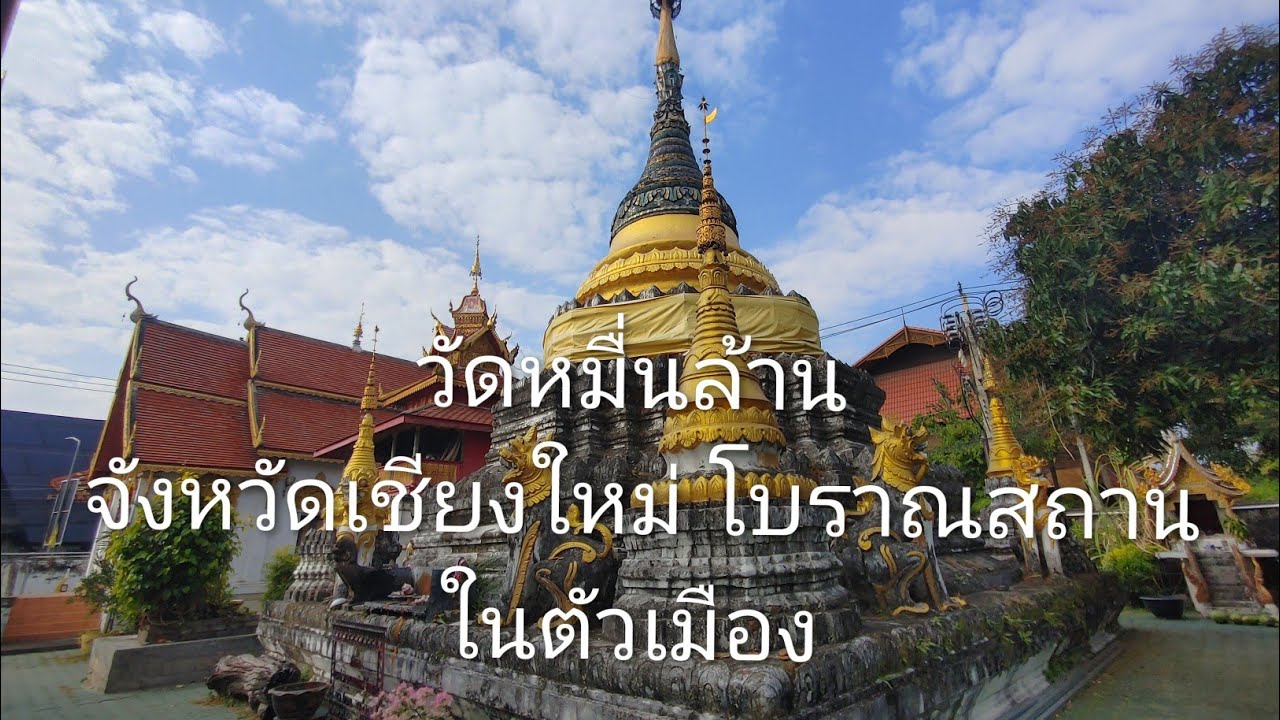
 Click to Access the Navigation Map GPS
Wat Muen Lan Map
Recommend

 Muang Chiang Mai(121)Chom Thong(47)Mae Chaem(25)Chiang Dao(33)Doi Saket(68)Mae Taeng(85)Mae Rim(69)Samoeng(29)Fang(71)Mae Ai(59)Phrao(70)San Pa Tong(105)San Kamphaeng(66)San Sai(73)Hang Dong(74)Hot(32)Doi Tao(22)Omkoi(11)Saraphi(74)Wiang Haeng(15)Chai Prakan(28)Mae Wang(32)Mae On(22)Doi Lo(34)Galyani Vadhana(1)


