
lovethailand home >North Travel Attractions >Chiang Mai Travel Attractions >Muang Chiang Mai >Si Phum > Wat Pa Phrao Nai
TL;DR: Wat Pa Phrao Nai is located at Arak Road, Si Phum Subdistrict, Mueang Chiang Mai District, Chiang Mai Province, open Daily, hours Open 24 Hours.

Wat Pa Phrao Nai
Open Days: Daily
Opening Hours: Open 24 Hours
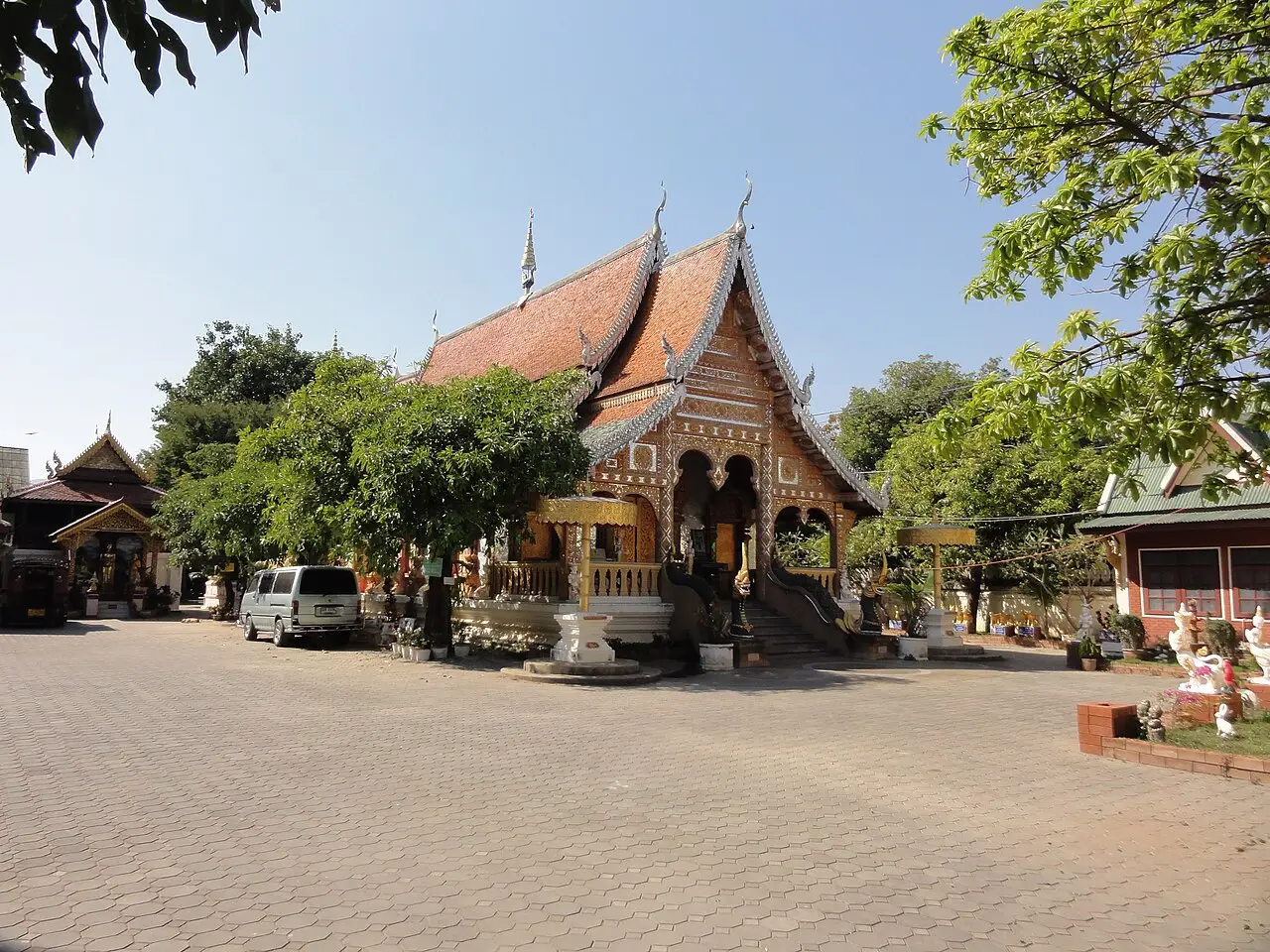
Wat Pa Phrao Nai is a historic private Buddhist temple under the Maha Nikaya order in Si Phum Subdistrict, Mueang Chiang Mai District, Chiang Mai Province. Located around Arak Road inside Chiang Mai Old City, the temple was established in 1482 and received its consecrated boundary in 1507. Its main highlights include Lanna-style religious architecture, naga staircases, decorated gables, a two-storey Lanna scripture hall, a chedi behind the ordination hall, important Buddha images, and an inscription on a Buddha image base dated to 1519, making the temple a valuable cultural stop for travelers interested in Chiang Mai’s Lanna heritage.
Wat Pa Phrao Nai is an old Buddhist temple in Chiang Mai Old City that continues to serve as a place of worship, merit-making, and cultural learning. It is located in Si Phum Subdistrict, Mueang Chiang Mai District, Chiang Mai Province, and is classified as a private temple under the Maha Nikaya order. Although the temple compound is compact, its historical depth is considerable. Within the temple grounds are religious buildings, Lanna artistic details, sacred Buddha images, a two-storey scripture hall, a chedi, and an important inscription that connects the temple with the Lanna period.
The appeal of Wat Pa Phrao Nai lies in its quiet atmosphere and the amount of detail it preserves. It is not a large commercial attraction, but it rewards visitors who enjoy slow cultural travel. Key elements to observe include the naga staircases, the decorated gables, the stucco and mirror-glass ornamentation, the standing deity motifs on the doors, the Lanna-style scripture hall, the chedi behind the ordination hall, the revered Buddha images, and the old inscription associated with a bronze Buddha image base. Together, these features reveal how art, devotion, architecture, and local community life are woven into a living temple.
The name “Wat Pa Phrao Nai” reflects the older landscape of the area. “Phrao” refers to coconut trees, and the name comes from the temple’s original setting, which was once a dense area with many coconut trees. The word “Nai,” meaning “inner,” distinguishes this temple from another temple in Mueang Chiang Mai District known as Wat Pa Phrao Nok, or the outer Pa Phrao temple. The name therefore preserves more than a location; it records an earlier natural environment before this part of Chiang Mai became part of the dense urban fabric of the Old City.
Wat Pa Phrao Nai was established in 1482 and received its consecrated boundary in 1507. These dates place the temple in the Lanna period, when Chiang Mai was a major political, religious, and cultural center in northern Thailand. The temple’s foundation in the late 15th century gives it significance as part of the historic network of Buddhist temples inside the walled city. It also shows how Buddhism shaped the settlement pattern and spiritual geography of Chiang Mai over several centuries.
Within the broader context of Chiang Mai Old City, Wat Pa Phrao Nai represents the role of smaller community temples. Chiang Mai is not defined only by its famous royal temples and major monuments. It is also made up of many local temples connected with old neighborhoods, lanes, roads, and community identities. Wat Pa Phrao Nai helps complete the cultural picture of the city because it shows how private temples continued to support religious practice and preserve Lanna artistic traditions at the neighborhood level.
The main religious buildings of Wat Pa Phrao Nai express Lanna architectural character. The ordination hall has naga staircases leading into the building. The upper structure is made of wood, while the lower portion is built of brick and plaster. The roof is arranged in two tiers, creating a balanced northern Thai form that suits the climate and the scale of the temple. The gable is divided into rectangular panels and decorated with mirror glass, stucco work, floral patterns, and animal motifs. These details are characteristic of Lanna craftsmanship, where religious symbolism and decorative refinement work together.
The naga staircases are more than ornamental features. In Lanna Buddhist art, nagas are associated with protection, water, fertility, and passage into sacred space. When visitors walk up the naga stairway toward the religious building, they symbolically move from ordinary ground into a consecrated area. This is one reason temple etiquette matters here. Wat Pa Phrao Nai is still an active Buddhist temple, not a museum, and visitors should approach the buildings respectfully.
The decorated gable is another feature worth studying. The rectangular paneling, mirror-glass decoration, stucco motifs, flowers, and animal figures give the façade texture and symbolic meaning. Mirror glass catches the light and makes the building appear more radiant, while stucco and floral motifs soften the structure visually. Animal motifs reflect a Buddhist and Lanna worldview in which humans, nature, sacred beings, and religious space are connected through visual language.
The doors of the temple buildings feature standing deity motifs. In Thai and Lanna temple art, deities often serve as guardians of sacred space. Their presence on the doors prepares visitors for the transition into a place of worship. The imagery reminds those entering the building to behave with calmness, respect, and mindfulness. Even small decorative details at Wat Pa Phrao Nai therefore carry religious and cultural meaning.
Another important feature of the temple is its two-storey Lanna scripture hall. In a Buddhist monastery, a scripture hall is traditionally used to preserve Buddhist texts such as palm-leaf manuscripts, folded manuscripts, and doctrinal writings. In Lanna culture, the scripture hall is more than a storage building. It represents the preservation of the Dhamma and the learning tradition of the temple. Its presence at Wat Pa Phrao Nai adds another layer of significance to the temple compound.
Behind the ordination hall stands the chedi, an important sacred structure within the temple grounds. In Lanna Buddhist tradition, chedis often function as focal points of devotion and are associated with relic worship, merit-making, and the continuity of Buddhism. The position of the chedi behind the ordination hall gives the temple a clear sacred sequence: entrance, worship building, and relic-related monument. Visitors should take time to walk around the temple compound rather than viewing only the front façade.
The important sacred objects at Wat Pa Phrao Nai include Luang Pho Sothon, a seated meditation Buddha image, and Phra Kaeo Song Khrueang. These Buddha images remain objects of devotion for people who come to worship and make merit. They also show the variety of Buddhist image traditions present within the temple, from meditative serenity to richly adorned imagery. For cultural travelers, these objects help explain how sacred images function both as religious centers and as artistic expressions.
One of the most important historical pieces associated with Wat Pa Phrao Nai is the inscription on a Buddha image base from Wat Pa Phrao Nai. The inscription is on the base of a bronze Buddha image in the Mara-subduing posture seated in vajrasana. It uses Lanna Tham and Fak Kham scripts, with Pali and Thai language, and is dated to 1519. The inscription is now kept at Wat Pa Phrao Nai in Si Phum Subdistrict, Mueang Chiang Mai District. This type of evidence is highly valuable because it links a sacred object with a specific date, script tradition, religious act, and historical context.
The inscription states that the abbot of Wat Suan Dok Buppharam encouraged people to participate in casting the Buddha image in 1519. The creators included the abbot of Wat Suan Dok Buppharam and temple dependents. This reveals a network of religious patronage connecting important monastic institutions in Chiang Mai with Wat Pa Phrao Nai. It also shows how the creation of Buddha images was often a collective religious act involving monks and lay communities.
The year 1519 falls within the reign of King Mueang Kaeo, also known as Phra Chao Phra Mueang Kaeo, who ruled Chiang Mai from 1495 to 1525. This was an important period for Buddhism and Lanna art. The inscription therefore places Wat Pa Phrao Nai within a significant phase of Chiang Mai’s religious history. For visitors interested in Lanna culture, this makes the temple more than a quiet local stop. It is a site connected with one of the important artistic and religious periods of the Lanna kingdom.
The inscription also deepens the visitor experience. Instead of seeing only a beautiful temple building or a Buddha image, visitors can understand Wat Pa Phrao Nai as a place where faith, craftsmanship, written records, and community participation meet. The inscription preserves the memory of people who contributed to Buddhist devotion more than 500 years ago. This makes the temple a meaningful place for understanding social history as well as religious art.
Wat Pa Phrao Nai also remains important through contemporary rituals. In 2026, the temple organized a ceremony for the 544th anniversary of its founding, including the bathing of Phra That Salee Lin Kham and a merit-making ceremony for the abbot. Such events show that the temple is not only a historical site. It remains a living Buddhist institution supported by monks, local residents, and lay devotees who continue to connect present-day religious life with the long history of the temple.
The bathing of a sacred chedi or relic-related shrine is an important expression of Lanna Buddhist devotion. It brings people together for merit-making, respect, and renewal. At Wat Pa Phrao Nai, the bathing ceremony for Phra That Salee Lin Kham connects the temple’s long foundation history with current community faith. This is one of the clearest examples of how old temples in Chiang Mai continue to function as living cultural centers rather than static heritage sites.
Contemporary temple information lists the abbot of Wat Pa Phrao Nai as Phra Kru Baidika Kantaphong Chandasaro, with 5 resident monks. This confirms that the temple remains active and cared for by a monastic community. For travelers, this matters because some areas of the temple may be used for monastic life and are not meant for casual sightseeing. Visitors should respect private monastic spaces and behave quietly within the temple compound.
The overall atmosphere of Wat Pa Phrao Nai is suitable for worship, cultural photography, and close observation of Lanna architecture. Many visitors to Chiang Mai Old City focus on Wat Phra Singh, Wat Chedi Luang, or Wat Chiang Man. Adding Wat Pa Phrao Nai to the route gives a more complete understanding of local religious life. The temple shows that smaller private temples can hold valuable inscriptions, refined architecture, sacred images, and active community traditions.
Getting There is easy because Wat Pa Phrao Nai is located inside Chiang Mai Old City around Arak Road in Si Phum Subdistrict. Visitors staying within the moat can reach the temple on foot or by bicycle. From Wat Phra Singh, the temple can be reached within a short distance. Travelers coming from outside the Old City can use a red songthaew, tuk-tuk, taxi, rental car, or ride-hailing service by setting the destination as Wat Pa Phrao Nai on Arak Road.
Visitors arriving by private car should allow extra time for parking. Streets inside Chiang Mai Old City are narrow, and traffic can become heavy on weekends, in the evening, and during festival periods. A practical way to explore this area is to park in a suitable location and continue on foot to nearby temples and cultural sites such as Wat Dubphai, Wat Phra Singh, Wat Lok Moli, the Three Kings Monument, and Chiang Mai City Arts & Cultural Centre.
The best time to visit is in the morning or late afternoon. Natural light makes the decorated gables, stucco details, mirror-glass ornamentation, naga staircases, and chedi easier to appreciate. Morning visits are usually calmer and more comfortable, while late afternoon is suitable for a walking route through the Old City followed by nearby restaurants or cafés. Although some listings describe the temple area as open 24 hours, visitors who want to enter religious buildings should plan a daytime visit and respect the temple’s daily routine.
Temple etiquette is important at Wat Pa Phrao Nai. Visitors should dress respectfully, remove shoes before entering religious buildings, keep voices low, avoid touching Buddha images or old objects, and stay out of monastic areas unless invited. Photography should be considerate, especially when people are praying or monks are present. A respectful visit helps preserve both the religious atmosphere and the cultural value of the temple.
For itinerary planning, Wat Pa Phrao Nai fits well into a walking route around Arak Road, Singharat Road, and the western side of Chiang Mai Old City. A practical route can begin at Wat Phra Singh, continue to Wat Pa Phrao Nai and Wat Dubphai, then move toward Wat Lok Moli or return toward the central Old City to visit the Three Kings Monument, Chiang Mai City Arts & Cultural Centre, Lanna Folklife Museum, and Wat Chedi Luang. This route gives travelers a strong view of Chiang Mai through temples, local neighborhoods, religious art, and old urban geography.
As a cultural destination, Wat Pa Phrao Nai is best appreciated by travelers who want more than basic opening hours and a map pin. The temple has several layers of value: the old coconut-grove name, the foundation date in 1482, the consecrated boundary in 1507, Lanna religious architecture, the two-storey scripture hall, the chedi behind the ordination hall, sacred Buddha images, the 1519 inscription, and the contemporary bathing ceremony of Phra That Salee Lin Kham. Reading about these elements before visiting makes the experience more meaningful.
Another reason Wat Pa Phrao Nai is worth visiting is the way it connects past and present. The temple name recalls an earlier landscape of coconut trees. The architecture shows Lanna craftsmanship. The inscription preserves the memory of a religious act from the time of King Mueang Kaeo. Contemporary rituals show that the temple remains part of Chiang Mai’s living Buddhist culture. A visit to Wat Pa Phrao Nai is therefore not only a stop at a temple; it is a way to read Chiang Mai through history, art, belief, and community continuity.
Overall, Wat Pa Phrao Nai is a compact but valuable temple for anyone exploring Chiang Mai Old City in depth. It may not be as crowded as the city’s major tourist temples, but it offers a rich combination of history, Lanna art, sacred objects, inscriptions, ritual life, and local atmosphere. Travelers who want a fuller understanding of Chiang Mai should include Wat Pa Phrao Nai in the same route as nearby temples and cultural sites. It is a quiet place, but one with strong historical substance.
| Name | Wat Pa Phrao Nai |
| Location | Arak Road, Si Phum Subdistrict, Mueang Chiang Mai District, Chiang Mai Province |
| Address | 4/3 Arak Road Soi 2, Si Phum Subdistrict, Mueang Chiang Mai District, Chiang Mai 50200, Thailand |
| Coordinates | 18.79329, 98.9806 |
| Temple Type | Private Buddhist Temple Under The Maha Nikaya Order |
| Temple Area | 2 Rai 65 Square Wa |
| Highlights | Lanna-style ordination hall, naga staircases, mirror-glass and stucco gable decoration, two-storey Lanna scripture hall, chedi behind the ordination hall, Luang Pho Sothon, Phra Kaeo Song Khrueang, and a Buddha image base inscription dated to 1519 |
| History | Established in 1482, received its consecrated boundary in 1507, and contains an inscription dated to 1519 from the Lanna period during the reign of King Mueang Kaeo |
| Name Origin | The name comes from the former landscape of dense coconut trees, while “Nai” distinguishes it from Wat Pa Phrao Nok in Mueang Chiang Mai District |
| Distinctive Features | Lanna religious buildings with wooden upper structures, brick-and-plaster lower sections, two-tiered roofs, decorated gables, floral and animal motifs, and standing deity door paintings |
| Important Objects And Areas | Ordination hall, viharn, naga staircases, two-storey Lanna scripture hall, chedi, Luang Pho Sothon, meditation Buddha image, Phra Kaeo Song Khrueang, and the Wat Pa Phrao Nai Buddha image base inscription |
| Traditions / Rituals | Bathing ceremony of Phra That Salee Lin Kham and important merit-making activities connected with the temple’s founding anniversary |
| Travel Information | Accessible on foot, by bicycle, red songthaew, tuk-tuk, taxi, rental car, or ride-hailing service; set the destination to Wat Pa Phrao Nai on Arak Road in Chiang Mai Old City |
| Current Status | Active Buddhist temple with resident monks, open for worship, merit-making, and cultural visits |
| Open Days | Daily |
| Opening Hours | Open 24 Hours |
| Fees | Free Entry |
| Facilities | Worship area, religious-building viewing area, temple courtyard, and parking within or near the temple area depending on Old City conditions |
| Main Areas / Zones | Ordination hall, viharn, scripture hall, chedi, courtyard, Buddha image area, and inscription / historical-object area |
| Abbot / Caretaker | Phra Kru Baidika Kantaphong Chandasaro |
| Main Contact Number | 053-217-870 |
| Nearby Tourist Attractions | 1. Wat Dubphai, about 0.3 km 2. Wat Phra Singh Woramahawihan, about 0.6 km 3. Wat Lok Moli, about 0.9 km 4. Three Kings Monument, about 1.2 km 5. Chiang Mai City Arts & Cultural Centre, about 1.2 km 6. Lanna Folklife Museum, about 1.3 km 7. Wat Chedi Luang Worawihan, about 1.5 km 8. Wat Chiang Man, about 1.5 km |
| Nearby Restaurants | 1. Fern Forest Cafe, about 0.3 km, Tel. 053-416-204 2. Goodsouls Kitchen, about 0.7 km, Tel. 088-819-9669 3. Its Good Kitchen, about 0.9 km, Tel. 089-432-2323 4. Huen Phen, about 1.2 km, Tel. 086-911-2882 5. SP Chicken, about 1.3 km, Tel. 080-500-5035 6. Baan Buri Café & Restaurant, about 1.5 km, Tel. 053-416-500, 093-490-0878 |
| Nearby Accommodations | 1. De Lanna Hotel, about 0.8 km, Tel. 053-326-266, 053-326-278, 053-326-279 2. Buri Gallery House, about 1 km, Tel. 053-416-500 3. Le Naview @Prasingh, about 1.4 km, Tel. 052-087-686 4. Rachamankha Hotel, about 1.5 km, Tel. 053-904-111 5. Cheeva Dee Hotel, about 1.6 km, Tel. 053-283-959 6. The Inside House, about 1.8 km, Tel. 053-904-699 |
Frequently Asked Questions (FAQ)
Q: Where is Wat Pa Phrao Nai located?
A: Wat Pa Phrao Nai is located around Arak Road in Si Phum Subdistrict, Mueang Chiang Mai District, Chiang Mai Province, inside Chiang Mai Old City.
Q: What are the opening days and hours of Wat Pa Phrao Nai?
A: Wat Pa Phrao Nai is open daily and is listed as open 24 hours, but daytime visits are best for worship and viewing the religious buildings.
Q: Is there an admission fee for Wat Pa Phrao Nai?
A: No. Wat Pa Phrao Nai has free entry. Visitors can enter for worship, merit-making, and cultural sightseeing while observing temple etiquette.
Q: Why is Wat Pa Phrao Nai historically important?
A: The temple was established in 1482, received its consecrated boundary in 1507, and contains a Buddha image base inscription dated to 1519 from the Lanna period.
Q: What does the name Wat Pa Phrao Nai mean?
A: The name comes from the former landscape of dense coconut trees. The word “Nai” distinguishes it from Wat Pa Phrao Nok, another temple in Mueang Chiang Mai District.
Q: What are the main highlights of Wat Pa Phrao Nai?
A: The main highlights include the Lanna-style ordination hall and viharn, naga staircases, decorated gables, two-storey scripture hall, chedi, Luang Pho Sothon, Phra Kaeo Song Khrueang, and the 1519 inscription.
Q: Does Wat Pa Phrao Nai have an important ritual?
A: Yes. The temple has held the bathing ceremony of Phra That Salee Lin Kham and important merit-making activities connected with the anniversary of the temple’s founding.
Q: What nearby places can be visited with Wat Pa Phrao Nai?
A: Nearby places include Wat Dubphai, Wat Phra Singh, Wat Lok Moli, Three Kings Monument, Chiang Mai City Arts & Cultural Centre, Lanna Folklife Museum, Wat Chedi Luang, and Wat Chiang Man.
 Category: ●Places of Worship
 Group: ●Temple
Last Update : 3 DayAgo
 Last Update : 3 DayAgo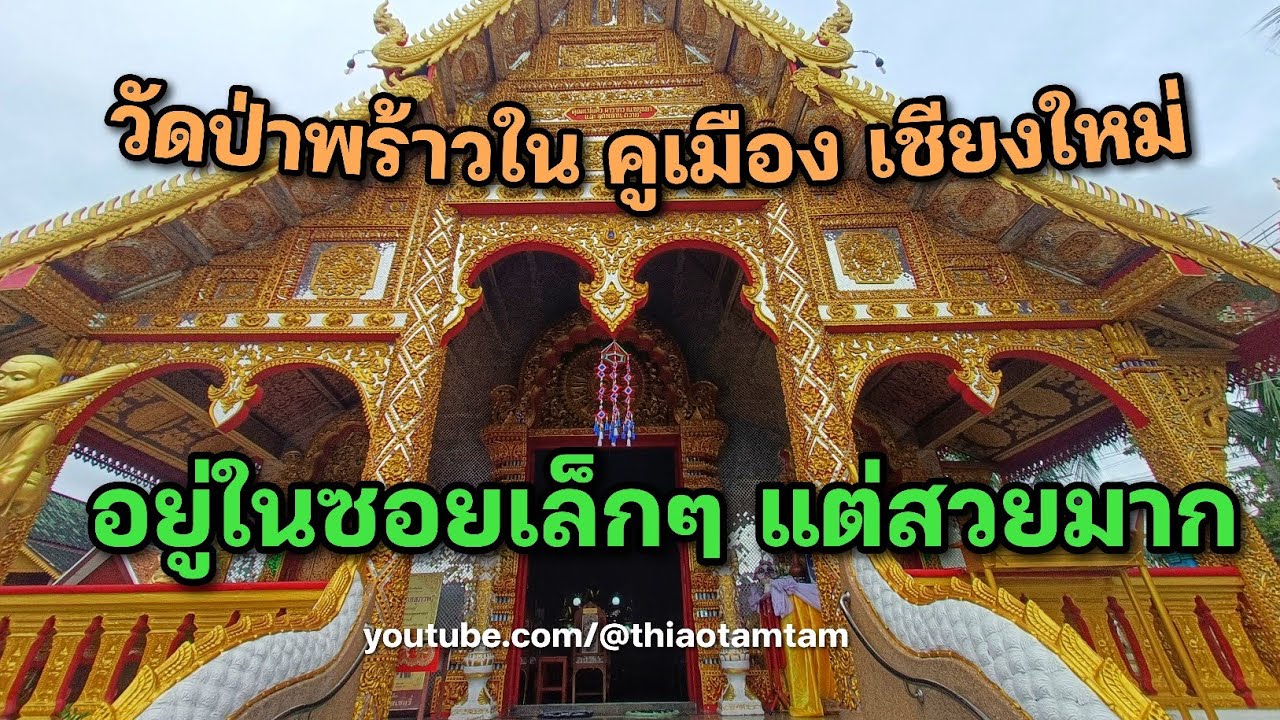
 Click to Access the Navigation Map GPS
Wat Pa Phrao Nai Map
Recommend

 Muang Chiang Mai(121)Chom Thong(47)Mae Chaem(25)Chiang Dao(33)Doi Saket(68)Mae Taeng(85)Mae Rim(69)Samoeng(29)Fang(71)Mae Ai(62)Phrao(70)San Pa Tong(105)San Kamphaeng(66)San Sai(73)Hang Dong(74)Hot(32)Doi Tao(22)Omkoi(11)Saraphi(74)Wiang Haeng(15)Chai Prakan(28)Mae Wang(32)Mae On(22)Doi Lo(34)Galyani Vadhana(1)


