
lovethailand home >North Travel Attractions >Chiang Mai Travel Attractions >Muang Chiang Mai >Si Phum > Wat Prasat (Si Phum)
TL;DR: Wat Prasat (Si Phum) is located at Inthawarorot Road, Chiang Mai Old City, Mueang Chiang Mai District, Chiang Mai Province, open Daily, hours 08.00–17.00. Highlights include Teak Lanna viharn, ku phra chao shrine, Phra Chao Muen Thong, and mixed-style chedi.
Wat Prasat (Si Phum)
Open Days: Daily
Opening Hours: 08.00–17.00
Wat Prasat Chiang Mai is a historic Buddhist temple in the Old City of Chiang Mai, located on Inthawarorot Road near Wat Phra Singh Woramahawihan. It is a private temple under the Maha Nikaya order and remains open for worship and cultural visits. The temple is especially valuable for travelers who want to see a quieter side of Chiang Mai’s Lanna heritage. Its main highlights are the teak Lanna viharn, the ornate stucco arch known as a ku phra chao or prasat-style shrine, Phra Chao Muen Thong, a bronze Buddha image dated by inscription to 1590 CE, and a chedi that combines different northern architectural influences.
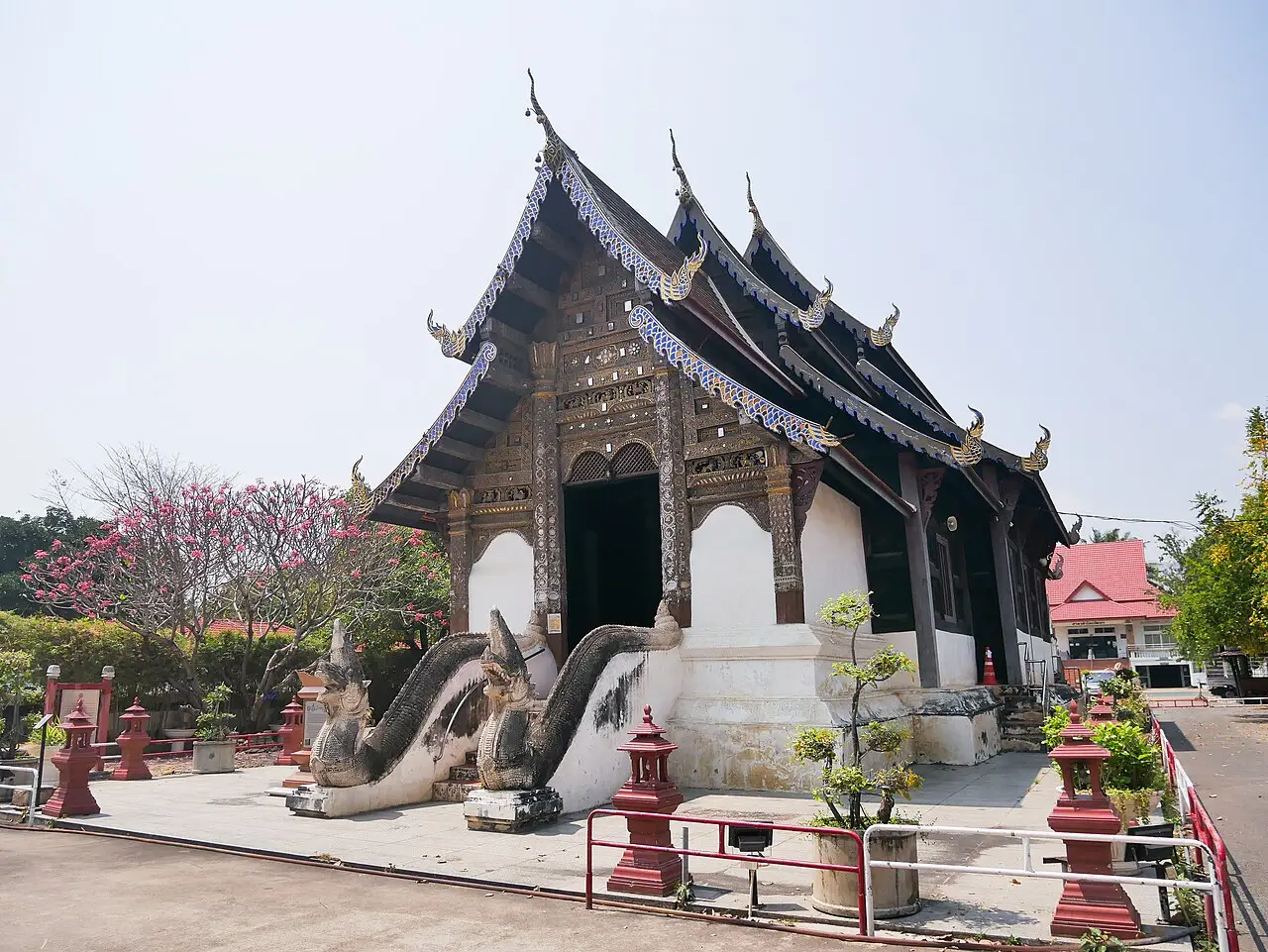
Although Wat Prasat stands close to one of Chiang Mai’s busiest cultural areas, the temple itself feels calm and local. Visitors usually begin by viewing the wooden viharn from the outside, where the layered Lanna roof, naga staircase, timber structure, and compact proportions immediately set it apart from larger temples in the city. Inside, the atmosphere becomes more intimate. Round gilded columns lead the eye toward the principal Buddha image and the ornate shrine behind it, creating a sacred focal point that gives the temple its distinctive character.
The history of Wat Prasat is closely linked with old Lanna inscriptions. The inscription of Wat Tapotharam mentions Phra Maha Thera Satthammathira Prasat Chao, the abbot of Wat Prasat, who was invited by the ruler of Chiang Mai to take part in an important monastic ceremony as a senior monk. His name appears among other respected elders, which shows that Wat Prasat held religious significance within Chiang Mai’s monastic network. This makes the temple more than a neighborhood place of worship; it is also a historical marker connected with the religious elite of old Chiang Mai.
The name “Prasat” is also meaningful. The older expression “Prasat Chao” reflects the temple’s association with an important noble or ruling-area context within the historic city. Chiang Mai was not only a political center of the Lanna kingdom but also a Buddhist city where temples, noble residences, monastic institutions, and local communities were closely connected. Wat Prasat preserves this layered relationship between religion, art, and urban history in a compact site that can be explored on foot.
According to temple records, Wat Prasat was established in 1492 CE and received its consecrated boundary in 1497 CE. This places the temple in the Lanna period, when Chiang Mai was a major religious and political center in northern Thailand. The temple’s long history helps explain why it contains several important artistic and historical elements, including its viharn, bronze Buddha image, inscriptions, ubosot, and chedi.
One of the temple’s most important sacred objects is Phra Chao Muen Thong, a bronze Buddha image in the Mara-subduing posture. The image is 114 centimeters high and carries an inscription dated to 1590 CE. The inscription names Phaya Luang Saen Kham and Chao Muen Thong in connection with the making or dedication of the image to Wat Prasat. This Buddha image is therefore important not only as an object of devotion but also as historical evidence that preserves names, dates, and religious patronage from a complex period in Chiang Mai’s past.
The inscription on the base of Phra Chao Muen Thong gives the Buddha image exceptional value. It turns the statue into a physical historical document, allowing visitors and researchers to connect the temple with specific people and events from the late 16th century. For travelers interested in Lanna history, this is one of the most meaningful reasons to visit Wat Prasat: the temple allows them to see art, faith, and documentary evidence in the same place.
A major restoration took place in 1823 during the time of Chao Luang Thammalangka, when Phaya Luang Sam Lan was ordered to build or restore the viharn. This restoration shaped the temple’s present appearance. The wooden Lanna viharn seen today reflects the architectural taste and craftsmanship of a period when Chiang Mai was being revived after earlier political changes. Wat Prasat is therefore not only a Buddhist temple but also a record of Chiang Mai’s cultural recovery during the era of its local rulers.
In 1979, the Fine Arts Department officially registered and defined the protected boundary of the viharn of Wat Prasat as a historic site. This designation confirms the architectural and historical value of the temple and places it among Chiang Mai’s recognized cultural heritage sites. For visitors, this means that the viharn should be approached not merely as a beautiful building but as a preserved work of Lanna religious architecture.
The viharn is the heart of Wat Prasat. It stands on a masonry base while its main structure is made of teak. The building has the low, compact, and graceful form associated with Lanna temple architecture. Its layered roof, extended eaves, naga staircase, and timber frame create a balanced composition that feels both sacred and human in scale. Unlike some larger temples that impress through size, Wat Prasat impresses through proportion, texture, and detail.
Inside the viharn, round lacquered and gilded columns support the main beams and side beams. These columns create a rhythmic path toward the sacred area at the rear of the building. The interior is not overly spacious, which makes the experience more focused. Woodwork, gold decoration, red lacquer tones, and the filtered light inside the hall all help emphasize the principal Buddha image and the shrine structure behind it.
The most distinctive feature inside the viharn is the ku phra chao, a large prasat-like shrine or stucco arch that houses the principal Buddha image. The arch is decorated with paired hamsa figures, coiling naga forms, kanok motifs, and a central moon-like radiating pattern. These forms belong to the symbolic language of Lanna Buddhist art, where mythical animals and ornamental patterns frame the Buddha image and mark the space as sacred.
The ku phra chao gives Wat Prasat a rare visual identity. Visitors do not simply see a Buddha image placed at the end of a hall; they see the image enshrined within an architectural frame that resembles a miniature sacred palace. This connection between the temple name, the prasat-like shrine, and the experience inside the viharn makes Wat Prasat particularly memorable for travelers who appreciate temple architecture.
The temple also has an ubosot that has undergone restoration. Its original form is not fully preserved, but records connect its restoration with Phaya Luang Sam Lan. In 1977, Phra Khru Chin Wongsa Nuwat, a former abbot, led repairs to the ubosot. This reflects the ongoing role of monks and the local community in maintaining old religious buildings so they can continue to serve Buddhist practice while preserving cultural heritage.
The chedi of Wat Prasat is also architecturally interesting. Its form combines elements associated with square-based chedis in the Si Satchanalai tradition and round chedis of Chiang Mai. Records state that Phaya Luang Sam Lan supervised a restoration in 1823, and the chedi was restored again in 1983. The chedi therefore shows how sacred architecture at Wat Prasat has been preserved, repaired, and reinterpreted across different periods.
For travelers interested in Lanna art, Wat Prasat is best appreciated slowly. Its details are distributed throughout the site: the teak viharn, gilded columns, stucco arch, naga staircase, bronze Buddha image, and chedi all contribute to the temple’s value. The temple demonstrates that Lanna art is not defined only by grandeur. It is also defined by restraint, proportion, symbolic detail, and the relationship between sacred buildings and devotional space.
Wat Prasat is also practical to include in a walking route through Chiang Mai Old City. It is very close to Wat Phra Singh and Wat Pha Bong, and it can be combined with Wat Chedi Luang, the Three Kings Monument, Chiang Mai City Arts & Cultural Centre, and the Lanna Folklife Museum. This makes it a useful stop for travelers who want to understand the Old City through temples, architecture, inscriptions, and urban history rather than through isolated photo stops.
Getting There is straightforward. Visitors staying in the Old City can walk from Wat Phra Singh in a short time. Travelers can also reach the temple by red songthaew, tuk-tuk, taxi, rental car, or ride-hailing service by setting the destination as Wat Prasat on Inthawarorot Road. Those driving should allow extra time for parking because streets in Chiang Mai Old City are narrow and can be busy on weekends, holidays, and festival periods.
The best time to visit is in the morning or late afternoon before closing. Natural light makes the wooden viharn, stucco arch, and chedi easier to appreciate. Visitors should dress respectfully, remove shoes before entering religious buildings, avoid disturbing worshippers, and refrain from using flash photography inside sacred areas. Wat Prasat is not a commercial tourist attraction, so a respectful and quiet visit fits the character of the temple.
Most visitors spend about 20 to 40 minutes at Wat Prasat, although those interested in architecture, photography, or inscriptions may want more time. The essential points to see are the Lanna wooden viharn, the ku phra chao inside the viharn, Phra Chao Muen Thong, and the chedi behind the main hall. Together, these elements make Wat Prasat one of the most rewarding smaller temples in Chiang Mai Old City.
Overall, Wat Prasat is a compact temple with historical value far beyond its size. It brings together evidence from Lanna inscriptions, a temple foundation date in the late 15th century, a dated bronze Buddha image from 1590, an important 1823 restoration, and official historic-site recognition in 1979. For cultural travelers, it fills an important gap in the story of Chiang Mai’s Old City and deserves a place on any thoughtful temple itinerary.
| Name | Wat Prasat Chiang Mai |
| Location | Inthawarorot Road, Chiang Mai Old City, Mueang Chiang Mai District, Chiang Mai Province |
| Address | 62 Inthawarorot Road, Si Phum Subdistrict, Mueang Chiang Mai District, Chiang Mai 50200, Thailand |
| Coordinates | 18.7897, 98.9811 |
| Highlights | Teak Lanna viharn, ku phra chao shrine, Phra Chao Muen Thong, and mixed-style chedi |
| History | Established in 1492, received its consecrated boundary in 1497, contains an inscribed Buddha image dated to 1590, and underwent major restoration in 1823 |
| Name Origin | The name relates to the old expression “Prasat Chao” and corresponds with the prasat-like ku phra chao shrine inside the viharn |
| Distinctive Features | Lanna viharn on a masonry base with a teak structure, gilded round columns, and stucco decoration featuring hamsa, naga, and kanok motifs |
| Travel Information | A short walk from Wat Phra Singh; also accessible by red songthaew, tuk-tuk, taxi, rental car, and ride-hailing service |
| Current Status | Open for worship and cultural visits |
| Open Days | Daily |
| Opening Hours | 08.00–17.00 |
| Fees | No admission fee |
| Facilities | Worship area, viharn and chedi viewing area, and parking within or near the temple area |
| Main Areas / Zones | Lanna wooden viharn, ku phra chao shrine, ubosot, chedi, and temple courtyard |
| Main Contact Number | 053-217-474 |
| Nearby Tourist Attractions | 1. Wat Pha Bong, about 0.1 km 2. Wat Phra Singh Woramahawihan, about 0.2 km 3. Wat Chedi Luang Worawihan, about 0.9 km 4. Three Kings Monument, about 1 km 5. Chiang Mai City Arts & Cultural Centre, about 1 km 6. Lanna Folklife Museum, about 1 km |
| Nearby Restaurants | 1. Baan Buri Café & Restaurant, about 0.3 km, Tel. 053-416-500, 093-490-0878 2. Its Good Kitchen, about 0.4 km, Tel. 089-432-2323 3. SP Chicken, about 0.5 km, Tel. 080-500-5035 4. Huen Phen, about 0.8 km, Tel. 086-911-2882 5. Tikky Cafe, about 1 km, Tel. 098-796-2182 6. Goodsouls Kitchen, about 1 km, Tel. 088-819-9669 |
| Nearby Accommodations | 1. De Lanna Hotel, about 0.2 km, Tel. 053-326266, 053-326278, 053-326279 2. Buri Gallery House, about 0.3 km, Tel. 053-416-500, 093-490-0878 3. Rachamankha Hotel, about 0.5 km, Tel. 053-904-111 4. Cheeva Dee Hotel, about 0.5 km, Tel. 053-283-959 5. Le Naview @Prasingh, about 0.6 km, Tel. 052-087-686, 096-807-3081 6. The Inside House, about 1 km, Tel. 053-904-699 |
Frequently Asked Questions (FAQ)
Q: Where is Wat Prasat Chiang Mai located?
A: Wat Prasat is located on Inthawarorot Road in Chiang Mai Old City, near Wat Phra Singh Woramahawihan.
Q: What are the opening days and hours of Wat Prasat?
A: Wat Prasat is open daily from 08.00 to 17.00.
Q: Is there an admission fee for Wat Prasat?
A: No. Wat Prasat does not charge an admission fee.
Q: What is the main highlight of Wat Prasat?
A: The main highlight is the teak Lanna viharn and the ku phra chao, an ornate prasat-like shrine that houses the principal Buddha image.
Q: Why is Phra Chao Muen Thong important?
A: Phra Chao Muen Thong is a 114-centimeter bronze Buddha image in the Mara-subduing posture with an inscription dated to 1590 CE, making it both a sacred image and an important historical object.
Q: How long should visitors spend at Wat Prasat?
A: Most visitors spend about 20 to 40 minutes, but travelers interested in architecture, inscriptions, and photography may want more time.
Q: How can travelers get to Wat Prasat?
A: Travelers can walk from Wat Phra Singh or use a red songthaew, tuk-tuk, taxi, rental car, or ride-hailing service to Wat Prasat on Inthawarorot Road.
Q: What nearby attractions can be visited with Wat Prasat?
A: Wat Prasat can be combined with Wat Phra Singh, Wat Pha Bong, Wat Chedi Luang, the Three Kings Monument, Chiang Mai City Arts & Cultural Centre, and the Lanna Folklife Museum.
 Category: ●Places of Worship
 Group: ●Temple
Last Update : 2 WeekAgo
 Last Update : 2 WeekAgo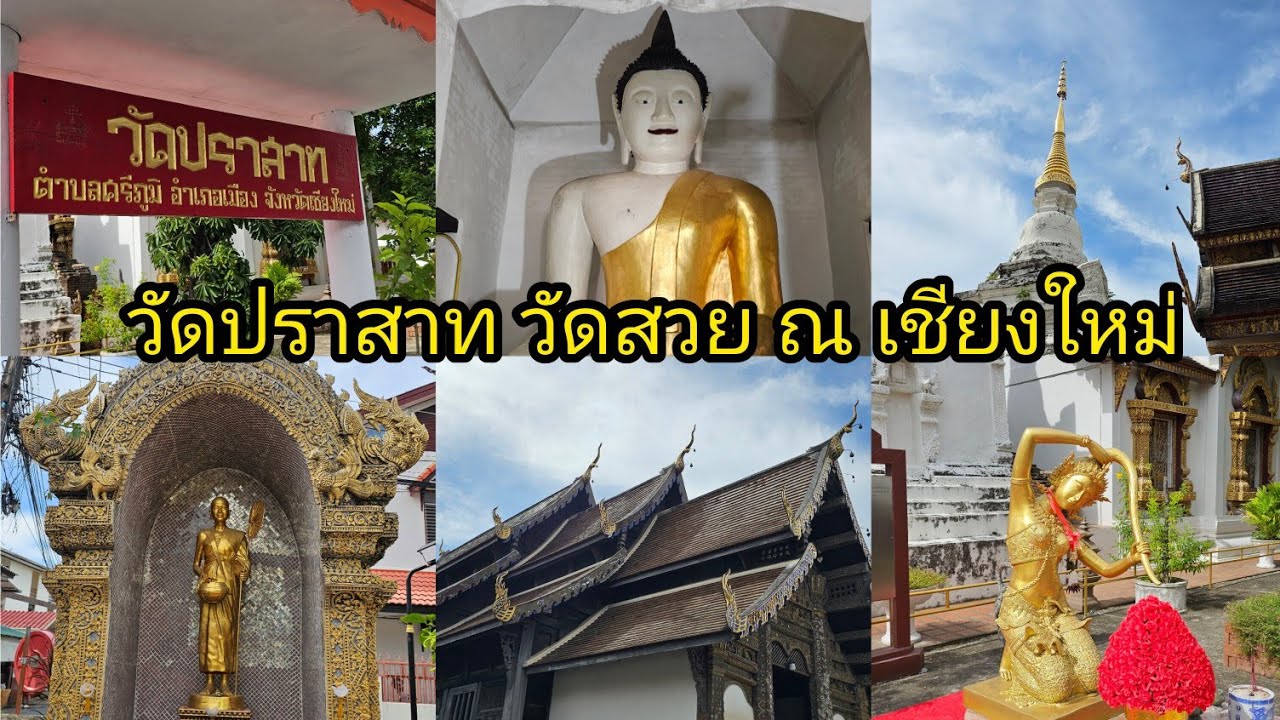
 Click to Access the Navigation Map GPS
Wat Prasat (Si Phum) Map
Recommend

 Muang Chiang Mai(121)Chom Thong(47)Mae Chaem(25)Chiang Dao(33)Doi Saket(68)Mae Taeng(85)Mae Rim(69)Samoeng(29)Fang(71)Mae Ai(59)Phrao(70)San Pa Tong(103)San Kamphaeng(66)San Sai(73)Hang Dong(73)Hot(32)Doi Tao(22)Omkoi(11)Saraphi(74)Wiang Haeng(15)Chai Prakan(28)Mae Wang(32)Mae On(22)Doi Lo(34)Galyani Vadhana(1)


