
lovethailand home >North Travel Attractions >Chiang Mai Travel Attractions >Muang Chiang Mai >Si Phum > Wat Dok Euang
TL;DR: Wat Dok Euang is located at Ratchawithi Road, Si Phum Subdistrict, Mueang Chiang Mai District, Chiang Mai Province, open Daily, hours 09.00 – 11.00 and 13.00 – 17.00.
Wat Dok Euang
Open Days: Daily
Opening Hours: 09.00 – 11.00 and 13.00 – 17.00
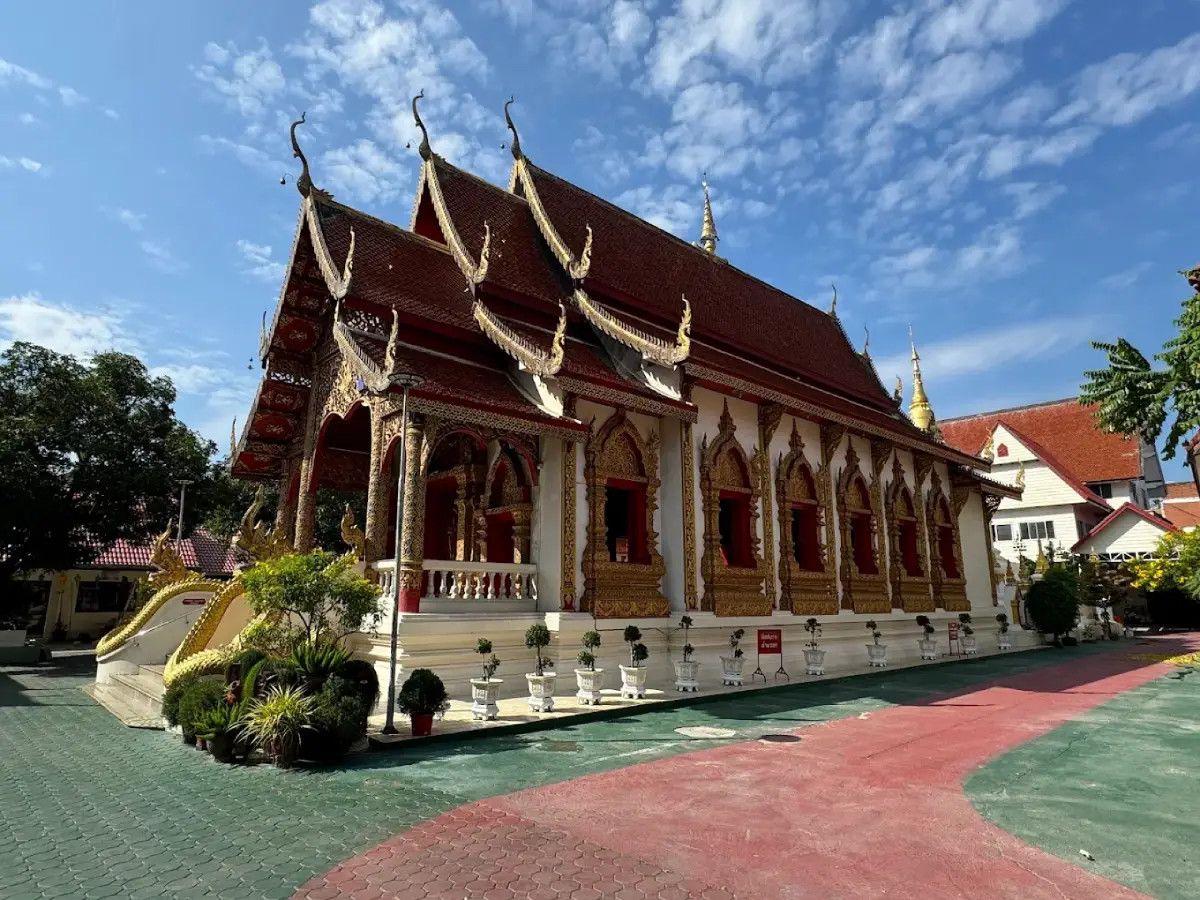
Wat Dok Euang in Chiang Mai is a historic Maha Nikaya Buddhist temple located at 3 Ratchawithi Road, Si Phum Subdistrict, Mueang Chiang Mai District, inside the eastern part of Chiang Mai Old City. Founded in B.E. 2219, it was originally known as Wat Nang Uem after Mae Uem, the woman traditionally credited with founding the temple. The temple is notable for its Lanna-style viharn, ubosot, two-storey scripture hall, Lanna-style round chedi, gilded Buddha image, sermon pulpit, ceremonial candle stands, scripture chests, and murals depicting the Vessantara Jataka.
Wat Dok Euang is a public Buddhist temple under the Maha Nikaya sect. It is located at 3 Ratchawithi Road, Si Phum Subdistrict, Mueang Chiang Mai District, Chiang Mai Province, in the eastern part of Chiang Mai Old City. The temple stands close to Tha Phae Gate, Moon Mueang Road, the old city moat, and several historic neighborhoods that have remained part of Chiang Mai’s urban life for generations. Wat Dok Euang covers 2 rai, 1 ngan and 50 square wah of temple land, with one additional monastic land plot of 53 square wah. Although the temple is compact, it contains a complete set of religious and architectural elements, including a viharn, ubosot, scripture hall, merit-making hall, chedi, monks’ quarters, and important Buddha images.
Wat Dok Euang is easy to reach for travelers exploring Chiang Mai Old City on foot. From Tha Phae Gate, visitors can walk along Ratchawithi Road or connect through nearby streets around Moon Mueang Road. The temple fits naturally into a walking route that includes Wat Muen Larn, Wat Ou Sai Kham, Wat Dok Kham, Wat Phan On, Wat Chiang Man, and other temples in the eastern section of the Old City. Unlike the larger and more crowded landmark temples, Wat Dok Euang preserves the quieter atmosphere of an active neighborhood temple. This makes it especially suitable for travelers who want to experience the historical texture of Chiang Mai beyond the most photographed sites.
The original name of the temple was Wat Nang Uem, named after Mae Uem, the woman whose devotion led to the founding of the temple in B.E. 2219. Local tradition describes Mae Uem as a person of strong Buddhist faith who gathered resources to build a temple for her community. This story gives Wat Dok Euang particular cultural value because it preserves the memory of a woman’s role in sustaining Buddhism and community life in old Chiang Mai. The temple was later renamed Wat Dok Euang by Somdet Phra Phutthachan of Wat Arun Ratchawararam in Bangkok, giving it a name that harmonizes with nearby flower-related temple names such as Wat Dok Kham, Wat Dok Ngoen, and Wat Dok Kaeo.
The word “dok euang” refers to a kind of orchid associated with northern Thai culture. In Lanna life, orchids are more than decorative flowers. They are linked with merit-making, auspicious symbolism, seasonal traditions, and the delicate beauty of northern Thai aesthetics. As a temple name, Wat Dok Euang suggests refinement, grace, auspiciousness, and a close relationship with Lanna cultural identity. The name therefore carries both historical memory and symbolic beauty: it recalls the founder Mae Uem while also connecting the temple to the floral language of Lanna culture.
Wat Dok Euang was founded in B.E. 2219, giving it a history of several centuries within Chiang Mai’s Old City. Its location inside the old city walls places it within the long evolution of urban communities in Chiang Mai. The surrounding Ban Dok Euang community was historically associated with dyeing cloth, sewing, and pottery production. These details show that Wat Dok Euang was closely tied to a working community of craftspeople and local households. The temple functioned not only as a sacred space but also as a communal center where people gathered, made merit, held ceremonies, preserved manuscripts, and maintained social ties through Buddhist practice.
The temple received its royal grant of consecrated boundary, or wisungkhamsima, in B.E. 2457. The consecrated boundary measures 4 metres wide and 8 metres long. This is an important milestone in the temple’s religious status because the ubosot and its consecrated boundary are essential for formal monastic ceremonies. The ubosot is not simply another temple building. It is the space where monks carry out Sangha acts under Buddhist monastic discipline, including ordination and important ritual proceedings.
The land boundaries of Wat Dok Euang also reveal the temple’s relationship with the Old City’s street network. The northern boundary extends 86.40 metres along Ratchawithi Road. The southern boundary extends 81.80 metres toward Moon Mueang Soi 5. The eastern boundary measures 47 metres and meets a public lane, while the western boundary measures 43 metres and also meets a public lane. This position places the temple within a tight urban fabric of roads, lanes, homes, and community activity. Entering the temple feels like stepping from the movement of the Old City into a calm religious compound.
The main monastic structures of Wat Dok Euang include the viharn, ubosot, scripture hall, merit-making hall, and a gilded brick-and-plaster Buddha image. Each has a distinct function. The viharn is the main hall for public worship and merit-making. The ubosot is reserved for formal monastic ceremonies. The scripture hall, or ho trai, preserves Buddhist manuscripts and sacred texts. The merit-making hall supports community ceremonies and religious gatherings. The Buddha image serves as a central object of devotion. Together these elements make Wat Dok Euang a complete neighborhood temple that supports worship, learning, ritual, and community life.
The viharn is the most important structure for visitors interested in Lanna architecture. It is a local-style hall with three-tiered roofs at both the front and rear, a side entrance porch, and distinctive balustrades shaped in traditional decorative forms. The layered roof gives the building a graceful rhythm typical of northern Thai temple architecture. The façade, doorways, windows, and principal altar area are decorated with gilded stucco work. Visitors should spend time observing the front of the viharn before entering because the exterior reveals the skill of local artisans, the devotion of donors, and the refined visual language of Lanna Buddhist art.
Inside the viharn, visitors will find several important artistic and ritual elements. The doors and windows are carved from wood and gilded. The floor is laid with marble. The interior contains a sermon pulpit, ceremonial candle stands, and scripture chests. The sermon pulpit was used by monks when delivering teachings. The ceremonial candle stands, known in northern Thai temples as sattaphan, were used for offerings. The scripture chests preserved Buddhist texts and palm-leaf manuscripts. These objects show that Wat Dok Euang was not only a place for worship but also a center for teaching, manuscript culture, and the transmission of Buddhist knowledge.
The murals inside Wat Dok Euang are especially meaningful because they function as visual Buddhist teachings. Key scenes include the Vessantara Jataka and episodes from the Buddha’s life, arranged in 17 paintings. The Vessantara Jataka is central to the Mahachat sermon tradition and teaches generosity, sacrifice, and the cultivation of spiritual perfection. In Lanna Buddhist communities, such murals helped people understand religious stories through images. Visitors who look closely at these paintings are therefore not merely viewing decoration. They are reading Buddhist teaching through line, color, narrative, and symbolic composition.
The ubosot of Wat Dok Euang is a Lanna-style ordination hall with a front porch and a pediment decorated with colored glass. Its roof ornaments, carved wooden elements, and gilded details reflect northern Thai craftsmanship. The ubosot is particularly important because of its connection with the consecrated boundary granted in B.E. 2457. For visitors, it is a structure to observe respectfully, paying attention to its proportions, ornamental details, and sacred function. For the monastic community, it remains one of the most important ritual spaces in the temple.
The scripture hall, or ho trai, adds another layer of cultural value to Wat Dok Euang. It is a two-storey structure with a brick-and-plaster lower level and a wooden upper level, surrounded by a balcony beneath the roof. In Lanna temples, the scripture hall was a place for preserving palm-leaf manuscripts, Buddhist texts, and ritual knowledge. Its presence at Wat Dok Euang shows the importance of education, textual preservation, and the transmission of religious learning within the community. The temple therefore represents not only worship but also the intellectual and literary culture of Lanna Buddhism.
The chedi of Wat Dok Euang is a round Lanna-style chedi set on an indented square base, with subsidiary chedis at the four corners. The lower front section includes a mondop-like niche with decorative forms influenced by Burmese and Mon art. This makes the chedi one of the temple’s most interesting architectural features. Chiang Mai has long been a city of cultural exchange, and the chedi reflects the way Lanna Buddhist art absorbed and adapted visual influences from surrounding regions. For travelers interested in temple architecture, the chedi offers a compact but valuable example of regional artistic interaction.
The administration of Wat Dok Euang has been carried through several generations of abbots. Known abbots include Phra Athikan Kong Kham, Phra Athikan Bun Tan, Phra Athikan Bun Peng Inthasilo, and Phra Khru Sophit Silachan. Phra Khru Sophit Silachan is associated with the later administration of the temple and with ecclesiastical responsibilities in the Si Phum area. Including the abbots’ history helps visitors understand that Wat Dok Euang is not only a historic site or a collection of old buildings. It is a living religious institution cared for by monks and supported by the community.
Wat Dok Euang is especially suitable for travelers who enjoy smaller historic temples with strong local identity. It has a founding story from B.E. 2219, a former name linked to Mae Uem, a connection with craft communities in Ban Dok Euang, a royal consecrated boundary, a full set of monastic structures, and several forms of Lanna art. Travelers who have already visited Chiang Mai’s major temples will find a different perspective here. Wat Dok Euang shows the Old City through the lens of a community temple, where devotion, craftsmanship, urban history, and daily Buddhist life remain closely connected.
A good visit should begin at the entrance on Ratchawithi Road. From there, visitors can walk into the courtyard and observe the overall layout before approaching the viharn. After viewing the viharn, continue to the ubosot, scripture hall, chedi, and merit-making hall. Taking time to walk slowly around the compound helps reveal details that are easy to miss, including roof layers, carved wood, gilded stucco, balustrades, wall paintings, and the relationship between the temple and its surrounding lanes.
Visitors should dress modestly, speak quietly, remove shoes before entering sacred buildings, and avoid touching murals, wooden objects, scripture chests, sermon pulpits, or old religious items. Wat Dok Euang is an active temple used by monks and local residents, so courtesy is essential. Travelers should avoid entering private monastic areas without permission and should photograph the site respectfully. These simple practices help preserve the calm atmosphere of the temple and show respect for the community that continues to use the space.
Getting There is straightforward. Travelers staying in the Old City, Tha Phae Gate area, Ratchawithi Road, Moon Mueang Road, or Chang Moi area can walk to Wat Dok Euang easily. From Chiang Mai International Airport, the temple can be reached by taxi, ride-hailing service, or rental car in around 15–25 minutes depending on traffic. From Chiang Mai Railway Station, visitors can travel along Charoen Mueang Road toward Tha Phae Gate and continue to Ratchawithi Road. Those without a private vehicle can get off near Tha Phae Gate or Somphet Market and walk to the temple.
Wat Dok Euang fits well into an eastern Old City walking route. A practical itinerary can begin at Tha Phae Gate, then continue to Wat Dok Euang, Wat Muen Larn, Wat Ou Sai Kham, Wat Dok Kham, Wat Phan On, Wat Chiang Man, or Warorot Market. This route works well for travelers who want to combine temples, historic communities, local restaurants, cafés, markets, and everyday Chiang Mai street life in a single day. Wat Dok Euang adds depth to such a trip because it offers a calm, historically layered, and culturally meaningful view of Chiang Mai Old City.
| Name | Wat Dok Euang |
| Location | Ratchawithi Road, Si Phum Subdistrict, Mueang Chiang Mai District, Chiang Mai Province |
| Address | 3 Ratchawithi Road, Si Phum Subdistrict, Mueang Chiang Mai District, Chiang Mai 50200, Thailand |
| Coordinates | 18.79024, 98.99243 |
| Highlights | Lanna-style viharn, ubosot, two-storey scripture hall, Lanna-style round chedi, gilded Buddha image, sermon pulpit, ceremonial candle stands, scripture chests, and Vessantara Jataka murals |
| History / Period | Founded in B.E. 2219. Formerly known as Wat Nang Uem after Mae Uem, the founder. Later renamed Wat Dok Euang and granted a consecrated boundary in B.E. 2457. |
| Name Origin | The temple was originally named Wat Nang Uem after its founder and later renamed Wat Dok Euang, a name connected with the orchid symbolism of Lanna culture. |
| Distinctive Features | Historic neighborhood temple with a three-tiered Lanna viharn, colored-glass ubosot pediment, two-storey scripture hall, and round Lanna chedi with Burmese-Mon artistic influence |
| Main Areas | Viharn, ubosot, scripture hall, merit-making hall, chedi, temple courtyard, and monks’ quarters |
| Getting There | Walk from Tha Phae Gate, Ratchawithi Road, Moon Mueang Road, or Somphet Market, or travel by red songthaew, tuk-tuk, taxi, ride-hailing service, rental motorbike, or private car |
| Current Status | Open to visitors and remains an active Buddhist temple in Chiang Mai Old City |
| Open Days | Daily |
| Opening Hours | 09.00 – 11.00 and 13.00 – 17.00 |
| Buddhist Sect | Maha Nikaya |
| Temple Area | 2 rai, 1 ngan, 50 square wah |
| Monastic Land | 1 plot, 53 square wah |
| Abbot / Caretaker | Phra Khru Sophit Silachan |
| Main Contact Number | 053-210-543 |
| Nearby Attractions | 1. Tha Phae Gate, about 0.3 km 2. Wat Muen Larn, about 0.2 km 3. Wat Ou Sai Kham, about 0.2 km 4. Wat Dok Kham, about 0.3 km 5. Wat Phan On, about 0.6 km 6. Wat Chiang Man, about 1 km 7. Wat Chedi Luang, about 1 km 8. Warorot Market, about 2 km |
| Nearby Restaurants | 1. The House by Ginger, about 0.4 km, Tel. 053-287-681 2. By Hand Pizza Cafe, about 0.5 km, Tel. 063-882-8195 3. Aroon Rai, about 0.8 km, Tel. 053-276-947 4. Khao Soi Khun Yai, about 1 km, Tel. 090-651-7088 5. Dash Teak House, about 1 km, Tel. 053-279-230 6. Fern Forest Cafe, about 2 km, Tel. 084-616-1144 |
| Nearby Accommodations | 1. Muan Hotel Chiang Mai, about 0.4 km, Tel. 053-235-440 2. Hotel M Chiang Mai, about 0.4 km, Tel. 053-211-069 3. THEE Vijit Lanna, about 0.5 km, Tel. 053-233-717 4. Amora Tapae Chiang Mai, about 0.5 km, Tel. 053-251-531 5. U Chiang Mai, about 1 km, Tel. 053-327-000 6. Chala Number 6, about 1 km, Tel. 052-010-466 |
Frequently Asked Questions (FAQ)
Q: Where is Wat Dok Euang located?
A: Wat Dok Euang is located at 3 Ratchawithi Road, Si Phum Subdistrict, Mueang Chiang Mai District, Chiang Mai Province, close to Tha Phae Gate and Moon Mueang Road in Chiang Mai Old City.
Q: What are the opening days and hours of Wat Dok Euang?
A: Wat Dok Euang is open daily from 09.00 to 11.00 and from 13.00 to 17.00.
Q: What is the history of Wat Dok Euang?
A: Wat Dok Euang was founded in B.E. 2219. It was originally called Wat Nang Uem after Mae Uem, the founder, and was later renamed Wat Dok Euang. The temple received its royal consecrated boundary in B.E. 2457.
Q: What are the main highlights of Wat Dok Euang?
A: The main highlights are the Lanna-style viharn, ubosot, two-storey scripture hall, round Lanna chedi, gilded Buddha image, sermon pulpit, ceremonial candle stands, scripture chests, and Vessantara Jataka murals.
Q: What does the name Wat Dok Euang mean?
A: The temple was formerly named Wat Nang Uem after its founder. Its later name, Wat Dok Euang, refers to an orchid associated with the beauty and auspicious symbolism of Lanna culture.
Q: Who is the abbot of Wat Dok Euang?
A: The abbot of Wat Dok Euang is Phra Khru Sophit Silachan, who is associated with the temple’s later administration and ecclesiastical responsibilities in the Si Phum area.
Q: How do visitors get to Wat Dok Euang?
A: Visitors can walk from Tha Phae Gate, Ratchawithi Road, Moon Mueang Road, or Somphet Market, or travel by red songthaew, tuk-tuk, taxi, ride-hailing service, rental motorbike, or private car.
Q: Which nearby places can be visited together with Wat Dok Euang?
A: Wat Dok Euang can be visited together with Tha Phae Gate, Wat Muen Larn, Wat Ou Sai Kham, Wat Dok Kham, Wat Phan On, Wat Chiang Man, Wat Chedi Luang, and Warorot Market.
 Category: ●Places of Worship
 Group: ●Temple
Last Update : 4 WeekAgo
 Last Update : 4 WeekAgo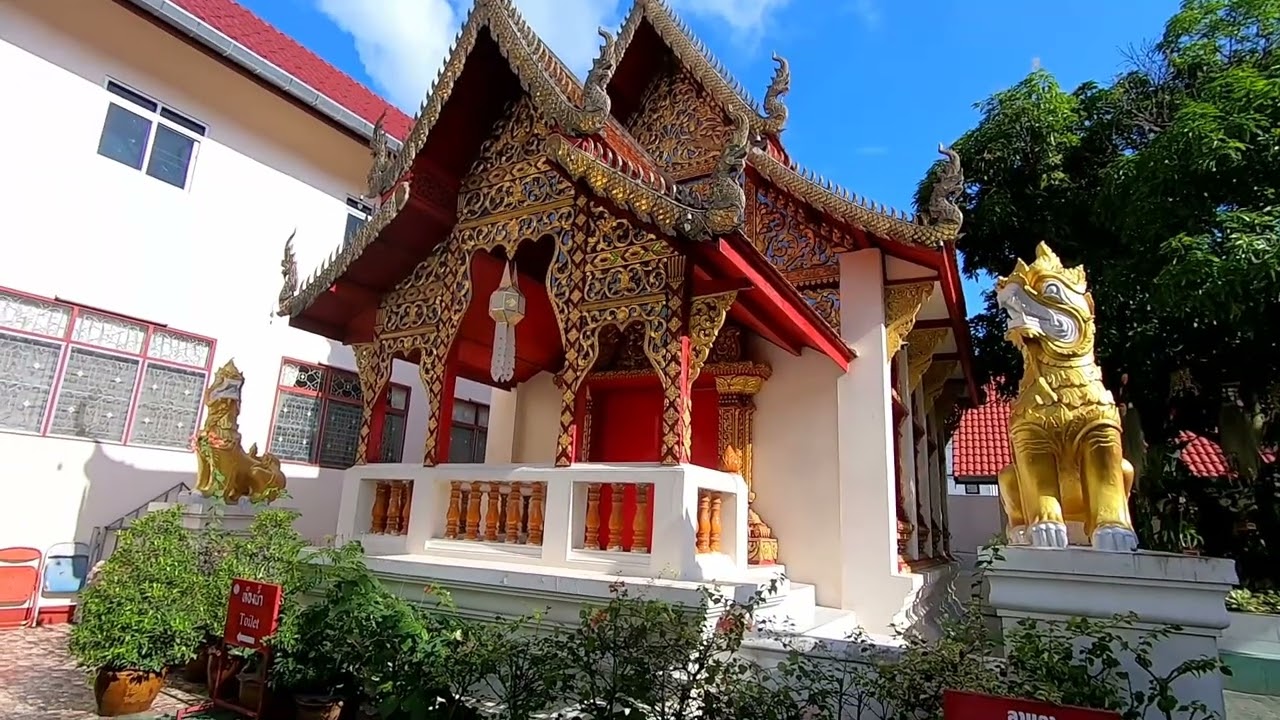
 Click to Access the Navigation Map GPS
Wat Dok Euang Map
Recommend

 Muang Chiang Mai(121)Chom Thong(47)Mae Chaem(25)Chiang Dao(33)Doi Saket(68)Mae Taeng(85)Mae Rim(69)Samoeng(29)Fang(71)Mae Ai(59)Phrao(70)San Pa Tong(103)San Kamphaeng(66)San Sai(73)Hang Dong(73)Hot(32)Doi Tao(22)Omkoi(11)Saraphi(74)Wiang Haeng(15)Chai Prakan(28)Mae Wang(32)Mae On(22)Doi Lo(33)Galyani Vadhana(1)


