
lovethailand home >North Travel Attractions >Chiang Mai Travel Attractions >Muang Chiang Mai >Si Phum > Wat Dok Kham
TL;DR: Wat Dok Kham is located at Moon Mueang Road, Si Phum Subdistrict, Mueang Chiang Mai District, Chiang Mai Province, open Daily, hours 08.00 – 17.00.

Wat Dok Kham
Open Days: Daily
Opening Hours: 08.00 – 17.00
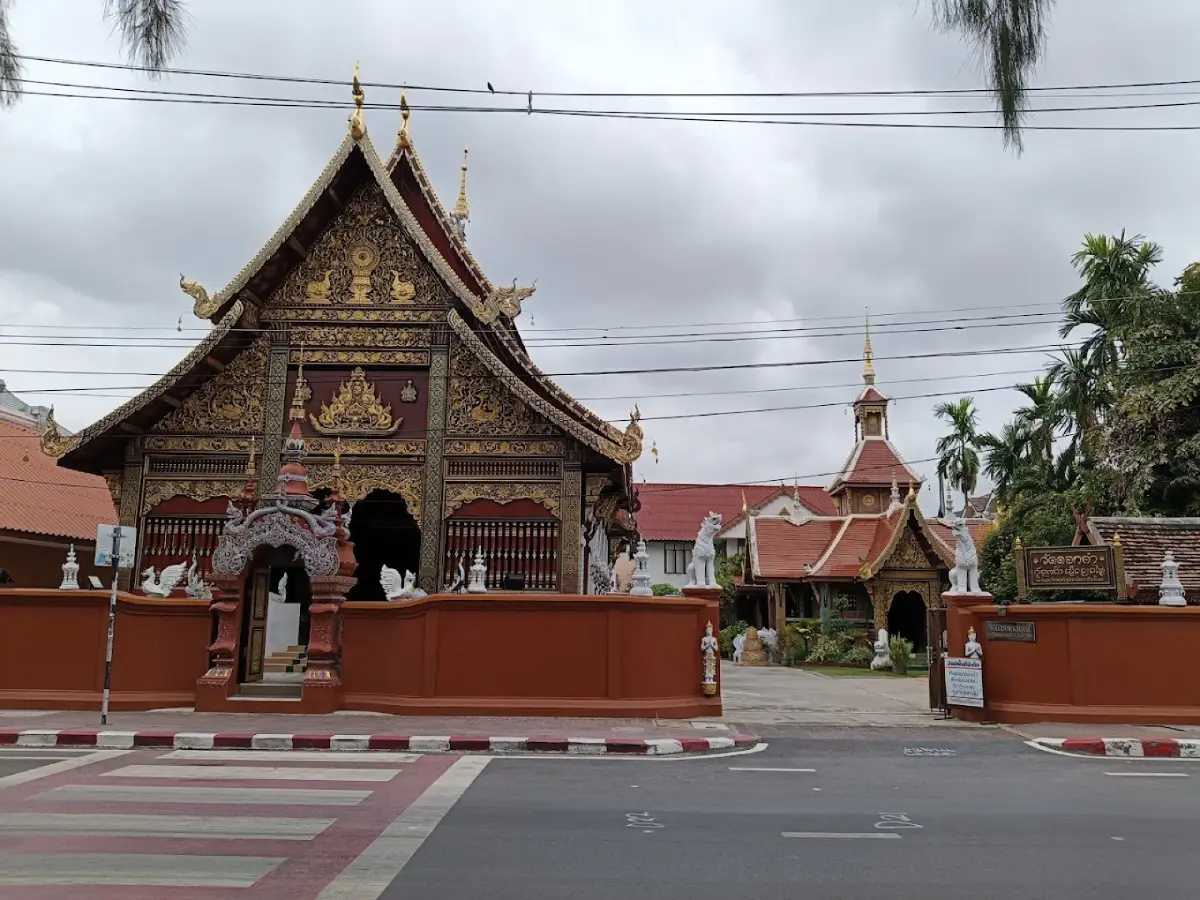
Wat Dok Kham in Chiang Mai is a compact historic Buddhist temple in the eastern part of the Old City, close to Tha Phae Gate. Its key highlights include a Lanna-style viharn, a standing Buddha image in the Pacifying Relatives posture, five principal Buddha images in the Maravijaya posture, gold murals on a red background, Phra Chao Saen Lan Dok Kham, a small mondop, and a Lanna-style chedi behind the viharn. It is a worthwhile stop for travelers who want to make merit, study Lanna art, and understand the community history of Chiang Mai during the city’s revival under King Kawila.
Wat Dok Kham is located at 111 Moon Mueang Road, Si Phum Subdistrict, Mueang Chiang Mai District, Chiang Mai Province, in the eastern section of Chiang Mai Old City near Tha Phae Gate, Ratchadamnoen Road, and the old moat. Although the temple is small, it carries a dense concentration of religious, artistic, and historical value. Visitors can usually explore the main areas within 30–60 minutes, yet the site contains many important elements of a Lanna Buddhist temple, including the viharn, Buddha images, murals, scripture chest, sermon pulpit, mondop, Phra Chao Saen Lan Dok Kham, and the chedi behind the viharn.
The appeal of Wat Dok Kham does not come from grand scale or heavy tourist traffic. Its strength lies in its quiet atmosphere, historic depth, and detailed craftsmanship. The temple stands in an easy-to-reach location near Tha Phae Gate, but once visitors step inside the grounds, the setting becomes noticeably calmer. It is suitable for merit-making, quiet reflection, and slow observation of Lanna art. Many travelers walk from Tha Phae Gate toward Ratchadamnoen Road, Wat Phan On, Wat Chedi Luang, the Three Kings Monument, and Wat Chiang Man. Adding Wat Dok Kham before or after those major stops gives the route a stronger sense of local temple life in Chiang Mai Old City.
The history of Wat Dok Kham is closely connected with the revival of Chiang Mai during the reign of King Kawila. After a period of decline and depopulation, the restoration of Chiang Mai required people, artisans, religious devotion, and the rebuilding of communities inside the city. Groups from Mueang Pan and Mueang Tong Kai played a role in the resettlement and restoration of the community around this temple. For this reason, Wat Dok Kham is more than a small temple in the Old City. It is part of the historical record of settlement, community formation, and the use of Buddhism as a social and spiritual center during Chiang Mai’s recovery.
One of the most important pieces of evidence connected with Wat Dok Kham is the inscription on the base of a Buddha image known as Wat Dok Kham Buddha-base Inscription 1. The inscription is dated to B.E. 2326, during the reign of King Kawila, and records that Thao Bun Rueang and his family created a Buddha image to sustain Buddhism. This inscription gives the temple clear historical weight in the early phase of Chiang Mai’s revival. At that time, creating a Buddha image was not only an act of devotion but also a public expression of faith and a commitment to preserving Buddhism as the city returned to life.
The name Wat Dok Kham also carries cultural meaning. The temple was formerly associated with the name “Chang Tho Kham” before it became known as Wat Dok Kham, a name that harmonizes with nearby temples such as Wat Dok Ueang, Wat Dok Ngoen, and Wat Dok Kaeo. In the Lanna language, “kham” means gold, so the name suggests beauty, prosperity, auspiciousness, and faith shining like gold. It also reflects the relationship between the temple, craft communities, and the network of temples in Chiang Mai during the city’s revival period.
A later restoration of Wat Dok Kham is associated with Phraya Tam, who built several permanent structures within the temple. He also brought his son, Tan, to ordain and study there. The monk Tan became well known for preaching the Mahachat sermon and later became abbot of Wat Dok Kham. This story gives the temple a cultural dimension beyond architecture. It shows Wat Dok Kham as a place of Buddhist learning, a training ground for skilled preachers, and a community ritual center connected with Lanna religious life.
The Mahachat sermon is an important tradition in Thai and Lanna Buddhist society. Its content centers on the Vessantara Jataka, one of the major former lives of the Bodhisattva before becoming the Buddha. The reputation of Monk Tan as a Mahachat preacher shows that Wat Dok Kham once functioned as an active religious and cultural space. Listening to the Mahachat sermon was not merely an act of hearing Buddhist teachings. It brought together people, offerings, ritual sponsorship, collective work, and community devotion.
The viharn is the main focus of a visit to Wat Dok Kham. It is a Lanna-style structure built of brick and plaster, with a finely decorated stucco pediment. The motifs include floral patterns, deer with a dharma wheel, naga serpents, mythical karavika birds, and the 12 zodiac animals. These details express a Lanna worldview that combines Buddhist symbolism with local beliefs. The deer and dharma wheel refer to the teaching of the Dharma. The naga represents protection of Buddhism. The 12 zodiac animals connect the building to ideas of time, destiny, and daily life in Lanna culture.
In front of the viharn stands a golden Buddha image in the Pacifying Relatives posture, one of the most memorable visual features of Wat Dok Kham. This posture represents the calming of conflict and the restoration of peace among people. Its meaning fits the atmosphere of a temple that stands in the middle of the city yet provides a quiet place for reflection. The image is also a common point where visitors pause to pay respect and take photographs because it is clearly visible from the front of the temple grounds.
Inside the viharn, visitors will find five golden principal Buddha images in the Maravijaya posture, arranged with solemn dignity. The interior feels calm and sacred, with gold tones contrasting against the red background of the murals behind the principal images. The gold murals on red ground depict episodes from the Buddha’s life and Buddhist teachings, giving the viharn both artistic beauty and religious meaning. Travelers interested in Lanna art should spend time observing the interior carefully, as many of its details become clearer when viewed slowly.
In front of the principal Buddha images is a Lanna sattaphan, or ceremonial candle stand, carved with figures of deities, Rahu swallowing the moon, and naga serpents. The sattaphan is an important element inside Lanna viharns. It is used for offerings and marks the sacred status of the interior space. This carved object is not simply decoration. It combines cosmological ideas, protective symbolism, ritual practice, and devotion to the Triple Gem in one piece of craftsmanship.
The viharn also contains an old scripture chest and a carved sermon pulpit decorated with vine motifs. A scripture chest was used to store Buddhist manuscripts or palm-leaf texts, while the pulpit served as the seat from which monks delivered sermons. These elements confirm Wat Dok Kham’s role as a place of Buddhist learning and preaching. When connected with the story of Monk Tan, the temple becomes especially meaningful as a site associated with sermons, manuscript culture, and the transmission of Buddhist teachings to the community.
The side walls of the viharn are painted with scenes from the Ten Jatakas, the important former lives of the Bodhisattva before enlightenment. In Lanna temples, Jataka murals were a visual form of Buddhist teaching. They helped people understand generosity, morality, compassion, wisdom, patience, and sacrifice. Visitors who look closely at these murals are not only viewing art. They are also reading Buddhist teachings through images, stories, and symbols preserved on the walls of the viharn.
Phra Chao Saen Lan Dok Kham is another sacred image that visitors commonly pay respect to inside the temple. The name carries an auspicious meaning associated with prosperity, abundance, and the beauty of faith. The mondop housing Phra Chao Saen Lan Dok Kham is a suitable place for quiet worship and personal prayer. Travelers visiting temples around Tha Phae can therefore pay respect to the principal Buddha images in the viharn, the standing Buddha image in front, and Phra Chao Saen Lan Dok Kham in one compact visit.
The chedi of Wat Dok Kham stands behind the viharn. It is a Lanna-style chedi on a square base, rising to an indented elevated base that supports three tiers of octagonal mouldings before the bell-shaped body. Although the chedi is not large compared with major temples in Chiang Mai, it is important because it completes the temple layout. Together, the viharn, Buddha images, mondop, and chedi form a small but clearly readable Lanna Buddhist complex.
Several inscriptions associated with Wat Dok Kham add further historical depth to the temple. In addition to the B.E. 2326 Buddha-base inscription, other records connected with Wat Dok Kham include inscriptions dated B.E. 2344, B.E. 2354, B.E. 2357, B.E. 2390, B.E. 2434, and B.E. 2435. These inscriptions reflect the creation of Buddha images, donation, merit-making, and support for Buddhism across different periods, from the time of King Kawila to later Lanna society under Siam.
Some Wat Dok Kham inscriptions mention Buddha images made from wood, mai kum wood, sandalwood, and muk, a material associated with Lanna ritual practice. These materials are connected with traditions of making Buddha images from meaningful substances, including flower-based and muk-based Buddha images in Lanna culture. Such images reflect the devotion of their makers and the use of ritually significant materials as offerings to Buddhism. The name Wat Dok Kham therefore connects gold, flowers, faith, and Buddhist image-making in the Lanna world.
A good way to explore Wat Dok Kham is to begin in front of the viharn, observing the standing Buddha image, the entrance niche, and the stucco pediment. Visitors can then enter the viharn to pay respect to the five principal Buddha images and view the gold-on-red murals, sattaphan, scripture chest, and sermon pulpit. After leaving the viharn, they can walk to the chedi behind the building and then pay respect to Phra Chao Saen Lan Dok Kham in the mondop. This simple route helps visitors see the main worship points, artistic details, and historical elements without missing the temple’s core features.
The best time to visit is in the morning or late afternoon, when the weather is more comfortable and the light is better for observing the front of the viharn. Travelers who want to take photographs should spend time with the pediment details, stucco motifs, standing Buddha image, and the temple-front atmosphere. Inside the viharn, photography should be done respectfully, without flash where inappropriate, and without disturbing people who are praying or meditating.
Wat Dok Kham is an active Buddhist temple as well as a cultural attraction. Visitors should dress modestly, remove shoes before entering the viharn, speak quietly, avoid touching murals, wooden objects, scripture chests, pulpits, or old religious elements, and refrain from entering monks’ private areas without permission. Courtesy matters especially in a small temple, because the space is shared by monks, local residents, and travelers.
Getting There is very convenient. Travelers staying near Tha Phae Gate, Ratchadamnoen Road, Chang Moi Road, or the eastern moat can walk to Wat Dok Kham easily. Visitors coming from other areas of Chiang Mai can use red songthaews, tuk-tuks, taxis, ride-hailing services, rental motorbikes, or private cars. The main access route is Moon Mueang Road near Tha Phae Gate and Ratchadamnoen Road. Those driving should check parking options in advance because traffic in Chiang Mai Old City can become dense, especially in the evening, on weekends, and around the Sunday Walking Street period.
From Chiang Mai International Airport, the temple is easily reached by car or ride-hailing service, with the journey usually taking around 15–25 minutes depending on traffic. From Chiang Mai Railway Station, travelers can head along Charoen Mueang Road toward Tha Phae Gate and continue to Moon Mueang Road. For visitors without a private vehicle, getting off near Tha Phae Gate and walking to Wat Dok Kham is one of the easiest ways to include the temple in an Old City walking route.
For travelers planning a Chiang Mai Old City route, Wat Dok Kham works well as either a first stop or a quiet break near Tha Phae. From the temple, visitors can continue to Tha Phae Gate, Wat Muen Larn, Wat Ou Sai Kham, Wat Phan On, Wat Chedi Luang, the Three Kings Monument, Wat Chiang Man, and Warorot Market. This route suits travelers who prefer a slower walking itinerary that combines temples, the Old City, local communities, restaurants, cafés, and markets in one day.
Wat Dok Kham is best suited for travelers who enjoy old temples, Lanna art, Buddhist heritage, and quiet cultural sites. Its main strength is completeness in a small space. Visitors can see Lanna community faith, post-abandonment Chiang Mai history, stucco craftsmanship, the viharn, Buddha images, murals, scripture chest, sermon pulpit, mondop, and chedi within a short walk. Wat Dok Kham may not be the largest temple in Chiang Mai, but it is highly valuable for anyone who wants to understand the Old City through a community temple and Lanna Buddhist art.
| Name | Wat Dok Kham |
| Location | Moon Mueang Road, Si Phum Subdistrict, Mueang Chiang Mai District, Chiang Mai Province |
| Address | 111 Moon Mueang Road, Si Phum Subdistrict, Mueang Chiang Mai District, Chiang Mai 50200, Thailand |
| Coordinates | 18.78925, 98.99299 |
| Highlights | Lanna-style viharn, standing Buddha image in the Pacifying Relatives posture, five principal Buddha images in the Maravijaya posture, gold murals on a red background, Phra Chao Saen Lan Dok Kham, mondop, and rear chedi |
| History / Period | Associated with the revival of Chiang Mai under King Kawila. Wat Dok Kham Buddha-base Inscription 1 is dated B.E. 2326, with other inscriptions connected to the temple across later periods. |
| Name Origin | The name is connected with the former name Chang Tho Kham and nearby temples such as Wat Dok Ueang, Wat Dok Ngoen, and Wat Dok Kaeo. In Lanna language, “kham” means gold. |
| Distinctive Features | A small Old City temple with a brick-and-plaster viharn, stucco pediment, murals, Ten Jataka paintings, scripture chest, sermon pulpit, and Lanna-style chedi |
| Important Objects | Standing Buddha image, five principal Buddha images, Phra Chao Saen Lan Dok Kham, sattaphan candle stand, scripture chest, sermon pulpit, Ten Jataka murals, and rear chedi |
| Main Areas | Front viharn area, main viharn, Phra Chao Saen Lan Dok Kham mondop, rear chedi, and temple courtyard |
| Getting There | Walk from Tha Phae Gate or travel by red songthaew, tuk-tuk, taxi, ride-hailing service, rental motorbike, or private car to Moon Mueang Road |
| Current Status | Open to visitors and remains an active Buddhist temple in Chiang Mai Old City |
| Open Days | Daily |
| Opening Hours | 08.00 – 17.00 |
| Admission Fee | Free admission |
| Buddhist Sect | Maha Nikaya |
| Temple Area | 1 rai 3 square wah |
| Nearby Attractions | 1. Tha Phae Gate, about 0.2 km 2. Wat Muen Larn, about 0.2 km 3. Wat Ou Sai Kham, about 0.2 km 4. Wat Phan On, about 0.6 km 5. Wat Chedi Luang, about 1 km 6. Three Kings Monument, about 1 km 7. Wat Chiang Man, about 1 km 8. Warorot Market, about 2 km |
| Nearby Restaurants | 1. The House by Ginger, about 1 km, Tel. 053-287-681 2. Aroon Rai, about 1 km, Tel. 053-276-947 3. Dash Teak House, about 1 km, Tel. 053-279-230 4. By Hand Pizza Cafe, about 1 km, Tel. 063-882-8195 5. Fern Forest Cafe, about 2 km, Tel. 084-616-1144 6. Khao Soi Khun Yai, about 2 km, Tel. 090-651-7088 |
| Nearby Accommodations | 1. Muan Hotel Chiang Mai, about 1 km, Tel. 053-235-440 2. Hotel M Chiang Mai, about 1 km, Tel. 053-211-069 3. THEE Vijit Lanna, about 1 km, Tel. 053-233-717 4. U Chiang Mai, about 1 km, Tel. 053-327-000 5. Chala Number 6, about 1 km, Tel. 052-010-466 6. Amora Tapae Chiang Mai, about 1 km, Tel. 053-251-531 |
Frequently Asked Questions (FAQ)
Q: Where is Wat Dok Kham located?
A: Wat Dok Kham is located at 111 Moon Mueang Road, Si Phum Subdistrict, Mueang Chiang Mai District, Chiang Mai Province, close to Tha Phae Gate and the eastern moat of the Old City.
Q: What are the opening days and opening hours of Wat Dok Kham?
A: Wat Dok Kham is open daily from 08.00 to 17.00.
Q: Is there an admission fee for Wat Dok Kham?
A: Wat Dok Kham has free admission. Visitors may make merit or donate according to their own faith.
Q: Why is Wat Dok Kham historically important?
A: Wat Dok Kham is connected with the revival of Chiang Mai under King Kawila and has a Buddha-base inscription dated B.E. 2326, along with several other inscriptions related to Buddha image creation and merit-making.
Q: What are the main highlights of Wat Dok Kham?
A: The main highlights are the Lanna-style viharn, the standing Buddha image in front of the viharn, five principal Buddha images, gold murals on a red background, Phra Chao Saen Lan Dok Kham, and the chedi behind the viharn.
Q: Is Phra Chao Saen Lan Dok Kham inside Wat Dok Kham?
A: Yes. Phra Chao Saen Lan Dok Kham is housed in a mondop inside Wat Dok Kham and is one of the sacred images visitors commonly pay respect to.
Q: How do visitors get to Wat Dok Kham?
A: Visitors can walk from Tha Phae Gate or travel by red songthaew, tuk-tuk, taxi, ride-hailing service, rental motorbike, or private car to Moon Mueang Road.
Q: Which nearby places can be visited together with Wat Dok Kham?
A: Wat Dok Kham can be visited together with Tha Phae Gate, Wat Muen Larn, Wat Ou Sai Kham, Wat Phan On, Wat Chedi Luang, the Three Kings Monument, Wat Chiang Man, and Warorot Market.
 Category: ●Places of Worship
 Group: ●Temple
Last Update : 1 WeekAgo
 Last Update : 1 WeekAgo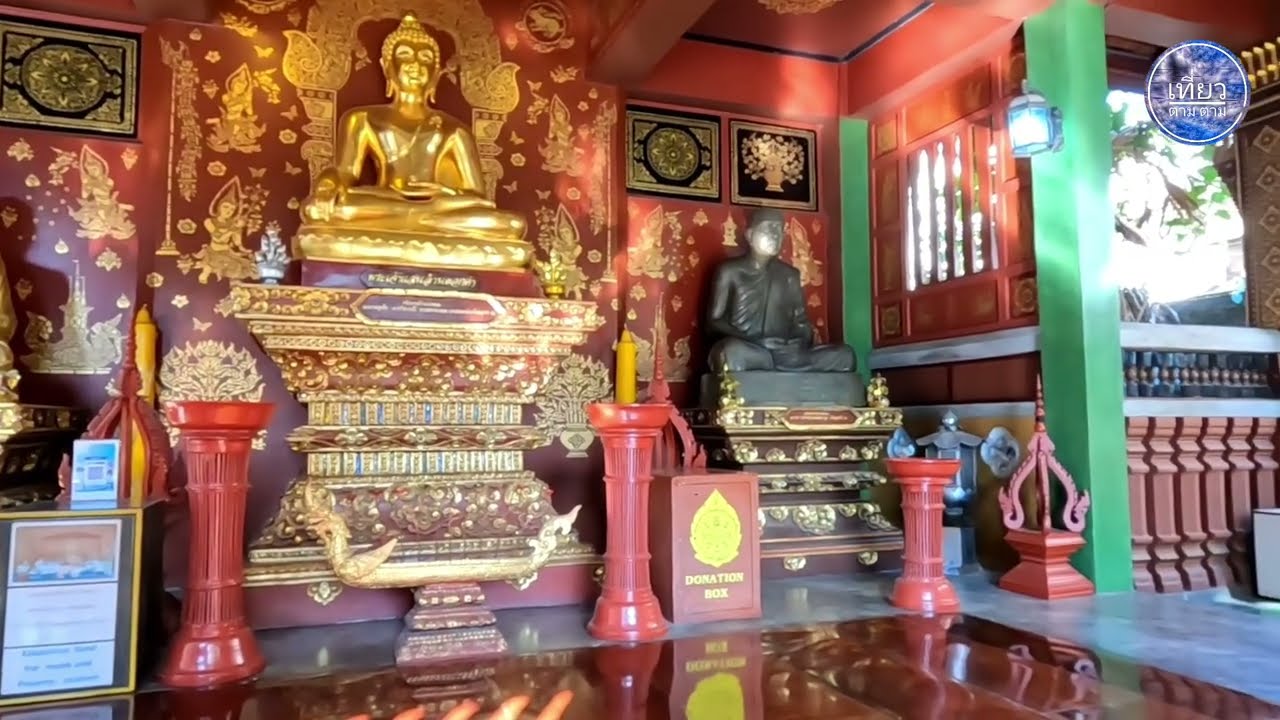
 Click to Access the Navigation Map GPS
Wat Dok Kham Map
Recommend

 Muang Chiang Mai(121)Chom Thong(47)Mae Chaem(25)Chiang Dao(33)Doi Saket(68)Mae Taeng(85)Mae Rim(69)Samoeng(29)Fang(71)Mae Ai(59)Phrao(70)San Pa Tong(105)San Kamphaeng(66)San Sai(73)Hang Dong(74)Hot(32)Doi Tao(22)Omkoi(11)Saraphi(74)Wiang Haeng(15)Chai Prakan(28)Mae Wang(32)Mae On(22)Doi Lo(34)Galyani Vadhana(1)


