
lovethailand home >North Travel Attractions >Chiang Mai Travel Attractions >Muang Chiang Mai >Wat Ket > Wat San Pa Khoi
TL;DR: Wat San Pa Khoi is located at Wat Ket Subdistrict, Mueang Chiang Mai District, Chiang Mai Province 50000, open Daily, hours Monday, Tuesday, Friday, Saturday and Sunday 06.00–21.00 / Wednesday and.
Wat San Pa Khoi
Open Days: Daily
Opening Hours: Monday, Tuesday, Friday, Saturday and Sunday 06.00–21.00 / Wednesday and Thursday 06.00–15.00
Wat San Pa Khoi is an old community temple in Wat Ket Subdistrict, Mueang Chiang Mai District, Chiang Mai Province. It stands in the San Pa Khoi neighborhood on the eastern side of the Ping River, an area closely connected with old markets, local trade, railway access, riverside communities, and everyday Chiang Mai life. The temple is a suitable stop for travelers who want to explore Chiang Mai temples beyond the main old-city circuit while still staying close to Tha Phae Gate, Warorot Market, San Pa Khoi Market, and the Wat Ket area.
Wat San Pa Khoi was officially established as a temple in 1881 and received its Wisung Kham Sima in 1947. These dates make it an important local religious site with a long history in Chiang Mai’s urban community. The temple is not only a place for merit-making and worship; it also reflects the growth of settlement on the eastern side of the Ping River, the relocation of local religious spaces after flooding, and the continued role of Buddhist temples in neighborhood life.
The original name of Wat San Pa Khoi was Wat Nang Liao. The temple was once located closer to the eastern bank of the Ping River, but after repeated flooding, it was moved to its current location. The present name, Wat San Pa Khoi, comes from the surrounding neighborhood. This name preserves the connection between the temple and the community, a common pattern in northern Thailand where temple names often reflect local geography, vegetation, settlement history, or community identity.
The San Pa Khoi and Wat Ket districts are important parts of Chiang Mai’s historic urban landscape. Located near the Ping River, Warorot Market, San Pa Khoi Market, Thong Kham Market, Charoen Mueang Road, and the railway corridor, this area combines religious life with market culture and old trading routes. Visiting Wat San Pa Khoi therefore gives travelers more than a single temple stop. It offers a compact view of how local temples, markets, food shops, and residential streets function together in Chiang Mai’s older east-side neighborhoods.
Architecturally, Wat San Pa Khoi contains several key elements of a northern Thai community temple. Its old chedi is one of the most meaningful features of the site. Historical information connects the chedi with the reign of King Kawilorot Suriyawong, and a celebration of the chedi is recorded around 1868. The chedi follows a round Chiang Mai-style form with a lotus base, bell-shaped body, surrounding wall elements, and decorative features that reflect local Buddhist architecture. Although the temple is not as large as Chiang Mai’s major royal temples, its cultural value lies in the way its buildings and sacred spaces preserve local history.
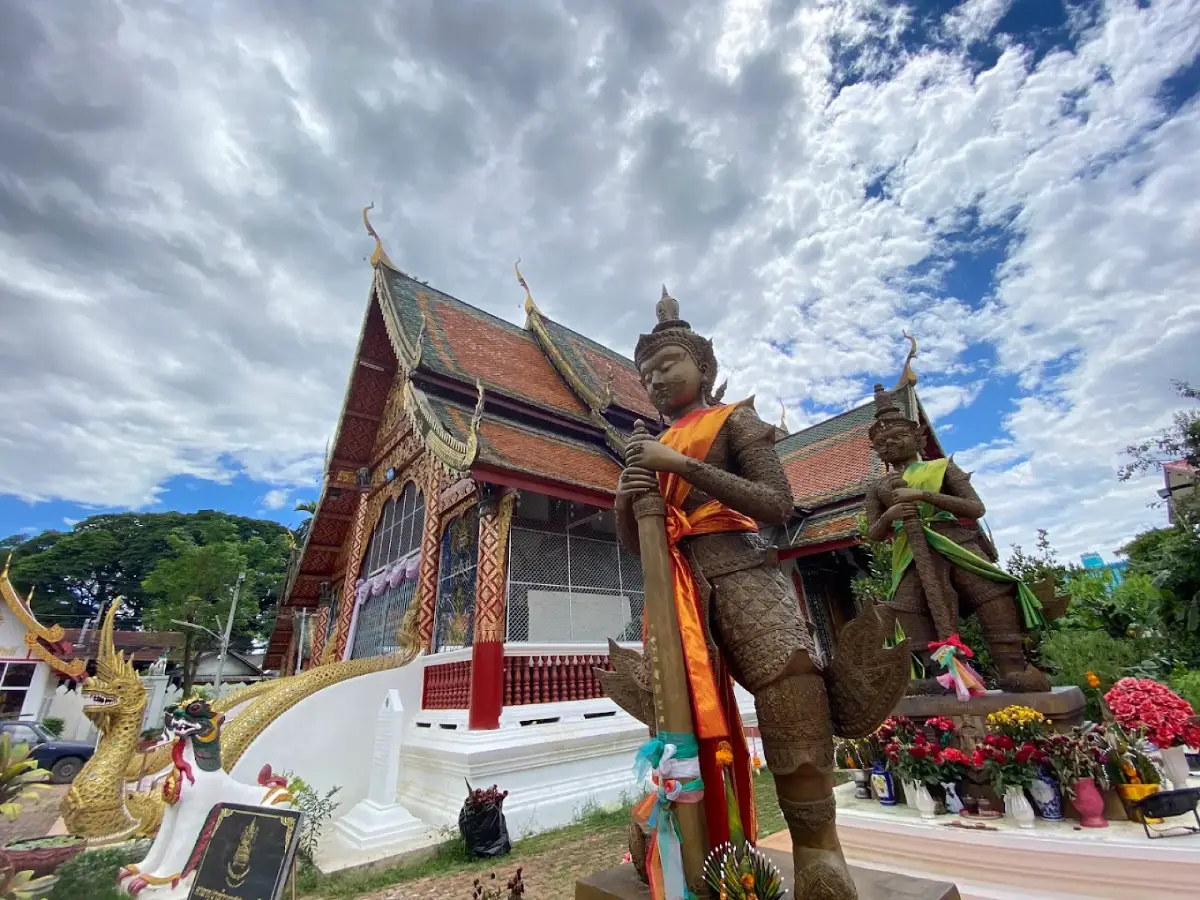
The viharn at Wat San Pa Khoi serves as the main worship space for visitors and local residents. The temple area also includes an ubosot, the old chedi, worship areas, and a Chinese shrine. The presence of a Chinese shrine within the temple compound reflects the cultural diversity of the Wat Ket and San Pa Khoi communities, where Buddhist, local northern Thai, and Chinese-influenced traditions have long existed together. This gives the temple a distinctive atmosphere compared with more tourist-focused temples in the old city.
Wat San Pa Khoi remains active as a neighborhood temple. Visitors will find a calm, local atmosphere rather than the heavy crowds often seen at the most famous tourist temples in Chiang Mai. This makes it a useful destination for travelers who prefer quiet cultural visits, local history, and walkable neighborhoods. The temple is especially convenient for those staying near Charoen Mueang Road, the Night Bazaar area, the railway station, Warorot Market, or the Ping River.
For travelers interested in Chiang Mai’s history beyond the city walls, Wat San Pa Khoi is a valuable stop. Many visitors associate Chiang Mai temple travel mainly with Wat Phra Singh, Wat Chedi Luang, and temples inside the old city moat. Wat San Pa Khoi adds another layer by showing how temples outside the old-city wall supported local communities, markets, and east-bank settlements. It helps travelers understand that Chiang Mai’s cultural landscape extends across the Ping River and into older neighborhoods where daily life continues around temples and markets.
Visitors should observe normal temple etiquette. Dress respectfully, keep noise low, remove shoes before entering designated religious buildings, and avoid taking intrusive photographs during worship or monastic activities. Wat San Pa Khoi is still a working religious site for the local community, so a visit should be quiet, respectful, and mindful of monks, residents, and worshippers.
A morning visit works well because the temple can be paired with nearby markets and food shops. The San Pa Khoi area is known for local eateries, traditional snacks, noodle shops, rice dishes, northern Thai food, and long-established food stalls. Travelers can begin with a temple visit, continue to San Pa Khoi Market or Thong Kham Market, and then move on to Warorot Market, Tha Phae Gate, or riverside attractions in the Wat Ket area.
Getting There is straightforward from central Chiang Mai. From Tha Phae Gate, Wat San Pa Khoi is about 1.5 km away and can be reached by red songthaew, tuk-tuk, ride-hailing car, or private vehicle. From Warorot Market, the distance is about 0.9 km, making it easy to combine the temple with a market visit. The temple is also convenient from Chiang Mai Railway Station because it is located near the Charoen Mueang Road corridor and the San Pa Khoi neighborhood.
Visitors arriving by private car can use Charoen Mueang Road, Nai Phon Road, or local roads within the Wat Ket area. Because the surrounding neighborhood includes markets and narrow urban streets, using local transport or a ride-hailing service is often more convenient for travelers who plan to continue to Warorot Market, Nawarat Bridge, Tha Phae Road, the Night Bazaar, or the Ping River area.
The best time to visit Wat San Pa Khoi is in the morning or late afternoon, when the weather is more comfortable. Morning is suitable for worship, merit-making, and local food stops, while late afternoon works well for travelers continuing toward Tha Phae Gate, the Night Bazaar, or riverside areas. Visiting outside peak market hours also gives travelers more time to observe the chedi, viharn, shrine, and quiet temple atmosphere.
Wat San Pa Khoi fits well into a half-day cultural route through Wat Ket and San Pa Khoi. A practical route can start at the temple, continue to San Pa Khoi Market, Warorot Market, Wat Ket Karam, Nawarat Bridge, and the Ping River, then end around Tha Phae Gate or Chiang Mai’s old city temples. This route is suitable for travelers who want temples, old neighborhoods, local food, markets, and city history in one compact itinerary.
For photography, Wat San Pa Khoi is best approached as a local cultural site rather than a large landmark. The most meaningful scenes are the old chedi, viharn, ubosot, Chinese shrine, worship areas, and quiet neighborhood surroundings. Photographers should avoid disrupting religious activities and should follow any temple restrictions on photography inside sacred buildings.
Wat San Pa Khoi is especially worthwhile for foreign travelers who want to understand Chiang Mai beyond its headline attractions. It shows how temples function as living community centers and how religious spaces are integrated into markets, streets, food culture, and neighborhood identity. A slow visit, combined with nearby local food and market walking, gives travelers a clearer view of everyday Chiang Mai.
Overall, Wat San Pa Khoi is a strong choice for travelers looking for an accessible, culturally meaningful temple in Chiang Mai. Its value comes from its history, its connection with the San Pa Khoi neighborhood, its old religious structures, its Chinese shrine, and its easy connection to nearby markets, restaurants, accommodations, and major city attractions. It is suitable for cultural travelers, temple visitors, families, photographers, and anyone planning a quiet stop in Chiang Mai’s old east-side district.
| Name | Wat San Pa Khoi |
| Location | Wat Ket Subdistrict, Mueang Chiang Mai District, Chiang Mai Province 50000 |
| Address | 18 Nai Phon Road, Wat Ket Subdistrict, Mueang Chiang Mai District, Chiang Mai Province 50000 |
| Coordinates | 18.7859939923, 99.0078019647 |
| Highlights | Old community temple in San Pa Khoi with an old chedi, viharn, ubosot, Chinese shrine, and important worship areas |
| History | Officially established as a temple in 1881 and granted Wisung Kham Sima in 1947. The old chedi is linked with the reign of King Kawilorot Suriyawong, with a celebration recorded around 1868 |
| Name Origin | The temple was formerly known as Wat Nang Liao. It was moved from a flood-prone area near the Ping River to its present site and later named after the San Pa Khoi neighborhood |
| Distinctive Features | Chiang Mai-style round chedi, northern Thai viharn, ubosot, Chinese shrine, and calm community-temple atmosphere |
| Travel Information | Accessible by private car, red songthaew, tuk-tuk, or ride-hailing service. About 1.5 km from Tha Phae Gate and about 0.9 km from Warorot Market |
| Current Status | Active local Buddhist temple under the Mahanikaya order in the San Pa Khoi neighborhood |
| Open Days | Daily |
| Opening Hours | Monday, Tuesday, Friday, Saturday and Sunday 06.00–21.00 / Wednesday and Thursday 06.00–15.00 |
| Facilities | Parking and wheelchair-accessible entrance |
| Main Areas / Zones | Viharn, chedi, ubosot, Chinese shrine, and worship areas |
| Main Contact Number | 053-245-608 |
| Nearby Tourist Attractions | 1. San Pa Khoi Market, about 0.2 km, Tel. 053-248-185 2. Warorot Market, about 0.9 km 3. Wat Ket Karam, about 1.3 km, Tel. 053-243-550 4. Tha Phae Gate, about 1.5 km 5. Tha Phae Walking Street, about 1.8 km 6. Wat Chedi Luang, about 2.3 km 7. Wat Phra Singh, about 2.8 km |
| Nearby Restaurants | 1. Nat Restaurant in front of Wat San Pa Khoi, about 0.1 km, Tel. 089-953-8898 2. Khanom Jeen San Pa Khoi at Thong Kham Market, about 0.1 km, Tel. 061-301-8000 3. Wikul Panich, about 0.1 km, Tel. 053-241-930 4. Pa Toi Chiang Mai, San Pa Khoi Branch, about 0.2 km, Tel. 087-990-2950 5. Aroi Tum Yum Zab Charoen Mueang, about 0.7 km, Tel. 052-002-181, 095-964-4397 6. Charoen Mueang Restaurant, about 0.2 km, Tel. 053-241-161 |
| Nearby Accommodations | 1. Shewe Wana Boutique Hotel Chiang Mai, about 0.5 km, Tel. 053-240-020 2. Gategaa Village, about 0.7 km, Tel. 088-894-4777 3. CHU Hotel, about 0.8 km, Tel. 053-244-495 4. Villa Sanpakoi, about 0.9 km, Tel. 095-145-1544 5. At The Train Hotel, about 1 km, Tel. 053-245-453, 081-473-6556 6. Puripunn Baby Grand Boutique Hotel, about 0.9 km, Tel. 053-244-567 |
Frequently Asked Questions (FAQ)
Q: Where is Wat San Pa Khoi located?
A: Wat San Pa Khoi is located at 18 Nai Phon Road, Wat Ket Subdistrict, Mueang Chiang Mai District, Chiang Mai Province 50000, in the San Pa Khoi neighborhood east of the Ping River.
Q: What are the opening hours of Wat San Pa Khoi?
A: The temple opens daily. It opens from 06.00 to 21.00 on Monday, Tuesday, Friday, Saturday, and Sunday, and from 06.00 to 15.00 on Wednesday and Thursday.
Q: Why is Wat San Pa Khoi historically important?
A: Wat San Pa Khoi is an old community temple officially established in 1881 and granted Wisung Kham Sima in 1947. It reflects the development of Chiang Mai’s east-side communities near the Ping River.
Q: What are the main highlights of Wat San Pa Khoi?
A: The main highlights include the old chedi, northern Thai viharn, ubosot, Chinese shrine, worship areas, and its quiet community-temple atmosphere.
Q: How can travelers get from Tha Phae Gate to Wat San Pa Khoi?
A: Travelers can take a red songthaew, tuk-tuk, ride-hailing car, or private vehicle from Tha Phae Gate. The distance is about 1.5 km.
Q: How long should visitors spend at Wat San Pa Khoi?
A: Most visitors can spend about 30 to 60 minutes for worship, walking around the temple compound, and observing the main religious structures.
Q: Are there restaurants near Wat San Pa Khoi?
A: Yes. Nearby options include Nat Restaurant, Khanom Jeen San Pa Khoi at Thong Kham Market, Wikul Panich, Pa Toi Chiang Mai, and other local restaurants around Charoen Mueang Road.
Q: What nearby attractions can be combined with Wat San Pa Khoi?
A: Visitors can combine the temple with San Pa Khoi Market, Warorot Market, Wat Ket Karam, Tha Phae Gate, Tha Phae Walking Street, Wat Chedi Luang, and Wat Phra Singh.
 Category: ●Places of Worship
 Group: ●Temple
Last Update : 8 HourAgo
 Last Update : 8 HourAgo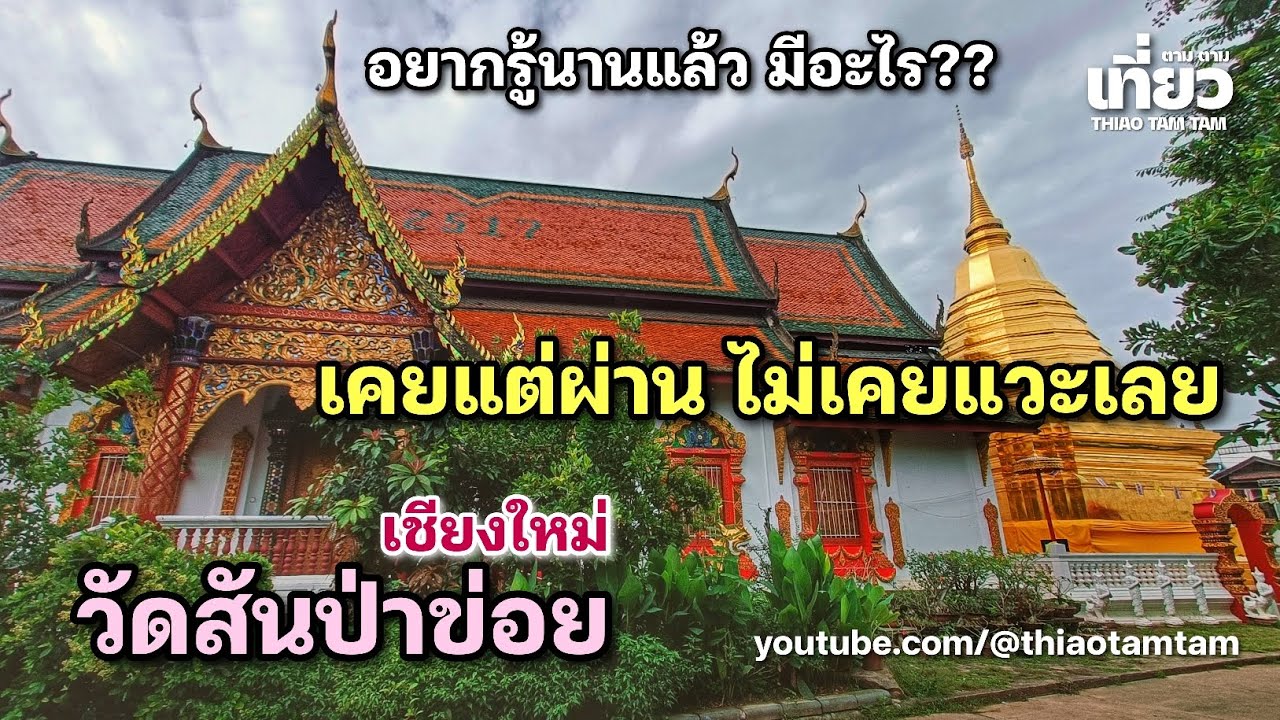
 Click to Access the Navigation Map GPS
Wat San Pa Khoi Map
Recommend

 Muang Chiang Mai(121)Chom Thong(47)Mae Chaem(25)Chiang Dao(33)Doi Saket(68)Mae Taeng(85)Mae Rim(69)Samoeng(29)Fang(71)Mae Ai(62)Phrao(70)San Pa Tong(105)San Kamphaeng(66)San Sai(73)Hang Dong(74)Hot(32)Doi Tao(22)Omkoi(11)Saraphi(74)Wiang Haeng(15)Chai Prakan(28)Mae Wang(32)Mae On(22)Doi Lo(34)Galyani Vadhana(1)


