
lovethailand home >North Travel Attractions >Chiang Mai Travel Attractions >Muang Chiang Mai >Wat Ket > Wat Sri Khong
TL;DR: Wat Sri Khong is located at Wat Ket Subdistrict, Mueang Chiang Mai District, Chiang Mai Province, open Daily, hours 08.00 – 17.00.
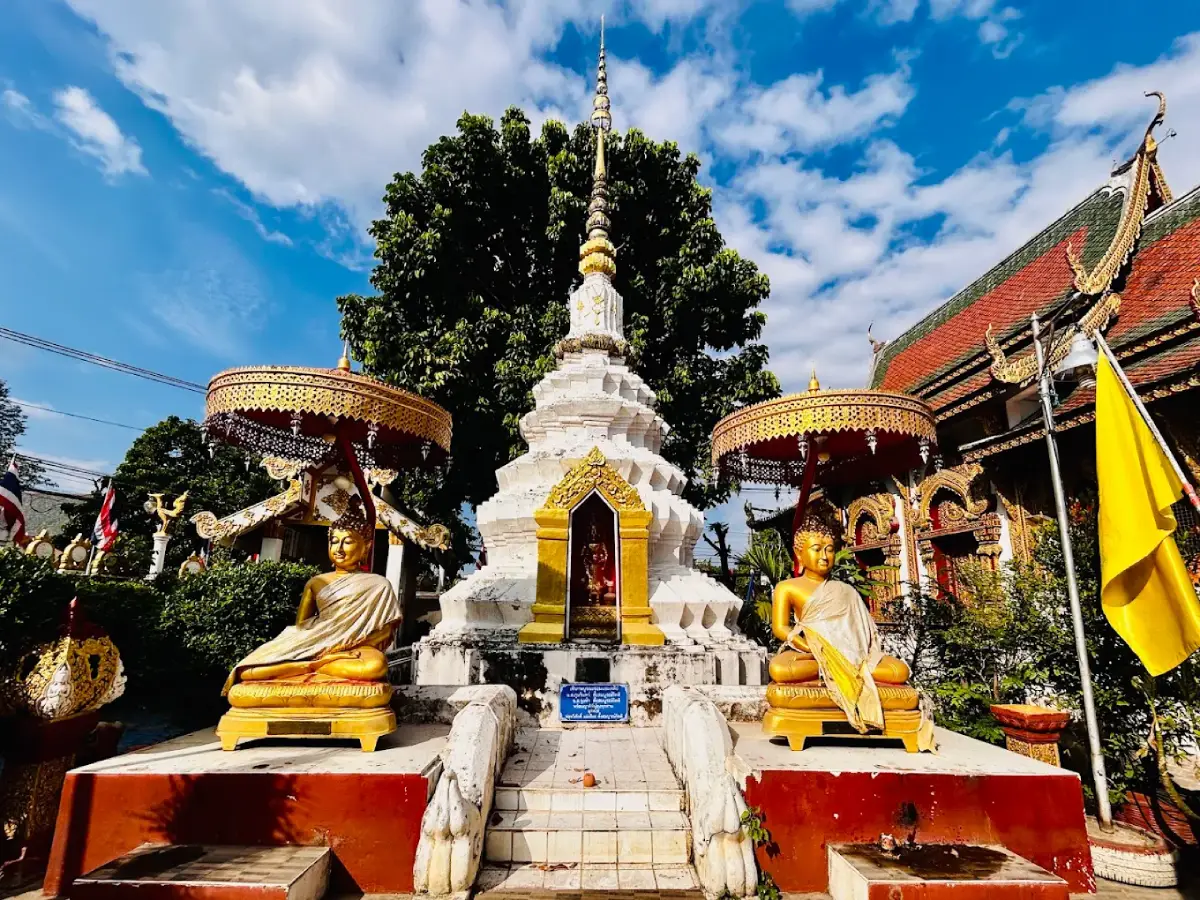
Wat Sri Khong
Open Days: Daily
Opening Hours: 08.00 – 17.00
Wat Sri Khong is an old Buddhist community temple in the Wat Ket area of Mueang Chiang Mai District, Chiang Mai Province. Located on Charoen Rat Road on the east side of the Ping River, the temple belongs to the Maha Nikaya order and has long been part of the cultural landscape of Wat Ket, one of Chiang Mai’s historic riverside neighborhoods. The temple is especially notable for the story behind its name, which is connected with a large Bodhi tree, locally remembered as “Sari Luang,” and a huge hollow at the base of the tree that gave rise to the word “Khong.”
Wat Sri Khong is suitable for travelers who want to understand Chiang Mai beyond the best-known temples inside the old city. The temple stands in a neighborhood shaped by riverside trade, old landing points, local markets, religious diversity, and historic movement along the Ping River. For this reason, Wat Sri Khong is not only a place for Buddhist worship. It is also a useful point from which to read the history of Chiang Mai through its temples, river ports, trade routes, and local communities.
The name “Sri Khong” preserves an important layer of local language and memory. The word “Sri” is connected with “Sari” or “Sa-li,” a northern Thai and Pali-related term associated with the Bodhi tree. Over time, the spelling came to follow the Sanskrit-influenced form “Sri.” The word “Khong” refers to a large hollow or cavity. Local tradition says that the area where the temple chedi now stands once had a large Bodhi tree with a hollow base wide enough for many people to take shelter from the rain. The temple’s name therefore connects language, nature, Buddhism, and community memory in one place.
This origin story is important because many place names in northern Thailand preserve older relationships between people and their environment. Temples were often named after trees, waterways, landing points, settlements, or important people. Wat Sri Khong belongs to this pattern. Its name tells visitors that before the present temple compound took shape, the area was remembered for a large Bodhi tree and a remarkable hollow at its base. Understanding the name helps visitors see the temple as part of a deeper local landscape.
Historical sources record that Wat Sri Khong was built in 1867, making it an old temple in Chiang Mai’s urban east-bank area. This period was significant for Chiang Mai, as the city was changing through trade, river transport, expanding communities, and stronger connections with Siam. Wat Ket was one of the key riverside neighborhoods of the city. A temple in this area served not only as a sacred place, but also as a social anchor for people living and working around the Ping River.
The temple is located at 264 Charoen Rat Road, Wat Ket Subdistrict, Mueang Chiang Mai District, Chiang Mai Province. Its land area covers 2 rai and 90 square wah. Although the compound is modest in scale compared with major landmark temples, its importance comes from its position and context. Behind the temple is the Ping River area traditionally known as Tha Sri Khong. This riverside connection gives Wat Sri Khong a distinct character as both a Buddhist temple and a memory point of Chiang Mai’s old river transport landscape.
Tha Sri Khong is one of the features that makes Wat Sri Khong different from many urban temples. The rear side of the temple was associated with a large riverside landing point on the Ping River. In the past, this area was also connected with timber movement, especially teak logs transported along the river. This shows how the Ping River once functioned as an economic and transport artery for Chiang Mai before roads and railways became more dominant.
Today, the former riverside context of Wat Sri Khong is also associated with the Scorpion-Tailed Boat pier, a tourism pier on the Ping River. River routes in this area allow visitors to see Chiang Mai from a different angle, passing riverside neighborhoods, old temples, bridges, and historic sites along the Ping. The connection between Wat Sri Khong and the river pier strengthens the temple’s value as a link between faith, riverside culture, and the city’s transport history.
The wider Wat Ket neighborhood is one of Chiang Mai’s most important old communities. Before the arrival of the railway, this area served as a major riverside zone for travel, commerce, and exchange. Historic houses, temples, mosques, churches, old shops, and trading communities all contributed to the neighborhood’s distinctive identity. Wat Sri Khong should therefore be understood as part of a dense cultural landscape rather than as an isolated temple.
A visit to Wat Sri Khong is best approached as a visit to a working community temple. The atmosphere is calm, compact, and local. Visitors can begin by paying respect to the Buddha images, then observe the chedi, the worship areas, and the relationship between the temple compound, Charoen Rat Road, and the Ping River behind the neighborhood. The temple is not designed as a large-scale tourist site, but its quiet character is precisely what makes it meaningful.
The chedi is one of the key elements of Wat Sri Khong because it is connected with the story of the temple’s name. The area where the chedi stands is remembered as the site of the great Bodhi tree with the hollow base. In northern Thai Buddhist culture, a chedi often functions as a focal point of devotion and sacred memory. At Wat Sri Khong, the chedi also helps visitors connect the temple’s religious identity with the local story of the Bodhi tree and the name “Sri Khong.”
The Buddha images and worship spaces within the temple form the devotional heart of the compound. In a community temple, Buddha images are not valued only for artistic appearance. They also represent accumulated local faith, merit-making, and the spiritual life of residents. People come to worship on Buddhist holy days, during ceremonies, and at personal moments when they seek calm and merit. Wat Sri Khong therefore offers a direct encounter with the everyday religious culture of Wat Ket.
Wat Sri Khong also has a history of Buddhist education. During the period when Luang Ta Pom served as abbot, the temple hosted Sunday Buddhist teaching. Pali study and meditation instruction were also part of the temple’s role, with monks and lay supporters contributing to religious education. This history shows that Wat Sri Khong functioned not only as a place for ceremonies, but also as a place for learning Dhamma, Pali, and meditation practice in the local community.
The temple’s continuity has also depended on lay supporters. Local history mentions Mae Boon Sri Krasai Chai, wife of Nai Tia Seng Krasae Chai, as one of the important supporters connected with the temple. Such stories show how Thai community temples survive through cooperation between monks, laypeople, families, and local networks of faith. Wat Sri Khong is therefore a record of both monastic life and lay devotion.
Current public temple information identifies Wat Sri Khong as a Wat Rat, with Phra Achan Somphon Opaso serving as abbot and five resident monks. This confirms that the temple remains an active Buddhist institution rather than a historical site separated from living practice. Visitors should treat the compound as a sacred and active space used by monks, worshippers, and the surrounding community.
Wat Sri Khong is a strong stop on a Wat Ket cultural route. Nearby places include Wat Ket Karam, Wat Ket Museum, Attaqwa Mosque, Nawarat Bridge, Warorot Market, Ton Lam Yai Market, the Ping River, and riverside restaurants. Visitors interested in local history can easily combine these places to understand the neighborhood’s mix of Buddhist, Muslim, Chinese, Western, and Lanna influences.
Wat Ket Karam, located nearby, is another important temple in the neighborhood. It has long served as a central religious and community point, and its museum preserves photographs, objects, and memories of the old Wat Ket area. Visiting Wat Sri Khong together with Wat Ket Karam gives travelers a deeper understanding of the east bank of the Ping River and the relationship between temples, community life, and old trade routes.
Attaqwa Mosque, also known as the San Pa Khoi Mosque, is another nearby landmark that shows the religious diversity of the area. The presence of Buddhist temples, a mosque, Chinese-influenced shops, old trading houses, and riverside communities within a short distance makes Wat Ket one of Chiang Mai’s most culturally layered neighborhoods. Wat Sri Khong contributes to this landscape as a Buddhist community temple with a strong local identity.
The route from Wat Sri Khong to Warorot Market and Ton Lam Yai Market helps connect temple culture with the city’s commercial life. Warorot Market, often known locally as Kad Luang, remains one of Chiang Mai’s most active traditional markets, with local food, textiles, snacks, everyday goods, and northern Thai products. A visit that begins at Wat Sri Khong and continues to these markets helps travelers understand how religion, commerce, and the river shaped Chiang Mai.
For travelers interested in the riverside, Wat Sri Khong can be combined with the Scorpion-Tailed Boat pier and Ping River routes. These river experiences pass old neighborhoods, bridges, temples, and historic riverside sites. Although the boat activity is not part of the temple itself, it helps explain the meaning of Tha Sri Khong and why the Ping River was so central to the development of this area.
Architecturally and spatially, Wat Sri Khong is a compact urban temple. Its value lies less in monumental scale and more in its relationship with Charoen Rat Road, the old landing point, the chedi, worship spaces, and the surrounding neighborhood. Visitors should observe how the temple sits within the urban fabric. The roads, river, houses, markets, and religious buildings around it are all part of the same cultural story.
Most visitors can spend around 30 to 60 minutes at Wat Sri Khong for worship and a careful look at the main temple spaces. Those who want a deeper experience of Wat Ket should plan at least half a day. A practical route can begin at Wat Sri Khong, continue to Wat Ket Karam and Wat Ket Museum, then move on to Attaqwa Mosque, Nawarat Bridge, Warorot Market, Ton Lam Yai Market, and riverside restaurants.
Getting There is convenient from many parts of Chiang Mai. From Tha Phae Gate or the old city, visitors can cross the Ping River via Nawarat Bridge and continue along Charoen Rat Road. From Chiang Mai Railway Station, the temple is a short local ride away by red songthaew, local transport, ride-hailing service, motorcycle, or private car. Because the temple is located in an old urban neighborhood, visitors should allow time for traffic and parking.
Travelers staying around Night Bazaar, Warorot Market, Wat Ket, or the Ping River can include Wat Sri Khong as a quiet cultural stop during the day. Many restaurants, cafés, hotels, and cultural sites are scattered along Charoen Rat Road and nearby streets. A slow walking route or short local ride is often the best way to experience the area.
Temple etiquette is important at Wat Sri Khong. Visitors should dress modestly, keep voices low, remove shoes before entering sacred areas, avoid touching Buddha images or sacred objects, and respect areas used by monks. During ceremonies or community activities, visitors should give space to worshippers and avoid intrusive photography.
Photography should be done respectfully. Suitable subjects include the chedi, temple buildings, worship spaces, and the overall atmosphere of the temple and Charoen Rat Road. Visitors should avoid photographing monks or worshippers at close range without permission and should not use flash inside sacred buildings. Respectful behavior helps preserve the quiet dignity of a living community temple.
Wat Sri Khong is also useful for travelers interested in the meaning of place names. Its name preserves the shift from “Sari” or “Sa-li,” associated with the Bodhi tree, to the modern spelling “Sri,” while “Khong” refers to the large hollow at the base of the tree. This makes the temple a strong example of how language, trees, Buddhism, and community memory are linked in northern Thailand.
From a cultural travel perspective, Wat Sri Khong adds depth to Chiang Mai temple routes. Many visitors know Wat Phra Singh, Wat Chedi Luang, Wat Chiang Man, and Doi Suthep, but Wat Sri Khong represents a different type of experience: a smaller community temple in an old riverside neighborhood. This type of temple is essential for understanding Chiang Mai as a living city with many layers of history.
When considered together with other nearby religious sites, Wat Sri Khong helps reveal the cultural density of Wat Ket. Wat Ket Karam, Wat Sri Khong, Wat Chai Mongkhon, Attaqwa Mosque, riverside markets, bridges, and old trading houses form a network of places that tell the story of religion, trade, transport, and community life on the east bank of the Ping River.
In summary, Wat Sri Khong is an old temple in the Wat Ket area with a distinctive name origin, a history dating to 1867, a connection with the Bodhi tree story, a relationship with Tha Sri Khong and the Scorpion-Tailed Boat pier, and an ongoing role as a community Buddhist temple. Travelers who want to explore Chiang Mai more deeply should include Wat Sri Khong in a route with Wat Ket, Warorot Market, Nawarat Bridge, the Ping River, and the old riverside neighborhoods of the city.
| Name | Wat Sri Khong |
| Location | Wat Ket Subdistrict, Mueang Chiang Mai District, Chiang Mai Province |
| Address | 264 Charoen Rat Road, Wat Ket Subdistrict, Mueang Chiang Mai District, Chiang Mai 50000, Thailand |
| Coordinates | 18.79592, 99.00115 |
| Type | Wat Rat; Maha Nikaya Buddhist temple |
| Temple Land Area | 2 rai and 90 square wah |
| History | Built in 1867; an old temple in the Wat Ket area on the east side of the Ping River |
| Name Origin | The name is linked with a large Bodhi tree known as Sari Luang and a huge hollow, or “Khong,” at the base of the tree. “Sari” was later written as “Sri.” |
| Highlights | Old community temple in Wat Ket, Bodhi tree name story, Tha Sri Khong, Scorpion-Tailed Boat pier, chedi, Buddha images, and calm riverside-neighborhood atmosphere |
| Main Areas / Zones | Buddha image worship area Wat Sri Khong chedi Community temple compound on Charoen Rat Road Rear area connected with the Ping River and Tha Sri Khong |
| Abbot / Caretaker | Phra Achan Somphon Opaso |
| Resident Monks | 5 monks |
| Travel Information | Accessible by private car, motorcycle, red songthaew, local transport, or ride-hailing service via Nawarat Bridge, Charoen Rat Road, Charoen Mueang Road, or riverside routes in Wat Ket |
| Current Status | Open to visitors and remains an active community temple in Wat Ket, Mueang Chiang Mai District |
| Open Days | Daily |
| Opening Hours | 08.00 – 17.00 |
| Nearby Tourist Attractions | 1. Wat Ket Museum, about 0.4 km 2. Wat Ket Karam, about 0.4 km 3. Attaqwa Mosque San Pa Khoi, about 0.8 km 4. Warorot Market, about 1.2 km 5. Ton Lam Yai Market, about 1.3 km 6. Nawarat Bridge, about 1.4 km 7. Iron Bridge Chiang Mai, about 1.7 km |
| Nearby Restaurants | 1. Samsen Villa Chiang Mai, about 0.3 km 2. Woo Cafe Art Gallery Lifestyle Shop, about 0.5 km, Tel. 052-003-717 3. Vieng Joom On Teahouse, about 0.6 km 4. The Good View Bar & Restaurant Chiang Mai, about 0.8 km, Tel. 099-271-0666 5. Deck 1, about 0.9 km, Tel. 053-302-788 6. Khao Soi Lam Duan Fah Ham, about 2.4 km |
| Nearby Accommodations | 1. Hotel Ping Silhouette, about 0.3 km 2. Sala Lanna Chiang Mai, about 0.6 km, Tel. 053-242-588 3. 137 Pillars House Chiang Mai, about 0.9 km, Tel. 053-247-788 4. RarinJinda Wellness Spa Resort, about 1 km 5. Gategaa Village, about 1.6 km, Tel. 088-894-4777 6. Rimping Village Chiang Mai, about 1.8 km, Tel. 053-243915, 053-243916 |
Frequently Asked Questions (FAQ)
Q: Where is Wat Sri Khong located?
A: Wat Sri Khong is located at 264 Charoen Rat Road, Wat Ket Subdistrict, Mueang Chiang Mai District, Chiang Mai Province, on the east side of the Ping River.
Q: What are the opening days and hours of Wat Sri Khong?
A: Wat Sri Khong is open daily from 08.00 to 17.00.
Q: What is the origin of the name Wat Sri Khong?
A: The name comes from a local story about a large Bodhi tree, or Sari Luang, with a huge hollow at its base. “Sari” later became written as “Sri,” while “Khong” refers to the hollow.
Q: When was Wat Sri Khong built?
A: Wat Sri Khong was built in 1867 and is one of the old community temples in the Wat Ket area of Chiang Mai.
Q: What are the highlights of Wat Sri Khong?
A: Highlights include the Bodhi tree name story, the chedi, Buddha worship areas, the connection with Tha Sri Khong, the Scorpion-Tailed Boat pier, and the quiet atmosphere of an old community temple near the Ping River.
Q: Who is the abbot of Wat Sri Khong?
A: The abbot of Wat Sri Khong is Phra Achan Somphon Opaso.
Q: How can travelers get to Wat Sri Khong?
A: Travelers can reach Wat Sri Khong by private car, motorcycle, red songthaew, local transport, or ride-hailing service via Nawarat Bridge, Charoen Rat Road, Charoen Mueang Road, or riverside routes in Wat Ket.
Q: What nearby places can be visited with Wat Sri Khong?
A: Nearby places include Wat Ket Museum, Wat Ket Karam, Attaqwa Mosque, Warorot Market, Ton Lam Yai Market, Nawarat Bridge, Iron Bridge, and the Ping River area.
 Category: ●Places of Worship
 Group: ●Temple
Last Update : 2 WeekAgo
 Last Update : 2 WeekAgo
 Click to Access the Navigation Map GPS
Wat Sri Khong Map
Recommend

 Muang Chiang Mai(121)Chom Thong(47)Mae Chaem(25)Chiang Dao(33)Doi Saket(68)Mae Taeng(85)Mae Rim(69)Samoeng(29)Fang(71)Mae Ai(59)Phrao(70)San Pa Tong(103)San Kamphaeng(66)San Sai(73)Hang Dong(73)Hot(32)Doi Tao(22)Omkoi(11)Saraphi(74)Wiang Haeng(15)Chai Prakan(28)Mae Wang(32)Mae On(22)Doi Lo(34)Galyani Vadhana(1)


