
lovethailand home >North Travel Attractions >Chiang Mai Travel Attractions >Muang Chiang Mai >Wat Ket > Wat Tha Sa Toi
TL;DR: Wat Tha Sa Toi is located at Wat Ket Subdistrict, Mueang Chiang Mai District, Chiang Mai Province, open Daily, hours 08.00 – 17.00.
Wat Tha Sa Toi
Open Days: Daily
Opening Hours: 08.00 – 17.00
Wat Tha Sa Toi, also written as Wat Tha Satoy, is an old community temple in Wat Ket Subdistrict, Mueang Chiang Mai District, Chiang Mai Province. Located near Chiang Mai-Lamphun Road and within easy reach of Nawarat Bridge, the temple is closely tied to the history of Chiang Mai’s revival, the Tha Sa Toi community, Lanna Buddhist art, a finely decorated viharn, a Lanna-style chedi with Sukhothai influence, Phra Chao Tan Jai, and a living relationship between the temple and Wat Tha Satoi Municipal School within the same compound.
For travelers looking for a quieter Buddhist temple in Chiang Mai, Wat Tha Sa Toi offers more than a short stop for merit-making. It is a place where local history, religious life, school life, and neighborhood memory still meet in a real community setting. The temple is not as crowded as the major landmarks inside the old city, but its value lies in the details: carved woodwork, stucco decoration, colored glass, Buddhist murals, local shrines, and the way the temple continues to serve people who live around it.
The name Tha Sa Toi is connected to the old settlement of “Sa Toi,” a community associated with the population movements during the revival of Chiang Mai under King Kawila. This period is remembered in northern Thai history through the phrase often translated as gathering people back into the city. After Chiang Mai had endured more than 200 years under Burmese domination, King Kawila worked to rebuild the city by bringing people from different towns across the Lanna region to resettle in Chiang Mai. The Sa Toi people became part of that historical movement, and the community around today’s temple preserves the memory of that settlement.
This historical context makes Wat Tha Sa Toi especially meaningful. The temple did not emerge merely as a religious building; it grew out of the return of people, households, belief systems, and social order to Chiang Mai. When different communities resettled in the city, they brought languages, craftsmanship, religious habits, and local identities with them. Over time, these groups became part of the wider Chiang Mai urban community. The temple therefore stands as a reminder that the city’s recovery was not only a political event, but also a human process built through neighborhoods, temples, markets, schools, and shared rituals.
Wat Tha Sa Toi is situated in the Wat Ket area on the east side of the Ping River. This part of Chiang Mai has long been linked with river trade, local markets, transport routes, and multicultural settlement. The temple can easily be included in a cultural route through Wat Ket, San Pa Khoi, Warorot Market, Iron Bridge, Wat Chai Mongkhon, Wat Ket Karam, and riverside areas along the Ping River. Travelers can plan a half-day or full-day walk around this side of Chiang Mai without needing long-distance transport.
Inside the temple compound, one of the most distinctive features is the relationship between the monastic area and Wat Tha Satoi Municipal School. The two areas sit within the same compound without a hard visual separation, reflecting the traditional role of Thai temples as centers not only of religion but also of education and community life. This gives the temple a living atmosphere. It is possible to see daily school activity alongside the quiet rhythm of Buddhist worship, especially during weekdays.
This temple-school relationship gives Wat Tha Sa Toi a character that differs from many heavily visited tourist temples. It is a working community space rather than a staged attraction. On Buddhist holy days and important religious occasions, the temple remains a place for merit-making, sermons, and community participation. The setting shows how temples in northern Thailand have historically supported learning, social values, and public life, not only religious ceremonies.
The viharn is the main architectural highlight and deserves careful attention. The rear side of the viharn features a finely decorated arched structure with stucco work and colorful glass inlay. Within the niche is a small Buddha image in the Mara Vijaya posture, while the front area includes a sculpture of Phra Mae Thorani wringing her hair. In Buddhist iconography, Phra Mae Thorani is associated with the moment when the Buddha called the earth to witness his accumulated merit before attaining enlightenment. This makes the sculpture more than decoration; it expresses the Buddhist idea that virtue and perseverance can overcome obstruction.
The area around the viharn is shaded by trees, giving visitors a calm setting for slow observation. Wat Tha Sa Toi is best appreciated through detail rather than scale. The stucco patterns, reflective glass pieces, guardian forms, carved wooden gable, and quiet surrounding greenery reveal the care invested in local Lanna craftsmanship. This is the kind of temple where a visitor benefits from walking slowly, pausing often, and looking closely at surfaces, symbols, and spatial relationships.
At the front of the viharn, the wooden gable is carved with thepphanom figures and floral motifs. The thepphanom gesture represents reverence and auspiciousness, while the plant motifs soften the architectural lines with the grace associated with Lanna decorative art. Beneath the curved decorative frames on both sides are low-relief figures of two revered monks, reflecting the temple’s respect for teachers and spiritual elders.
The entrance arch includes peacock figures, a symbolic motif often associated with Lanna visual culture. The peacock gives the viharn entrance a sense of elegance before visitors step into the sacred interior. Inside, a group of Buddha images in the Mara Vijaya posture is enshrined, and the walls contain murals narrating episodes from the life of the Buddha. These murals serve as visual teachings, allowing visitors and local worshippers to understand Buddhist stories through images rather than text alone.
The Mara Vijaya Buddha image is a common and important form in Thai and Lanna temples, but within Wat Tha Sa Toi it carries a strong sense of spiritual grounding. The posture represents the Buddha’s victory over Mara and symbolizes inner steadiness, moral strength, and the overcoming of obstacles. Visitors who come to pray here often experience the temple as a quiet place to gather their thoughts and begin again with calm determination.
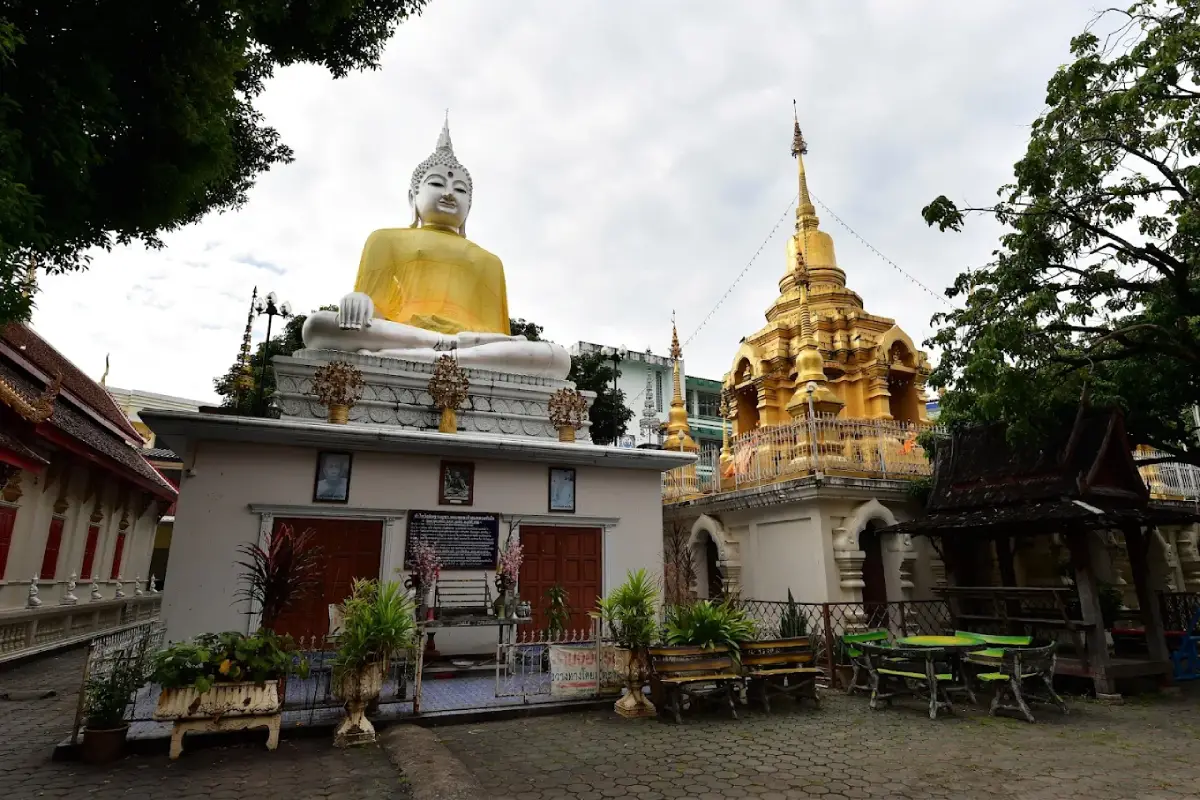
The temple’s chedi is another essential feature. It stands within the school zone on top of a building, an unusual location that makes it visually and spatially distinctive. The chedi reflects Lanna art with Sukhothai influence. At each corner stands a small attendant chedi. The raised square base has recessed angles, and each side contains a niche with a Buddha image in the Mara Vijaya posture. Above the base is a sixteen-sided moulding supporting the bell-shaped body, while the top rises to a seven-tiered golden umbrella.
The chedi’s form demonstrates a refined combination of Lanna and Sukhothai-derived elements. The recessed base creates visual rhythm, the niches turn each side into a devotional surface, and the layered structure leads the eye upward toward the golden umbrella. Its importance is not based on monumental size, but on proportion, placement, and layered symbolism. For visitors interested in Buddhist architecture, this chedi is one of the most rewarding elements of the temple.
Near the chedi stands Phra Chao Tan Jai, a large white Buddha image in the Mara Vijaya posture seated on a lotus base. Phra Chao Tan Jai images are widely respected in northern Thailand and are often associated with auspicious blessings. At Wat Tha Sa Toi, the image forms a key devotional point near the chedi, allowing visitors to pay respect, sit quietly, and experience the temple’s peaceful atmosphere.
Another meaningful stop is the hall of revered teachers, where statues of Khruba Bunmi, Khruba Sitthi, and Somdet Phra Phutthachan are enshrined. This hall reflects the northern Thai tradition of honoring Buddhist teachers and spiritual predecessors. Paying respect here is not only an act of devotion to individual figures, but also a way of acknowledging the transmission of Buddhist practice, learning, and community leadership across generations.
Beside the hall is a shrine to Ganesha. In Thailand, Ganesha is widely respected as a deity connected with wisdom, learning, arts, and success. Its presence within the temple compound illustrates the flexible religious culture often found in Thai and Lanna settings, where Buddhist practice remains central while other sacred figures may also be honored by worshippers according to personal faith.
Wat Tha Sa Toi can be understood through several layers. The first layer is the historical memory of the Sa Toi community and Chiang Mai’s revival under King Kawila. The second layer is Lanna religious art expressed through the viharn, arches, carvings, murals, and chedi. The third layer is the temple’s community function through its shared compound with the municipal school. The final layer is devotional life, with Buddha images, Phra Chao Tan Jai, revered teachers, and the Ganesha shrine forming a set of sacred points within the same space.
For photography, the temple is best approached as a place of detail. Good subjects include the carved wooden gable, the front and rear arches of the viharn, the peacock figures, colored glass decoration, Phra Mae Thorani sculpture, Buddhist murals, the chedi and its attendant structures, and the area around Phra Chao Tan Jai. Visitors should take photographs respectfully, avoid disturbing monks or worshippers, and be especially careful not to photograph schoolchildren without permission.
Wat Tha Sa Toi is particularly suitable for travelers who want to understand Chiang Mai beyond its famous old-city temples. Small community temples often preserve important evidence of local history: settlement names, migration patterns, neighborhood identity, craftsmanship, and the daily role of religion. Visiting Wat Tha Sa Toi is therefore not only about seeing a temple, but about reading Chiang Mai through a real local place that continues to connect past and present.
A practical itinerary can begin at Wat Tha Sa Toi in the morning or late morning, allowing 30 to 60 minutes for the viharn, chedi, Phra Chao Tan Jai, and the hall of revered teachers. After that, travelers can continue to Thongkham Market or the San Pa Khoi area for local food, then move on to Iron Bridge, Wat Chai Mongkhon, Mae Ping River Cruise, Warorot Market, or Wat Ket Karam. This route works well for visitors who enjoy slower cultural travel rather than rushing between major landmarks.
Getting There is convenient by private car, motorcycle, red songthaew, or ride-hailing service. Main access routes include Charoen Mueang Road, Chiang Mai-Lamphun Road, and the route from Nawarat Bridge into the Wat Ket and San Pa Khoi neighborhoods. Because the temple is located in an active urban community, visitors should allow time for traffic and parking, especially during school hours and late afternoon. Travelers staying near the Night Bazaar, Iron Bridge, Warorot Market, or the Ping River can reach the temple within a short local ride.
Visitors arriving by public transport can get off near Nawarat Bridge, Warorot Market, Iron Bridge, or Charoen Mueang Road, then continue by red songthaew, local taxi, or on foot if the weather is comfortable. The temple is also relatively close to Chiang Mai Railway Station, making it a useful first stop for travelers who arrive by train and want to explore the San Pa Khoi, Wat Ket, and riverside districts before entering the old city.
Temple etiquette is important. Visitors should dress modestly, remove shoes before entering sacred areas, keep their voices low, and avoid touching Buddha images, murals, stucco work, or decorative elements. Since a school operates within the same compound, visitors should be mindful of school activity and avoid intrusive photography. The best way to appreciate a living community temple is to respect both the sacred space and the people who use it every day.
As a cultural destination, Wat Tha Sa Toi is ideal for travelers interested in Lanna history, King Kawila, the Wat Ket neighborhood, northern Thai temple architecture, and the social role of temples in education and community life. It can be visited as a quiet stop between better-known Chiang Mai attractions or as part of a deeper route through the east bank of the Ping River.
The strength of Wat Tha Sa Toi lies in its balance of religious function, community life, and artistic value. The viharn and chedi preserve craftsmanship, while the school and religious activities show the temple’s continuing role in the present. Taken together, Wat Tha Sa Toi is not just another temple in Chiang Mai; it is a compact but meaningful place for understanding how temples help shape local identity, memory, and everyday life in northern Thailand.
Visitors should take time to move through the temple step by step: the front of the viharn, entrance arch, peacock figures, carved gable, Buddha images, murals, rear stucco arch, Phra Mae Thorani sculpture, chedi, Phra Chao Tan Jai, hall of revered teachers, and Ganesha shrine. This slow approach reveals how much history and symbolism can exist within a modest community temple.
In summary, Wat Tha Sa Toi is a worthwhile cultural and spiritual stop in Mueang Chiang Mai. Its highlights include the history of the Sa Toi community, the legacy of Chiang Mai’s revival period, the temple-school relationship, Lanna-style decorative art, a chedi with Sukhothai influence, Phra Chao Tan Jai, and a meaningful hall of revered teachers. Travelers who want to experience Chiang Mai through local neighborhoods, not only famous landmarks, should include this temple in a Wat Ket, San Pa Khoi, and Ping River itinerary.
| Name | Wat Tha Sa Toi / Wat Tha Satoy |
| Location | Wat Ket Subdistrict, Mueang Chiang Mai District, Chiang Mai Province |
| Address | Tha Satoi Road, Wat Ket Subdistrict, Mueang Chiang Mai District, Chiang Mai 50000, Thailand |
| Coordinates | 18.78308, 99.00737 |
| Type | Community Buddhist temple; Wat Rat; Maha Nikaya |
| Highlights | Lanna-style viharn, colored-glass stucco arch, chedi with Lanna and Sukhothai influence, Phra Chao Tan Jai, and hall of revered teachers |
| History | Established in the early period of the Thipchakrathiwong dynasty and linked to King Kawila’s revival of Chiang Mai and the settlement of the Sa Toi community |
| Name Origin | The name Tha Sa Toi is connected to the old Sa Toi settlement and the community surrounding the present temple |
| Distinctive Features | A living community temple sharing its compound with Wat Tha Satoi Municipal School, reflecting the temple’s role in religion, education, and neighborhood life |
| Main Areas / Zones | Monastic area Wat Tha Satoi Municipal School area Viharn Chedi Phra Chao Tan Jai Hall of revered teachers Ganesha shrine |
| Important Sacred Objects | Mara Vijaya Buddha images, Buddhist murals, Phra Mae Thorani sculpture, attendant chedis, Phra Chao Tan Jai, statues of Khruba Bunmi, Khruba Sitthi, and Somdet Phra Phutthachan |
| Travel Information | Accessible by private car, motorcycle, red songthaew, or ride-hailing service via Charoen Mueang Road, Chiang Mai-Lamphun Road, or the route from Nawarat Bridge into Wat Ket and San Pa Khoi |
| Current Status | Open to visitors and remains an active community temple in Wat Ket Subdistrict, Mueang Chiang Mai District |
| Open Days | Daily |
| Opening Hours | 08.00 – 17.00 |
| Nearby Tourist Attractions | 1. Mae Ping River Cruise, about 0.5 km 2. Wat Chai Mongkhon, about 0.5 km 3. Iron Bridge Chiang Mai, about 0.6 km 4. Thongkham Market, about 0.5 km 5. Warorot Market, about 1.2 km 6. Wat Ket Karam, about 1.5 km |
| Nearby Restaurants | 1. Khao Soi BusCoffee Tha Satoi, about 0.2 km, Tel. 098-262-7963 2. Lan Tiew Behind San Pa Khoi Fire Station, about 0.3 km, Tel. 095-473-1303, 097-256-7161 3. Sanpakoi Kanomjeen at Thongkham Market, about 0.5 km, Tel. 061-301-8000 4. Khao Ngiao Khun Yai at Trok Lao Jo, about 0.6 km, Tel. 086-671-6215 5. Aroi Tum Yum Zap Charoen Mueang, about 1 km, Tel. 052-002-181, 095-964-4397 |
| Nearby Accommodations | 1. Rimping Village Chiang Mai, about 0.9 km, Tel. 053-243915, 053-243916, 085-695-4436 2. Puripunn Hideaway, about 0.9 km, Tel. 053-244-567 3. Gategaa Village, about 1 km, Tel. 088-894-4777 4. Ketawa Pet Friendly Hotel and Cafe, about 1.6 km, Tel. 099-191-9426 5. Cross Chiang Mai Riverside, about 3.6 km, Tel. 053-931-999 |
Frequently Asked Questions (FAQ)
Q: Where is Wat Tha Sa Toi located?
A: Wat Tha Sa Toi is located on Tha Satoi Road in Wat Ket Subdistrict, Mueang Chiang Mai District, Chiang Mai Province, near Chiang Mai-Lamphun Road, Nawarat Bridge, and the San Pa Khoi area.
Q: Why is Wat Tha Sa Toi important?
A: The temple is important because it is connected to the Sa Toi community, the revival of Chiang Mai under King Kawila, and the continuing role of temples in local religion, education, and community life.
Q: What are the main highlights of Wat Tha Sa Toi?
A: Highlights include the Lanna-style viharn, colored-glass stucco arch, carved wooden gable, Buddhist murals, chedi with Lanna and Sukhothai influence, Phra Chao Tan Jai, and the hall of revered teachers.
Q: What are the opening hours of Wat Tha Sa Toi?
A: Wat Tha Sa Toi is open daily from 08.00 to 17.00.
Q: How can travelers get to Wat Tha Sa Toi?
A: Travelers can reach the temple by private car, motorcycle, red songthaew, or ride-hailing service via Charoen Mueang Road, Chiang Mai-Lamphun Road, or the route from Nawarat Bridge into Wat Ket and San Pa Khoi.
Q: Who should visit Wat Tha Sa Toi?
A: The temple is suitable for travelers interested in Chiang Mai temples, Lanna history, northern Thai Buddhist art, community temples, and quiet cultural routes outside the most crowded tourist areas.
Q: What nearby places can be visited with Wat Tha Sa Toi?
A: Nearby places include Mae Ping River Cruise, Wat Chai Mongkhon, Iron Bridge, Thongkham Market, Warorot Market, Wat Ket Karam, and the San Pa Khoi neighborhood.
Q: What should visitors keep in mind when visiting Wat Tha Sa Toi?
A: Visitors should dress modestly, remove shoes before entering sacred areas, keep quiet, avoid touching religious art, and be respectful of school activity within the temple compound.
 Category: ●Places of Worship
 Group: ●Temple
Last Update : 3 DayAgo
 Last Update : 3 DayAgo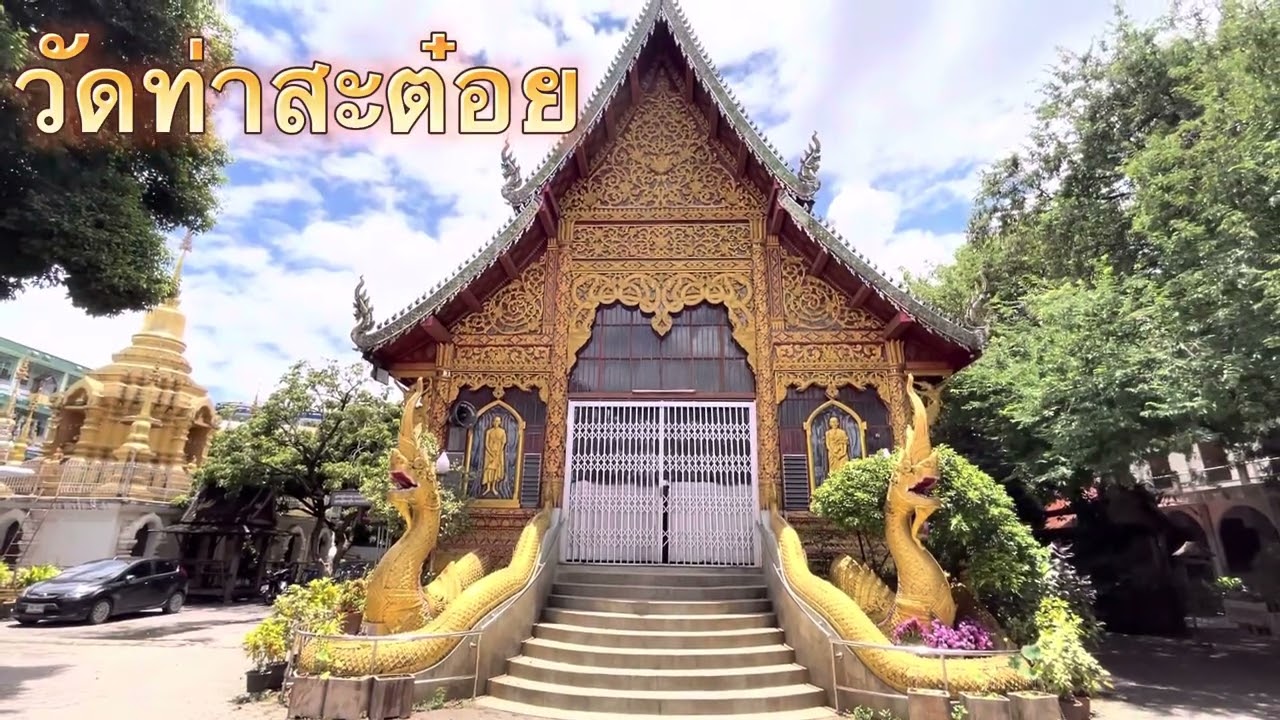
 Click to Access the Navigation Map GPS
Wat Tha Sa Toi Map
Recommend

 Muang Chiang Mai(121)Chom Thong(47)Mae Chaem(25)Chiang Dao(33)Doi Saket(68)Mae Taeng(85)Mae Rim(69)Samoeng(29)Fang(71)Mae Ai(62)Phrao(70)San Pa Tong(105)San Kamphaeng(66)San Sai(73)Hang Dong(74)Hot(32)Doi Tao(22)Omkoi(11)Saraphi(74)Wiang Haeng(15)Chai Prakan(28)Mae Wang(32)Mae On(22)Doi Lo(34)Galyani Vadhana(1)


