
lovethailand home >North Travel Attractions >Chiang Mai Travel Attractions >Muang Chiang Mai >Wat Ket > Wat Ku Kham
TL;DR: Wat Ku Kham is located at Kaew Nawarat Road, Wat Ket Subdistrict, Mueang Chiang Mai District, Chiang Mai Province, open Daily, hours 08.00 – 17.00.

Wat Ku Kham
Open Days: Daily
Opening Hours: 08.00 – 17.00
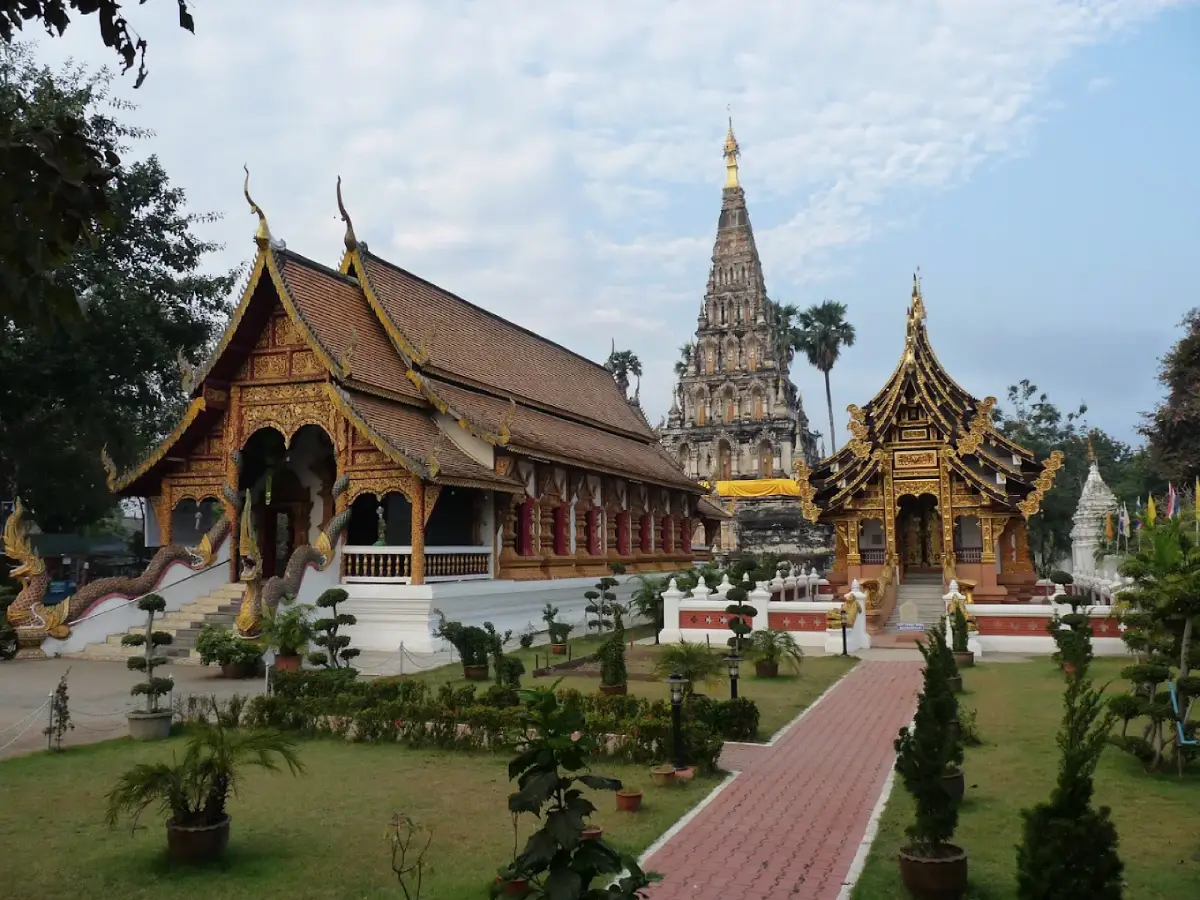
Wat Ku Kham is an old Buddhist temple on Kaew Nawarat Road in Wat Ket Subdistrict, Mueang Chiang Mai District, Chiang Mai Province. It is a local temple under the Mahanikaya order and an important community temple in one of Chiang Mai’s historic riverside neighborhoods. The temple is known for its golden chedi, Lanna-style viharn, ubosot, Ho Trai, preaching hall, connection with Wat Ku Kham Municipal School, and sacred worship points such as Phra Chao Chok Chuai Chaiya Mongkhon, Ganesha, Phra Siwali, and Phra Upagutta. For travelers seeking a quieter cultural temple beyond Chiang Mai’s old city walls, Wat Ku Kham offers history, art, local faith, and community context in one compact temple compound.
Wat Ku Kham is located at No. 220, Kaew Nawarat Road, Wat Ket Subdistrict, Mueang Chiang Mai District, Chiang Mai Province 50000. The temple land consists of two documented plots: 4 rai and 15 square wah of temple land, plus 1 ngan and 20 square wah of monastic land now associated with Wat Ku Kham Municipal School. The total area is 4 rai, 1 ngan, and 35 square wah. Its location in Wat Ket places the temple on the eastern side of the Ping River, close to Chiang Mai Arcade Bus Station, old educational institutions, hospitals, and urban communities shaped by religion, trade, transport, and local settlement.
The appeal of Wat Ku Kham lies not in monumental scale but in layered local history. Visitors can walk around the chedi, viharn, ubosot, Ho Trai, and sacred worship points without rushing. The temple feels different from the better-known tourist temples inside Chiang Mai’s old city because it still sits within the everyday life of the Wat Ket and Kaew Nawarat area. This makes it a meaningful stop for travelers who want to understand Chiang Mai through community temples, not only through major landmark temples.
The name “Wat Ku Kham” is closely tied to the temple’s identity. In northern Thai usage, “ku” refers to a chedi, small pagoda, or pagoda-like structure, including small reliquary structures found in temple grounds. “Kham” means gold. Together, the name suggests a golden chedi or golden reliquary structure. This meaning matches the visual character of the temple, especially the golden chedi and glittering decorative elements that reflect natural light and give the temple compound a bright, auspicious, and serene atmosphere.
The temple’s history records its foundation in 1920 B.E. The surviving written documentation is not as extensive as that of some major royal temples, but the date is linked with temple land records and local oral history. According to the local story, the site originally contained the remains of an old chedi. The structure had collapsed into a mound of broken bricks and looked like a half-ruined pagoda. Local residents called the place simply “ku,” referring to the ruined chedi, before the site was restored and brought back into religious use.
The revival of Wat Ku Kham is associated with a Chinese man known as Daeng. His name was later identified in Lanna Buddhist manuscript tradition as Luang Khachat Thanthanikorn. He worked together with local residents to restore the ruined chedi into a complete structure. Monks were then invited to reside at the temple, and local people began calling it Wat Ku Daeng after the man who played a key role in the restoration. The former name therefore preserves the memory of a community effort that transformed a ruined sacred site into a living temple again.
Over time, more permanent structures were built and restored within the temple compound. The local community later agreed to change the name from Wat Ku Daeng to Wat Ku Kham, a name that better reflected the temple’s golden chedi, auspicious character, and visual identity. In 2440 B.E., the temple received its Wisungkhamsima and was formally registered under the Mahanikaya order. The name Wat Ku Kham has been used ever since and is now recognized as the temple’s present identity in the Kaew Nawarat and Wat Ket area.
Wat Ku Kham is a clear example of a temple sustained by community faith. Its origin story did not begin with a large new construction project. It began with an old ruined chedi that local people chose to restore. The rebuilding of the chedi, the invitation of monks, the development of temple structures, and the renaming of the temple all show the relationship between lay devotion and Buddhist continuity at the community level. Visitors should therefore understand Wat Ku Kham as a place of religious restoration as much as a place of worship.
The chedi is the most important visual symbol of Wat Ku Kham. Its golden form stands prominently inside the temple compound and immediately draws attention. The chedi gives physical meaning to the name Ku Kham, because the idea of a golden chedi is expressed directly through the structure itself. Visitors interested in Lanna Buddhist art should take time to observe the base, bell-shaped body, upper tiers, finial, ceremonial umbrellas, and surrounding details. The chedi is the symbolic heart of the temple and a reminder of the community restoration that gave the site new life.
The viharn is another key structure at Wat Ku Kham. It presents the atmosphere of a Lanna community temple through its decorated façade, gilded details, colored glass, and traditional proportions. When sunlight falls on these elements, the building gains a bright and shimmering quality. This visual effect is common in many northern Thai temples, where woodwork, stucco, glasswork, gilding, and color are integrated into a sacred architectural language. The viharn is not only a hall for Buddha images; it is a devotional and artistic space shaped by local craftsmanship.
The ubosot stands to the northeast of the viharn and is an important monastic structure. In Buddhist practice, the ubosot is used for formal Sangha ceremonies, including ordination and other ritual acts that require a consecrated boundary. Because Wat Ku Kham received its Wisungkhamsima in 2440 B.E., the ubosot is closely tied to the temple’s formal religious status. Visitors should view the ubosot together with the viharn and chedi to understand the main sacred layout of the temple.
The Ho Trai is one of the temple’s most interesting architectural elements. A Ho Trai is traditionally connected with the preservation of Buddhist scriptures and religious texts. At Wat Ku Kham, the Ho Trai combines masonry elements, a wooden roof structure, gilded decorative patterns under the eaves, and colored glass around the doorway. Some details show signs of age, but these traces add historical character. They reveal how old community temples survive through use, weathering, repair, and continued devotion.
The preaching hall, chanting hall, monks’ residences, multi-purpose hall, and rest pavilion complete the temple’s role as a community institution. These spaces support sermons, merit-making, meetings, religious events, community gatherings, and everyday temple life. Wat Ku Kham therefore functions not only as a sacred site but also as a social space. It connects local residents through faith, education, ritual, and shared memory in the Wat Ket neighborhood.
One of the important sacred images at Wat Ku Kham is Phra Chao Chok Chuai Chaiya Mongkhon, also known as Phra Chao Plot Ni Than Jai. Many worshippers visit this image to pray for auspiciousness, success, relief from obstacles, and renewed confidence in life. The name itself suggests timely help and victory. Visitors should approach the image with calm intention, make merit according to their means, and use the act of prayer as encouragement for honest, mindful action.
Other sacred points in the temple include Ganesha, Phra Siwali, and Phra Upagutta. Ganesha is commonly associated with success and auspicious beginnings. Phra Siwali is widely revered in Thailand for fortune and abundance. Phra Upagutta holds special importance in northern Buddhist belief and is often associated with protection and religious merit. The presence of these sacred figures gives Wat Ku Kham both traditional Buddhist depth and a contemporary devotional role for local worshippers and visitors.
The relationship between Wat Ku Kham and Wat Ku Kham Municipal School adds another layer of community meaning. Part of the temple’s monastic land is associated with the school, showing how temple space and education have long been connected in Thai communities. The coexistence of temple and school reflects the traditional relationship among home, temple, school, and community life. It also shows that Wat Ku Kham remains part of daily local experience, not a detached historical monument.
The wider Wat Ket neighborhood is essential for understanding Wat Ku Kham. Wat Ket lies on the eastern side of the Ping River and has long been associated with river transport, trade, multi-ethnic settlement, and religious diversity. The area once served as an important riverside commercial zone linking Chiang Mai with other regions. Wat Ku Kham should therefore be seen within the broader context of Wat Ket’s historic community landscape. Its value comes not only from its temple structures but also from the urban history around it.
On a Chiang Mai cultural itinerary, Wat Ku Kham fits well with temples, markets, and riverside heritage sites east of the Ping River. Travelers can begin at Wat Ku Kham to pay respect and view the golden chedi, then continue to Wat Ket Karam, the Wat Ket community museum, Nawarat Bridge, Warorot Market, Wat Mahawan, Wat Chetawan, and the riverside streets around Charoen Rat Road. This route shows Chiang Mai as a city shaped by river movement, trade, religion, education, and cultural diversity.
A useful way to explore Wat Ku Kham is to divide the visit into five zones. The first zone is the golden chedi, the symbolic center of the temple name. The second is the viharn, where visitors can pay respect and appreciate Lanna decorative work. The third is the ubosot, connected with formal monastic ceremonies. The fourth includes the Ho Trai, preaching hall, and supporting temple structures. The fifth includes contemporary sacred worship points such as Phra Chao Chok Chuai Chaiya Mongkhon, Ganesha, Phra Siwali, and Phra Upagutta.
Visitors with limited time can spend 30 to 45 minutes at Wat Ku Kham to pay respect and see the main structures. Those who want to observe the chedi, viharn, Ho Trai, ubosot, and the Wat Ket context should allow at least 1 hour. Morning is suitable for a quiet worship visit, while late afternoon is especially good for seeing the golden surfaces and colored glass in softer light. The temple can be visited as a short stop near Chiang Mai Arcade Bus Station or as part of a deeper cultural route.
Getting There is easy from central Chiang Mai. Travelers can head toward Kaew Nawarat Road in Wat Ket Subdistrict. The temple is close to Chiang Mai Arcade Bus Station, making it convenient for visitors arriving by interprovincial bus. Drivers can search for “Wat Ku Kham, Kaew Nawarat Road” or use the coordinates 18.79889, 99.01739. Red songthaews, hired vehicles, and app-based transport are also practical options. To avoid confusion with other temples called Wat Ku Kham in Chiang Mai, specify the Wat Ket and Kaew Nawarat location.
From Chiang Mai’s old city, the route usually crosses the Ping River to the Wat Ket side and continues toward Kaew Nawarat Road. Travel time is short when traffic is light, but visitors should allow extra time during morning and evening peak periods. Those staying around Wat Ket, Nawarat, Fa Ham, Pa Tan, Charoen Muang, or the Ping River area can include Wat Ku Kham easily in a half-day itinerary. It is also convenient for travelers who need to continue their journey from Chiang Mai Arcade Bus Station.
Wat Ku Kham is suitable for travelers interested in Chiang Mai temples, northern Thai temples, Lanna art, Wat Ket community history, and sacred worship in a calm urban setting. The temple’s key themes include the ruined chedi, the restoration led by Luang Khachat Thanthanikorn and the local community, the transition from Wat Ku Daeng to Wat Ku Kham, the golden chedi, the Ho Trai, and the sacred worship points that continue to attract devotees. These layers make the temple more meaningful than its modest scale first suggests.
For a worship-focused visit, start inside the viharn, continue to the golden chedi, pay respect to Phra Chao Chok Chuai Chaiya Mongkhon, and then visit Ganesha, Phra Siwali, and Phra Upagutta. The visit should be calm and unhurried. The temple is a place not only for asking blessings but also for quiet reflection. Its restoration story reminds visitors that community faith can bring a neglected sacred place back to life.
For photography, Wat Ku Kham offers several attractive points: the golden chedi, viharn, Ho Trai, gateway, and colored glass decoration. Morning and late afternoon light are better than harsh midday sun. Visitors should photograph respectfully, avoid disturbing worshippers, and avoid flash in areas where old decorative work or religious objects may be affected. Photographs should not be taken in ways that disrespect Buddha images or monastic spaces.
Visitors should dress respectfully when entering Wat Ku Kham. Shoulders and knees should be covered, shoes should be removed before entering the viharn or ubosot, and voices should be kept low. Visitors should not touch Buddha images, decorative surfaces, the Ho Trai, or ritual objects without permission. If monks, novices, students, or local residents are using the temple area, visitors should give them space and remember that Wat Ku Kham is an active community temple.
The area around Wat Ku Kham is practical for food and accommodation. Nearby dining options include local Thai restaurants, riverside restaurants, northern Thai food, Chinese restaurants, and long-established eateries around Wat Ket, Charoen Rat Road, and Fa Ham. Accommodation choices include small hotels near the bus station, guesthouses, riverside homestays, and boutique resorts. This makes the temple easy to include in routes for both city-based travelers and people arriving or leaving by bus.
Compared with the famous temples inside Chiang Mai’s old city, Wat Ku Kham offers a quieter and more community-based experience. Visitors do not come only to see attractive architecture. They also encounter the relationship between a temple, school, transport route, neighborhood history, and the old commercial identity of the Ping River’s eastern bank. This makes Wat Ku Kham a good choice for travelers who have already visited Wat Phra Singh, Wat Chedi Luang, or Wat Chiang Man and want to see a more local side of Chiang Mai.
In summary, Wat Ku Kham is an old temple in Wat Ket Subdistrict with historical, artistic, religious, and community value. Its story begins with a ruined chedi restored by Luang Khachat Thanthanikorn and local residents, leading to the former name Wat Ku Daeng and later the present name Wat Ku Kham. Its highlights include the golden chedi, Lanna viharn, ubosot, Ho Trai, preaching hall, Wat Ku Kham Municipal School, Phra Chao Chok Chuai Chaiya Mongkhon, Ganesha, Phra Siwali, and Phra Upagutta. For travelers who want to understand Chiang Mai beyond the main tourist circuit, Wat Ku Kham is a meaningful stop in the Wat Ket and Kaew Nawarat area.
| Name | Wat Ku Kham |
| Former Name | Wat Ku Daeng |
| Location | Kaew Nawarat Road, Wat Ket Subdistrict, Mueang Chiang Mai District, Chiang Mai Province |
| Address | No. 220, Kaew Nawarat Road, Wat Ket Subdistrict, Mueang Chiang Mai District, Chiang Mai Province 50000, Thailand |
| Coordinates | 18.79889, 99.01739 |
| Temple Type | Local Buddhist Temple Under The Mahanikaya Order |
| Temple Area | 4 rai, 1 ngan, and 35 square wah in total, including temple land and monastic land associated with Wat Ku Kham Municipal School |
| Highlights | Golden chedi, Lanna viharn, ubosot, Ho Trai, Phra Chao Chok Chuai Chaiya Mongkhon, Ganesha, Phra Siwali, Phra Upagutta, and the story of a ruined chedi restored into a living community temple |
| History | Founded in 1920 B.E.; associated with the restoration of a ruined chedi by Luang Khachat Thanthanikorn and local residents; granted Wisungkhamsima in 2440 B.E. |
| Name Origin | “Ku” means a chedi or pagoda-like reliquary structure in northern Thai usage, while “Kham” means gold. The name reflects the golden chedi inside the temple |
| Important Features Inside The Temple | Golden chedi in Hariphunchai-inspired style, viharn, ubosot, preaching hall, chanting hall, monks’ residences, multi-purpose hall, Ho Trai, rest pavilion, Phra Chao Chok Chuai Chaiya Mongkhon, Ganesha, Phra Siwali, and Phra Upagutta |
| Distinctive Art And Architecture | Lanna architecture, golden chedi, decorative viharn details, colored glass, masonry Ho Trai with wooden roof structure, gilded eave patterns, and old urban temple elements in the Wat Ket area |
| Suggested Visit Zones | Golden chedi zone, viharn zone, ubosot zone, Ho Trai and preaching hall zone, and sacred worship zone for Phra Chao Chok Chuai Chaiya Mongkhon, Ganesha, Phra Siwali, and Phra Upagutta |
| Community Context | Located in Wat Ket, a historic community on the eastern bank of the Ping River, connected with trade, river transport, education, and multi-cultural urban life in Chiang Mai |
| Travel Information | Travel from central Chiang Mai to Kaew Nawarat Road in Wat Ket Subdistrict. The temple is close to Chiang Mai Arcade Bus Station and can be reached by private car, red songthaew, hired vehicle, or app-based transport |
| Current Status | Active local Buddhist temple and religious site in Wat Ket Subdistrict, with current e-Donation listing and continued presence in contemporary travel and community information |
| Open Days | Daily |
| Opening Hours | 08.00 – 17.00 |
| Contact Number | 053-245-969 |
| Facilities | Viharn, ubosot, preaching hall, chanting hall, monks’ residences, multi-purpose hall, Ho Trai, rest pavilion, and community religious activity spaces |
| Nearby Tourist Attractions | 1. Chiang Mai Arcade Bus Station, about 0.5 km 2. Wat Ket Karam And Wat Ket Community Museum, about 3 km 3. Nawarat Bridge, about 3 km 4. Chan Som Memorial Bridge, about 3 km 5. Warorot Market, about 4 km 6. Wat Mahawan, about 4 km 7. Wat Chetawan, about 4 km 8. Tha Phae Gate, about 5 km |
| Nearby Restaurants | 1. Huen Kha Jao Restaurant, about 1 km, Tel. 053-262-905 2. The Riverside Bar & Restaurant, about 3 km, Tel. 053-243-239 3. The Good View Bar & Restaurant, about 3 km, Tel. 053-241-886 4. The Gallery Restaurant, about 3 km, Tel. 053-248-601, 053-248-602 5. The Duke’s Ping River, about 3 km, Tel. 053-249-231 6. Khao Soi Samer Jai Fa Ham, about 3 km, Tel. 053-242-928 7. Jia Tong Heng Fa Ham Branch, about 4 km, Tel. 053-242-242 |
| Nearby Accommodations | 1. The Y Smart Hotel, about 0.3 km, Tel. 085-310-0055 2. Poi De Ping Guest House, about 1 km, Tel. 086-157-1021 3. Zak Residence Chiang Mai, about 2 km, Tel. 089-425-9741 4. Double Tree House, about 3 km, Tel. 090-329-5660 5. Baan SongJum Homestay, about 3 km, Tel. 053-244-994 6. Shewe Wana Boutique Resort & Spa, about 4 km, Tel. 053-240-020 |
Frequently Asked Questions (FAQ)
Q: Where is Wat Ku Kham located?
A: Wat Ku Kham is located at No. 220, Kaew Nawarat Road, Wat Ket Subdistrict, Mueang Chiang Mai District, Chiang Mai Province 50000, near Chiang Mai Arcade Bus Station and the historic Wat Ket area east of the Ping River.
Q: Why is Wat Ku Kham important?
A: Wat Ku Kham is an old temple founded in 1920 B.E. Its history is linked with a ruined chedi restored by Luang Khachat Thanthanikorn and local residents before becoming a Mahanikaya community temple in Wat Ket.
Q: What does the name Wat Ku Kham mean?
A: In northern Thai usage, “ku” means a chedi or pagoda-like reliquary structure, while “kham” means gold. The name refers to a golden chedi and matches the temple’s prominent golden sacred structure.
Q: What was the former name of Wat Ku Kham?
A: The temple was formerly known as Wat Ku Daeng, after Daeng, or Luang Khachat Thanthanikorn, who helped restore the ruined chedi with the local community.
Q: What can visitors see inside Wat Ku Kham?
A: Visitors can see the golden chedi, Lanna viharn, ubosot, Ho Trai, preaching hall, Phra Chao Chok Chuai Chaiya Mongkhon, Ganesha, Phra Siwali, and Phra Upagutta.
Q: What are the opening hours of Wat Ku Kham?
A: Wat Ku Kham is open daily from 08.00 to 17.00.
Q: How can travelers get to Wat Ku Kham?
A: Travelers can go from central Chiang Mai to Kaew Nawarat Road in Wat Ket Subdistrict. The temple is close to Chiang Mai Arcade Bus Station and can be reached by private car, red songthaew, hired vehicle, or app-based transport.
Q: What nearby places can be visited with Wat Ku Kham?
A: Nearby places include Wat Ket Karam, the Wat Ket Community Museum, Nawarat Bridge, Chan Som Memorial Bridge, Warorot Market, Wat Mahawan, Wat Chetawan, and Tha Phae Gate.
 Category: ●Places of Worship
 Group: ●Temple
Last Update : 2 DayAgo
 Last Update : 2 DayAgo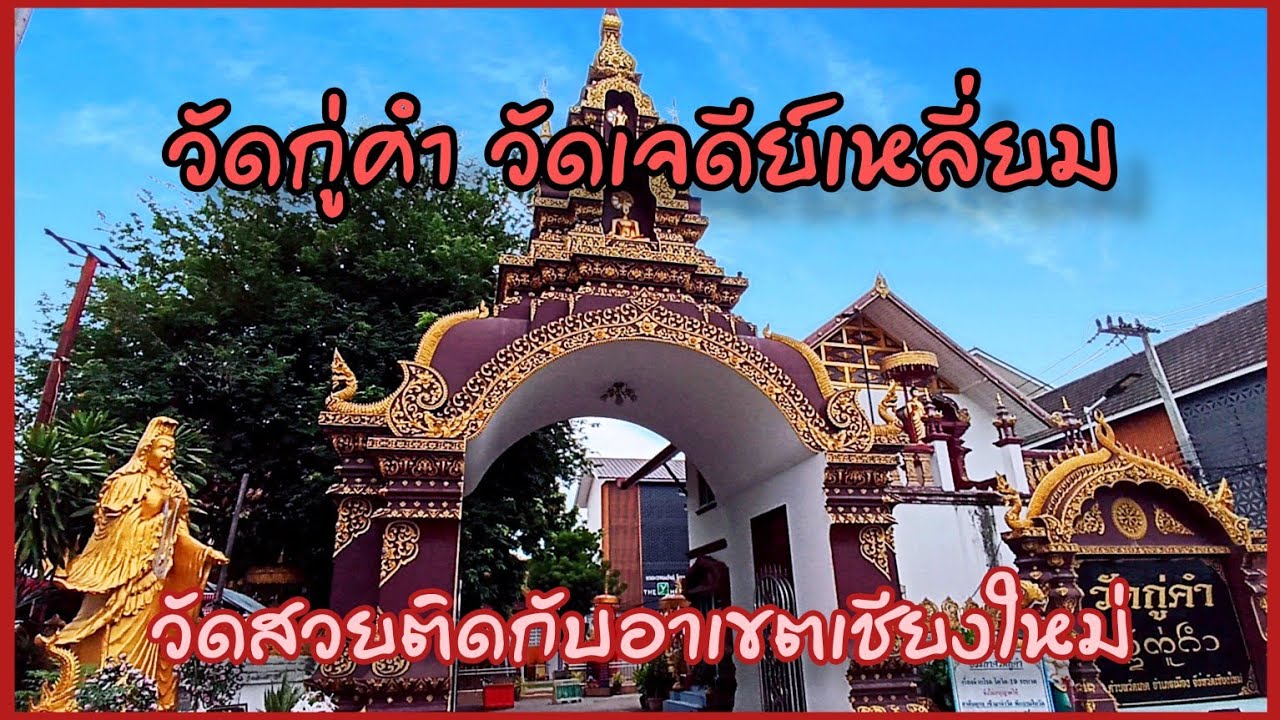
 Click to Access the Navigation Map GPS
Wat Ku Kham Map
Recommend

 Muang Chiang Mai(121)Chom Thong(47)Mae Chaem(25)Chiang Dao(33)Doi Saket(68)Mae Taeng(85)Mae Rim(69)Samoeng(29)Fang(71)Mae Ai(62)Phrao(70)San Pa Tong(105)San Kamphaeng(66)San Sai(73)Hang Dong(74)Hot(32)Doi Tao(22)Omkoi(11)Saraphi(74)Wiang Haeng(15)Chai Prakan(28)Mae Wang(32)Mae On(22)Doi Lo(34)Galyani Vadhana(1)


