
lovethailand home >North Travel Attractions >Chiang Mai Travel Attractions >Muang Chiang Mai >Fa Ham > Wat Fa Ham
TL;DR: Wat Fa Ham is located at Charoen Rat Road, Fa Ham Subdistrict, Mueang Chiang Mai District, Chiang Mai Province, open Daily, hours 08.00 – 17.00.

Wat Fa Ham
Open Days: Daily
Opening Hours: 08.00 – 17.00
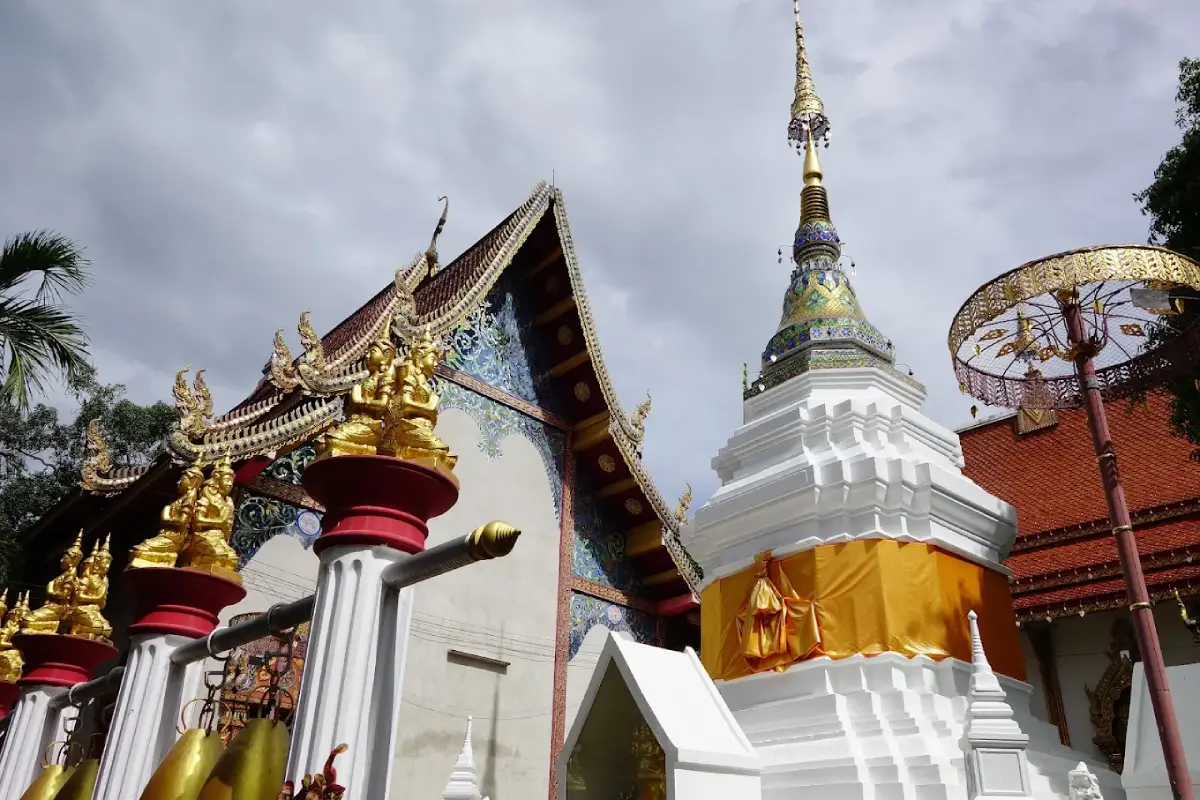
Wat Fa Ham is an old riverside Buddhist temple on Charoen Rat Road in Fa Ham Subdistrict, Mueang Chiang Mai District, Chiang Mai Province. It is an excellent destination for travelers who want to experience a quieter, more locally rooted side of Chiang Mai’s temple culture. The temple is closely connected with the Ping River, the legend of Phra Phuttha Sihing, King Saen Mueang Ma of the Mangrai dynasty, the meaning of the name Fa Ham, Lanna Buddhist architecture, temple murals, and the living religious traditions of the local community.
Wat Fa Ham is a local Buddhist temple under the Mahanikaya order. Its location near the Ping River gives it a strong historical and cultural identity. The area around Fa Ham has long been connected with riverside settlement, local travel routes, trade, and community life on the eastern side of Chiang Mai city. For visitors, this makes Wat Fa Ham more than a place for worship. It is also a cultural landmark that explains how faith, geography, local memory, and northern Thai history are tied together outside the better-known old city walls.
The temple is especially appealing because it has a calm, community-based atmosphere. It is not as crowded as the major tourist temples in central Chiang Mai, so visitors can take time to observe the architecture, murals, Buddha images, and temple grounds carefully. A visit usually begins at the Lanna-style viharn, continues to the chedi and ubosot, and then moves through the surrounding temple spaces. The setting makes Wat Fa Ham suitable for slow cultural travel rather than a short photo stop.
The history of Wat Fa Ham begins in 1943 B.E., an important period in Lanna history. Local tradition links the temple with the reign of King Saen Mueang Ma, the ninth king of the Mangrai dynasty. The story begins after the passing of King Kue Na, when King Saen Mueang Ma ascended the throne of Chiang Mai. His uncle, Chao Thao Maha Phrom, who ruled Chiang Rai, later came to Chiang Mai to seek royal pardon after political conflict. The legend of the temple is closely connected with this episode and with the arrival of the revered Phra Phuttha Sihing image.
According to local legend, Chao Thao Maha Phrom brought Phra Phuttha Sihing to Chiang Mai by river and overland routes. When the sacred image reached the area near Wang Sing Kham and Tha Chedi Ngam on the Mae Raming, now known as the Ping River, an extraordinary event occurred. The bright sky became dark, and a golden ray of light from Phra Phuttha Sihing shone toward the northeast. The ray extended to a specific location, and King Saen Mueang Ma ordered a monastery to be built where the light ended. That monastery became known as Aram Fa Ham, the origin of today’s Wat Fa Ham.
The name “Fa Ham” is associated with brightness, radiance, and auspicious prosperity. This meaning gives the temple a deep symbolic identity. Once visitors understand the origin of the name, the temple’s architecture and sacred spaces become more meaningful. The viharn, chedi, ubosot, murals, and Buddha images are not isolated features. They are part of a continuous local story shaped by faith in Phra Phuttha Sihing, the memory of the Mangrai dynasty, and the sacred geography of Chiang Mai’s riverside communities.
Wat Fa Ham received its Wisungkhamsima, or officially granted monastic boundary, on 29 January 2490 B.E. This status is important because it allows the temple to conduct formal monastic ceremonies according to Buddhist discipline. The temple compound includes several important structures, such as the viharn, ubosot, chedi, preaching hall, monks’ residences, bell tower, dining hall, and Tripitaka library. Together, these buildings show the temple’s role as a religious, educational, ceremonial, and community center for Fa Ham.
The Lanna-style viharn is the highlight of Wat Fa Ham. Its front wooden carvings, gilded decoration, and colored glass details display the craftsmanship of northern Thailand. Inside the viharn is a Lanna-style Buddha image, along with mural paintings that depict the life of the Buddha and the Ten Jataka stories. These murals are important because they help visitors understand how Buddhist teachings were communicated visually in northern Thai temples. The architecture and paintings work together as a sacred teaching space.
The murals inside Wat Fa Ham make the temple especially valuable for travelers interested in northern Thai Buddhist art. The scenes from the life of the Buddha guide visitors through key moments of Buddhist history, while the Ten Jataka stories explain the perfection of virtues before Buddhahood. These paintings are not only decorative. They are visual narratives that connect doctrine, storytelling, local artistry, and devotional practice. Visitors should view them slowly and avoid touching the walls or painted surfaces.
The temple’s Lanna-style chedi is another major sacred feature. The chedi enshrines relics of the Buddha and has undergone important restoration. In 2516 B.E., Phra Khru Singhawichai and the local community restored the chedi by building a new structure around the older one, adding niches on all four sides, and placing Buddha images within those niches. Later, during the time of Phra Palat Panya Panyatharo, ceremonial umbrellas were installed around the chedi as an act of Buddhist devotion.
The ubosot at Wat Fa Ham was built in Lanna style to replace an older ordination hall that had deteriorated. Construction began during the time of Phra Khru Singhawichai and was completed during the time of Phra Palat Panya Panyatharo. Inside the ubosot is a replica of Phra Phuttha Sihing, cast and consecrated at Wat Fa Ham in 2540 B.E. The image is named Phra Singhanimit Phichit Phai. It is especially meaningful because it connects the temple’s founding legend with present-day devotion.
Wat Fa Ham is culturally distinctive because it connects several important entities in Chiang Mai’s history: Phra Phuttha Sihing, King Saen Mueang Ma, Chao Thao Maha Phrom, the Mangrai dynasty, the Ping River, and Fa Ham Subdistrict. For this reason, the temple should not be understood only as a local place of worship. It is a site that helps explain the sacred landscape of Chiang Mai, especially the relationship between the old city, the eastern riverside communities, and the movement of revered Buddha images through Lanna history.
Phra Khru Singhawichai, also remembered locally as Luang Pu Khru Ba Singh, is an important figure in the later history of Wat Fa Ham. He played a major role in restoring and developing important temple structures, including the viharn and chedi. His work helped preserve the temple’s religious function and cultural identity into the modern period. Travelers interested in northern Thai monks, local temple restoration, and Lanna Buddhist history will find this later period of the temple’s history as meaningful as its legendary foundation.
Wat Fa Ham also remains a living community temple. One of its notable traditions is the Poy Luang festival, a major northern Thai merit-making event. During this community festival, local residents and visitors gather to make merit, worship sacred objects, pay respect to the chedi, and participate in activities that preserve Lanna culture. The festival shows that Wat Fa Ham is not only a historic site. It continues to function as a social, religious, and cultural center for the Fa Ham community.
For cultural travelers, Wat Fa Ham fits well into a route that includes Fa Ham, Wat Ket, Pa Tan, and the Ping River area. Visitors can begin at Wat Fa Ham to learn about Phra Phuttha Sihing and the temple’s Lanna architecture, then continue to the public park along the Ping River, Wat Kha Chao, Wat Tha Kradat, Wat Langka, Wat Ket Karam, Warorot Market, Wat Chiang Man, or Wat Chedi Luang. This route provides a broader view of Chiang Mai beyond the main old city temple circuit.
A good visit to Wat Fa Ham takes about 45 minutes to 1 hour. Visitors can start by paying respect inside the viharn, then look closely at the carved wooden details, gilded decoration, colored glass, and wall murals. After that, they can walk to the chedi, ubosot, bell tower, and other temple areas. Morning light is suitable for photographing the architecture, while late afternoon gives the temple and riverside neighborhood a calmer atmosphere. Taking time here helps visitors appreciate the temple’s depth.
Getting There is convenient from central Chiang Mai. Travelers can use Charoen Rat Road or connecting roads on the eastern side of the Ping River to reach Fa Ham Subdistrict. When using a navigation app, enter “Wat Fa Ham, Charoen Rat Road” or use the temple coordinates. Private cars, red songthaews, local hired vehicles, and app-based transport are all practical options. Traffic can be heavier during morning and evening peak periods, so visitors should plan travel time accordingly.
Travelers using local transport can reach Wat Fa Ham by red songthaew, hired vehicle, or app-based ride from central Chiang Mai. The temple is not far from Wat Ket, Pa Tan, Central Chiang Mai, and other well-known urban areas. This makes it suitable for a half-day itinerary, especially for visitors who want to combine a temple visit with riverside neighborhoods, local restaurants, and older parts of Chiang Mai outside the old city walls.
Visitors should dress respectfully when visiting Wat Fa Ham. Shoulders and knees should be covered, shoes should be removed before entering the viharn or ubosot, and voices should be kept low inside sacred spaces. Visitors should not touch murals, wooden carvings, Buddha images, or ritual objects. If monks, novices, or local residents are conducting a ceremony, visitors should give them space and ask for permission before photographing people or religious activities.
Wat Fa Ham is suitable for several types of travelers: those searching for Chiang Mai temples, visitors interested in Lanna history, travelers who enjoy Buddhist mural painting, people planning a cultural route along the Ping River, and repeat visitors who want to see a quieter part of the city. The temple offers a complete cultural experience through history, legend, sacred art, architecture, living tradition, practical travel information, and nearby places to continue the trip.
Compared with the major temples inside Chiang Mai’s old city, Wat Fa Ham feels more local and peaceful. Its strength is the way it tells the story of Chiang Mai from the riverside rather than from the walled city alone. Visiting the temple helps travelers understand that small community temples can hold deep historical and artistic value. Wat Fa Ham is therefore a strong choice for travelers who want to experience Chiang Mai through local faith, Lanna craftsmanship, and the continuing life of a riverside Buddhist community.
In summary, Wat Fa Ham is an old Mahanikaya Buddhist temple founded in 1943 B.E. on Charoen Rat Road in Fa Ham Subdistrict, Mueang Chiang Mai District. Its main significance comes from the legend of Phra Phuttha Sihing, its connection with King Saen Mueang Ma, the meaning of the name Fa Ham, its Lanna-style viharn, chedi, ubosot, Phra Singhanimit Phichit Phai, murals of the Buddha’s life and the Ten Jataka stories, and its living Poy Luang tradition. For travelers seeking a quieter and more meaningful temple in Chiang Mai, Wat Fa Ham deserves a place on the cultural itinerary.
| Name | Wat Fa Ham |
| Location | Charoen Rat Road, Fa Ham Subdistrict, Mueang Chiang Mai District, Chiang Mai Province |
| Address | No. 1 Charoen Rat Road, Fa Ham Subdistrict, Mueang Chiang Mai District, Chiang Mai Province, Thailand |
| Coordinates | 18.80439, 99.00491 |
| Temple Type | Local Buddhist temple under the Mahanikaya order |
| Highlights | Old riverside temple near the Ping River with a Lanna-style viharn, Buddhist murals, Lanna chedi, ubosot, and the legend of Phra Phuttha Sihing |
| History | Founded in 1943 B.E. during the time of King Saen Mueang Ma and granted Wisungkhamsima on 29 January 2490 B.E. |
| Name Origin | The name “Fa Ham” is associated with brightness, radiance, and auspicious prosperity, linked with the legend of a golden ray from Phra Phuttha Sihing ending at the temple site |
| Distinctive Features | Lanna viharn with carved wooden decoration, gilded details, colored glass, Lanna Buddha images, and murals of the Buddha’s life and the Ten Jataka stories |
| Important Features Inside The Temple | Lanna viharn, chedi containing Buddha relics, ubosot, Phra Singhanimit Phichit Phai, bell tower, dining hall, Tripitaka library, preaching hall, and monks’ residences |
| Related Tradition / Ritual | Poy Luang festival, a major Lanna merit-making tradition with temple worship, merit-making, cultural activities, and community participation |
| Travel Information | Travel from central Chiang Mai toward Charoen Rat Road and Fa Ham Subdistrict on the eastern side of the Ping River. Private cars, red songthaews, hired vehicles, and app-based transport are suitable options |
| Current Status | Active community temple and religious site in Fa Ham Subdistrict, with ongoing merit-making and community cultural activities |
| Open Days | Daily |
| Opening Hours | 08.00 – 17.00 |
| Abbot / Caretaker | Phra Khru Preechanipakorn Panyatharo |
| Facilities | Temple courtyard, viharn, ubosot, preaching hall, and parking area inside the temple grounds |
| Nearby Tourist Attractions | 1. Public Park Along The Ping River, about 1 km 2. Wat Kha Chao, about 2 km 3. Wat Tha Kradat, about 2 km 4. Wat Langka, about 2 km 5. Wat Ket Karam, about 3 km 6. Warorot Market, about 3 km 7. Wat Chiang Man, about 4 km 8. Wat Chedi Luang, about 5 km |
| Nearby Restaurants | 1. Khao Soi Samer Jai Fa Ham, about 0.2 km, Tel. 081-950-9067, 053-242-928, 081-764-8723 2. Pad Thai Fa Ham, about 2 km, Tel. 098-008-9367 3. Kuai Tiao Jai Dee Rot Det Fa Ham, about 3 km, Tel. 093-924-9753 4. Homok Michelin Fa Ham Branch, about 4 km, Tel. 095-292-5459 5. LamLam Pad Thai Fa Ham, about 4 km, Tel. 084-619-5162 6. Jia Tong Heng Restaurant Fa Ham Branch, about 4 km, Tel. 053-242-242 |
| Nearby Accommodations | 1. Baan Singkham Resort, about 2 km, Tel. 082-386-8887 2. Rimthara Residence, about 2 km, Tel. 053-110-430 3. Tonnam Homestay, about 3 km, Tel. 089-853-4402 4. The Balcony Chiang Mai Village, about 4 km, Tel. 065-538-3566 5. Blessing Place, about 4 km, Tel. 089-556-5678 6. The Rise Suites Hotel Chiang Mai, about 5 km, Tel. 098-661-6422 |
Frequently Asked Questions (FAQ)
Q: Where is Wat Fa Ham located?
A: Wat Fa Ham is located on Charoen Rat Road in Fa Ham Subdistrict, Mueang Chiang Mai District, Chiang Mai Province, near the Ping River.
Q: Why is Wat Fa Ham important?
A: Wat Fa Ham is an old temple founded in 1943 B.E. and is linked with the legend of Phra Phuttha Sihing, King Saen Mueang Ma, and the name Fa Ham, which refers to brightness and radiance.
Q: What can visitors see inside Wat Fa Ham?
A: Visitors can see the Lanna-style viharn, murals of the Buddha’s life and the Ten Jataka stories, the chedi containing Buddha relics, the ubosot, and Phra Singhanimit Phichit Phai.
Q: What are the opening days and hours of Wat Fa Ham?
A: Wat Fa Ham is open daily from 08.00 to 17.00.
Q: What is the Poy Luang festival at Wat Fa Ham?
A: The Poy Luang festival is a major Lanna merit-making event where the local community gathers for worship, merit-making, cultural activities, and respect for the temple’s sacred objects.
Q: How can travelers get to Wat Fa Ham?
A: Travelers can reach Wat Fa Ham from central Chiang Mai by heading toward Charoen Rat Road and Fa Ham Subdistrict. Private cars, red songthaews, hired vehicles, and app-based transport are convenient options.
Q: What nearby places can be visited with Wat Fa Ham?
A: Nearby places include the public park along the Ping River, Wat Kha Chao, Wat Tha Kradat, Wat Langka, Wat Ket Karam, Warorot Market, Wat Chiang Man, and Wat Chedi Luang.
Q: What should visitors wear when visiting Wat Fa Ham?
A: Visitors should dress respectfully, cover shoulders and knees, remove shoes before entering the viharn or ubosot, keep voices low, and avoid touching murals, carvings, or sacred objects.
 Category: ●Places of Worship
 Group: ●Temple
Last Update : 4 DayAgo
 Last Update : 4 DayAgo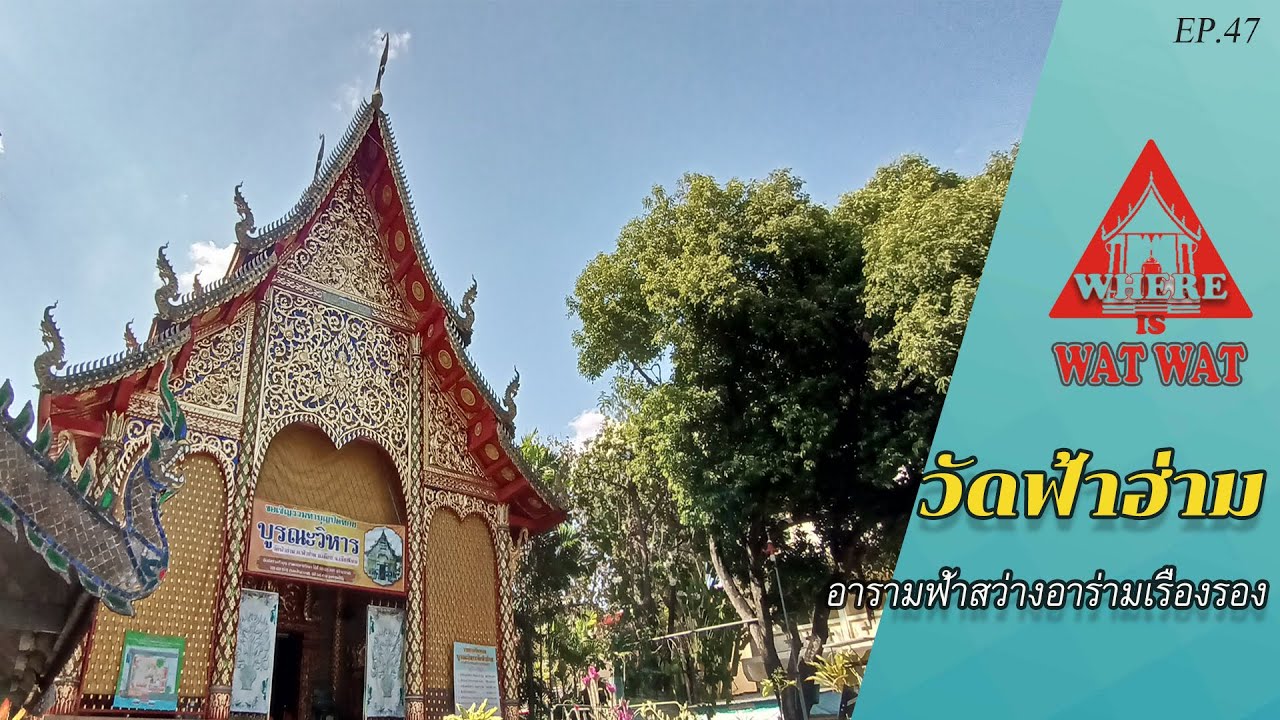
 Click to Access the Navigation Map GPS
Wat Fa Ham Map
Recommend

 Muang Chiang Mai(121)Chom Thong(47)Mae Chaem(25)Chiang Dao(33)Doi Saket(68)Mae Taeng(85)Mae Rim(69)Samoeng(29)Fang(71)Mae Ai(62)Phrao(70)San Pa Tong(105)San Kamphaeng(66)San Sai(73)Hang Dong(74)Hot(32)Doi Tao(22)Omkoi(11)Saraphi(74)Wiang Haeng(15)Chai Prakan(28)Mae Wang(32)Mae On(22)Doi Lo(34)Galyani Vadhana(1)


