
lovethailand home >North Travel Attractions >Chiang Mai Travel Attractions >Muang Chiang Mai >Fa Ham > Wat Kha Chao
TL;DR: Wat Kha Chao is located at Fa Ham Subdistrict, Mueang Chiang Mai District, Chiang Mai Province, open Daily, hours 08.00 – 17.00.
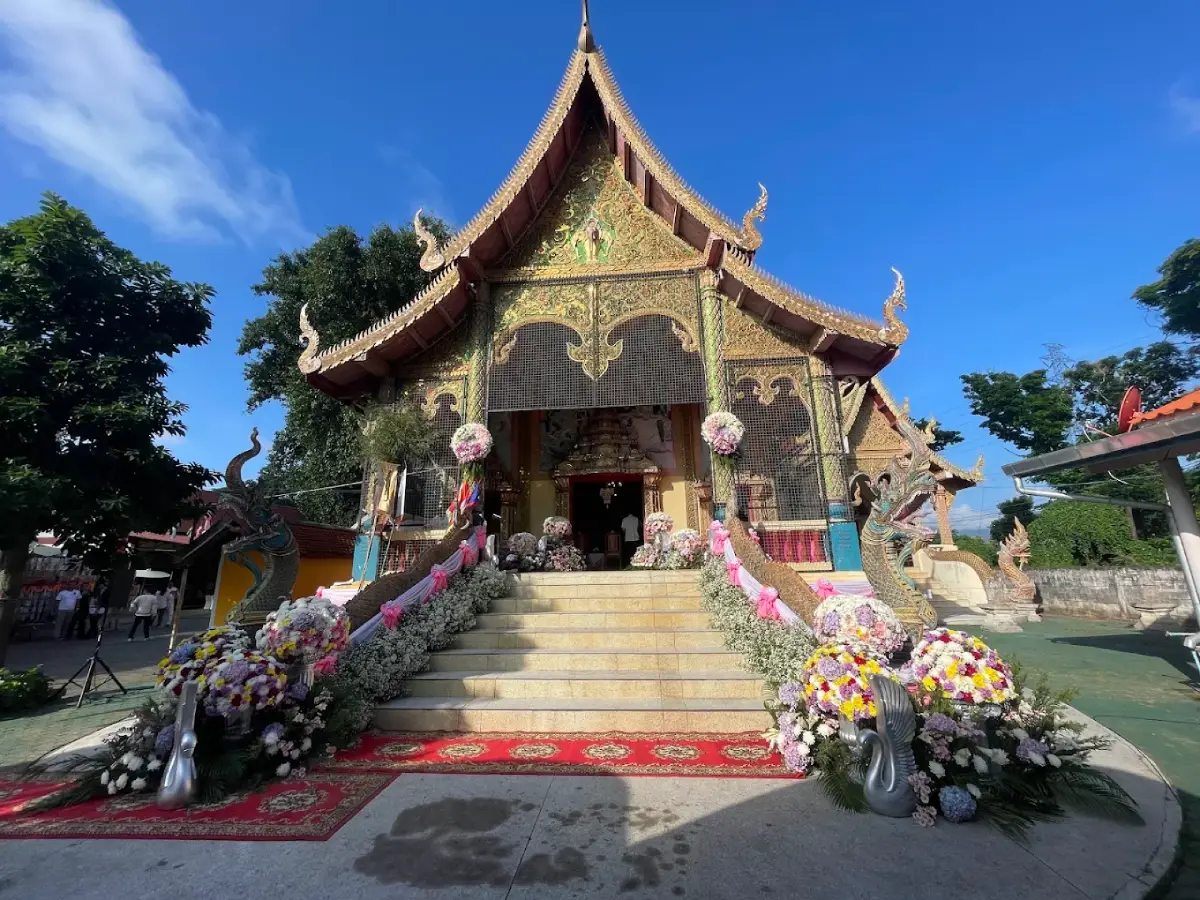
Wat Kha Chao
Open Days: Daily
Opening Hours: 08.00 – 17.00
Wat Kha Chao is an old community temple in Fa Ham Subdistrict, Mueang Chiang Mai District, Chiang Mai Province. It is a private Buddhist temple under the Maha Nikaya order and is known for its Lanna religious art, old viharn, Lanna-style chedi enshrining Buddhist relics, Thai-Lanna ordination hall, and the story of the kha chao trees that gave the temple its name. The temple is suitable for travelers who want to explore a quieter side of Chiang Mai, away from the city’s busiest temple routes, while still learning about local faith, community history, and Lanna cultural heritage.
Wat Kha Chao is located at 148 Ban Kha Chao, Fa Ham Samakkhi Road, Moo 2, Fa Ham Subdistrict, Mueang Chiang Mai District, Chiang Mai Province. The temple stands within Ban Kha Chao, an old local community in Fa Ham. Its setting connects the temple with the everyday life of the neighborhood, while its proximity to the Ping River gives the area a calmer atmosphere than many heavily visited places in central Chiang Mai.
The appeal of Wat Kha Chao does not come from monumental scale or heavy tourist traffic. Its value lies in the way it preserves the character of a working local temple. Visitors can see the viharn, ubosot, chedi, monks’ residences, multipurpose hall, temple courtyard, old trees, and community activity areas. Together, these elements show how a temple in northern Thailand functions not only as a place of worship but also as a cultural and social center for the surrounding community.
The history of Wat Kha Chao dates back to 1826, when Nai Yot donated land for the establishment of the temple. The temple later received its Wisungkhamasima, the official consecrated boundary for monastic ceremonies, in 1948. This status is important because it allows formal Buddhist ecclesiastical rites to be performed within the ordination boundary. Wat Kha Chao therefore has both historical and religious significance within the Fa Ham community.
The name “Wat Kha Chao” comes from the kha chao trees that once grew abundantly in the temple area and the surrounding community. Over time, urban and community development changed the local landscape, and only a small number of these trees remain in the area. The temple name therefore serves as a living memory of the old natural environment of Ban Kha Chao and Fa Ham.
The viharn is one of the most important structures inside Wat Kha Chao. It was built in 1826, the same period as the foundation of the temple, and reflects Lanna artistic style. Inside the viharn are three Buddha images that serve as important objects of devotion for the local community. The viharn remains a central place for merit-making, prayer, religious gatherings, and community participation in Buddhist activities.
The viharn also contains mural paintings depicting the life of the Buddha and the Vessantara Jataka, one of the most important Buddhist birth stories in Thai and Lanna religious art. These murals are not merely decorative. They function as visual teachings, helping people understand moral lessons such as generosity, compassion, patience, and spiritual cultivation. Visitors interested in cultural heritage should take time to observe the murals, the Buddha images, and the overall Lanna atmosphere of the viharn together.
The chedi of Wat Kha Chao is an ancient Lanna-style structure built in 1853. It enshrines Buddhist relics and is one of the temple’s most sacred areas. For local Buddhists, a chedi containing relics is a powerful focus of faith and reverence. Visitors should approach the chedi respectfully and treat the area as a sacred religious space rather than a casual photo spot.
The ubosot, or ordination hall, is built in Thai-Lanna style. It received its Wisungkhamasima on 10 August 1948. After deteriorating over time, the ordination hall was renovated beginning in 1990 and completed in 2000. The ubosot is used for important monastic ceremonies, including ordination and formal Sangha rites, so visitors should avoid disturbing the area whenever religious ceremonies are taking place.
Wat Kha Chao also has several important supporting structures, including monks’ residences, a multipurpose hall, ceremonial buildings, and areas used for community religious events. These spaces show that the temple is not only a historical site but also an active center of Buddhist practice and local life. The temple’s connection with Wat Kha Chao School further reflects the traditional relationship between temples, education, families, and local communities in Thailand.
Another notable feature of the temple is the large Bodhi tree in the courtyard. The tree is more than 150 years old and is regarded by the local community as a sacred tree. Its size and age add shade, dignity, and a strong sense of place to the temple grounds. The tree also reinforces the close relationship between Buddhist faith, nature, and community memory in northern Thailand.
The 2025 Kathin temple database lists Wat Kha Chao as having 5 resident monks, with Phra Athikan Peeraphat Ajarasampanno as the abbot. This confirms that the temple remains active as a living religious institution. Visitors who come to make merit or pay respect should dress modestly, keep their voices low, and avoid interrupting monks or local residents during ceremonies.
For travelers, Wat Kha Chao is best understood as a local Lanna temple rather than a mainstream tourist landmark. A visit here can include paying respect to the Buddha images in the viharn, viewing the murals, walking around the chedi, observing the old Bodhi tree, and learning about the origin of the temple name. The experience is quiet, reflective, and closely connected to local community life.
The surrounding area is also convenient for a half-day cultural route. Kha Chao Market is very close to the temple, making it easy to combine a temple visit with local food or a nearby cafe. Fa Ham also connects conveniently to Ruamchok, Meechok Plaza, and Central Chiangmai, so travelers staying in the city can visit Wat Kha Chao without needing a long-distance trip.
Getting There is convenient by private car, rental car, ride-hailing service, or local red truck transport within Chiang Mai. From the Old City area, travelers can head toward Fa Ham and continue to Fa Ham Samakkhi Road. When using a taxi or ride-hailing app, entering Wat Kha Chao or Kha Chao Market as the destination helps drivers locate the community more easily.
The best time to visit is in the morning or late afternoon, when the light is softer and the temple atmosphere is calmer. Morning is suitable for merit-making and quiet worship, while the afternoon works well for visitors who want to continue to nearby cafes, restaurants, markets, or shopping areas. A slower visit gives travelers a better appreciation of the temple’s architecture, history, and community setting.
Visitors should follow standard temple etiquette. Dress politely, remove shoes where required, avoid touching Buddha images or old religious structures, and do not photograph people during religious activities without permission. If a ceremony, school activity, or community event is taking place, visitors should give priority to monks and local residents who use the temple as part of their daily religious life.
Wat Kha Chao is valuable because it combines several layers of Chiang Mai heritage in one place: an early Rattanakosin-period foundation, Lanna religious architecture, a relic chedi, mural paintings, a Thai-Lanna ordination hall, a sacred Bodhi tree, and the memory of the kha chao trees that shaped the name of the temple and community. These details make the temple more than a simple stop. It is a cultural learning site for travelers who want to understand Chiang Mai beyond its most famous attractions.
| Name | Wat Kha Chao |
| Place Type | Private Buddhist temple under the Maha Nikaya order |
| Location | Fa Ham Subdistrict, Mueang Chiang Mai District, Chiang Mai Province |
| Address | 148 Ban Kha Chao, Fa Ham Samakkhi Road, Moo 2, Fa Ham Subdistrict, Mueang Chiang Mai District, Chiang Mai Province |
| Highlights | Old community temple with a Lanna-style viharn, relic chedi, Thai-Lanna ubosot, Buddhist murals, and a name connected to local kha chao trees |
| History | Founded in 1826 when Nai Yot donated land for the temple; received Wisungkhamasima in 1948 |
| Name Origin | The temple name comes from kha chao trees that once grew abundantly in the temple area and surrounding community |
| Distinctive Features | Working Lanna community temple with an old viharn, murals, three Buddha images, Lanna chedi, and large Bodhi tree |
| Important Elements | Viharn built in 1826, three Buddha images, Lanna-style chedi enshrining Buddhist relics, Thai-Lanna ordination hall, and a Bodhi tree over 150 years old |
| Main Areas / Zones | Viharn, ubosot, chedi, monks’ residences, multipurpose hall, Bodhi tree courtyard, and Wat Kha Chao School area |
| Travel Information | Accessible by private car, rental car, ride-hailing service, or local red truck transport; use Wat Kha Chao or Kha Chao Market in Fa Ham as the destination |
| Current Status | Active community temple in Fa Ham with resident monks and ongoing Buddhist activities |
| Open Days | Daily |
| Opening Hours | 08.00 – 17.00 |
| Abbot / Caretaker | Phra Athikan Peeraphat Ajarasampanno |
| Facilities | Multipurpose hall, ceremonial buildings, monks’ residences, and areas for community religious activities |
| Nearby Tourist Attractions | 1. Kha Chao Market, about 0.2 km 2. Wat Langka, about 1 km 3. Wat Tha Kradas, about 1.5 km 4. Wat Fa Ham, about 2 km, Tel. 053-246-431 5. Meechok Plaza, about 3 km, Tel. 088-547-2052 6. Ruamchok Market, about 3 km, Tel. 053-853-378 7. Central Chiangmai, about 4 km, Tel. 053-998-999 |
| Nearby Restaurants | 1. Klom Cafe, about 0.1 km 2. Chatangnuea at Kad Kha Chao, about 0.2 km, Tel. 064-993-2546 3. Triple C Coffee Kad Kha Chao, about 0.2 km, Tel. 096-442-2989 4. Lung Tha Bitter Larb Kad Kha Chao, about 0.2 km 5. Hor Mok Michelin Fa Ham Branch, about 3 km, Tel. 095-292-5459 6. Ikigai Restaurant, about 3 km, Tel. 082-126-2915 7. Jia Tong Heng Fa Ham Branch, about 5 km, Tel. 053-242-242 |
| Nearby Accommodations | 1. A Boutique Hotel, about 3 km, Tel. 097-942-3410 2. Faham Lodge, about 3 km, Tel. 053-306-751 3. GO Hotel Chiangmai, about 4 km, Tel. 052-090-388 4. B2 Khamtieng Boutique & Budget Hotel, about 4.5 km, Tel. 052-009-557 5. B2 Resort Boutique & Budget Hotel, about 5 km, Tel. 052-009-567 6. Furama Chiang Mai, about 6 km, Tel. 053-415-222 |
Frequently Asked Questions (FAQ)
Q: Where is Wat Kha Chao located?
A: Wat Kha Chao is located at 148 Ban Kha Chao, Fa Ham Samakkhi Road, Moo 2, Fa Ham Subdistrict, Mueang Chiang Mai District, Chiang Mai Province.
Q: Is Wat Kha Chao open daily?
A: Yes. Wat Kha Chao is open daily from 08.00 to 17.00.
Q: Why is Wat Kha Chao historically important?
A: The temple was founded in 1826 and preserves several important Lanna Buddhist elements, including an old viharn, a relic chedi, and a Thai-Lanna ordination hall.
Q: What does the name Wat Kha Chao mean?
A: The name comes from kha chao trees that once grew abundantly around the temple and the surrounding community.
Q: What can visitors see inside Wat Kha Chao?
A: Visitors can see the viharn, three Buddha images, murals of the Buddha’s life and the Vessantara Jataka, the Lanna-style chedi, the Thai-Lanna ubosot, and a large Bodhi tree over 150 years old.
Q: Who is the abbot of Wat Kha Chao?
A: The abbot of Wat Kha Chao is Phra Athikan Peeraphat Ajarasampanno.
Q: How can travelers get to Wat Kha Chao?
A: Travelers can get there by private car, rental car, ride-hailing service, or local red truck transport. Using Wat Kha Chao or Kha Chao Market in Fa Ham as the destination is convenient.
Q: What nearby places can be visited with Wat Kha Chao?
A: Nearby places include Kha Chao Market, Wat Langka, Wat Tha Kradas, Wat Fa Ham, Meechok Plaza, Ruamchok Market, and Central Chiangmai.
 Category: ●Places of Worship
 Group: ●Temple
Last Update : 4 DayAgo
 Last Update : 4 DayAgo
 Click to Access the Navigation Map GPS
 Muang Chiang Mai(121)Chom Thong(47)Mae Chaem(25)Chiang Dao(33)Doi Saket(68)Mae Taeng(85)Mae Rim(69)Samoeng(29)Fang(71)Mae Ai(62)Phrao(70)San Pa Tong(105)San Kamphaeng(66)San Sai(73)Hang Dong(74)Hot(32)Doi Tao(22)Omkoi(11)Saraphi(74)Wiang Haeng(15)Chai Prakan(28)Mae Wang(32)Mae On(22)Doi Lo(34)Galyani Vadhana(1)


