
lovethailand home >North Travel Attractions >Chiang Mai Travel Attractions >Muang Chiang Mai >Phra Sing > Wat Puak Hong (Wat Phuak Hong)
TL;DR: Wat Puak Hong (Wat Phuak Hong) is located at Phra Sing Subdistrict, Mueang Chiang Mai District, Chiang Mai Province, open Daily.

Wat Puak Hong (Wat Phuak Hong)
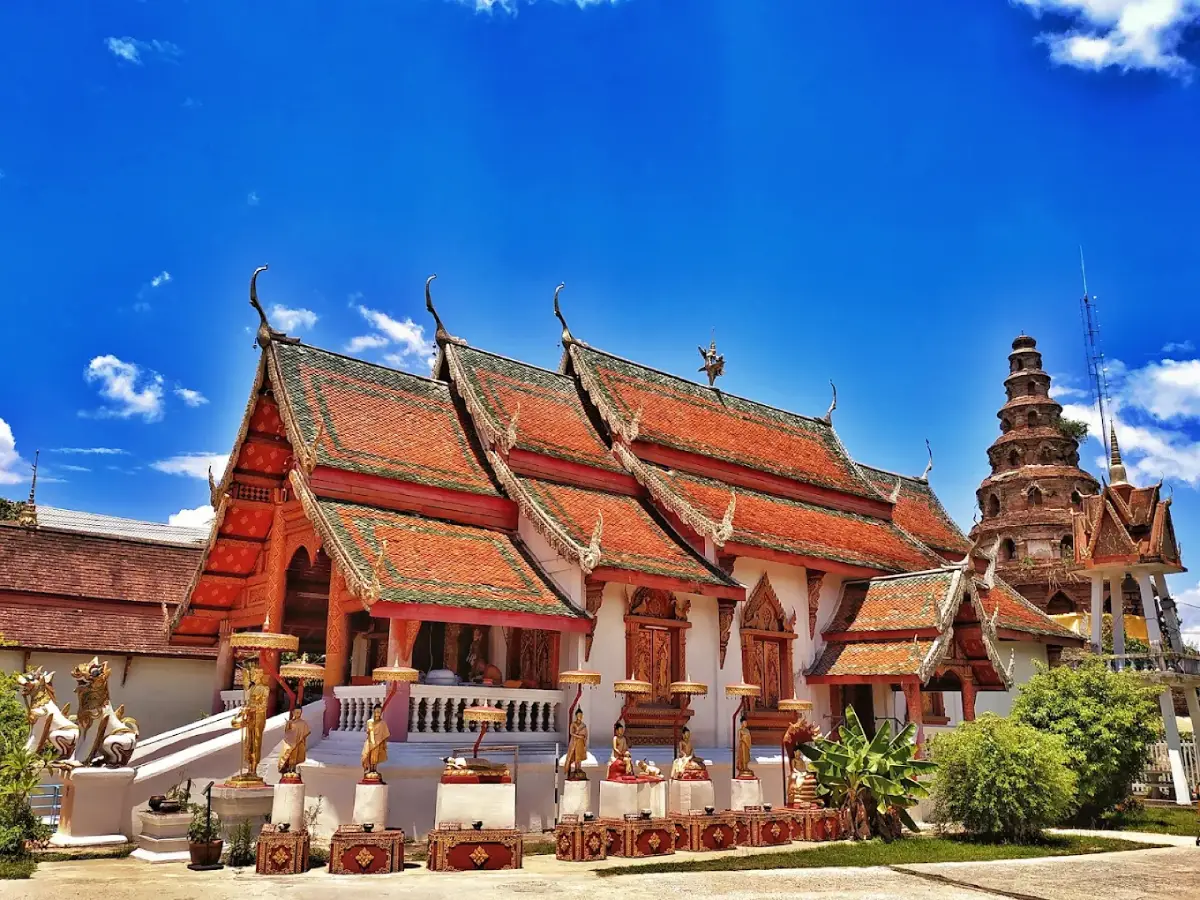
Open Days: Daily
General Visiting Hours: 08.00 – 17.00
Admission Fee: Free Admission
Wat Puak Hong, also transliterated as Wat Phuak Hong, is an old Buddhist temple in Chiang Mai’s historic old city. It is located on Samlan Road, Phra Sing Subdistrict, Mueang Chiang Mai District, Chiang Mai Province, close to Nong Buak Haad Park, Wat Puak Taem, Wat Phra Chao Mengrai, Wat Muen Ngoen Kong, Wat Phra Singh Woramahawihan, and the Sunday Walking Street route. The temple is a local Buddhist monastery under the Mahanikaya order. Although it is not a large temple and does not appear prominently in many old chronicles, it has high artistic and archaeological value, especially because of its distinctive round, tiered chedi, which is registered as a national ancient monument.
Wat Puak Hong is suitable for visitors who want to understand Chiang Mai beyond the major landmark temples. The temple explains part of the old city’s history through a small community monastery, local craft-related naming traditions, Lanna architecture, and a rare chedi form that is not commonly seen in Chiang Mai. A visit may not require a long time, but the temple becomes far more meaningful when visitors understand the background of its chedi, viharn, ordination hall, and the name “Puak Hong.”
The word “puak” is associated with a local headman or a lower-ranking nobleman with specific duties in traditional Lanna society. The word “hong” refers to a swan or hamsa and is connected with the name of the local group or community related to this area. Wat Puak Hong is therefore often discussed together with other old Chiang Mai temples whose names begin with “Puak,” such as Wat Puak Chang, Wat Puak Taem, and Wat Puak Pia. These temples show that Chiang Mai was not shaped only by large royal monasteries, but also by local communities, artisans, occupational groups, and neighborhood-based religious foundations.
The temple’s foundation history is not preserved through a clear founding inscription, but temple records and art-historical evidence indicate that Wat Puak Hong is an old Lanna temple. Some records state that the temple was registered in 2060 B.E. and received its visungkhamsima in 2062 B.E. The artistic evidence of the chedi and related objects points to the 21st Buddhist century, a period when Buddhism and Lanna Buddhist art were strongly developed in Chiang Mai.
Wat Puak Hong once fell into abandonment and was later restored. Local accounts describe a period when only the chedi and the base of the viharn remained. Later restoration work brought the temple back into religious use, and additional buildings were repaired or developed over time. This pattern reflects the history of many old temples in Chiang Mai: prosperity, abandonment, restoration, and renewed community worship.
The main highlight of Wat Puak Hong is its round, tiered chedi, the oldest ancient structure in the temple. The chedi is built of brick and plaster. It stands on a low square base, above which circular tiers rise in a stepped form. The base includes circular lotus elements before the upper section rises in diminishing round layers. This form differs from many Lanna bell-shaped or castle-shaped stupas found elsewhere in Chiang Mai, making Wat Puak Hong’s chedi one of the most distinctive monuments in the old city.
The chedi rises in 7 circular tiers, with niches for Buddha images arranged around the structure. These repeating niches create a powerful visual rhythm around the monument. Some sources describe a large number of niches around the chedi, while older local information describes niches around each tier. The key point is the architectural idea of surrounding the sacred core of the chedi with many Buddha-image niches, giving the monument both symbolic and devotional depth.
The form of Wat Puak Hong’s chedi is related to a rare group of circular-plan, castle-like stupas in northern Thailand. Its round stepped structure and surrounding Buddha niches make it unusual when compared with more common Lanna chedi forms. Some art-historical interpretations connect this type with developments from Hariphunchai and neighboring cultural influences, while others view it as an adapted form within early Chiang Mai Buddhist architecture.
Decorative jar-like elements around the chedi add another layer of detail. They create visual rhythm around the base and supporting levels, showing that the chedi’s beauty is not only in its height but also in its lower architectural composition. Visitors should observe the square base, circular tiers, lotus elements, niches, decorative details, and overall proportions together. These elements make the chedi the strongest visual and historical feature of Wat Puak Hong.
The viharn at Wat Puak Hong is a local Lanna-style assembly hall. Although later repairs altered some of the wooden elements, the foundation and overall massing still preserve an older character. A Lanna viharn usually emphasizes a long, directional plan, layered roofs, and an interior focus on the principal Buddha image. The value of Wat Puak Hong’s viharn lies not in monumental size but in its role as the devotional center of a neighborhood temple.
Inside the viharn, visitors can pay respect to Buddha images and experience the quiet atmosphere of a local temple. The relationship between the viharn and the chedi is important. In Lanna temple planning, the viharn is the space where worshippers approach the Buddha image and the teachings, while the chedi represents sacred presence and religious memory. To understand Wat Puak Hong properly, visitors should look at these two elements together.
The ordination hall at Wat Puak Hong is another local Lanna-style building. It is later than the chedi and belongs to the local Lanna artistic tradition from around the 24th Buddhist century onward. In Buddhist monastic life, the ordination hall is essential for formal Sangha activities. Even though many visitors first notice the chedi, the ordination hall confirms the temple’s active religious function within the monastic system.
Temple information describes the ordination hall as a brick-and-plaster building with a local tile roof, facing east, and decorated with traditional local elements such as roof ornaments and sema stones. Its simple form reflects the character of an old community temple, where religious function and Lanna identity are preserved without the scale of a major royal monastery.
The former scripture hall, or ho trai, is another important part of the temple’s history. Although the original structure has deteriorated, local information records that many bundles of Buddhist manuscripts and a scripture cabinet remained connected with the temple. This shows that Wat Puak Hong was not only a ritual space. It was also a place for preserving Buddhist knowledge, sermons, manuscripts, and the transmission of religious learning within the community.
Another important piece of evidence is the Wat Puak Hong Buddha image base inscription, dated to 2036 B.E. during the reign period of Phaya Yot Chiang Rai. This inscription relates to the making of a Buddha image and acts of merit by devotees. Although it is not a founding inscription for the temple, it confirms religious and artistic activity at Wat Puak Hong in the early 21st Buddhist century and strengthens the temple’s historical significance.
Wat Puak Hong was registered and its ancient monument boundary was defined in the Royal Gazette, Volume 97, Part 41, dated 14 March 2523 B.E. This confirms the temple’s national heritage value. The chedi, viharn, and ordination hall should therefore be understood as cultural assets that deserve careful preservation, not merely as small old-city attractions.
Wat Puak Hong is also mentioned in the wider context of religious sites and archaeological resources that reflect Lanna identity within Chiang Mai’s old city. Its viharn and chedi are part of the city’s heritage landscape, linked with surrounding temples, lanes, neighborhoods, the moat system, and public spaces. A visit to Wat Puak Hong is best understood together with nearby sites such as Wat Puak Taem, Wat Phra Chao Mengrai, Wat Muen Ngoen Kong, and Nong Buak Haad Park.
The atmosphere of Wat Puak Hong is generally quiet. It is a good stop for visitors who want to avoid the busiest temple routes while still seeing an important ancient monument. Visitors can begin with the entrance area, then continue to the viharn, ordination hall, chedi, and courtyard. For photography, the round tiered chedi is the most important subject because it gives the temple its distinctive identity.
Getting There is convenient because the temple is located on Samlan Road inside Chiang Mai’s old city. From Nong Buak Haad Park, visitors can walk to the temple easily. From Wat Phra Singh, they can continue south along Samlan Road. From Wat Chedi Luang, Ratchamankha Road, or the Sunday Walking Street area, visitors can walk through old-city lanes to reach the temple without needing a car.
Visitors driving to Wat Puak Hong should plan carefully because Samlan Road and nearby lanes are part of the old city, where roads are relatively narrow and parking can be limited. Parking may be more difficult on weekends, in the evening, and during Sunday Walking Street. Walking from nearby accommodation or using a red songthaew, tuk-tuk, or motorcycle taxi is often more convenient, especially for travelers visiting several temples in one route.
The best time to visit Wat Puak Hong is in the morning or late afternoon. These periods are more comfortable for walking and provide better natural light for seeing the chedi, viharn, and architectural details. A morning visit offers a quiet atmosphere for worship, while late afternoon works well for a route continuing to Nong Buak Haad Park, Wat Puak Taem, Wat Phra Chao Mengrai, or Wat Phra Singh.
Wat Puak Hong can be included in several old-city routes. A community-temple and artisan route can connect it with Wat Puak Taem, Wat Puak Pia, Wat Puak Chang, and Wat Chang Taem. A classic old-city temple route can include Wat Phra Singh, Wat Chedi Luang, Wat Phan Tao, and Wat Phra Chao Mengrai. A relaxed walking route can continue to Nong Buak Haad Park and Samlan Road.
Visitors should follow normal Thai temple etiquette. Dress respectfully, speak quietly, remove shoes before entering designated sacred areas, avoid disturbing monks or worshippers, and do not climb on or touch ancient structures. The old chedi is the heart of Wat Puak Hong, and it should be viewed from an appropriate distance. Respectful behavior helps preserve both the temple atmosphere and the heritage value of the site.
In summary, Wat Puak Hong is a Chiang Mai temple whose value is greater than its physical size. It is important because of its community-related name, distinctive 7-tiered round chedi, Lanna viharn, local-style ordination hall, Buddha image base inscription, and national ancient monument registration. For visitors who want to understand Chiang Mai through smaller temples, Buddhist art, archaeology, local communities, and old-city walking routes, Wat Puak Hong is a meaningful place to include in the itinerary.
| Name | Wat Puak Hong |
| Alternative Spellings | Wat Puak Hong, Wat Phuak Hong |
| Temple Type | Local Buddhist temple under the Mahanikaya order |
| Location | Phra Sing Subdistrict, Mueang Chiang Mai District, Chiang Mai Province |
| Address | Samlan Road, Phra Sing Subdistrict, Mueang Chiang Mai District, Chiang Mai Province 50200 |
| Coordinates | Latitude 18.7831, Longitude 98.9810 |
| Highlights | Seven-tiered round chedi, Buddha niches around the chedi, Lanna viharn, local-style ordination hall, Buddha image base inscription, and quiet old-city temple atmosphere |
| History | Registered as a temple in 2060 B.E. and granted visungkhamsima in 2062 B.E.; its key artistic evidence is associated with the 21st Buddhist century |
| Name Origin | The name is connected with an old local group or community and belongs to a group of Chiang Mai temples whose names begin with “Puak,” such as Wat Puak Chang, Wat Puak Taem, and Wat Puak Pia |
| Important Ancient Monument | A brick-and-plaster round chedi on a low square base, rising in 7 circular tiers with Buddha-image niches around the structure |
| Viharn | A local Lanna-style assembly hall whose foundation and overall form preserve an older character, although some wooden elements were repaired or altered later |
| Ordination Hall | A local Lanna-style building from around the 24th Buddhist century onward, used for formal monastic activities |
| Key Evidence | Wat Puak Hong Buddha image base inscription dated to 2036 B.E. and ancient monument registration in the Royal Gazette, Volume 97, Part 41, dated 14 March 2523 B.E. |
| Important Areas | Seven-tiered round chedi, viharn, ordination hall, temple courtyard, worship area, Buddhist manuscripts, and scripture cabinet related to the former scripture hall |
| Travel Information | Accessible from Samlan Road, Nong Buak Haad Park, Wat Phra Singh, Wat Phra Chao Mengrai, and the Sunday Walking Street route by walking, red songthaew, tuk-tuk, motorcycle taxi, or private car |
| Current Status | Open to worshippers and visitors; it remains listed in contemporary travel and cultural heritage databases |
| Open Days | Daily |
| General Visiting Hours | 08.00 – 17.00 |
| Admission Fee | Free admission |
| Facilities | Viharn, worship area, temple courtyard, ordination hall, and limited parking depending on old-city conditions |
| Main Areas / Zones | Entrance area, viharn, ordination hall, seven-tiered round chedi, courtyard, worship area, and ancient monument area |
| Nearby Tourist Attractions | 1. Nong Buak Haad Park, about 0.2 km 2. Wat Puak Taem, about 0.3 km 3. Wat Muen Ngoen Kong, about 0.3 km 4. Wat Phra Chao Mengrai, about 0.4 km 5. Wat Chang Taem, about 0.6 km 6. Wat Phra Singh Woramahawihan, about 0.7 km 7. Wat Chedi Luang, about 1 km 8. Sunday Walking Street, about 1 km |
| Nearby Restaurants | 1. Lab Moo Wat Puak Taem, about 0.3 km, Tel. 082-601-8479 2. 2C's2son's, about 0.6 km, Tel. 086-327-8325 3. Coconut Shell, about 0.8 km, Tel. 086-654-2746 4. Huen Phen, about 0.8 km, Tel. 053-814-548 5. Rachamankha Restaurant, about 0.8 km, Tel. 053-904-111 6. Dash Teak House, about 1.2 km, Tel. 053-279-230 |
| Nearby Accommodations | 1. Chana Place, about 0.2 km, Tel. 053-282-808 2. Puak Taem Boutique Hotel, about 0.3 km, Tel. 063-651-5323 3. Pastell Oldtown Chiang Mai, about 0.3 km, Tel. 053-272-989 4. The Inside House, about 0.5 km, Tel. 053-904-699 5. Chiang Mai Hostel, about 0.7 km, Tel. 062-757-5725, 053-272-414 6. Rachamankha Boutique Hotel, about 0.8 km, Tel. 053-904-111 |
Frequently Asked Questions (FAQ)
Q: Where is Wat Puak Hong located?
A: Wat Puak Hong is located on Samlan Road, Phra Sing Subdistrict, Mueang Chiang Mai District, Chiang Mai Province. It is inside Chiang Mai’s old city, close to Nong Buak Haad Park, Wat Puak Taem, Wat Phra Chao Mengrai, and Wat Phra Singh Woramahawihan.
Q: What are the opening days and visiting hours of Wat Puak Hong?
A: Wat Puak Hong is open daily. The general visiting period is 08.00 to 17.00, which is suitable for worship, viewing the chedi, and walking around the quiet old-city temple compound.
Q: Is there an admission fee at Wat Puak Hong?
A: Wat Puak Hong has free admission. Visitors should dress respectfully and follow normal Thai temple etiquette.
Q: What is the main highlight of Wat Puak Hong?
A: The main highlight is the 7-tiered round chedi with Buddha-image niches around the structure. It is the temple’s most distinctive ancient monument and one of the most unusual chedi forms in Chiang Mai.
Q: When was Wat Puak Hong established?
A: Temple records state that Wat Puak Hong was registered as a temple in 2060 B.E. and granted visungkhamsima in 2062 B.E. Its important artistic evidence is associated with the 21st Buddhist century.
Q: What important evidence is found at Wat Puak Hong?
A: Important evidence includes the 7-tiered round chedi, the Lanna-style viharn, the local-style ordination hall, the Wat Puak Hong Buddha image base inscription, and the temple’s registration as an ancient monument in the Royal Gazette on 14 March 2523 B.E.
Q: How can visitors get to Wat Puak Hong?
A: Visitors can reach the temple from Samlan Road, Nong Buak Haad Park, Wat Phra Singh, Wat Phra Chao Mengrai, or the Sunday Walking Street route by walking, red songthaew, tuk-tuk, motorcycle taxi, or private car. Parking in the old city can be limited.
Q: What nearby places can be included in the same route?
A: Nearby places include Nong Buak Haad Park, Wat Puak Taem, Wat Muen Ngoen Kong, Wat Phra Chao Mengrai, Wat Chang Taem, Wat Phra Singh Woramahawihan, Wat Chedi Luang, and the Sunday Walking Street route.
 Category: ●Places of Worship
 Group: ●Temple
Last Update : 1 DayAgo
 Last Update : 1 DayAgo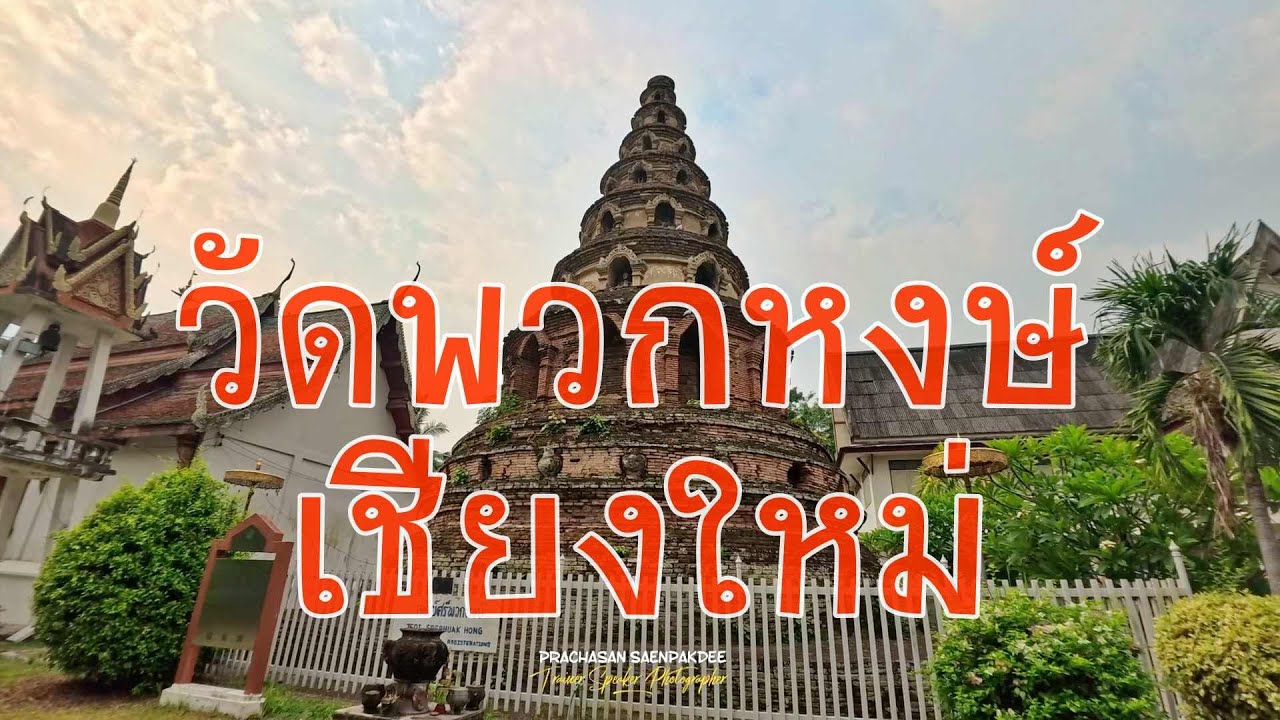
 Click to Access the Navigation Map GPS
Wat Puak Hong (Wat Phuak Hong) Map
Recommend

 Muang Chiang Mai(121)Chom Thong(47)Mae Chaem(25)Chiang Dao(33)Doi Saket(68)Mae Taeng(85)Mae Rim(69)Samoeng(29)Fang(71)Mae Ai(62)Phrao(70)San Pa Tong(105)San Kamphaeng(66)San Sai(73)Hang Dong(74)Hot(32)Doi Tao(22)Omkoi(11)Saraphi(74)Wiang Haeng(15)Chai Prakan(28)Mae Wang(32)Mae On(22)Doi Lo(34)Galyani Vadhana(1)


