
lovethailand home >North Travel Attractions >Chiang Mai Travel Attractions >Omkoi >Sop Khong > Wat Phra That Nong Sa
TL;DR: Wat Phra That Nong Sa is located at Moo 6, Ban U-chae, Mae Long Subdistrict, Omkoi District, Chiang Mai Province 50310. Highlights include Hilltop Buddhist stupa and sacred site for Karen Buddhist communities in Mae Long and nearby areas.
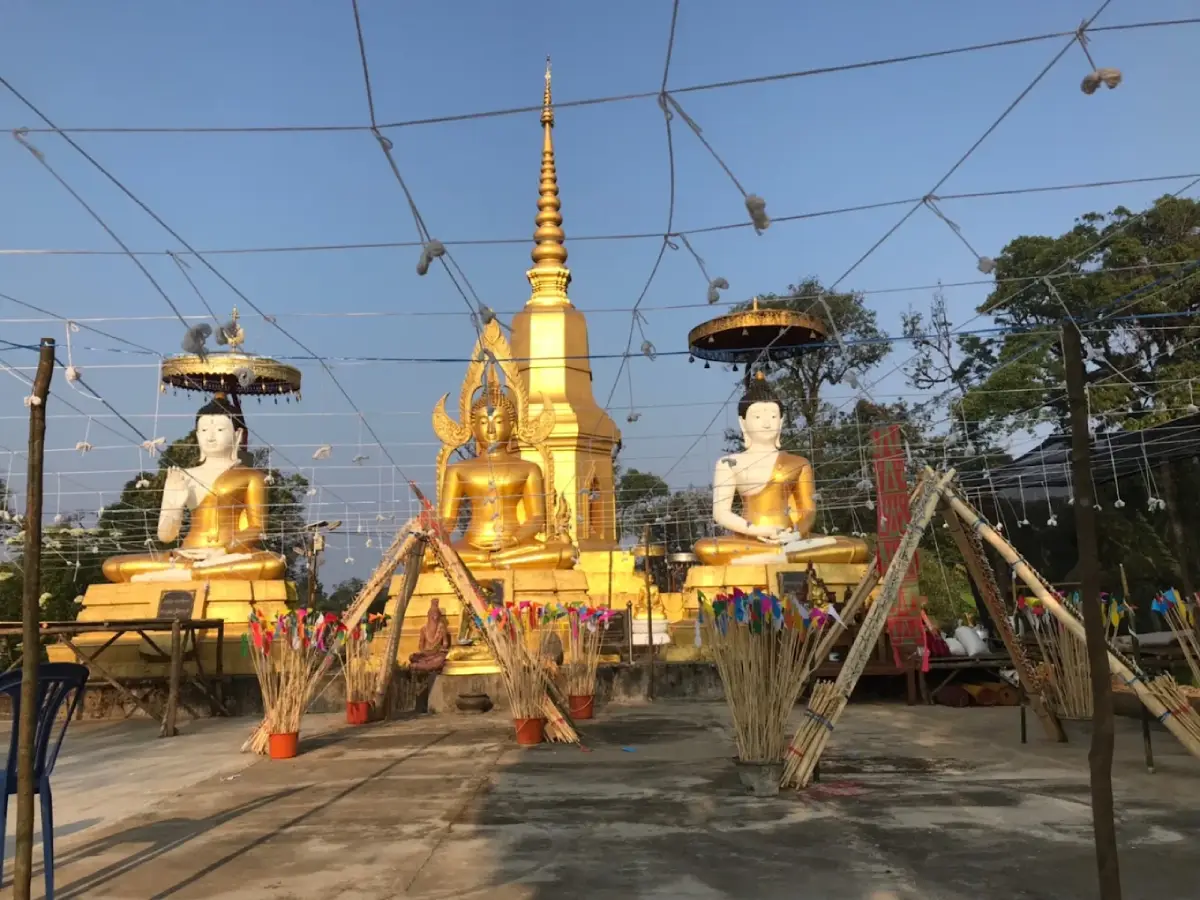
Wat Phra That Nong Sa
Operating day: Daily
Operating time: 08.00 - 17.00
Wat Phra That Nong Sa is a hilltop Buddhist temple in Ban U-chae, Moo 6, Mae Long Subdistrict, Omkoi District, Chiang Mai Province. The temple is known as a sacred place for Karen Buddhists in Mae Long and nearby communities. Its main appeal lies in its hilltop stupa, quiet mountain atmosphere, and strong connection with local faith rather than large-scale tourism. For travelers, this is a destination for merit-making, Buddhist worship, mountain scenery, and a deeper understanding of highland community life in southern Chiang Mai.
In practical terms, Wat Phra That Nong Sa is a remote mountain temple that requires careful planning. The route from Omkoi District town is about 50 km and normally takes around 3 hours by 4-wheel-drive vehicle. The road is mountainous, winding, and demanding, especially after rain. This temple should not be treated as a quick roadside stop. Visitors should prepare the vehicle, check local road conditions, travel during daylight, and respect the temple as an active sacred place for the local community.
The temple is located in Ban U-chae, a highland village in Mae Long Subdistrict. This area was formerly known as Sop Khong Subdistrict before the name was changed to Mae Long, reflecting the identity of the Mae Long stream and the Mae Long villages within the area. Ban U-chae is now Moo 6 of Mae Long Subdistrict. The mountainous landscape, remote access, and strong village identity make Wat Phra That Nong Sa feel very different from temples in Chiang Mai city or other easily accessible tourist zones.
The importance of Wat Phra That Nong Sa is not based on grand scale or elaborate urban architecture. Its value lies in its role as a spiritual anchor for local Karen Buddhist communities. The stupa is a place of worship for villagers from Mae Long and surrounding areas, and the temple functions as a link between Buddhist faith, highland life, and community memory. Visiting the temple is therefore not only a sightseeing experience, but also a chance to understand how Buddhism is practiced and preserved in remote mountain communities.
The confirmed history of Wat Phra That Nong Sa appears mainly in local tourism and community records rather than in detailed archaeological documentation. What is clear is that the temple stands on a high mountain, is respected by Karen Buddhists, and is supported through a rotating monastic presence from Wat Phra Phutthabat Huai Tom. This gives the temple the character of a remote hill temple maintained through faith networks and local care, rather than a site designed primarily for mass tourism.
The stupa is the central sacred feature of the temple. Visitors come to pay respect, make merit, and enjoy the peaceful mountain environment. The journey itself is part of the experience. Reaching the temple requires passing through highland roads, village areas, and natural landscapes. The setting creates a sense of distance from the city and invites a slower, more respectful approach. This is a destination best suited to travelers who have enough time and who value quiet places with real local meaning.
What visitors should appreciate at Wat Phra That Nong Sa is the combination of the stupa, the hilltop worship area, and the surrounding mountain views. Nearby, Doi Nong Sa Viewpoint offers wide views of villages and mountain ridges in Mae Long Subdistrict. On clear days, the layered ridgelines of Omkoi are especially beautiful. During some seasons, white wildflowers can appear around the viewpoint area, adding to the simple charm of this highland route.
The atmosphere of Wat Phra That Nong Sa is suitable for travelers who understand the conditions of highland travel. This is not a destination with extensive tourist facilities. It is better suited to visitors interested in faith, culture, landscape, and local community life. Travelers should dress modestly, speak quietly, avoid disturbing monks or villagers, take all trash back with them, and behave with respect around the stupa and temple grounds.
The temple also plays an important community role. For Karen Buddhist villagers in the area, the stupa is more than a religious structure; it is a shared spiritual reference point. It supports merit-making, Buddhist observance, and the continuity of community faith. Preserving a place like Wat Phra That Nong Sa also means preserving the cultural landscape of Omkoi’s mountain communities.
Specific annual temple festival details are not publicly confirmed in reliable sources. However, the temple is connected with ordinary Buddhist practices such as merit-making, offerings, worship at the stupa, and community support for the temple. Travelers who want to join a ceremony or visit during an important Buddhist period should contact Mae Long Subdistrict Administrative Organization or local residents before making the trip.
Getting There should begin from Omkoi District town. From there, the route heads toward the Mae Long highland villages and Ban U-chae. The distance to Wat Phra That Nong Sa is about 50 km and normally takes around 3 hours by 4-wheel-drive vehicle. The road is steep, winding, and requires a driver familiar with mountain conditions. Visitors should leave early, avoid travelling after heavy rain, carry enough fuel, and check the road condition with local contacts before going up the mountain.
The best travel period is during drier weather, when the mountain roads are safer. After heavy rain, the road can become slippery and difficult to control, especially for vehicles without 4-wheel drive. Visitors should plan to descend before dark because fog, low light, and mountain curves can reduce visibility quickly. A trip to Wat Phra That Nong Sa should be planned like a true mountain journey, not like a short visit to an urban temple.
For route planning, Wat Phra That Nong Sa can be combined with Doi Nong Sa Viewpoint, Mae Long Waterfall, and other natural attractions in Mae Long and Omkoi. However, because travel time on mountain roads is much longer than normal road distance suggests, visitors should not pack too many stops into one day. A safe plan is to choose one or two main destinations and stay overnight in Omkoi town or another suitable base before or after the mountain trip.
Wat Phra That Nong Sa is meaningful for travelers who want to see another side of Chiang Mai. Beyond the famous temples in the old city and well-known Lanna sites, this hilltop temple reveals a quieter religious landscape shaped by mountains, Karen Buddhist communities, and remote village life. With proper preparation and respectful behavior, the journey offers more than a temple visit; it offers insight into the connection between Buddhism, highland geography, and local identity in Omkoi.
| Name | Wat Phra That Nong Sa |
| Location | Moo 6, Ban U-chae, Mae Long Subdistrict, Omkoi District, Chiang Mai Province 50310 |
| Address | Ban U-chae, Moo 6, Mae Long Subdistrict, Omkoi District, Chiang Mai 50310, Thailand |
| Highlights | Hilltop Buddhist stupa and sacred site for Karen Buddhist communities in Mae Long and nearby areas |
| History / Importance | A remote mountain temple respected by local Karen Buddhists, with monks from Wat Phra Phutthabat Huai Tom taking turns to reside and support religious activities |
| Name Origin | The name Nong Sa is associated with the stupa and the Doi Nong Sa highland route around Ban U-chae in Mae Long Subdistrict |
| Distinctive Features | High mountain location, peaceful religious atmosphere, and panoramic Omkoi highland setting |
| Travel Information | About 50 km from Omkoi District town. A 4-wheel-drive vehicle is recommended. Travel time is about 3 hours on winding mountain roads. |
| Current Status | Listed as a local religious and tourism site by Mae Long Subdistrict Administrative Organization |
| Facilities | Visitors should bring drinking water, snacks, personal medication, and basic supplies for remote mountain travel |
| Main Areas / Zones | Stupa worship area, temple grounds, and the route connected with Doi Nong Sa Viewpoint |
| Resident Monks / Religious Care | Monks from Wat Phra Phutthabat Huai Tom take turns residing at the temple and supporting religious activities |
| Main Contact Number | Local attraction inquiry: 086-420-3270 Mae Long Subdistrict Administrative Organization: 065-626-7676 |
| Nearby Tourist Attractions | 1. Doi Nong Sa Viewpoint, about 5 km, Tel. 086-420-3270 2. Mae Long Waterfall, about 12 km, Tel. 086-420-3270 3. Wang Khwai Phueak Waterfall, about 50 km, Tel. 086-420-3270 4. Ta Ko Kha Waterfall, about 35 km 5. Wat Saen Thong, Omkoi District, about 50 km 6. Phra That Doi Kaew, Omkoi District, about 52 km |
| Nearby Restaurants / Omkoi Route | 1. Khao Soi Mae Son Omkoi, about 50 km, Tel. 086-193-7155 2. Muan Khanat at Omkoi, about 50 km, Tel. 089-850-7182, 084-378-1567 3. Pat Bar Cafe Omkoi, about 50 km, Tel. 064-345-1059 4. Ingdoi Kitchen Restaurant, about 50 km, Tel. 088-249-5219 5. Phu Fa Restaurant Omkoi, about 90 km, Tel. 053-114-334 |
| Nearby / Omkoi Area Accommodations | 1. Omkoi Resort, about 50 km 2. Ban Bon Doi Omkoi The Resort, about 50 km, Tel. 098-651-8314 3. Sawanya Rooms, about 50 km, Tel. 092-105-1558 4. Srithong Ville, about 50 km 5. Ban Suan Homestay, about 70 km, Tel. 081-165-3596 |
Frequently Asked Questions (FAQ)
Q: Where is Wat Phra That Nong Sa located?
A: Wat Phra That Nong Sa is located in Ban U-chae, Moo 6, Mae Long Subdistrict, Omkoi District, Chiang Mai Province 50310.
Q: Why is Wat Phra That Nong Sa important?
A: It is a sacred hilltop temple and stupa worship site for Karen Buddhist communities in Mae Long and nearby highland areas.
Q: What kind of vehicle is needed to reach Wat Phra That Nong Sa?
A: A 4-wheel-drive vehicle is recommended because the road from Omkoi is mountainous, winding, and takes about 3 hours to reach the temple.
Q: When is the best time to visit Wat Phra That Nong Sa?
A: Visit during daylight and in dry weather. Avoid travelling after heavy rain, and plan to leave the mountain area before dark.
Q: Is there an admission fee for Wat Phra That Nong Sa?
A: No verified official admission fee is available. Visitors should mainly prepare for transport, fuel, food, and local coordination costs.
Q: What nearby places can be combined with this trip?
A: The route can be combined with Doi Nong Sa Viewpoint, Mae Long Waterfall, Wang Khwai Phueak Waterfall, Wat Saen Thong, and Phra That Doi Kaew in Omkoi District.
Q: Who should visitors contact before travelling?
A: Visitors should contact Mae Long Subdistrict Administrative Organization or the local tourism contact number to check road conditions and local readiness before travelling.
Q: Who is Wat Phra That Nong Sa suitable for?
A: It is suitable for travelers interested in remote hill temples, Karen Buddhist culture, mountain scenery, and faith-based travel that requires careful preparation.
 Category: ●Places of Worship
 Group: ●Temple
Last Update : 2 WeekAgo
 Last Update : 2 WeekAgo
 Click to Access the Navigation Map GPS
Wat Phra That Nong Sa Map
Recommend

 Muang Chiang Mai(121)Chom Thong(47)Mae Chaem(25)Chiang Dao(33)Doi Saket(68)Mae Taeng(85)Mae Rim(69)Samoeng(29)Fang(71)Mae Ai(59)Phrao(70)San Pa Tong(103)San Kamphaeng(66)San Sai(73)Hang Dong(73)Hot(32)Doi Tao(22)Omkoi(11)Saraphi(74)Wiang Haeng(15)Chai Prakan(28)Mae Wang(32)Mae On(22)Doi Lo(33)Galyani Vadhana(1)


