
lovethailand home >North Travel Attractions >Chiang Mai Travel Attractions >Muang Chiang Mai >Phra Sing > Wat Chang Taem
TL;DR: Wat Chang Taem is located at Phra Sing Subdistrict, Mueang Chiang Mai District, Chiang Mai Province, open Daily, hours 08.00 – 17.00.

Wat Chang Taem
Open Days: Daily
Opening Hours: 08.00 – 17.00
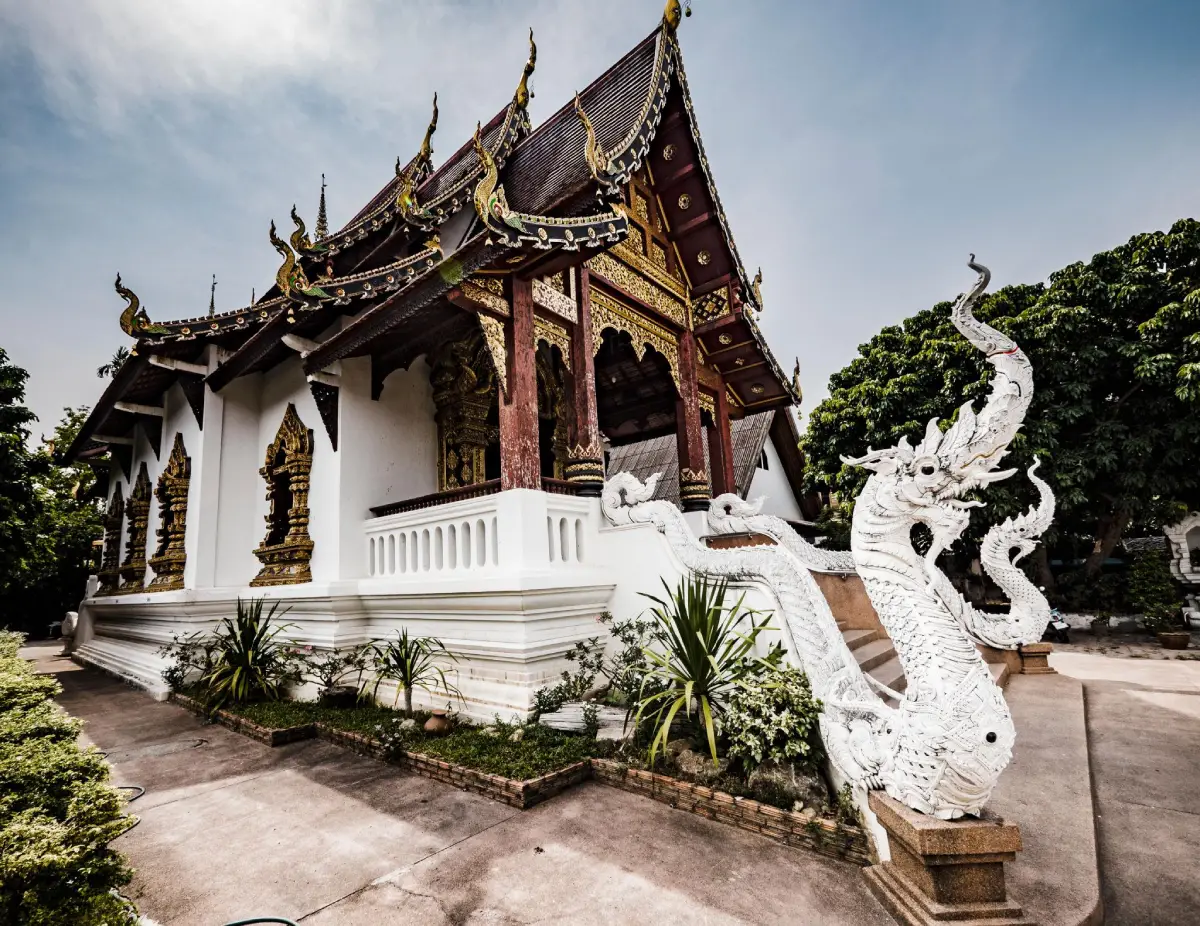
Wat Chang Taem is an old Buddhist temple on Prapokklao Road in Phra Sing Subdistrict, Mueang Chiang Mai District, Chiang Mai Province. It stands inside Chiang Mai’s old city, close to Wat Chedi Luang, Wat Phan Tao, Wat Chet Lin, and the Sunday Walking Street route. Although the temple compound is small, covering about 2 rai, it contains a dense concentration of Lanna history, local craftsmanship, Buddhist art, and city-level ritual significance. Its main highlights include the name connected with northern Thai painters, an applied Lanna viharn with a three-tiered roof, a decorative entrance arch, a Lanna-style stupa behind the viharn, and the revered Buddha image known as Phra Chao Fon Saen Ha.
Wat Chang Taem is suitable for travelers who want to understand Chiang Mai beyond the most famous landmark temples. The temple is compact, but it tells several important stories at once: the history of artist communities in old Lanna, the symbolic language of temple decoration, the relationship between Lanna and Burmese artistic influence, and the ritual role of Phra Chao Fon Saen Ha in Chiang Mai’s Inthakhin tradition. Visitors can make a short worship stop here, but the temple becomes much more meaningful when explored slowly and with attention to architectural detail.
The former name of Wat Chang Taem was Wat Tom Taem Kaew Kwang Tha Chang Phichai. The present name is easier to remember and carries clear cultural meaning. In the northern Thai language, “chang taem” refers to painters or artists who create painted works. This fits the temple’s historical association with a group of Lanna painters. The name therefore preserves the memory of an artisan community whose work was connected with Buddhist devotion, temple painting, and religious visual culture.
This connection with artists makes Wat Chang Taem more than a neighborhood monastery. In old Chiang Mai, several temples carried names related to crafts, occupations, or community groups. Such names reveal how temples were woven into social organization, local skills, and neighborhood identity. Wat Chang Taem belongs to this cultural pattern. It shows how a Buddhist temple could serve as a sacred space, a community center, and a place where craftsmanship and faith met.
The temple is believed to have been established around 2038–2063 B.E. by a group of Lanna painters or “chang taem.” This places the temple within the cultural world of late Mangrai Dynasty Chiang Mai, when Buddhism, temple building, and religious art remained central to urban life. The origin story emphasizes that art and religion were not separate in Lanna society. Painting, carving, gilding, and symbolic design were all ways to express devotion and support Buddhism.
Wat Chang Taem’s location on Prapokklao Road makes it highly accessible. The road links several important places inside Chiang Mai’s old city, including Wat Chedi Luang, Wat Phan Tao, Wat Inthakhin Sadue Mueang, Wat Chet Lin, and Chiang Mai Gate. Around the temple are old temples, small lanes, local businesses, guesthouses, cafés, and walking routes. This makes Wat Chang Taem an easy stop for visitors exploring the old city on foot.
The viharn is the main architectural feature of Wat Chang Taem. It is built in an applied Lanna style with a three-tiered roof. The roofline gives the building a graceful northern Thai character, while some decorative details feel more contemporary. The viharn is not monumental in scale, but it has strong visual balance. Its layered roof, gable decoration, and entrance elements make the building the central focus of the temple compound.
The front gable is divided into structural sections in a style locally described as ma tang mai. Each section is decorated with floral and plant motifs. In Lanna temple art, floral patterns often suggest growth, abundance, and the flourishing of Buddhism. These motifs are therefore not simply ornamental. They add symbolic meaning to the viharn and help transform the building into a sacred architectural space.
The entrance to the viharn is formed by an elegant Lanna-style arch. The stucco work includes swan motifs and two intertwined naga serpents. The swan suggests grace and elevated spiritual beauty, while the naga is associated with protection, water, and guardianship of Buddhism. Together, these motifs create a meaningful threshold between the everyday space outside and the sacred interior of the viharn.
Inside the viharn are several Buddha images in the Mara-vijaya posture. The faces of the Buddha images are not identical, which makes the interior especially interesting for visitors who enjoy Buddhist art. These differences reflect local craftsmanship and the visual diversity of devotional sculpture. The interior invites both worship and close observation, allowing visitors to see how different artistic hands shaped the sacred atmosphere of the temple.
Behind the principal Buddha image is a decorative stucco arch and a golden Dharma wheel set against a red background. The Dharma wheel symbolizes the teaching of the Buddha and the turning of the Buddhist doctrine. Its placement behind the principal image draws attention to the spiritual center of the viharn. The gold-and-red contrast gives the interior depth, warmth, and a strong sense of sacred focus.
In front of the Buddha images is a sattaphan, a traditional multi-branched candle stand used in northern Thai Buddhist ritual. At Wat Chang Taem, the sattaphan is carved from wood in the form of Garuda and naga figures and decorated with colored glass. This object is important because it combines ritual function with symbolic craftsmanship. Garuda and naga imagery reflects protective power and cosmological meaning, while the glass inlay adds brightness to the worship area.
Behind the viharn stands the temple stupa. The stupa reflects Lanna artistic form while also preserving traces of Burmese influence. Chiang Mai was under Burmese power for a long period, and this history affected the appearance of several temple structures. At Wat Chang Taem, the upper part of the stupa was formerly associated with Burmese style before later restoration emphasized a more Lanna appearance. The stupa therefore helps visitors read the political and artistic history of Chiang Mai through architecture.
The stupa has a square lower base with small ceremonial umbrellas at the corners. Above the base is an elevated indented platform supporting six stacked octagonal tiers before rising to a round bell-shaped body covered with golden changko metal sheets. The top is crowned with a seven-tiered golden umbrella. The structure moves visually from a firm square base to a sacred vertical summit, showing the formal elegance of Lanna Buddhist architecture.
One of the most important sacred objects at Wat Chang Taem is Phra Chao Fon Saen Ha, also known as Phra Phuttha Khantharat. This revered Buddha image is deeply respected by Chiang Mai residents. The name is connected with the belief that the Buddha image can help bring seasonal rain. This belief reflects the agricultural foundations of Lanna society, where rain, water, and seasonal balance were essential to the well-being of the city and its people.
Phra Chao Fon Saen Ha is a Buddha image in the Mara-vijaya posture, associated with Chiang Saen art and Lanka influence. Local tradition connects the image with Queen Chamathewi, the first ruler of Hariphunchai, before it was later brought to Chiang Mai. This legend links the image to both Hariphunchai and Chiang Mai, two major centers of northern Thai Buddhist history. For worshippers, the image is not only old and beautiful; it is a sacred object tied to the spiritual protection and prosperity of the city.
The importance of Phra Chao Fon Saen Ha extends beyond Wat Chang Taem itself. During the annual Inthakhin pillar worship festival, the image is carried from Wat Chang Taem to Wat Chedi Luang Worawihan, where people can pay respect and pour water over it as part of the ritual. The ceremony is associated with civic blessing, seasonal rain, and the spiritual well-being of Chiang Mai. This makes Wat Chang Taem a small temple with a city-level religious role.
In Chiang Mai’s annual ritual cycle, Phra Chao Fon Saen Ha is brought out of Wat Chang Taem only on important occasions, especially during the Songkran or northern Thai New Year period and the Inthakhin festival. The image’s public procession shows how strongly it is connected with the city’s collective faith. Even though Wat Chang Taem is modest in size, it houses a Buddha image that carries major significance for the people of Chiang Mai.
Historical inscriptions add another layer of value to Wat Chang Taem. The Thai inscription database records several inscriptions connected with Buddha images at the temple, including an inscription at the base of a Mara-vijaya Buddha image dated to 2416 B.E. and an inscription at the base of a reclining Buddha image dated to 2447 B.E. These inscriptions show acts of merit-making, Buddha image creation, and religious donation during the Lanna period under Siamese administration.
One inscription connected with the reclining Buddha image is especially notable because it refers to a Buddha image made with muk khiao nga chang, a northern Thai term associated with powdered elephant ivory. The inscription records donors who created the image to support Buddhism. Such evidence shows that Wat Chang Taem is not only architecturally interesting, but also historically important as a place where devotional objects and written records were preserved.
Wat Chang Taem remains an active local Buddhist temple. It is a private local monastery of the Mahanikaya order in Phra Sing Subdistrict. Recent temple activity data lists 5 resident monks and identifies the abbot as Phra Palat Phiraphon Panyawaro. This confirms that the temple is not abandoned. It continues to function as a living religious site for worship, merit-making, annual ceremonies, and community devotion.
The main areas within Wat Chang Taem include the viharn, stupa, temple courtyard, monks’ quarters, multipurpose hall, bell structure, dining hall, kitchen, and religious activity areas. Visitors should begin at the viharn to pay respect to the Buddha images and Phra Chao Fon Saen Ha, then walk respectfully to the stupa behind the viharn. Because the compound is compact, details can be seen clearly and should be observed slowly.
Getting There is easy because Wat Chang Taem is located on Prapokklao Road inside Chiang Mai’s old city. From Wat Chedi Luang, visitors can walk south for a short distance. From Chiang Mai Gate, visitors can walk north along Prapokklao Road. Travelers staying inside the old city or near the Sunday Walking Street route can reach the temple on foot, while those coming from other areas can use red songthaew, tuk-tuk, motorcycle taxi, or private car.
Visitors driving to Wat Chang Taem should plan for limited parking. Prapokklao Road is an important old-city road, and parking can be difficult on Sundays, holidays, and during major festivals such as Songkran and Inthakhin. Walking from a nearby hotel or using local transport is often easier. The temple’s location makes it convenient to combine with nearby sites rather than visiting as a single isolated stop.
The best time to visit Wat Chang Taem is in the morning or late afternoon. The light is suitable for observing the viharn, arch, decorative details, and stupa, while the temperature is usually more comfortable. During the Inthakhin festival or Songkran period, visitors should check the city’s ritual schedule because Phra Chao Fon Saen Ha may be temporarily enshrined at a ceremonial location, and the area around Wat Chedi Luang and Prapokklao Road may be crowded.
Wat Chang Taem can be included in several old-city walking routes. A temple route can connect it with Wat Chedi Luang, Wat Phan Tao, Wat Chet Lin, Wat Inthakhin Sadue Mueang, and Wat Phra Singh. A cultural walking route can include the Sunday Walking Street, Three Kings Monument, Chiang Mai Gate, and Chiang Mai Gate Market. The temple’s strength lies in its convenient location and its unusually rich cultural content for a small monastery.
Visitors should follow normal Thai temple etiquette. Dress modestly, speak quietly, remove shoes before entering designated sacred spaces, do not disturb monks or worshippers, and take photos respectfully. If a procession or religious ceremony connected with Phra Chao Fon Saen Ha is taking place, visitors should give priority to monks, officials, and local worshippers. Respectful conduct helps preserve the temple as a shared space for residents and travelers.
In summary, Wat Chang Taem is a small but culturally significant temple in Chiang Mai’s old city. Its name preserves the memory of Lanna painters. Its viharn displays applied Lanna architecture and symbolic decoration. Its stupa reveals layers of Lanna and Burmese artistic influence. Phra Chao Fon Saen Ha connects the temple with Chiang Mai’s city-level rituals, especially the Inthakhin festival. Its inscriptions add documentary value to the temple’s sacred objects. For travelers who want to understand Chiang Mai through art, faith, history, and living ritual, Wat Chang Taem is a highly meaningful stop.
| Name | Wat Chang Taem |
| Former Name | Wat Tom Taem Kaew Kwang Tha Chang Phichai |
| Location | Phra Sing Subdistrict, Mueang Chiang Mai District, Chiang Mai Province |
| Address | 95 Prapokklao Road, Phra Sing Subdistrict, Mueang Chiang Mai District, Chiang Mai Province |
| Coordinates | Latitude 18.78525, Longitude 98.98813 |
| Highlights | Applied Lanna viharn, decorative entrance arch, ma tang mai-style gable, Lanna-style stupa, Phra Chao Fon Saen Ha, and carved wooden sattaphan with Garuda and naga motifs |
| History | Believed to have been founded around 2038–2063 B.E. by Lanna painters or chang taem within the cultural context of late Mangrai Dynasty Chiang Mai |
| Name Origin | “Chang taem” means painters or artists in northern Thai, reflecting the temple’s connection with Lanna painting and artisan communities |
| Distinctive Features | A compact old-city temple of about 2 rai, rich in Lanna art, sacred objects, inscriptions, and city-level ritual significance |
| Important Sacred Objects | Viharn, Buddha images in Mara-vijaya posture, Phra Chao Fon Saen Ha, stupa, entrance arch, sattaphan, monks’ quarters, multipurpose hall, bell structure, dining hall, and kitchen |
| Phra Chao Fon Saen Ha | A revered Chiang Mai Buddha image enshrined at Wat Chang Taem, associated with the belief in seasonal rain and the Inthakhin pillar worship festival |
| Related Traditions | Inthakhin pillar worship festival and northern Thai New Year celebrations, during which Phra Chao Fon Saen Ha is brought out for public worship and water-pouring rites |
| Key Evidence | Wat Chang Taem Buddha image base inscriptions, including a Mara-vijaya Buddha image inscription dated 2416 B.E. and a reclining Buddha image inscription dated 2447 B.E. |
| Travel Information | Accessible from Wat Chedi Luang, Wat Phan Tao, Chiang Mai Gate, and the Sunday Walking Street route by walking, red songthaew, tuk-tuk, motorcycle taxi, or private car via Prapokklao Road |
| Current Status | Open to worshippers and visitors; it remains an active local Buddhist temple in Phra Sing Subdistrict with resident monks and regular religious activity |
| Open Days | Daily |
| Opening Hours | 08.00 – 17.00 |
| Main Contact Number | 053-274-790 |
| Abbot / Caretaker | Phra Palat Phiraphon Panyawaro |
| Resident Monks | 5 monks |
| Facilities | Viharn, worship areas, temple courtyard, multipurpose hall, dining hall, kitchen, and limited parking depending on old-city conditions |
| Main Areas / Zones | Viharn, stupa, entrance arch, temple courtyard, monks’ quarters, religious activity areas, and the area where Phra Chao Fon Saen Ha is enshrined |
| Nearby Tourist Attractions | 1. Wat Chedi Luang, about 0.2 km 2. Wat Chet Lin, about 0.2 km 3. Wat Phan Tao, about 0.3 km 4. Sunday Walking Street, about 0.3 km 5. Wat Inthakhin Sadue Mueang, about 0.6 km 6. Three Kings Monument, about 0.7 km 7. Chiang Mai Gate, about 0.8 km 8. Wat Phra Singh Woramahawihan, about 1 km |
| Nearby Restaurants | 1. See You Soon Cafe, about 0.1 km, Tel. 081-880-8380 2. Hom Naan Baan Din Beef Noodle, about 0.1 km, Tel. 097-197-9747 3. Thaan Aoan Restaurant, about 0.4 km, Tel. 053-278-507 4. Tiang Sieng Vegetarian Restaurant, about 0.5 km, Tel. 053-206-056, 053-281-487 5. Huen Phen, about 0.6 km, Tel. 053-814-548 6. Dash Teak House, about 0.8 km, Tel. 053-279-230 7. Pad Thai Restaurant & Khon Gallery, about 0.8 km |
| Nearby Accommodations | 1. Chala Number 6 Hotel, about 0.3 km, Tel. 052-010-466 2. Villa Klang Wiang Hotel, about 0.4 km, Tel. 053-280-196 3. Viang Luang Resort, about 0.4 km, Tel. 053-271-936 4. Baan Huenphen Boutique Hotel, about 0.5 km, Tel. 097-921-8311 5. U Chiang Mai Hotel, about 0.8 km, Tel. 053-327-000 6. 99 The Heritage Hotel, about 1.2 km, Tel. 053-326-287 |
Frequently Asked Questions (FAQ)
Q: Where is Wat Chang Taem located?
A: Wat Chang Taem is located at 95 Prapokklao Road, Phra Sing Subdistrict, Mueang Chiang Mai District, Chiang Mai Province, near Wat Chedi Luang, Wat Phan Tao, Wat Chet Lin, and the Sunday Walking Street route.
Q: What are the opening days and hours of Wat Chang Taem?
A: Wat Chang Taem is open daily from 08.00 to 17.00. Morning and late afternoon are suitable times for worship and quiet observation.
Q: What was the former name of Wat Chang Taem?
A: The former name was Wat Tom Taem Kaew Kwang Tha Chang Phichai. The present name Wat Chang Taem refers to painters or artists in northern Thai.
Q: What are the main highlights of Wat Chang Taem?
A: The highlights include the applied Lanna viharn with a three-tiered roof, ma tang mai-style gable, decorative entrance arch with swan and naga motifs, Lanna-style stupa, and Phra Chao Fon Saen Ha.
Q: Why is Phra Chao Fon Saen Ha important?
A: Phra Chao Fon Saen Ha is a revered Buddha image of Chiang Mai enshrined at Wat Chang Taem. It is associated with the belief in seasonal rain and plays an important role in the Inthakhin pillar worship festival.
Q: How is Wat Chang Taem connected with the Inthakhin festival?
A: During the Inthakhin pillar worship festival, Phra Chao Fon Saen Ha is carried from Wat Chang Taem to Wat Chedi Luang Worawihan so that people can pay respect and pour water over the image as part of the ceremony.
Q: How can visitors get to Wat Chang Taem?
A: Visitors can reach the temple from Wat Chedi Luang, Wat Phan Tao, Chiang Mai Gate, or the Sunday Walking Street area via Prapokklao Road. It is accessible on foot, by red songthaew, tuk-tuk, motorcycle taxi, or private car.
Q: What nearby places can be included in the same route?
A: Nearby places include Wat Chedi Luang, Wat Chet Lin, Wat Phan Tao, Sunday Walking Street, Wat Inthakhin Sadue Mueang, Three Kings Monument, Chiang Mai Gate, and Wat Phra Singh Woramahawihan.
 Category: ●Places of Worship
 Group: ●Temple
Last Update : 3 DayAgo
 Last Update : 3 DayAgo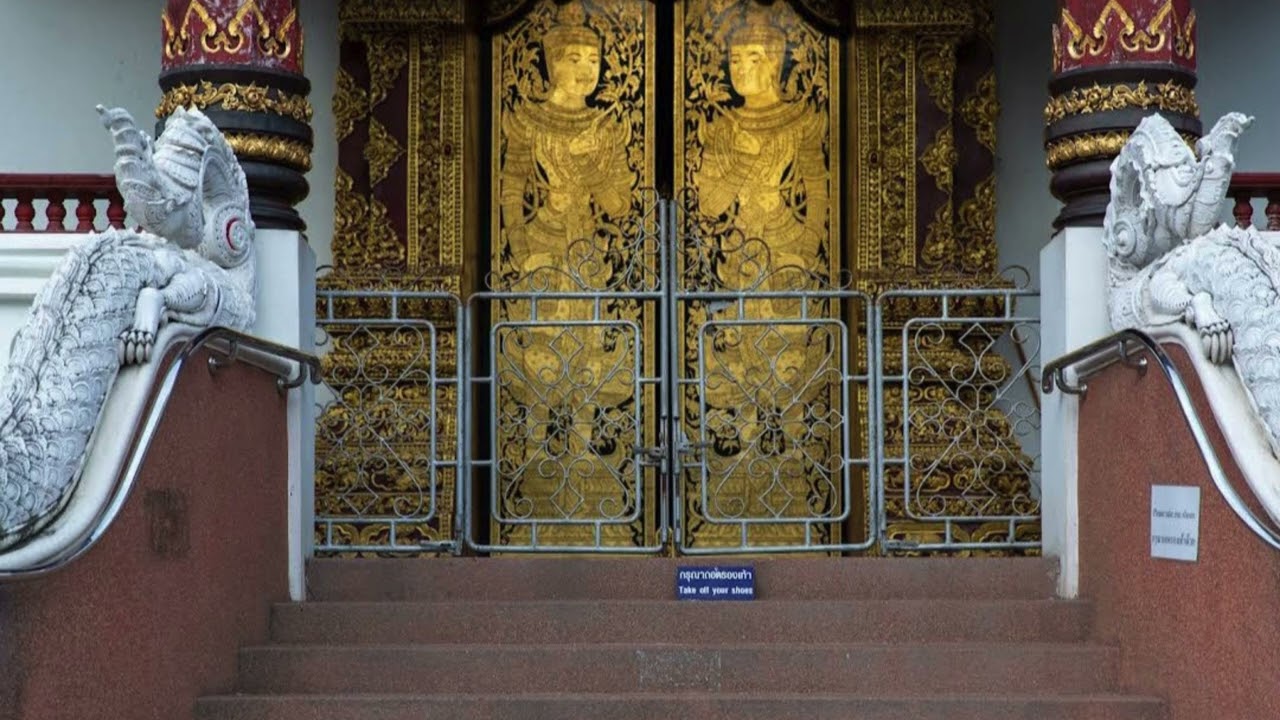
 Click to Access the Navigation Map GPS
Wat Chang Taem Map
Recommend

 Muang Chiang Mai(121)Chom Thong(47)Mae Chaem(25)Chiang Dao(33)Doi Saket(68)Mae Taeng(85)Mae Rim(69)Samoeng(29)Fang(71)Mae Ai(62)Phrao(70)San Pa Tong(105)San Kamphaeng(66)San Sai(73)Hang Dong(74)Hot(32)Doi Tao(22)Omkoi(11)Saraphi(74)Wiang Haeng(15)Chai Prakan(28)Mae Wang(32)Mae On(22)Doi Lo(34)Galyani Vadhana(1)


