
lovethailand home >North Travel Attractions >Chiang Mai Travel Attractions >Muang Chiang Mai >Hai Ya > Wat Mueang Mang
TL;DR: Wat Mueang Mang is located at Hai Ya Subdistrict, Mueang Chiang Mai District, Chiang Mai Province, open Daily, hours 08.00 – 17.00. Highlights include Old temple in Hai Ya connected with people from Mueang Yong and Ban Mueang Mang in Sipsongpanna.

Wat Mueang Mang
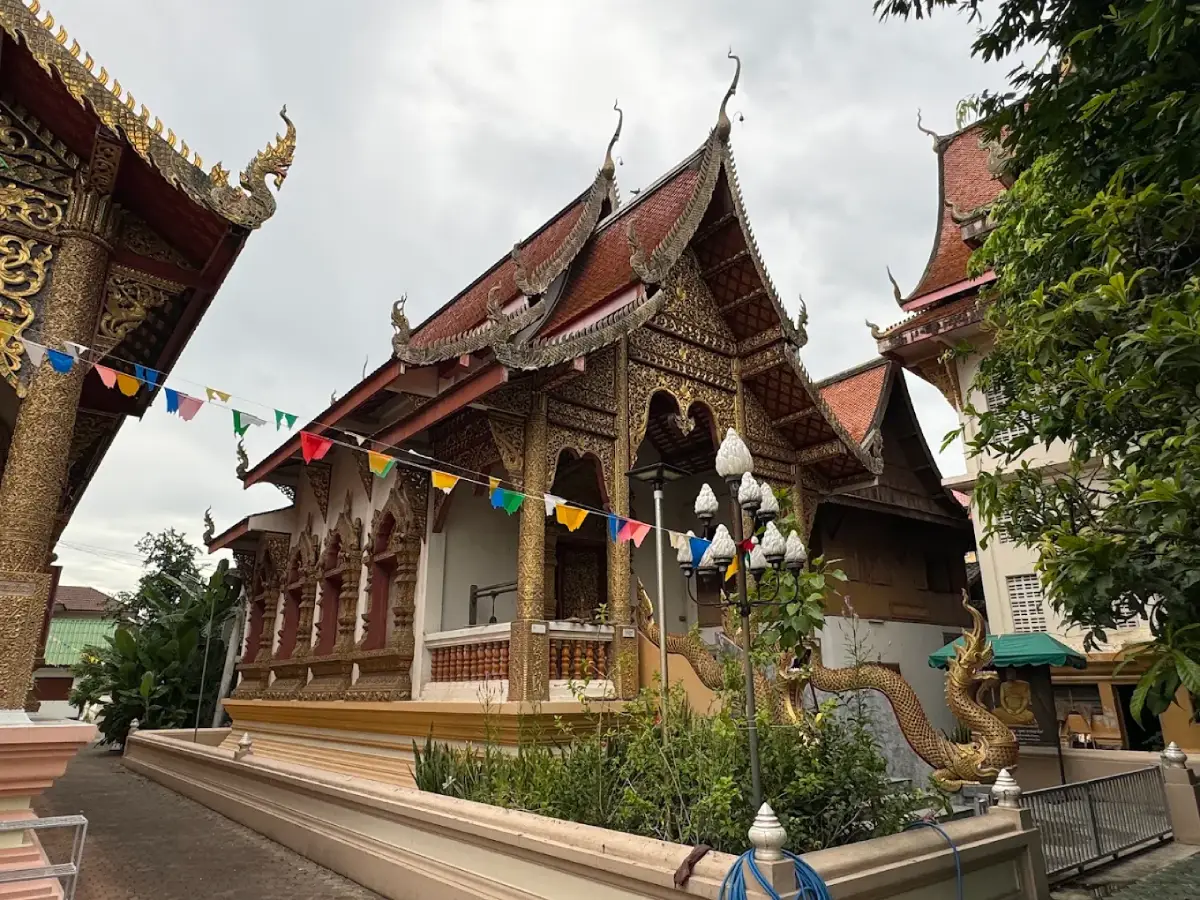
Open Days: Daily
Opening Hours: 08.00 – 17.00
Wat Mueang Mang is an old Buddhist temple in Hai Ya Subdistrict, Mueang Chiang Mai District, Chiang Mai Province. It is located at No. 2, Soi 2, Ban Mueang Mang, Ratchiangsaen Road, close to Chiang Mai Gate, Chaeng Ka Tam, Wat Sai Moon Muang, Wat Nantaram, and Wua Lai Road. The temple is historically important because it preserves the memory of people from Mueang Yong and Ban Mueang Mang in Sipsongpanna who were brought to Chiang Mai and later formed a local community in the city. The name Wat Mueang Mang is therefore more than a temple name. It is a cultural marker of migration, settlement, memory, and Lanna community identity.
Wat Mueang Mang is suitable for travelers who want to explore Chiang Mai through its quieter local temples rather than only its famous landmarks. The temple tells a story of war, population movement, community formation, and the preservation of homeland memory through the name of a Buddhist monastery. For this reason, Wat Mueang Mang is meaningful not only as a place of worship but also as a site of local history and identity in the Hai Ya area.
The recorded history of Wat Mueang Mang places its founding in 2225 B.E. The temple later received royal granting of the visungkhamsima in 2355 B.E. These dates establish Wat Mueang Mang as one of the older temples in the southern zone of Chiang Mai’s old city area. Hai Ya, where the temple stands, has long been an important neighborhood outside and around the old city wall. It contains old temples, historic communities, markets, craft streets, and routes that connect the southern and southeastern parts of Chiang Mai.
The origin story of Wat Mueang Mang begins with a military campaign in which a Chiang Mai ruler led troops to attack Mueang Yong in Sipsongpanna. After victory, people from Mueang Yong were brought to Chiang Mai as captives and settled within the city’s territory. A nobleman named Muen Phian, or in some documents Muen Yuean, was appointed to supervise these people. The appearance of this nobleman in the temple’s history shows that Wat Mueang Mang emerged within a historical process of population control, resettlement, and community organization after war.
Among the people from Mueang Yong were villagers from Ban Mueang Mang in Sipsongpanna. After settling in Chiang Mai, they built a temple to serve as the spiritual center of their new community. The temple was first named Wat Muen Phian after the nobleman responsible for supervising them. This first name reflects both the social order of the period and the need of a displaced community to establish a Buddhist center that could hold people together in a new place.
After Muen Phian passed away, people living around the temple continued to support and develop the monastery. Over time, the villagers decided to rename the temple so that it would reflect the name of their original community in Mueang Yong. They chose the name Wat Mueang Mang to remember Ban Mueang Mang, their former home in Sipsongpanna, a place they had left behind and could not easily return to. The renaming of the temple shifted its meaning from a reference to a supervising official to a reference to the collective memory of the community itself.
The name Wat Mueang Mang carries strong cultural meaning. “Mueang Mang” connects the original homeland in Sipsongpanna with the new settlement in Chiang Mai. It preserves the memory of movement across regions and shows how communities used temple names to keep their roots alive. For later generations, the temple name works as a historical signpost. It reminds the community of where their ancestors came from and how they rebuilt social and religious life in Chiang Mai.
Wat Mueang Mang is located in the Pratu Hai Ya area, also known as Hai Ya, in the outer zone of old Chiang Mai. This neighborhood contains many important local temples, including Wat Nantaram, Wat Sai Moon Muang, Wat Puak Chang, Wat Puak Pia, Wat Sri Suphan, and Wat Muen San. The concentration of temples in this area shows that Hai Ya has long been a religious, craft, market, and residential district. Wat Mueang Mang is one of the temples that help explain the layered identity of this historic neighborhood.
From an urban-history perspective, Wat Mueang Mang is also linked with the old city’s southeastern landscape. It stands near Chaeng Ka Tam and not far from the outer defensive earthwork known as Kamphaeng Din. This area helps visitors understand that old Chiang Mai was not limited to the familiar square moat. The city also included outer defensive lines, settlement zones, routes, markets, and temple communities. Wat Mueang Mang is therefore a useful place for reading the older urban geography of Chiang Mai.
The temple’s address is No. 2, Soi 2, Ban Mueang Mang, Ratchiangsaen Road, Hai Ya Subdistrict, Mueang Chiang Mai District, Chiang Mai Province. It belongs to the Mahanikaya order. The temple land covers 3 rai and 82 square wah under land title deed No. 53618. Its northern boundary adjoins private houses, the southern boundary adjoins a public road, the eastern boundary adjoins Ratchiangsaen Road, and the western boundary adjoins a public road. The temple also has one plot of monastic land measuring 2 rai, 1 ngan, and 63 square wah under title deed No. 4204.
Wat Mueang Mang remains an active local Buddhist temple. It continues to welcome worshippers and visitors, and it is still connected with temple activities and the surrounding community. Recent temple-activity data lists resident monks and a current abbot, showing that Wat Mueang Mang is not merely a historical name but a living religious site in Hai Ya.
The historical record of Wat Mueang Mang lists a succession of abbots, beginning with Phra Athikan Srithep, followed by Phra Athikan Sitthi from 2438 to 2458 B.E., Phra Athikan Kham Pan from 2459 to 2468 B.E., Phra U from 2469 to 2472 B.E., Phra Athikan Muen from 2473 to 2478 B.E., Phra Athikan Kham Ai from 2478 to 2482 B.E., Phra Samu Kham Pan from 2483 to 2486 B.E., Phra Kham Ai from 2487 to 2488 B.E., Phra Khru Phiphat Khanaphiban from 2489 to 2531 B.E., and Phra Khru Worayanamongkhon from 2532 B.E. onward. Current temple-activity data identifies the present abbot as Phra Maha Chaluai, Dr., reflecting the continuing administration of the temple today.
The historical importance of Wat Mueang Mang comes from its connection with people from Mueang Yong and Ban Mueang Mang in Sipsongpanna. This story links Chiang Mai’s local history with wider regional movements across Lanna, Sipsongpanna, and the upper Mekong cultural world. People from Mueang Yong played important roles in several northern Thai communities, and temples often became the main institutions that preserved their language, faith, social ties, and memory of origin.
In cultural terms, Wat Mueang Mang helps visitors understand the meaning of “homeland” in Lanna society. The name Mueang Mang allowed later generations to remember where their ancestors came from, even after they had lived in Chiang Mai for many generations. The temple name functions as a living memory device. It preserves a sense of origin within a new urban setting and shows how Buddhist temples helped displaced or resettled communities rebuild identity.
Wat Mueang Mang has the calm atmosphere of a neighborhood temple. Visitors can come to pay respect, make merit, and walk around the temple compound without needing a long visit. Its beauty lies less in monumental scale and more in its historical depth. Travelers who spend time understanding the background of the name and community will find the temple much more meaningful than it first appears from the outside.
The main areas of the temple include the viharn, temple courtyard, monks’ quarters, religious activity areas, and spaces used by the local community. The viharn is the primary place for worship, while the courtyard connects the temple’s religious function with everyday community life. Because the temple stands within a compact urban neighborhood, it feels closely tied to the daily rhythm of Hai Ya rather than separated from the city around it.
For travelers interested in Lanna art and community history, Wat Mueang Mang is best visited together with other nearby temples in Hai Ya. Wat Sri Suphan is known for its silver craftsmanship and silver ordination hall. Wat Puak Pia is connected with a community of pin pia instrument makers. Wat Puak Chang preserves the memory of an elephant-related community. Wat Mueang Mang, in contrast, tells the story of people from Mueang Yong and Ban Mueang Mang. Together, these temples reveal Hai Ya as a layered historic neighborhood, not just a sightseeing area near Wua Lai Road.
Getting There is convenient from Chiang Mai Gate, Ratchiangsaen Road, Sridonchai Road, Chaeng Ka Tam, and Wua Lai Road. Visitors can travel by private car, red songthaew, tuk-tuk, motorcycle taxi, or on foot from accommodation in the southern old city area. From Chiang Mai Gate, it is easy to continue toward Ratchiangsaen Road and Ban Mueang Mang. From the Night Bazaar or Loi Kroh area, visitors can travel through Sridonchai Road toward Chaeng Ka Tam and Ratchiangsaen Road.
Travelers driving to Wat Mueang Mang should plan for limited parking because the temple is located in a dense urban neighborhood with narrow streets and local traffic. Public transport or walking from nearby areas can be more convenient, especially during weekends, holidays, and Saturday evenings when the Wua Lai Walking Street area becomes busy. Morning or late afternoon is usually the most comfortable time to visit.
Wat Mueang Mang can be included in a half-day cultural route around Hai Ya and the southern side of Chiang Mai’s old city. A useful route can connect Wat Mueang Mang with Wat Sai Moon Muang, Wat Sai Moon Myanmar, Wat Puak Chang, Chaeng Ka Tam, Chiang Mai Gate, Chiang Mai Gate Market, Wua Lai Walking Street, Wat Sri Suphan, and Wat Muen San. This route gives visitors a balanced view of old temples, local markets, craft traditions, historic neighborhoods, and living Buddhist practice.
The best time to visit Wat Mueang Mang is in the morning or afternoon. The atmosphere is quieter, the light is suitable for observing the temple compound, and the surrounding streets are easier to navigate than during peak traffic. Visitors who plan to combine the temple with Wua Lai Walking Street on Saturday should visit the temple earlier in the day and continue to the walking street later.
Visitors should dress respectfully, speak quietly, remove shoes before entering designated sacred areas, and avoid disturbing monks or worshippers. Since Wat Mueang Mang is still a functioning local temple, respectful behavior is part of the visit. Photography should be done with care, especially around worship areas or during religious activities.
The value of Wat Mueang Mang lies in the way it reveals a quieter and deeper side of Chiang Mai. The temple preserves the story of Mueang Yong people, Ban Mueang Mang, Muen Phian, resettlement, temple founding, and the continuing memory of homeland within a new city. Visiting the temple helps travelers understand that Chiang Mai is not only a city of famous temples and tourist landmarks, but also a city of small historic communities whose stories are preserved in temple names, lanes, markets, and local Buddhist institutions.
In summary, Wat Mueang Mang is a meaningful temple for travelers interested in Lanna history, Mueang Yong communities, old temples in Hai Ya, and cultural routes around Chiang Mai’s old city. Founded in 2225 B.E. and granted visungkhamsima in 2355 B.E., the temple was originally known as Wat Muen Phian before being renamed Wat Mueang Mang to honor the original homeland of the community from Sipsongpanna. Although modest in size, the temple has strong historical and cultural value and is a worthwhile stop on a deeper Chiang Mai itinerary.
| Name | Wat Mueang Mang |
| Former Name | Wat Muen Phian |
| Location | Hai Ya Subdistrict, Mueang Chiang Mai District, Chiang Mai Province |
| Address | No. 2, Soi 2, Ban Mueang Mang, Ratchiangsaen Road, Hai Ya Subdistrict, Mueang Chiang Mai District, Chiang Mai Province |
| Coordinates | Latitude 18.780127, Longitude 98.991302 |
| Highlights | Old temple in Hai Ya connected with people from Mueang Yong and Ban Mueang Mang in Sipsongpanna |
| History | Founded in 2225 B.E. and granted visungkhamsima in 2355 B.E. |
| Name Origin | Originally named Wat Muen Phian after the nobleman who supervised people from Mueang Yong; later renamed Wat Mueang Mang to remember Ban Mueang Mang in Sipsongpanna |
| Distinctive Features | A local Buddhist temple in the outer zone of old Chiang Mai, closely linked with migration history and Mueang Yong community memory |
| Important Areas | Viharn, temple courtyard, religious activity areas, monks’ quarters, and resident monk areas |
| Travel Information | Accessible from Chiang Mai Gate, Ratchiangsaen Road, Sridonchai Road, Chaeng Ka Tam, and Wua Lai Road by private car, red songthaew, tuk-tuk, motorcycle taxi, or on foot from nearby accommodation |
| Current Status | Open to worshippers and visitors; it remains an active local Buddhist temple with resident monks |
| Open Days | Daily |
| Opening Hours | 08.00 – 17.00 |
| Facilities | Viharn, worship areas, temple courtyard, and limited parking depending on neighborhood conditions |
| Main Areas / Zones | Viharn, temple courtyard, monks’ quarters, religious activity areas, and resident monk areas |
| Abbot / Caretaker | Phra Maha Chaluai, Dr. |
| Temple Area | 3 rai and 82 square wah |
| Monastic Land | 1 plot measuring 2 rai, 1 ngan, and 63 square wah |
| Royal Granting of Visungkhamsima | 2355 B.E. |
| Resident Monks | 5 monks |
| Nearby Tourist Attractions | 1. Wat Sai Moon Myanmar, about 0.2 km 2. Wat Sai Moon Muang, about 0.3 km 3. Wat Dao Dueng, about 0.3 km 4. Chaeng Ka Tam, about 0.3 km 5. Chiang Mai Gate, about 0.5 km 6. Chiang Mai Gate Market, about 0.6 km 7. Wua Lai Walking Street, about 0.9 km 8. Wat Chedi Luang, about 1.1 km |
| Nearby Restaurants | 1. Noodles and A La Carte by Ratchiangsaen 2, about 0.1 km, Tel. 061-906-7788 2. Jaew Hon Isan Yok Sod, about 0.2 km, Tel. 063-525-6424 3. Je Nok A La Carte Ratchiangsaen, about 0.2 km, Tel. 099-457-2401 4. Khao Piak Sen Ratchiangsaen, about 0.3 km, Tel. 080-520-2642 5. Aroon Rai Restaurant, about 0.8 km, Tel. 053-276-947 6. Dash Teak House, about 0.9 km, Tel. 053-279-230 7. Huen Phen Restaurant, about 1.1 km, Tel. 053-814-548 |
| Nearby Accommodations | 1. Baan Ratchiangsaen, about 0.2 km, Tel. 053-274-755 2. Kodchasri Thani Heritage Collections, about 0.4 km, Tel. 053-281-950 3. The Old City Wall Inn, about 0.5 km, Tel. 096-679-7990 4. Hotel De Nara, about 0.6 km, Tel. 053-271-224 5. The Mellow Pillow Hotel @ Chiang Mai Gate, about 0.8 km 6. BED Chiangmai Gate, about 0.9 km |
Frequently Asked Questions (FAQ)
Q: Where is Wat Mueang Mang located?
A: Wat Mueang Mang is located at No. 2, Soi 2, Ban Mueang Mang, Ratchiangsaen Road, Hai Ya Subdistrict, Mueang Chiang Mai District, Chiang Mai Province, near Chiang Mai Gate, Chaeng Ka Tam, and Wua Lai Road.
Q: What are the opening days and hours of Wat Mueang Mang?
A: Wat Mueang Mang is open daily from 08.00 to 17.00. Morning and afternoon are suitable times for worship and a quiet temple visit.
Q: When was Wat Mueang Mang founded?
A: Wat Mueang Mang was founded in 2225 B.E. and received royal granting of visungkhamsima in 2355 B.E.
Q: What was the former name of Wat Mueang Mang?
A: The temple was formerly called Wat Muen Phian, after the nobleman who supervised the Mueang Yong people brought to Chiang Mai.
Q: What does the name Wat Mueang Mang mean?
A: The name remembers Ban Mueang Mang in Sipsongpanna, the former homeland of a group of villagers who later settled in Chiang Mai.
Q: What kind of trip is Wat Mueang Mang suitable for?
A: Wat Mueang Mang is suitable for travelers interested in Lanna history, Mueang Yong community heritage, old temples in Hai Ya, and cultural routes around Chiang Mai’s old city.
Q: How can visitors get to Wat Mueang Mang?
A: Visitors can reach the temple from Chiang Mai Gate, Ratchiangsaen Road, Sridonchai Road, Chaeng Ka Tam, or Wua Lai Road by private car, red songthaew, tuk-tuk, motorcycle taxi, or on foot from nearby accommodation.
Q: What nearby places can be included in the same route?
A: Nearby places include Wat Sai Moon Muang, Wat Sai Moon Myanmar, Wat Dao Dueng, Chaeng Ka Tam, Chiang Mai Gate, Chiang Mai Gate Market, Wua Lai Walking Street, and Wat Chedi Luang.
 Category: ●Places of Worship
 Group: ●Temple
Last Update : 2 MinuteAgo
 Last Update : 2 MinuteAgo
 Click to Access the Navigation Map GPS
Wat Mueang Mang Map
Recommend

 Muang Chiang Mai(121)Chom Thong(47)Mae Chaem(25)Chiang Dao(33)Doi Saket(68)Mae Taeng(85)Mae Rim(69)Samoeng(29)Fang(71)Mae Ai(62)Phrao(70)San Pa Tong(105)San Kamphaeng(66)San Sai(73)Hang Dong(74)Hot(32)Doi Tao(22)Omkoi(11)Saraphi(74)Wiang Haeng(15)Chai Prakan(28)Mae Wang(32)Mae On(22)Doi Lo(34)Galyani Vadhana(1)


