
lovethailand home >North Travel Attractions >Chiang Mai Travel Attractions >Muang Chiang Mai >Pa Tan > Wat Ban Tho
TL;DR: Wat Ban Tho is located at Ban Tho, Moo 2, Pa Tan Subdistrict, Mueang Chiang Mai District, Chiang Mai Province, open Daily, hours 08.00 – 17.00.

Wat Ban Tho
Open Days: Daily
Opening Hours: 08.00 – 17.00
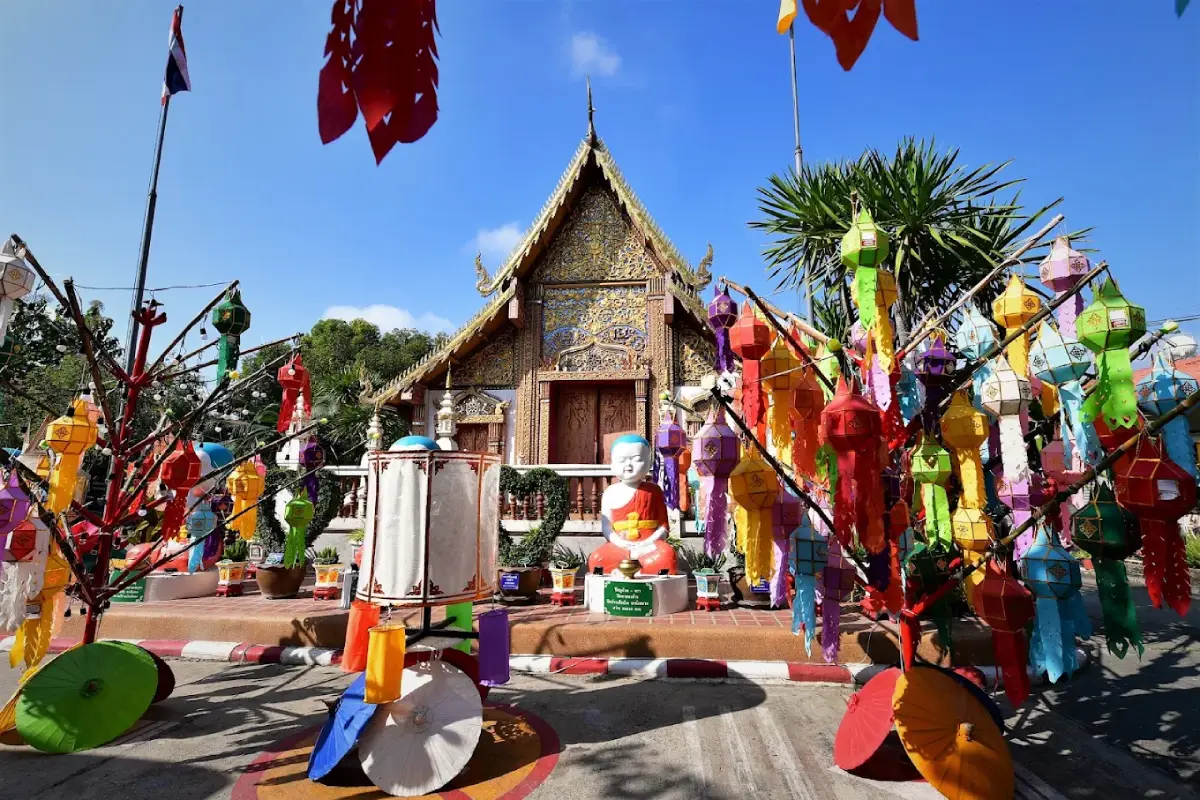
Wat Ban Tho is a private Buddhist temple under the Maha Nikaya order, located at 604 Moo 2, Ban Tho, Pa Tan Subdistrict, Mueang Chiang Mai District, Chiang Mai Province. It is one of the long-established community temples in the northern part of Chiang Mai city. The temple was founded in B.E. 2315, or 1772, and is closely tied to the Ban Tho community, Pa Tan, the Ping River area, and the everyday religious life of local residents. Its main highlights include Phra Chedi Phuttha Rattanawirot, a chedi associated with the Horse zodiac year, the Lanna-style ubosot, the Lanna viharn, a Lanna-style preaching pulpit, sattaphan ritual offerings, an old scripture cabinet, the fish pond, and the nearby Ban Tho temple community market.
Wat Ban Tho offers a deeper view of Chiang Mai beyond the famous temples of the Old City. Pa Tan and Ban Tho are old community areas in Mueang Chiang Mai, not far from the Ping River. The temple is located in a living neighborhood where religious life, market life, local houses, food stalls, schools, and community activities remain closely connected. A visit to Wat Ban Tho is therefore not only a temple visit. It is a chance to see how a northern Thai community temple continues to function in daily life.
The name Wat Ban Tho is directly connected with Ban Tho community. This type of temple name reflects the strong relationship between village and temple in Thai and Lanna society. The temple is not named after a royal event or a large monument. It carries the name of the community itself. This makes Wat Ban Tho a clear example of a village temple whose identity grew from the people living around it. The temple represents local faith, shared memory, and the social life of Ban Tho.
Wat Ban Tho was founded in 1772 and has existed for more than 250 years. Its history passes through several major periods of Chiang Mai’s development, including the era of Burmese influence in Lanna, the transition into Siamese administration, and the growth of modern Chiang Mai. The temple’s long continuity shows that Ban Tho has preserved a stable Buddhist and cultural foundation for generations. Wat Ban Tho is therefore more than an old religious building. It is part of the historical memory of the local community.
Local historical accounts say that people of Burmese background once lived in the area and built a chedi inspired by the Shwedagon Pagoda. The earlier structure was made with white lime and was regarded as a chedi connected with the Horse zodiac year. Later, villagers restored the structure by adding cement layers, and the visible form gradually developed into the Lanna style seen today. This layered history gives Wat Ban Tho special cultural value because it reflects the artistic exchange between Burmese and Lanna traditions, an important part of Chiang Mai’s historical landscape.
The temple’s main chedi is known as Phra Chedi Phuttha Rattanawirot. Even though parts of the earlier architectural form have changed through restoration, the chedi remains one of the temple’s most important sacred monuments. It functions as a focus of devotion, a symbol of Buddhism, and a shared religious object cared for by the Ban Tho community. Visitors should approach the chedi respectfully because it is directly connected with the temple’s history, local faith, and the community’s long-term care for the temple.
Phra Chedi Phuttha Rattanawirot is meaningful because it brings together several cultural layers: Burmese artistic influence, local restoration, present Lanna-style appearance, and the belief in a chedi associated with the Horse zodiac year. In northern Thai Buddhist culture, zodiac-year relic sites are important because worshippers often visit a chedi linked to their birth year for auspiciousness. For this reason, Wat Ban Tho is not only a neighborhood temple. It also carries a devotional meaning linked with birth-year worship and relic veneration.
The ubosot, or ordination hall, is another important building. The earlier ubosot was built in B.E. 2492 and was later renovated into a Lanna-style structure in B.E. 2546. An ubosot is not a general sightseeing hall. It is a sacred space used by monks for formal Sangha ceremonies. The presence and care of the ubosot confirm Wat Ban Tho’s role as an active Buddhist temple with a complete religious function.
The viharn of Wat Ban Tho dates from the period of the first recorded abbot, Phra Athikan Kon Kaeo, and follows Lanna architectural style. The viharn is the main hall used by laypeople for worship, merit-making, Dhamma listening, and temple activities. Its northern Thai character can be seen in its form, decorative details, atmosphere, and role as a devotional center. Visitors interested in Lanna community temples should take time to observe the viharn carefully, rather than treating it as only a small local hall.
Inside the temple are several important works of religious art and ritual culture, including a Lanna-style preaching pulpit, sattaphan ritual offerings, and a scripture cabinet used for old Buddhist texts. These objects are important because they show that Wat Ban Tho served not only as a place of worship, but also as a place where Dhamma teaching, ritual practice, and the preservation of Buddhist knowledge took place. They give the temple cultural depth beyond its buildings.
The Lanna preaching pulpit is especially meaningful. A pulpit is linked with sermons, Dhamma teaching, and the communication of Buddhist teachings to the community. In the past, temples were the main centers of learning in village life. The pulpit therefore represents the importance of the spoken Dhamma and the role of monks as teachers. Its craftsmanship also shows how Lanna communities treated religious teaching as something worthy of beauty and respect.
The sattaphan ritual offering set connects Wat Ban Tho with northern Thai ceremonial culture. Sattaphan objects are used in Buddhist worship and ritual settings. Their form, decoration, and placement reflect the refined way Lanna temples organize sacred space. The presence of such ritual objects at Wat Ban Tho strengthens the temple’s value as a community temple that preserves northern Thai religious practice.
The scripture cabinet is another important cultural object. In northern Thai temples, Buddhist manuscripts and scriptures were often stored in cabinets, scripture halls, or protected spaces so they could be used for study, preaching, and ritual purposes. The scripture cabinet at Wat Ban Tho shows that the temple has been connected with the preservation of Buddhist knowledge, not only with visible ceremonies.
Wat Ban Tho received its royal monastic boundary in the late 1940s B.E. A royal monastic boundary defines the area used for formal monastic acts, including important Sangha ceremonies. This status confirms that Wat Ban Tho has a clear role within the Thai Buddhist monastic system. For visitors, this detail helps explain why the temple is not merely an old neighborhood shrine, but a fully established Buddhist temple.
The recorded abbot lineage of Wat Ban Tho shows continuity across generations. The known names include Phra Athikan Kon Kaeo, Phra Athikan Kham Pan Chayalangkalo, Phra Athikan Saen Kham Suphattho, Phra Athikan Insom Inthawanno, Phra Athikan Kaeo Chotithammo, and Phra Khru Athon Sangwonkhun. This line of abbots shows that the temple has been managed and maintained by monks across different periods, preserving its religious role and relationship with the local community.
Phra Khru Athon Sangwonkhun appears in later temple records and modern references connected with Wat Ban Tho. The abbot of a community temple has an important role: maintaining the compound, guiding monks and novices, leading merit-making activities, coordinating with local residents, and preserving temple order. Wat Ban Tho has remained active because monks and lay supporters have continued to care for it together.
The atmosphere of Wat Ban Tho is strongly local. A key feature is its close connection with the Ban Tho temple community market. The surrounding area has houses, food stalls, shops, and daily community movement. This gives the temple a living quality. Visitors can see how the temple, market, and neighborhood support one another in everyday life. Wat Ban Tho is therefore best understood as part of an active local ecosystem, not as an isolated monument.
The Ban Tho temple community market adds a strong lifestyle dimension to the visit. The market is a place for buying food, vegetables, fruit, and everyday goods, and it also acts as a social meeting place for residents. When a temple and a market stand close together, the relationship between faith and daily life becomes clear. The temple supports the spiritual side of the community, while the market supports everyday social and economic life.
Wat Ban Tho is also known as a place for ordinary merit-making. Visitors and local families come to pay respect, make offerings, join ceremonies, and feed fish. The fish pond is especially approachable for families with children, because it makes a temple visit simple and accessible. This type of activity should still be done respectfully, using appropriate food and keeping the area clean.
During important Buddhist periods, Wat Ban Tho becomes more active. Buddhist holy days, Buddhist Lent, the end of Buddhist Lent, Kathina season, New Year merit-making, and community ceremonies bring local residents together at the temple. These events show that Wat Ban Tho is not only a place to view architecture. It is a working religious center where people make merit, listen to Dhamma, support monks, and keep community traditions alive.
A meaningful visit to Wat Ban Tho should begin at the viharn. Visitors can pay respect, observe the Lanna-style hall, and look for the preaching pulpit, sattaphan objects, and scripture cabinet if the area is open and appropriate to view. After that, continue to Phra Chedi Phuttha Rattanawirot and observe the chedi with respect. Then visit the ubosot, merit-making areas, fish pond, and the surrounding community market area. This sequence helps visitors understand the temple through faith, art, history, and everyday life.
For those interested in architecture, Wat Ban Tho is a useful example of a temple whose art moved through several historical layers. Earlier influence connected with Burmese forms was later restored and transformed within a Lanna visual language. This kind of change is common in living temples because communities continue to repair and maintain sacred structures over time. The value of Wat Ban Tho lies not only in what remains from the past, but also in how the community has kept the temple useful and meaningful.
Visitors who enjoy photography will find several interesting points: the Lanna viharn, the chedi, the temple entrance, the market area, and decorative elements during temple festivals. Photography should always be respectful. Visitors should not interrupt worshippers, monks, ceremonies, or merit-making activities. Inside the viharn and near sacred objects, photography should be limited to what is appropriate for a religious site.
Proper conduct is important at Wat Ban Tho. Visitors should dress modestly, keep their voices low, avoid touching Buddha images, the chedi, or sacred objects unnecessarily, and help keep the temple clean. Those feeding fish should use suitable food and avoid dropping packaging into the pond or temple grounds. A temple is a shared space for monks, local residents, and visitors, so calmness and respect should come before casual sightseeing.
Getting to Wat Ban Tho is convenient from central Chiang Mai. Travelers can head north toward Pa Tan and Ban Tho by using Chang Phueak Road, Chotana Road, Pa Tan Road, Ban Tho-Pa Tan Road, or riverside routes near the Ping River, depending on the starting point. Those using a private car, taxi, or ride-hailing service should search specifically for Wat Ban Tho, Pa Tan, Mueang Chiang Mai to avoid confusion with similarly named places.
Wat Ban Tho can be included in a half-day route through the northern side of Chiang Mai city. A temple-and-community route can include Ban Tho temple community market, Wat Tha Duea, Wat Tha Luk, and Wat Phra Non Khon Muang. A family-oriented route can continue to Hidden Village Chiangmai, Chiang Mai Provincial Administrative Organization Park, Chiang Mai 700th Anniversary Stadium, and the Ruam Chok area. This makes Wat Ban Tho a practical starting point for exploring Pa Tan and nearby neighborhoods.
The best time to visit Wat Ban Tho is in the morning or late afternoon. Morning visits allow travelers to see the community and market atmosphere, while late afternoon is suitable for worship and a slower walk around the compound. On Buddhist holy days or temple festivals, visitors may see more community activity. Those who want a quieter visit should choose a weekday and move slowly through the temple with respect.
Wat Ban Tho is worth knowing for travelers interested in Chiang Mai temples, northern Thai community life, and Lanna Buddhist culture. Its value does not come from size or mainstream fame. It comes from more than 250 years of history, Phra Chedi Phuttha Rattanawirot, the Horse-year chedi belief, the Lanna viharn, the ubosot, Lanna ritual objects, the scripture cabinet, and its living relationship with the Ban Tho community. A visit to this temple offers a grounded and local understanding of Chiang Mai as a city where Buddhism, neighborhood life, and cultural memory remain closely connected.
| Name | Wat Ban Tho |
| Location | Ban Tho, Moo 2, Pa Tan Subdistrict, Mueang Chiang Mai District, Chiang Mai Province |
| Address | 604 Moo 2, Ban Tho, Pa Tan Subdistrict, Mueang Chiang Mai District, Chiang Mai 50300, Thailand |
| Coordinates | 18.83710, 98.98868 |
| Current Status | Open for visits, worship, merit-making, and Buddhist community activities |
| Open Days | Daily |
| Opening Hours | 08.00 – 17.00 |
| Admission Fee | No Admission Fee |
| Main Contact Number | 053-110-050 |
| Monastic Affiliation | Private Buddhist Temple Under The Maha Nikaya Order |
| History | Founded in B.E. 2315, or 1772, as an old community temple of Ban Tho and Pa Tan, with local historical layers connected with Burmese artistic influence and later Lanna-style restoration |
| Royal Monastic Boundary | Granted in the late 1940s B.E. |
| Name Origin | The name is directly linked with Ban Tho community and reflects the temple’s role as the village’s religious center |
| Highlights | Phra Chedi Phuttha Rattanawirot, Horse-year chedi belief, Lanna-style ubosot, Lanna viharn, Lanna preaching pulpit, sattaphan ritual objects, scripture cabinet, fish pond, and Ban Tho temple community market |
| Sacred Objects | Phra Chedi Phuttha Rattanawirot, Horse-year chedi, Buddha images in the viharn, Lanna preaching pulpit, sattaphan ritual offerings, and scripture cabinet for old Buddhist texts |
| Main Areas / Zones | Viharn, ubosot, Phra Chedi Phuttha Rattanawirot, worship areas, merit-making areas, fish pond, community activity area, and the area near Ban Tho temple community market |
| Traditions / Rituals | Buddhist worship, merit-making, Buddhist holy day activities, Buddhist Lent, the end of Buddhist Lent, Kathina, New Year merit-making, Dhamma listening, and community Buddhist events |
| Abbot / Caretaker | Phra Khru Athon Sangwonkhun |
| Facilities | Parking, public restrooms, worship areas, merit-making areas, fish-feeding area, and community activity spaces |
| Travel Information | Travel from central Chiang Mai toward Pa Tan and Ban Tho by Chang Phueak Road, Chotana Road, Pa Tan Road, Ban Tho-Pa Tan Road, or Ping River routes; search specifically for Wat Ban Tho, Pa Tan, Mueang Chiang Mai |
| Nearby Tourist Attractions | 1. Ban Tho Temple Community Market, about 0.1 km 2. Wat Tha Duea, about 0.6 km 3. Wat Tha Luk, about 1 km 4. Hidden Village Chiangmai, about 1 km 5. Wat Phra Non Khon Muang, about 1.5 km 6. Chiang Mai Provincial Administrative Organization Park, about 2.2 km 7. Chiang Mai 700th Anniversary Stadium, about 2.6 km |
| Nearby Restaurants | 1. Majam Korean Fried Chicken Ban Tho, about 58 m, Tel. 080-941-4430 2. FUKU Ramen, about 90 m, Tel. 064-994-9565 3. Five Star Ban Tho Market, about 82 m, Tel. 081-097-4595 4. Raw Milo Ban Tho Branch, about 83 m, Tel. 092-416-9611 5. Lung Te Khao Kha Moo In Front Of Wat Ban Tho, about 72 m 6. Joed Ja Fried Fish Balls, about 87 m 7. Pizza House Pa Tan Chiang Mai Ban Tho, about 76 m 8. Ton Tam Rap Bamee Kiao Branch 1, about 100 m |
| Nearby Accommodations | 1. Herry Residence, about 0.5 km, Tel. 053-110-233 To 4 2. Villa San Phisuea, about 0.6 km, Tel. 080-015-6789 3. B2 Resort Boutique & Budget Hotel, about 1.2 km, Tel. 052-009-567 4. Raya Heritage, about 1.4 km, Tel. 053-111-670 To 73 5. Lanna Dusita Riverside Boutique Resort, about 1.4 km, Tel. 053-110-345 To 6 6. Zensala Riverpark Resort, about 2.3 km, Tel. 053-225-888, 083-096-5589 7. Green Lake Resort Chiangmai, about 2.6 km, Tel. 053-112-888, 053-112-800, 086-924-3397 |
Frequently Asked Questions (FAQ)
Q: Where is Wat Ban Tho located?
A: Wat Ban Tho is located at 604 Moo 2, Ban Tho, Pa Tan Subdistrict, Mueang Chiang Mai District, Chiang Mai 50300, Thailand.
Q: What are the opening hours of Wat Ban Tho?
A: Wat Ban Tho is open daily from 08.00 to 17.00 for worship, merit-making, and temple visits.
Q: Is there an admission fee for Wat Ban Tho?
A: No. Wat Ban Tho has no admission fee, and visitors can enter during normal opening hours.
Q: What is the history of Wat Ban Tho?
A: Wat Ban Tho was founded in B.E. 2315, or 1772, as an old community temple of Ban Tho and Pa Tan. Local history connects the temple with Burmese artistic influence and later Lanna-style restoration.
Q: What is Wat Ban Tho known for?
A: The temple is known for Phra Chedi Phuttha Rattanawirot, the Horse-year chedi belief, the Lanna viharn, the Lanna ubosot, the Lanna preaching pulpit, sattaphan ritual objects, the scripture cabinet, the fish pond, and its local community atmosphere near Ban Tho market.
Q: Why is the chedi at Wat Ban Tho important?
A: Phra Chedi Phuttha Rattanawirot is an important sacred monument of the temple. It is associated with the Horse zodiac year and with local accounts of Burmese and Lanna artistic layers.
Q: Who is the abbot of Wat Ban Tho?
A: The abbot appearing in later temple records and modern references is Phra Khru Athon Sangwonkhun.
Q: What nearby places can be visited with Wat Ban Tho?
A: Nearby places include Ban Tho Temple Community Market, Wat Tha Duea, Wat Tha Luk, Hidden Village Chiangmai, Wat Phra Non Khon Muang, Chiang Mai Provincial Administrative Organization Park, and Chiang Mai 700th Anniversary Stadium.
 Category: ●Places of Worship
 Group: ●Temple
Last Update : 3 DayAgo
 Last Update : 3 DayAgo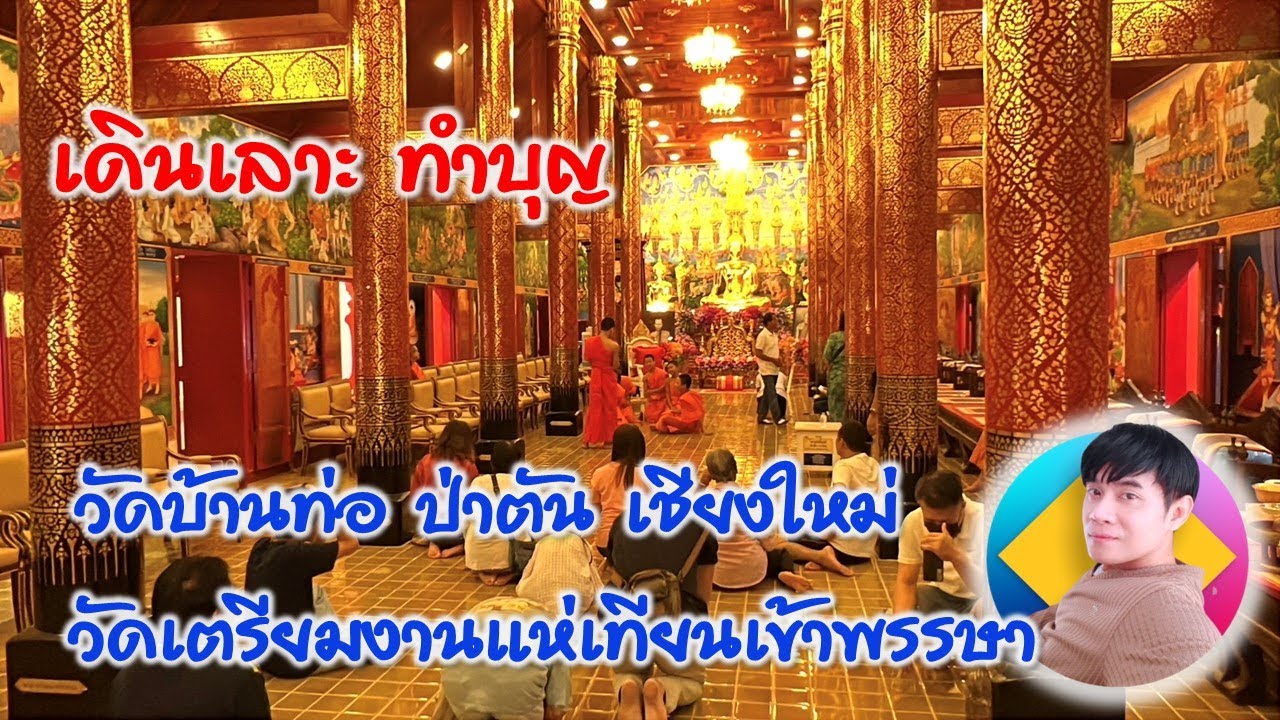
 Click to Access the Navigation Map GPS
Wat Ban Tho Map
Recommend

 Muang Chiang Mai(121)Chom Thong(47)Mae Chaem(25)Chiang Dao(33)Doi Saket(68)Mae Taeng(85)Mae Rim(69)Samoeng(29)Fang(71)Mae Ai(62)Phrao(70)San Pa Tong(105)San Kamphaeng(66)San Sai(73)Hang Dong(74)Hot(32)Doi Tao(22)Omkoi(11)Saraphi(74)Wiang Haeng(15)Chai Prakan(28)Mae Wang(32)Mae On(22)Doi Lo(34)Galyani Vadhana(1)


