
lovethailand home >North Travel Attractions >Chiang Mai Travel Attractions >Muang Chiang Mai >Pa Daet > Wat Wang Sing Kham
TL;DR: Wat Wang Sing Kham is located at Ban Wang Sing Kham, Moo 6, Pa Daet Subdistrict, Mueang Chiang Mai District, Chiang Mai Province, open Daily, hours 08.00 – 17.00.

Wat Wang Sing Kham
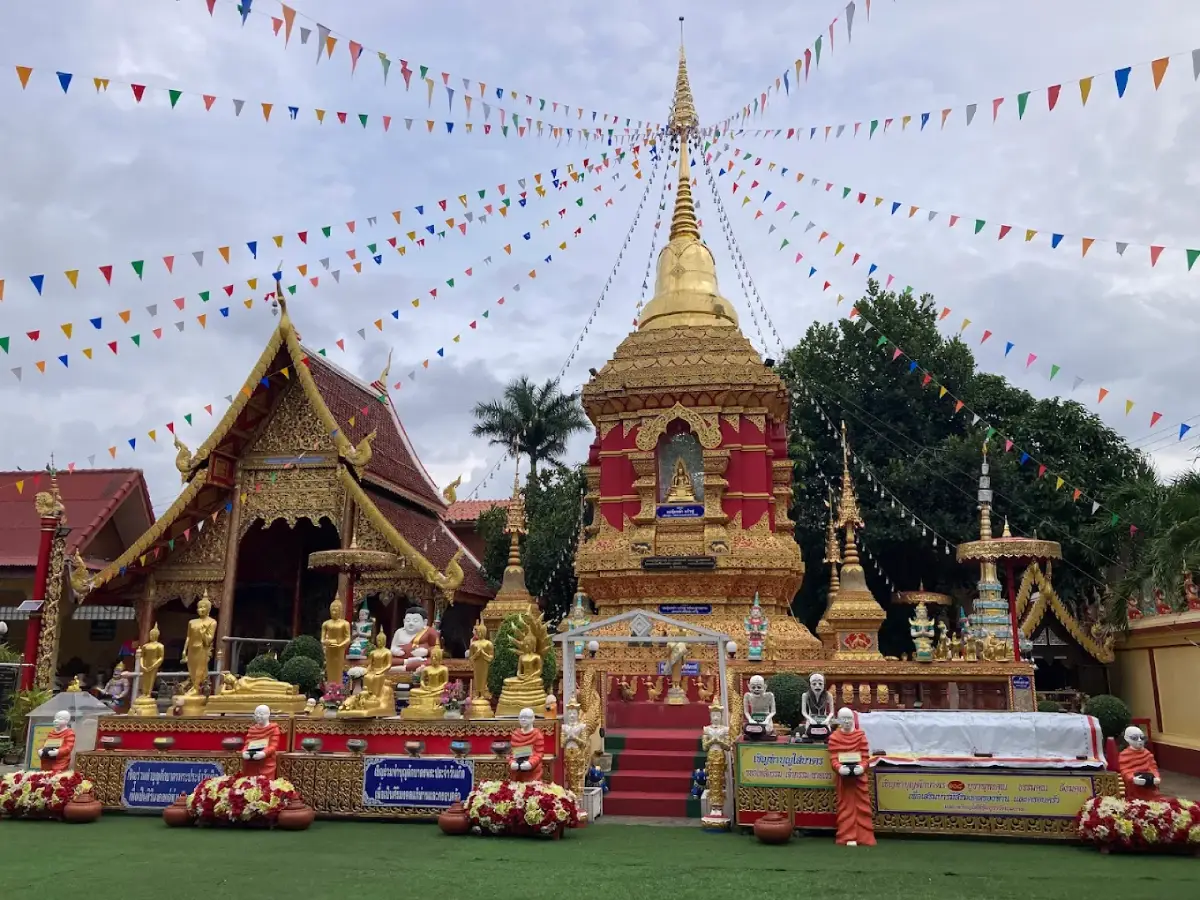
Open Days: Daily
Opening Hours: 08.00 – 17.00
Wat Wang Sing Kham is a private Buddhist temple under the Maha Nikaya order, located at 139 Moo 6, Ban Wang Sing Kham, Pa Daet Subdistrict, Mueang Chiang Mai District, Chiang Mai Province. The temple was founded in B.E. 2417, or 1874, when Thao Wongsa donated land for the temple, and it received its royal monastic boundary in B.E. 2473, or 1930. Wat Wang Sing Kham is known for its riverside legend of a golden Phra Phuttha Sihing image in the Ping River, its sacred chedi, the annual relic-bathing tradition, Ho Upakhut, Lanna local guardian belief, Lanna-style temple elements, and its role as a religious, cultural, and community center of Pa Daet.
Wat Wang Sing Kham is suitable for travelers who want to experience a quieter and more local side of Chiang Mai. The temple stands in Pa Daet, south of Mueang Chiang Mai, near the Ping River and several cultural routes. Around the area are community temples, old settlements, riverside roads, craft villages, and local attractions that can be combined into a meaningful half-day itinerary. A visit to Wat Wang Sing Kham is therefore not only a temple stop, but also a way to understand the relationship between Buddhism, local community life, the Ping River, and northern Thai legends.
The name Wat Wang Sing Kham comes from a local legend connected with the Ping River. In front of the temple, near a rain tree or chamcha tree, there was once a deep and clear whirlpool-like river basin. Local people believed that a golden Phra Phuttha Sihing image, also called Phra Sing Kham, was enshrined in this river basin. The legend says that when fishermen cast hooks, nets, or fishing traps in the area, the sacred image would miraculously become caught. Villagers then invited the image up to the temple, but at night it returned to the Ping River. The event was said to have happened repeatedly, and the place became known as Wang Sing Kham, the river basin of the golden Singha Buddha image.
This legend gives Wat Wang Sing Kham a distinctive identity among Chiang Mai’s community temples. It is not only a story about a sacred Buddha image. It also links the temple directly with the Ping River, which has long shaped settlement, travel, trade, agriculture, and belief in Chiang Mai. Because the temple’s name comes from a river basin in front of the temple, Wat Wang Sing Kham should be understood as a riverside sacred site where geography, faith, and local memory are inseparable.
Although the golden Phra Phuttha Sihing image from the legend is no longer visible, the story continues to shape the spiritual meaning of the temple. Local belief holds that the image remains in the Ping River near the temple. For visitors, the legend should be approached as a form of community memory. It reveals how Pa Daet residents have respected the river, the temple, and Buddhism through stories passed from generation to generation.
The temple’s founding in 1874 reflects the role of local faith in establishing Buddhist temples. A community temple does not begin with buildings alone. It begins with land, monks, lay supporters, local families, and the shared need for a Buddhist center. The donation of land by Thao Wongsa shows how Wat Wang Sing Kham grew from community devotion and the wish to create a permanent spiritual center for Ban Wang Sing Kham.
The royal monastic boundary granted in 1930 is an important part of the temple’s institutional history. A monastic boundary defines the area used for formal Sangha ceremonies. Its presence confirms that Wat Wang Sing Kham became an established Buddhist temple within the Thai monastic system, not merely a temporary religious shelter or informal worship site.
The abbot lineage of Wat Wang Sing Kham shows long continuity. Recorded names include Khruba Suriya, Phra Khru Palat Intha, Phra Chuen Indavaro, Phra Bunma Suwajjajo, Phra Kham Mun, Phra Kaeo Suwattano, Phra Chan Kaeo Pasatho, Phra Bunmi Khosathammo, Phra Duang Thammawaro, Phra Sao Khantiko, Phra Niwat, Phra Athikan Suraphon Yanaphalo, Phra Athikan Phop Hemawanno, and Phra Khru Wisit Silaphon. This succession shows that the temple has remained under continuous monastic and community care.
The current abbot is Phra Khru Wisit Silaphon, who also serves as Deputy Ecclesiastical District Chief of Mueang Chiang Mai. Recent reports show him leading the monks and devotees of Wat Wang Sing Kham in the annual relic-bathing ceremony in B.E. 2569. His role is therefore not limited to maintaining temple buildings. It includes leading religious activities, preserving local tradition, and connecting the temple with the wider Buddhist community of Chiang Mai.
The chedi, or sacred relic monument, is one of the most important elements of Wat Wang Sing Kham. It is the focus of the annual relic-bathing tradition, a Lanna Buddhist ceremony in which devotees gather to make merit, listen to chanting, bathe the chedi, and express reverence for Buddhism. In northern Thailand, a chedi is more than an architectural feature. It is a symbol of faith, continuity, and community devotion.
The present chedi at Wat Wang Sing Kham has been described as a newer structure built to cover the older chedi. This type of restoration is common in northern Thai temples, where communities preserve the original sacred core while strengthening and beautifying the visible structure. Building over an older chedi does not erase the past. It preserves continuity between the older sacred monument and later generations of devotees.
Another meaningful feature is Ho Upakhut, a shrine connected with the northern Thai belief in Phra Upakhut. Because Wat Wang Sing Kham has a legend of a sacred image coming from the river, Ho Upakhut carries special meaning. In Lanna belief, Phra Upakhut is often associated with water, protection, calmness, and the removal of obstacles during important Buddhist ceremonies. This shrine adds another layer to the temple’s riverside spirituality.
The temple also preserves the local belief in suea wat, the guardian spirit of the temple area. This belief reflects a Lanna worldview in which Buddhism and local protective spirits coexist in an ordered relationship. The guardian spirit does not stand above Buddhism. It serves as a protector of the sacred compound. Understanding this belief helps visitors see Wat Wang Sing Kham as a cultural landscape that combines Buddhist practice, riverside legend, and northern Thai folk belief.
Wat Wang Sing Kham is also connected with community learning. Wat Wang Sing Kham School and the Pa Daet Local Wisdom and Cultural Learning Center are part of the wider temple area and community context. This shows that the temple is not only a place of worship. It is also a place where local wisdom, education, and cultural identity are supported and transmitted between generations.
The atmosphere of Wat Wang Sing Kham is quiet, local, and riverside in character. Visitors can sense the shade of old trees, the presence of the Ping River, and the modest rhythm of Ban Wang Sing Kham community life. The temple is not a large commercial tourist site. Its value comes from being a living temple with resident monks, local merit-making, community activities, and annual traditions that continue to matter to Pa Daet residents.
A meaningful visit should begin in the main worship area or viharn. After paying respect, visitors can continue to the chedi and observe the sacred space respectfully. Then they can look for Ho Upakhut, the local guardian-spirit area, and the community learning area. This route helps visitors understand the temple from several angles: Buddhism, the Phra Sing Kham legend, river belief, Lanna cultural memory, and the temple’s current role in Pa Daet.
The annual relic-bathing ceremony is one of the most important traditions of Wat Wang Sing Kham. Monks and devotees gather to make merit, chant, and bathe the chedi as an expression of respect and auspiciousness. In Lanna culture, bathing a sacred relic monument is not only a public event. It is an act of devotion, purification, and continuity. The ceremony allows the community to renew its connection with Buddhism and local tradition each year.
Beyond the relic-bathing tradition, the temple is also used for Buddhist holy day activities, merit-making, chanting, meditation, Dhamma listening, and community ceremonies. These regular activities are the core of a living Buddhist temple. They keep Wat Wang Sing Kham active throughout the year, not only during festivals or tourist visits.
Architecturally, Wat Wang Sing Kham reflects Lanna temple character and the taste of northern Thai community temples. The viharn, chedi, Ho Upakhut, entrance structures, and decorative motifs all contribute to the temple’s identity. Visitors should take time to notice the pediments, symbolic animals, gateway decoration, and details connected with local belief. The temple is best appreciated slowly rather than through a quick stop.
For travelers interested in local history, Wat Wang Sing Kham is a useful case study of a temple with both formal history and oral legend. The founding date, royal boundary, and abbot lineage show institutional continuity, while the story of the golden Phra Phuttha Sihing in the Ping River preserves local memory. Together, these two layers make the temple both a documented religious site and a living story-place for the Pa Daet community.
Getting to Wat Wang Sing Kham is convenient from central Chiang Mai. Travelers can head south toward Pa Daet using Mahidol Road, Chang Klan Road, Pa Daet Road, or the riverside road on the west bank of the Ping River. Visitors using a private car, taxi, or ride-hailing service should search specifically for Wat Wang Sing Kham, Pa Daet, Mueang Chiang Mai to avoid confusion with other places using similar names in Chiang Mai.
Wat Wang Sing Kham can be combined with several nearby attractions. A temple-and-community route can include Wat Tha Mai I, Wat Don Chai, Wat Ton Tan Ton, Wat Pa Daet, and Wat Chai Sathan. A cultural and family-oriented route can include the Ping River, Tong Floating Market, Ban Tawai, and Ban Mueang Kung pottery village. This makes Wat Wang Sing Kham a good starting point for exploring southern Chiang Mai beyond the Old City.
The best time to visit is in the morning or late afternoon, when the weather is more comfortable and the temple is calmer. During the annual relic-bathing ceremony or important Buddhist occasions, visitors may see stronger community participation. Those who want a quieter visit should come on a weekday and move slowly through the compound.
Proper conduct is important at Wat Wang Sing Kham. Visitors should dress modestly, speak quietly, avoid touching Buddha images or sacred objects unnecessarily, and photograph respectfully, especially in the viharn, around the chedi, near Ho Upakhut, and in areas where local people are making merit. The temple remains an active religious and community space, so calmness and respect should come before casual sightseeing.
Wat Wang Sing Kham is worth knowing for travelers interested in Chiang Mai temples and northern Thai Buddhist culture. Its value does not come from size or mainstream fame. It comes from its founding by local faith, the legend of the golden Phra Phuttha Sihing in the Ping River, the annual relic-bathing tradition, Ho Upakhut, the guardian-spirit belief, and its cultural role in Pa Daet. A visit to this temple offers a quiet and meaningful view of Chiang Mai as a living riverside Buddhist community.
| Name | Wat Wang Sing Kham |
| Location | Ban Wang Sing Kham, Moo 6, Pa Daet Subdistrict, Mueang Chiang Mai District, Chiang Mai Province |
| Address | 139 Moo 6, Pa Daet Subdistrict, Mueang Chiang Mai District, Chiang Mai 50100, Thailand |
| Coordinates | 18.70291, 98.98313 |
| Current Status | Open for visits, worship, merit-making, and Buddhist community activities |
| Open Days | Daily |
| Opening Hours | 08.00 – 17.00 |
| Monastic Affiliation | Private Buddhist Temple Under The Maha Nikaya Order |
| History | Founded in B.E. 2417, or 1874, when Thao Wongsa donated land for the temple; received its royal monastic boundary in B.E. 2473, or 1930 |
| Name Origin | The name comes from the legend of a deep river basin in the Ping River in front of the temple, where a golden Phra Phuttha Sihing image, or Phra Sing Kham, was believed to be enshrined |
| Highlights | Legend of the golden Phra Phuttha Sihing in the Ping River, sacred chedi, annual relic-bathing tradition, Ho Upakhut, temple guardian belief, riverside community atmosphere, and Pa Daet Local Wisdom and Cultural Learning Center |
| Sacred Objects | Sacred chedi, worship objects in the viharn, Ho Upakhut, and devotional areas connected with the Phra Sing Kham legend |
| Main Areas / Zones | Viharn, sacred chedi, Ho Upakhut, temple guardian area, Pa Daet Local Wisdom and Cultural Learning Center, worship areas, merit-making areas, and community activity spaces |
| Traditions / Rituals | Annual relic-bathing ceremony, Buddhist worship, merit-making, Buddhist holy day activities, chanting, meditation, Dhamma listening, and community Buddhist ceremonies |
| Abbot / Caretaker | Phra Khru Wisit Silaphon, Deputy Ecclesiastical District Chief of Mueang Chiang Mai and abbot of Wat Wang Sing Kham |
| Facilities | Worship areas, merit-making spaces, ceremonial areas, community activity areas, and parking within the temple compound |
| Travel Information | Travel south from central Chiang Mai toward Pa Daet via Mahidol Road, Chang Klan Road, Pa Daet Road, or the west-bank Ping River route; search specifically for Wat Wang Sing Kham, Pa Daet, Mueang Chiang Mai |
| Nearby Tourist Attractions | 1. Ping River, about 1.3 km 2. Wat Tha Mai I, about 2 km 3. Tong Floating Market, about 2.5 km 4. Wat Chai Sathan, about 3.1 km 5. Jungle Adventure Park, about 3.4 km 6. Ban Tawai, about 3.9 km 7. Ban Mueang Kung Pottery Village, about 4.7 km 8. Wat Don Chai, about 3.7 km |
| Nearby Restaurants | 1. Mu Ping Na Ja Traditional Grilled Pork, Wat Wang Sing Kham Branch, about 41 m 2. Cha Khang Wat, about 43 m 3. Kuai Tiao Yoem Ahan Tam Sang, about 88 m 4. Khrua Khun Lek Yum Yua Wang Sing Kham, about 99 m, Tel. 083-325-0613 5. DerRay Cafe Lanna, about 200 m, Tel. 083-612-8298 6. Rim Rabiang Thai Soi, about 500 m, Tel. 096-034-9579 7. Lab Lung Kaen, about 800 m, Tel. 087-994-2961 8. Banh Mi Hoa Chiang Mai, about 800 m, Tel. 084-045-2244 9. Nam Thong Cafe, about 1.6 km, Tel. 098-762-0888, 095-046-9639 |
| Nearby Accommodations | 1. Chiang Mai Luxury Villa, about 800 m 2. Relax Garden House, about 1 km, Tel. 090-326-6108 3. BanWongdee, about 1 km, Tel. 094-328-2466 4. Lanna Boutique Village, about 1.5 km, Tel. 053-448-703 5. Marndadee Heritage River Village, about 2.3 km, Tel. 053-103-703 6. The Loft Riverside Chiangmai, about 2.5 km, Tel. 089-415-6162 7. North Hill City Resort, about 2.8 km, Tel. 053-333-111 8. Sri Ping Resort, about 2.9 km, Tel. 053-447-077 |
Frequently Asked Questions (FAQ)
Q: Where is Wat Wang Sing Kham located?
A: Wat Wang Sing Kham is located at 139 Moo 6, Ban Wang Sing Kham, Pa Daet Subdistrict, Mueang Chiang Mai District, Chiang Mai 50100, Thailand.
Q: What are the opening hours of Wat Wang Sing Kham?
A: Wat Wang Sing Kham is open daily from 08.00 to 17.00 for worship, merit-making, and temple visits.
Q: What is the history of Wat Wang Sing Kham?
A: Wat Wang Sing Kham was founded in B.E. 2417, or 1874, when Thao Wongsa donated land for the temple. It received its royal monastic boundary in B.E. 2473, or 1930.
Q: Why is the temple called Wat Wang Sing Kham?
A: The name comes from a local legend about a deep river basin in the Ping River in front of the temple, where a golden Phra Phuttha Sihing image, or Phra Sing Kham, was believed to be enshrined.
Q: What is Wat Wang Sing Kham known for?
A: The temple is known for the legend of the golden Phra Phuttha Sihing in the Ping River, its sacred chedi, annual relic-bathing ceremony, Ho Upakhut, temple guardian belief, and riverside community atmosphere.
Q: What important tradition is held at Wat Wang Sing Kham?
A: The important tradition is the annual relic-bathing ceremony, a Lanna Buddhist merit-making event in which monks and devotees gather to chant, make merit, and bathe the temple’s sacred chedi.
Q: Who is the abbot of Wat Wang Sing Kham?
A: The abbot is Phra Khru Wisit Silaphon, who also serves as Deputy Ecclesiastical District Chief of Mueang Chiang Mai.
Q: What nearby places can be visited with Wat Wang Sing Kham?
A: Nearby places include the Ping River, Wat Tha Mai I, Tong Floating Market, Wat Don Chai, Wat Ton Tan Ton, Ban Tawai, and Ban Mueang Kung Pottery Village.
 Category: ●Places of Worship
 Group: ●Temple
Last Update : 1 WeekAgo
 Last Update : 1 WeekAgo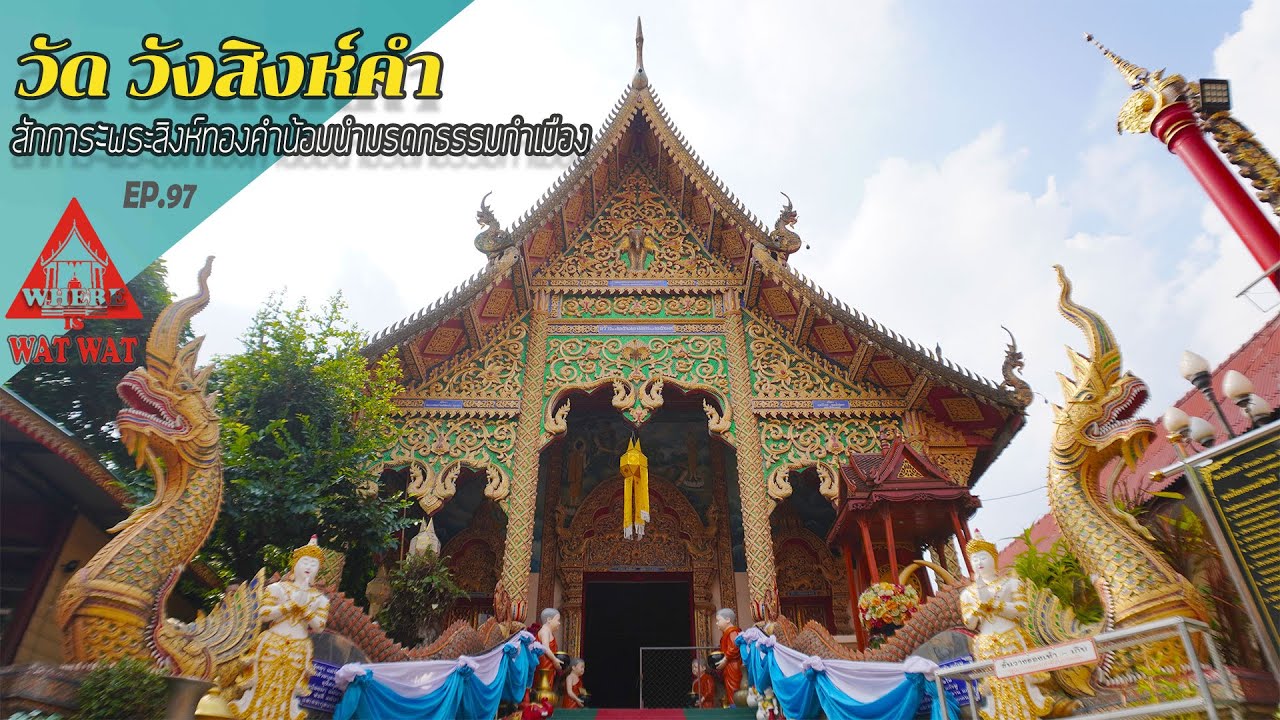
 Click to Access the Navigation Map GPS
Wat Wang Sing Kham Map
Recommend

 Muang Chiang Mai(121)Chom Thong(47)Mae Chaem(25)Chiang Dao(33)Doi Saket(68)Mae Taeng(85)Mae Rim(69)Samoeng(29)Fang(71)Mae Ai(59)Phrao(70)San Pa Tong(105)San Kamphaeng(66)San Sai(73)Hang Dong(74)Hot(32)Doi Tao(22)Omkoi(11)Saraphi(74)Wiang Haeng(15)Chai Prakan(28)Mae Wang(32)Mae On(22)Doi Lo(34)Galyani Vadhana(1)


