
lovethailand home >North Travel Attractions >Chiang Mai Travel Attractions >Muang Chiang Mai >Pa Daet > Wat Pa Phrao Nok
TL;DR: Wat Pa Phrao Nok is located at Ban Pa Phrao Nok, Moo 2, Pa Daet Subdistrict, Mueang Chiang Mai District, Chiang Mai Province, open Daily, hours 08.00 – 17.00.

Wat Pa Phrao Nok
Open Days: Daily
Opening Hours: 08.00 – 17.00
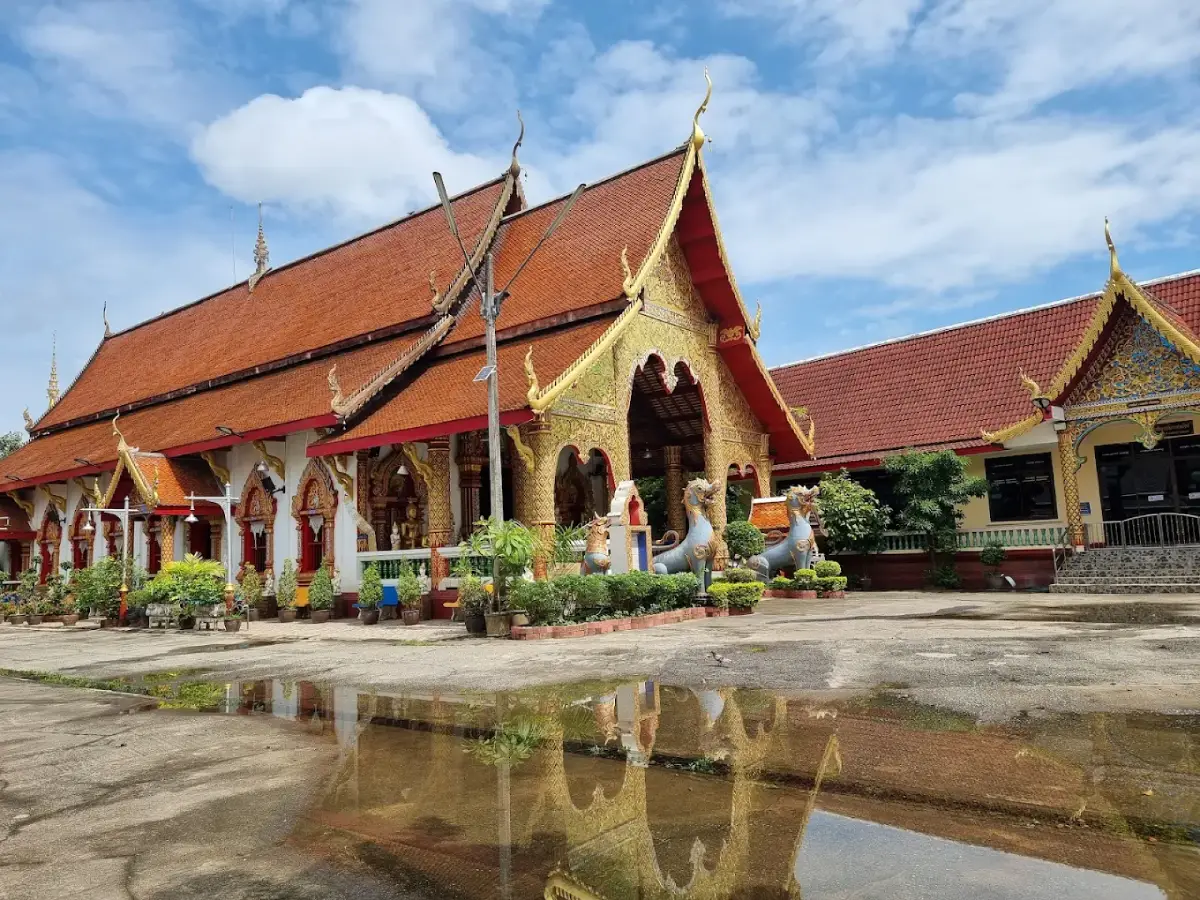
Wat Pa Phrao Nok is a private Buddhist temple under the Maha Nikaya order, located in Ban Pa Phrao Nok, Moo 2, Pa Daet Subdistrict, Mueang Chiang Mai District, Chiang Mai Province. The temple was officially permitted as a Buddhist temple in B.E. 2390 and received its royal monastic boundary on 10 August B.E. 2491. The boundary measures 40 meters wide and 80 meters long. Wat Pa Phrao Nok is valued for its long community history, quiet local atmosphere, Lanna-style viharn, Luang Pho Samret, chedi, brick Buddha image, scripture hall, sermon hall, monks’ residences, and origin story connected with Shan or Tai Yai settlers and the development of Pa Daet.
Wat Pa Phrao Nok is suitable for travelers who want to explore a quieter and more local side of Chiang Mai. Pa Daet lies south of the city center, close to Chang Klan Road, Mahidol Road, and the Ping River corridor. This location makes the temple convenient from central Chiang Mai, Chang Klan, Chiang Mai International Airport, and cultural routes leading toward Wiang Kum Kam, Wat Pa Daet, Wat Don Chai, and other nearby community temples. A visit to Wat Pa Phrao Nok can therefore be included in a half-day route focused on local temples and the southern cultural landscape of Chiang Mai.
The name Wat Pa Phrao Nok reflects both landscape and older urban geography. “Pa Phrao” suggests an area once associated with coconut or palm-like vegetation, while “Nok” means outside. The name developed because there were two temples known as Wat Pa Phrao. One was located closer to the inner city area, while this temple was located outside the old municipal zone. Local people therefore called it Wat Pa Phrao Nok, and the name has remained in use until today. Another name found in temple-related sources is Wat Khum Kham, showing that the site carries more than one layer of local memory.
The foundation story of Wat Pa Phrao Nok is especially important. Local tradition says the temple began in the time of Phra Maha Uparat Tham Langka, in Chula Sakarat 1160, corresponding to B.E. 2341. According to this account, Nai Kwat Yi Pio, a Shan or Tai Yai community leader, encouraged local villagers to clear unused land and establish a temple. In the beginning, the temple had only a viharn, monks’ residence, hall, and one Buddha image. After construction, villagers invited Phra Khruba Potha to reside there, and he became the first abbot of Wat Pa Phrao Nok.
This origin story shows that Wat Pa Phrao Nok grew from local faith and community cooperation. It was not only an institutional foundation, but a religious center created through shared labor and devotion. The early stage of the temple, with only a few essential structures and one Buddha image, reflects how many community temples in northern Thailand developed gradually. The temple became a spiritual center because local people built it, supported it, and invited a monk to lead Buddhist practice there.
The temple’s official permission in B.E. 2390 gave Wat Pa Phrao Nok a clear religious status. Later, the royal monastic boundary granted on 10 August B.E. 2491 confirmed the temple’s formal area for monastic acts. The boundary measures 40 meters wide and 80 meters long. This detail is important because a monastic boundary is directly connected with formal Sangha ceremonies. It confirms that Wat Pa Phrao Nok became an established temple within the Thai Buddhist monastic system.
Temple-history records identify Wat Pa Phrao Nok at 111 Ban Pa Phrao Nok, Moo 2, Pa Daet Subdistrict, Mueang Chiang Mai District. The temple belongs to the Maha Nikaya order and has a land area of 5 rai and 17 square wah. Its monastic buildings include an ordination hall, sermon hall, monks’ residences, viharn, and scripture hall. Sacred objects include a chedi and a brick Buddha image. These features show that Wat Pa Phrao Nok has the core elements of an active community temple: places for ceremonies, Dhamma teaching, monastic residence, worship, and lay merit-making.
The viharn is the first major area visitors should notice. Inside, the principal Buddha image is Luang Pho Samret, a Lanna-style Buddha image and the spiritual focus of the temple. The name “Samret” means success, giving the image an auspicious association for worshippers. Visitors should pay respect quietly and sincerely, using the viharn as a place for prayer, reflection, and appreciation of the temple’s Buddhist atmosphere.
The viharn has a northern Thai character. Its interior columns guide the eye toward the principal Buddha image, creating a clear movement from the outside world into the sacred space. The importance of the viharn is not only architectural. It is also the space where local residents worship, listen to Dhamma, make merit, and continue Buddhist traditions across generations. This makes the viharn the religious heart of Wat Pa Phrao Nok.
The walls of the viharn contain paintings at window level that depict episodes from the life of the Buddha. The narrative begins on the right side of the Buddha image when viewed from the front and continues around the hall. These murals make the viharn more than a worship space. They also serve as visual Dhamma teaching, helping visitors understand the Buddha’s life and Buddhist values through painted scenes. This is an important feature of many traditional Thai temples, where murals once functioned as public education for the community.
The chedi is another important sacred object within the temple. In northern Thai Buddhist culture, a chedi is a focus of devotion and a symbol of reverence for Buddhism. Visitors should walk around the chedi calmly and respectfully, avoiding unnecessary contact with sacred structures. Together, the viharn, chedi, and brick Buddha image give Wat Pa Phrao Nok a clear religious identity and make it a useful place to study the structure of a Lanna community temple.
The scripture hall, or ho trai, is also meaningful because it is traditionally associated with the preservation of Buddhist texts. Even when the interior of such buildings is not open to visitors, observing the scripture hall from outside helps visitors understand the temple compound as a whole. A temple with an ordination hall, sermon hall, monks’ residences, viharn, scripture hall, chedi, and Buddha images serves several functions at once: ritual, education, residence, worship, and community life.
The sermon hall and community activity areas reflect the temple’s social role. In Chiang Mai, community temples are not only places for worship. They are also gathering points for village activities, merit-making ceremonies, funerary rites, Buddhist festivals, and local public events. Recent information from local and Buddhist administrative sources confirms that Wat Pa Phrao Nok remains an active temple and continues to be part of contemporary community and monastic programs in Chiang Mai.
Wat Pa Phrao Nok has also been included in the Wat Pracha Rat Sang Suk temple-development program in B.E. 2569. This confirms that the temple is still in active use and remains part of the temple-development network of Mueang Chiang Mai. Its role therefore continues beyond history. It remains a living temple serving both religious and community functions today.
When Chiang Mai experienced flooding, Wat Pa Phrao Nok was among the affected temples that received cleaning and support from local authorities, monks, novices, and community members. This event shows the close relationship between the temple and local society. When the temple is affected, the community and local agencies help restore it. This confirms the temple’s role as a shared public and religious space.
The known abbot lineage also reflects continuity. The first abbot was Phra Khruba Potha, followed by Phra Khruba Yana, Phra Khruba Kham Pan, Phra Khruba Kanthiya, Phra Inthanon, Phra Inthajak, Phra Khru Sukon Chanthanakhun, Phra Baidika Sophon Kittiphattho, and later Phra Khru Si Tham Khun. The latest information found identifies Phra Khru Si Tham Khun Chutintharo as an important monk of Wat Pa Phrao Nok, and his name also appears in official Buddhist administrative records.
The role of an abbot in a community temple is essential. The abbot oversees the temple compound, monks and novices, Buddhist activities, community coordination, and internal order. Wat Pa Phrao Nok has remained active for generations because monks and lay supporters have continued to care for it. Visitors should therefore understand the temple not simply as an old site, but as a living religious place maintained by real community support.
A meaningful visit to Wat Pa Phrao Nok should begin inside the viharn, where visitors can pay respect to Luang Pho Samret. After that, take time to observe the murals of the Buddha’s life, then continue to the chedi, scripture hall, sermon hall, monks’ residences, and the surrounding compound. Moving slowly through the temple allows visitors to notice the quiet details that make it valuable: local faith, Lanna style, religious continuity, and the calm rhythm of a neighborhood temple.
Proper conduct is important at Wat Pa Phrao Nok. Visitors should dress modestly, keep their voices low, avoid touching Buddha images or sacred objects unnecessarily, and photograph respectfully, especially inside the viharn and near the principal Buddha image. The temple is still used for merit-making and community Buddhist activities, so visitors should prioritize calmness and respect over casual photography.
Getting to Wat Pa Phrao Nok is straightforward from central Chiang Mai. Travelers can head south via Chang Klan Road, Mahidol Road, or local roads leading into Pa Daet and Ban Pa Phrao Nok. Those using a private car, taxi, or ride-hailing service should search specifically for Wat Pa Phrao Nok, Pa Daet, Mueang Chiang Mai, to avoid confusion with similarly named temples or locations.
Wat Pa Phrao Nok can be combined with several nearby cultural places. A half-day route can include Wat Hua Fai, Wat Si Ping Mueang, Wat Don Chai, Wat Pa Daet, and Wiang Kum Kam. Travelers who prefer a more urban route can also continue toward Mae Kha Canal, Chiang Mai Night Bazaar, Art in Paradise Chiang Mai, and the Iron Bridge. This combination allows visitors to see community temples, urban heritage, and riverside Chiang Mai in one trip.
The best time to visit Wat Pa Phrao Nok is in the morning or late afternoon, when the weather is more comfortable and the temple atmosphere is calm. On Buddhist holy days or important religious periods, visitors may see more local merit-making activity. Those who want to observe the architecture and murals quietly should visit on a weekday and allow enough time to walk through the temple compound respectfully.
Wat Pa Phrao Nok is worth knowing for travelers interested in Chiang Mai temples and northern Thai Buddhist culture. Its value does not come from size or mainstream fame. It comes from its community foundation, Shan-related origin story, Lanna viharn, Luang Pho Samret, Buddhist murals, chedi, scripture hall, and continuing role in Pa Daet. A visit to Wat Pa Phrao Nok offers a quieter, more rooted understanding of Chiang Mai as a living Buddhist city.
| Name | Wat Pa Phrao Nok |
| Alternative Name | Wat Khum Kham |
| Location | Ban Pa Phrao Nok, Moo 2, Pa Daet Subdistrict, Mueang Chiang Mai District, Chiang Mai Province |
| Address | 111 Ban Pa Phrao Nok, Moo 2, Pa Daet Subdistrict, Mueang Chiang Mai District, Chiang Mai Province, Thailand |
| Coordinates | 18.76306, 98.99694 |
| Current Status | Open for visits, worship, merit-making, and Buddhist community activities |
| Open Days | Daily |
| Opening Hours | 08.00 – 17.00 |
| Main Contact Number | 053-282-799 |
| Monastic Affiliation | Private Buddhist Temple Under The Maha Nikaya Order |
| Temple Land Area | 5 Rai And 17 Square Wah |
| History | Local tradition says the temple began in B.E. 2341; it was officially permitted as a temple in B.E. 2390 and received its royal monastic boundary on 10 August B.E. 2491 |
| Royal Monastic Boundary | 40 Meters Wide And 80 Meters Long |
| Name Origin | The name distinguishes this temple from another Wat Pa Phrao closer to the old city; because this temple was outside the former city or municipal area, it became known as Wat Pa Phrao Nok |
| Highlights | Lanna-style viharn, Luang Pho Samret, murals of the Buddha’s life, chedi, brick Buddha image, scripture hall, sermon hall, and old Pa Daet community-temple atmosphere |
| Sacred Objects | Luang Pho Samret, chedi, brick Buddha image, Buddha images inside the viharn, and murals of the Buddha’s life |
| Main Areas / Zones | Ordination hall, viharn, sermon hall, monks’ residences, scripture hall, chedi, worship area, and community activity area |
| Traditions / Rituals | Buddhist worship, merit-making, Buddhist holy day activities, Buddhist festival ceremonies, funerary rites, and community Buddhist events |
| Abbot / Caretaker | Phra Khru Si Tham Khun Chutintharo |
| Facilities | Worship areas, halls, ceremonial spaces, monks’ residences, and parking area within the temple compound |
| Travel Information | Travel south from central Chiang Mai via Chang Klan Road, Mahidol Road, or local roads into Pa Daet; search specifically for Wat Pa Phrao Nok, Pa Daet, Mueang Chiang Mai |
| Nearby Tourist Attractions | 1. Wat Hua Fai, about 1 km 2. Art in Paradise Chiang Mai, about 1 km 3. Wat Si Ping Mueang, about 2 km 4. Mae Kha Canal, about 2 km 5. Chiang Mai Night Bazaar, about 2 km 6. Iron Bridge, about 3 km 7. Wiang Kum Kam, about 4 km |
| Nearby Restaurants | 1. Thanam Restaurant, about 0.5 km, Tel. 053-275-125 2. Takawa Halal Cuisine @ Chiang Mai, about 1 km, Tel. 088-267-6660 3. PO Kha Mu Restaurant Chang Klan, about 1 km, Tel. 096-435-7815 4. Ruammit Halal Restaurant, about 1 km, Tel. 053-819-085 5. Yod Aroi Restaurant, about 1 km, Tel. 053-280-190 6. Godam Korean Restaurant, about 1 km |
| Nearby Accommodations | 1. Chiang Mai International Youth Hostel, about 0.2 km, Tel. 081-884-2055 2. U-Sa Family Hotel, about 0.5 km, Tel. 089-755-3006 3. Nantra Chiangmai Riverfront Hotel, about 1 km, Tel. 053-277-599 4. The Park Hotel Chiang Mai, about 1 km, Tel. 053-253-199 5. The Empress Hotel Chiang Mai, about 1 km, Tel. 053-253-199 6. Shangri-La Chiang Mai, about 2 km, Tel. 053-253-888 7. Lanna Palace 2004 Hotel, about 2 km, Tel. 053-819-2778 |
Frequently Asked Questions (FAQ)
Q: Where is Wat Pa Phrao Nok located?
A: Wat Pa Phrao Nok is located in Ban Pa Phrao Nok, Moo 2, Pa Daet Subdistrict, Mueang Chiang Mai District, Chiang Mai Province.
Q: What are the opening hours of Wat Pa Phrao Nok?
A: Wat Pa Phrao Nok is open daily from 08.00 to 17.00 for worship, merit-making, and temple visits.
Q: What is the history of Wat Pa Phrao Nok?
A: Local tradition says the temple began in B.E. 2341 through the leadership of Nai Kwat Yi Pio, a Shan or Tai Yai community leader. It was officially permitted as a temple in B.E. 2390 and received its royal monastic boundary on 10 August B.E. 2491.
Q: Why is it called Wat Pa Phrao Nok?
A: The name distinguishes this temple from another Wat Pa Phrao closer to the old city. Because this temple was located outside the former city or municipal area, local people called it Wat Pa Phrao Nok.
Q: What is Wat Pa Phrao Nok known for?
A: The temple is known for its Lanna-style viharn, Luang Pho Samret, murals of the Buddha’s life, chedi, brick Buddha image, scripture hall, sermon hall, and old Pa Daet community-temple atmosphere.
Q: Who is the important monk or caretaker of Wat Pa Phrao Nok?
A: The latest information found identifies Phra Khru Si Tham Khun Chutintharo as an important monk of Wat Pa Phrao Nok, and his name appears in official Buddhist administrative records.
Q: What type of visit is Wat Pa Phrao Nok suitable for?
A: It is suitable for worship, merit-making, studying a local Lanna viharn, learning about an old community temple, and combining with Wat Hua Fai, Wat Si Ping Mueang, Mae Kha Canal, Chiang Mai Night Bazaar, and Wiang Kum Kam.
Q: How should visitors behave at Wat Pa Phrao Nok?
A: Visitors should dress modestly, speak quietly, avoid touching Buddha images or sacred objects unnecessarily, and photograph respectfully, especially inside the viharn and near the principal Buddha image.
 Category: ●Places of Worship
 Group: ●Temple
Last Update : 2 WeekAgo
 Last Update : 2 WeekAgo
 Click to Access the Navigation Map GPS
Wat Pa Phrao Nok Map
Recommend

 Muang Chiang Mai(121)Chom Thong(47)Mae Chaem(25)Chiang Dao(33)Doi Saket(68)Mae Taeng(85)Mae Rim(69)Samoeng(29)Fang(71)Mae Ai(59)Phrao(70)San Pa Tong(103)San Kamphaeng(66)San Sai(73)Hang Dong(74)Hot(32)Doi Tao(22)Omkoi(11)Saraphi(74)Wiang Haeng(15)Chai Prakan(28)Mae Wang(32)Mae On(22)Doi Lo(34)Galyani Vadhana(1)


